Search

Showing posts with label legal philosophy. Show all posts

23 February 2026

CALL FOR PAPERS: Forum on International Legal History & Philosophy (Patna: Chanakya National University, 15 APR 2026) [DEADLINE 15 MAR 2026]

(image source: Legal History Blog)


Description:

This Call for ideas (in the form of detailed abstracts) invites scholars working in International Law, Constitutional Law, and Legal Philosophy, whether individually or through interdisciplinary approaches. The contours of the forum are outlined below in two overlapping and porous themes.


Aims
.  We intend to stimulate discourse on international legal history and theory employing regional and archival lens. We expect a rough sketch of your clearly formulated idea to make such stimulations. We aim to discuss the vitality of your research ideas for them to be transformed into future research (beyond this forum). 

Thematic Background: Legal History
.  The word 'civilization' has re-entered academic discourse, only this time it is the East which is assertive of it. India is asserting its civilizational heritage by calling itself the 'mother of democracy'. However, the evidence of it (for example, Sangha) points more towards democratic values, like public participation, than a political system of democracy. Alongside this civilizational assertion is a renewed emphasis on "decolonizing" India, including in the field of law, though both the efficacy of these efforts and the normative framework of "decolonization" itself remain contested. While these debates have gained traction in International Relations (see the March 2023 issue of International Affairs on "India as a 'civilizational state'"), their implications for international law, legal history, and legal philosophy remain underexplored.

This Call invites scholars of international law, legal history, and legal philosophy to intervene in this debate through a focused regional and archival lens. While earlier works, such as C. H. Alexandrowicz's discussion of the Mandala system situating Kautilya within the Law of Nations (1965), have addressed cognate themes, this project concentrates specifically on Bihar and Uttar Pradesh, including their pre-modern formations. Thus, Pataliputra, Azimabad, and Patna, while essentially the same site, retain their individuality and continuity across time and space. Contributions on neglected princely states and provinces such as Arah, Awadh, Benaras, Baksar, Betiyah, Champaran, Darbhanga, Sasaram, Sagauli, among others, are especially welcome. 

Many of these entities were classified as "Zemindari estates" rather than "Princely states." Colonial Bihar thus reveals how international law sustained empire not by outright denial of sovereignty, but by withholding international legal personality from polities that governed in every meaningful sense. The contemporary relevance of these discriminatory practices persists, as illustrated by the 1st and the 26th Amendment to the Indian Constitution, land reform Act of Bihar and U.P. 1950, State of Bihar v Radha Krishna Singh & Ors (1983) and The Vesting of Bettiah Raj Properties Act, 2024.

The Call also encourages works on figures such as Veer Kunwar Singh and Begum Hazrat Mahal, particularly research drawing on archives from the National Archives of India, Uttar Pradesh State Archives, and the Khuda Baksh Oriental Library (Patna). Finally, it seeks renewed readings of colonial constitutional instruments, such as the Pitt's India Act (1784) and the Government of India Act (1833), and the constitution-like document drafted during the early days of the 1857 revolt.

The Call, therefore, asks: How does colonial legal invisibility structure postcolonial international law? What legal techniques differentiated Zemindari estates and Princely states? How do colonial legal categories shape postcolonial constitutional disputes? What do colonial legislations tell us about the constitutional origins of international law? How did British colonial rule transform indigenous sovereignty into quasi-sovereign authority without formal annexation (of places like Betiyah-Raj and Darbhanga-Raj)? 
           
Thematic Background: Indian Legal Philosophy.  A related interest of this call is Indian (legal) philosophy. While no Indian philosophical school explicitly identifies itself as "legal", the Nyaya tradition, through its sustained engagement with Pramana, Prameya, Tarka, Nirnaya, Sabda, Artha etc., offers a systematic framework grounded in logic and epistemology.

This project is interested in works exploring the connections between the Nyaya school and decolonization and retains the regional focus. Gotama (or Aksapada Gautama) who composed Nyaya Sutras, Panini (composer of Astadhyayi), Gangesa (pioneer of Navya-Nyaya branch), Udayanacarya (defended Nyaya school against Buddhist critiques), Vachaspati Misra (Critique of Nyaya school), Kautilya (whose thoughts on Anviksiki was used by Gotama for Nyaya school) were all either based in the Bihar region or wrote their works here. 

We, therefore, encourage scholars to explore the fields of Nyaya, Vaisesika, Navya- Nyaya (through works of Gangesa), and of Panini's Astadhyay1. While Panini tells us how reasoning works Nyaya explains why reasoning works. Scholars working exclusively in the field of philosophy, and those working on legal philosophy are welcome to respond to this call.


Practical:


Participation details.  If your research aligns with either of these themes or questions, we invite you to participate in this Forum, as:


1.    Presenters.  If you would like to present your research, you are requested to submit a 500-word abstract, clearly setting out

  • the central theme(s) of your research, 
  • your core research question(s),  
  • three to five literatures you are engaging with,
  • your name, position and affiliation. 

We will select abstracts based upon the novelty, strength and coherence. The selected participants will then be required to submit a preliminary draft of not more than 1500 words one week before the Forum, i.e. on 8th April 2026 for thorough academic engagement with your research. Participants will have ten minutes to present their work at the forum. 

There will be no sections or panels at the forum. Each participant will be expected to attend all the presentations. This is aimed at breaking departmental barriers and fostering interdisciplinary engagements from which both lawyers, historians and philosophers can gain.

2.    Engaged Listeners.  Scholars from the field of law, history and philosophy (including teachers, PhD Scholars) and students (including graduate and post graduate students) who are interested in understanding and potentially developing future work on these themes with us are invited to join the forum as Engaged Listeners. Engaged listeners will have access to all presentations at the forum and will have chance to interact with the presenters within and outside the forum, providing an opportunity to refine their research interests and to contribute to the project in the future.

For participating as engaged listeners, individuals are requested to submit a 200-word statement outlining their reasons and motivations for participating, and their primary areas of interest (identifying two to three such areas), and their name, position and affiliation. 

Presenters and Engaged Listeners should send their abstracts to ilhilpf@gmail.com.

Date and Venue.  10 AM to 5 PM, 15 April 2026 at Chanakya National Law University, Patna, Bihar, India.

Key dates:
15 March 2026.  Submission of abstracts (by presenters) & interests (by engaged listeners)   
25 March 2026   Communication of selection (for presenters & listeners)   
5 April 2026       Registration   
8 April 2026       Research outline submission (by presenters)  
 

Registration details:  
For presenters:

  • For undergraduate, postgraduate students and PhD scholars: Rs. 500/- 
  • For teachers and practitioners: Rs. 1000/- 

There is no participation fee for the engaged listeners.

The Project is being led by Aman Kumar, PhD Candidate at the Australian National University, Canberra. The Forum is convened by Dr Swati Singh Parmar (DNLU, Jabalpur) and Dr Aditya Roy (CNLU, Patna).

(source: Legal History Blog

19 May 2025

BOOK: Johann Benedikt STEIGER, Einzelfall und Norm. Zur Rolle der Billigkeit in der Rechtsphilosophie der Frühen Neuzeit [Recht und Philosophie; 17] (Berlin: Duncker & Humblot, 2025), 414 p., ISBN 978-3-428-19406-3

Cover: Einzelfall und Norm

ABOUT THE BOOK:

Das Verhältnis von Einzelfall und Norm stellt seit der griechischen Antike eine zentrale Problemfrage der Rechtsphilosophie dar. Der Begriff der Billigkeit (gr. ›epieíkeia‹, lat. ›aequitas‹) verkörpert den Versuch der rechtsmethodischen Beantwortung dieser Problemfrage. Die heterogenen billigkeitsphilosophischen und -theologischen Traditionslinien aus Antike und Mittelalter kulminieren in den verschiedenartig ausdifferenzierten Billigkeitsverständnissen der Frühen Neuzeit. Die mit dieser Schrift erstmals vorgelegte epochenübergreifende billigkeitsphilosophische Analyse zeigt – bei allen bestehenden teils deutlichen Differenzen zwischen den untersuchten Autoren – eine übergreifende hermeneutische Prägung sowie eine theologische Legitimationskontinuität der frühneuzeitlichen Billigkeitsverständnisse. Deren Bedeutung erschöpft sich dabei nicht in einer historischen Relevanz, sondern erstreckt sich auf rechtsethische Impulse für den rechtsphilosophischen Diskurs der Gegenwart. 

Ausgezeichnet mit dem Dr. Feldbausch-Preis 2024 der Juristenfakultät der Universität Leipzig.

TABLE OF CONTENTS:

A. Einleitung
Verortung des rechtsphilosophischen Problems der Billigkeit – Terminologie

B. Grundlagen des Billigkeitsverständnisses der Frühen Neuzeit
Antike Philosophie – Mittelalterliche Theologie und Kirchenrecht – Conclusio

C. Das hermeneutische Billigkeitsverständnis der Frühen Neuzeit unter den Vorzeichen von Reformation und sog. Älterem Naturrecht
Begriff und Bedeutung der Billigkeit im Deutschen – Erster Hauptteil: Die Billigkeit als theologisches Regulativ in der Reformationszeit (Erste Hälfte des 16. Jahrhunderts) – Zweiter Hauptteil: Kontinuität und Wandlung der Billigkeitsverständnisse im 17. Jahrhundert

D. Die Billigkeit: Renaissance einer verlorenen Kategorie? – Die Relevanz der frühneuzeitlichen Billigkeitsphilosophie für das Recht im 21. Jahrhundert
Bestandsaufnahme: Die Billigkeit im (deutschen) Recht des 21. Jahrhunderts – Perspektiven der frühneuzeitlichen Billigkeit in der Gegenwart – Exemplifizierung der Billigkeitsanwendung – veranschaulicht an Fallkonstellationen der Gegenwart

E. Conclusio

Find more here.

15 May 2025

SYMPOSIUM: Symposium in Erinnerung an Prof. Marcel Senn. Zwischen Rechtsgeschichte und Rechtsphilosophie (Zürich: Universität Zürich, 16 JUN 2025)

ZWISCHEN RECHTSGESCHICHTE UND RECHTSPHILOSOPHIE

EIN SYMPOSIUM IN ERINNERUNG AN PROF. DR. MARCEL SENN


14:00 – 14:15         Begrüssung durch Thomas Gächter, Dekan der Rechtswissenschaftlichen Fakultät, Universität Zürich

14:15 14:45         Rechtsgeschichte als juristische Kultur- und Ideengeschichte

Marcel Senns rechtshistorisches Vermächtnis

Inputreferat von Lukas Gschwend (Universität St. Gallen)

14:45 – 15:30         Rechtsgeschichte in der Schweiz: Perspektiven, Methoden und laufende Forschungen

-      Filippo Contarini (Universität Lausanne)        

   Numa Graa (Universität Genf)

-        Michele Luminati (Universität Luzern)

-        René Pahud de Mortanges (Universität Freiburg) Moderation: Elisabetta Fiocchi Malaspina (Universität Zürich)

15:30 16:00         Kaffeepause im Lichthof

16:00 16:45         Freiheit, Staat, Demokratie

Podiumsdiskussion mit

-         Julia Hänni (Universität Luzern)

-         André Kistler (Universität Zürich)

-         Jörg Paul Müller (Universität Bern)

Moderation: Matthias Mahlmann (Universität Zürich)

16:45 18:00         Vorstellung von Dissertationsprojekten

-        Lars    Göldi,    Das    bundesstaatliche Schuldbetreibungs-            und Konkursrecht in seiner Genese und Entwicklung

-        Leonardo Longhini, Die Konstruktion der «Willensnation» und das Staatsverständnis Carl Hiltys

-        Mareike Stanke, Der haftende Liturge im römischen Ägypten: Rechtliche, soziale und wirtschaftliche Aspekte

-        Elisa Stauffer, Auf der Suche nach einer «aufgeklärten» Methode für den Innominatvertrag

-        Jonathan Zeller, Die Stellung der Frau im Zürcher Erwerbsleben um 1900 - Die Arbeiterinnenschutzgesetzgebung des Kantons Zürich

Moderation: Ulrike Babusiaux (Universität Zürich)

Ab 18:00               Apéro im Lichthof


Anmeldung

Über den Link https://www.ema.uzh.ch/RH9U4


Für mehr Informationen wenden Sie sich bitte an:

Lehrstuhl von Prof. Dr. Elisabetta Fiocchi Malaspina (lst.fiocchi@ius.uzh.ch)


Veranstaltungsort:

Universität Zürich Raum RAA-G-01

Rämistrasse 59

8001 Zurich

Rämistrasse 59 

30 April 2025

BOOK: Conor CRUMMEY, The Principle of Legality [Oxford Legal Philosophy, ed. Timothy ENDICOTT] (Oxford: Oxford university Press, 2025), 224 p. ISBN 9780198935438, 100 GBP


(image source: OUP)

Abstract:
It is a well-known tenet of public law that judges must interpret a statute consistently with common law rights and principles, unless that statute uses 'clear and express' language to license their violation of such rights and principles. This is the 'principle of legality'. But what rights and principles activate this rule of statutory construction? How explicit must statutory language be to permit the violation of common law rights? Is there a point at which a potential interference with common law principles is so egregious that even a clearly-worded statute cannot license it? The Principle of Legality: A Moral Theory develops a theory to help us engage with and answer these questions. Professor Conor Crummey challenges prevailing accounts of the principle of legality as a presumption about the intentions of the legislature. By engaging with debates in the philosophy of language and general jurisprudence, the book reveals the shortcomings of these existing theories. Through the lens of a non-positivist theory of general jurisprudence, The Principle of Legality demonstrates that judges, when invoking the principle of legality, are engaging in a complex process of moral reasoning. This innovative approach provides clear, satisfying answers to some of the most pressing and controversial questions in contemporary public law scholarship.

 Table of contents:

1:Introduction 2:Mapping the Principle of Legality 3:Meaning and Intentions 4:Legislative Intentions and General Jurisprudence 5:What Is Non-Positivism? 6:Integrity and the Legal Domain of Morality 7:Non-Positivism, Parliamentary Sovereignty, and the Rule of Law 8:Beyond a Presumption: Legality as Integrity 9:Legality and 'Disapplication'

 On the author:

Conor Crummey is an Assistant Professor in Law at Maynooth University. His work addresses the theoretical underpinnings of constitutional law, with a particular focus on the connections between general jurisprudence and statutory interpretation in UK public law. His work also focuses on debates in general jurisprudence, in particular non-positivist, or interpretivist, theories of general jurisprudence. His work has been published in Legal Theory, The Modern Law Review, Public Law, and Jurisprudence and The Irish Judicial Studies Journal.

Read more here


08 September 2023

CALL FOR PAPERS: International conference on Constitutional Communities (KU Leuven, 8-9 February 2024) (DEADLINE: 25 October 2023).


(Source: KU Leuven)

We received notice of a call for papers for a conference on constitutional communities at KU Leuven in February 2024.

Call for Papers

International conference on

Constitutional Communities

       When: 8-9 February 2024

       Where: KU Leuven (Institute of Philosophy and Faculty of Law), Belgium

       Deadline for abstract submissions: 25 October 2023 

Theme:

Today almost all countries are “constitutional communities” in a broad sense: their constitution provides the basic framework for their common life. This link between community and constitution is increasingly recognized and there is a growing awareness of the potential of constitutions for societal integration. Jürgen Habermas, with his notion of constitutional patriotism, made the case for a collective identity that does not rely on ethnic nationalism. At the same time, the belief that a constitutional document can be the source of a liberal collective identity has been criticized from various angles. A constitution is typically anchored at the national level, while in a globalized world social integration happens at many different levels. Moreover, courts have used the concept of “constitutional identity” to justify divergent interpretations of the rule of law and human rights and to uphold populist claims. Indigenous people sometimes see constitutional recognition as a new form of assimilation. And some critics have claimed that the concept is empty and abstract: constitutional principles are mostly the same across borders so how can they inspire a sense of community?

These developments raise important questions. How do constitutions create communities? Can they really do so? And should they? These questions can be answered from different disciplinary perspectives. Scholars in constitutional law and in the history of law have studied the working of constitutions since long. But legal and political philosophy should also weigh in, as philosophers from the past and the present have amply studied the relation between written laws and community. The issue of constitutional identity can also be approached from an empirical sociological perspective or even from a literary perspective, as it is ultimately the agency of a text that is at stake here. 

By engaging in an interdisciplinary dialogue about constitutions and community, this conference aims to explore the impact that constitutions have and can have in the functioning of communities, and to contribute to our understanding of the concept of constitutional identity.

Possible paper topics: 

- Constitutions and community building

- National and/or constitutional identity as legal instruments 

- The relation between constitutional identity and affiliated notions (sovereignty, constituent power, representation, …) 

- Constitutional recognition (of minorities, historically oppressed groups, rights of nature, …)

- Constitutional change 

- Specific philosophers on the role of constitutions 

- Constitutions as a literary genre

Submitting your abstract:

If you are interested in presenting your work at this conference, please submit an anonymized abstract (max. 400 words, in .doc, .docx or .pdf format) along with your name, title, and affiliation via e-mail to Ana Van Liedekerke (ana.vanliedekerke@kuleuven.be). The actual presentations can be 15 to 20 minutes long. Abstract should be submitted on 25 October 2023 (CET) at the latest. If accepted, you will be invited to develop your abstract into a full paper of around 5000 words; papers will be precirculated to all conference participants. We welcome submissions both from junior and from senior scholars. We especially encourage scholars from underrepresented groups to apply.

Conference Fee: There will be a registration fee of 75 euro to participate in the conference (40 euro for those attending just one day and reduced prices for KU Leuven students) and an additional fee of 75 euro for those wanting to attend the conference dinner.

Organizers: Raf Geenens, Stefan Sottiaux, Christophe Maes, Roger Ventura Cossin, Ana Van Liedekerke.

This conference is organized by RIPPLE (Research in Political Philosophy and Ethics Leuven) and the Leuven Centre for Public Law. It is part of an interdisciplinary research project on constitutional identity, jointly hosted by KU Leuven's Institute of Philosophy and KU Leuven's Faculty of Law and funded by FWO, the Research Foundation Flanders.


All info here

24 January 2022

BOOK: Bart RAYMAEKERS, Peter HEYRMAN & Wim DECOCK, Neo-Thomism in Action. Law and Society Reshaped by Neo-Scholastic Philosophy, 1880-1960 (Leuven: University Press, 2021). ISBN: 9789462703063, pp. 336, € 49.50

(Source: LUP)

ABOUT THE BOOK

Multifaceted and in-depth analysis of the neo-scholastic movement

In his encyclical Aeterni Patris (1879), Pope Leo XIII expressed the conviction that the renewed study of the philosophical legacy of Saint Thomas Aquinas would help Catholics to engage in a dialogue with secular modernity while maintaining respect for Church doctrine and tradition. As a result, the neo-scholastic framework dominated Catholic intellectual production for nearly a century thereafter.

This volume assesses the societal impact of the Thomist revival movement, with particular attention to the juridical dimension of this epistemic community. Contributions from different disciplinary backgrounds offer a multifaceted and in-depth analysis of many different networks and protagonists of the neo-scholastic movement, its institutions and periodicals, and its conceptual frameworks. Although special attention is paid to the Leuven Institute of Philosophy and Faculty of Law, the volume also discloses the neo-Thomist revival in other national and transnational contexts. By highlighting diverse aspects of its societal and legal impact, Neo-Thomism in Action argues that neo-scholasticism was neither a sterile intellectual exercise nor a monolithic movement. The book expands our understanding of how Catholic intellectual discourse communities were constructed and how they pervaded law and society during the late 19th century and the first half of the 20th century.

Contributors: Philippe Chenaux (Pontifical Lateran University), Jo Deferme, Jean-Pierre Delville, Joeri De Smet (KU Leuven), Kwinten Dewaele (KU Leuven), Vincent Genin (KU Leuven), Emiel Lamberts (KU Leuven), Faustino Martinez Martínez (Universidad Complutense de Madrid), Erik Sengers (Tilburg School of Catholic Theology), Jakub Štofaník (Masaryk Institute Prague), Cinzia Sulas (Sapienza Rome), Kasper Swerts (ADVN/Antwerp University)

This publication is GPRC-labeled (Guaranteed Peer-Reviewed Content).

ABOUT THE EDITORS

Bart Raymaekers is professor in moral philosophy and philosophy of law at the Institute of Philosophy, KU Leuven. Bart Raymaekers is hoogleraar aan het Hoger Instituut voor Wijsbegeerte aan KU Leuven. - Hoger Instituut van Wijsbegeerte, KU Leuven

Peter Heyrman is a historian and head of Research at KADOC-KU Leuven, Documentation and Research Centre on Religion, Culture and Society.

Wim Decock is professor of legal history at KU Leuven and Université de Liège.

TABLE OF CONTENTS

Neo-Thomism, Law and Society 
Prolegomenon to Further Study
Wim Decock

The Landscape of Neo-Thomism 

Religious, Political and Social Settings of the Revival of Thomism, 1870-1960
Emiel Lamberts

The 1920s Francophone Thomistic Revival
Philippe Chenaux

Neo-Thomism at Leuven’s Faculty of Law
Joeri De Smet

National Contexts and International Networks

Vetera novis augere or Leuven Quebec augere: Lionel Groulx, Neo-Thomism and French-Canadian Nationalism
Kasper Swerts

Reception and Adaptation of Neo-Thomism in East-Central Europe, between the Intellectual and Social Involvement of the Catholic Church
Jakub Štofaník

The Influence of Neo-Thomism on Catholic Social Policy-Making in Belgium, 1880-1914
Jo Deferme

Between Gospel and Constitution. Neo-Scholastic Traces in the Legal World of Nineteenth-Century Spain
Faustino Martínez Martínez

The Notion of War in the Rivista di Filosofia Neo-Scolastica, 1914-1918 
Cinzia Sulas

Protagonists 

A Conservative Reading of Rerum Novarum through a Neo-Scholastic Lens
The Jesuit Auguste Castelein (1840-1922) and the Belgian Patrons Catholiques
Peter Heyrman

Arthur Vermeersch on Colonial and Conjugal Morality
A Presentist Approach to Saint Thomas
Vincent Genin

Joannes Aengenent (1873-1935)
A Thomistic Sociologist’s Call for a More Humane Economy
Erik Sengers

Antoine Pottier and the Neo-Thomistic Roots of Social Justice
Jean-Pierre Delville

Neo-Thomism and the Debates on the Just Wage in Belgium (1879-1914)
Kwinten Dewaele

Authors
Index
Colophon


More information is available with the publisher.

10 December 2021

BOOK: Francesca IURLARLO, The Invention of Custom. Natural Law and the Law of Nations, Ca. 1550-1750 [The History and Theory of International Law, eds. Nehal BHUTA, Anthony PAGDEN & Benjamin STRAUMANN] (Oxford: OUP, 2021), 304 p. ISBN 9780192897954, 80 GBP

(image source: OUP)

Abstract:

The concept of customary international law, although differently formulated, is already present in early modern European debates on natural law and the law of nations. However, no scholarly monograph has, until now, addressed the relationship between custom and the European natural law and ius gentium tradition. This book tells that neglected story, and offers a solid conceptual framework to contextualize and understand the 'problematic of custom', namely how to identify its normative content. Natural law doctrines, and the different ways in which they help construct human reason, provided custom with such normative content. This normative content consists of a set of fundamental moral values that help identify the status of custom as either a fundamental feature or an original source of ius gentium. This book explores what cultural values and practices facilitated the emergence of custom and rendered it into as a source of the law of nations, and how they did so. Two crucial issues form the core of the book's analysis. Firstly, it qualifies the nature of the interrelation between natural law and ius gentium, explaining why it matters in relation to our understanding of the idea of custom. Second, the book claims that the process of custom formation as a source of law calls into question the role of the authority of history. The interpretation of the past through this approach can thus be described as one of 'invention'.

Table of contents:

Introduction: The 'Problematic' of Custom in the Natural Law and Ius Gentium Tradition
Part I. Custom, Conscience, and Natural Law
1:The Problematic of Custom in Roman and Canon Law
2:'Like Beginners in Arabic'. Custom and Reason in Francisco de Vitoria's Doctrine of Ius Gentium
3:Obligation through Agreement, Agreement on Obligation: Customary Ius Gentium as Expression of Will in Francisco Suárez
Part II. Rhetoric and Humanism: Historicizing Custom
4:Custom as Historiography: Alberico Gentili
5:A Literary History of Custom: Hugo Grotius
Part III. The 'Birth' of Customary Ius Gentium as an Independent Legal Regime
6:A Turn Inward: the Europeanization of Customary Ius Gentium
7:Custom in Concentric Circles: Samuel Pufendorf's Customary Ius Gentium between Glory and State Interests
8:Christian Wolff and his Ius Gentium Consuetudinarium
9:Vattel's Doctrine of Customary Law of Nations
Conclusion
Appendix

On the author:

Francesca Iurlaro is a Senior Research Fellow at the Max Planck Institute for Comparative Public Law and International Law. She holds a PhD in Law from the European University Institute in Florence (2018). She graduated in the history of philosphy (University of Macerata, 2014) and has an LLM in Comparative, European and International Laws (European University Institute, 2015). She was a Global Postdoctoral Fellow at NYU School of Law (2019-2020). Her research interests include international legal thought, history of political thought, history and reception of natural law theories, law and literature, food ethics, and animal rights. In 2012 she was awarded the Alberico Gentili Prize for her Italian translation of and introduction to Alberico Gentili's Lectionis Virgilianae Variae Liber ad Robertum filium, a less-known commentary of Virgil's Eclogues published by the famous Italian jurist in 1603.

 Read more with OUP.

23 November 2021

BOOK: Isabel TRUJILLO (Ed.), Storie dei diritti umani (Torino: Giappichelli Editore, 2021). ISBN: 9788892139275, pp.192, € 20,00


ABOUT THE BOOK

Collana: Recta Ratio | Settima serie

ABOU THE EDITOR

Isabel Trujillo is full professor of Philosophy of Law at the Department of Law, University of Palermo.

TABLE OF CONTENTS

Introduzione - di Isabel Trujillo   p. 1 
Diritti, storia, critica - di Martti Koskenniemi   p. 15 
I diritti umani e la tradizione tomista - di Annabel Brett   p. 43 
I diritti umani e la crisi del liberalismo - di Samuel Moyn   p. 71 
Diritti umani, diritti culturali e copywrongs - di Fiona Macmillan   p. 101 
La natura dei diritti umani e il loro fondamento - di Francesco Viola   p. 131 
I diritti umani e lo ius gentium del nostro tempo - di Isabel Trujillo   p. 145 
Venticinque anni di diritti umani - di Francesco Viola   p. 165 
Gli autori e le autrici del volume   p. 175 


More information with the publisher.

29 September 2021

BOOK: Gustav RADBRUCH. Filosofia del diritto. (Milano: Giuffrè, 2021). ISBN 9788828832683. 28,50 €


(Source: )

La Filosofia del diritto di Gustav Radbruch è l’opera maggiore del filosofo del diritto tedesco più noto e influente del secolo scorso. Si può senz’altro affermare che essa, qui presentata per la prima volta in lingua italiana, nell’edizione del 1932, l’ultima da lui curata, costituisce insieme alla Dottrina pura del diritto di Kelsen e a Il concetto di diritto di Hart il trittico dei grandi classici della disciplina. Nella sua poliedricità, l’opera è peraltro in grado di suscitare interesse non solo nei filosofi del diritto, ma anche nei giuristi e negli uomini di cultura in generale. Innanzitutto, per lo stile elegante e icastico, esaltato dalla non comune inclinazione a riflettere sui problemi del diritto in costante dialogo con i giganti della filosofia (Seneca, Pascal, Kant, Hegel, Marx, Nietzsche, Windelband, Rickert, Weber), del pensiero religioso (Silesio, Lutero) e della letteratura (Dante, Shakespeare, Goethe¸ Schiller, Dostoevskij, Tolstoj). In secondo luogo, perché costituisce la base necessaria per comprendere la celeberrima “Formula di Radbruch”, che identifica nella giustizia la ratio essendi del diritto ed è stata utilizzata dai Tribunali tedeschi nel secondo dopoguerra e dopo la caduta del Muro di Berlino per giudicare le atrocità commesse sotto i regimi abbattuti. Infine, perché il relativismo virtuoso che ispira la Filosofia del diritto rivela una spiccata affinità con l’impronta neocostituzionalistica di numerosi ordinamenti contemporanei, tanto da conservare intatta ancora oggi la propria attualità.

More information: https://shop.giuffre.it/024213180-filosofia-del-diritto.html 


02 June 2021

BOOK: Matthew H. KRAMER, Freedom of Expression as Self-Restraint (Oxford: University Press, 2021). ISBN: 9780198868651, pp. 368, £ 80.00

 
(Source: OUP)

ABOUT THE BOOK

Freedom of Expression as Self-Restraint provides a novel justificatory foundation for the principle of freedom of expression. As the book argues, such a principle is absolute in that it is exceptionless; it imposes general duties that are binding always and everywere on every system of governance. In addition to injecting a new level of philosophical sophistication into the debates over freedom of expression, the book ties the principle to an ideal of governmental self-restraint, and it shows how that ideal connects to the paramount moral responsibility of every system of governance: the responsibility to bring about the political, social, and economic conditions under which every member of society can be warranted in harbouring an ample sense of self-respect. In short, compliance by a system of governance with the principle of freedom of expression is integral to the fulfilment of that paramount responsibility.

ABOUT THE AUTHOR

Matthew H. Kramer is Professor of Legal and Political Philosophy at the University of Cambridge, and is a Fellow of Churchill College, Cambridge. He is the Director of the Cambridge Forum for Legal & Political Philosophy, and he has been a Fellow of the British Academy since 2014. He is the author of 16 previous books and co-editor of 4 additional books.

TABLE OF CONTENTS

Table of Contents

1:Introduction: Philosophical Preliminaries

2:Components of a Theory of Freedom of Expression

3:Legitimate Restrictions

4:Governmental Self-Restraint and Individual Self-Respect

5:Pornography, Subordination, and Silencing

6:Hatred, Dignity, and Freedom of Expression

7:Conclusion: The Principle of Freedom of Expression in Practice


More information with the publisher

20 January 2021

BOOK: Rafael RAMIS BARCELÓ, El nacimiento de la Filosofía del derecho. De la Philosophia iuris a la Rechtsphilosophie [Historia del Derecho, 90] (Madrid: Universidad Carlos III de Madrid, 2021), ISBN 978-84-1377-286-8, OPEN ACCESS

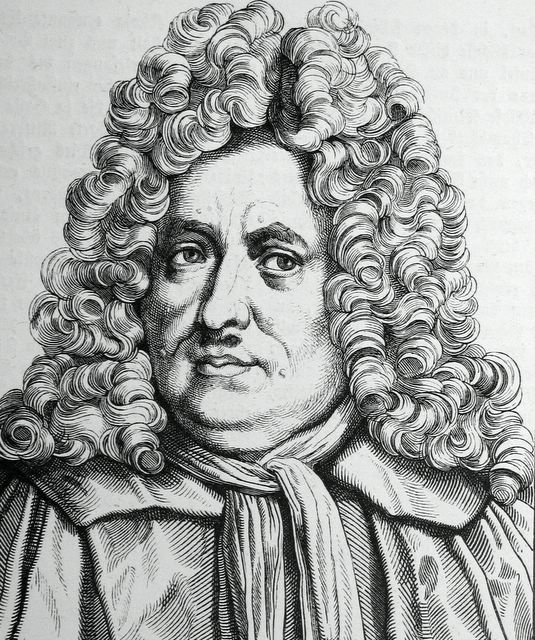
(image: Christian Thomasius; source: Wikimedia Commons)


Abstract: 

This book, according to the method of Begriffsgeschichte, explains the history of the notion of “Philosophy of Law”. Starting from the distinction between the “simulata” and the “vera philosophia”, the historical development continues with the Renaissance notion of “philosophia legalis” and shows that, from 1650 to 1730, treatises and manuals entitled “philosophia iuris” began to proliferate in Lutheran regions. These works (from Chopius until Reftelius, through Thomasius) had never been systematically studied. Starting from the Three-Year Course of Bachelor of Arts and from the Chair of “Natural Law”, these professors looked for some first Principles of Law and wished to establish a conceptual basis for the pedagogical transition from the Faculty of Arts and Philosophy to the Faculty of Law. After a few decades in which the notion of “ius naturale et gentium” was definitively imposed (1730-1780), because of Kant’s Philosophy there was a violent reaction against the philosophical “excesses” of rationalist Natural Law. Then Hugo and others coined the notion of “Philosophie des positiven Rechts”, to which some philosophers like Hegel responded with their “Philosophie des Rechts” or “Rechtsphilosophie”. Through this historical study, some reflections on the current dichotomy between “Theory” and “Philosophy of Law” are made and, according to the historical analysis, some solutions are proposed
 Read the full book here.

04 August 2020

BOOK: Vincenzo PEPE, Giambattista Vico e la comparazione giuridica (Napoli: Edizioni Scientifiche Italiane, 2020). ISBN: 9788849540727, pp. 200, € 27,00

Nessuna immagine impostata
(Source: ESI)


ABOUT THE BOOK

Questa pubblicazione è il risultato di una ricerca sul pensiero di Giambattista Vico e il suo contributo per la scienza e la comparazione giuridica. Il Vico comparatista, facendo dei popoli i protagonisti delle culture e gli artefici della storia ha schiuso nuovi percorsi, non solo alla scienza storico-filosofica, ma anche a quel settore di conoscenze e competenze che oggigiorno è classificato come Diritto costituzionale comparato. Secondo l’insegnamento di Vico, il giurista, ispirandosi al metodo della comparazione, è in grado di ricercare e dare forma ad un diritto universale della ragione e del progresso che rispetti le molteplici identità umane. In questo quadro gli ambiti locali, di prossimità, si traducono in occasioni di ricchezza culturale, di valorizzazione di identità e tradizioni che non possiamo permetterci di lasciare dissipare nell’omologazione che accompagna i processi di globalizzazione. Grazie a Giambattista Vico facciamo nostro il dovere di valorizzare la sovranità delle identità contro il pericoloso prevalere di modelli senza radici e di un progresso globalizzato che si accompagna all’oblio dell’etica e dei valori identitari.

ABOUT THE AUTHOR

Vincenzo Pepe insegna Diritto pubblico italiano e comparato e Diritto dell’ambiente comparato presso il Dipartimento di Scienze Politiche Jean Monnet dell’Università degli Studi della Campania Luigi Vanvitelli. È Presidente nazionale del Movimento ecologista europeo FareAmbiente ed è Presidente onorario della Fondazione Giambattista Vico. Ha teorizzato l’ambientalismo responsabile, diventando a livello nazionale e internazionale uno dei principali protagonisti delle politiche ambientali e dello sviluppo sostenibile. Tra le sue pubblicazioni ricordiamo: Diritto comparato dell’energia. Esperienze europee, Napoli 2008; Fare Ambiente. Teorie e modelli giuridici di sviluppo sostenibile, Milano 2009; Governo del territorio e valori costituzionali, la protezione civile in Italia e in Francia, Padova 2009; Saggi Vichiani. Riflessioni sul programma di un «corso di legislazione comparata» di Vincenzo Cuoco, Soveria Mannelli 2010; La democrazia della prossimità nella comparazione giuridica, Napoli, 2015.

TABLE OF CONTENTS

Parte I
Giambattista Vico filosofo dell’Origine
Capitolo I
Giambattista Vico filosofo dell’Origine
1. La questione dell’origine e l’inizio del filosofare
2. La filosofia della memoria. Identità e mito
3. Le società umane tra Filosofia della storia e la Comune natura delle nazioni
4. Natura, tempo e culture
5. La Provvidenza e la Metafisica, scienze dei principi. La nuova «Teologia civile ragionata»
6. Per una nuova gnoseologia
7. Il desiderio della civiltà
Capitolo II
Eloquenza, retorica, linguaggio
L’esperienza sociale nella fenomenologia vichiana
1. Homo cogitans o Homo loquens?
2. Esprimere la conoscenza. Il linguaggio come socializzazione del sapere
3. Fenomenologia vichiana. Uomo e storia
Capitolo III
Giambattista Vico e la Scienza della politica
1. L’uomo fa il mondo. La Storia
2. Cosa è Storia. Ciclo o «storia ideale eterna»?
3. Storia, storie e libertà dell’uomo
4. Una filosofia della storia vichiana?
5. La politica come scienza pienamente civile
6. La filologia, senso comune della Storia
7. Della dignità dell’uomo nel mondo
8. La Scienza Nuova

Parte II
Giambattista Vico e l’origine della comparazione giuridica
Capitolo I
L’essenza del diritto
1. Il diritto come rappresentazione normativa di una data formazione sociale
2. «Tre spezie di diritti naturali. Tre spezie di governi»
3. Il Diritto come concreto bene civile
4. Il Diritto come comparazione
5. Il diritto nella Scienza Nuova delle nazioni. Vico padre del Diritto internazionale
6. Diritto e valori contro il nichilismo
Capitolo II
L’eco di Giambattista Vico nell’Assemblea costituente
1. Valori, identità, tradizioni nella Costituzione repubblicana
2. La giustizia nel pensiero vichiano e l’assemblea costituente
3. I valori della libertà e lo storicismo vichiano
4. La Costituzione repubblicana come fondamento
Capitolo III
Giambattista Vico e l’origine della comparazione giuridica
1. La comparazione giuridica. Caratteristiche generali
2. La comparazione giuridica vichiana
3. Vico fra comparazione giuridica e identità
4. Vico e l’origine della comparazione giuridica
5. Il ruolo del diritto comparato nelle società
6. La gnoseologia giuridica e il metodo comparativo vichiano
7. Il diritto delle nazioni
Capitolo IV
La comparazione giuridica vichiana nell’ambito della cultura giuridica europea
1. Giambattista Vico negli ambienti giuridici tedeschi
2. Giambattista Vico e Carl Schmitt
3. Giambattista Vico, Donoso Cortés e Carl Schmitt

Parte III
Giambattista Vico oggi. Comparazione giuridica e globalizzazione
1. Come preservare, valorizzandole giuridicamente, le identità
2. Comparazione giuridica e globalizzazione
3. Legiferare meglio con il metodo comparativo
4. Comparazione, prossimità, identità
5. Principi giuridici di partecipazione democratica
6. Prossimità e Sussidiarietà: questioni di metodo per una comparazione giuridica
7. Il principio giuridico della sussidiarietà e limiti della sua applicazione

Considerazioni finali
Il valore comparativo dell’identità


More information is available here.