Search

Showing posts with label Territory. Show all posts

10 November 2025

CONFERENCE: Territoire(s). Notion, limites et extensions (Lille: Université de Lille, Salle Guy Debeyre, 14-15 NOV 2025)

(Image source: Univ-droit)

Abstract

Understood as part of the earth’s surface in the usual sense, described by Sextus Pomponius in the Digest as ‘all the land within the boundaries of any community’, territory is defined in modern and contemporary times as ‘a constitutive element of the State, for which it forms the geographical basis and whose powers it determines’. The link between territory and public and judicial authorities thus predates the concept of the State. The civil authority freely administers and organises its territory, which is divisible and divided. It can also create subdivisions within the same territory, which have a greater or lesser extent of autonomy and their own powers, as in the case of French decentralisation or the devolution of power in the United Kingdom.

The notion of territory inherently includes the idea of its own limit, i.e. the border, and raises the question of its extension. 

National borders can be natural (theory of the natural borders of France) or artificial (borders of the European colonies in Africa and Asia). It can be physical, such as a city wall, but it can also be vague, such as the limes of ancient Rome or the demarcation of the European continent from Asia. The border divides an internal space (the territory itself) from a space beyond, in which sovereignty no longer applies and public authority no longer has any power. It is therefore possible, as the Roman jurist Paul wrote, to disobey ‘the judge who exercises jurisdiction outside his territory’4. In this context, the rules of international private and criminal law clarify the problems raised when a legal act or crime is committed abroad and provide solutions to conflicts of law and jurisdiction.

This consideration of borders invites us to examine how war shapes territory, particularly through annexation, recognition of a newly-formed state or state succession. These different ways of altering borders can bring up complex legal issues. Medieval jurists developed the ‘just war theory’, derived from Roman fetial law and the reflections of Christian thinkers of late antiquity. International law has gradually incorporated mechanisms to limit the effects of war on territories and populations, but these legal principles are difficult to reconcile with geopolitical realities. At national level, the extension of borders through the incorporation of new territories can lead to the establishment of special public and private law statutes, as in certain overseas territories, former French colonies, or in the British Overseas Territories.

Territories are constantly extending their borders to new horizons, such as the sea from the end of the Middle Ages and the sky and space in the 20th century. Diplomacy is instrumental in exploring and sharing these new territories and spaces. More generally, diplomacy is a means of preventing or resolving border and territorial disputes between states, as well as maintaining peaceful international relations and boosting economic exchanges. 


Program:

Vendredi 14 novembre 2025

09h00 : Mots d’accueil et propos introductifs
  • Gaël Chantepie, Directeur de l’École doctorale SJPG
  • Serge Dauchy, Directeur du CHJ
  • Alexandra Garifullina, Hugo Neuhauser, Lucie Ranchoux, Université de Lille
Séance 1. Territoire(s), échelles et frontières
  • 9h30: Daniel Bökenkamp, Tilburg University - Territory and Scale in Urban Legal History: A Framework for Comparative Analysis.
  • 9h50: Quentin Muller, Université de Lorraine / Alexandre Ruelle, CY Cergy Paris Université - Concevoir le(s) territoire(s) dans des États composites au XVIIe siècle. L’exemple des espaces lorrain et savoyard.
  • 10h10: Antoine Laurent, Université Paris Panthéon Assas - Penser le territoire par la frontière : réflexions sur la conceptualisation exclusive du territoire en droit international.
Séance 2. Territoire(s), cultures et identités
  • 11h20: Natalie Schwabl, Sorbonne Université - Constructions et légitimations des frontières dans les régimes fascistes : l’exemple du territoire de l’« État indépendant de Croatie » (1941-1945).
  • 11h40: Asena Poyrazer, Université Paris Saclay - Territorialiser l’immatériel ? Approche juridique du patrimoine culturel immatériel en contexte post-conflit.
  • 12h00: Raphaël Capet, Université Toulouse Capitole - Le territoire de chasse comme palimpseste.
Séance 3. Territoire(s) divisés
  • 14h30: Jean-Michel Mangiavillano, Office français de la biodiversité - Le découpage entre le territoire urbain et le territoire rural de la Provence baroque d’après le Code Buisson : le témoignage de la réception de la romanité.
  • 14h50 : Lucie Ranchoux, Université de Lille - Chambres de commerce et territorialisation du pouvoir économique : les cas de Lille et Dunkerque au XVIIIe siècle.
  • 15h10 : Benedetta Rinaldi Ferri, EHESS - Un idiome juridictionnel de la ville : la dédicace des espaces en droit contemporain (Italie, 1971-1988).
Séance 4. Territoire(s) occupés et colonisés
  • 16h20 : Thao Anh Hoang, Université de Montpellier - La question du conflit de lois sur les territoires colonisés : le cas du Vietnam (1862-1945).
  • 16h40 : Paul-Emmanuel Babin, Fondation pour la Mémoire de la Shoah - Le « quadrillage » du FLN pendant la guerre d’indépendance algérienne ou la constitution d’une véritable atteinte à l’intégrité du territoire national ?
  • 17h00 : Claire de Blois, Université d’Orléans - Du territoire occupé au territoire revendiqué : l’effectivité de la souveraineté territoriale face aux occupations prolongées.

Samedi 15 novembre 2025
Séance 5. Territoire(s) et souveraineté
  • 10h00: Stefano Cattelan, Vrije Universiteit Brussel - Sarpi et la mer Adriatique : le territoire maritime vénitien entre souveraineté et déclin (v. 1610–1720).
  • 10h20 : Andrea Raffaele Amato, Università di Macerata - À l’ombre de la Grande Guerre. La nature juridique du territoire d’élément co-essentiel de la souveraineté étatique à simple objet de dominum dans la disponibilité de l’État-nation : Santi Romano, Tommaso Perassi
  • et Donato Donati (1902-1924).
  • 10h40 : Alexandra Garifullina, Université de Lille - The Status of Outer Space in Legal Soviet Doctrine.

11h30 : Propos conclusifs
  • Alexandra Garifullina, Hugo Neuhauser, Lucie Ranchoux, Université de Lille

More information can be found here

15 December 2023

BOOK: Pascal HEPNER, Tanguy LE MARC’HADOUR, Christian PFISTER-LANGANAY (eds), Construire et Déconstruire les territoires. Actes des Journées internationales tenues à Arras les 11 et 12 mai 2018 (Lille: Centre d’Histoire Judiciaire, 2023) [OPEN ACCESS]


Actes des Journées internationales de la Société d'histoire du droit et des institutions des pays flamands, picards et wallons tenues à Arras les 11 et 12 mai 2018

TABLE OF CONTENT
  • "Introduction – Préface", par Pascal Hepner, Tanguy Le Marc’hadour et Christian Pfister
  • "‘Free movement’ of peoples: Flemings in England" par Caroline Laske
  • "Arras, Boulogne, Saint-Omer, Ypres et les nouveaux diocèses aux Pays-Bas anciens. Des questions territoriales ?" par Paul Van Peteghem
  • "La déconstruction du territoire judiciaire de l'abbaye du Saint-Sépulcre de Cambrai 1636-1793" par Cyril Clerbout
  • "Le pouvoir pénal et le territoire : l'exposition du cadavre du condamné et les fourches patibulaires. Le cas du Parlement de Flandre entre 1681 et 1790" par Maki Fukuda
  • "Jean Rousset de Missy et les Intérêts présens des puissances de l’Europe : territoires, souveraineté et argumentation juridique pratique" par Frederik Dhondt
  • "La contrebande du sel dans le nord de la France au XVIIIe siècle" par Sébastien Évrard
  • "Le signalement judiciaire, un révélateur d’une continuité des anciens Pays-Bas" par Pascal Hepner
  • "Le contrôle du territoire Kosovo : coexistence, rupture, homogénéisation" par Felipe Hernández

More information can be found here

20 May 2022

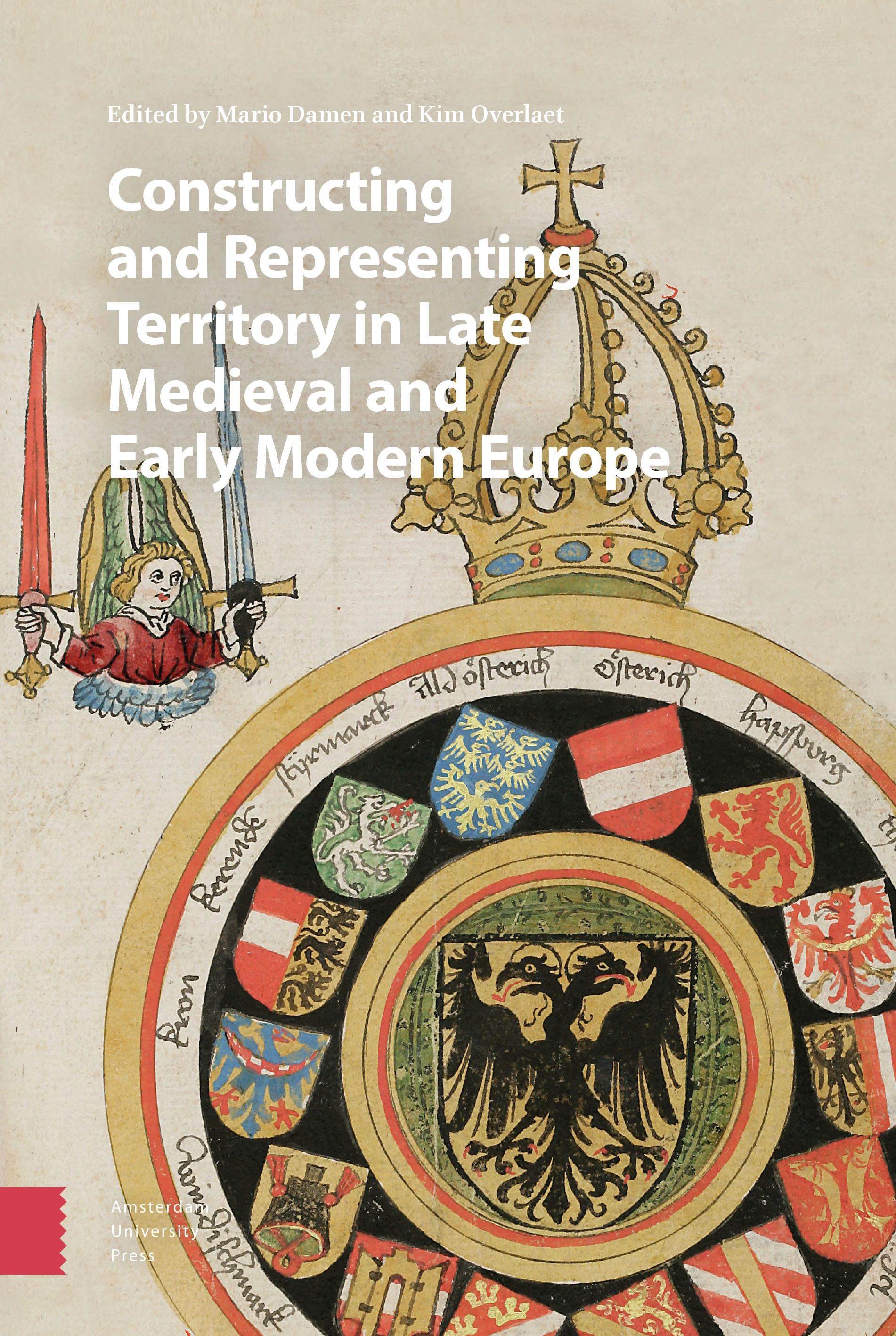
BOOK: Mario DAMEN, Kim OVERLAET (eds.), Constructing and Representing Territory in Late Medieval and Early Modern Europe (Amsterdam: Amsterdam University Press, 2021), ISBN : 9789463726139 OPEN ACCESS


ABOUT THE BOOK

In recent political and legal history, scholars seldom specify how and why they use the concept of territory. In research on state-formation processes and nation building, for instance, the term mostly designates an enclosed geographical area ruled by a central government. Inspired by ideas from political geographers, this book explores the layered and constantly changing meanings of territory in late medieval and early modern Europe before cartography and state formation turned boundaries and territories into more fixed (but still changeable) geographical entities. Its central thesis is that assessing the notion of territory in a pre-modern setting involves analysing territorial practices: practices that relate people and power to space(s). The essays in this book not only examine the construction and spatial structure of pre-modern territories but also explore their perception and representation through the use of a broad range of sources: from administrative texts to maps, from stained-glass windows to chronicles.


ABOUT THE EDITORS

Mario Damen is senior lecturer at the University of Amsterdam. He has published widely on the social and political history of the late medieval Low Countries and is the PI of the research project Imagining a territory. Constructions and representation of late medieval Brabant, financed by the Dutch Research Council (NWO).

Kim Overlaet worked from 2016 till 2019 as a postdoctoral researcher at the University of Amsterdam on the NWO project ‘Imagining a territory’. She currently works as a research manager at the Department of History at Antwerp University.


TABLE OF CONTENTS

Constructing and Representing Territory in Late Medieval and Early Modern Europe: An Introduction (Mario Damen and Kim Overlaet)

Part 1 - The Multiplicity of Territory

  • Were There ‘Territories’ in the German Lands of the Holy Roman Empire in the Fourteenth to Sixteenth Centuries? (Duncan Hardy)
  • Beyond the State: Community and Territory-Making in Late Medieval Italy (Luca Zenobi)
  • Clerical and Ecclesiastical Ideas of Territory in the Late Medieval Low Countries (Bram van den Hoven van Genderen)
  • Marginal Might? The Role of Lordships in the Territorial Integrity of Guelders, c. 1325-c. 1575 (Jim van der Meulen)

Part 2 - The Construction of Territory

  • Demographic Shifts and the Politics of Taxation in the Making of Fifteenth-Century Brabant (Arend Elias Oostindier and Rombert Stapel)
  • From Knights Errant to Disloyal Soldiers? The Criminalisation of Foreign Military Service in the Late Medieval Meuse and Rhine Regions, 1250-1550 (Sander Govaerts)
  • Conquest, Cartography and the Development of Linear Frontiers during Henry VIII’s Invasion of France in 1544-1546 (Neil Murphy)
  • From Multiple Residences to One Capital? Court Itinerance during the Regencies of Margaret of Austria and Mary of Hungary in the Low Countries (c. 1507-1555) (Yannick De Meulder)

Part 3 - The Representation of Territory

  • Heraldry and Territory: Coats of Arms and the Representation and Construction of Authority in Space (Mario Damen and Marcus Meer)
  • The Territorial Perception of the Duchy of Brabant in Historiography and Vernacular Literature in the Late Middle Ages (Bram Caers and Robert Stein)
  • Imagining Flanders: The (De)construction of a Regional Identity in Fifteenth-Century Flanders (Lisa Demets)
  • Mapping Imagined Territory: Quaresmio’s Chorographia and Later Franciscan Holy Land Maps (Marianne Ritsema van Eck)

Constructing and Representing Territory in Late Medieval and Early Modern Europe: A Conclusion (Mario Damen and Kim Overlaet)


The entire publication can be read and downloaded at this link.

17 September 2019

CALL FOR PAPERS: Territoriality and Non-territoriality in Accommodating National Diversity within States, 1789-1989 (University of Vienna, 2-4 April 2020) (DEADLINE: 8 January 2020)


(Source: Ntaunomy)

We learned of a call for papers for a conference on territorial and non-territorial aspects in accommodating national diversity within states at the University of Vienna.

We invite scholars for an in-depth exploration of territorial and non-territorial aspects in accommodating national diversity within states, from the French Revolution to the end of the Cold War in Europe and beyond.

We welcome proposals that tackle the interplay between the dimensions of territory, group, and the individual from both theoretical and empirical perspectives. Since the late 18th century states have increasingly perceived ethno-national diversity as an issue to be addressed through policy. Voluntarily or not, some of them responded to this challenge by granting positive rights to individuals, groups or territories. What interests us is the relationship between these various approaches and whether they can be treated separately at all. While the accommodation of national diversity is commonly associated with territorial arrangements, ethno-national groups could also be conceived of separately from specific territories. Yet, one could also argue that even fully fledged non-territorial solutions based solely on the “personality principle” nevertheless have to take territorial issues into account for administrative purposes. By exploring how theoreticians or political protagonists engaged in entangling or disentangling both ideas and policies about territory and nation, we hope to shed new light on the chequered history of accommodating national diversity. We invite a broad range of scholars (historians, political scientists, legal scholars, anthropologists, sociologists, geographers and political philosophers) to submit papers dealing with the above-outlined problems.

We are especially interested in presentations that focus on one or several of the following agents: governments, bodies claiming to represent national groups, parties and other political organisations, supranational organisations, as well as individual politicians, scholars (including legal scholars) and national and minority activists.

Possible topics to be addressed through the lens of territoriality and non-territoriality include, but are not limited to:

- Theories of national diversity accommodation
– federalism, non-territorial autonomy, consociationalism, collective rights
- Case studies of attempts to accommodate national diversity - Discourses on territoriality and groupness - National ideologies and party programmes - Liberal citizenship, legal equality and group rights
– complementarity and conflict
- Accommodating national diversity in non-liberal and authoritarian settings
- The scope, extent and content of national autonomy - managing national diversity in colonies and former colonies
- Indigenous groups and state territory
- International minority protection

The conference will take place at the University of Vienna between April the 2nd and 4th of 2020. Keynote addresses will be given by Prof. Jana Osterkamp (University of Munich) and Prof. Yonatan Fessha (University of the Western Cape). Accommodation will be fully covered by the organisers. Partial reimbursement of travel costs will also be available. The working language of the conference will be English. Please send paper proposals of no more than 400 words and a brief CV to ntautonomy.iog@univie.ac.at by January the 8th 2020.

More info at the project website