Search

Showing posts with label Police and Justice. Show all posts

25 September 2024

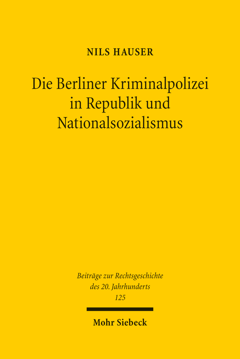
BOOK: Nils HAUSER, Die Berliner Kriminalpolizei in Republik und Nationalsozialismus [Beiträge zur Rechtsgeschichte des 20. Jahrhunderts; 125] (Tübingen: Mohr Siebeck, 2024), 479 p., ISBN 978-3-16-162624-1

 Cover von 'undefined'
 
ABOUT THE BOOK:
 
Anhand von Archiv- und zeitgenössischen Literaturquellen analysiert Nils Hauser die nicht eindeutige Aufgabenstellung der Kriminalpolizei zwischen Justiz und Polizei. Nach einem rechtshistorischen Überblick über die Entstehung von Polizei und Kriminalpolizei wendet er sich den (kriminal-)polizeilichen Rechtsgrundlagen zu. Sodann untersucht er den Aufbau und die personelle Zusammensetzung der Berliner Kriminalpolizei in den Jahren 1925 bis 1937 und insbesondere die personellen Veränderungen durch »Preußenschlag« und »Machtergreifung«. Er betrachtet die sich wandelnde Kriminalpolizeipraxis, insbesondere die Verfolgung von »Berufsverbrechern«, »Asozialen« und Juden sowie die Entstehung einer polizeilichen Justiz. Abschließend fügt Nils Hauser diese drei Teile in einem Überblick über die Wechselwirkungen zwischen Polizeirecht, Strafrecht und Kriminalpolizeipraxis zu einem Ganzen zusammen.
 
TABLE OF CONTENTS:
Einleitung
A. Forschungsstand und Quellenlage
B. Zielsetzung und Vorgehensweise
C. Vorbemerkung

§ 1 Rechtsgrundlagen
A. Das Verständnis von Polizei als Grundlage des Kriminalpolizeibegriffes
B. Die Kriminalpolizei und ihre Rechtsgrundlagen
C. Die Rechtsgrundlagen in Weimarer Republik und NS-Staat

§ 2 Institution
A. Föderale und gesellschaftliche Rahmenbedingungen
B. Institutionelle Verfasstheit
C. Berliner Polizei und "Preußenschlag“
D. Untergang der Weimarer Republik
E. Die Institution in Weimarer Republik und NS-Staat

§ 3 Rechtstatsächlichkeit
A. Kriminalpolizeilicher Alltag im Berlin der Weimarer Republik
B. Die Rechtspraxis der Verbrecherbekämpfung, Sozialhygiene und Minderheitenverfolgung durch die Berliner Kriminalpolizei im NS-Staat
C. Die Rechtstatsächlichkeit in Weimarer Republik und NS-Staat

Ergebnisse
A. Autonome justizielle Polizei und Kriminalitätsverwaltung
B. Polizeiliche Justiz und Verpolizeilichung des Strafprozesses
C. Schlussbetrachtung
 
Reade more here.

24 May 2024

BOOK: Barbara STELZL-MARX, Andreas KRANEBITTER, Gregor HOLZINGER (eds.), Exekutive der Gewalt - Die österreichische Polizei und der Nationalsozialismus (Wien: Böhlau, 2024), 824 p., ISBN 978-3-205-21847-0


Book abstract:

Mit dem „Anschluss“ im März 1938 bildete die österreichische Polizei einen wesentlichen Bestandteil des nationalsozialistischen Terrorregimes. Die Publikation bietet einen umfassenden Einblick in Bedeutung, Funktion und Entwicklungsgeschichte dieser Exekutive der Gewalt. Ausgehend von der weitgehend reibungslosen Eingliederung der Exekutive in den NS-Repressionsapparat widmen sich 32 nationale und internationale Expert*innen der Geschichte der österreichischen Polizei im Nationalsozialismus – von der Umwandlung der Sicherheitsstrukturen nach dem „Anschluss“ 1938 bis hin zur Organisation des Terrorregimes in der Heimat und den eroberten Gebieten. Die Polizei war maßgeblich in Kriegsverbrechen und den Holocaust involviert. Beispiele von Widerstand innerhalb der Polizei verweisen zugleich auf die Frage nach individuellen Handlungsoptionen. Im Fokus stehen zudem die gerichtliche Ahndung von NS-Verbrechen und Entnazifizierungsmaßnahmen der Nachkriegszeit. Durch die Öffnung der Polizei-Archive gelingt erstmals ein umfassender Einblick in die Arbeitsweise der Exekutive der Gewalt.

Finde more here.

18 October 2023

BOOK: Maria Agustina VACCARONI, Los primeros policías de Buenos Aires. Funciones, materialidades y territorios (1772-1825) (México: Tirant lo Blanch, 2023). ISBN: 9788411471480


ABOUT THE BOOK 

Este libro ofrece una historia social de los primeros agentes policiacos en Buenos Aires, entre finales del siglo XVIII y las primeras décadas del XIX. Con una mirada a ras de suelo, atenta a las diferencias entre normas, discursos y prácticas, la autora busca recuperar la cotidianeidad de los actores involucrados y su interacción con otros actores sociales e institucionales, desde las autoridades del gobierno hasta aquellas personas que fueron objetos primordiales de su vigilancia, los vagos y malentretenidos. Así, la obra destaca las múltiples tensiones que acompañaron el surgimiento de los primeros cuerpos policiacos y la forma como se articularon en el proceso de modernización estatal. En particular, resulta muy útil el análisis del territorio donde dichos cuerpos se desarrollaron, pues no es posible entender los procesos de configuración del poder, el control y la vigilancia sin tomar en cuenta la organización espacial de la ciudad. 


ABOUT THE AUTHOR 

MARÍA AGUSTINA VACCARONI es licenciada y magíster en Historia por la Universidad Nacional de Mar del Plata y Doctora en Historia por la Universidad Nacional del Centro de la Provincia de Buenos Aires. Realizó estudios postdoctorales en El Colegio de México. Sus líneas de investigación combinan la historia social de la policía, la justicia y el gobierno con la historia crítica del derecho.


TABLE OF CONTENTS
Introducción
  • Una historia social de las configuraciones policiales
  • Problemas, fuentes y organización del libro

Primera Parte: Normativas y perfiles
Capítulo I. La ciudad en transformación. De los bandos a los reglamentos policiales
  • Ornamentar la ciudad. Bandos, instrucciones y acuerdos en conflicto
  • Guardar la causa. Un reglamento para la ciudad
  • Expandir el poder de policía Reglamentos, órdenes y decretos de policía 
Capítulo II. Perfiles y trayectorias. Los hombres de la policía
  • En el terreno. Los alcaldes de barrio
  • Mediaciones. Los comisarios de ciudad 
  • Con el gobierno. Los intendentes y jefes de policía
Segunda Parte: Materialidades y territorios
Capítulo III. El equipamiento de la policía. Materialidades como relaciones 
  • Más hombres, más dotaciones 
  • El desarme de la población y las armas y animales de la policía
  • Vestuarios, manuales, boletines. Hacer visible a la policía
Capítulo IV. La territorialidad de las prácticas policiales 
  • Los cuarteles urbanos y los policías como testigos 
  • Policías en la ciudad, en los suburbios, en la campaña
  • Las comisarías de ciudad y la jerarquización policial
Reflexiones finales


More information can be found here.

05 May 2022

BOOK: Scott JACQUES, Philip SCHOFIELD (eds.), Jeremy Bentham on Police. The unknown story and what it means for criminology (London: UCL Press, 2021), ISBN: 9781787356177 OPEN ACCESS

(Image source: UCL Press)


ABOUT THE BOOK

Jeremy Bentham’s ideas on punishment are famous. Every criminology student learns about Bentham, and every criminologist contends with him, as advocate or opponent. This discourse concerns his ideas about punishment, namely with respect to legislation and the panopticon. Yet, scholars and students are generally ignorant of Bentham’s ideas on police. Hitherto, these ideas have been largely unknowable. Now, thanks to UCL’s Bentham Project, these ideas are public. Jeremy Bentham on Police celebrates this achievement by exploring the story of Bentham’s writings on police and considering their relevance to the past, present and future of criminology. After Scott Jacques introduces the book, the Director of the Bentham Project, Philip Schofield, describes and explains how it works. Then Michael Quinn, who brought together Bentham’s writings on police, delves into the personal and socio-historical background in which they were created. An extract follows, representing the most (criminologically-)relevant passages from Bentham’s police writings. Finally, a rich variety of scholars offer their thoughts on what those writings mean for criminology. These contributions come from Anthony A. Braga, Ronald Clarke, David J. Cox, Stephen Douglas, Stephen Engelmann, G. Geltner, Joel F. Harrington, Jonathan Jacobs, Paul Knepper, Gloria Laycock, Gary T. Marx, Daniel S. Nagin, Graeme R. Newman, Pat O’Malley, Eric L. Piza, Kim Rossmo, Lucia Summers and Dean Wilson.


ABOUT THE EDITORS

Scott Jacques is Director of Criminology Open, and Professor of Criminal Justice and Criminology at Georgia State University.

Philip Schofield is Director of the Bentham Project, Faculty of Laws, UCL, and General Editor of the new authoritative edition of The Collected Works of Jeremy Bentham.


TABLE OF CONTENTS

Part I: Chapters

1. The Story of Jeremy Bentham on Police: Bridging the Bentham Project to Criminology (Scott Jacques)
2. Jeremy Bentham, the Bentham Project and The Collected Works of Jeremy Bentham (Philip Schofield)
3. Bentham on Preventive Police: The Calendar of Delinquency in Evaluation of Policy, and the Police Gazette in Manipulation of Opinion (Michael Quinn)

Part II: Extracts

4. Extracts from Jeremy Bentham’s Board-of-Police Bill (Jeremy Bentham, Selected and edited by Philip Schofield and Scott Jacques)

Part III: Comments

  • The Influence of Bentham on the Development of Focused Deterrence (Anthony A. Braga and Stephen Douglas)
  • Regulating Crime and the International Crime Drop (Ronald Clarke)
  • ‘An Attention to Domestic Quiet’: A Comparative Commentary on the Originality or Otherwise of Bentham’s Views and Writings on Preventive Policing and the Police Gazette (David J. Cox)
  • Bentham’s Virtue (Stephen Engelmann)
  • On Policing Before Bentham: Differences in Degree and Differences in Kind (G. Geltner)
  • Bentham’s England and the Longue Durée of Preventive Policing (Joel F. Harrington)
  • Bentham on the Complex Role of Police (Jonathan Jacobs)
  • Bentham and Historical Criminology (Paul Knepper)
  • Bentham: The First Crime Scientist? Gloria Laycock)
  • Bentham on Modern Social Control: Prescient, Clairvoyant, Prescient, and More (Gary T. Marx)
  • Utilitarianism and Policing in the US (Daniel S. Nagin)
  • Bentham in the Weeds (Graeme R. Newman)
  • A Genealogy of Bentham’s Preventive Policing (Pat O’Malley)
  • Bentham on Crime Analysis and Evidence-Based Policing (Eric L. Piza)
  • Bentham and the Philosophical Nature of Preventive Policing (Kim Rossmo and Lucia Summers)
  • Bentham in the Colonies (Dean Wilson)


More information can be found here. The entire publication can be read and downloaded at this link.

20 March 2020

BOOK: Vincent DENIS, Isabelle FOUCHER, Vincent MILLIOT (éds.): La police des Lumières. Ordre et désordre dans les villes au XVIIIᵉ siècle (1830-1850) (Paris: Gallimard, 2020), 256 p. ISBN 978-2-0728-8629-4, € 35,-

(Source: univ-droit.fr)

Book abstract:
Lorsque la Bastille tombe le 14 juillet 1789, c'en est fini du despotisme de la police. Lettres de cachet, mouches, espions sont devenus insupportables à un peuple en quête de liberté et d'égalité. Pourtant, l'histoire de la police de l'Ancien Régime ne peut se résumer à ce sombre portrait. Présentés pour la première fois, deux cents documents exceptionnels conservés aux Archives nationales nous plongent dans le quotidien du travail policier. On y voit Rousseau déclarer un vol de chemises, Sade protester contre son enfermement, Diderot et d'Alembert fichés, des prostituées sous contrôle. Mais l'on découvre aussi des lettres, des rapports, des projets qui dessinent une autre police, fille du siècle des Lumières. Prétendant vouloir «faire le bonheur des hommes en société», elle approvisionne les villes en blés, organise le travail ou veille à l'hygiène des populations. Cet ouvrage richement illustré offre un nouvel éclairage sur la naissance de la police moderne à la veille de la Révolution française. 

15 November 2019

CALL FOR PAPERS: Polizei und Demokratie seit dem 19. Jahrhundert (Duisburg, 25-27 May 2020) (DEADLINE: 20 January 2020)


 We learned of a call for papers for the 30th colloquium on police history, with the theme “police and democracy since the 19th century”.  

Call for Papers: Polizei und Demokratie seit dem 19. Jahrhundert
30. Kolloquium zur Polizeigeschichte
Landesarchiv Nordrhein-Westfalen, Duisburg, 25.05.-27.05.2020

Veranstalter des 30. Kolloquiums zur Polizeigeschichte (25.05.-27.05.2020) ist das Landesarchiv Nordrhein-Westfalen in Duisburg. Zentrales Thema der Tagung ist Polizei und Demokratie seit dem 19. Jahrhundert. Ein zweiter Schwerpunkt wird die archivalische Überlieferung der Polizei und deren Digitalisierung betreffen. Zudem ist wie üblich eine offene Sektion vorgesehen.

Polizei und Demokratie zusammen zu denken ist in der longue durée der Entwicklung der modernen Polizei seit dem frühen 19. Jahrhundert ein Ansatz neueren Datums. Das Verhältnis von Polizei und Demokratie – nicht nur in Europa und in Nordamerika, sondern auch in anderen Kontinenten (Afrika, Lateinamerika oder Asien) – kann unter verschiedenen Aspekten thematisiert werden. Zum einen geht es um die Einflüsse politischer Akteure auf die Polizei sowie um die Positionierung der Polizei zu und in (demokratischen) politischen Systemen (Polizei in der Demokratie). Zum anderen rückt auch die Demokratie innerhalb der Polizei in den Blick (Demokratie in der Polizei). Drittens bleibt zu fragen, inwieweit beide Aspekte miteinander verflochten sind. Das Landesarchiv Nordrhein-Westfalen mit seinen Beständen dokumentiert viele dieser Themenfelder.

Für die Polizei auf dem Gebiet des späteren Landes Nordrhein-Westfalen endete das lange 19. Jahrhundert erst 1945, als die Briten in ihrer Besatzungszone eine Polizeireform durchzusetzen versuchten, die Polizei und Demokratie in einem umfassenden Sinne miteinander verbinden sollte. Widerstände dagegen reflektierten die Entstehungsbedingungen der modernen Polizei im 19. Jahrhundert, die in erster Linie als Institution zum Schutz des Staates konzipiert war.  Dieser Fokus auf den Staats-Schutz beinhaltete auch eine mehr oder minder ausgeprägte soziale bzw. repressive Distanz zum Publikum. Die Polizei und die herrschenden politischen und sozialen Ordnungen des 19. Jahrhunderts gingen eine enge Verbindung ein. Mit Beginn des 20. Jahrhunderts, bei wachsender Kritik an der Polizei insgesamt sowie ihren autoritären Praktiken und Binnenstrukturen, setzten Versuche ein, die Polizei demokratischer, sprich ‚volksnäher‘ zu gestalten. In diese Zeit fiel auch die zunehmende Nutzung der Medien durch die Polizei, sowie eine intensivere Beobachtung der Polizei durch die Medien. Diese Ansätze erhielten Auftrieb, als mit dem Ende des Ersten Weltkriegs die politischen Systeme vieler Länder demokratisch umgestaltet wurden. Einerseits gab es nun Bestrebungen, die Polizei sowohl intern als auch im Aufgabenprofil zu demokratisieren. Andererseits standen diese Bemühungen, zumindest unmittelbar nach dem Ersten Weltkrieg, in einem massiven Spannungsverhältnis zur anhaltenden Rekrutierung militärischen Personals und zu transnationalen Revolutionsängsten.

Diese demokratischen Ansätze wurden durch die Etablierung faschistisch-diktatorischer Regime und des Kommunismus in der Sowjetunion sowie durch den Zweiten Weltkrieg unterbrochen bzw. beendet. Im so genannten Ostblock wurden nach dem Zweiten Weltkrieg Polizeien ‚volksdemokratischen‘ Typs eingerichtet, die erst Ende der 1980er bzw. zu Beginn der 1990er Jahre abgewickelt wurden. In der Bundesrepublik, aber auch in vielen anderen europäischen Ländern außerhalb des Ostblocks prägten die Traditionslinien, die im frühen 19. Jahrhundert angelegt worden waren, noch lange die polizeilichen Konzeptionen und Praktiken. Trotz vieler Reformbemühungen blieben der Vorrang des Staats-Schutzes sowie autoritäre polizeiliche Praktiken und Binnenstrukturen in einigen Ländern bis in die 1970er Jahre und länger erhalten. Danach setzten – nicht nur in Deutschland – Polizeireformen ein, die diese Traditionslinien infrage stellten und durch andere Funktionsmodelle zu ersetzen versuchten (Polizei als sozialstaatliche Einrichtung, partizipative Modelle – z.B. Ordnungspartnerschaften usw.), oft getragen von einer gesamtgesellschaftlichen Legitimierung des polizeilichen Gewaltmonopols. Oftmals sahen sich diese Reformen jedoch mit langlebigen autoritären Überhängen in der (Binnen-)Kultur der Polizei konfrontiert.

Im Folgenden einige Leitfragen, die als thematische Orientierungen für Beiträge zum Tagungsschwerpunkt Polizei und Demokratie dienen sollen:

·        Bürgerschaftliche Sicherheits- bzw. Polizeiorgane im 19. Jahrhundert: Welche bürgerschaftlichen Sicherheits- bzw. Polizeiorgane wurden im 19. Jahrhundert etabliert? Endeten diese Ansätze mit dem Ende des Zeitalters der Revolutionen 1848/49, oder wurden sie danach in veränderten Formen fortgeführt?

·        Polizei, Demokratie und Kultur der Polizei: Mit welchen Praktiken und mit welchem Repertoire begegnete die Polizei demokratischen Bewegungen im 19. und 20. Jahrhundert? Lassen sich diese Interaktionen primär in einem Repressionsschema verorten, oder erlaubte der ‚Eigensinn‘ der Betroffenen auf beiden Seiten Interaktionsspielräume? Wie veränderte sich die Kultur der Polizei vom 19. bis in das beginnende 21. Jahrhundert? Demokratische Kontrolle der Polizei: Ein Nicht-Thema?

·        „Volksnähe“, Medien und Polizei: Wie manifestierten sich Versuche zur Überbrückung der Distanz zwischen Polizei und Polizierten? Inwieweit beförderten die Nutzung von Medien für die Polizeiarbeit, wie auch die wachsende Aufmerksamkeit, die die Polizei durch mediale Berichterstattungen seit dem Ende des 19. Jahrhunderts und dann insbesondere seit dem letzten Drittel des 20. Jahrhunderts erfuhr, eine Demokratisierung der Polizei?

·        Gewerkschaftliche polizeiliche Selbstorganisation: Freie Gewerkschaften gelten als Indikatoren demokratischer Systeme.  Wie entwickelte sich die gewerkschaftliche Selbstorganisation der Polizei seit dem Beginn des 20. Jahrhunderts und wie wirkte sie sich auf das polizeiliche Binnenleben sowie auf die öffentliche Wahrnehmung von Polizei aus?

·        Wechsel politischer Systeme im 20. Jahrhundert: Welche Bedeutung hatten Wechsel politischer Systeme für die Polizei, abgesehen von Säuberungen des Personals? Inwieweit wurden auch die Polizeiarbeit (Strategien und Praktiken) sowie die Kultur der Polizei davon tangiert?

·        Polizei außerhalb Europas: Welche Entwicklungsmuster zeigten nicht-europäische Polizeien, etwa in Lateinamerika, Afrika oder Asien? Wie positionierten diese sich zu staatlichen und nichtstaatlichen Akteuren? Welche Arbeitsformen und kulturellen Muster bildeten sich heraus, insbesondere in Phasen von Entkolonialisierung und Demokratisierung?

Auch zum zweiten Tagungsthema  Archivalische Überlieferung der Polizei und deren Digitalisierung sind Beiträge erwünscht. Wie in den vergangenen Jahren üblich, wird es auch die Möglichkeit geben, in einer freien Sektion polizeigeschichtliche Forschungen oder Werkstattberichte ohne Bezug zu den Hauptthemen der Tagung zu präsentieren.

Bitte senden Sie Ihren Beitragsvorschlag (inkl. einer kurzen Zusammenfassung und einer kurzen biografischen Notiz) unter dem Betreff „30. Kolloquium zur Polizeigeschichte“ bis zum 20. Januar 2020 an die folgende E-Mail-Adresse: poststelle@lav.nrw.de. Die Übernahme der Reise- und Übernachtungskosten für angenommene Referent(inn)en ist beabsichtigt.

English Summary
The 30st colloquium on police history focuses on police and democracy since the 19th century. The conference is clustered around two core issues: Police/police culture and/in democratic political systems and democracy within the police. Papers might, amongst others, address issues like: 
·        Non-state, civil police forces since the 19th century. Impact, continuities and discontinuities
·        Police and democratic developments during the 19th and 20th centuries, global and transnational perspective included. Democratic control of the police
·        Police and its clients, police and the media
·        Police unions and democracy within the police
·        From democracy to totalitarian regimes and back: The trajectories of the police as an actor and/or as an object of changes of political systems
·        Patterns of police (cultures) and democracy in a global perspective.

A second focus of the conference will be on archival sources of police forces and their digitization. An open section is – as in the previous years – planned as well.

Please send your proposal (a short summary and a short biographical note included), using the reference “30. Kolloquium zur Polizeigeschichte” until January 20th, 2020 to the following email-address of the Northrhine-Westphalian State Archive: poststelle@lav.nrw.de. The assumption of travel and accommodation costs for accepted speakers is intended.

13 September 2019

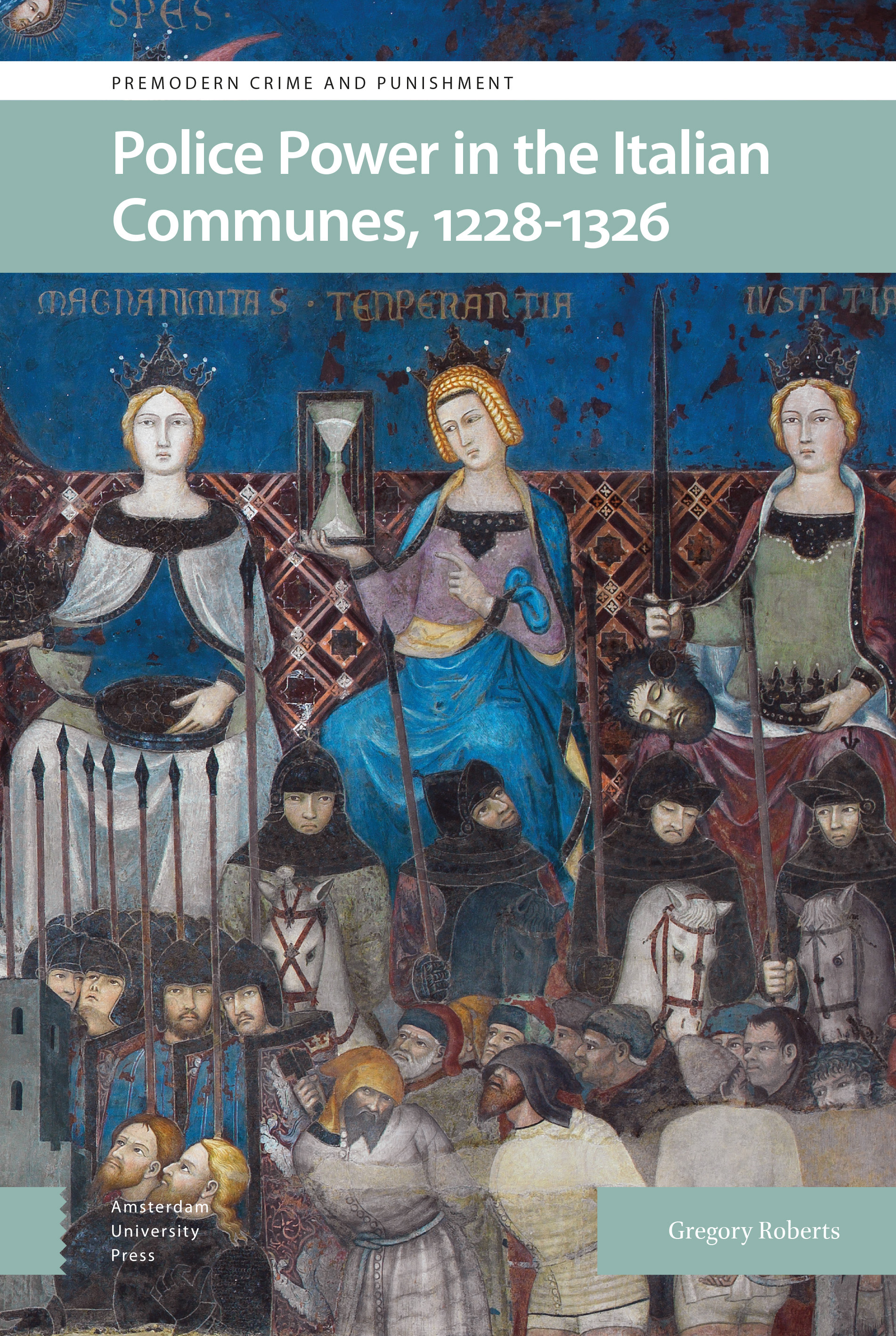
BOOK: Gregory ROBERTS, Police Power in the Italian Communes (Amsterdam: Amsterdam University Press, 2019). ISBN 9789463725309, € 89,00


Amsterdam University Press has published a new book on urban policing in Medieval Italy.

ABOUT THE BOOK

Medieval states are widely assumed to have lacked police forces. Yet in the Italian city-republics, soldiers patrolled the streets daily in search of lawbreakers. Police Power in the Italian Communes, 1228—1326 is the first book to examine the emergence of urban policing in medieval Italy and its impact on city life.

Focusing on Bologna in the thirteenth and early fourteenth centuries, Gregory Roberts shows how police forces gave teeth to the communes’ many statutes through a range of patrol activities. Whether seeking outlaws in the countryside or nighttime serenaders in the streets, urban police forces pursued lawbreakers energetically and effectively. They charged hundreds of individuals each year with arms-bearing, gambling, and curfew violations, convicting many of them in the process. Roberts draws on a trove of unpublished evidence from judicial archives, rich with witness testimony, to paint a vivid picture of policing in daily life and the capacity of urban governments to coerce.

Breaking new ground in the study of violence, justice, and state formation in the Middle Ages, Police Power in the Italian Communes sheds fresh light on the question of how ostensibly modern institutions emerge from premodern social orders.

ABOUT THE AUTHOR

Gregory Roberts is a foreign affairs officer at the U.S. State Department and previously served as a historian at the U.S. Army Center of Military History. He received his PhD from Yale University in 2013 and was a 2010—2011 Fulbright scholar in Italy.

The table of contents can be found here

13 September 2018

BOOK: Conor O’REILLY, Colonial Policing and the Transnational Legacy : the Global Dynamics of Policing Across the Lusophone Community (London: Routledge, 2017). ISBN 9781409465300, £115.00


(Source: Routledge)

Last year, Routledge published a new book on colonial policing in the Portuguese Empire

ABOUT THE BOOK

This compilation represents the first study to examine the historical evolution and shifting global dynamics of policing across the Lusophone community. With contributions from a multi-disciplinary range of experts, it traces the role of policing within and across settings that are connected by the shared legacy of Portuguese colonialism. Previously neglected within studies of the globalisation of policing, the Lusophone experience brings novel insights to established analyses of colonial, post-colonial and transnational policing. This compilation draws research attention to the policing peculiarities of the Lusophone community. It proposes new cultural settings within which to test dominant theories of policing research. It uncovers an important piece of the jigsaw that is policing across the globe. Key research questions that it addresses include:

• What were the patterns of policing, and policing transfers, across Portuguese colonial settings?
• How did Portugal’s dual status as both fascist regime and imperial power shape its late colonial policing?
• What have been the different experiences of post-colonial and transitional policing across the former Portuguese colonies?
• In what ways are Lusophone nations contributing to, and indeed shaping, patterns of transnational policing?
• What comparative lessons can be drawn from the Lusophone policing experience?

ABOUT THE EDITOR

Conor O’Reilly is Associate Professor in Transnational Crime and Security at the School of Law, University of Leeds. His research interests focus upon the transnational dynamics of crime, policing and security. He has published widely on these and related research themes in leading journals, including: British Journal of CriminologyCrime, Law and Social ChangeInternational Political SociologyPolice Quarterly; and Theoretical Criminology. He is also author of the forthcoming monograph, Policing Global Risks: The Transnational Security Consultancy Industry. He has worked on a range of international research projects, including the COPP-LAB project on Lusophone policing, and is currently leading a three-year project on kidnapping in Mexico.

TABLE OF CONTENTS

SUMMARY OF CONTENTS
Introduction: Policing and the Lusophone Community Across Time and Space
Conor O’Reilly (University of Leeds)
PART ONE: THE COLONIAL POLICING MISSION
1. Colonial Policing and the Portuguese Empire (c.1870-1961)
Gonçalo Rocha Gonçalves (University Institute of Lisbon) and Rita Ávila Cachado (University Institute of Lisbon)
2. The Military and the (Colonial) Policing of Mainland Portugal (1850–1910)
Diego Palacios Cerezales (University of Stirling)
3. Militarism in the São Paulo Police Force (1868-1924)
André Rosemberg (Universidade Estadual Paulista ‘Júlio de Mesquita Filho’)
Comment: The Portuguese Colonial Policing Mission in Comparative Perspective
Richard S. Hill (Victoria University of Wellington)
PART TWO: POLICING AT THE END OF EMPIRE
 
4. PIDE’s Racial Strategy in Angola (1957-1961)
Fernando Tavares Pimenta (New University of Lisbon)
5. Knowing ‘Mozambican Islam’: The Confidential Questionnaire on Islam and Colonial Governance during the Liberation War
Sandra Araújo (New University of Lisbon)
6. Intelligence-centric Counterinsurgency as Late Colonial Policing: Comparing Portugal with Britain and France
Bruno Cardoso Reis (University of Lisbon)
Comment: Reflections on Portuguese Late Colonial Policing
Martin Thomas (University of Exeter)
PART THREE: POSTCOLONIAL, TRANSITIONAL AND TRANSNATIONAL POLICING DYNAMICS
7. Post-War Police Reform in Mozambique: The Case of Community Policing
Helene Maria Kyed (Danish Institute for International Studies)
8. Transformation of Macau Policing: From a Portuguese Colony to China’s SAR
Lawrence K.K. Ho (The Hong Kong Institute of Education) and Agnes I.F. Lam (University of Macau)
9. Faint Echoes of Portugal but Strong Accents of Indonesia: Hidden Influences on Police Development in Timor-Leste
Gordon Peake (Australian National University)
10. Branding Rio de Janeiro’s Pacification Model: A Silver Bullet for the ‘Planet of Slums’?
Conor O’Reilly (University of Leeds)
Comment: "Never Mind the Similarities, Focus on the Differences": Imposition, Imitation and Intransigence in Post-colonial Global Policing Reform
Andrew Goldsmith (Flinders University)

More information here

29 May 2018

CONFERENCE: Popular Policing in Europe, 18th-20th Centuries (Louvain-la-Neuve: UCL, 30-31 May 2018)

(image source: UCLouvain)

Summary:
À travers l’analyse tant des contextes de crise que des mutations politiques, économiques ou sociales des sociétés européennes, il apparaît clairement que le concept de justice populaire doit être appréhendé au-delà du champ strictement judiciaire et être intégré dans l’horizon plus large des diverses formes de maintien de l’ordre. Que ce soit à travers la création de commissions populaires sous la Révolution française, l’appel aux délations pendant les périodes d’occupation, l’adoption négociée de normes de police consensuelles ou encore la mise sur pied de gardes bourgeoises ou villageoises pour combattre le banditisme, les populations ont été sollicitées à différentes reprises pour participer au maintien de l’ordre. Les interrogations soulevées sont nombreuses: comment les populations sont-elles intégrées aux dispositifs policiers contrôlés par l’Etat ? Quelles formes revêtent ces « polices populaires » ? Quelles relations établissent-elles avec les corps professionnels ? Par quels moyens les populations parviennent-elles à peser sur les politiques d’ordre public ?

Announcement:
Depuis une dizaine d’années, la problématique de la justice populaire fait l’objet d’un renouveau historiographique majeur. Les colloques de Trento (2012) et de Regensburg (2015) ont notamment permis de nombreuses avancées dans notre compréhension non seulement de la multiplicité des champs couverts par le concept de justice populaire mais également des processus historiques qui ont conditionné la transformation, l’émergence ou l’extinction de ses différentes formes, de la fin du 18ème siècle jusqu’à nos jours. Cette période apparaît cruciale du fait du développement croissant de l’Etat et, conjointement, de son monopole dans l’exercice de la violence légitime. Ce mouvement avait déjà été relevé dans les travaux menés par Max Weber, Norbert Elias ou encore Michel Foucault. Il aboutit, à la suite de l’affirmation des Etats-nations, à la légitimation et à l’institutionnalisation de l’exercice de la justice par le « peuple » sous le contrôle étroit des gouvernements. Le jury populaire constitue sans doute l’institution judiciaire la plus représentative de ce processus historique. Toutefois, l’établissement d’une justice populaire « institutionnelle » est loin de suivre une trajectoire linéaire. D’une part, la légitimité de l’exercice de la justice par le peuple est sans cesse contestée en Europe tant par les gouvernements conservateurs que par les professionnels du droit tout au long des 19e et 20e siècles. D’autre part, la justice populaire institutionnelle n’efface pas d’un coup l’existence des autres modes de justice populaire (qu’elle soit violente, spontanée, ritualisée ou traditionnelle). Ceux-ci connaissent notamment une résurgence lors des périodes de transitions politiques ou de conflits face à la défaillance ou à l’effondrement de l’Etat.
À travers l’analyse tant des contextes de crise que des mutations politiques, économiques ou sociales des sociétés européennes, il apparaît clairement que le concept de justice populaire doit être appréhendé au-delà du champ strictement judiciaire et être intégré dans l’horizon plus large des diverses formes de maintien de l’ordre. Que ce soit à travers la création de commissions populaires sous la Révolution française, l’appel aux délations pendant les périodes d’occupation, l’adoption négociée de normes de police consensuelles ou encore la mise sur pied de gardes bourgeoises ou villageoises pour combattre le banditisme, les populations ont été sollicitées à différentes reprises pour participer au maintien de l’ordre. Les interrogations soulevées sont nombreuses: comment les populations sont-elles intégrées aux dispositifs policiers contrôlés par l’Etat ? Quelles formes revêtent ces « polices populaires » ? Quelles relations établissent-elles avec les corps professionnels ? Par quels moyens les populations parviennent-elles à peser sur les politiques d’ordre public ? L’importance de ces questions traduit la nécessité d’étudier les composantes populaires du maintien de l’ordre, leurs évolutions dans le temps et dans l’espace européen de même que leurs interactions - ou l’absence d’interaction - avec les organes étatiques. Par l’analyse de ces différentes dynamiques, nous souhaitons que la conférence puisse servir de cadre à une réflexion qui dépasse le cloisonnement traditionnel entre espaces policiers et espaces judiciaires. Dans cette perspective, la nature polysémique de la participation populaire invite à une lecture globale et « connectée » de la problématique du maintien de l’ordre.

Programme:

Mercredi 30 mai

  • 9h00 - Accueil
  • 9h30 – Introduction par Emmanuel Berger et Antoine Renglet

10h00 – La participation populaire au maintien de l’ordre sous l’Ancien Régime

  • Livio Antonielli (Università degli Studi di Milano), La participation populaire dans l’organisation des contrôles sanitaires dans l’Etat de Milan au XVIIIe siècle.
  • Brigitte Marin (Aix-Marseille Université), Les charges électives dans le maintien de l’ordre urbain au XVIIIe siècle (Italie, Espagne).
11h00 - Pause

11h30 – La participation populaire au maintien de l’ordre pendant les indépendances nationales

  • Michal Galedek (University of Gdansk), Dreams of ‘moving from the Napoleonic code to the new era of the judiciary’. The Concept of ‘popular justice’ on the eve of establishment of the Kingdom of Poland.
  • Dimitrios Antoniou (EHESS), De l’infrajudiciaire au jury : survivances et institutionnalisation de la justice populaire dans la Grèce de la monarchie absolue (1833-1848).
  • Emilio Scaramuzza (Università degli Studi di Milano et Aix-Marseille Université), Gérer l’ordre public dans une ville capitale pendant une « révolution ». L’exemple des « squadre » à Palerme au moment de l’Unification italienne (1860).
13h00 – Pause déjeuner

14h00 – La participation populaire au maintien de l’ordre pendant les Révolutions et Contre-révolutions

  • Maria Betlem Castellà i Pujols (Universitat Pompeu Fabra), Sous les yeux du Comité des rapports : La gestion locale et populaire du maintien de l’ordre public sous l’Assemblée constituante (France, 1789-1791).
  • Alvaro Paris Martin (Universitat de Zaragossa), Justice populaire et milices royalistes dans l’Europe méridionale (1789-1830).
  • Pierre-Marie Delpu (Aix-Marseille Université), Dissidence et police populaire en révolution : comment juger le tyran ? (Royaume des Deux-Siciles, 1848).
15h30 – Pause

16h00 – Les Gardes nationales dans le long 19e siècle

  • Francesco Dendena (Università degli Studi di Milano), Imposer la paix aux campagnes, créer la République : Action des colonnes mobiles de la garde nationale et logiques de maintien de l’ordre au sein de la République Cisalpine (1796-1799).
  • Axel Dröber (Institut Historique Allemand, Paris), Bourgeoisie armée et défense de l’ordre public : la garde nationale de Rennes pendant la Monarchie de Juillet.
  • Mathias Pareyre (Université de Lille), La Garde nationale, une expérience concrète mais temporaire de la participation populaire au maintien de l'ordre. L'exemple de la milice lyonnaise de 1830 à 1871.
Jeudi 31 mai

09h30 – Les milices populaires dans l’Espagne contemporaine

  • Florian Grafl (Ludwigs-Universität Munich), Cooperation or Confrontation? The interaction between the police forces and the vigilate group ‘Somatent’ during the time of Pistolerismo (1918-1923) in Barcelona.
  • Matthew Kerry (Durham University), The Thin Red Line. Paramilitarism, Policing and Social Control in Spain, 1936.
10h30 – Pause

11h00 – Polices et populations dans la Cité

  • Laurent Lopez (Service historique de la Défense, Vincennes), La police des foules par la police de l’opinion. L’impact de la demande sociale sur les priorités et modalités des politiques sécuritaires (France, fin XIXe siècle).
  • Maria Joao Vaz (Instituto Universitario de Lisboa), Autorité policière et action populaire à Lisbonne (c. 1867-1910).
  • Laurence Montel (Université de Poitiers), Enquêtes sur le kidnapping du petit Malméjac (1935) : police, justice et population.
12h30 - Pause déjeuner

13h30 – Dénonciations et surveillances populaires

  • Jeanne-Laure Le Quang (Université Paris 1 Panthéon-Sorbonne), Mouchards et délateurs. L’implication populaire en matière de « haute police » sous la Consulat et le Premier Empire (1799-1815).
  • Ronan Richard (Université de Rennes 2), « Il y a des Boches partout… » La participation populaire à la traque et au contrôle de « l’ennemi de l’intérieur » en France Durant la Première Guerre mondiale.
14h30 : Conclusions par Xavier Rousseaux
More information here.
Source: Calenda.

05 April 2018

SYMPOSIUM: Legal Histories of Policing and Surveillance (Stanford, 20 April 2018)

(image source: Stanford Law School)

Legal Histories of Policing and Surveillance

April 20, 2018
Sponsored by the Stanford Center for Law and History and Stanford Humanities Center
Location: Stanford Humanities Center
8:30 - 9 AM: Breakfast
Surveillance Technologies and Legal Culture, 9 - 10:30 AM
    • David Sklansky (Chair), Stanford Law School
    • Binyamin Blum, Hastings Law School
    • Lawrence Friedman, Stanford Law School
    • Mitra Sharafi, University of Wisconsin Law School
10:30 - 10:45 AM: Mid-morning break
Policing Intimate and Family Life, 10:45 AM - 12:30 PM
    • Estelle Freedman (Chair), Stanford History Department
    • Michael Grossberg, Indiana University History Department and Law School
    • Samuel Huneke, Stanford History Department
    • Elizabeth Katz, Stanford Law School
    • Naama Maor, University of Chicago History Department
12:30 - 1:30: Lunch
Broadening the State's Criminal Oversight Power, 1:30 - 3:15
    • George Fisher (Chair), Stanford Law School
    • Malcolm Feeley, Berkeley Law School
    • Elizabeth Hinton, Harvard University History and African and African American Studies Departments
    • Jacqueline Ross, University of Illinois College of Law
    • Jonathan Simon, Berkeley Law School
3:15 - 4 PM: Afternoon coffee break
Keynote, 4 - 5 PM
Michael Willrich, Brandeis University History Department
"Writ of Hocus Pocus": Anarchists and the U.S. Surveillance State
NOTE: Registration is on a first come, first served basis and seating is limited. Registration is required. Register here.

(source: Legal History Blog)

19 November 2014

CONFERENCE: "Police et Justice: Le noeud gordien Du temps des Lumières à l’État libéral (1750-1850)" (Geneva, 20-22 November 2014)


WHAT: Police et Justice: Le noeud gordien Du temps des Lumières à l’État libéral (1750-1850), Conference

WHERE: University of Geneve - Faculty of Literature - Unité d'Histoire Moderne / Damoclès, Uni Bastions, B 111

WHEN: 20-22 November 2014


Program

20 novembre 2014
9h. - Accueil
9h30. - Mot de bienvenue: Christine CHAPPUIS, doyenne de la Fac. de droit (Uni. de Genève)
9h45. - Introduction au colloque: Marco CICCHINI, Michel PORRET (Uni. de Genève)
10h15. - SÉANCE 1. POLICE ET JUSTICE: L’EMBOÎTEMENT (I)
Présidence de séance: Vincent Milliot (Uni. de Caen)
  • Les abus de pouvoir de José Conejo, alcalde de barrio à Mexico à la fin du XVIIIe siècle, Arnaud EXBALIN (Casa de Velázquez, Madrid)
  • Policier le matin et juge l’après-midi: l’imbrication des fonctions de police et justice à Lisbonne sous l’Ancien Régime,Flávio BORDA D’ÁGUA (Uni. de Genève)
  • Justice et police dans l’Espagne des Lumières: le cas des "alcaldes de barrio" de Valladolid, Lourdes AMIGO VÁZQUEZ (Uni. de Murcia)