Search

Showing posts with label Civil rights. Show all posts

29 August 2025

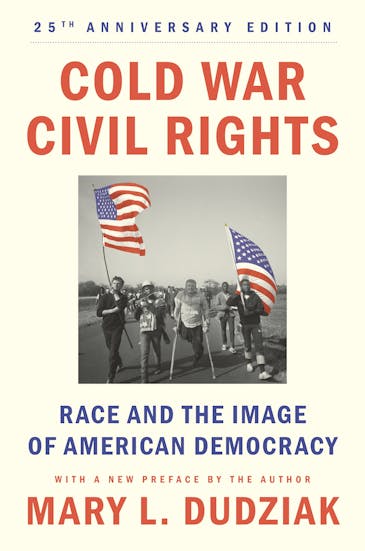
BOOK: Mary L. DUDZIAK, Cold War Civil Rights: Race and the Image of American Democracy (Princeton: Princeton University Press, 2025), 360 p. ISBN 9780691274324, 32 USD


(image source: Princeton)

Abstract:

In 1958, an African American handyman named Jimmy Wilson was sentenced to die in Alabama for stealing less than two dollars. Shocking as this sentence was, it was overturned only after intense international attention and the interference of Secretary of State John Foster Dulles. Soon after World War II, American racism became a major concern of US allies, a chief Soviet propaganda theme, and an obstacle to American Cold War goals throughout Africa, Asia, and Latin America. Racial segregation undermined the American image, harming foreign relations in every administration from Truman to Johnson. Mary Dudziak shows how the Cold War helped to facilitate desegregation and other key social reforms at home as the United States sought to polish its image abroad, yet how a focus on appearances over substance limited the nature and extent of progress. Cold War Civil Rights situates the Cold War in civil rights history while giving an international perspective to the fight for racial justice in America.

On the author:

Mary L. Dudziak is the Asa Griggs Candler Professor of Law at Emory University. Her books include War Time: An Idea, Its History, Its Consequences and Exporting American Dreams: Thurgood Marshall’s African Journey.

Read more here. 

(source: Legal History Blog)

23 July 2019

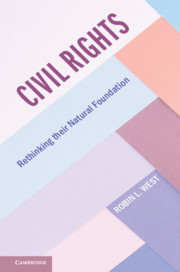
BOOK: Robin L. WEST, Civil Rights Rethinking their Natural Foundation (Cambridge: Cambridge University Press, 2019). ISBN 9781108736947, $ 29.99


(Source: CUP)

Cambridge University Press is publishing a new book dealing with the US’ Civil Rights Acts of the 19th century and the foundations of civil rights.

ABOUT THE BOOK

All of us are entitled to the protections of law against violence, to a high quality education, to decent employment that respects our dignity, and to necessary assistance with our caregiving. Our civil rights are our rights to the protections of ordinary law - not constitutional law, and not only antidiscrimination law - that will ensure that we can participate in civil society, and hence lead flourishing lives. In this innovative work, Robin L. West looks back to nineteenth-century Civil Rights Acts to argue that the point of civil rights law is not only non-discrimination, but also to assure that all of us receive the protection of legal rights that promote human flourishing. Since the 1960s, Supreme Court decisions on civil rights issues have focused on non-discrimination and thus have 'hollowed out' this broader meaning of civil rights law. This book reconceives civil rights as a set of legal guarantees that all will be included in the legal, political, economic and social projects central to civil society.

ABOUT THE AUTHOR

All of us are entitled to the protections of law against violence, to a high quality education, to decent employment that respects our dignity, and to necessary assistance with our caregiving. Our civil rights are our rights to the protections of ordinary law - not constitutional law, and not only antidiscrimination law - that will ensure that we can participate in civil society, and hence lead flourishing lives. In this innovative work, Robin L. West looks back to nineteenth-century Civil Rights Acts to argue that the point of civil rights law is not only non-discrimination, but also to assure that all of us receive the protection of legal rights that promote human flourishing. Since the 1960s, Supreme Court decisions on civil rights issues have focused on non-discrimination and thus have 'hollowed out' this broader meaning of civil rights law. This book reconceives civil rights as a set of legal guarantees that all will be included in the legal, political, economic and social projects central to civil society.

TABLE OF CONTENTS

Introduction
1. The antidiscrimination principle and its discontents
2. Residues of injustice: formal equality and civil rights
3. Toward a jurisprudence of civil rights
4. A frayed quilt: our lost, imperfect, and unimagined civil rights
5. Protecting rights to enter: constitutional rights and civil rights in conflict
Conclusion.

More info here

13 May 2019

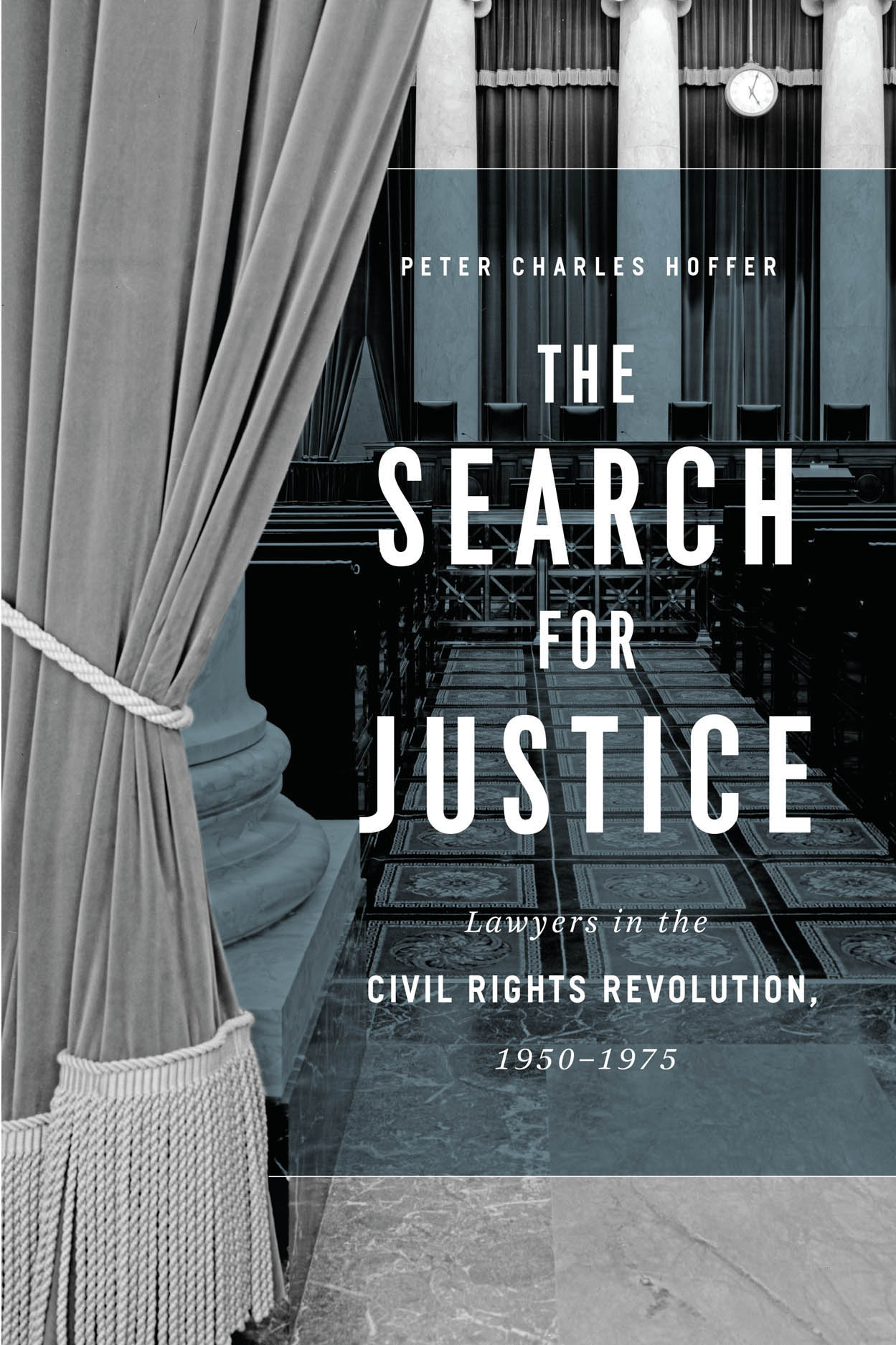
BOOK: Peter Charles HOFFER, The Search for Justice : Lawyers in the Civil Rights Revolution, 1950-1975 (Chicago: The University of Chicago Press, 2019). ISBN 9780226614311, $27.50


The University of Chicago Press has just published a new book on lawyers during the civil rights era.

ABOUT THE BOOK

The civil rights era was a time of pervasive change in American political and social life. Among the decisive forces driving change were lawyers, who wielded the power of law to resolve competing concepts of order and equality and, in the end, to hold out the promise of a new and better nation.
          
The Search for Justice is a look the role of the lawyers throughout the period, focusing on one of the central issues of the time: school segregation. The most notable participants to address this issue were the public interest lawyers of the NAACP’s Legal Defense Fund, whose counselors brought lawsuits and carried out appeals in state and federal courts over the course of twenty years. But also playing a part in the story were members of the bar who defended Jim Crow laws explicitly or implicitly and, in some cases, also served in state or federal government; lawyers who sat on state and federal benches and heard civil rights cases; and, finally, law professors who analyzed the reasoning of the courts in classrooms and public forums removed from the fray. With rich, copiously researched detail, Hoffer takes readers through the interactions of these groups, setting their activities not only in the context of the civil rights movement but also of their full political and legal legacies, including the growth of corporate private legal practice after World War II and the expansion of the role of law professors in public discourse, particularly with the New Deal. Seeing the civil rights era through the lens of law enables us to understand for the first time the many ways in which lawyers affected the course and outcome of the movement.

ABOUT THE AUTHOR

Peter Charles Hoffer is distinguished research professor of history at the University of Georgia and coauthor, most recently, of The Federal Courts: An Essential History.

TABLE OF CONTENTS

Introduction: Lawyering in the Civil Rights Era
Prologue: The Long Night of Jim Crow
1 The Road to Sweatt v. Painter
2 Brown v. Board of Education
3 Making the Case for Segregation
4 They Had a Dream
5 Whose Victory? Whose Defeat?
6 Legal Academics and Civil Rights Lawyering
Conclusion: Politics or Law? Legacies of Lawyering in the Civil Rights Era

Index

More information here