Search

Showing posts with label Louisiana. Show all posts

02 February 2021

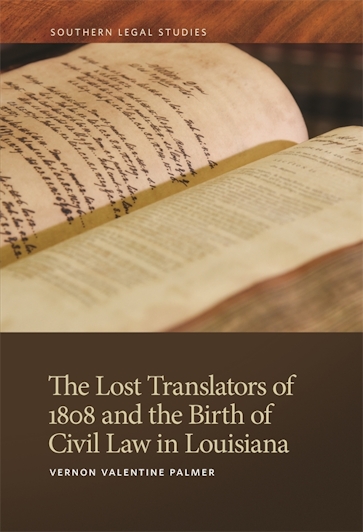
BOOK: Vernon V. PALMER, The Lost Translators of 1808 and the Birth of Civil Law in Louisiana (Athens: University of Georgia Press, 2021). ISBN 9-780-8203-5833-8, 54.95 USD


The University of Georgia Press is publishing a new book on the birth of the civil law in Louisiana.

ABOUT THE BOOK

In 1808 the legislature of the Louisiana territory appointed two men to translate the Digest of the Laws in Force in the Territory of Orleans (or, as it was called at the time, simply the Code) from the original French into English. Those officials, however, did not reveal who received the commission, and the translators never identified themselves. Indeed, the "translators of 1808" guarded their secret so well that their identities have remained unknown for more than two hundred years. Their names, personalities, careers, and credentials, indeed everything about them, have been a missing chapter in Louisiana legal history.

In this volume, Vernon Valentine Palmer, through painstaking research, uncovers the identity of the translators, presents their life stories, and evaluates their translation in the context of the birth of civil law in Louisiana. One consequence of the translators' previous anonymity has been that the translation itself has never been fully examined before this study. To be sure, the translation has been criticized and specific errors have been pointed out, but Palmer's study is the first general evaluation that considers the translation's goals, the Louisiana context, its merits and demerits, its innovations, failures, and successes. It thus allows us to understand how much and in what ways the translators affected the future course of Louisiana law. The Lost Translators, through painstaking research, uncovers the identity of the translators, presents their life stories, and evaluates their translation in the context of the birth of civil law in Louisiana.

ABOUT THE AUTHOR

VERNON VALENTINE PALMER is the Thomas Pickles Professor of Law at Tulane University and the codirector of the Eason Weinmann Center for International and Comparative Law. He is the author of numerous books, including The Louisiana Civilian ExperienceThrough the Codes Darkly, and Mixed Jurisdictions Worldwide: The Third Legal Family.


More info here

01 March 2019

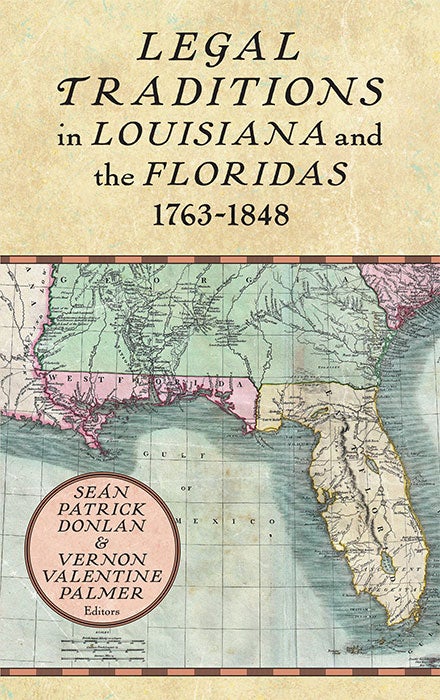
BOOK: Seán Patrick DONLAN and Vernon Valentine PALMER, eds., Legal traditions in Louisiana and the Floridas 1763-1848 (Clark, New Jersey: Talbot Publishing, 2019). ISBN 9781616195847, $75


(Source: Lawbook Exchange)

Talbot Publishing has published a new book on legal traditions in Louisiana and the Floridas in the period from 1763 through the mid-nineteenth century.

ABOUT THE BOOK

This collection focuses on the period from 1763 through the mid-nineteenth century. In Louisiana and the Floridas, the territorial ambitions of Britain, France, and Spain, as well as the new American Republic, led to a rapidly shifting series of political and cultural changes. The result in the region was the creation of complex hybrids of social mores, customs, and legal ideas and institutions. Of particular significance were the land claims that inevitably followed transfers of sovereignty and legal systems, the social and legal entrenchment of established elites and the institution of slavery, as well as a legacy of extra-legal violence and folk justice. The fluid borders of Louisiana and the Floridas, both East and West, exposed the flexible social identities and political loyalties of those who were settled there. Indeed, later accounts of the period and place have often misunderstood mixed motives, and contemporary rhetoric, of its subjects and citizens. Through a mix of different historiographical methods, a broad understanding of legal and social history, and the lens of plural comparative contexts, this collection tells us much about continuity and change in a critical transition period for the region, as well as for the modern Western nation-state and its increasingly common laws.

ABOUT THE EDITORS

Sean Patrick Donlan is Associate Dean of the Thompson Rivers University Faculty of Law (Canada). His research interests include Irish history, comparative law, and legal history. Most recently, he edited Comparative Legal History (Hart/Taylor & Francis (UK), 2013-2016) and (with D Heirbaut), The Law's Many Bodies: Studies in Legal Hybridity and Jurisdictional Complexity, c1600-1900 (Duncker & Humblot (Germany), 2015).

Vernon Palmer is Thomas Pickles Professor of Law and Director of the Eason Weinmann Center for International and Comparative Law, Tulane University. He is a titular member of the International Academy of Comparative Law and recipient of the Legion d'Honneur.

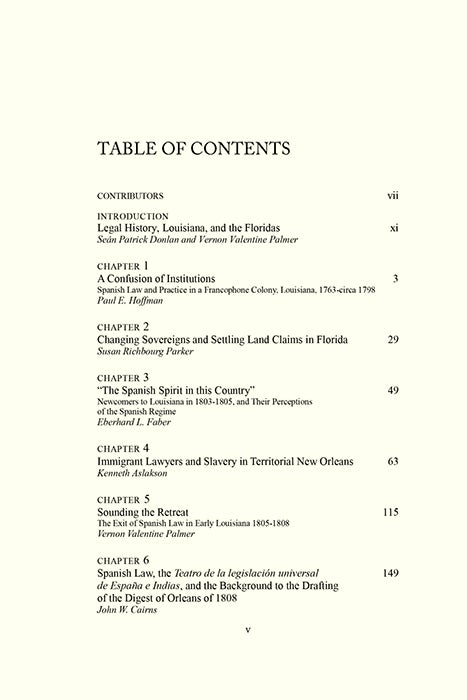
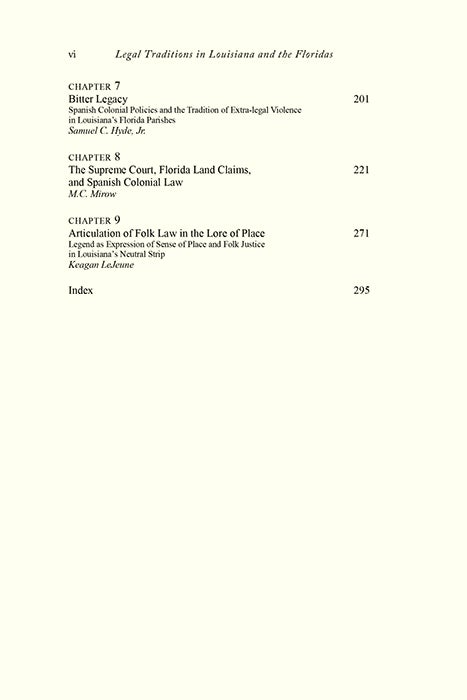
The table of contents can be consulted here (Pt1) and here (Pt2)

More information here

22 February 2013

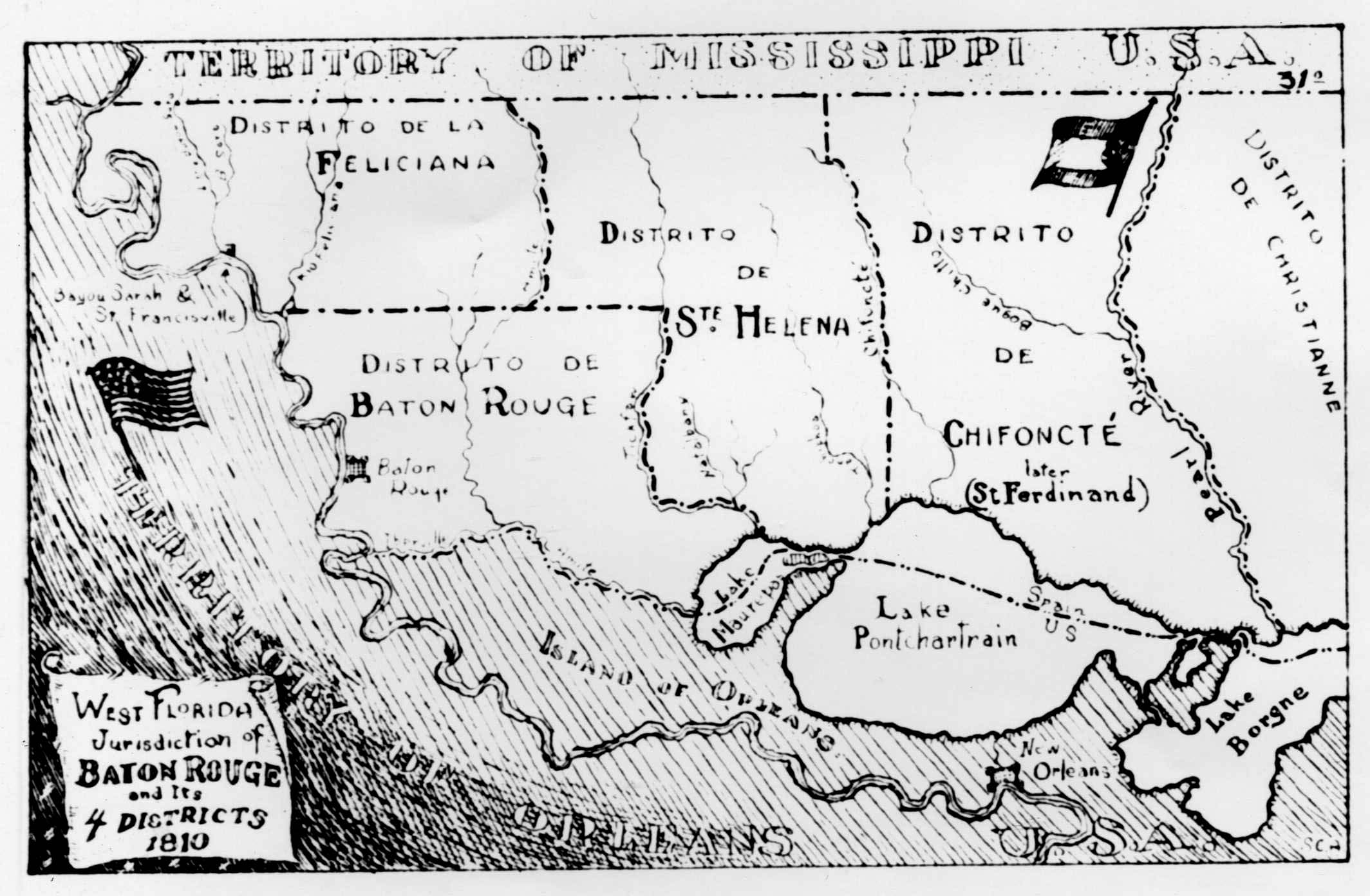
SHAMELESS SELF-PROMOTION: Donlan on Spanish West Florida and the American Territory of Orleans, 1803-1810

A draft of my 'Entangled up in Red, White, and Blue: Spanish West Florida and the American Territory of Orleans, 1803-1810' is available here and will soon be available here.  


The piece has been accepted for Thomas Duve (ed.), Entanglements in Legal History: Conceptual Approaches to Legal History, Global Perspective on Legal History vol. 1, Max Planck Institute for European Legal History Open Access Publication, 2013.

The abstract reads:


This article is a preliminary case study of legal and normative entanglement in Spanish West Florida—which stretched across the Gulf Coast of present-day Louisiana, Mississippi, Alabama, and Florida—between 1803-1810. Between the time of the Louisiana Purchase (1803) and the annexation of Westernmost part of West Florida by the United States (1810), the laws and norms of the Territory criss-crossed in various ways those of Spain and the United States. Indeed, the territory was, in turn, French, British, and Spanish before being annexed, in part, by the Americans. For the period under study here, and decades before, its settlers were largely Anglophone, while its laws were a variant of the Spanish colonial ius commune. West Florida had an especially close relationship with the area that would become the new American Territory of Orleans (1805), especially the city of New Orleans. Carved out of the vast Louisiana Territory purchased from France, the Territory of Orleans had its own complex history. Its population was still largely Francophone. In its first decade, its laws were already a gumbo of continental and Anglo-American ingredients. Together, the two territories sat at the precipice of the modern nation-state, of nationalism and popular sovereignty, of legal positivism and legal formalism. In both territories, the diffusion—direct and indirect, formal and informal, ongoing and sporadic—of the various laws and norms of natives and newcomers created intricate legal and normative hybrids.   

I'd welcome your thoughts and corrections.