Search

Showing posts with label secularisation. Show all posts

16 July 2026

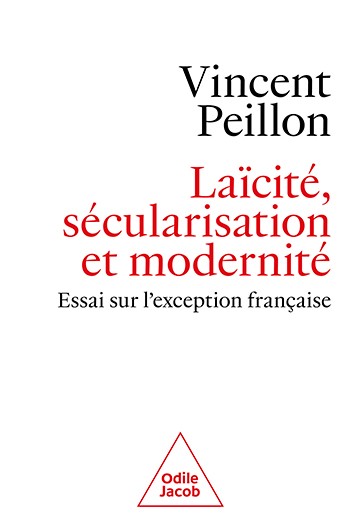
BOOK: Vincent PEILLON, Laïcité, sécularisation et modernité. Essai sur l'exception française (Paris: Odile Jacob, 2026), 272 p. ISBN 9782415015435, € 24,9


(image source: Odile Jacob)

Abstract:

La laïcité donne lieu aujourd’hui à de nombreux débats, à de vigoureuses polémiques et à bien des contresens. Dans ce livre érudit et exigeant, où il noue un dialogue serré avec les fondateurs ainsi qu’avec de nombreux interprètes contemporains, Vincent Peillon montre comment la laïcité française propose une version absolument singulière de la sécularisation. Ni rejet et éviction du religieux, ni réinvestissement à l’identique du religieux dans le séculier, pas davantage bricolage individuel qui permettrait à chacun de se forger ses propres croyances, la laïcité française met en œuvre un modèle de sécularisation jusqu’ici curieusement peu étudié. Ce modèle, qui définit au plus près l’exception française, est inséparablement religieux et politique, rationnel et mystique. La laïcité française ne peut se résumer à un dispositif juridique de neutralité et de séparation des Églises et de l’État. Pensée comme nécessaire pour fonder le lien civique, garantir la démocratie, émanciper l’individu et réaliser la justice sociale, elle est une religion civile qui engage une compréhension nouvelle de la modernité. Celle-ci serait le produit d’une longue histoire, celle des hérésies.

On the author:

Philosophe et homme politique, Vincent Peillon a consacré de nombreux ouvrages à Maurice Merleau-Ponty, au républicanisme, à la laïcité et à la philosophie juive française. Comme ministre de l’éducation nationale, il a mis en place la Charte de la laïcité et relancé l’enseignement moral et civique. 

 (source: univ-droit)


15 March 2022

BOOK: Simon P. KENNEDY, Reforming the Law of Nature. The Secularisation of Political Thought, 1532–1689 [Edinburgh Studies in Comparative Political Theory] (Edinburgh: Edinburgh University Press, 2021), ISBN 9781474493987, 216 p.


(image source: Edinburgh UP)

On the book:

Uncovers the relationship between early modern natural law ideas and secular conceptions of politics Provides a fresh interpretation of the historical relationship between early modern developments in natural law theories and important features of modern political thought, including secularization and liberalism Offers a fresh, interdisciplinary reading of early Reformed Protestant natural law jurisprudence and political thought Reframes the relationship of the Reformed Protestant tradition to both medieval and Enlightenment political thought and jurisprudence in a way that has a lasting impact on scholarly discourse in law, intellectual history, theology, and political science Reforming the Law of Nature is a stimulating study of the development of natural law ideas in the early modern period, uncovering their connection to conceptions of the origins of politics. It brings sixteenth and seventeenth century jurisprudence, theology and political philosophy into conversation with one another to uncover the ways in which developments in political thought affected the emergence of a secular understanding of political life.

On the author:

Simon P. Kennedy is Senior Lecturer in Humanities at Christian Heritage College and the Director of the Millis Institute, in Brisbane, Queensland. He is also a Research Fellow at the Institute for Advanced Studies in the Humanities at the University of Queensland. He researches the intersections between political ideas, law, and religion.

Table of contents:

Introduction

  1. John Calvin’s Political Naturalism
  2. Richard Hooker’s Theistic Naturalism
  3. Johannes Althusius and Political Society as Pactum
  4. Thomas Hobbes: Reforming Nature, Profaning Politics
  5. John Locke on Conventional Politics

Conclusion

 (source: Edinburgh University Press)