Search

Showing posts with label monarchy and state formation. Show all posts

03 September 2026

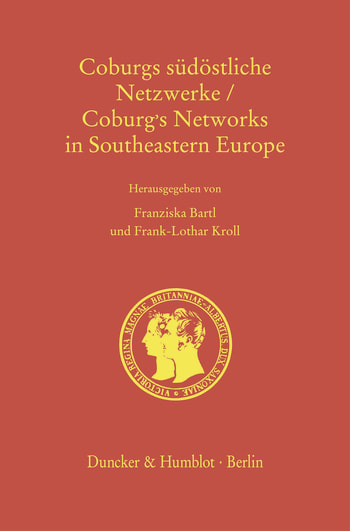
BOOK: Franziska BARTL, Frank-Lothar KROLL (eds.), Coburgs südöstliche Netzwerke / Coburg's Networks in Southeastern Europe [Prince Albert Studies; 39] (Berlin: Duncker & Humblot, 2026), 196 p., ISBN 978-3-428-19723-1

Cover: Coburgs südöstliche Netzwerke / Coburg's Networks in Southeastern Europe 

ABOUT THE BOOK:

Ende des 19. Jahrhunderts zählte das Haus Sachsen-Coburg und Gotha zu den einflussreichsten Dynastien Europas, wenngleich die Verflechtungen mit den Monarchien Südosteuropas lange unzureichend berücksichtigt wurden. Der Sammelband widmet sich umfassend diesen dynastischen Netzwerken in Bulgarien, Rumänien und der Balkanregion vom 19. bis ins 20. Jahrhundert.

Im Zentrum stehen die Etablierung der bulgarischen Monarchie durch die Coburg-Koháry, Ferdinand I. als Gestalter des modernen Bulgarien sowie Königin Marie von Rumänien als transnationale Akteurin dynastischer Machtpolitik. Darüber hinaus werden die politischen Transformationen der Region und deren erinnerungskulturelle Verarbeitung analysiert.

Die Beiträge renommierter Wissenschaftler aus Bulgarien, Österreich, der Slowakei und Deutschland zeigen, wie die Coburger durch strategische Heiratsallianzen, politische Einflussnahme und kulturelle Transferprozesse die Modernisierung Südosteuropas maßgeblich mitgestalteten.

TABLE OF CONTENT:

I. Einführende Bemerkungen / Introductory Remarks
Franziska Bartl und Frank-Lothar Kroll
Coburgs dynastische Netzwerke im Südosten Europas

II. Dynastische Netzwerke
Ivan Parvev
Alexander Battenberg und das Gleichgewicht der Mächte in Europa 1879-1886

Günter Fuhrmann
Karriere einer Seitenlinie. Die Coburg-Kohárys in den Ländern der Stephanskrone

Gregor Gatscher-Riedl
Südosteuropas Großmutter? Königin Marie von Rumänien als dynastische Netzwerkerin

Edda Binder-Iijima
Die Konsolidierung der rumänischen Dynastie als nationales und internationales Problem am Ende des 19. Jahrhundert

III. Der Begründer des modernen Bulgarien – Leben und Nachwirken des Zaren Ferdinand I.
Lothar Höbelt
Ferdinand von Bulgarien, Österreich-Ungarn und die vier Balkankriege

Franziska Bartl
Ein Zar im Exil – Die Coburger Jahre Ferdinands I. (1918–1948)

Zornitsa Velinova
»Ferdinand der Schuldige?« oder »Ferdinand der Moderne?« Die Rezeption Ferdinands I. in der Lehrbuchliteratur Bulgariens

IV. Das 20. Jahrhundert
Vladimir Zlatarsky
Waffen, Generäle, König: Der Wiederaufbau der deutsch-bulgarischen militärpolitischen Beziehungen unter Zar Boris III.

Veronika Aschenbrierova und Jarmila Oceľová
Die Transformation des Industrieerbes in der Slowakei

V. Anhang

Find more here.  


09 October 2020

BOOK: Nils HYBEL, The Nature of Kingship c. 800-1300. The Danish Incident (Leiden: Brill, 2017). ISBN: 978-90-04-35834-8, pp. 400, € 159.00

(Source: Brill)

ABOUT THE BOOK

Series: The Northern World, Volume: 83.

In The Nature of Kingship c. 800-1300. The Danish Incident Nils Hybel presents the first comprehensive history of the changeable nature of monarchial power in Danish territories from the Viking Age to the Central Middle Ages. The work offers a pioneering methodological approach entirely based on medieval conceptions on sovereign power. This innovative approach involves contemporary ideas, not modern notions of power and kingship, being used to undertake the analysis. The Danish “Incident” is therefore integrated within the European context. Kingship experienced a profound transformation during the half millennium investigated. A royal genealogy and strong bonds with Christian institutions were established in the late eleventh century. In the middle of the twelfth century the Danish realm was united, followed by the final liberation from German hegemony and the expansion of the realm with German and Slavic fiefs in the late twelfth century. At the same time, with the first signs of taxation, legislation, law enforcement and the notion of a national, military force, kings began the transition from warlords to medieval kingship. With stirrings of constitutionalism from 1241 onwards, this development of a national, medieval, kingdom intensified, though by c. 1300 the kingdom had not yet reached the point of total sovereign power.

ABOUT THE AUTHOR

Nils Hybel, Ph.D. (1989), is Professor at the Saxo Institute, the University of Copenhagen. He has published extensively on many aspects of European medieval history and historiography.

TABLE OF CONTENTS

List of Figures, Charts and Maps 

Abbreviations 

Introduction 

1. Historiography 

  Kings and Clans 

  The Birth of the Viking Age 

  Regnum and Sacerdotium 

  A Tenth-Century Central Power 

  The Historical Turning Point 

  A Medieval Kingdom of the Viking Age 

  The Janus-Faced King 

  The Birth of Medieval Kingship 

  Conclusion 

2. A Speculum Regale 

  The European Context 

  Rex Gratia Dei 

  Popular Legitimation of Kingship 

  The Lawmaker 

  The Ideal Leader 

  Conclusion 

3. Genealogy 

  Historical Kings until c. 1140 

  Legendary Kings 

  Historic Kings in Sources from c. 1140 

  Conclusion 

4. Marca, Feudum, and Sovereignty 

  The Danish Marca 

  Feudum 

  Sovereignty 

  Sovereignty—An Anachronism? 

  Conclusion 

5. Law, Justice, and Constitution 

  Sources of Medieval Law 

  Narratives of the Earliest Danish Laws 

  Extant Laws and Ordinances before 1241 

  Monarchical Legislation and Jurisdiction before 1241 

  Extant Laws and Ordinances from 1241 

  Monarchical Legislation and Jurisdiction from 1241 

  Constitution 

  Conclusion 

6. Landownership 

  Ownership in Roman Law 

  Ownership in Medieval Jurisprudence 

  Family Ownership 

  Private Property 

  Ways of Acquiring Land 

  Common Rights and Dominium Utile 

  Conclusion 

7. Tax 

  Tribute, Plunder, and Gifts 

  Mint Taxes 

  Town and Market Taxes 

  Customs Duties 

  Urban and Commercial Duties 

  Rural Taxes 

  Conclusion 

8. War and Peace 

  Viking Kings and/or Warlords 

  Medieval Kings and/or Warlords 

  Towards a Public Army? 

  Military Law 

  Conclusion 

9. The Realm 

  Dane 

  Denmark 

  The Geopolitical Area of Denmark before the Mid-Eleventh Century 

  Towards the Formation of a Realm 

  The Danish Realm 

  Conclusion 

10. Overall Assessment 

Bibliography/ Index of Persons and Places/ Subject Index 


More information with the publisher.

26 August 2020

CONFERENCE: Monarchy & Money: Interdisciplinary Approaches to Economics and Finances of Monarchical Rule (Online, 16-18 September 2020)

 
(Source: HSozKult)

We learned of an online conference organized by the University of Göttingen on monarchy & money.

“In monarchies, power, law, finances, and economy were and are intertwined aspects of the royal household. Recent legal disputes between royal and formerly royal houses and governments show the continued relevance of economic aspects of monarchical rule. Historically, monarchies were often not only states ruled by a closely related, small elite group, i.e. the dynasty, but also encompassed the private properties of these families. Separating ownership between the institution (crown) and the family (dynasty) has been a difficult problem which is yet to be solved entirely. Analysing the economic and financial resources of a monarchy, a dynasty or a court therefore also has implications of how scholars assess the economic development of a realm or a state. Although historical research has addressed many questions of monarchical rule, there is still a need to analyse the administration of money and resources at court, the decision making behind patterns of expenditure and resource utilisation, and the strategies of royal investments. Regarding the political and historical context, economic and financial prosperity also contributes to the international reputation and influence of a court and/or a monarchy. Economic aspects of monarchical rule are still mostly lacunae in historical research, and also directly relevant for current affairs.

The e-conference “Monarchy & Money” will address the interdependences of monarchical rule on past and present economies and finances.”

The program of the conference can be found on HSozKult

09 July 2020

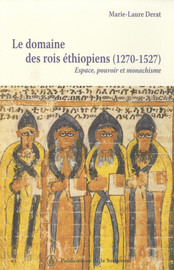
BOOK: Marie-Laure DERAT, Le domaine des rois éthiopiens (1270-1527). Espace, pouvoir et monachisme (Paris: Éditions de la Sorbonne, 2019 sur OpenEdition Books). ISBN: 9782859444808, pp. 383, € 25

Le domaine des rois éthiopiens (1270-1527)

ABOUT THE BOOK

Cet ouvrage, qui dessine une géographie historique du royaume chrétien éthiopien, retrace l'histoire de l'installation des souverains et le transfert de leur pouvoir dans deux nouvelles provinces, l'Amḥära et le Šäwa, entre la fin du xiiie et le début du xvie siècle : une nouvelle dynastie y implante son domaine royal et fonde la légitimation de son pouvoir sur le contrôle des réseaux monastiques. L'enquête, qui explore les chroniques royales, les sources hagiographiques, les récits de géographes arabes ou d'ambassades européennes, tente de démêler les étapes de l'écriture et des réécritures qui sacralisent une histoire, devenue mythe.
La rencontre du monachisme et du pouvoir dans cet espace en construction est à la fois un facteur de renforcement du pouvoir royal et un facteur de fragilisation de ce même pouvoir, lorsque les moines font du martyr, idéal de sainteté, l'expression privilégiée de leur indépendance vis-à-vis du politique.
En réponse, les souverains éthiopiens superposent aux réseaux monastiques leurs propres fondations religieuses qui, étapes pour la cour, lieux de conciles et nécropoles royales, deviennent des lieux privilégiés de l'exercice du pouvoir.

ABOUT THE AUTHOR

Marie-Laure Derat est agrégée et docteur en histoire, est chargée de recherche au CNRS dans le laboratoire « Mutations africaines dans la longue durée » (UMR 8054, Université Paris I, CNRS). Elle travaille sur le royaume chrétien d'Éthiopie du XIe au XVe siècle.

TABLE OF CONTENTS

Introduction
Chapitre 1. L’Amḥära et le Šäwa au centre du royaume ?
Première partie. L’émergence d’un nouveau domaine royal dans l’Amḥära et le Šäwa à partir du XIIIe siècle
Chapitre 2. L’Amḥära et le Šäwa, centres d’un renouveau politique
Deuxième partie. Les moines et le roi (XIIIe-XVIe siècle)
Chapitre 3. Réseaux monastiques et pouvoir royal
Chapitre 4. La confrontation de deux conceptions antagonistes du monachisme et du pouvoir (xive-xve siècle)
Chapitre 5. Les figures de l’entente (xve-xvie siècle), l’émergence de nouveaux modèles de sainteté
Troisième partie. Églises et monastères royaux, une armature politique et religieuse
Chapitre 6. Les rois bâtisseurs
Chapitre 7. Lieux et enjeux de pouvoir
Conclusion
Annexes
Bibliographie
Index


More information with the publisher.