Search

Showing posts with label Digital and Humanities. Show all posts

11 March 2026

JOURNAL: The Journal for Digital Legal History IV (2025) [OPEN ACCESS]

(Image source: Open Journals UGent)

The Journal for Digital Legal History has recently published its fourth issue. The full issue can be found (in open access) here.


Table of content

  • Is Sharing Research Materials Worth the Effort? (Gijs van Dijck)
  • Regulae Iuris organized by conceptual, structural, genealogical and bibliographical criteria: A dataset (Ilya Andreevich Kotlyar)
  • The 2020-Systematic, Multilingual Categorisation of Policeymaterien for Early Modern Police Ordinances (Christel Annemieke Romein; Andreas Wagner; Karl Härter)
  • Database and catalogue of the early modern differentiae iuris civilis et canonici (Paweł Dziwiński; Piotr Alexandrowicz)
  • Testing New Methodologies and Approaches in Legal History Research (Homero Chiaraba Gouveia; Luiz Guilherme Bandeira Zanino)


28 May 2020

VACANCY: Research Manager (Junior Post-Doc) Integrating Digital Humanities and Artificial Intelligence in Pre-Modern Intellectual History (KULeuven: Lectio; DEADLINE 1 SEP 2020)


(image source: Lectio KULeuven)

LECTIO, the KU Leuven Institute for the Study of the Transmission of Texts, Ideas and Images in Antiquity, the Middle Ages and the Renaissance, is committed to advancing the study of the intellectual heritage of pre-modern Europe. It comprises more than 150 researchers from 12 research groups within arts, law, philosophy and theology at KU Leuven. Within the framework of its new research program “Scholars, Schools and Societies”, LECTIO wants to contribute to the renewal of the history of ideas and the science of text editing through increased integration of Artificial Intelligence (AI) and Digital Humanities (DH). LECTIO is looking for a strongly motivated Research Manager at postdoc level to broker this methodological paradigm shift.

Responsibilities
The successful candidate will play a seminal role in advancing the integration of DH and AI into traditional research and assist the Director and the Executive Board in the day-to-day management of LECTIO’s activities. (S)he will manage core activities of LECTIO and act as a broker and liaison person with the following responsibilities:
§  To perform a needs analysis of projects run by LECTIO members in light of new techniques in the field of DH and AI.
§  To inform LECTIO members about good practices and novel methods for the integration of AI and computational methods in traditional scholarship of text editing and the history of ideas, and to assist them in the actual application.
§  To establish connections between LECTIO and experts in DH/AI both at KU Leuven and other universities.
§  To act as liaison person with technical experts in the Group of Science and Technology and at KU Leuven Libraries
§  To actively search for and prepare external funding applications linked to the integration of DH/AI in LECTIO’s research
§  To identify opportunities for funding applications and assist in acquiring research projects.
§  To coordinate research projects on LECTIO-related topics. To enhance the visibility of LECTIO as place of first choice for the integration of computational methods into pre-modern intellectual history and digital philology.
§  To assist with the organization of scientific meetings (min. 1 LECTIO conference and 2 LECTIO roundtables per year).

Profile
§  You hold a PhD degree in any relevant field in the humanities, social sciences, exact sciences or technology and engineering. You have a maximum of 3 years of postdoctoral experience.
§  You have acquired experience in applying Digital Humanities and/or Artificial Intelligence in the field of pre-modern history of ideas or philology.
§  Taking initiative and developing new ideas for project applications comes natural to you.
§  You are a team-player and prosper in an interdisciplinary working environment.
§  You like to organize events and communicate with both specialists and laymen in the field.
§  You have a good oral and written command of English and preferably a working knowledge of French, German and Italian.
§  Knowledge of Greek, Latin, or any other ancient language is an asset.

Offer
We offer a fulltime postdoctoral position of 3 years, subject to positive evaluation at the end of the first year, with a competitive wage according to Salary Scale 44. You will work in the stimulating environment of the interdisciplinary institute LECTIO at one of Europe's leading research universities. You will have the unique opportunity to work together with experts in the field of intellectual and textual history from 4 different faculties (arts, law, philosophy and theology).
Your appointment will start on 1 September 2020, or as soon as possible thereafter.

For more information, feel free to contact Prof. Dr. Wim Decock (wim.decock@kuleuven.be).

Applications can be submitted by following the online tool available at https://www.kuleuven.be/personeel/jobsite/jobs/55670458?hl=en&lang=en.

28 January 2020

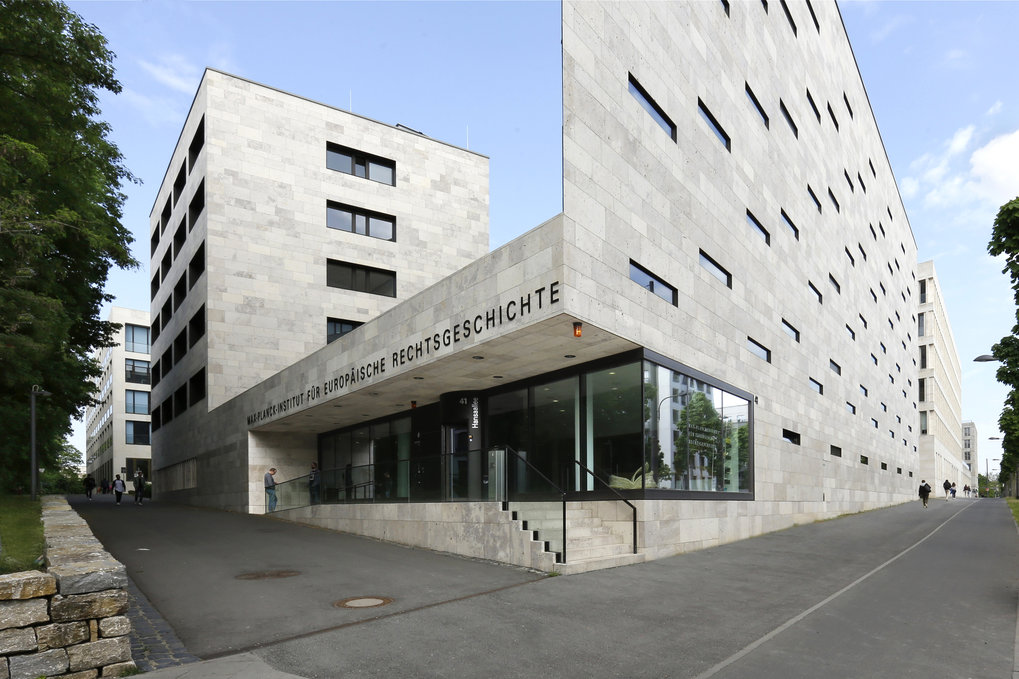
CONFERENCE: Digital Methods and Resources in Legal History (Frankfurt am Main: MPIeR, 19-20 MAR 2020)


(image source: academicpositions)


We invite researchers to participate in our conference on "Digital Methods and Resources in Legal History", which is intended to provide an opportunity for the critical discussion of digital methods and resources in legal history. We will have presentations of collections, databases, gazetteers and similar resources of relevance to legal history, and discuss how these and other resources, and digital methods in general, have been put to use in concrete project contexts. Interested researchers, whether from legal history, the digital humanities or other fields are welcome.

In the download documents section to the right, you can find the preliminary programme and the book of abstracts. While the call for papers is closed, it is also still accessible in the column to the right, as it also contains a more detailed statement on the conference's rationale.

Conference Dates and Venue: 19-20 March 2020
The venue is on the Campus Westend of the University of Frankfurt, and can be reached by bus (lines 36, 64, 75), underground (U1, U2,U3 or U8 to station Holzhausenstraße). You can find directions here andhere.

Registration, Accommodation and Administrative Issues
There is no conference fee. However, we kindly request that you register before 14 February 2020 by sending an informal mail to .
A contingent of rooms is reserved until 5 February 2020 at the Hotel Leonardo Royal in Frankfurt, who ask you to book your room with the keyword "MAX180320S", using the form available in the download documents section to the right (available in German only). Other hotels in the vicinity are the Hotel Liebig, the motel Frankfurt, the Hotel Mondial, or the Turm Hotel.
For all questions and comments, you are very welcome to contact us by sending e-mail to: 

Links:

11 December 2019

OPEN ACCESS: Digitization of the Dictionnaire de l'Académie Française (BnF)

(image source: Gallica (BnF))

The BnF announced the full digitization of the Dictionnaire de l'Académie Française (1694).

Read the two volumes here.

30 August 2019

PROJECT PRESENTATION: Digital Humanities and Legal History. Can the computer read and classify ordinances ? By dr. C.A. ROMEIN (UGent/KB)


(image source: Dr. C.A. Romein)
As Researcher-in-Residence at the KB National Library of the Netherlands (The Hague), I – Annemieke Romein – I look for early modern norms in books of ordinances (‘plakkaatboeken’). These books hold mainly administrative laws, varying from norms against beggars, safety, but also laws intended to stimulate the economy, and international treaties are frequently included too. Together with colleagues at the library, we are looking for means to have the computer take over the process of categorising these texts. The question is: Can a computer recognise the texts containing rules, and distinguish between texts on religion, maintenance of dykes, colonial affairs, etc.?
Currently, I work as a postdoctoral researcher at Ghent University, where I focus on both handwritten and printed norms from the Low Countries. My current project (called: ‘Law and Order: Low Countries?!’) focuses on the federation-states of Flanders and Holland between 1576 (Pacification of Ghent) and 1702 (Spanish War of Succession). Initially, I am looking at the topics of the published norms. Personally, I find the rules on safety and security most intriguing as the topics are still relevant today, however, when you are interested in a selection of the texts, it is necessary to go through all of them. This gave rise to my initial question of whether the computer can be trained on the process of distinguishing texts from one another. I am very grateful for the chance to work at the Dutch National Library and on my project ‘Entangled Histories’ for six months.
My interest in the topic of legal history – more specifically Policeygesetzgebung and Policeywissenschaften (police norms) – was peaked in 2005 when I was looking for a Bachelor thesis topic. Professor Robert von Friedeburg had me read some German articles (Karl Härter/ Michael Stolleis, Policey im Europa der Frühen Neuzeit (Frankfurt 1996)) which gave – at that time – the impression that norms required a strong authoritarian type of rule: a top-down approach that one could only find in principalities or city-states. I was asked why similar texts were available in books of ordinances in the Netherlands, and this question has gradually evolved into my current projects.


Image 1. City crier, Cornelis Ploos van Amstel, by Cornelis Dusart, 1776; etching, h 201mm × w 155mm. Source: http://hdl.handle.net/10934/RM0001.COLLECT.165473

Ordinances, what are they?
In the early modern period – rules were announced by the city crier. He walked through the city, or rode a horse, to visit indicated locations to read new rules to the inhabitants. After reading them aloud, the printed texts were fixed to “well-known places” (e.g. church doors, at the market square) for people to be able to reread them. An estimated 70% of people could read in the Republic, so for the remainder of the inhabitants having the new rules read aloud was still very important. The rules had to make sense so people could remember them by heart. Hence, there is a repetitiveness in the texts – which makes sense given that the 16th and 17th century had an important oral tradition.
Ordinances, or placards, were affixed to known places. This made them official. The provincial estates considered it to be important to print a selection of their agreed-upon texts in books of ordinances. These formed a source for lawyers as a reference work. These books do not form a complete overview, but they do give a sense of what government officials deemed important.


Image 2A The New Church in Amsterdam, Anonymous, 1693 – 1694. Etching, h 273mm × w 353mm. Bron: http://hdl.handle.net/10934/RM0001.COLLECT.232576
Image 2B Detail: ordinances near the church doors.

Normative rules within a federation
The Dutch Republic, like the Habsburg Netherlands, were federations of autonomous states. In the Republic, the Estates-General held sovereign powers and in each of the federation-states the estates held the highest power.[1] [1]The Republic’s Stadtholder(s) was/were officially civil servants. The Habsburg Netherlands differed from the Republic as they had a sovereign prince (the King of Spain), though the federation-states did have a certain amount of freedom. They had to verify new rules did not jeopardise traditions and customs. Yet, when you look in many history books the scene is depicted as a game of thrones. This results in poorly studied political-institutional constellations of republics (the Republic and Switzerland alike). I find this very intriguing: we actually know too little to say something concrete about how federation-states without a prince were ruled! While Belgium is a long tradition of republishing the rules through the Royal Commission for the Publication of Ancient Laws and Ordinances (since 1846), the Netherlands does not hold such an institute. Such publications offer a rich source of information.

The differences between norms in Holland and Flanders
In the Netherlands, we do not have an overview of what laws were published and, hence, we cannot say anything substantial about the legislation in the Low Countries, or differences among the federation-states, or even in comparison with other areas in Europe. This is fascinating because my current research in Ghent gives rise to the suspicion that the differences between Holland and Flanders – both very trade-oriented – were not that big. Hence, my current hypothesis is that there was little differences between an indirect-ruled princely state and the federation-state Holland (as part of the Dutch Republic).

Computer techniques
In order to study the potential differences, the first step in the project is to analyse the layout of the pages and enhance the readability of the early modern texts. As humans, we can read the texts fairly well, but gothic fonts prove to be more challenging than roman fonts. The computer does not mind, rather it considers it a challenge. Within the Google Books project an OCR (Optical Character Recognition) has been applied, but, when you attempt to copy the texts (to a notepad for example) it will render useless due to the numerous errors.
These errors directly influence the searchability of the texts, even if you are only looking for keywords. In order to improve this, we apply Handwritten Text Recognition. This technique is developed within the European funded READ-project, which resulted in the application called Transkribus. The computer program is trained through manual transcriptions of a single hand, or, in our case, a font. Through this training, the computer learns how certain characters are represented. Furthermore, the program places the characters within a context by looking at complete lines instead of individual characters. This is called an N-Gram, which remembers the most frequent character combinations (such as a ‘q’ is always followed by a ‘u’).
We basically fool the computer by claiming that our printed sources are very regular handwriting, which will enormously help with recognition. I heard about these techniques before, but I had never applied them to printed texts. I became curious about whether they would be as successful as claimed. Would this work on the 108 books of ordinances that we retrieved from various digital collections? So far the results are giving us hope, and a reason to believe we can apply other techniques to analyse individual texts. Where I am currently still hand-labelling the individual texts in Ghent, the question arises whether the computer can do this also. I use the same categories as the Repertorium der Policeyordnungen-project once did, so that the datasets can merge at some point through LinkedData analysis. Can the High-Performance Computer (Artificial Intelligence) with the program Annif read through the texts and spot words that triggered me into categorising them  in a certain way? Then, apply this to other books of ordinances? While working at the KB, I hope to find the answer to this question.
  
Image 3a The Paalhuis and the New Bridge (Amsterdam) during the winter, by Jan Abrahamsz. Beerstraten, 1640 – 1666. Oil Painting, h 84cm × w 100cm.


Image 3b Detail with ordinances on the wall of the Paalhuis.

This blog was previously published – in an altered version – in Dutch at https://www.kb.nl/blogs/digitale-geesteswetenschappen/plakkaten-classificeren-met-de-computer

Read more:
·        Andrea Iseli, Gute Policey: öffentliche Ordnung in der frühen Neuzeit (UTB GmbH, 2009).
·        Toomas Kotkas, Royal Police Ordinances in Early Modern Sweden: The Emergence of Voluntaristic Understanding of Law (Brill, Leiden/ Boston 2013).
·        Stolleis, M. (2000). Was bedeutet "Normdurchsetzung" bei Policeyordnungen der Frühen Neuzeit? In R. H. Helmholz (Ed.), Grundlagen des Rechts. Festschrift für Peter Landau zum 65. Geburtstag (pp. 739-757). Paderborn: Schöningh.


[1] The English translation province for the Dutch word gewest might be misleading, as it has the connotation of being subordinate to another entity – while the Low Countries’ provinces were basically federation-states hence I have given a preference to use this later term.

12 June 2019

CONFERENCE: “Digital Methods and Resources in Legal History” (Frankfurt: MPIeR, 19-20 MAR 2020); DEADLINE 15 SEP 2019

(image source: MPIeR)

Organization: Sigrid Amedick, Andreas Wagner

Introduction
The digital turn that changes society as we are watching has reached far into academia and even into the humanities as well. Digital methods are in use in academic fields like archaeology, music, art history, and digital resources are being established in literature studies, history, media studies and many more. (And that is not even mentioning fields arguably closer to quantitative methods such as social and political sciences, psychology or linguistics.) Computers are now involved in the gathering and preparation of research objects (e.g. digital audio records of interviews, digital images of manuscript pages, harvesting of social media on internet platforms, “cleaning” the resulting raw audio/video or text data, photogrammetrical extrapolation of archaeological 3D models etc), in their collection and curation (e.g. classifying objects in catalogues, linking cross- references over the internet, or providing smart access points to a digital collection), in their perusal, exploration and analysis (via search interfaces that include features like suggestion mechanisms and fuzzy matches, via various forms of complexity reduction, information extraction and exploratory visualization) and in the enhanced publication of research results (e.g. instantiating cross-references as hyperlinks, combining different media and dynamic forms of visualization, or offering interactive elements). Even in the field of applicable law, databases provide access to legislation and case law, sometimes going back to the 17th century, and they offer “intelligent” methods like semantic querying or citation extraction. In fact, while expectations of research policy makers and a general interest even of many non-technical legal historians have become tangible, the array of potentially useful resources and methods has already become quite confusing. Another feature of digital approaches in the humanities that stands out is their inter- or transdisciplinary nature. In making use of digital methods and resources, scholars almost inevitably come into contact with persons, experiences and approaches from other disciplines: not only do they have to negotiate the applicability in their domain or the possible extensibility of existing tools and resources with the providers of the latter, but they also learn about the use of the same tools and resources in other disciplines, with slightly different, or maybe even quite similar questions and perspectives. On the other hand, as those who are already using digital tools in the various disciplines can confirm, they can hardly ever be applied to a new field without difficulties, and frequently, what at first might seem to be a small but necessary modification is in fact a substantial challenge on the conceptual level, so that the seemingly effortless transdisciplinary use of those methods and tools is actually backed by continuing processes of critique, revision and redesign. The experience in other disciplines suggests that a more intense discussion of digital methods and resources in legal history is likely to reveal new challenges for toolmakers, too, and that it can be expected to promote the development of new tools that answer specific needs of legal history more directly. While by now, more than just a few projects making use of such techniques have made their contributions to legal history, the uptake of those techniques in legal history as a field is still rather hesitant. To some extent this is probably due to the limited visibility of these methods (which is often related to disciplinary boundaries) and to the limited knowledge of how they may respond to genuinely legal-historical questions. In 2016, a forum of the journal Rechtsgeschichte has discussed the character of such projects’ results (in some cases by tentatively translating results from other disciplines to legal history), and a special issue of the Law and History Review has presented a number of pioneering projects (with a – maybe unintended – exclusively Anglo-american focus), but by now a more encompassing, more concrete, and more differentiated picture can be drawn. Thus, we think it is a good moment to assemble legal historians and discuss what role digital methods play in their respective projects and what some of the aspects of a digital legal history, taken more generally, could be. To that end, the Max Planck Institute for European Legal History holds a conference on “Digital Methods and Resources in Legal History” in March 2020, bringing together scholars with experiences and interest in digital methods who contribute to the composition of such a picture. Besides the presentation and critical discussion of methods, resources and project results, the conference also seeks to provide an opportunity for legal history scholars who are interested in digital approaches to get to know each other and begin building a community of sorts. In this vein, we will devote some sections of the conference to the discussion of common needs, of communication and collaboration strategies, and of perspectives relating the digital turn to the development of the discipline.
Call
With this conference, we want to provide an opportunity to present collections, databases, gazetteers and similar resources of relevance to legal history, but also to have demonstrations of how these or other resources, and how digital methods in general have been put to use in concrete project contexts. Note that we explicitly invite reports about research questions, projects or approaches that have failed to find or create digital means to work with in a satisfactory manner, too. Some of the questions that could be discussed are the following:
· what insights in legal history have been made possible by the use of digital methods and resources?
· how do you integrate digital methods with hermeneutical and narrative aspects of your work?
· how are popular digital methods of analysis applied in legal history?
· what aspects of texts and objects are particularly relevant for legal history and how can they be modelled and processed in digital approaches?
· how do data-driven methods differ from other approaches in legal history?
· which limitations did you encounter when trying to use digital tools or methods?
· which digital resources are presently available, waiting to be exploited by legal history?
· which resources are lacking?

The conference combines invited talks with an open Call for Papers/Posters, so when submitting, please indicate whether you intend your submission as a talk or a poster proposal. Paper submissions should have a length of up to 1.200 words, excluding references. Please also add a short abstract (150-300 words) for publication with the preliminary program. Poster submissions should have a length of up to 500 words, excluding references. There will be an opportunity invite the audience to your poster during a poster slam. Please also add a short abstract for publication with the preliminary program. Please note that submissions will not be anonymized in the review process. The primary language of the conference will be English, but if you want to hold your presentation in another language, please get in touch with us so we can discuss the options.

Important dates
Please submit your proposal by: 2019-09-15 
· Notifications of acceptance will be sent by: 2019-10-30
· Conference dates: 19-20 March 2020

Submissions should be sent by e-mail to dlh@rg.mpg.de. There is no conference fee. For paper presenters, we will provide accommodation and reimburse travel costs according to the institute’s general guidelines. (If you are presenting and want to organize your accommodation yourself, please get in touch so we can clarify conditions of reimbursement.)

For poster presenters, we can provide reimbursement of up to 400 € for travel and accommodation costs, according to the institute’s guidelines.

The conference venue is the Max Planck Institute for European Legal History, Hansaallee 41, 60323 Frankfurt am Main, Germany. Directions for getting to the venue can be found on the Institute’s website.

For all questions and comments, you are very welcome to contact us by sending e- mail to: dlh@rg.mpg.de

29 May 2019

REPOSITORY: Leibniz Institute of European History (Mainz) on GitHub

(image source: GitHub)

The Leibniz Institute of European History opened its repository on Digital History on GitHub.

More information here.

24 April 2019

FREE MOOC: Introduction to Digital Humanities (Harvard)

(image source: Harvard)

Course description:
As primary sources of information are more frequently digitized and available online than ever before, how can we use those sources to ask new questions? How did Chinese families organize themselves and their landscapes in China’s past? How did African slaves from different cultures form communities in the Americas? What influences informed the creation and evolution of Broadway musicals? How can I understand or interpret 1,000 books all at once? How can I create a visualization that my students can interact with? The answers to these questions can be explored using a wide variety of digital tools, methods, and sources. As museums, libraries, archives and other institutions have digitized collections and artifacts, new tools and standards have been developed that turn those materials into machine-readable data. Optical Character Recognition (OCR) and the Text Encoding Initiative (TEI), for example, have enabled humanities researchers to process vast amounts of textual data. However, these advances are not limited just to text. Sound, images, and video have all been subject to these new forms of research. This course will show you how to manage the many aspects of digital humanities research and scholarship. Whether you are a student or scholar, librarian or archivist, museum curator or public historian — or just plain curious — this course will help you bring your area of study or interest to new life using digital tools.
More information here.

01 September 2016

JOB OPENING: Project Officer for the project HIRMEOS (Göttingen State and University Library, Deadline 25 Sep 2016)

(image source: Wikimedia Commons)

Prof. Serge Dauchy (Lille II/CNRS - St Louis Bruxelles) transmitted the following job vacancy:

Göttingen State and University Library (SUB Göttingen) is active in several national and international projects on the development of infrastructures, services for electronic publishing, and implementation of Open Access and Open Science. 

In this context, the European project “HIRMEOS – High Integration of Research Monograph in the European Open Science Infrastructure” is seeking a  

Project Manager

to manage the library’s contributions to the HIRMEOS project. The post is offered with immediate effect as a full-time position (39,8 hrs/week) for the project period (overall 2,5 years). Salary is expected to be around EUR 45.000 p.a. (pro rata, depending on experience and qualification; German salary schema for public employees, E 14 TV-L). The position can be filled by two candidates in part-time employment, given that the two candidates’ qualifications cover all project requirements.
The EU-funded HIRMEOS project brings together five publishing platforms for open access monographs in the Social Sciences and the Humanities and will enhance their technical capacities and services. One of these platforms is the well-established Göttingen University Press offering publishing services to Göttingen university research communities. 

Responsibilities are as follows:
·         lead the project’s central work package “Community Outreach and Dissemination” and coordinate all partners’ contribution referring to community feedback and service evaluation
·         concept and implementation of processes and infrastructures for internal and external communication, public relation and marketing for the project
·         monitor and coordinate technical developments for the Göttingen University Press platform, cooperate with the press‘ editorial board and other university bodies.
·         organisation of project meetings, workshops and conferences
·         building the key stakeholder network via close cooperation with several target groups (societies, academies, publishers, vendors and service-provider, scholarly infrastructures etc.)
·         project reporting and supporting project administration
You will need:
·         You will need a Master or equivalent degree in a discipline with a publishing culture drawing on books (Humanities, Arts, Social Sciences, etc.). If you have a degree from other disciplines you will need professional experience with one of the mentioned ones.   
·         professional experience in scientific information management (preferably in Digital Humanities, scholarly presses or electronic publishing) along with a good understanding of its technical aspects
·         knowledge on Open Access and Open Science
·         Lecture and presenting skills together with a high command of English in writing and speaking
·         Experience and solid knowledge of project public relation and marketing including use of social media and event organisation
·         previous project experience with third-party funding, preferably in international contexts and with multiple stakeholders
·         high communication and organisational skills with a proven ability to work with a wide range of internal and external contacts and stakeholders, team spirit and dynamism
·         responsible, goal-oriented and forward-looking way of working; command of the usual office applications and working on virtual infrastructures.
·         traveling within Europe
We’d appreciate if you could identify with one or more of the following qualifications:
·         practical experience with Open Access, Open Science or innovative publishing formats
·         practical experience in scholarly publishing for Humanities, Arts, and Social Sciences
·         Management of repositories or other digital platforms
·         Experience in service evaluation and community feedback
·         IT affinity such as programming or script creation.

The position offers you varied and exciting project work in a dedicated international team in a collaborative working environment. It will involve a certain amount of travel both within Europe and internationally, and gives you the opportunity to bring in your own research interests wherever feasible.

The University is an equal opportunities employer and places particular emphasis on fostering career opportunities for women. Qualified women are therefore strongly encouraged to apply. The University firmly intends to raise the number of disabled persons in its employment. In the case of equally qualified applicants, disabled persons will be preferentially considered.
If you need to move to Germany to work with us, the university’s Welcome Center offers support for you and your family.

For further information, please contact Margo Bargheer (E-Mail), +49 551 39-91188 (phone) or Birgit Schmidt (E-Mail), +49 551 39 33181 (phone). 

Please apply via the online application portal to upload your application and refrain from sending printed applications. The application process is open until 25.9.2016.
Job interviews are expected to start on 41 calender week 2016. 

In justified cases you may send your application to “Direktion der Niedersächsischen Staats- und Universitätsbibliothek Göttingen, Platz der Göttinger Sieben 1, D-37073 Göttingen”. Please note that we won’t return printed documents to applicants. You should refrain from submitting original documents.