Search

Showing posts with label history of maritime law. Show all posts

29 January 2026

BOOK: Malte BRIX, Maritime Schiedsgerichtsbarkeit in New York City. Rechtshistorische Betrachtung der Entwicklung einer eigenständigen maritimen Schiedsgerichtsbarkeit [Schriften zur Rechtsgeschichte; 228] (Berlin: Duncker & Humblot, 2025), 223 p., ISBN 978-3-428-19344-8

 Cover: Maritime Schiedsgerichtsbarkeit in New York City 

ABOUT THE BOOK:
 
Die private Seehandelsschiedsgerichtsbarkeit hat eine enorme praktische Bedeutung im internationalen Seehandel. Die 1963 gegründete Society of Maritime Arbitrators (SMA) mit Sitz in New York City ist eine bedeutsame Institution in diesem Bereich. Die Arbeit untersucht die Entstehung der eigenständigen maritimen Schiedsgerichtsbarkeit in New York City seit der Kolonialzeit bis heute anhand von bislang noch nicht erforschten Originalquellen und ausgewählten Schiedssprüchen verschiedener Institutionen. Durch die Auswertung des hauptsächlich in den Archiven der New York Historical Society und des New Netherland Institute in Albany aufgefundenen Materials gelingt es, die Zusammenschlüsse von Kaufleuten und die vielfältigen maritimen Handelsbräuche als Ausgangspunkt dieser Entwicklung zu identifizieren. So waren die Arbitration Committees der New York Chamber of Commerce und der New York Produce Exchange die Wegbereiter der Gründung der SMA als eigenständiger Seehandelsschiedsgerichtsbarkeit in New York City.
 
TABLE OF CONTENTS:
 
A. Einführung
Einleitung und Forschungsgegenstand – Quellenlage

B. Die Geschichte des Seehandelsrechts
Erste Überlieferungen des Seerechts und des Seehandels – Das Seehandelsrecht im antiken Griechenland – Das Seehandelsrecht im antiken Rom – Das Seehandelsrecht im Frühmittelalter – Das Seehandelsrecht nach dem Zerfall des Römischen Reiches

C. Die Geschichte der Schiedsgerichtsbarkeit
Das Schiedsgericht im antiken Griechenland – Die Schiedsgerichtsbarkeit und der Zivilprozess im römischen Recht – Die Entwicklung der Schiedsgerichtsbarkeit seit dem Mittelalter

D. Die Entwicklung einer maritimen Schiedsgerichtsbarkeit in New York City
Die niederländische Kolonialzeit – Die englische Kolonialzeit – Die New York Chamber of Commerce – Die New York Produce Exchange – Die Society of Maritime Arbitrators

E. Die gegenwärtige Bedeutung der maritimen Schiedsgerichtsbarkeit
Die gegenwärtige Bedeutung der Schiedsgerichtsbarkeit für den internationalen Seehandel – Die gegenwärtige Bedeutung der SMA im Seehandel

F. Gesamtergebnis
Die Entstehung einer maritimen Schiedsgerichtsbarkeit in New York City – Die Handelsplätze als Ausgangspunkt – Die Bedeutung der Handelsbräuche und die lex mercatoria – Ausblick
 
Find more here

25 April 2025

BOOK: Jake DYBLE, Managing Maritime Risk in Early Modern Europe (London: Boydell & Brewer, 2025), ISBN 9781837651559 [OPEN ACCESS]


(image source: Boydel & Brewer)

Abstract:
Draws on the rich surviving archives of the Tuscan port of Livorno to explore how General Average worked. Commercial seafaring, both dangerous and with large amounts of capital at stake, was the source of the risk-management institutions that still undergird the global economy today. A key institution of early modern risk management was General Average, a procedure used to redistribute extraordinary costs arising from a maritime venture between all financially interested parties. For example, should one merchant's cargo be jettisoned to lighten a ship in a storm, the loss would be shared pro rata by the shipper and all the cargo-owners. A risk-sharing practice, different from the risk-shifting of marine insurance which became established relatively late, General Average is still in widespread use. This book explores how General Average worked. It reveals the gap between General Average in law and how it worked on the ground. It shows how General Average partitioned a wide array of business costs, thereby performing a significant role in structuring maritime commerce, managing risk and promoting shipping and trade. In addition, the book discusses how far General Average was a feature of a supposedly ancient, universal, customary maritime law, and contributes to debates about the evolution of institutions in economic development.

Read the book here


13 June 2024

BOOK: Andrew R. C. SIMPSON and Jørn ØYREHAGEN SUNDE (eds.), Comparative Perspectives in Scottish and Norwegian Legal History, Trade and Seafaring, 1200-1800 (Edinburgh: University Press, 2023). ISBN: 9781399503877, pp. 344, £95.00


(Source: Edinburgh UP)


ABOUT THE BOOK

There were significant points of contact and similarities in the ways in which the laws of Scotland and Norway developed. The Treaty of Perth of 1266 was of significance in the state formation of both countries, and in the determination of their territorial boundaries. The laws and customs applicable in the Orkneys and the Shetlands remain distinctive due to Norse influence, centuries after those islands became subject to Scottish sovereignty. The extensive trading links between two countries united by the North Sea raises the question of how trade between the territories was regulated.

This book brings together experts in Norwegian and Scottish legal, economic and political history to explore these points of contact. It breaks new ground, considering Scots law in terms of its historical interactions and similarities with another national legal system, rather than in terms of its place at the intersection between the common law and the civilian traditions.


TABLE OF CONTENTS


Introduction - by Andrew R C Simpson, Jørn Øyrehagen Sunde, pp 1-32

PART 1 - The Medieval Period, ca. 1200–ca. 1500, pp 33-34

1 - The Treaty of Perth: Union of the realm and the king’s law - by Erik Opsahl, pp 35-62

2 - The Treaty of Perth: Union of the realm and the laws of the kingdom - By Dauvit Broun, pp 63-94

3 - Law and Administrative Change in Norway, Twelfth–Fourteenth Centuries - by Jørn Øyrehagen Sunde, pp 95-121

4 - Law and Administrative Change in Scotland, Twelfth–Fourteenth Centuries - by Alice Taylor, pp 122-154

5 - Urban Legal Procedure in Fourteenth Century Norway - by Miriam Jensen Tveit, pp 155-180

6 - Urban Legal Procedure in Fourteenth Century Scotland: A fresh look at the 1317 court roll of Aberdeen - by Andrew R. C. Simpson, pp 181-208

PART 2 - The Early Modern Period, ca. 1500–ca. 1800, pp 209-210

7 - War and Peace: Scottish-Norwegian relations in the early modern period (ca. 1520–1707)- by Steve Murdoch, pp 211-231

8 - Traders and Immigrants: A Norwegian perspective on Scottish-Norwegian economic relations from the fifteenth to the early seventeenth century - by Per G Norseng, pp. 232-271

9 - Norm and Fact: Timber trade in early modern western Norway (1530–1730) - by Sören Koch, pp 272-296

10 - The Law and Economy of Shipwreck in Scotland during the Sixteenth Century - by J. D. Ford, pp 297-321

Index, pp 322-332


More information with the publisher.

21 May 2024

BOOK: Franck BILLÉ, Sanjyot MEHENDALE & James LANKTON (eds.), The Maritime Silk Road. Global Connectivities, Regional Nodes, Localities (Amsterdam: University Press, 2022). ISBN 9789048552429, pp. 284 (open access)


(Source: AUP)


ABOUT THE BOOK

The Maritime Silk Road foregrounds the numerous networks that have been woven across oceanic geographies, tying world regions together often far more extensively than land-based routes. On the strength of the new data which has emerged in the last two decades in the form of archaeological findings, as well as new techniques such as GIS modelling, the authors collectively demonstrate the existence of a very early global maritime trade. From architecture to cuisine, and language to clothing, evidence points to early connections both within Asia and between Asia and other continents—well before European explorations of the Global South. The human stories presented here offer insights into both the extent and limits of this global exchange, showing how goods and people travelled vast distances, how they were embedded in regional networks, and how local cultures were shaped as a result.

ABOUT THE EDITORS

Franck Billé is a cultural anthropologist based at the University of California, Berkeley, where he is program director for the Tang Center for Silk Road Studies. He is the author of Sinophobia (Hawaii, 2015), coauthor of On the Edge (Harvard, 2021), editor of Voluminous States (Duke, 2020), and coeditor of Yellow Perils (Hawaii, 2019) and Frontier Encounters (Open Book, 2012). He is currently finalizing his latest book, Somatic States: On Cartography, Geobodies, Bodily Integrity (Duke University Press). More information about his current research is available on his website: www.franckbille.com.

Sanjyot Mehendale is Chair of the P.Y. and Kinmay W. Tang Center for Silk Road Studies and Vice Chair of the Center for Buddhist Studies at UC Berkeley. Her main research concerns is a focus on the Kushan period, in particular on trade and cultural exchange and the relationship between Kushan kingship and Buddhist institutions. A recipient of a National Endowment for the Humanities Fellowship, she has developed, in collaboration with the Electronic Cultural Atlas Initiative, a digital archive of the Begram ivory and bone carvings, which were once housed in the National Museum in Kabul, Afghanistan (www.ecai.org/begramweb=). The author of several articles on Silk Roads art and archaeology, she is the co-editor of Central Asia and the Caucasus: Transnationalism and Diaspora (Routledge, 2005).

James W. Lankton is currently a Senior Research Associate at UCL Institute of Archaeology in London and has been a Visiting Scholar at the Tang Center for Silk Road Studies, UC Berkeley. For the past twenty years James has focused on the interpretation of chemical analyses of early glass found both East and West, with recent projects on glass from South and Southeast Asia and Korea in the late 1st c. BCE to the 6th c. CE, and Egypt and the Mediterranean basin from the Late Bronze Age.


TABLE OF CONTENTS

Illustrations

Acknowledgments

(Franck Billé, Sanjyot Mehendale, and James W. Lankton) Introduction

Globalities

1. (Eivind Heldaas Seland) Spaces, Places and Things: The Spatial Dimension of Early Indian Ocean Exchange

2. (Hyunhee Park) Open Space and Flexible Borders: Theorizing Maritime Space through Premodern Sino-Islamic Connections

3. (James W. Lankton) From Regional to Global: Early Glass and the Development of the Maritime Silk Road

Regional Nodes

4. (Jun Kimura) Archaeological evidence of shipping and shipbuilding along the Maritime Silk Road

5. (Ariane De Saxcé) Networks and cultural mapping of South Asian maritime trade

6. (Shadreck Chirikure) Southern Africa and the Indian Ocean World: Relocating Agency From “Center” to “Periphery,” From the Maritime Silk Road to the Maritime Ivory Route

Localities

7. (John N. Miksic) Chinese Ceramics on the Maritime Silk Road The Importance of Context

8. (Derek Heng) Urban Demographics along the Maritime Asian Silk Road: Archaeological Small Finds and Settlement Patterns at Pre-Modern Port-Settlements of the Malay Region

9. (Osmund Bopearachchi) Indian Ocean Trade through Buddhist Iconographies

Contributors

Index


More information with the publisher.

28 March 2024

SEMINAR: La question de la souveraineté sur les océans et le début de la modernité (Cergy-Pontoise: CY Cergy-Paris Université, 29 MAR 2024 h. 14:30)


La question de savoir qui a le droit de gouverner les océans et d'en réglementer l'utilisation reste d'actualité. Cette présentation vise à montrer comment cette problématique a agité l'esprit des juristes et des diplomates depuis le début de l'époque moderne, lorsque les découvertes géographiques ont ouvert de nouveaux horizons et des problèmes juridiques complexes. En particulier, l'évolution du concept de mare clausum, selon lequel les Etats pouvaient acquérir des droits exclusifs sur la mer, sera abordée.

THE SPEAKER

M. Stefano Cattelan, Chercheur post-doctoral à la Vrije Universiteit Brussel - CORE


PRACTICAL INFORMATION

Conférence organisée par Carlos-Miguel Herrera, directeur du CPJP, CY Cergy Paris Université. La session sera animée par la Professeure Caroula Argyriadis-Kervégan

La conférence aura lieu dans la salle B322 de la Faculté de droit de l'Université de Cergy-Paris.


More information can be found here.

26 February 2024

JOURNAL: Grotiana XLIV (2023), No. 2 (Dec)


(image source: Brill)

Grotius’s Contribution to Commercial and Maritime Law (Dave De ruysscher) (OPEN ACCESS)
First sentences:

On 10 February 2023 a workshop was held at Tilburg University that addressed the theme of Grotius and commercial and maritime law. The thematic issue presented here is the outcome of this event. In four contributions Grotius’s views on the issues of pledge, insolvency, representation and limited liability are analyzed.

Grotius’s Contribution to the Law of Secured Credit (Vincent Van Hoof) (OPEN ACCESS)
DOI 10.1163/18760759-44020003
Abstract:

Over the centuries, Grotius’s writings on onderzetting (rights of hypothec) have been widely cited, particularly in the Netherlands and South Africa. This article investigates the originality and lasting impact of Grotius’s contributions to this field. The article follows the layout of the chapter on hypothecs of Grotius’s Inleiding tot de Hollandsche Rechts-geleertheyd. It examines Grotius’s translation of hypotheca as onderzetting, the structure of his Inleiding, the distinctions between various kinds of hypothec, and contemporary requirements for the creation of hypothecs. It then explores the right to follow encumbered assets into the hands of third parties and analyses the enforcement of hypothecs, priority issues in cases of competing hypothecs, and reflects on Grotius’s influence on Dutch security rights. In summary, although Grotius’s insights were largely derivative, often echoing interpretations of earlier scholars, they illustrate Grotius’s deep understanding of the influence of Germanic and Roman law on Roman-Dutch security rights. Grotius had a lasting impact on legal scholarship and practice because he was the first to provide a scholarly systematization of Roman-Dutch law within the framework of Justinian’s Institutes and firmly placed the rights of hypothec in the book on property rights of his Inleiding.

Grotius and Insolvency (Maurits Den Hollander) (OPEN ACCESS)
DOI  10.1163/18760759-44020004
Abstract:

This article considers Hugo Grotius’s ideas on a specific topic of commercial law, analysing his position and potential contributions to early modern Dutch insolvency legislation. It might be questioned how ‘Hollandic’ Grotius’s interpretations of legal solutions for insolvency as presented in the Inleidinge tot de Hollandsche Rechts-Geleerdheid actually were. Grotius’s treatment of cessie van goede is relatively strict, whereas compositions are hardly mentioned. A rather different image rises from his later work. Here, Grotius displays a more radical view, in specific cases allowing the sovereign to interfere in private property rights and to restructure debts for the common good. It is an inriguing question if and to what extent these ideas can be related to contemporary Dutch insolvency practices.

Representation in Business: Grotius’s Inleidinge and the Ius Commune Tradition in the Low Countries (Wouter Druwé)
DOI 10.1163/18760759-44020005
Abstract:

In his Inleidinge tot de Hollandsche Rechts-geleerdheid, Hugo Grotius wrote an accessible introductory overview of Hollandic law, in which he combined insights from the learned law (ius commune) with the particular law of Holland. The Inleidinge was read by generations of Dutch law students, and would thus become very influential in the Roman-Dutch tradition. This contribution studies how the topic of representation, especially in a business context, was treated in Grotius’s Inleidinge. On the basis of an analysis of the Justinianic Corpus iuris, the medieval ius commune tradition and – especially – early modern scholarship from the Low Countries, it is argued that Grotius’s Inleidinge by and large followed the communis opinio among the learned scholars, although on one important point – namely the acquisition by a third party of a claim on the basis of a stipulatio alteri – Grotius went beyond that communis opinio and, thus, opened the way for a gradual wider legal acceptance of active direct representation.

Grotius and Limited Liability (Dave De ruysscher) (OPEN ACCESS)
DOI 10.1163/18760759-44020002
Abstract:

Grotius’s ideas on proportionate and limited liability, as mentioned in the Inleidinge and De iure belli ac pacis, were novel in comparison to the civilian doctrine of his time. Grotius drew from sources of local law and statutes regarding maritime law but was nonetheless original in his interpretations. Grotius proposed to consider the liability of co-owners of ships (reders, exercitores), who acted as organizers of maritime expeditions, and of others that were participating in these expeditions, as broad. At the same time, their liability was limited to the maximum of the value of the ship and cargo. In this regard, Grotius’s conceptions hinged on a view of a ship’s voyage as engendering a community of risk among all stakeholders. However, in spite of the underlying connections, Grotius did not eradicate all inconsistencies which the originality of his combinations brought forward.

Grotius’s Via Media (Sebastián Contreras Aguirre)
DOI 10.1163/18760759-44020006
Abstract:

Grotius’s theory of the foundations of law and morality follows a sort of middle way between rationalism and voluntarism. Grotius, far from both extremes, defends both the normative force of the will and the directive power of practical reason. On this basis, he explains that reason serves as the formal cause of law and the will as the efficient cause. Now, the command of the will alone is not yet valid as a law. It must conform to reason. Reasoning so, Grotius places himself within the scholastic-Aristotelian tradition. Accordingly, he holds the primacy of reason over the will and defends the eminently practical, i.e., non-mathematical, character of morality and law.

Book Reviews:

  • Contract before the Enlightenment: The Ideas of James Dalrymple, Viscount Stair, 1619–1695, written by Stephen Bogle (by Matthew Cleary)
  • Sepúlveda on the Spanish Invasion of the Americas: Defending Empire, Debating Las Casas, edited and translated by Luke Glanville, David Lupher, and Maya Feile Tomes (by Daniel Schwartz)
  • Portraits of Women in International Law: New Names and Forgotten Faces?, edited by Immi Tallgren (by Francesca Iurlarlo)
  • Hugo Grotius als Wegbereiter des Menschenrechts auf Asyl und des modernen Rechts zum Schutz geflüchteter Personen vor ernsthaftem Schaden, written by Rainer Keil (by Jacob Giltaij)
Read the full issue here.


04 December 2023

CFP: "L'histoire du droit de la mer, la mer dans l'histoire du droit" - Journées internationales de la Société d’histoire du droit (Toulon: Université de Toulon, 30 MAY-2 JUN 2024) [DEADLINE 30 MAR 2024]


Vincent Courdouan (Toulon 1810-1893), Le combat du Romulus (1847) Toulon, Musée National de la Marine (Source: Wikimedia Commons)


La Faculté de droit de l’Université de Toulon, accueillera les prochaines Journées internationales de la Société d’histoire du droit du 30 mai au 2 juin 2024. La Société d’Histoire du Droit est une des plus anciennes sociétés savantes juridiques. Elle a fêté son centenaire en 2013. Elle organise chaque année un colloque international rassemblant une centaine d’universitaires, dont la langue  d’expression est le français. Le colloque annuel aura lieu à Toulon en 2024 à l’invitation du Professeur Laurent Reverso, avec le soutien du Centre de Droit et de Politique Comparés (UMR CNRS 7318).

Le thème retenu pour le colloque de Toulon, qui correspond à deux axes transdisciplinaires stratégiques de la recherche de l’Université de Toulon est « L’histoire du droit de la mer, la mer dans l’histoire du droit ». 

L’axe « Civilisations et sociétés euro-méditerranéennes et comparées » de façon évidente du fait du caractère éminemment comparatiste de l’histoire du droit, et du fait que le colloque touchant l’histoire du droit de la mer, il comportera sans doute de nombreux ateliers portant sur l’histoire du droit de la mer en Méditerranée. En outre, il est prévu que l’histoire du droit ultra-marin fasse aussi l’objet de travaux.

L’axe « Mer Environnement et Développement Durable » sera doublement concerné dans la mesure où il s’agit de la mer, mais également parce que les communicants pourront proposer des thèmes de recherche concernant l’environnement, thème émergent en histoire du droit. Les réflexions porteront sur la façon dont le droit a envisagé la mer, singulièrement la Méditerranée, depuis l’Antiquité jusqu’au début du XXe siècle, mais aussi de voir comment, bien souvent, c’est la mer et les activités maritimes (guerre et commerce notamment), qui ont façonné le droit. Bien que des propositions de contribution sortant du cadre puissent être acceptées, nous proposons les thématiques suivantes qui formeront l’architecture scientifique du colloque.

1. Les propositions de communication pourront concerner les droits antiques, qu’ils soient proche ou moyen orientaux (en particulier les droits égyptien, biblique, babylonien et sumérien). Le droit grec et le droit romain feront sans aucun doute l’objet de plusieurs communications, tant le droit maritime, mais aussi le droit de la mer, se sont développés autour de la Méditerranée antique, à partir de ces droits-là. Il est aussi attendu que les spécialistes de la question et de la période traitent des questions commerciales, contractuelles, assurantielles venues du droit maritime. 

2. Ces mêmes questions commerciales, contractuelles et assurantielles, avec bien entendu la vexata quaestio du prêt à intérêt, souvent lié aux activités maritimes et au commerce lointain, pourront également être travaillées par les spécialistes de la période médiévale. Les droits (au sens de chartes, coutumes commerciales, etc.) des villes italiennes et méditerranéennes sont particulièrement aptes à fournir des sujets d’étude dans ce domaine. Il est fort possible qu’il en soit de même avec des villes portuaires du nord de l’Europe (Flandres, Pays-Bas, Allemagne voire Scandinavie ou Îles britanniques). Bien entendu, la richesse de la doctrine juridique médiévale constitue également un champ de recherche particulièrement vaste et stimulant. 

3. Les docteurs médiévaux ont laissé à la postérité nombre d’ouvrages dans lesquels les rapports entre le droit et la mer peuvent être étudiés. La période moderne qui s’ouvre avec Vittoria, Suarez, Gentili ou Grotius est également d’une richesse immense pour ce qui concerne la doctrine juridique en général, et la doctrine juridique en rapport avec la mer en particulier. On assiste, cela est très connu, à la naissance du droit international et cette naissance est liée au droit maritime, au droit de la mer et à l’appréhension de l’espace particulier qu’est la mer, par le droit. Mais même déjà très travaillée, surtout en langue anglaise d’ailleurs, cette thématique recèle encore quantité de domaines d’investigation scientifique inexplorés. La piraterie est le thème le plus exotique, la guerre le plus pragmatique, mais bien d’autres sont envisageables. C’est aussi le temps des grands traités et des partages du monde qui coïncident avec les colonisations européennes. Dans cette diplomatie, la mer et son éventuelle appropriation est un enjeu de premier plan. 

4. Le monde qui s’ouvre avec la Révolution française hérite des problématiques de la période précédente notamment en ce qu’elle voit l’amplification considérable de la guerre maritime, qui existait avant le XVIIIe siècle, mais qui prend une tout autre ampleur à partir des guerres révolutionnaires et impériales. Surtout, on voit l’approfondissement de toutes les thématiques maritimes liées au droit international, que ce soit du point de vue doctrinal ou du point de vue législatif et jurisprudentiel. Dans le même temps, la mer reste comme dans toutes les époques précédentes un formidable incubateur de la formation du droit privé, qu’il soit commercial, contractuel ou assurantiel. La naissance du droit international privé est également un champ de recherche possible. Le droit colonial ne saurait être oublié tant il occupe une place majeure à l’époque contemporaine, tout comme le droit militaire, les deux se développant souvent de concert. Enfin, les contributions tournant autour du droit actuel, mais possédant une profondeur historique, seront évidemment les bienvenues.

Ces pistes qui ne se veulent d’ailleurs pas exhaustives montrent à quel point tous les historiens du droit spécialistes du droit privé, du droit public de la pensée juridique et politique, du droit colonial, etc., sont susceptibles d’apporter leur contribution à ce colloque de la Société d’Histoire du Droit. 

Les propositions de communication, qui ne devront pas excéder la taille d’une page pdf (3500 caractères), seront adressées à l’adresse suivante avant le 31 mars 2024, délai de rigueur shd.mer.toulon2024@gmail.com

01 October 2023

JOB: Postdoctoral Researcher, Freedom of the Seas and Human Rights Protection Project (SOAS, London) (DEADLINE: 26 October 2023)

(Source: SOAS)


SOAS is currently advertising a legal history postdoctoral position (on the development of the concept of freedom of the seas in early international law (XV-XVII centuries) and its linkages with individual freedom and slavery.)

SOAS University of London is the leading Higher Education institution in Europe specialising in the study of Asia, Africa and the Near and Middle East.  SOAS University of London is positioned to play a leading role in reimagining higher education globally, with a new strategic plan in place as the basis for the renewal and revitalisation of the School which commits SOAS to both student responsiveness and research intensity. SOAS is moving towards a new model of international partnerships which is responsive to the transnational character of our global challenges.

About the Department:

The School of Law, Gender and Media at SOAS is the only one of its kind in the UK that is dedicated to legal systems and legal challenges of the developing world, with complementary strengths in human rights, international law and institutions, law of the sea, environmental law and international trade and commerce.

We have unrivalled expertise and produce world-leading research in comparative law (China, Africa, South/South-East Asia, the Middle East), complemented by specialists in international and transnational law, human rights, law of the sea, transnational commercial law, environmental law, and socio-legal method.

About the Role

The Research Fellow will conduct critical research on the development of the concept of freedom of the seas in early international law (XV-XVII centuries) and its linkages with individual freedom and slavery. The Research Fellow will work under the overall supervision of Professor Irini Papanicolopulu and will contribute to the successful implementation of the project “Freedom of the Seas and Human Rights Protection”, funded by the British Academy. The Research Fellow will identify, categorise, and analyse legal sources, including both primary and secondary sources, relating to the law of the sea, rights of individuals, and regulation of the slave trade, from the XV to the first half of the XIX century. Based on these findings, the Research Fellow will develop an online historical repository of legal tools that link the freedom of the seas with slavery and/or movement of peoples and protection of their rights. The Research Fellow is expected to author at least one publication relating to the topic of the research project.

You can find further information on the key criteria for the role in the Job Description and Person Specification, along with a full list of duties and responsibilities, which can be found on the SOAS website.

How to Apply

Closing date: 26 October 2023            

Interviews to be held: week starting 27 November 2023

We would particularly welcome applications from candidates from working class, first generation Higher Education, Black, Asian, other minority ethnic and underrepresented groups from within the UK and beyond. All appointment decisions will be made on merit, following a fair and competitive process.

All info here

19 July 2023

CFP: Sixth International Conference of the Mediterranean Maritime History Network (MMHN) - 27-31 May 2024, Institute for Mediterranean Studies (IMS), Rethymnon Centre of Maritime History [DEADLINE 15 OCT 2023]

(Source: MMHN)


The Centre of Maritime History in the Institute for Mediterranean Studies in Rethymnon announces the Sixth International Conference of the Mediterranean Maritime History Network (MMHN), which will take place at the Centre of Maritime History of the Institute for Mediterranean Studies in Rethymno from the 27th to the 31st of May 2024.

 MMHN has a long tradition of bringing together scholars who study the maritime history of the Mediterranean Sea and its linkages to the world. We welcome papers that explore the relationship between humans and the sea in all its facets: on the sea (seamen, ships, navigation, sea trade, war, piracy); around the sea (maritime communities, islands, port cities, shipping, shipping-related, fishing and touristic businesses); in the sea (fishing, marine resources, environment); because of the sea (maritime transport systems and entrepreneurial networks, maritime empires, international and national maritime institutions and policy); and about the sea (the maritime culture and heritage, the ideology, the myths and poems of a sea, the impact of the sea on art).

If you are interested in participating, we kindly request that you submit a title and an abstract of no more than 300 words, accompanied by a brief biographical note of 200 words, no later than October 15th, 2023. If you would like to present a panel (3-4 speakers), please send the individual abstracts into one file, providing a title and an abstract for the panel topic of no more than 200 words.

Submissions in English or French are welcome and should be sent to organizer.mmhn@gmail.com.

For any further question, please contact us at: secretariat.mmhn@gmail.com

18 July 2023

CFP: 9th IMHA Congress of Maritime History - 19-24 August 2024, Busan, South Korea [DEADLINE 3 December 2023]

(Source: IMHA)

Event date: 19-24 August 2024

Location: Busan, Korea

The Programme Committee appointed by the International Maritime History Association (IMHA) invites proposals for panels, papers and roundtables to be presented at IMHA’s 9th International Congress of Maritime History in Busan, Korea.

The congress will be hosted by the IMA (Institute of International Maritime Affairs), affiliated with the Korea Maritime & Ocean University, and the Korean Association of Maritime History, on August 19 – 24, 2024, in cooperation with KASPS (Korean Association of Shipping and Ports Studies) and WCMCI (World Committee of Maritime Culture Institutes), the academic consortium of research institutes for maritime culture in East Asia.

The main theme is Oceans: Local Mobility, Global Connectivity, and the aim is to address multiple aspects of the relationship between humans and the oceans. Oceans were regarded by humans as barriers in ancient times, although, in modern times, they became routes for exploring, travelling and connecting peoples and worlds separated by spatial and cultural distance. 

As with previous IMHA congresses, the meeting in Busan adopts a broad conception of maritime history, treating it as an interdisciplinary field that covers all historical periods, all regions of the world and all aspects of human interactions with the seas. 

Papers will therefore be welcomed on a wide range of research areas, chronological periods and regions of the world. IMHA welcome submissions by young, mid-career and senior scholars alike, whether working on individual projects or in larger research groups. The Programme Committee also welcomes proposals for full panels and roundtables. They are particularly keen on proposals addressing new, high-risk collective research that integrates different areas of expertise and colleagues from different academic cultures. 

The Congress wishes to create opportunities for researchers to share their work with colleagues in their own areas of interest and with researchers in adjoining fields, seeking to identify and define new avenues for individual and collective research in maritime history.

Find out more and read the full CfP here: Call for papers, 9th IMHA Congress of Maritime History

Deadline for proposals: 3 December 2023

Programme and details


04 May 2023

BOOK: John D. FORD, The Emergence of Privateering (Leiden: Brill, 2023). ISBN: 978-90-04-54140-5, € 148.40

(Source: Brill)

ABOUT THE BOOK

Privateering was legal whereas piracy was illegal. That much everyone knows. But what exactly was privateering? Answering this question turns out to depend not so much on the relationship between privateering and piracy as on the relationship between privateering and other forms of maritime raiding that had been considered legal long before the word ‘privateering’, or the practice it denoted, came into existence. This book clarifies all these relationships and explains how privateering emerged as a new legal category in the late sixteenth and early seventeenth centuries. The subject is approached from a British perspective, in the light of developments elsewhere, including the movement towards a new understanding of the law regulating relations between nations.

ABOUT THE AUTHOR

J. D. Ford is Professor of Civil Law at the University of Aberdeen. His edition of Alexander King’s Treatise on Maritime Law was published by the Stair Society in 2018.

TABLE OF CONTENTS

Preface

Introduction

1Seizures of Ships and Goods at Sea before Privateering
 1 Seizures of Ships and Goods at Sea as Plunder

 2 Acquisition of Prizes in Sixteenth-Century Scotland

 3 Seizures of Ships and Goods at Sea as Reprisal

 4 Authorisation of Reprisals in Sixteenth-Century Scotland

 5 Seizures of Ships and Goods at Sea as Piracy

 6 Apprehension of Pirates in Sixteenth-Century Scotland


2From Licit Plunder towards Licensed Privateering
 1 Regulation of Maritime Warfare in England

 2 Innovation during the Reign of Elizabeth

 3 Justification in Terms of the Practice of Nations

 4 Justification in Terms of the Law of God

 5 Justification in Terms of the Law of Policy

 6 Condemnation of Pirates as Common Enemies


3Privateering in Theory and Practice avant la lettre
 1 Licensed Raiding in Jacobean Scotland

 2 Licensed Raiding in Jacobean England

 3 Towards a New Theory of Prize Acquisition

 4 Towards a New Theory of International Law

 5 Prize Litigation in Caroline England

 6 Prize Litigation in Caroline Scotland


Conclusion

Bibliography

Index

12 May 2020

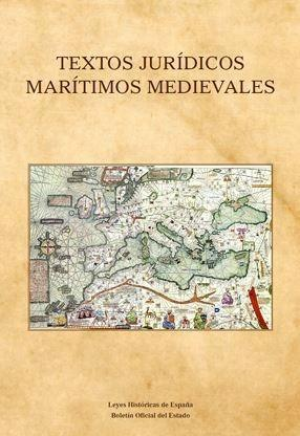
BOOK: Margarita Serna VALLEJO, Textos Jurídicos Marítimos Medievales (Madrid: Agencia Estatal Boletín Oficial del Estado 2018). ISBN: 9788434024793, pp. 986, € 76,00

Cubierta de TEXTOS JURÍDICOS MARÍTIMOS MEDIEVALES


ABOUT THE BOOK

Colección: Leyes Históricas de España

Esta obra, cuyo estudio ha sido realizado por Margarita Serna Vallejo, catedrática de Historia del Derecho de la Universidad de Cantabria, reúne los textos principales de nuestra tradición marítima, tanto atlántica como mediterránea, de la Baja Edad Media. El lector debe tener en cuenta que el derecho marítimo que se perfila a partir del tránsito de la Alta a la Baja Edad Media en las costas europeas es un derecho fundamentalmente consuetudinario porque fueron los propios navegantes quienes procedieron a su creación, englobando dentro del término "navegante" no solo a los individuos que tenían algún protagonismo en las actividades vinculadas directamente con el hecho de la navegación de las embarcaciones, con el arte de navegar en sentido estricto, sino también a los comerciantes que viajaban en los barcos con sus mercancías para poder negociarlas en los puertos de destino de las embarcaciones. Este derecho marítimo es de raíz consuetudinaria, sencillo, atécnico y transmitido oralmente, en cuya formación no intervino el poder público. No obstante, recibió, el apoyo de las autoridades, incluidas las propias monarquías, una vez que constataron la utilidad de sus disposiciones para ordenar el comercio marítimo.
Así surgieron en la Corona de Aragón los consulados del mar con una doble personalidad: como corporaciones profesionales y como jurisdicciones, primero marítimas, y más tarde mercantiles, una vez que extendieron sus competencias sobre el comercio marítimo, pero también sobre el terrestre. En las costas cantábricas de la Corona de Castilla la aparición de los consulados se retrasó hasta la época moderna: solo el primer consulado, el de Burgos, se estableció en las postrimerías de la Baja Edad Media, en 1494.

ABOUT THE AUTHOR

Margarita Serna Vallejo es Licenciada en Derecho por la Universidad de Cantabria (1990) y Doctora en Derecho en la misma Universidad (1995). En esta Universidad ocupó una plaza de Profesora Titular de Historia del Derecho entre los años 1995 y 2009. Fecha a partir de la cual pasó a ocupar la plaza de Catedrática de Universidad en la que continúa en la actualidad. Sus investigaciones se han centrado en tres líneas principales: historia del derecho de la propiedad, historia de las fuentes y de las instituciones marítimas de Época bajomedieval y moderna e historia de la administración territorial y local medieval y moderna. Entre sus publicaciones y al margen de los artículos y capítulos de libros publicados en distintas sedes destacan las siguientes monografías: 1996. La publicidad inmobiliaria en el Derecho hipotecario histórico español; 2004. Los Rôles d’Oléron: El coutumier marítimo del Atlántico y del Báltico de época medieval y moderna; 2010. Los viajes pesquero-comerciales de guipuzcoanos y vizcaínos a Terranova (1530-1808): régimen jurídico.

TABLE OF CONTENTS

Capítulo I. El Derecho Marítimo Medieval del Mediterráneo
1.1. Los privilegios de creación de los consulados de la Corona de Aragón: el inicio de las jurisdicciones consulares y de las corporaciones marítimas del Mediterráneo
1.2. Los privilegios de ampliación de la jurisdicción consular a la negociación terrestre: la conversión de los antiguos consulados marítimos en consulados mercantiles
1.3. La Tradición Mediterránea: El llibre del Consolat de Mar
Capítulo II. La tradición atlántica: los Rôles d’Oléron, el Fuero de Layron y las Ordenanzas de las Cofradías Marítimas
2.1. La versión primitiva de los Roles D'Oléron
2.2. El Fuero de Layron, la versión castellana de los Roles D'Oléron
2.3. Las ordenanzas de las cofradías de pescadores y mareantes del Cantábrico: máxima expresión de la potestad autonormativa reconocida a las cofradías

More information here.