Search

Showing posts with label financial law history. Show all posts

04 December 2023

ADVANCE ARTICLE: Mario CONETTI, "Banking Law in Italian Legal Consulting between the Fourteenth and the Fifteenth Centuries" (American Journal of Legal History)


(image source: OUP)

Abstract:

Banking operations in northern and central Italy between late fourteenth and early fifteenth century were very sophisticated and often gave rise to disputes involving the expertise only law professors could provide. To provide solutions which were at the same time viable and grounded in legal culture, lawyers went beyond merely practical considerations to work out legal institutions as a framework to banking activities. In doing so, they developed a proper banking law, a peculiar legal system.

Read more here: DOI 10.1093/ajlh/njad027.

17 September 2020

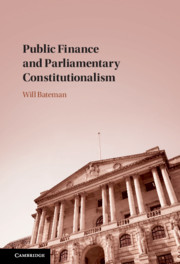
BOOK: Will BATEMAN, Public Finance and Parliamentary Constitutionalism (Cambridge: Cambridge University Press, 2020). ISBN 9781108478113, 80.00 GBP


Cambridge University Press is publishing a new book on the history of public finance law in the UK, its export throughout the British Empire, and its entrenchment in Commonwealth constitutions.

ABOUT THE BOOK

Public Finance and Parliamentary Constitutionalism analyses constitutionalism and public finance (tax, expenditure, audit, sovereign borrowing and monetary finance) in Anglophone parliamentary systems of government. The book surveys the history of public finance law in the UK, its export throughout the British Empire, and its entrenchment in Commonwealth constitutions. It explains how modern constitutionalism was shaped by the financial impact of warfare, welfare-state programs and the growth of central banking. It then provides a case study analysis of the impact of economic conditions on governments' financial behaviour, focusing on the UK's and Australia's responses to the financial crisis, and the judiciary's position vis-à-vis the state's financial powers. Throughout, it questions orthodox accounts of financial constitutionalism (particularly the views of A. V. Dicey) and the democratic legitimacy of public finance. Currently ignored aspects of government behaviour are analysed in-depth, particularly the constitutional role of central banks and sovereign debt markets.

ABOUT THE AUTHOR

Will Bateman, Australian National University, Canberra

Will Bateman is Senior Lecturer in Law and the Deputy-Director of Research at the Law School of the Australian National University, Canberra. He has worked at the apex of constitutional and financial law, including at the High Court of Australia and Herbert Smith Freehills.

TABLE OF CONTENTS

1. Finance and constitutionalism

Part I. Historical Development of Parliamentary Public Finance:

2. History (I): parliament and executive

3. History (II): judiciary

4. History (III): exporting parliamentary public finance

5. History (IV): public finance in the modern state

Part II. Parliamentary Public Finance in Operation:

6. Fiscal authority

7. Debt and monetary authority

8. Judicial power

Part III. Evaluating Parliamentary Public Finance:

9. Descriptive failure of parliamentary control

10. Theory and practice of financial self-rule.


More info here

12 June 2020

BOOK: Luisa BRUNORI, Serge DAUCHY, Olivier DESCAMPS & Xavier PREVOST (dir)., Le droit face à l'économie sans travail. Tome II: l'approche internationale [Histoire du Droit; 7] (Paris: Classiques Garnier, SEPT 2020), 329 p. ISBN 978-2-406-09729-7


(image source: Classiques Garnier)

Book abstract:
Ten years after the beginning of the subprime crisis, the situation in the early years of the third millennium requires a broad look at the dynamics of the jobless economy, understood as the set of financial operations that do not directly compensate human labor or the exchange of goods.
Papers by Luisa Brunori, Serge Dauchy, Olivier Descamps, Xavier Prévost, David Kusman, David Carvajal de la Vega, Claudio Marsilio, Roman Zaoral, David Gilles, Anja Amend-Traut, Jean Hilaire, Erik Aerts, Carlos Petit, Guido Rossi, Oscar Cruz Barney, Dave De ruysscher and Alain Wijffels.

Read more: DOI 10.15122/isbn.978-2-406-09729-7. The book is currently available as e-book, and will appear in print in September.

14 May 2020

WORKSHOP: Geld und Internationale Politik von der Antike bis ins 20. Jahrhundert (18 March 2021) (DEADLINE: 30 June 2020)


(Source: HSozKult)

Via Hsozkult, we learned of an interdisciplinary workshop on money and international politics throughout the ages.

Geld spielt seit der Antike eine wichtige Rolle in den zwischenstaatlichen Beziehungen. Es ist – neben den diplomatischen Verhandlungen, dem Recht und der Gewalt – das wichtigste Instrument zur Durchsetzung von Interessen zwischen Staaten. Die vierte Tagung der Arbeitsgruppe Internationale Geschichte des VHD (Vereins der Historikerinnen und Historiker Deutschlands), die am 18./19 März 2021 im Geldmuseum der Deutschen Bundesbank in Frankfurt am Main stattfinden wird, wird sich daher mit dem Thema Geld in den internationalen Beziehungen von der Antike bis zum 20. Jahrhundert befassen. […]”

The full call can be found here

11 November 2019

CALL FOR PAPERS: Interdisciplinary Conference on the Politics of Finance (Geneva, 18-19 June 2020) (DEADLINE: 20 December 2020)


We learned of a call for papers for an interdisciplinary conference on the politics of finance at the Graduate Institute in Geneva.

CALL FOR PAPERS

In July 1964, in the aftermath of the military coup which deposed President João Goulart, creditors at the Hague Club approved the Brazilian officials request for rescheduling its debts. The roaring inflation under the left-wing government cost the sympathy of its creditors, who considered the unpopular policy by the new general in power, Castelo Branco, to restore economic order with credit curbs, cuts in state spending and increased taxation with a kindlier eye. As The Economist summarized, “Creditors Prefer Generals”. (The Economist, July 11, 1964). About a decade later, when the Economics Minister of Argentina’s military José Alfredo Martínez de Hoz, came back from his world tour to drum up loans to service the $1.2 billion in loans that came due over the following months, the magazine Euromoney reported that the minister had managed to re-establish in a few months an essential part of Argentina's image: credibility (Euromoney, September 1976).

As was the case with other developing countries in Latin America and elsewhere, Brazil and Argentina had been largely cut off by foreign creditors during the previous democratic regime, before becoming a hot destination once the military regime that came to power committed to orthodox monetary and fiscal policies. Democracy and international finance were at the crossroads, as these moments have indicated.

This interdisciplinary conference, to be held at the International History Department, Graduate Institute Geneva, on 18 - 19 June 2020, invites scholars in Economics, History, Sociology, Political Science and Legal Studies at different career stages to examine critically sovereign creditworthiness, credibility and reputation. In doing so, it attempts to initiative a scholarly dialogue on the political and cultural aspects of banking practices based on ‘trust’, and the relationship between politics and banking.

Contributions might address, but are not limited to, the following questions:

  • What makes a country credible and creditworthy?
  • How do International Organisations perceive different regimes?
  • How is creditworthiness lost? How is creditworthiness reestablished?
  • How do governmental and rating agencies, or financial institutions establish creditworthiness?
These are some of the questions that this international conferences wishes to address in an interdisciplinary way. We hope to bring together scholars to discuss a highly relevant research topic, in the context of increasing tensions in countries such as Argentina, Venezuela and Turkey. Confirmed keynote is Professor Jeffry Frieden, Harvard University.

The conference is generously supported by the Swiss National Science Foundation (SNSF), sponsor of the research project ‘Business with the Devil? Assessing the Financial Dimension of Authoritarian Regimes in Latin America, 1973-85’. Supporting institutions include the International History Department and the Centre for Finance and Development at the Graduate Institute, Geneva.

Scholars interested in participating in the conference are invited to submit paper abstracts of no more than 300 words, along with their academic CV, to the conference convenors at politicsfinance2020@gmail.com by 20th December 2019. Abstracts should include the speaker’s name, academic affiliation and contact details. Selected presenters are expected to submit a full paper by the end of April. Funding opportunities are available to defray travel and accommodation expenses. Priorities will be given to early career researchers. For questions, please contact us at politicsfinance2020@gmail.com.

More info with the Graduate Institute

07 August 2019

BOOK: Luisa BRUNORI et al., eds., Le Droit face à l’économie sans travail. Tome I Sources intellectuelles, acteurs, résolution des conflits (Paris: Classiques Garnier, 2019). ISBN 978-2-406-08407-5


Classiques Garnier has published a new co-edited collection that contains several contributions that deal with the “dynamics of the jobless economy” from a legal-historical angle (the book is only available in digital version).

ABOUT THE BOOK

Ten years after the beginning of the subprime crisis, the situation in the early years of the third millennium requires a broad look at the dynamics of the jobless economy, understood as the set of financial operations that do not directly compensate human labor or the exchange of goods.

The table of contents can be found here

All info here