Search

Showing posts with label 13th century legal history. Show all posts

06 March 2020

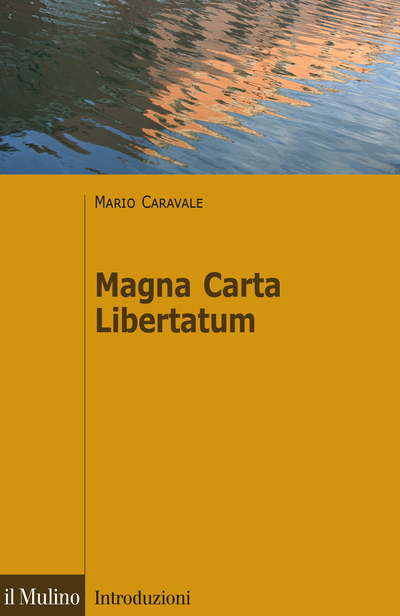
BOOK: Mario CARAVALE, Magna Charta Libertatum (Bologna: Il Mulino, 2020). ISBN: 9788815286093, pp. 136, € 12.00


Cover Magna Charta Libertatum
(Source Il Mulino)

ABOUT THE BOOK

Questo libro analizza il contesto storico e giuridico in cui venne promulgata la Magna Carta del 1215, uno dei documenti più celebri del periodo medievale. Quest'ultima consolidava alcuni dei diritti consuetudinari degli ordinamenti vigenti nel regno inglese all’inizio del secolo XIII. Ancora oggi la Magna Carta è considerata come fonte di princìpi per gli ordinamenti giuridici. Inoltre essa continua a rappresentare un manifesto del valore universale delle libertà individuali.

ABOUT THE AUTHOR

Mario Caravale è professore ordinario di Storia del diritto italiano nella Facoltà di Giurisprudenza dell'Università di Roma “La Sapienza”, dopo avere insegnato nella Università di Camerino e, nella stessa sede romana, nella Facoltà di Scienze politiche. E’ direttore del Dizionario Biografico degli Italiani pubblicato dall'Istituto
dell'Enciclopedia Italiana.

TABLE OF CONTENTS

Introduzione
Parte prima: Fondamenti ed evoluzione storica della Magna Carta
I. Gli ordinamenti giuridici del regno d’Inghilterra
II. L’autorità unitaria del re
III. Gli avvenimenti che portarono alla Magna Carta 1215
IV. La Magna Carta Libertatum 1215
V. Inghilterra e Sicilia a confronto
VI. Gli avvenimenti successivi all’accordo di Runnymede: le Cartae del 1216, del 1217 e la Carta de Foresta
VII. La Magna Carta 1225 e i suoi rinnovi
VIII. Il mito della Magna Carta
Parte seconda: Appendice documentale
«Articuli Baronum. Ista sunt Capitula quae Barones petunt et dominus Rex concedit»
Magna Carta Libertatum 1215
Carta de Foresta 1217
Magna Carta 1225
Confirmatio cartae 1297
Riferimenti bibliografici

More information here


22 November 2019

BOOK: Thomas J. MCSWEENEY, Priests of the Law Roman Law and the Making of the Common Law’s First Professionals (Oxford: Oxford University Press, 2019). ISBN 9780198845454, £70.00


(Source: OUP)

Oxford University Press is publishing a new book on the first legal professionals in the common law (focused on the 13th century).

ABOUT THE BOOK

Priests of the Law tells the story of the first people in the history of the common law to think of themselves as legal professionals. In the middle decades of the thirteenth century, a group of justices working in the English royal courts spent a great deal of time thinking and writing about what it meant to be a person who worked in the law courts. This book examines the justices who wrote the treatise known as Bracton. Written and re-written between the 1220s and the 1260s, Bracton is considered one of the great treatises of the early common law and is still occasionally cited by judges and lawyers when they want to make the case that a particular rule goes back to the beginning of the common law. This book looks to Bracton less for what it can tell us about the law of the thirteenth century, however, than for what it can tell us about the judges who wrote it.

The judges who wrote Bracton - Martin of Pattishall, William of Raleigh, and Henry of Bratton - were some of the first people to work full-time in England's royal courts, at a time when there was no recourse to an obvious model for the legal professional. They found one in an unexpected place: they sought to clothe themselves in the authority and prestige of the scholarly Roman-law tradition that was sweeping across Europe in the thirteenth century, modelling themselves on the jurists of Roman law who were teaching in European universities. In Bracton and other texts they produced, the justices of the royal courts worked hard to ensure that the nascent common-law tradition grew from Roman Law. Through their writing, this small group of people, working in the courts of an island realm, imagined themselves to be part of a broader European legal culture. They made the case that they were not merely servants of the king: they were priests of the law.

ABOUT THE AUTHOR

Thomas J. McSweeney, Professor of Law, William & Mary Law School
Thomas J. McSweeney is Professor of Law at William & Mary Law School. He earned his J.D. and Ph.D. in history at Cornell University.

TABLE OF CONTENTS

1: Setting the Stage
2: Law as Text
3: Thinking About Law
4: From Classroom to Courtroom
5: Cases and the Dialectic
6: The Genres of Authority
7: A New Plea Roll for a New Audience
8: An End or a Beginning?
Appendix: Writing the Note Book

More info here

16 October 2019

BOOK: Jennifer JAHNER, Literature and Law in the Era of Magna Carta (Oxford: Oxford University Press, 2019). ISBN 9780198847724, £65.00


(Source: Wildy & Sons)

Oxford University Press is publishing a book on literature and law in the era of the Magna Carta.

ABOUT THE BOOK

Oxford Studies in Medieval Literature and Culture showcases the plurilingual and multicultural quality of medieval literature and promotes work that not only focuses on the whole array of subjects medievalists now pursue—in literature, theology, philosophy, social, political, jurisprudential, and intellectual history, the history of art, and the history of science—but also work that combines these subjects productively. It offers innovative and interdisciplinary studies of every kind, including but not limited to manuscript and book history, linguistics and literature, post-colonial and global studies, the digital humanities and media studies, performance studies, the history of affect and the emotion, the theory and history of sexuality, ecocriticism and environmental studies, theories of the lyric, of aesthetics, of the practices of devotion, and ideas of medievalism.

Literature and Law in the Era of Magna Carta traces processes of literary training and experimentation across the early history of the English common law, from its beginnings in the reign of Henry II to its tumultuous consolidations under the reigns of John and Henry III. The period from the mid-twelfth through the thirteenth centuries witnessed an outpouring of innovative legal writing in England, from Magna Carta to the scores of statute books that preserved its provisions. An era of civil war and imperial fracture, it also proved a time of intensive self-definition, as communities both lay and ecclesiastic used law to articulate collective identities. Literature and Law in the Era of Magna Carta uncovers the role that grammatical and rhetorical training played in shaping these arguments for legal self-definition. Beginning with the life of Archbishop Thomas Becket, the book interweaves the histories of literary pedagogy and English law, showing how foundational lessons in poetics helped generate both a language and theory of corporate autonomy. In this book, Geoffrey of Vinsauf's phenomenally popular Latin compositional handbook, the Poetria nova, finds its place against the diplomatic backdrop of the English Interdict, while Robert Grosseteste's Anglo-French devotional poem, the Château d'Amour, is situated within the landscape of property law and Jewish-Christian interactions. Exploring a shared vocabulary across legal and grammatical fields, this book argues that poetic habits of thought proved central to constructing the narratives that medieval law tells about itself and that later scholars tell about the origins of English constitutionalism.

ABOUT THE AUTHOR

Jennifer Jahner’s research focuses on the interaction of literary, legal, and textual cultures in the high and later Middle Ages, especially in Britain and France. She is the author of Literature and Law in the Era of Magna Carta, forthcoming from Oxford University Press, which explores the ways that literary training shaped political vocabularies and legal communities in twelfth- and thirteenth-century England. With Emily Steiner and Elizabeth Tyler, she is the editor of Historical Writing in Britain and Ireland, 500–1550, forthcoming from Cambridge University Press. Her current research considers how multilingual book production in later medieval England made use of the burgeoning concept of the “experiment.” Research for this project is currently supported by a Graves/ACLS Award in the Humanities (2018–2019).

At Caltech, Jahner teaches courses on Geoffrey Chaucer, on poetry and theories of justice, on premodern sexualities, and on medieval romance. She is recipient of the ASCIT Teaching Award (2013) and the HSS Division Teaching Award (2015). In January 2019, she will join Studies in the Age of Chaucer as the book review editor.

TABLE OF CONTENTS

Introduction: The Poetics of Jurisdiction
1: The Grammar of Sacrifice: Becket, Learning, and Libertas
2: Classroom Historicisms: Interdict and the Poetria nova
3: Inventing Magna Carta
4: Jurisdictional Formalism: Robert Grosseteste and the Pastoral Model of Governance
5: Conjuring England: Crusade, Violence, and Communitas
Coda: The Jurisdictions of Form
Bibliography

More info here