Search

21 May 2021

ESCLH BLOG TEAM: new composition (as of 21 May 2021) - How to reach us - How to suggest posts

(Image: Charles V's coat of arms, representing the various entities of the composite Spanish/Burgundian monarchy, as well as the imperial eagle, Oudenaarde town hall (Belgium))

1.

Following our call for bloggers, the ESCLH is glad to announce the new composition of the Blog team, in alphabetical order:

  • Arthur Barrêto de Almeida Costa, PhD candidate in Theory and History of Law at the Università degli Studi di Firenze and researches the history of 19th and 20th public law in Brazil in a comparative perspective. Master and Bachelor of law at the Universidade Federal de Minas Gerais. Member of Studium Iuris - Research Group on the History of Legal Culture (CNPq/UFMG)
  • Filip Batselé, PhD-Fellow of the Research Foundation Flanders (FWO) at Ghent University and the Université Libre de Bruxelles, specializing in the history of international investment law. He is also an affiliated researcher at the research Group CORE (VUB). He studied law at Ghent University, the University of Glasgow (Erasmus+) and the Fletcher School of Law and Diplomacy (LL.M.)
  • Marco Castelli, PhD student in Legal studies at the University of Milan (Dept. 'Cesare Beccaria'). He also studies Latin Palaeography and Diplomacy at the School of Archival Studies of the State Archive in Milan and he collaborates with the research group in legal history at the University of Brescia. His main field of interest is the rediscovery of Aristotle's Natural Philosophy and its effects on Medieval legal theory and political thought.
  • Stefano Cattelan, research assistant at Aalborg University (Dept. of Law). In December 2020, he defended his PhD dissertation on the historical development of the law of the sea in the Early Modern Age (Aarhus University). He previously studied at the University of Trento (Bachelor and Master of Law). His primary interests lie at the crossroad of legal history and public international law.
  • Frederik Dhondt, associate professor of legal history at the Vrije Universiteit Brussel (Research Group Contextual Research in Law) is the ESCLH's director of communications and coordinates the team. He  studied Law (Ghent), History (Ghent/Paris-Sorbonne) and International Relations (Sciences Po Paris), before obtaining his PhD in Law (Ghent, 2013) and was a visiting researcher in Frankfurt, Heidelberg, Paris and Geneva. From 2016 to 2020, he was also a visiting lecturer at the University of Antwerp.
  • Gilles Hebben, PhD student at the University of Lille. His PhD directors are Luisa Brunori (University of Lille) and Guido Rossi (University of Edinburgh). He is currently writing a thesis called : “The Levant Company (1592-1825), a chartered company supervising the British merchants in law in their trade with the Levant.
  • Christel Annemieke Romein holds a PhD in early modern history (2016, Rotterdam). Her focus is on early modern political-institutional and legal history. She currently works at the Huygens Institute for Dutch History.
2.
We reiterate our thanks to the loyal readers and followers of our blog, which attracts an impressive number of internet users. The blog can be followed in several ways:
  • The website (https://esclh.blogspot.com);
  • An RSS-feed reader, such as Feedly;
  • The Twitter account (https://www.twitter.com/esclh), which automatically retweets posts added to the blog;
  • The daily mailing to subscribers (see box on the right-hand side of the page)
    !!! Attention: blogger has announced that this module will be terminated as of July 2021 !!!
    => It might be useful to switch to an RSS-reader or twitter 
3.
Reaching us with proposals for posts is quite easy: the gmail-account of the blog (esclhblog@gmail.com) is the unique channel to suggest an announcement. We prefer this channel, rather than one-on-one e-mails to the persons listed above. 

We gently remind our readers of the instructions set out on the right-hand column of the blog. Proponents need to provide us with a file in MS Word and an image. Bloggers are volunteers, and have to organize their time efficiently. We would -of course- appreciate drafts formatted according to own bibliographical template, as some of you have already done in the past. 

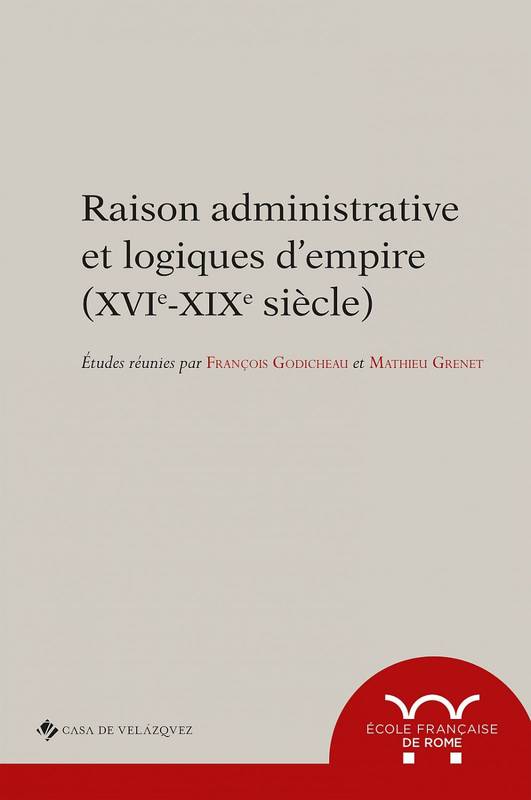
BOOK: François GODICHEAU & Mathieu GRENET (dir.), Raison administrative et logiques d'empire (XVIe-XIXe siècle) [Collection de la Casa de Velázquez] (Madrid: Casa de Velázquez, 2021), 440 p. ISBN 9788490961957, € 29. OPEN ACCESS


(image source: Casa de Velázquez)

Book abstract:
Entre le XVIe et le XIXe siècles émerge et s'affirme un pouvoir formidable, que nous connaissons sous le nom d'administration. Il se développe notamment dans le contexte des empires européens des époques moderne et contemporaine : le sens du mot administrer évolue alors que s'impose la nécessité de gouverner des espaces multiples et hétérogènes, proches et lointains. Ce livre propose de remonter aux sources puis de suivre la trace de cette raison administrative et de son affirmation au cours d'une chronologie habituellement associée à l'histoire de l'Etat, ici au second plan. Historiens et historiens du droit s'emparent du sujet à partir de l'étude de cas concrets, inscrits dans des contextes chronologiques et spatiaux différents, ainsi que dans des cultures politiques et juridiques fortement diversifiées. Ils tentent de saisir des logiques administratives à bonne distance des téléologies traditionnelles, depuis l'analyse des institutions étatiques et des dynamiques centres-périphéries, vers les redéfinitions de la potestas et l'exercice du commandement à l'échelle locale.

Table of contents:

Introduction. Une histoire politique (François Godicheau, Mathieu Grenet)

PREMIÈRE PARTIE. ADMINISTRATION ENTRE DROIT ET SOCIÉTÉ

Espace français, espace anglo-américain. Pour une sémantique comparée du mot « administration » à l’âge moderne (Luca Mannori)

Des territoires entre tutelle et auto-administration : le premier débat constitutionnel en Espagne (José Maria Portillo Valdés)

La raison administrative : figures d’un mode de normativité (Paolo Napoli)

Droit et autorité politique dans leur contexte social (Michael J. Braddick)

DEUXIÈME PARTIE. RAISON ADMINISTRATIVE, GOUVERNEMENT ET EMPIRE

Raison fiscale et logiques d’Empire : administrer un impôt sans État (XVIIe‑XVIIIe siècles) (Rachel Renault)

Députés du commun : représentation et gouvernement des pueblos en Espagne (1766-1812) (Carlos Garriga Acosta)

Logique militaire et ordre public. Le statut ambigu de l’administration des territoires catalans dans la première moitié du XIXe siècle (Manel Risques Corbella & François Godicheau)

Inflexions et échos d’une politique impériale dans la Monarchie hispanique (1580-1610) (José Javier Ruiz Ibánez)

Dilemmes de l’anthropologie historique (Jean-Frédéric Schaub)

TROISIÈME PARTIE. RAISON ADMINISTRATIVE ET GOUVERNEMENTS TERRITORIAUX

L’administration des campagnes de l’empire avant « l’ordre public », entre besoins de justice et gouvernement des populations (1759-1808) (Darío Barriera, François Godicheau)

En attendant quels barbares ? Pouvoir et administration dans le Stato da Mar vénitien : le cas de Leucade/Sainte-Maure à la fin des années 1770 (Mathieu Grenet)

Les territoires des corporations : l’administration et la justice dans les places commerciales de l’Empire portugais (v. 1750-1820) (Andréa Slemian)

Administrer les territoires d’une nation pluricontinentale. Représentations, connaissances et logiques administratives dans l’Empire portugais du XIXe siècle (Cristina Nogueira da Silva)

L’État italien entre administration et tutelle dans l’Empire français (Alessandro Giovanazzi)

Lecture (Bernard Vincent)

L’administration d’une « ombre d’empire » : l’organisation des « Portugais » en Afrique et en Asie (António Manuel Hespanha)

More information with the Casa de Velázquez. 


WEBINAR: ‘A proposito di di "Histories contemporaines du droit"’ - 9 giugno 2021, 14:30-1700 - Università Bocconi Milano & Université de Bordeaux


(Source: Università Bocconi)

BOOK: Oscar FERREIRA, Le Pouvoir Royal (1814-1848) À la recherche du quatrième pouvoir ? [Bibliothèque d'histoire du droit et droit romain; 37] (Paris: LGDJ, 2021), 588 p. ISBN 978-2-2750-8393-3, €68


(source/bron: univ-droit)

Abstract:
Ce travail met en lumière les représentations du pouvoir royal qui se sont affrontées jusqu’en 1848 pour remplir le programme de réconciliation des « deux France » voulu par Louis XVIII. Elles se répartissent entre le désir du retour à l’Ancien Régime et la tentative de renouveler la fonction royale. Opposés aux ultraroyalistes, les partisans de cette voie originale souhaitent consacrer le constitutionnalisme libéral en recourant à un expédient inattendu, le pouvoir du roi, qu’il convenait de remodeler. Comme chez Constant et Dunoyer, il s’agit de créer un quatrième pouvoir doté d’une essence propre et chargé d’une nouvelle mission : veiller sur les institutions. Ce pouvoir régulateur ou préservateur produisit un débat passionné sur le terrain des idées et de la philosophie du droit entre ces Modernes et les Anciens. Tel Bonald, ces derniers préfèrent encourager le pouvoir conservateur de la société, quitte à revenir sur des dogmes établis (souveraineté, légitimité) ou sur des acquis indésirables (responsabilité) à même de nuire à la mission conservatrice confiée au roi. La recherche du quatrième pouvoir contraint en effet à réviser entièrement le pouvoir royal, sa nature comme ses rapports avec les autres pouvoirs. En dépit de leur échec, ces réflexions marqueront durablement la pensée française sur le chef de l’État en renaissant au gré des conjonctures. Il sera alors intéressant de reconsidérer le rôle du chef de la Ve République à la lumière de cet héritage ambivalent.


PODCAST: Às vésperas do leviathan


(Source: https://www.politico.eu/wp-content/uploads/2020/04/GettyImages-1152427249-1160x926.jpg)

We have learned of a legal history podcast. Episodes already published:

Cap 2 - Os Jesuítas e Construção da Ordem Jurídica

Cap 3 - A religião como meio de inclusão e de exclusão nas corporações de ofício

Cap 4 - John Locke e as prerrogativas ministeriais: um problema clássico do liberalismo político


More information: https://www.asvesperasdoleviathan.com/

Spotfy page: https://open.spotify.com/show/2B9Jp7a23OigFctdqzfj76 


20 May 2021

BOOK: P. SEAN MORRIS (ed.), The League of Nations and the Development of International Law. A New Intellectual History of the Advisory Committee of Jurists [Routledge Research in Legal History] (London: Routledge, SEP 2021), ISBN 9780367897536


(image source: Routledge)


Book abstract:

This volume examines the contributions to International Law of individual members of the Advisory Committee of Jurists in the League of Nations, and the broader national and discursive legal traditions of which they were representative. It adopts a biographical approach that complements existing legal narratives. Pre-1914 visions of a liberal international order influenced the post-1919 world based on the rule of law in civilised nations. This volume focuses on leading legal personalities of this era. It discusses the scholarly work of the ACJ wise men, their biographical notes, and narrates their contribution as legal scholars and founding fathers of the sources of international law that culminated in their drafting of the statute of the Permanent Court of International Justice, the forerunner of the International Court of Justice. The book examines visions of world law in a liberal international order through social theory and constructivism, historical examination of key developments that influenced their career and their scholarly writings and international law as a science. The book will be a valuable reference for those working in the areas of International Law, Legal History, Political History and International Relations.

Table of contents:

The "Wise Men" of the Advisory Committee of Jurists (ACJ) and Contemporary Legal Biography: An Introduction
P. Sean Morris

  1. The Legal Conscience of a Universal Man: Rafael Altamira y Crevea (1866 – 1951)
    Yolanda Gamarra
  2. National Political Ideologies and International Legal Practices: Raul Fernandes (1877 – 1968)
    Arthur Roberto Capella Giannattasio
  3. A Civilizational Pluralist and Inegalitarian: Mineichiro Adachi (1870 – 1934)
    Tetsuya Toyoda
  4. Francis Hagerup (1853 – 1921): A Norwegian Legal Internationalist
    Dag Michalsen
  5. Elihu Root (1845 – 1937): Architect and Advocate of the Permanent Court of International Justice
    William G. Ross
  6. Forgetting Albert Geouffre de Lapradelle (1871 – 1955) and Ignorance as Remembering
    Toni Selkälä
  7. Edouard Descamps (1847 – 1933): From Negative Neutrality to Positive Pacigerate
    Frederik Dhondt
  8. The Judicial-Churchman for Peace: Walter George Frank Phillimore (1855 – 1933)
    P. Sean Morris
  9. "Where is Your Tribunal?" Bernard Loder (1849 – 1935) and the Quest for International Justice
    Freya Baetens and Veronica Lavista
  10. The Italian Jurist and Diplomat at the Advisory Committee of Jurists: Arturo Ricci Busatti (1868 – 1923)
    Elisabetta Fiocchi Malaspina
On the editor:
P. Sean Morris is a research fellow at the Faculty of Law, University of Helsinki, Finland.


(source: Routledge - DOI 10.4324/9781003020882) 

(source: ESILHIL) 


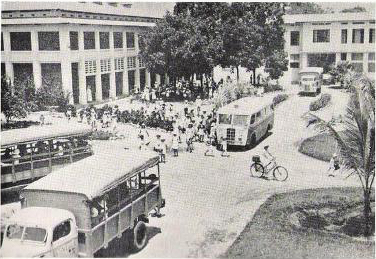
JOURNAL: C@hiers du CRHiDI. Histoire, droit, institutions, société [Special Issue Dire, appliquer et diffuser le droit. L'action des gens de justice au Congo belge (1908-1960), eds. Françoise MULLER, Bérengère PIRET, Xavier ROUSSEAUX & Nathalie TOUSIGNANT]


(image: Leopoldville; source: Wikimedia Commons)

Gouvernementalité en régime colonial : acteurs, vecteurs et pratiques du droit et de la justice en Afrique coloniale belge (Xavier Rousseaux) (DOI 10.25518/1370-2262.709)

La compénétration des magistratures métropolitaine et coloniale. Analyse du cas belge (1885-1939) (Françoise Muller, Amandine Dumont & Xavier Rousseaux) (DOI 10.25518/1370-2262.697)

Abstract:

Cet article traite de la compénétration des magistratures métropolitaine et coloniale belges durant la période 1885-1939. La compénétration de ces magistratures – c’est-à-dire les passages d’un corps à l’autre – s’observe à 51 reprises durant la période étudiée. Ces passages obéissent à des règles différentes selon qu’ils s’effectuent dans un sens ou dans l’autre. En dépit de propositions doctrinales et législatives répétées, les passages « colonie/métropole » (75% de l’effectif) n’ont pas fait, durant la période étudiée, l’objet d’une législation particulière facilitant l’intégration des magistrats coloniaux à la magistrature métropolitaine. Ceux-ci étaient contraints de recommencer une nouvelle carrière en métropole. Les passages « métropole/colonie » étaient mieux encadrés, assurant aux magistrats métropolitains de retrouver leur place au terme de leur séjour dans la colonie et leur permettant (en théorie) de conserver leurs droits à l’avancement.

Nomenclature du personnel judiciaire colonial. Dire le droit et rendre la justice à Stanleyville, 1935-1955 (Bérengère Piret) 

Abstract:

On considère généralement que la fonction fait l’homme, au Congo c’est davantage l’homme qui fait la fonction. En raison de la multiplicité des missions confiées aux fonctionnaire territoriaux (assurer le maintien de l’ordre et de la tranquillité publique, construire et entretenir les voies de communication comme les édifices publics, définir et faire exécuter les programmes agricoles, etc.), du contrôle réduit dont ils font l’objet et de l’absence de contre-pouvoir qui leur est opposé, leur formation et leur personnalité s’avèrent déterminantes. Loin de dresser la prosopographie du personnel du tribunal de district de Stanleyville, nous baliserons uniquement les principaux éléments de leur parcours. Ceux-ci doivent nous permettre de comprendre qui ils sont lorsqu’ils agissent au sein de ladite juridiction.

 Antoine Sohier, magistrat colonial au Congo belge (1910-1934). Éléments bio- et bibliographiques (Romain Landmeters) (DOI 10.25518/1370-2262.722)

Abstract:

L’article présente les éléments biographiques principaux et les productions bibliographiques d’Antoine Sohier en tant que magistrat au Congo belge. Il retrace notamment les grandes étapes de sa carrière coloniale entre 1910 et 1934.

Un barreau sur mesure ? Les enjeux de la création d’un Barreau colonial (1908-1932) (Jérôme de Brouwer & Maxime Jottrand) (DOI 10.25518/1370-2262.706)

Abstract:

Les premiers avocats s’installent dans la colonie au cours des années qui suivent la reprise du Congo par l’État belge. En l’absence de toute réglementation et parce qu’ils évoluent dans un environnement très différent de celui dont ils sont familiers, les avocats s’interrogent sur l’applicabilité à la colonie des règles organisant la profession et sa discipline en vigueur dans la métropole. Si à partir des années 1920 les avocats s’accordent sur la nécessité de l’organisation de la profession, ils s’opposent sur ces modalités. La perspective de l’institution d’un barreau colonial se heurte aux enjeux spécifiques liés au statut de la colonie et à sa géographie ainsi qu’à son administration.

 « S’il est construit à faux, tout risque de s’effondrer ». Le Journal des Tribunaux et le droit au Congo belge (Sebastiaan Vandenbogaerde) (DOI 10.25518/1370-2262.737)

Abstract:

Les revues juridiques forment un noyau dans un réseau élitaire où différents acteurs se rencontrent. Chaque titre a un programme dans lequel les rédacteurs s’inscrivent et essayaient de convaincre les lecteurs. Le Journal des Tribunaux et sa « petite sœur », le Journal des Tribunaux d’Outre-Mer, avaient l’idée de faire connaitre le droit au public qui n’avait pas vraiment un intérêt au droit congolais. Cette contribution se focalise sur les leaders, notamment les rédacteurs en chef, qui sont cruciaux pour la construction de la mentalité sur le droit congolais et l’impact du droit sur l’indépendance congolaise.

 « Pénétrer au mieux l’âme de nos sujets ». La perception des coutumes congolaises par les fonctionnaires territoriaux à travers leur contribution au Bulletin des Juridictions indigènes et de Droit coutumier congolais (Alix Sacré) (DOI 10.25518/1370-2262.675)

Absract:

Issu de recherches effectuées dans le cadre du projet Belgafrican Magistrates Social Networks, cet article se penche sur la contribution des fonctionnaires territoriaux du Congo belge à une revue juridique, le Bulletin des Juridictions indigènes et de Droit coutumier congolais. Il s’agit de montrer en quoi ces écrits sont particulièrement dépendants du contexte de leur rédaction, tant en termes de forme que de contenu ; en cela, ils nous informent sur les préoccupations des territoriaux, sur leur posture vis-à-vis des Congolais et sur la vision qu’ils ont de leurs coutumes. A travers l’analyse de quatre thématiques abordées par ces fonctionnaires, cet article propose ainsi une réponse supplémentaire à la question des liens entre savoir et pouvoir en contexte colonial. Le propos est illustré par plusieurs exemples, issus notamment de la carrière et des travaux rédigés par Fernand Grévisse, administrateur territorial puis commissaire de district du Haut-Katanga.

Prononcer et exercer le droit par l’administration coloniale. Les acteurs de la relégation au Congo Belge (1910-1960) (Valentine Dewulf) (DOI 10.25518/1370-2262.656)

Abstract:

Dès 1910 au Congo Belge, l’administration coloniale peut sanctionner d’une relégation, c’est-à-dire d’une déportation ou d’une interdiction de séjour, tout individu qui a nui à la tranquillité publique. La relégation constitue une sanction parapénale qui échappe au pouvoir judiciaire. Basé sur les correspondances tenues par les membres de l’administration coloniale, cet article interroge l’application de la relégation à partir des acteurs qui la décident ou qui l’influencent. Il met à jour le rôle fondamental du pouvoir local et des agents européens de terrain dans les prononcés de relégation. Il met également en évidence les différents points de vue et les intérêts qui coexistent parmi les autres acteurs d’influence de la relégation : missionnaires, acteurs économiques et pouvoir judiciaire.

Droit et justice en Afrique coloniale belge : acquis et perspectives (Nathalie Tousignant) (DOI 10.25518/1370-2262.802)

Read all articles here.


19 May 2021

BOOK: Lorenzo GAGLIARDI, David KREMER. Cittadinanza e nazione della stori europea. (Milano: Giuffrè, 2020). ISBN 9788828818458. 28 EUR.


(Source: https://shop.giuffre.it/024208942-cittadinanza-e-nazione-nella-storia-europea-citoyennete-et-nation-dans-l-histoire-europeenne.html)

Table of contents:

Cittadinanza e nazione. Un approccio storico, di Lorenzo Gagliardi e David Kremer
David Kremer (Université Paris Descartes) Leçons romaines à l’adresse des Européens. Brèves réflexions sur la civitas Romana et son héritage
Lorenzo Gagliardi (Università degli Studi di Milano) La nazione latina al tempo della Roma dei re
Loredana Cappelletti (Universität Wien) Lo « Stato » degli Italici al tempo della guerra sociale (91-88 a.C.)
Estela García Fernández (Universidad Complutense de Madrid) La condición latina como instrumento de integración de la población provincial
Chiara Corbo (Università degli Studi di Napoli Federico II) Constitutio Antoniniana: un’ulteriore chiave di lettura
Lorenzo Tanzini (Università degli Studi di Cagliari) Cittadinanza e appartenenza alla comunità nelle città italiane tra XIII e XIV secolo
Claire de Blois (Université Paris Descartes) L’évolution du lien entre « population » et « État » dans les dictionnaires de l’Ancien régime (1689-1789)
Thomas Branthôme (Université Paris Descartes) Le citoyen révolutionnaire
Jean-Baptiste Busaall (Université Paris Descartes) Le Citoyen espagnol de la Nation catholique dans la Constitution politique de la Monarchie espagnole de 1812 : sujet nouveau d’un ordre traditionnel
Guillaume Richard (Université Paris Descartes) Redéfinir la nation. L’application des lois sur les réparations pour dommages de guerre aux territoires intégrés après la Première Guerre mondiale (France, Italie)
Valerio Marotta (Università degli Studi di Pavia) Conclusioni


18 May 2021

ADVANCE ARTICLE: Lorren Eldridge, "Gone and forgotten: Vinogradoff's historical jurisprudence" (Legal Studies)

(image source: CUP)

 Abstract:

Sir Paul Vinogradoff was once well known for his historically contextualised approach to legal theory which held that legal ideas were the contingent products of social factors. Law was necessarily engaged with other subjects, and ‘historical jurisprudence’ could produce real insight into the nature of law – in part by placing theories such as analytical jurisprudence in context, evaluating and modifying theoretical models by reference to the contingent social facts of an era. This was part of the nineteenth-century turn to ‘science’ in history and a focus on methodology. Sir Henry Maine argued that legal history proved the insufficiency of analytic theories, but his method met with many criticisms, some of which Vinogradoff sought to address. However, Vinogradoff's insights have rarely been pursued or developed, with legal history favouring Maitland's more doctrinal approach, and legal theory rejecting historical jurisprudence – at least explicitly. Despite its imperfections, historical jurisprudence offers a rich and valuable way to understand law, including to evaluate analytical models such of those of HLA Hart, and as a methodology for dialogue between comparative and historical legal scholarship. It has, in fact, continued to do so without explicit recognition in the 100 years since Vinogradoff's death.

Read more here: DOI 10.1017/lst.2020.41.

BOOK: Kjell A. MODEER (ed.), Legal history Reflecting the Past and the Present – Current Perspectives for the Future (Stockholm: Jure Forlag, 2021). ISBN 9789186645151, 420 SEK).


(Source: Jure)

A new volume in the series "Rättshistoriska studier", published by the Olin Foundation, has recently been published: Legal history Reflecting the Past and the Present – Current Perspectives for the Future (ed. Kjell Å Modéer).

ABOUT THE BOOK

”In 2016 – 18 Lund University in Sweden celebrated its 350 years of existence. In 1666 the new university got its constitution, and in 1668 January 28 the university was inaugurated. At the Law Faculty this celebration was observed with several seminars and symposia. In November 2017 the legal historians at Lund arranged an international symposium dedicated to the doctores honoris causæ within the discipline of legal history at the Law faculty. The theme for this historiographical symposium was the impact of and interaction with the nine Nordic, European and American scholars who received their honorary degrees at the Lund Law Faculty from 1990 up to today. This volume is dedicated to them.

This volume gives examples of history of knowledge in action in a dynamic scholarly environment within legal history from the post-World War II up to today. The diversity of the research areas – their networks and theoretical and methodological discourses – exemplifies the “Historical turn” within the law, and demonstrate the development of the internationalized – and even globalized – discipline of legal history within in the late modernity during the last quarter century. Each of the nine honorary doctors gives in an article a presentation of their scholarly work, as well as a number of internationally established European scholars elaborate on their current perspectives on legal history – reflecting on the past and the future.”

TABLE OF CONTENTS

Preface – Mia Rönnmar

Foreword – Johan Hirschfeldt

Introduction

1. Law, Time and Place: Legal history: The Lund perspective:

A tribute to our honorary doctors

Kjell Å Modéer

2. Presence of mind and the future of legal history

Matthew Dyson

Part I

Supreme Courts

3. Die höchsten Gerichte und Rechtliche Zeitgeschichte – ”The Supreme Courts” and ”Contemporary Legal History”

Bernhard Diestelkamp

4. Central Courts, an inexhaustible Source of information for Legal History

Serge Dauchy

5. The Wismar Tribunal: A survey of the research

Nils Jörn

Part II

Legal Cultures

6. ”That’s the way I am”: Lawrence M Friedman in interview

Kjell Å Modéer

7. Legal Culture as a tool for legal analysis

Jörn Øyrehagen Sunde

8. A spatial history of Swedish rural courts

Eva Löfgren

Part III

Contemporary Legal History

9. Social law, contemporary legal history and the history of public law

Michael Stolleis

10. The Ghost of the King. Traces of ‘Royal Majesty’ in the Swedish constitution of 1974

Henrik Wenander

11. A short comment on the history of administrative law and Michael Stolleis

Mats Kumlien

Part IV

Intellectual Legal History

12. Nordic Legal Science – Diversity and Unity

Lars Björne

13. Legal Compilation in early modern Denmark and Norway: Creatively recycling the law

Sören Koch

Part V

Comparative Legal History

14. Understanding the law in historical and comparative perspectives

Reinhard Zimmermann

15. Law émigré Max Rheinstein (1899 – 1977): A comparatist in pre-war Germany and post-war America

Kjell Å Modéer

Part VI

European Legal Integration

16. The Europeanization of legal cultures

Pia Letto-Vanamo

17. The rule of law as a criterion for Europe

Martin Sunnqvist

18. A kaleidoscope of people: The legal cultures of the European Court of Human Rights and the European Court of Justice

Nina-Louisa Arold Lorenz

Part VII

Legal History and Legal Science

19. The temporalities of constitutions

Dag Michalsen

20. Constitutions and Codifications 1667 – 2017. A legal historian’s reflection

Dag Michalsen

21. Why legal history matters: Dangerous social sciences and the authoritarian state Heikki Pihlajamäki

22. Concluding remarks: The future of legal history

Lena Foljanty


More info here


(Source: Rattshistoria)

BOOK: Elizabeth WALGENBACH, Excommunication and Outlawry in the Legal World of Medieval Iceland (Leiden: Brill, 2021). ISBN: 978-90-04-46091-1, €90.00


(Source: Brill)

ABOUT THE BOOK

Series: The Northern World, Volume: 92

In this book, Elizabeth Walgenbach argues that outlawry in medieval Iceland was a punishment shaped by the conventions of excommunication as it developed in the medieval Church. Excommunication and outlawry resemble one another, often closely, in a range of Icelandic texts, including lawcodes and narrative sources such as the contemporary sagas. This is not a chance resemblance but a by-product of the way the law was formed and written. Canon law helped to shape the outlines of secular justice. The book is organized into chapters on excommunication, outlawry, outlawry as secular excommunication, and two case studies—one focused on the conflicts surrounding Bishop Guðmundr Arason and another focused on the outlaw Aron Hjǫrleifsson. 

ABOUT THE AUTHOR

Elizabeth Walgenbach, Ph.D. (2016), Yale University, is a post-doctoral researcher at the Árni Magnússon Institute for Icelandic Studies. Her work focuses on medieval canon law in the north, and she has published articles on medieval Icelandic law, religion, and manuscripts.


More information with the publisher.

BOOK: Sabrina LO IACONO. Gli anni della breccia cristiana. La legistazione dell'imperatore graziano. (Milano: Giuffrè, 2021). ISBN 9788828833482. 28 EUR.


(Source: https://shop.giuffre.it/024213365-gli-anni-della-breccia-cristiana-la-legislazione-dell-imperatore-graziano.html)


Table of contents: https://shop.giuffre.it/pub/media/Indice/INDICE_024213365.pdf#search=%22%22 

17 May 2021

BOOK PRESENTATION: Coronations and Inaugurations in the 18th-19th Century Habsburg Monarchy (Standen & Landen/Anciens Pays & Assemblées d'États, 20 MAY 2021, 17:00 CET)

(poster; source: S&L/APAE)

Book abstract:
Across the medieval and early modern eras, new rulers were celebrated with increasingly elaborate coronations and inaugurations that symbolically conferred legitimacy and political power upon them. Many historians have considered rituals like these as irrelevant to understanding modern governance—an idea that this volume challenges through illuminating case studies focused on the eighteenth- and nineteenth-century Habsburg lands. Taking the formal elasticity of these events as the key to their lasting relevance, the contributors explore important questions around their political, legal, social, and cultural significance and their curious persistence as a historical phenomenon over time.

Table of contents here. 

(RSVP details here)
 

ONLINE SEMINAR: Hugo STAHL (Montpellier) on The Parlement de Provence and the Plague in 1720 (21 MAY 2021)

(image: the plague in Marseille, 1720, by Michel Serre; source: Wikimedia Commons) 


 Vendredi 21 mai 16:30-19:00

   Hugo Stahl (Docteur de l’Université d’Aix-Marseille, Enseignant-chercheur contractuel de l’Université de Montpellier) : « Le Parlement de Provence et la question sanitaire à l’époque moderne ».
            Répondants : Anne Dobigny- Reverso (Université d’Angers) et Reynald Abad (Université Paris – Sorbonne)
(source and further information: parlements.hypotheses.org)

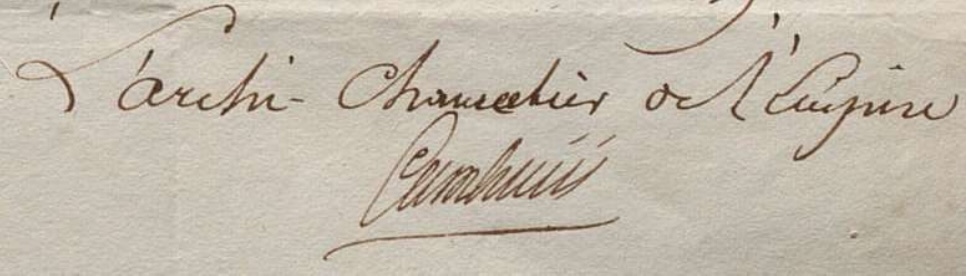
DIGITIZATION: Cambacérès papers acquired by local authorities in Montpellier (France)

 
(image: Cambacérès's signature; source: actualitté) 

First paragraph:

À Montpellier ce jour, ont été présentés les manuscrits des mémoires de Jean-Jacques-Régis de Cambacérès dans leurs versions successives. Cet ensemble remarquable, qui a été acquis au mois de novembre dernier par Montpellier Méditerranée Métropole pour la somme de 46.800 euros, viendra enrichir le fonds conservé à la médiathèque centrale Émile Zola concernant cet homme illustre, qui, avec sa famille, est étroitement lié à l’histoire de Montpellier.

The documents will be digitized and made accessible to all on the internet. 

Read more here.

BOOK: Balázs FEKETE, Paradigms in Modern European Comparative Law - A History (Oxford: Hart Publishing, 2021). ISBN 9781509946921, 63.00 GBP


(Source: Hart Publishing)

Hart is publishing a new book on paradigms in modern European comparative law.

ABOUT THE BOOK

This book uses the philosophy of Thomas Kuhn to provide a new vision of the development of European comparative law that will challenge and inspire scholars in the field.

With the 'empathic' use of some ideas from Kuhn's theories on the history of science – paradigm, paradigm-shift, puzzle-solving research and incommensurability – the book rethinks the modern history of European comparative law from the late 19th century to the modern day.

It argues that three major paradigms determine modern comparative law:

- historical and comparative jurisprudence,

- droit comparé, and

- post-World War II comparative law.

It concludes that contemporary methodological trends are not signs of a paradigm-shift toward a postmodern and culturalist understanding of comparative law, but that the new approach spreads the idea of methodological plurality.

ABOUT THE AUTHOR

Balázs Fekete is Associate Professor at the Eötvös Loránd University Faculty of Law and Senior Research Fellow at the Centre of Social Sciences Institute for Legal Studies, Hungary.

TABLE OF CONTENTS

Acknowledgments


Introduction: Scope and Subject

I. The History of Comparative Law and a History of Comparative Law

II. The Dominance of Descriptive Linearity

III. Comparative Law as a Discipline and the Application of Comparative Methods in Law

IV. Ancient or Modern History of Comparative Law Thinking

V. Comparative Law and Comparative Constitutional Law

VI. A Mezzo-Perspective Approach


1. The History of Comparative Law and Kuhn's Oeuvre

I. Studying Science as a Historical Phenomenon: Some Preliminaries

II. Applying Kuhn's Legacy to Understand the History of Comparative Legal Studies

III. Lessons from Kuhn in the Historiography of Legal Scholarship


2. Historical-Comparative Jurisprudence

I. Introduction: The Centuries-Long Pre-Paradigm Period and the Rise of the First Paradigm

II. Prologue: The Modern Precursors and the Pre-Paradigm Period

III. General Background: The Rise of Positivism and the Idea of Evolution

IV. Historical and Comparative Jurisprudence – The Emergence of the Paradigm in England

V. From Ethnologische Jurisprudenz to Vergleichende Rechtswissenschaft – The Birth of a Paradigm in Germany

VI. The First Paradigm of Modern Comparative Law: A Summary


3. The Paradigm of Droit Comparé

I. Fin-de-siècle Atmosphere

II. A New Wave of Institutionalisation

III. The 1900 Paris Congress of Comparative Law

IV. The Establishment of the New Paradigm

V. The Development of the Paradigm – Functionalism, Global Law and Skepticism

VI. Characteristics of the Second Paradigm


4. The Third Paradigm – Post-World War II Comparative Law

I. Introductory Remarks: The New World Order and Comparative Law Scholarship

II. The Taxonomy of the World's Legal Orders

III. The Renewal of Comparative Law Methodology – The Victory of Functionalism

IV. The Third Paradigm


5. New Trends in Contemporary Comparative Law: Toward a Paradigm Shift?

I. A Changing Scholarly Landscape

II. A Cultural Turn in Comparative Law?

III. The Decline of Methodological Exclusivity in Comparative Law Thinking

IV. Paradigm Shift in Comparative Law?


Concluding Thoughts

I. On the Validity of This Research, with Special Regard to the Relevance of Kuhn's Ideas

II. On the Utility of Having a Single Book on the History of Modern European Comparative Law

III. On Recent Perspectives of Comparative Law


Bibliography


More info here

DIALOGUE: Journal Comparative Legal History: Dialogues on Otherness in Comparative Legal History - 15 June 2021, 17:00-18:00hs (CEST)

(Source: ESCLH)


Journal Comparative Legal History: Dialogues on Otherness in Comparative Legal History

15 June 2021 – 17:00-18:00hs (CEST)


The journal Comparative Legal History is an official academic forum of the European Society for Comparative Legal History. It was first published in 2013 and aims to offer a space for the development of comparative legal history. Based in Europe, it welcomes contributions that explore law in different times and jurisdictions from across the globe. Submissions are currently welcome and are being assessed on a rolling basis. 

The journal will host a one-hour public session to discuss on how to deal with otherness in comparative legal history. Editors (past and present) will present exploratory points and all attendees will be invited to join in a general discussion. 

Otherness is a multidimensional topic. It can relate to, inter alia, methods, disciplines, literature, culture, systems, and time periods. Otherness is needed when crossing time and space, it is needed when seeking for answers within and beyond specific environments. Exposure to otherness can only be beneficial for the disciplinary growth of comparative legal history.

The event is free and open to the public, and it will take place via Zoom. 


Registration is required by sending an email to clhdialogues@gmail.com

BOOK: Francesco MASTROBERTI & Gaia MASIELLO (Eds.), Il codice per lo Regno Delle Due Sicilie. Elaborazione, applicazione e dimensione europea del modello codicistico borbonico (Napoli: Editoriale Scientifica, 2020). ISBN: 978-88-9391-923-4, pp. XVIII-672, € 57,00


ABOUT THE BOOK

Collana: IusRegni. Collana di Storia del diritto medievale, moderno e contemporaneo - n. 13

Il Codice per lo Regno delle Due Sicilie (diviso in cinque parti: I. Leggi civili, II. Leggi penali, III. Leggi di procedura ne’ giudizj civili, IV. Leggi di procedura ne’ giudizj penali, V. Leggi di eccezione per gli affari commercio) fu il primo codice della Restaurazione e si guadagnò l’attributo di codice eccellente nel panorama delle codificazioni dell’Italia preunitaria. Frutto dei lavori delle prestigiose commissioni nominate da Ferdinando I il 2 agosto del 1815- composte da giuristi di formazione illuministica tra i quali spiccavano Niccola Nicolini e Francesco Magliano – esso riuscì a coniugare l’indirizzo della continuità con i codici e le riforme del decennio francese, sostenuto dal ministro della giustizia Donato Tommasi, con la prospettiva di una codificazione nazionale. Il Codice portò pertanto a compimento un percorso già avviato durante il decennio francese con i lavori delle commissioni istituite da Murat nel 1810 e nel 1814. Ispirato dalle opere degli Illuministi, in particolare di Gaetano Filangieri, fino alla fine del regno borbonico il Codice riuscì ad essere un ancora di libertà in un contesto istituzionale autoritario e influenzò in modo decisivo i codici italiani preunitari.

Il presente volume prende le mosse da dal convegno internazionale A duecento anni dal Codice per lo Regno delle Due Sicilie: elaborazione, applicazione e di­mensione europea del modello codicistico borbonico (Napoli-Caserta, 4-5 ottobre 2019) e ricalca la sua impostazione di fondo con la divisione dell’opera in tre parti, corrispondenti alle tre sessioni nelle quali era diviso l’evento: Genesi e vita, relativa alla elaborazione e all’applica­zione del Codice, Destino, concernente la considerazione che il Codice ebbe in Italia e in Europa e, infine, Eredità, che indaga sulle tracce del codice borbonico nei codici italiani ed europei. Coinvolgendo in questa iniziativa editoriale non solo i partecipanti al convegno ma tutti coloro che avevano studiato o avevano in corso ricerche sul Codice, si è inteso offrire un quadro tendenzialmente completo dello stato dell’arte e delle prospettive di ricerca ancora aperte.

ABOUT THE EDITORS

Francesco Mastroberti è professore ordinario per il Settore Scientifico Disciplinare IUS/19 - Storia del Diritto Medievale e Moderno presso il Dipartimento di Giurisprudenza-Università degli Studi di Bari Aldo Moro.
Gaia Masiello è ricercatore confermato per il Settore scientifico-disciplinare IUS 19 (Storia del diritto medievale e moderno) presso il Dipartimento di Giurisprudenza-Università degli Studi di Bari Aldo Moro.


TABLE OF CONTENTS

It is available in PDF format here.


More information with the publisher.


PODCAST: Une "conversation mondiale" exceptionnelle sur les origines de la laïcité entre Carlo Ginzburg et Sanjay Subrahmanyam (France Culture, 14 MAY 2021)

(cartoon on the imminent rupture of the link between Church and State during the French Third Republic; source: France Culture)

 Abstract:

A l’ordre du jour ce soir : le "Temps du débat" poursuit la conversation entamée il y a longtemps déjà entre deux grands historiens et intellectuels, Carlo Ginzburg, professeur d’histoire moderne à l’Ecole Normale supérieure de Pise et à l’université de Californie à Los Angeles et Sanjay Subrahmanyam, professeur également à UCLA et au Collège de France. L’un et l’autre s’intéressent ces temps-ci à ce qu’on appelle habituellement la religion mais aussi au sécularisme. Après une année où la France fut secouée encore par les débats liés à la laïcité, nous avons plaisir à élargir dans le temps et l’espace ces questions profondément renouvelées par la recherche et la confrontation mondiale des idées.

(source: France Culture)

14 May 2021

CALL FOR PAPERS: Ius Commune Workshop on Comparative Legal History 2021: Ius Commune in the Making: Great Debates in the History of Law, - Maastricht University, 25-26 November 2021 (deadline 15 July 2021)


(Source: Maastricht University)


Call for Papers

Ius Commune Workshop on Comparative Legal History 2021

Ius Commune in the Making: Great Debates in the History of Law


The 26th Ius Commune Conference will take place in Maastricht (25-26 November 2021), and a Workshop will be devoted to “Great Debates” in the history of law.

The workshops on “Comparative Legal History–Ius Commune in the Making” aim to reveal and understand the nature and effects of various legal formants in the development of law. Indeed, forces of legal formants are too often lost or hidden beneath a superficies of commonalities. History is a living laboratory. In the past, we explored the role of legal actors (Edinburgh 2014), legal sources (Maastricht 2016), force of local laws (Utrecht 2017), methods and dynamics of law (Amsterdam 2018), networks (Leuven, 2019), and paradigmatic shifts (Maastricht, 2020).

The current Workshop aims to explore the way in which debates–be these academic, judicial, social, or political–have an impact on law and society. Further, it aims to explore how these Great Debates gain a place of pre-eminence, triggering divides but also synergy and joint efforts, remaining in the narrative or fading away. Societal and political debates took place on participation in public powers leading to the eighteenth-century revolutions, and the modern constitutions; social debates took place as corollary to the Industrial Revolution, leading to a change in legal reasoning (eg, Libre recherche scientifique). Great Debates merit attention (eg, colonialism, economic power of private companies), being palpable across time. Likewise, grand academic debates have been omnipresent, on various levels, occasionally causing stagnation of legal science, yet on other occasions triggering seminal changes. Some legendary debates confirm this statement. For example, the early encounters between Proculians and Sabinians, though shrouded in mystery. Examples are found also in the Medieval Investiture Controversy and in the twelfth-century disputes between Martinus and Bulgarus. The tracing of controversies can extend to the encounters in the modern period on codification between von Savigny and Thibaut or between Kemper and Nicolaï. The catalogue of Great Debates ought to include the clash between Loeff and Struycken on the need for separate administrative courts in the Netherlands. The common law was not free of Great Debates, and the quests of Bentham offer rich examples.

Tournaments of Scholars (Sweeney 1972) may keep alive or ignite the interest in the study of a specific aspect of the law or of the actors that shaped the law. This Workshop invites to address those Great Debates, exploring the process of their making and perception, the shifts they may have gestated in the creation, interpretation, and/or application of the law. This Workshop aims to highlight those moments in time in which ideas came to fruition, to find themselves juxtaposed or aligned, and sometimes lost, like tears in rain, throughout the history of law. Further, a look into these seminal debates can explain oscillations and malleability of law, moving across time and space, through legal cultures and systems.

We need to understand and be aware of the different clashes that took place in the past, and hence understand an important way in which law is shaped. As always, calls for change may be heard, from within or from outside the legal domain. History is a necessity, as it offers us the opportunity to identify and analyse change. We seek to identify the nature of these Great Debates and the changes they entailed. Reasons and motivations for change may be highlighted, and reveal the contextual formants, like prevailing ideologies, in time and space. Great Debates took place at different time periods, including Roman law, the learned ius commune, nineteenth-century codification, and the more recent efforts towards a harmonization of law in Europe. Law in the making can be better explained by a look into Great Debates at different times and places.

Senior researchers and PhD candidates are invited to submit an abstract of a paper related to the above-mentioned theme. Abstracts (max. 400 words) should be sent to Agustín Parise (agustin.parise@maastrichtuniversity.nl) no later than 15 July 2021. Shortly after that, the authors will be informed whether their papers are selected for a presentation during the Workshop. All contributions should be in English. Co-authored papers will be also considered. The organizing committee will give preference to early-career researchers when facing submissions of similar high quality.

Researchers from within and outside the Ius Commune Research School will be eligible to present abstracts. Please also forward this call to colleagues who might be interested.

Should you have any questions please do not hesitate to contact a member of the organizing committee,

Harry Dondorp (j.h.dondorp@vu.nl)

Wouter Druwé (wouter.druwe@kuleuven.be)

Michael Milo (j.m.milo@uu.nl)

Pim Oosterhuis (janwillem.oosterhuis@maastrichtuniversity.nl)

Agustín Parise (agustin.parise@maastrichtuniversity.nl)