Search

Showing posts with label World history. Show all posts

03 December 2025

BOOK: Mark Philip BRADLEY (eds.), The Cambridge History of America and the world (Cambridge: CUP, 2022 [paperback 2025]), ISBN 9781108419208

(image source: CUP)

Abstract:

The Cambridge History of America and the World offers a transformative account of American engagement in the world from 1500 to the present. Representing a new scholarship informed by the transnational turn in the writing of US history and American foreign relations, the four-volume reference work gives sustained attention to key moments in US diplomacy, from the Revolutionary War and the Monroe Doctrine to the US rise as a world power in World War I, World War II and the Cold War. The volumes also cast a more inclusive scholarly net to include transnational histories of Native America, the Atlantic world, slavery, political economy, borderlands, empire, the family, gender and sexuality, race, technology, and the environment. Collectively, they offer essential starting points for readers coming to the field for the first time and serve as a critical vehicle for moving this scholarship forward in innovative new directions. 

Contents:

Table of Contents Volume I. 1500–1820 Edited by Eliga Gould, Paul Mapp and Carla Gardina Pestana Volume II. 1820–1900 Edited by Kristin Hoganson and Jay Sexton Volume III. 1900–1945 Edited by Brooke L. Blower and Andrew Preston Volume IV. 1945 to the Present Edited by David Engerman and Max Paul Friedman. 

On the editors:

Mark Philip Bradley is the Bernadotte E. Schmitt Distinguished Service Professor of History at the University of Chicago. He is the author of The World Reimagined: Americans and Human Rights in the Twentieth Century, Vietnam at War, and Imagining Vietnam and America: The Making of Postcolonial Vietnam. He is recipient of fellowships from the John Simon Guggenheim Memorial Foundation, the American Council of Learned Societies, and the National Endowment for the Humanities. 

Read more here

09 September 2025

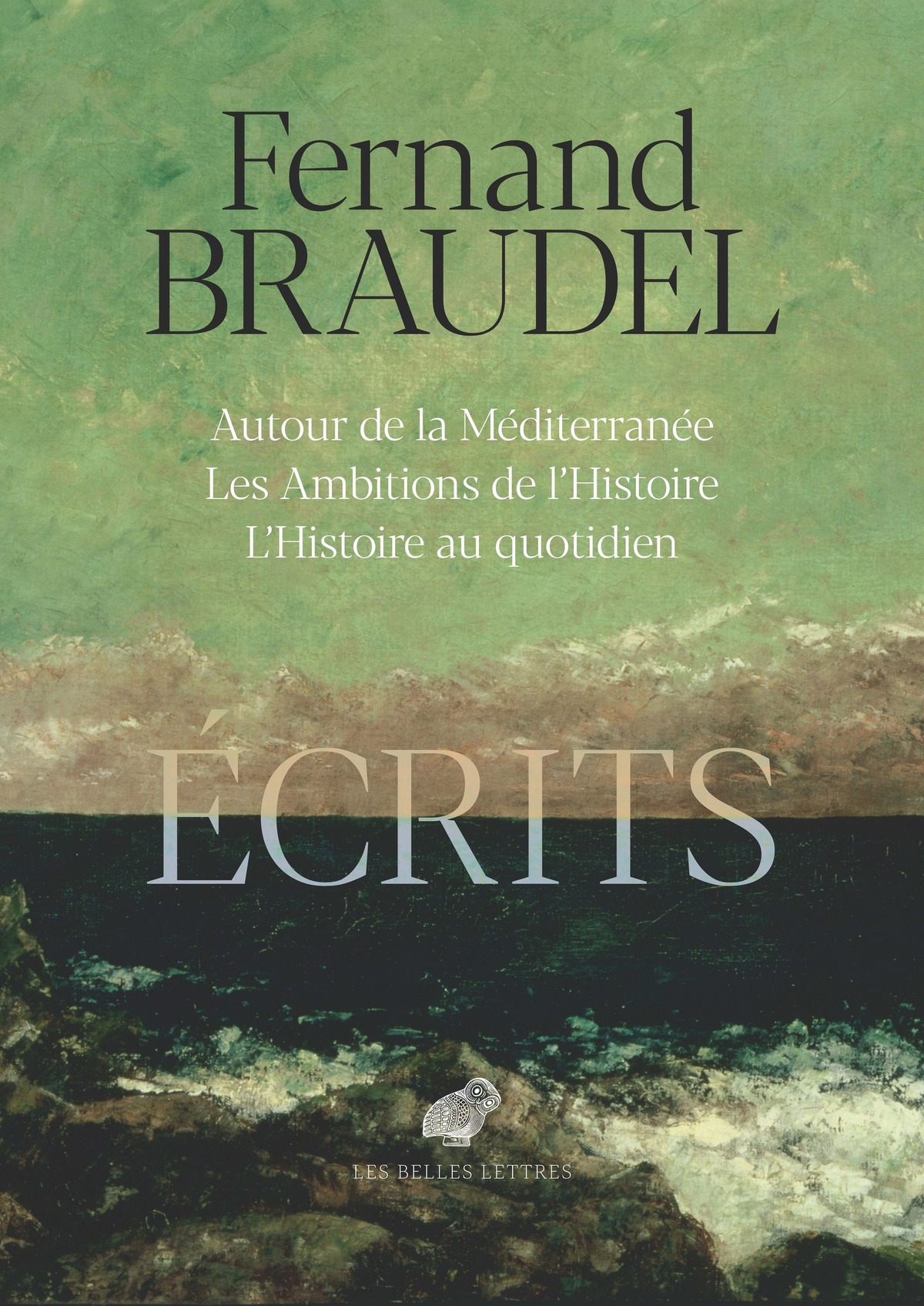
BOOK: Fernand BRAUDEL, Ecrits. Autour de La Méditerranée. Les Ambitions de l'Histoire. L'Histoire au quotidien (ed. Bernard DE FALLOIS) (Paris: Les Belles Lettres, 2025), ISBN 9782251457154 € 59,99


(image source: Les belles lettres)

Abstract:
Ces Écrits rassemblent les textes de Fernand Braudel, rédigés entre 1927 et 1985. Ils retracent, dans son évolution chronologique, le chemin d’une pensée originale et fondatrice pour le renouvellement de la discipline historique au XXe siècle. Si elle s’est longtemps cherchée, sa pensée témoigne d’intérêts constants : pour l’histoire de la Méditerranée, dont il dresse un parallèle éclairant avec l’espace Atlantique pendant un séjour de recherche à Sao Paulo ; pour le capitalisme de l'âge moderne et la place des ouvriers dans l’histoire ; mais aussi et surtout pour la manière dont l’histoire se fait, s’écrit et s’enseigne en France, avec en perspective son engagement au sein de l’École des Annales. La première partie, Autour de la Méditerranée, correspond pour l’essentiel aux premières années d’enseignement et de formation de Braudel. Articles et comptes rendus tournent autour de ses lectures et recherches à partir de 1927. Naturellement, ils concernent d’abord l’Afrique du Nord où il professa de 1923 à 1932. Puis l’Espagne et l’Italie prennent le relais ; elles resteront présentes dans ses curiosités tout au long de sa vie. La deuxième partie, Les Ambitions de l’Histoire, est composée autour de la réflexion théorique de l’auteur : elle s’affirme pendant la longue rumination de la captivité et les rédactions successives de la Méditerranée. Bien entendu, sa longue fréquentation des Annales, alors dans toute leur agressive nouveauté, sa rencontre avec Lucien Febvre en 1937 ont leur part dans cette élaboration. Après la création de la VIe section de l’École Pratique des Hautes Études en 1948, il entre à son tour dans le combat des Annales « pour une plus grande histoire ». Les textes de cette partie, qui vont de la guerre jusqu’à la fin de sa vie, en sont le reflet et s’organisent d’eux-mêmes autour de ses trois ouvrages successifs : La Méditerranée, Civilisation matérielle et Histoire de France. La troisième partie, L’Histoire au quotidien, comme de juste, est plus hétéroclite, à la mesure des activités très diversifiées de Fernand Braudel. On y trouvera successivement les traces de son expérience brésilienne, de ses relations avec les mondes universitaires et scientifiques français et étrangers, de sa direction des Annales jusqu’en 1970, et de l’exercice de son métier d’enseignant, du lycée jusqu’au Collège de France. Ce recueil des Écrits de Fernand Braudel, réunissant des textes dispersés d’accès parfois difficile, nous invite à considérer l’oeuvre comme un tout, dans son élaboration, sa cohérence et ses contradictions. Il met en perspective la progression et l’évolution interne, ainsi que le rapport aux différentes étapes et expériences de la vie de son auteur. Il constitue, à ce titre, un ouvrage de référence qui permettra aux historiens, grâce à son index, de se repérer et de saisir l’oeuvre de Braudel dans son ensemble.

 Read more here.


16 May 2024

BOOK: Stefan EKLÖF AMIRELL, Hans HÄGERDAL & Bruce BUCHAN (eds.), Piracy in World History (Amsterdam: University Press, 2021). ISBN: 9789463729215, pp. 290, € 124,00 (eBook open access, afterword by Lauren Benton).


(Source: AUP)

ABOUT THE BOOK

In a modern global historical context, scholars have often regarded piracy as an essentially European concept which was inappropriately applied by the expanding European powers to the rest of the world, mainly for the purpose of furthering colonial forms of domination in the economic, political, military, legal and cultural spheres. By contrast, this edited volume highlights the relevance of both European and non-European understandings of piracy to the development of global maritime security and freedom of navigation. It explores the significance of ‘legal posturing’ on the part of those accused of piracy, as well as the existence of non-European laws and regulations regarding piracy and related forms of maritime violence in the early modern era. The authors in Piracy in World History highlight cases from various parts of the early-modern world, thereby explaining piracy as a global phenomenon.

ABOUT THE EDITORS

Stefan Eklöf Amirell is a professor of global history at Linnaeus University, Sweden, and the director of the Linnaeus University Centre for Concurrences in Colonial and Postcolonial Studies. His research focuses on colonial encounters and maritime violence during the long nineteenth century.

Hans Hägerdal is a professor of history at Linnaeus University, Sweden. His major fields are East and Southeast Asian history, in particular focusing on early-modern colonial encounters and contact zones, historiographical questions, and the history of slaving.

Bruce Buchan is an intellectual historian specializing in the intersection of colonization with the history of ideas in the late eighteenth century. He is an associate professor in the School of Humanities, Languages, and Social Sciences, at Griffith University in Brisbane, Australia.

TABLE OF CONTENTS

Table of Contents
Hide Table of Contents
Acknowledgements

1 Introduction: Piracy in World History
Stefan Eklof Amirell, Bruce Buchan, and Hans Hagerdal

2 "Publique Enemies to Mankind": International Pirates as a Product of International Politics
Michael Kempe

3 All at Sea: Locke's Tyrants and the Pyrates of Political Thought
Bruce Buchan

4 The Colonial Origins of Theorizing Piracy’s Relation to Failed States
Jennifer L. Gaynor

5 The Bugis-Makassar Seafarers: Pirates or Entrepreneurs?
Hans Hagerdal

6 Piracy in India's Western Littoral: Reality and Representation
Lakshmi Subramanian

7 Holy Warriors, Rebels, and Thieves: Defining Maritime Violence in the Ottoman Mediterranean
Joshua M. White

8 Piracy, Empire, and Sovereignty in Late Imperial China
Robert J. Antony

9 Persistent Piracy in Philippine Waters: Metropolitan Discourses about Chinese, Dutch, Japanese, and Moro Coastal Threats, 1570–1800
Birgit Tremml-Werner

10 Sweden, Barbary Corsairs, and the Hostis Humani Generis: Justifying Piracy in European Political Thought
Joachim Ostlund and Bruce Buchan

11 "Pirates of the Sea and the Land": Concurrent Vietnamese and French Concepts of Piracy during the Second Half of the Nineteenth Century
Stefan Eklof Amirell

12 Pirate Passages in Global History: Afterword
Lauren Benton


More information with the publisher.

22 March 2024

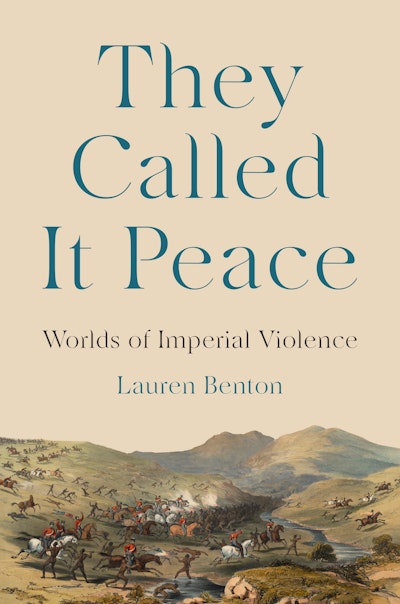
BOOK: Lauren BENTON. They Called it Peace: Worlds of Imperial Violence (Princeton: Princeton University Press, 2024), 304 p., ISBN 9780691248479


(image source: Princeton)

Abstract:

Imperial conquest and colonization depended on pervasive raiding, slaving, and plunder. European empires amassed global power by asserting a right to use unilateral force at their discretion. They Called It Peace is a panoramic history of how these routines of violence remapped the contours of empire and reordered the world from the fifteenth to the twentieth centuries. In an account spanning from Asia to the Americas, Lauren Benton shows how imperial violence redefined the very nature of war and peace. Instead of preparing lasting peace, fragile truces ensured an easy return to war. Serial conflicts and armed interventions projected a de facto state of perpetual war across the globe. Benton describes how seemingly limited war sparked atrocities, from sudden massacres to long campaigns of dispossession and extermination. She brings vividly to life a world in which warmongers portrayed themselves as peacemakers and Europeans imagined “small” violence as essential to imperial rule and global order. Holding vital lessons for us today, They Called It Peace reveals how the imperial violence of the past has made perpetual war and the threat of atrocity endemic features of the international order.

On the author:

Lauren Benton is the Barton M. Biggs Professor of History at Yale University and recipient of the Toynbee Prize for significant contributions to global history. Her books include A Search for Sovereignty: Law and Geography in European Empires, 1400–1900 and (with Lisa Ford) Rage for Order: The British Empire and the Origins of International Law, 1800–1850.

Read more here

04 November 2021

BOOK: Leos MÜLLER, Neutrality in World History (London: Routledge, 2019). ISBN: 9781138745384, pp. 188, £ 27.99 (paperback)

(Source: Routledge)

ABOUT THE BOOK

Neutrality in World History provides a cogent synthesis of five hundred years of neutrality in global history. Author Leos Müller argues that neutrality and neutral states, such as Switzerland, Sweden and Belgium, have played an important historical role in implementing the free trade paradigm, shaping the laws of nations and humanitarianism, and serving as key global centres of trade and finance. Offering an intriguing alternative to dominant world history narratives, which hinge primarily on the international relations and policies of empires and global powers, Neutrality in World History provides students with a distinctive introduction to neutrality’s place in world history.

ABOUT THE AUTHOR

Leos Müller is Professor of History and Head of the Centre for Maritime Studies at Stockholm University.

TABLE OF CONTENTS

Chapter 1: Introduction: Why Neutrality?

Chapter 2: Birth of Maritime Neutrality: 1500–1650

Chapter 3: Neutrality at Sea: 1650–1815

Chapter 4: The Golden Age of Neutrality: 1814–1914

Chapter 5: Neutrality in Trouble: 1914–2016

Concluding Remarks: Neutrality in the Past, Present and Future


More information with the publisher.

05 October 2021

CALL FOR PHD-POSITIONS: ERC Research Group IberLAND (Beyond Property: Law and Land in the Iberian World (1510-1850); DEADLINE 15 OCT 2021


 The Max Planck Institute for Legal History and Legal Theory in Frankfurt/Main is a world leader in fundamental research on law. Its three research departments with more than 60 scholars, the unrivalled collections of its specialized library, and its numerous national and international co-operations make it the central research hub for a global scientific community investigating the past, present, and future of legal regimes.


We are looking to recruit from March 2022 onwards,


Three PhD researchers (m/f/d/)


for the ERC research group IberLAND

“Beyond Property. Law and Land in the Iberian World (1510-1850)”

directed by Dr. Manuel Bastias Saavedra, with a case study compatible with the following focus:


(1) Goa (and Old Conquests), 1510-1630

(2) New Spain, 1520-1630

(3) Cape Verde, 1600-1730


IberLAND explores the history of land tenure in a long-term and global perspective by focusing on the territories of the former Portuguese and Spanish empires in what has recently been labelled the Iberian world. The Iberian crowns of Portugal and Castile, beginning in the 15th century, connected diverse peoples and communities across Africa, Asia, Europe, and the Americas. In doing so, they for the first time transformed the questions of how to own and how to use land into an issue of global dimensions. While this age of discovery and colonialism has often been regarded as the first phase of the transplantation of European concepts of property from Europe to the non-European world, IberLAND seeks to disrupt this narrative by looking at the history of land tenure not as a process of diffusion from Europe to the world, but as a process of decentred legal innovation. To do this, the project will move beyond the idea of property and focus on land relations to understand the sets of social relations established between people and land. This conceptual approach provides a way of observing how law was produced at the local level through the combination of practice and doctrine. To connect legal doctrines to local practices, the project’s analysis will focus on different sets of institutions that structured land relations in different places in the Iberian world. This conceptual and analytical framework will be applied to six case studies focusing on New Spain, Goa, Cape Verde, Spain, Brazil and the Philippines, enabling us to overcome the diffusionist mindset that has pervaded the study of law and empire.


Job description


Your key responsibility is to develop and complete a doctoral dissertation within the framework of the research group with focus on one of the three regions and temporal foci above. Doctoral researchers are also expected to discuss, publish, and disseminate their research findings in close co-operation with the other members of the research group.


Your Profile


You hold a university degree in history, law, anthropology, or other related field that has been completed with above-average success. Applicants should hold a master’s degree at the time the PhD contract is signed. Candidates may already be enrolled in a PhD program in any university worldwide.


You are fully proficient in Portuguese and/or Spanish, and good knowledge of English is expected. Knowledge of additional languages relevant to the regional focus is not required but will be considered an asset.


Your curriculum vitae shows the potential to conduct research at an internationally high level. You work meticulously and are able to handle deadlines. You work independently and have a strong interest in interdisciplinary, archival, and comparative work. You have the ability to play an active collaborative role in the research group.


Our offer


We offer an attractive and international work environment with unparalleled research infrastructure and a good working atmosphere. The candidate will have the opportunity to take part in an interdisciplinary international research group, benefit from continuous scientific exchange, a comprehensive library and the possibility of research stays in Germany and abroad.


The PhD positions are full-time (39 hours per week) and are paid the equivalent of 65% of the German Civil Service Collective Agreement (TVöD Bund), level E13.


The positions are fixed-term appointments for three years; in exceptional cases, a position can be extended for up to one additional year.


The Max Planck Society is committed to increasing the number of individuals with disabilities in its workforce and therefore encourages applications from such individuals. Furthermore, the Max Planck Society seeks to increase the number of women in those areas where they are underrepresented and therefore women are explicitly encouraged to apply.


We encourage applications from all backgrounds.


Application process


The application can be in English, Portuguese, Spanish or German and should contain the following documents (in one pdf document):


·         Cover letter naming your research project and explaining to what extent your profile meets the selection criteria

·         Detailed CV containing a list of any publications you might have

·         Preliminary research project (up to five pages, not including bibliography) on a local or regional case study fitting within one of the three regions indicated above, specifically indicating archives and sources. (Applicants working on other regions of the Iberian World may be considered but should contact Dr. Bastias Saavedra before applying).

·         Copies of your university certificates


Your application must be submitted online via the following link by the closing date of October 15, 2021: https://www.lhlt.mpg.de/job-offers. Outstanding candidates will be invited to an interview.


Contact


You are encouraged to contact Dr. Bastias Saavedra (bastias@lhlt.mpg.de) for any inquiries regarding the scientific aspects of the project. For questions as to the terms and conditions of employment, please contact Ms. Anna Heym (jobs@lhlt.mpg.de).

17 May 2021

PODCAST: Une "conversation mondiale" exceptionnelle sur les origines de la laïcité entre Carlo Ginzburg et Sanjay Subrahmanyam (France Culture, 14 MAY 2021)

(cartoon on the imminent rupture of the link between Church and State during the French Third Republic; source: France Culture)

 Abstract:

A l’ordre du jour ce soir : le "Temps du débat" poursuit la conversation entamée il y a longtemps déjà entre deux grands historiens et intellectuels, Carlo Ginzburg, professeur d’histoire moderne à l’Ecole Normale supérieure de Pise et à l’université de Californie à Los Angeles et Sanjay Subrahmanyam, professeur également à UCLA et au Collège de France. L’un et l’autre s’intéressent ces temps-ci à ce qu’on appelle habituellement la religion mais aussi au sécularisme. Après une année où la France fut secouée encore par les débats liés à la laïcité, nous avons plaisir à élargir dans le temps et l’espace ces questions profondément renouvelées par la recherche et la confrontation mondiale des idées.

(source: France Culture)

08 January 2019

PRIZE: 2019 Toynbee Prize to Prof. Lauren Benton (Vanderbilt University)

(image source: Toynbee Prize Foundation)

We have the following announcement from the Toynbee Prize Foundation:

Lauren Benton has been named winner of the 2019 Toynbee Prize. Benton is Nelson O. Tyrone, Jr. Professor of History and Professor of Law at Vanderbilt University.
Benton was selected as winner of the Prize by the Toynbee Prize Foundation’s Board of Trustees. Both Dominic Sachsenmaier, President of the Foundation and Chair Professor of Modern China at the University of Göttingen, and Darrin McMahon, Foundation Vice-President and Mary Brinsmead Wheelock Professor of History at Dartmouth College, applauded the choice of Benton. “Lauren Benton has made enormous contributions to the global historical study of empires and international legal systems,” said Sachsenmaier. “We are delighted to award her the 2019 Toynbee Prize for the excellence and broad range of her global historical scholarship.”
The Trustees agreed. Jennifer Pitts, Associate Professor of Political Science at the University of Chicago, commented:
Lauren Benton has been an indispensable voice in global history, imperial history, and the history of international law, especially in the lively and ongoing interdisciplinary debate about the formation of the global legal order. She has broken important new ground with each of her books, as well as many articles on subjects from legal pluralism to piracy to the abolition of the slave trade. She has made a uniquely powerful case that the history of international law must take into account not simply the arguments of prominent legal theorists but also the actions and arguments of a host of actors from all over the world, what she has called “vernacular forms of political theory.” Her lively authorial voice, incisive arguments and conceptual innovations, engaging narratives, and remarkable archival work have made her work equally valuable to students and specialists alike.
David Armitage, Lloyd C. Blankfein Professor of History at Harvard University wrote:
Lauren Benton has done more than any other scholar in recent generations to reintegrate global history with legal history. With archival tenacity and broad conceptual sweep, she has used fine-grained microhistory in the service of world-spanning arguments about the tentative distribution of imperial power, the informal elaboration of international law, and the paradoxes of sovereignty in a world unevenly colonized and incompletely decolonized. Her achievements, alone and in collaboration with a wide range of younger scholars, make her an apt and inspirational recipient of the Toynbee Prize.
Jeremy Adelman, Henry Charles Lea Professor of History and Director of the Global History Lab at Princeton University enthused:
Lauren Benton has opened new frontiers for global history. She has challenged us all to rethink how we think about empires by spotlighting the spaces in between, the anomalies, and the fringes as locations of improvisation and development.  She has upended the traditional understandings of law and outlawry in the making of practices of modern sovereignty.  And the breadth of her research is simply astonishing.
Jie-Hyun Lim, Professor of Transnational History and Director of the Critical Global Studies Initiative at Sogang University, Seoul, added that “[b]y investigating “jurisdictional politics,” Lauren Benton has contributed to our understanding of the global legal regime as the palimpsest of historical negotiations between centers and peripheries.”
Benton is the author of four books and editor of three. She is perhaps best known for her three seminal works of comparative legal history: Law and Colonial Cultures: Legal Regimes in World History, 1400–1900 (Cambridge UP, 2002), which was awarded the J. Willard Hurst Prize and the World History Association Book Prize; A Search for Sovereignty: Law and Geography in European Empires, 1400–1900 (Cambridge UP, 2010); and, most recently, Rage for Order: The British Empire and the Origins of International Law, 1800–1850 (Harvard UP, 2016), co-written with Professor Lisa Ford. In his review of Law and Colonial Cultures, the late Adam McKeown, former professor of history at Columbia University, hailed the book as “a landmark in the creation of a more complex modern global cultural history built on more than just expansion and resistance, but on a shifting negotiation of power, culture, difference, homogenization, identity, and rights.” [1] Her other books include Invisible Factories: The Informal Economy and Industrial Development in Spain (State University of New York Press, 1990); with Bain Attwood and Adam Clulow, Protection and Empire: A Global History (Cambridge UP, 2017); with Richard Ross, Legal Pluralism and Empires, 1500-1850 (New York UP, 2013); and, with Alejandro Portes and Manuel Castells, The Informal Economy: Studies in Advanced and Less Developed Countries (1989). Benton received her A.B. with a concentration in economics from Harvard University in 1978 and a Ph.D. in anthropology and history from Johns Hopkins University in 1987. Prior to her position at Vanderbilt, she was Julius Silver Professor of History and Affiliated Professor of Law at New York University. She has also taught at Rutgers University, New Jersey Institute of Technology, the University of Washington, Bothell, and Massachusetts Institute of Technology.
The Toynbee Prize is awarded biennially “for work that makes a significant contribution to the study of global history.” In winning the Prize, Benton joins a distinguished roster of Toynbee Prize recipients, including Natalie Zemon Davis, Dipesh Chakrabarty, Christopher Bayly and, most recently, Jürgen Osterhammel.
Benton will formally accept the Prize and deliver the Toynbee Prize Lecture at the Annual Meeting of the American Historical Association in Chicago, Illinois, in early January 2019. Details of the lecture to follow.
(source: ESILHIL Blog)

17 October 2017

Eric SCHNAKENBOURG (ed.), Neutres et neutralité dans l'espace atlantique durant le long XVIIIe siècle (1700-1820)/Neutrals and Neutrality in the Atlantic World during the Long Eighteenth Century (1700-1820). Une approche totale/A Global Approach (Bécherel: les Perséides, 2015), 491 p. ISBN 9782371250147

(image source: AHMUF)


Book abstract:
L’étude de la neutralité révèle les tensions entre les logiques de guerre et les logiques négociantes qui manifestent, autant l’une que l’autre, l’intensité des relations au sein du monde atlantique. C’est pourquoi la neutralité doit être étudiée comme une réalité transversale inscrite dans un espace marqué par la fluidité des circulations. Elle impose de dépasser les cadres nationaux pour promouvoir une approche ouverte des interconnections afin d’envisager à nouveaux frais les questions relatives à la neutralité et au rôle des neutres au cours du long XVIIIe siècle. Cette approche, qui participe du décloisonnement spatial et thématique de l’histoire atlantique, permet d’embrasser dans une même perspective aussi bien « les » Amériques, septentrionale, intertropicale et méridionale, que l’Europe. La neutralité atlantique est une arène au sein de laquelle se nouent des relations entre Européens, entre Américains, et entre Européens et Américains. Elle peut être envisagée comme une entrée dans la réflexion sur la formation d’un espace euroaméricain économique,juridique et diplomatique.

Table of contents:
Introduction :
Neutralité atlantique et atlantique de la neutralité
Atlantic neutrality and the neutrality of the Atlantic
Partie 1 : Les circulations et réseaux du commerce neutre / circulation and networks of neutral commerce
Ana Crespo Solana, Madrid, Cooperation or Neutrality? How the war affects business strategies: The case of Cadiz (1700-1740)
Holger Weiss, Turku, Trade and neutrality during times of war: An analysis of the Danish-European and Danish-African relationships on the Gold Coast during the second half of the eighteenth century
Eric Schnakenbourg, Nantes, Substitution aux échanges des temps de paix ou modalité de l’interlope ? Le commerce neutre et les colonies françaises des Antilles pendant la guerre de Sept Ans
Boris Deschanel, Paris I Panthéon-Sorbonne, Les neutres dans les stratégies négociantes : l’exemple des sociétés Chauvet à Marseille (1785-1802)
Silvia Marzagalli, Nice, La navigation américaine pendant les French Wars (1793-1815) : une simple reconfiguration des circuits commerciaux par neutres interposés ?

Partie 2 : Les acteurs de la neutralité atlantique / The actors of Atlantic neutrality
Barry Stiefel, Charleston, Jews as Neutral Middlemen in the Long XVIIIth century Atlantic World
Manuel Covo, Warwick, Droit de la neutralité, pratiques de mobilité marchande et catégorisation politique à l’ère des révolutions : entre Antilles et États-Unis (années 1790)
Dominique Goncalvès, Toulouse, Le commerce de Cuba avec les neutres à travers les Actes de sessions du Consulat royal, 1797-1807.
Clément Thibaud, Nantes, América libre : les Neutres et la naissance du premier républicanisme hispano-américain (1793-1820)

Partie 3 : Les poles du commerce neutre / the centers of neutral commerce
Victor Enthoven, Amsterdam, ‘‘The unlimited cupidity of the Dutch merchants’’: St. Eustatius and Anglo-Dutch controversy over neutral rights, 1680-1780
François Antoine, Bruxelles, La guerre d’Indépendance américaine et la tentative de relance du commerce international des Pays-Bas méridionaux
Miguel Dantas da Cruz, Lisbonne, The Lisbon international trade and the ambiguities of the Portuguese Neutrality (1795-1807)
Ale Pålsson, Stockholm, Common Ground: Swedish neutrality and transit trade in S:t Barthélemy 1800-1820

Partie 4 : La neutralité dans les rivalités entre états / Neutrality in the interstate rivalry
François Ternat, Rouen, La neutralisation de la frontière. Un essai de solution diplomatique en Amérique du Nord à la veille de la guerre de Sept Ans
Marc Belissa, Paris Ouest Nanterre La Défense, Faire la guerre pour avoir le droit d’être neutre ? Les enjeux politiques de la neutralité américaine (1776-1812)
Nicolas Terrien, Nantes, Les neutres, la course maritime et l’effondrement de l’empire atlantique de la monarchie espagnole (1810-1824)

CONCLUSION French
CONCLUSION English
More information here (publisher's website).

03 January 2013

PUBLICATION: The Limits of Empire

The Limits of Empire: European Imperial Formations in Early Modern World History, Essays in Honor of Geoffrey Parker, Edited by Tonio Andrade, Emory University, USA, and William Reger, Illinois State University, Normal, USA, Ashgate, December 2012

This volume, published in honor of historian Geoffrey Parker, explores the working of European empires in a global perspective, focusing on one of the most important themes of Parker’s work: the limits of empire, which is to say, the centrifugal forces – sacral, dynastic, military, diplomatic, geographical, informational – that plagued imperial formations in the early modern period (1500–1800). During this time of wrenching technological, demographic, climatic, and economic change, empires had to struggle with new religious movements, incipient nationalisms, new sea routes, new military technologies, and an evolving state system with complex new rules of diplomacy.

Engaging with a host of current debates, the chapters in this book break away from conventional historical conceptions of empire as an essentially western phenomenon with clear demarcation lines between the colonizer and the colonized. These are replaced here by much more fluid and subtle conceptions that highlight complex interplays between coalitions of rulers and ruled. In so doing, the volume builds upon recent work that increasingly suggests that empires simply could not exist without the consent of their imperial subjects, or at least significant groups of them. This was as true for the British Raj as it was for imperial China or Russia...
 
For more information click here