
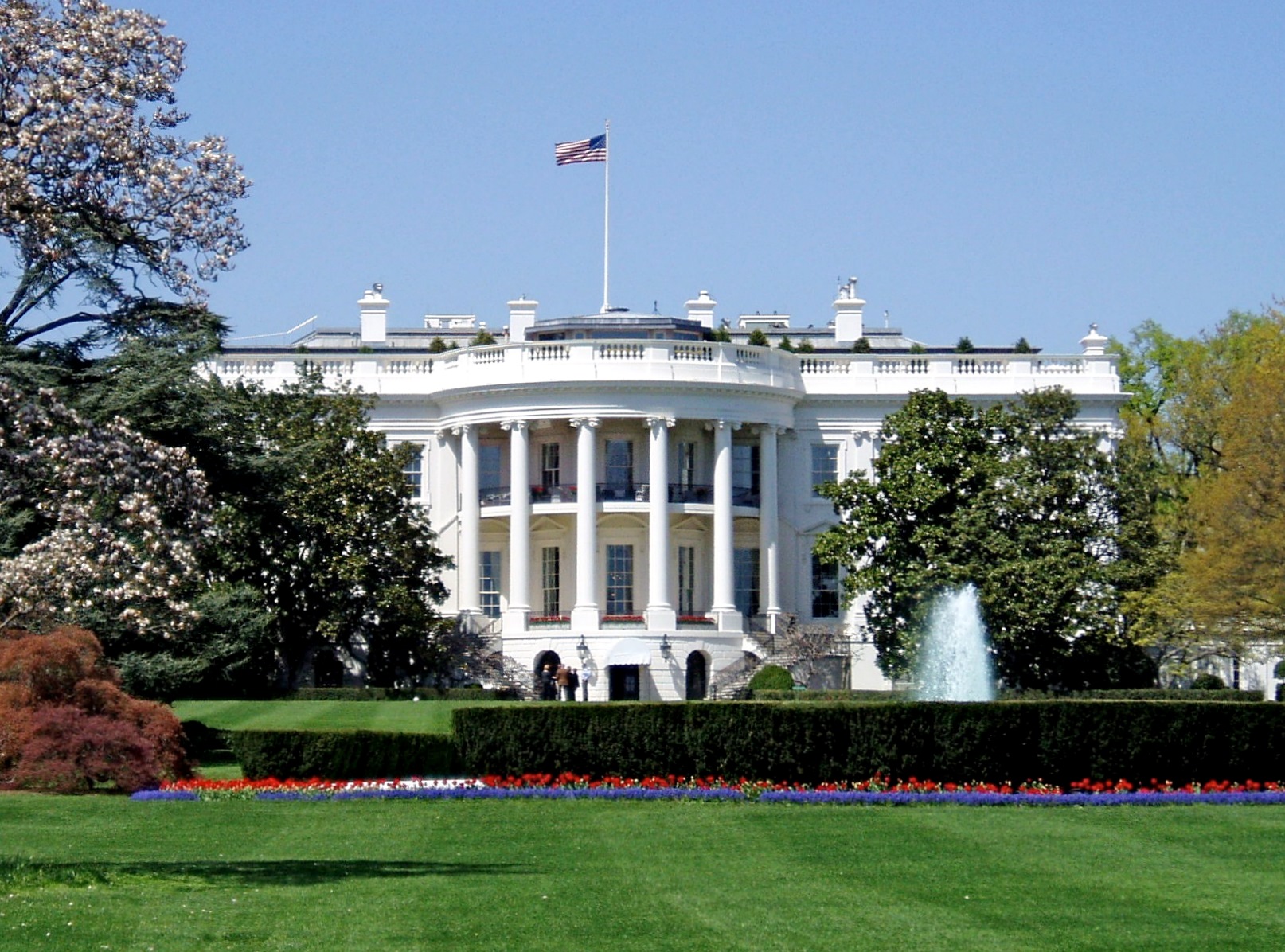
(image: The White House (South Façade); source: Wikimedia Commons)
Abstract:
This Article is the first to scrutinize presidential trade authority under the Constitution. The Constitution grants the President no independent power to regulate foreign commerce. That conclusion, while apparent from a straightforward reading of Articles I and II, stands in stark contrast to executive conduct of U.S. trade policy in recent years. This Article traces the roots of this constitutional distortion to a confluence of doctrinal drift and academic oversight. Courts and commentators have increasingly relied on an expansive conception of executive power grounded in a perceived general foreign affairs authority. In doing so, they have blurred the line between diplomacy and commerce and used this confluence to justify unilateral economic actions by a “trader in chief” that circumvent the Constitution’s allocation of power. These matters have reached a tipping point over the last decade, prompting a series of high-profile cases in which the government has argued that this general foreign affairs power includes some portion of the foreign commerce power. To correct this misapprehension, this Article undertakes a novel examination of Founding-era materials, including the distribution of commercial authority between the king and parliament in eighteenth-century Britain, the correspondence and deliberations of the Framers, and the Founding Generation’s implementation of the commerce power in matters of national security during the early years of the Republic. These sources reveal a consistent and deliberate understanding both that Congress’s control over foreign commerce is exclusive and that Congress’s control over commerce trumps the President’s general foreign affairs powers when the two intersect. This Article further argues that this allocation was not accidental or ancillary but central to the constitutional design.
Read the article in open access here.
(source: Legal History Blog)


