Search

Showing posts with label Linguistics. Show all posts

22 February 2024

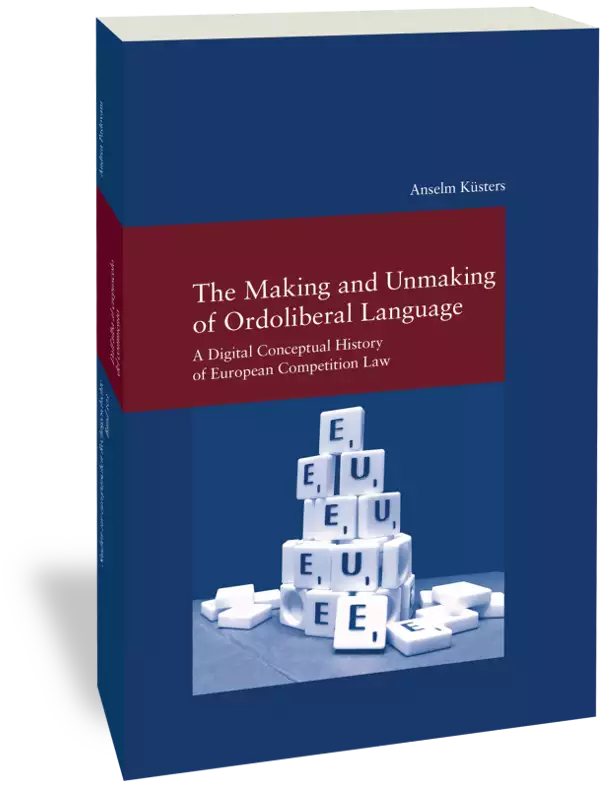
BOOK: Anselm KÜSTERS, The Making and Unmaking of Ordoliberal Language. A Digital Conceptual History of European Competition Law (Frankfurt am Main: Klostermann, 2023), ISBN: 9783465046011


ABOUT THE BOOK

The ordoliberal school of competition thought is a distinct linguistic community whose conceptual and semantic influence extended far beyond Germany and eventually shaped the European legal order. Linguistic misunderstandings still impacted the negotiations of the founding European Treaties, but in the subsequent application of the new rules, the Freiburg School’s ordoliberal ideas gained in popularity. In the early 2000s, this ordoliberal language was replaced by neoliberal concepts borrowed from the Chicago School. This study combines archival materials, oral history interviews, case law and Text Mining methods. In doing so, it contributes to the historiography of EU competition law, the post-war history of ordoliberalism, and methodological debates about Digital Humanities.


More information can be found here.

14 December 2020

BOOK: Robert GALLAGHER, Edward ROBERTS and Francesca TINTI (Eds.), The Languages of Early Medieval Charters - Latin, Germanic Vernaculars, and the Written Word (Leiden-New York: Brill, 2020). ISBN 978-90-04-42811-9, 134.00 EUR.


(Source: Brill)

Brill is publishing a new book on the interplay between Latin and Germanic vernaculars in early medieval records.

ABOUT THE BOOK

This is the first major study of the interplay between Latin and Germanic vernaculars in early medieval records. Building on previous work on the uses of the written word in the early Middle Ages, which has dispelled the myth that this was an age of ‘orality’, the contributions in this volume bring to the fore the crucial question of language choice in the documentary cultures of early medieval societies. Specifically, they examine the interactions between Latin and Germanic vernaculars in the Anglo-Saxon and eastern Frankish worlds and in neighbouring areas. The chapters are underpinned by an important comparative dimension on account of the two regions’ shared linguistic heritage and numerous cross-Channel links. 

ABOUT THE EDITORS

Robert Gallagher is Lecturer in Early Medieval History at the University of Kent. His primary research focus is the politics and textual cultures of early medieval Britain, with special interests in documentary activity, multilingualism, Latin verse, and manuscript use. 


Edward Roberts is Lecturer in Early Medieval History at the University of Kent. He specializes in the history of Carolingian and Ottonian Europe, with particular interests in historical writing, legal culture, charters, bishops, and institutional change.

 
Francesca Tinti is Ikerbasque Research Professor at the University of the Basque Country, UPV/EHU. She has published widely on early medieval religious, social, and cultural history, with a special focus on Anglo-Saxon England, its documentary culture, and its relations with the European continent. 

TABLE OF CONTENTS

Contents

List of Illustrations

Abbreviations

Notes on Contributors


1 Latin and Germanic Vernaculars in Early Medieval Documentary Cultures: Towards a Multidisciplinary Comparative Approach

  Francesca Tinti


2 Charters, Languages, and Communication: Recent Work on Early Medieval Literacy

  Rosamond McKitterick


3 The Multilingualism of the Early Middle Ages: Evidence from Peripheral Regions of the Regnum orientalium Francorum

  Wolfgang Haubrichs


4 Germanic Names, Vernacular Sounds, and Latin Spellings in Early Anglo-Saxon and Alemannic Charters

  Annina Seiler


5 Language, Formulae, and Carolingian Reforms: the Case of the Alemannic Charters from St Gall

  Bernhard Zeller


6 Signalling Language Choice in Anglo-Saxon and Frankish Charters, c.700–c.900

  Edward Roberts and Francesca Tinti


7 The Endorsement Practices of Early Medieval England

  Robert Gallagher and Kate Wiles


8 Traces of Bilingualism in Early Medieval Northern Italy: the Evidence from Eighth- and Ninth-Century Private Charters

  Marco Stoffella


9 Languages of Boundaries and Boundaries of Language in Cornish Charters

  Charles Insley


10 Vernacular Writing in Early Medieval Manorial Administration: Two Tenth-Century Documents from Werden and Essen

  Stefan Esders


11 Royal Authority, Regional Integrity: the Function and Use of Anglo-Saxon Writ Formulae

  Albert Fenton


12 From Memorandum to Written Record: Function and Formality in Old English Non-Literary Texts

  Kathryn A. Lowe


13 Writing, Communication, and Currency: Dialogues between Coinage and Charters in Anglo-Saxon England

  Rory Naismith


14 Epilogue

  Janet L. Nelson


Index


More info here

09 July 2018

BOOK: Jenny BENHAM, Matthew MCHAFFIE, and Helle VOGT, eds., Law and Language in the Middle Ages [Medieval Law and Its Practice] (Leiden-New York: Brill, 2018). ISBN 978-90-04-34267-5, €110.00

(Source: Brill)

Brill has published a new book on law and language in the Middle Ages.

ABOUT THE BOOK

Law and Language in the Middle Agesinvestigates the encounter between law and legal practice from the linguistic perspective. The essays explore how legal language expresses and advances power relations, along with the ways in which the language of law legitimates power. The wide geographical and chronological scope showcases how power, legitimacy and language interact, moving the discussion beyond traditional issues of identity or the formation of nation-states and their institutions. What emerges are different strategies reflective of the diverse and pluralistic political, legal, and cultural worlds of the Middle Ages.

Contributors are Michael H. Gelting, Dirk Heirbaut, Carole Hough, Anette Kremer, Ada Maria Kuskowski, Anders Leegaard Knudsen, André Marques, Matthew McHaffie, Bruce O’Brien, Paul Russell, Werner Schäfke, and Vincenz Schwab. 

ABOUT THE EDITORS

Jenny Benham is a Lecturer in Medieval History at Cardiff University. Her publications include Peacemaking in the Middle Ages: Principles and Practice (Manchester, 2011) and numerous articles on various aspects of law and diplomatic practice in the period 800-1250.

Matthew McHaffie completed his Ph.D. on ‘Power, Lordship, and Landholding in Anjou, c.1000–c.1150’ in 2014, and is currently a researcher at King’s College London. He has published on law and lordship in France in the central Middle Ages.

Helle Vogt is a Professor in Legal History at the University of Copenhagen. Her publications include The Function of Kinship in Medieval Nordic Legislation (Leiden, 2010) and numerous articles on aspects of Nordic legal history. 

TABLE OF CONTENTS

Contents
Notes on Contributors
List of Illustrations
Introduction
  Jenny Benham, Matthew McHaffie, and Helle Vogt 

Part 1 Translation and Interpretation of Law

1 Why Laws Were Translated in Medieval England: Access, Authority, and Authenticity
  Bruce O’Brien

2 Translating Justinian: Transmitting and Transforming Roman Law in the Middle Ages
  Ada Maria Kuskowski

3 Leges Iutorum: The Medieval Latin Translation of the Law of Jutland
  Michael H. Gelting

4 The Languages and Registers of Law in Medieval Ireland and Wales
  Paul Russell


Part 2 The Languages of Legal Practice and Documentary Culture

5 Latin and the Vernacular in Medieval Legal Documents: The Case of Denmark
  Anders Leegaard Knudsen

6 Between the Language of Law and the Language of Justice: The Use of Formulas in Portuguese Dispute Texts (Tenth and Eleventh Centuries)
  André Evangelista Marques

7 The Dangers of Using Latin Texts for the Study of Customary Law: The Example of Flemish Feudal Law during the High Middle Ages
  Dirk Heirbaut

8 Sources of Legal Language: The Development of Warranty Clauses in Western France, ca.1030–ca.1240
  Matthew McHaffie 

Part 3 Methodology, Interaction, and Language

9 Law and Language in the Leges Barbarorum: A Database Project on the Vernacular Vocabulary in Medieval Manuscripts
  Anette Kremer and Vincenz Schwab

10 ‘And since We are No Lawyers, We Will Void the Lawsuit with Battle Axes’! Voiding a Lawsuit in Old Icelandic Procedural Law
  Werner Schäfke

11 Biblical Analogues for Early Anglo-Saxon Law
  Carole Hough

Index 

More information here