ABOUT THE BOOK:
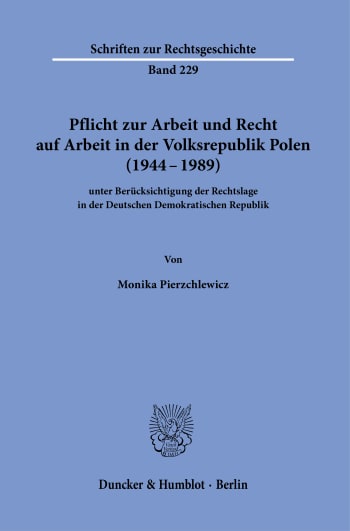
Die Dissertation untersucht die Arbeitspflicht und das Recht auf
Arbeit im sozialistischen Polen und nimmt Bezug auf die Rechtslage in
der DDR. Im Sozialismus galt Arbeit als Recht, Pflicht und Ehrensache
eines jeden Bürgers, was in den Verfassungen beider Länder verankert
war. Neben Verfassungsbestimmungen analysiert die Arbeit Rechtsakte des
einfachen Rechts, die strafrechtliche und administrative Sanktionen für
die Nichterfüllung der Arbeitspflicht vorsahen. Die Untersuchung zeigt,
dass die sozialistische Idealvorstellung von Arbeit als Lebensbedürfnis
des Werktätigen und Sache der Ehre, das Ideal der nach sozialistischem
Verständnis freiwillig nachgegangenen Pflicht zur Arbeit sowie des
Rechts auf eine »ausbeutungsfreie« und »schöpferische« Arbeit in der
Realität scheiterten. Die Arbeitspflicht sollte primär wirtschaftlichen
Zielen dienen, wobei Zwang im Sozialismus als Mittel zur Erreichung von
Freiheit betrachtet wurde.
TABLE OF CONTENT:
Einleitung
Zum Thema der Arbeit – Forschungsstand – Methodik und Leitfragen – Quellen – Thematischer und zeitlicher Rahmen der Arbeit – Aufbau
1. Einführende Bemerkungen und Begriffserklärungen
Zwangsbegriff – Sozialistischer Freiheitsbegriff – Sozialistischer Staat – Sozialistisches Recht – Wirtschaftliche und politische Hintergründe in der Volksrepublik Polen – Das gesellschaftlich-politische System der DDR und ökonomische Rahmenbedingungen
2. Arbeit im Sozialismus
Arbeitsbegriff – Sozialistische Arbeitsmoral – Sozialistische Berufsfreiheit
3. Pflicht zur Arbeit und Recht auf Arbeit auf Verfassungsebene
Charakter der VRP-Verfassung – Sozialistische Grundrechtskonzeption – Recht auf Arbeit auf Verfassungsebene – Pflicht zur Arbeit auf Verfassungsebene – Das Prinzip der »Einheit von Rechten und Pflichten«
4. Pflicht zur Arbeit und Recht auf Arbeit auf Gesetzesebene
Wiederaufbau des Staates nach dem Zweiten Weltkrieg – Absolventenlenkung – Die Bekämpfung des sog. »sozialen Parasitismus« – Pflicht zur Arbeit in dem Dekret vom 12. Dezember 1981 über das Kriegsrecht (Kriegsrechtsdekret) – Schlussbetrachtung: Recht oder Pflicht?
Zum Thema der Arbeit – Forschungsstand – Methodik und Leitfragen – Quellen – Thematischer und zeitlicher Rahmen der Arbeit – Aufbau
1. Einführende Bemerkungen und Begriffserklärungen
Zwangsbegriff – Sozialistischer Freiheitsbegriff – Sozialistischer Staat – Sozialistisches Recht – Wirtschaftliche und politische Hintergründe in der Volksrepublik Polen – Das gesellschaftlich-politische System der DDR und ökonomische Rahmenbedingungen
2. Arbeit im Sozialismus
Arbeitsbegriff – Sozialistische Arbeitsmoral – Sozialistische Berufsfreiheit
3. Pflicht zur Arbeit und Recht auf Arbeit auf Verfassungsebene
Charakter der VRP-Verfassung – Sozialistische Grundrechtskonzeption – Recht auf Arbeit auf Verfassungsebene – Pflicht zur Arbeit auf Verfassungsebene – Das Prinzip der »Einheit von Rechten und Pflichten«
4. Pflicht zur Arbeit und Recht auf Arbeit auf Gesetzesebene
Wiederaufbau des Staates nach dem Zweiten Weltkrieg – Absolventenlenkung – Die Bekämpfung des sog. »sozialen Parasitismus« – Pflicht zur Arbeit in dem Dekret vom 12. Dezember 1981 über das Kriegsrecht (Kriegsrechtsdekret) – Schlussbetrachtung: Recht oder Pflicht?
Find more here.