Search

Showing posts with label Law and Communication. Show all posts

31 August 2026

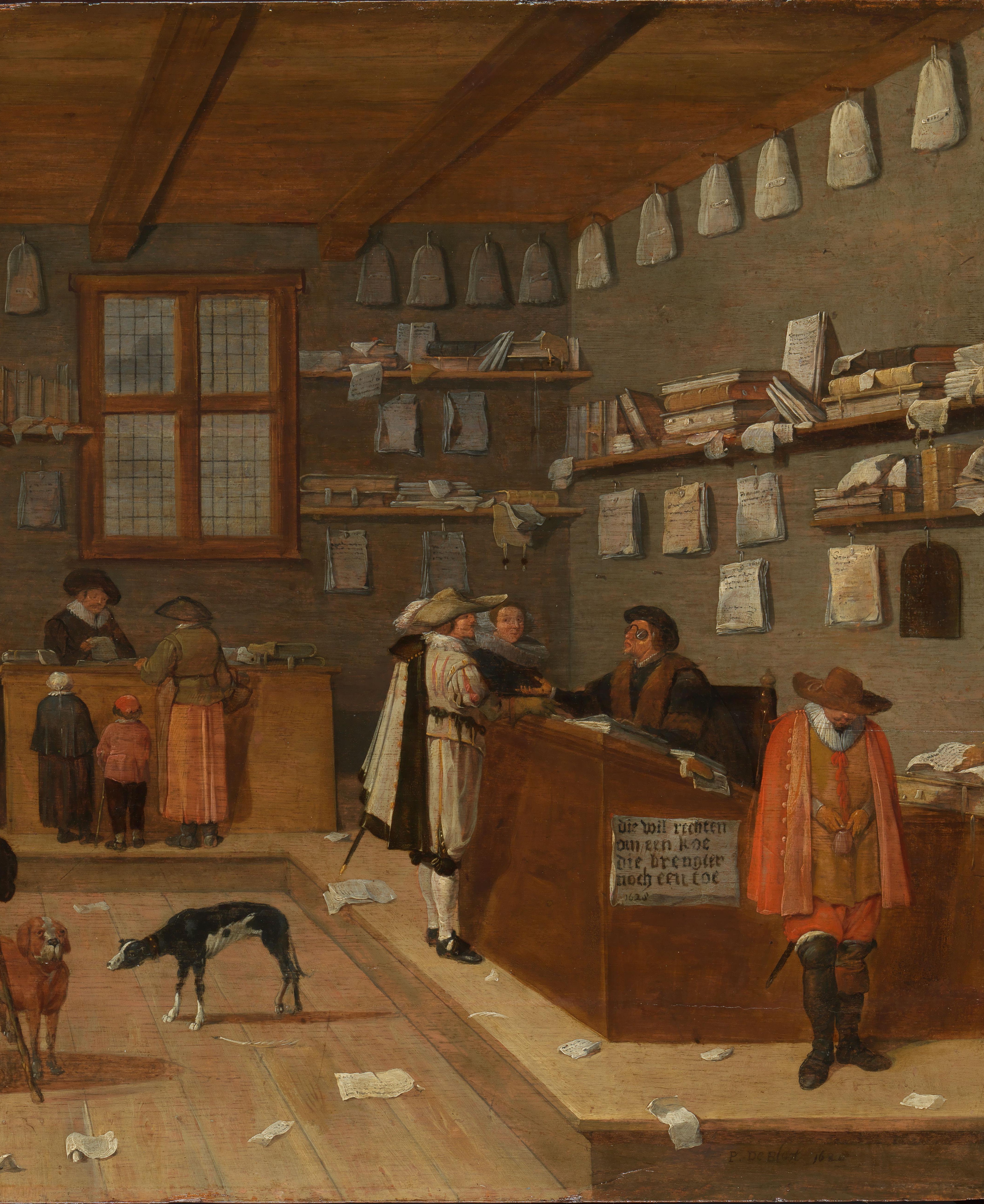
CALL FOR PAPERS: Legal Use of Print in Early Modern Europe: Function, Materiality and Circulation (St Andrews: University of St Andrews, 15, 17-19 JUN 2027) [DEADLINE 1 DEC 2026]


(image source: St Andrews)

Proposals for papers (max. 20 minutes) are invited on the subject of ‘Legal Use of Print in Early Modern Europe: Function, Materiality and Circulation’ to be presented at the combined 19th USTC/St Andrews Book History & 3rd COMLAWEU conference in St Andrews. The conference will feature hybrid sessions on Tuesday 15 June 2027 and in-person sessions on Thursday 17-Saturday 19 June 2027. 


In the early modern period, legal communication stood at the heart of European print culture. In sheer quantity of production, only works of religion can be judged to be more numerous. While legal works (similar to religious print) reached a broad public, legal print has received comparatively little attention in book historical studies. 

This conference seeks to advance the scholarly agenda by examining the manner in which print culture affected the communication of law in early modern Europe. It will aim to determine how print was used to shape the function, materiality and circulation of legal knowledge; to what extent print established new norms of legal communication; and how printed legal information spread within and beyond the juridical profession. We welcome contributions on any part of early modern Europe or its colonies, within the time frame of c. 1450-1800. 

Papers are invited on any aspect of the conference, which will seek to provide answers to (among others) the following questions: 

  • How did the form and function of legal print develop and change in early modern Europe? Did print introduce new means of legal communication? 
  • How was print employed in the administration of government, justice and tax? 
  • To what uses was print put in the legal profession? 
  • Where, how and amongst whom did legal printed matter circulate more broadly? To what extent was legal print distributed for free, or commercialised? 
  • How did the materiality of legal print (in regard to production, design and compilation) affect its use? To what extent did the genre encourage manuscript interaction? 
  • What was the role of early modern collectors, printers and publishers in assembling legal compendia, and to what extent did such compendia shape legal knowledge? 

Papers presented at the conference will form the basis of an edited volume to be published in Brill’s Library of the Written Word series.
 
Proposals, with a title, an abstract of up to 350 words, and a biography of up to 150 words, should be addressed to the organisers, Arthur der Weduwen, Demi van Breukelen and Zina Gharakhani, by 1 December 2026. Proposals should also indicate whether speakers wish to be considered exclusively for the hybrid or in-person sessions, or whether they are happy to present at either.

The organisers can be reached at adw7@st-andrews.ac.uk, dvb3@st-andrews.ac.uk and zzg1@st-andrews.ac.uk. 

07 January 2015

REVIEW: Law and Communication (St. Petersburg, 11-12 December 2014)


Review by Dmitry Poldnikov (Moscow)


International conference: "Law and Communication" (St. Petersburg, 11-12 December 2014)
The international conference "Law and Communication" was organized at St. Petersburg State University, Faculty of Law, to honour the 60th anniversary of professor Andrey Polyakov, the leading protagonist of the "law-as-communication" legal theory in Russia. This occasion attracted over 70 reporters (theoreticians of law, philosophers, practitioners) who collaborate with professor Polyakov and share his approach to study law.
Russian scholars came not only from St. Petersburg and Moscow, but also from Kaliningrad, Krasnoyarsk, Nizhny Novgorod, Saratov, Tambov, Tomsk, Volgograd, Vladivostok. Foreign colleagues represented Belarus, Belgium, Estonia, France, Germany, Italy, Poland, Ukraine, and USA.
Russian key-note presentations were made by Mikhail Antonov (St. Petersburg), Ilya Chestnov (St. Petersburg), Valentina Lapayeva (Moscow), Valery Lasarev (Moscow), Jenevra Lukovskaya (St. Petersburg), Leonid Mamut (Moscow), Vladimir Syrykh (Moscow), Elena Timoshina (St. Petersburg).
Among the renowned foreign participants were Wilfried Bergmann (Petersburger Dialog e.V.), Edoardo Fittipaldi (Milan), Werner Krawietz (Münster), Norbert Rouland (Aix-Marseille), William Simons (Leiden, Trento, Tartu), Mark Van Hoecke (Gent), Csaba Varga (Budapest).
Despite a variety of topics, most participants of the conference found their crossing points in the subject-centred perspective and the plurality of approaches to study the complex phenomenon of law in the period of post-modernity. The main ideas of the key-note presentations have been already developed and published in the two-volume "Festschrift" for professor Andrey Polyakov (Alef-Press, 2014, in Russian).
The main reason for a legal historian to participate at the conference (and to write a review thereof) is to foster the dialogue between legal history and legal theory in the methodological field. One of the major claims of Andrey Polyakov (and the St. Petersburg school of legal theoreticians, which goes back to Leon Petrazycki) is that law, in all its complexity, is basically a way of communication between human beings. This communication is based on the psychological interpretation of legal texts which leads to social interaction through claims, duties and liabilities. One can find similar perspective on law in Van Hoecke’s «Law as Communication» (2002) published almost simultaneously with Polyakov’s habilitation thesis (2001). Both professors underline the importance of communication or interaction between the subjects to create, develop and legitimate the law. This ontological perspective on law justifies the need for "multi-level approach" (Krawietz) to study and to uncover the "unsolvable enigma of law" (Chestnov).
Legal historians could also benefit from these methodological tenets, especially when dealing with the medieval disputes among creators and practitioners of the learned law (ius commune). Yet, legal theoreticians still underestimate the importance of this heritage. Apparently due to insufficient knowledge of history. For example, in Russian translation (2012) of Van Hoecke’s "Law as Communication" (2002) medieval learned law was called "primarily a matter of power" (instead of "authority", as in the English original). Although Van Hoecke’s own claim that "Legal science was also a matter of authority, not of rational consensus" (p.6) is also debatable. Most researchers of the medieval learned law would agree that it was based on both authority and reason (ratio), as Renoux-Zagamé put it.
Hopefully, the "law-as-communication" theory would encourage interdisciplinary communication to justify circulation of a saying: «historicus iuris sine philosopho iuris parum valet, philosophus iuris sine historico iuris nihil».

Conference web-page: http://law.spbu.ru/Science/SemConf.aspx#konf121214 (in Russian)