Search

Showing posts with label Law and Society. Show all posts

14 September 2026

CALL FOR PAPERS: Law in Motion: Reimagining Mobility, Boundaries, and Belonging [Global Meeting on Law and Society] (Hong Kong: The University of Hong Kong, 22-25 JUN 2026)

(image source: LSA)


Abstract:

We live in a paradoxical era. On the one hand, the world has become unprecedentedly mobile. Capital, data, goods, and ideas flow across the globe with increasing velocity, while human beings are on the move as never before—as tourists, students, laborers, digital nomads, and, most urgently, as refugees and asylum seekers displaced by conflict, climate change, and economic precarity. On the other hand, this hyper-mobility encounters an equally powerful counterforce: the hardening of boundaries. Around the world, wall-building has resurged, border surveillance has expanded, and complex legal architectures have proliferated to filter, channel, and restrict movement. In this struggle, law occupies a central position, often invisibly. It draws the lines, creates the categories, and ultimately determines who can move, where they can go, and on what terms. The conference theme, Law in Motion: Reimagining Mobility, Boundaries, and Belonging, directly confronts this tension. Emblematic of law and society scholarship, the conference urges researchers to examine law as a dynamic force that is both constituted by and constitutive of movement and to question the concepts that underpin our legal world. What constitutes a “boundary” in the 21st century, when digital borders and biometric databases are as formidable as physical walls? How is “mobility” itself stratified, creating hierarchies of travelers and migrants? And how does law construct “belonging”—not just through formal citizenship, but in the interstitial spaces of temporary visas, precarious statuses, and transnational communities? We invite scholars from law, sociology, anthropology, political science, geography, history, and beyond to investigate the intricate interplays among official law, social norms, and the mobile human experience. At the same time, we welcome submissions that do not speak to the conference theme but nevertheless forge interdisciplinary dialogues about law from all corners of the world. We look forward to welcoming you to Hong Kong!

Read more here. 

04 June 2026

BOOK: Domenico DI MICCO, Mario RIBERI & Matteo TRAVERSO (eds.), Puccini in law [Quaderni del Dipartimento di Giurisprudenza dell'Università di Torino] (Torino: Università di Torino & Edizioni Scientifiche Italiane, 2026), p. 440, ISBN: 9788849561777, € 80

(image source: ESI)
Descrizione: 
In occasione del centenario pucciniano, questo volume esplora e ricostruisce il sorprendente intreccio che, tra diritto e melodramma, attraversa le opere di Giacomo Puccini.
Dalla corruzione del potere nella Tosca alle asprezze coloniali di Manon Lescaut, dal conflitto tra ordinamenti in Madama Butterfly all’assenza di istituzioni ne La fanciulla del West, fino alla satira giuridica di Gianni Schicchi e alla crudeltà normativa di Turandot, i saggi qui raccolti – già relazioni al convegno Puccini in Law (2024), organizzato dai curatori del presente volume in collaborazione con il Teatro Regio di Torino e il MAO, Museo di Arti orientali, grazie al sostegno e con il patrocinio del Dipartimento di giurisprudenza dell’Università di Torino – mostrano come il diritto, lungi dall’essere un semplice accessorio della trama, plasmi i destini e le relazioni della società, in un eterno gioco di specchi tra palcoscenico e reale.
I curatori:
Domenico Di Micco, PhD, è docente e ricercatore in diritto privato comparato presso il Dipartimento di Giurisprudenza dell’Università di Torino.
Mario Riberi, PhD, è uno storico del diritto medievale e moderno, docente presso il Dipartimento di Giurisprudenza dell’Università degli Studi di Torino.
Matteo Traverso, PhD, è uno storico del diritto medievale e moderno, docente presso il Dipartimento di Giurisprudenza dell’Università degli Studi di Torino.
Indice:
Introduzione 

Parte I
Puccini, Law, Gender and Society

Giovanni Chiodi
Puccini by Callas: un binomio rivoluzionario

Ida Ferrero
Manon Lescaut e la scuola positiva 

Damigela Hoxha
Una fragile impudicizia. Donne e leggi dell’onore nelle opere pucciniane 

Federico Fornoni
Le conseguenze di un contratto da operetta: la «strana avventura» della Rondine 

Parte II
Puccini tra diritto privato e diritto penale

Geo Magri
Tra codice e pentagramma: il diritto privato come elemento narrativo in Giacomo Puccini 

Valerio Massimo Minale
Asrael (1888) tra Le Villi (1884) ed Edgar (1889): Ferdinando Fontana librettista e il patto giuridico “al soprannaturale” 

Domenico Di Micco
Scarpia. Il suono di un terribile diritto 

Matteo Francisetti Brolin
La fanciulla del West: noterelle semi giuridiche in materia di pena, perdono e redenzione 

Francesco Serpico
Un tragico destino. Classi lavoratrici e “classi pericolose” ne Il tabarro 

Davide Dimodugno
Suor Angelica: il suicidio tra teologia e diritto 

Valerio Gigliotti
Testando e dando al testamento norma (Inf. XXX, 45). La ricezione della figura di Gianni Schicchi nella letteratura e nell’opera buffa 

Filippo Annunziata
Gianni Schicchi: una “fedele” ricostruzione di un “falso” testamento medievale 

Paolo Giani Cei
Mettere in scena Puccini. Tra Vero e Verismo 

Andrea Pennini
Nella storia, con la storia. Puccini autore del suo tempo 

Laura Facchin, Massimo Ferrario
Luigi Morgari e le scenografie delle “prime” pucciniane 

Alberto Maria Tedoldi
“Chi ti ha mandato? Dio?”. Il tenore pucciniano par excellence: Enrico Caruso 

Niccolò Palazzetti
Il lambrusco e lo champagne. Giacomo Puccini e il loggione del Teatro Regio di Parma nel secondo Novecento 

Mario Riberi
Puccini, riflessi sul grande e sul piccolo schermo 

Parte IV
Puccini tra Oriente e globalizzazione

Giorgio Fabio Colombo
Il Giappone di Puccini tra scoperta e Legal Orientalism 

Matteo Traverso
Gli enigmi del diritto: Turandot tra Antigone e Lombroso 

Vittoria Trifiletti
Ultimare l’incompiuta? Da Puccini ai Beatles, da Alfano all’AI 

Alberto Oddenino
Puccini e globalizzazione: un duetto
Find more on ESI.

05 May 2026

BOOK: Ari Z. BRYEN, The Judgment of the Provinces: The Roman Empire and the Origins of Law and Society [Studies in Legal History, eds. Lisa FORD, Thomas McSWEENEY& Reuel SCHILLER] (Cambridge: Cambridge University Press, 2026), 450 p., ISBN 978-1-009-73037-2


(image source: CUP)

Abstract:

Roman law is justly famous, but what was its relationship to governing an empire? In this book, Ari Z. Bryen argues that law, as the learned practice that we know today, emerged from the challenge of governing a diverse and fractious set of imperial subjects. Through analysis of these subjects' political and legal ideologies, Bryen reveals how law became the central topic of political contest in the Roman Empire. Law offered a means of testing legitimacy and evaluating government, as well as a language for asking fundamental political questions. But these political claims did not go unchallenged. Elites resisted them, and jurists, in collaboration with emperors, reimagined law as a system that excluded the voices of the governed. The result was to separate, for the first time, 'law' from 'society' more broadly, and to define law as a primarily literate and learned practice, rather than the stuff of everyday life.

On the author:

Ari Z. Bryen, Vanderbilt University, Tennessee

Table of contents:

The Rhetoric of Inclusion
     Part 1: Law as Documents
          2. Becoming the Roman Provinces
          3. Arguing from Archives
     Part 2: Law as Dialogue
          4. Criminal Justice and the Challenge of Logos
          5. Law among the Degraded
The Practices of Exclusion
     Part 3: Law as Ecstasy
          6. The Transcendent Body Politic
          7. The Politics of Amazement
     Part 4: Law as Books
          8. Writing about Governance, from Cicero to Ulpian
          9. Radical Bureaucracy 
Epilogue: Why Premodernity?

Find more on CUP.  

28 March 2024

BOOK: Muriel BONNAUD, Justice et société dans la châtellanie de Bressuire (XIVe-XVe sièce) [Bibliothèque d'histoire moderne; 35] (Paris: Classiques Garnier, 2024), 577 p. ISBN 9782406159674, € 52


(image souce: Classiques Garnier)

Book abstract:

Cette étude porte sur les interactions entre une justice seigneuriale et sa population, durant les deux derniers siècles du Moyen Âge. Le tribunal y apparait davantage comme un lieu de négociation plutôt que de coercition.

Read more here: DOI 10.48611/isbn.978-2-406-15969-8.

26 January 2023

REMINDER SEMINAR SERIES: Helsinki Legal History Series 2023 (9 lectures)


During 2023, the CoCoLaw Project and EuroStorie Centre of Excellence will host the Helsinki Legal History Series. The initiative gathers both established scholars and younger researchers who all work at the intersection of law, society and history. The aim is to promote legal historical research and to illustrate the merits of historical approach in analyzing fundamental questions regarding law's embeddedness in society and the mechanisms of legal change. The seminar series consists of 9 lectures at the University of Helsinki and they are all streamed online, according to the following program:


January 31st

National Styles beyond Boarders. A Travelogue of Migrating Legal Stories in the Nineteenth Century

Cristina Vano (Università degli Studi di Napoli Federico II)


February 28th

European Union and its founding values – a legal history autopsy

Tuuli Talvinko (University of Helsinki)


March 28th

From the university-based ius commune to a potentially universal law. A lecture in honour of Mireille Delmas- Marty (1941-2022)

Alain Wijffels (KU Leuven)


April 25th

Homesteading and the American Dream

K-Sue Park (Georgetown University)


May 30th

The English ‘Law of Succession’ as an expression of European Legal Culture: The Story of its Development

Reinhard Zimmermann (Max Planck Institute for Comparative and International Private Law)


September 26th  

Transnational Legal Transfers: the extraordinary life of JP Benjamin QC (1811-1884)

Catharine MacMillan (Kings College London)


October 31st  

The History of Cultural Heritage in International Law

Pauno Soirila (University of Helsinki)


November 28th

Usus Theologicus Pandectarum: The Civilian Tradition in a Theological Context

Wim Decock (UCLouvain)


December 12th  

Tombos: How registering the Past became Normative and Why it Faltered in the Nineteenth Century

Tamar Herzog (Harvard University)


CoCoLaw Project

https://www.helsinki.fi/en/researchgroups/comparing-early-modern-colonial-laws

EuroStorie Centre of Excellence

https://www2.helsinki.fi/en/researchgroups/law-identity-and-the-european-narratives)

12 January 2023

SEMINAR SERIES: Helsinki Legal History Series 2023 (9 lectures)


During 2023, the CoCoLaw Project and EuroStorie Centre of Excellence will host the Helsinki Legal History Series. The initiative gathers both established scholars and younger researchers who all work at the intersection of law, society and history. The aim is to promote legal historical research and to illustrate the merits of historical approach in analyzing fundamental questions regarding law's embeddedness in society and the mechanisms of legal change. The seminar series consists of 9 lectures at the University of Helsinki and they are all streamed online, according to the following program:


January 31st

National Styles beyond Boarders. A Travelogue of Migrating Legal Stories in the Nineteenth Century

Cristina Vano (Università degli Studi di Napoli Federico II)


February 28th

European Union and its founding values – a legal history autopsy

Tuuli Talvinko (University of Helsinki)


March 28th

From the university-based ius commune to a potentially universal law. A lecture in honour of Mireille Delmas- Marty (1941-2022)

Alain Wijffels (KU Leuven)


April 25th

Homesteading and the American Dream

K-Sue Park (Georgetown University)


May 30th

The English ‘Law of Succession’ as an expression of European Legal Culture: The Story of its Development

Reinhard Zimmermann (Max Planck Institute for Comparative and International Private Law)


September 26th  

Transnational Legal Transfers: the extraordinary life of JP Benjamin QC (1811-1884)

Catharine MacMillan (Kings College London)


October 31st  

The History of Cultural Heritage in International Law

Pauno Soirila (University of Helsinki)


November 28th

Usus Theologicus Pandectarum: The Civilian Tradition in a Theological Context

Wim Decock (UCLouvain)


December 12th  

Tombos: How registering the Past became Normative and Why it Faltered in the Nineteenth Century

Tamar Herzog (Harvard University)


CoCoLaw Project

https://www.helsinki.fi/en/researchgroups/comparing-early-modern-colonial-laws

EuroStorie Centre of Excellence

https://www2.helsinki.fi/en/researchgroups/law-identity-and-the-european-narratives)

30 December 2021

ONLINE LECTURE: Paul CARTER, Pauper Patients and the New Poor Law, 1834-1900 (The National Archives, 14 JAN 2022)

(image source: The National Archives)

On the lecture: 

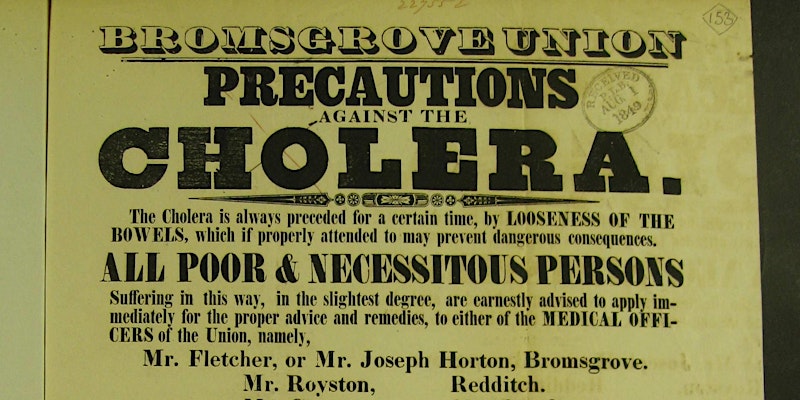
Discover the drastically different health and welfare services available to the poor in Victorian society. How did the sick alert local poor law medical officers of their needs, and what services were they entitled to? Did the poor and their families have a right to medical care, and what happened when their expectations of such rights were not reached? Join Paul Carter as he delves into Victorian welfares services, more specifically the health service of the time, and provides a fascinating insight into the medical care available to the poor.

On the speaker:

Paul Carter is the co-investigator and The National Archives' lead on In Their Own Write, a major Arts and Humanities Research Council funded research project undertaken with Professor Steve King at (initially) the University of Leicester, and (now) at Nottingham Trent University.

On the digital lecture series:

What’s Online is a series of talks, in conversation events and webinars delivered by our experts and special guests. Events last approximately one hour, including an audience Q&A. This event will be presented on Microsoft Teams. You do not need a Teams account to join an event, and can select the Join anonymously option to join from your browser if preferred. If you are accessing the event from a mobile device, you will need to download the Teams app. For the best experience we recommend using either a laptop or desktop computer. You will receive a reminder email, including a link to join in advance of the event. 

(source: The National Archives) 

23 February 2021

BOOK: Claire BILLEN, Bruno BLONDÉ, Marc BOONE & Anne-Laure VAN BRUAENE (Eds.), Faire société au Moyen Âge: Histoire urbaine des anciens Pays-Bas (1100-1600) (Paris: Garnier, 2021). ISBN: 2406107922, pp. 360, € 29,00


(Source: Garnier)

ABOUT THE BOOK

Collection: Bibliothèque d'histoire médiévale, n° 25

Favorisés par leur localisation côtière, les anciens Pays-Bas sont un pays de villes en réseaux. Celles-ci présentent une histoire sociale spécifique, marquée par la puissance d’une classe moyenne à la forte identité corporative, qui s’efforça d’y imposer ses intérêts, son idéologie et ses valeurs.

ABOUT THE EDITORS

Directeurs d'ouvrage: Claire Billen, Bruno Blondé, Marc Boone, Anne-Laure Van Bruaene 

TABLE OF CONTENTS

It is available here.


More information with the publisher.

22 October 2019

BOOK REVIEW: Cornelia AUST reviews Giorgio RIELLO & Ulinka RUBLACK (eds.), The Right to Dress. Sumptuary Laws in a Global Perspective, ca. 1200-1800

(image source: Sehepunkte)

First paragraph:
Obwohl es sich bei der Erforschung spätmittelalterlicher und frühneuzeitlicher Aufwands- und Kleiderordnungen nicht um ein neues Forschungsfeld handelt, so sind doch viele Studien regional oder lokal begrenzt oder bewegen sich im Rahmen der Nationalgeschichte. Selbst bei so relativ umfassenden Werken wie Alan Hunts klassischer Arbeit zur frühneuzeitlichen Aufwandsgesetzgebung mit einem Schwerpunkt auf England [1], die häufig allgemein zur Erklärung dieser Gesetzgebung herangezogen wird, ergibt sich das Problem der Übertragbarkeit auf andere geografische Kontexte, selbst innerhalb Europas.
Read more on Sehepunkte.

08 November 2018

BOOK: Katie BARCLAY, Men on Trial : Performing Emotion, Embodiment and Identity in Ireland, 1800-45 (Manchester: Manchester University Press, 2018). ISBN 978-1-5261-3292-5, £75.00


Manchester University Press is publishing a book on the “performance of 'the self' within the early nineteenth-century courtroom and its implications for law, society and nation”

ABOUT THE BOOK

Men on trial explores how the Irish perform 'the self' within the early nineteenth-century courtroom and its implications for law, society and nation. Drawing on new methodologies from the history of emotion, as well as theories of performativity and performative space, it emphasises that manliness was not simply a cultural ideal, but something practised, felt and embodied. Men on trial explores how gender could be a creative dynamic in productions of power. Targeted at scholars in Irish history, law and gender studies, this book argues that justice was not simply determined through weighing evidence, but through weighing men, their bodies, behaviours, and emotions. Moreover, in a context where the processes of justice were publicised in the press for the nation and the world, manliness and its role in the creation of justice became implicated in the making of national identity.

ABOUT THE AUTHOR

Katie Barclay is a Senior Lecturer in the ARC Centre for Excellence in the History of Emotions and Department of History, University of Adelaide

TABLE OF CONTENTS

Opening speeches: an introduction
1. Law and lawyers: 'the prerogative of the wig'
2. The stage: 'the court presented a very imposing spectacle'
3. Bodies in court: 'Hogarth would have admired him forever'
4. Speech, sympathy and eloquence: 'it is a voice full of manly melody'
5. The cross-examination: 'he's putting me in such a doldrum'
6. Storytelling: 'quoting the poet'
7. On character: 'you see McDonnell the value of a good character'
Closing arguments: a conclusion
Select Bibliography
Index

More information here

22 November 2016

INTERNATIONAL WORKSHOP & CFP: "Neo-Thomism in action. Law and society reshaped by neo-scholastic philosophy, 1880-1960" (Leuven, October 8-10 2017)


WHAT Neo-Thomism in action. Law and society reshaped by neo-scholastic philosophy, 1880-1960, International Workshop & Call for Papers

WHEN October 8-10 2017

WHERE Leuven


This workshop aims to provide an opportunity for an explicitly international audience of scholars to reflect on the societal impact of Neo-Thomism, especially in the domains of law and socio-economic thinking. It indeed starts from the hypothesis that Neo-Thomism above all had a social and apologetic vocation. Neo-Scholastic philosophy offered a holistic view of society, while shielding it against the secularizing forces of the modern world and striving towards a ‘shared’, ‘hybrid’ or ‘integrated modernity’. The Neo-Thomist project expressly called for greater involvement by lay people in the Church’s apologetic and pastoral strategies. 


Through scholarly education, periodicals, study circles and other networks involving current and former students and other participants from very different societal domains, these neo-Scholastic institutions pervaded society, with a holistic philosophical framework that showed explicitly apologetic objectives. They offered intellectual breeding grounds for a new Catholic elite to grow. During the decades preceding World War I, the interwar period and even post-World War II, neo-Thomist learning centres acted as hubs for various Catholic networks permeating society as a whole, and cemented these connections within civil society, education, the civil service and judiciary, the worlds of labour and business and especially their interest groups. 

The University of Leuven offers a fine example in this respect, with renowned legal scholars such as Victor Brants (1856-1917) and Léon de Lantsheere (1862-1912), and of course its Institute of Philosophy (HIW), founded in 1889 under the impetus of the later Archbishop and Cardinal, Désiré Mercier (1851-1926). These Belgian actors were of course merely one component of a vast international Thomist network that almost completely spanned the universal church with important hubs in places like Paris, Fribourg, Lille and of course Rome. The workshop aims to highlight the exchanges between these different Neo-Thomist centres and affiliated scholars, their societal networks and ideas. The role of religious institutions (Jesuits, Dominicans, and others) within this ‘Thomist international’ and their impact on its interaction with the legal and socio-economic domains of course deserves particular attention. 

01 October 2016

BOOK: Paul J. DU PLESSIS, Clifford ANDO & Kaius TUORI (eds.), The Oxford Handbook of Roman Law and Society [Oxford Handbooks]. Oxford: OUP, 2016, 752 p. ISBN 9780198728689, £ 110


(image source: OUP)


Dr. Paul du Plessis announced the publication of the Oxford Handbook of Roman Law and Society (eds. P. du Plessis, C. Ando & K. Tuori).

Table of contents:
Part I: Introduction
1: A Word from the Editors, Paul J. du Plessis, Clifford Ando and Kaius Tuori
2: Framing "Law and Society" in the Roman World, Janne Pölönen
Part II: Reading Roman Law
3: More than Codes: Roman Ways of Organising and Giving Access to Legal Information, Dario Mantovani
4: Epigraphy, Tommaso Begio
5: Juristic Papyrology and Roman Law, José Luis Alonso Rodríguez
6: Roman Law and Latin Literature, Michèle Lowrie
Part III: The Constitutional Structure of the Roman State
7: SPQR: Institutions and Popular Participation in the Roman Republic, Francisco Pina Polo
8: The Emperor, the Law and Imperial Administration, Werner Eck
9: Provincial Administration, John Richardson
10: Local Administration, Saskia T. Roselaar
11: Collegia and Their Impact on the Constitutional Structure of the Roman State, Jonathan S. Perry
Part IV: Legal Professionals and Legal Culture
12: Legal Education and Training of Lawyers, Jill Harries
13: Lawyers in Administration, Michael Peachin
14: Legal Writing and Legal Reasoning, Ulrike Babusiaux
15: Greek Philosophy and Classical Roman Law, Jacob Giltaij
16: Rhetoric and Roman Law, Agnieszka Kacprzak
Part V: Settling Disputes
Civil Actions and Civil Procedure
17: Magistrates that Made and Applied the Law, Frederik Vervaet
18: Roman Courts and Private Arbitration, Leanne Bablitz
19: Republican Civil Procedure: Sanctioning Reluctant Defendants, Ernest Metzger
20: Imperial Cognitio Process, Thomas Rüfner
21: Evidence and Argument: The Truth of Prestige and its Performance, Elizabeth A. Meyer
22: Legal Pluralism in Practice, Clifford Ando
Criminal Law and Social Order
23: Police Functions and Public Order, Christopher Fuhrmann
24: Public and Private Criminal Law, Andrew Riggsby
25: Crimes against the Individual: Violence and Sexual Crimes, Ari Z. Bryen
26: Crimes Against the State, Callie Williamson
Part VI Persons Before the Law
Status
27: Social Status, Legal Status, and Legal Privilege, Tristan S. Taylor
28: Legally Marginalised Groups-The Empire, Robert Knapp
29: Repression, Resistance and Rebellion, Benjamin Kelly
30: Slavery: Social Position and Legal Capacity, Richard Gamauf
31: Emancipation, Henrik Mouritsen
Gender
32: Defining Gender, Matthew J. Perry
33: Woman and Patriarchy in Roman Law, Eva Cantarella
34: Women as Legal Actors, Verena Halbwachs
Part VII Legal Relations
Persons and Family
35: Family, Suzanne Dixon
36: Husband and Wife, Jakub Urbanik
37: Child and Parent in Roman Law, Ville Vuolanto
38: Inheritance, Éva Jakab
Property
39: The Economic Structure of Roman Property Law, Richard A. Epstein
40: Ownership and Power in Roman Law, Luigi Capogrossi Colognesi
41: Possession, Christian Baldus
42: Possession and Provincial Practice, Andrea Jördens
Obligations
43: Obligatio in Roman Law and Society, David Ibbetson
44: Contracts, Commerce and Roman Society, Roberto Fiori
45: The Scope and Function of Civil Wrongs in Roman Society, Floriana Cursi
Economics
46: Price Setting and Other Attempts to Control the Economy, Egbert Koops
47: Law, Business Ventures and Trade, Jean-Jacques Aubert
48: Urban Landlords and Tenants, Paul J. du Plessis
49: Tenure of Land and Agricultural Regulation, Dennis P. Kehoe
50: Roman Law, Markets and Market Prices, Luuk de Ligt
This work can be acquired for £ 110.

More information at OUP.  See also preview on Google Books.

18 April 2016

BOOK: "Dialogue sur l’histoire et l’imaginaire social", by Paul Ricœur & Cornélius Castoriadis (Editions EHESS, 2016)


Paul Ricœur & Cornélius Castoriadis, Dialogue sur l’histoire et l’imaginaire social, Editions de l'Ecole des Hautes Etudes en Sciences Sociales - EHESS, 2016

all information here
Paul Ricœur invite en 1985 Cornélius Castoriadis dans l’émission « Le bon plaisir de Paul Ricœur » (France Culture), pour s’entretenir avec lui du rôle de l’imaginaire social dans les transformations historiques.
Tout semble opposer Castoriadis et Ricœur : deux tempéraments, deux styles, deux philosophies. Et c’est l’un des intérêts de ce dialogue entre les deux philosophes dans lequel la parole incisive de l’un n’a rien à envier à celle de l’autre. L’unité de l’entretien repose sur une interrogation : est-il possible de créer du nouveau historiquement ? L’enjeu de la controverse porte moins sur les conditions de possibilité de la science historique que sur les conditions de possibilité de l’agir humain dans des circonstances historiques données. Il revient à Castoriadis, dans ce jeu de rôles et de joutes verbales, de défendre de manière implacable la thèse de la création historique. Cette thèse est tout simplement inacceptable pour Ricœur, qui s’inscrit dans une dialectique entre innovation et sédimentation.
Par-delà cette divergence, il y a une analyse que partagent Ricœur et Castoriadis : le refus de réduire et d’indexer le politique sur l’économique.

23 June 2015

CALL FOR ABSTRACTS: Doing Justice. Multiple Interplays between Justice & Populations during the Two World Wars (Brussels, 3-4 December 2015); DEADLINE 22 JULY 2015


The Interuniversitary Attraction Pole Justice & Populations ("BeJust 2.0"/Belgian Federal Science Policy) organizes a conference in Brussels (CEGESOMA) on 3-4 December 2015. The event is the result of a cooperation between the universities of Ghent, St Louis, Louvain, The Humboldt Universität zu Berlin, the Research Foundation Flanders (FWO) and the Fonds de la Recherche Scientifique (FRS/FNRS).  

The elaborate description and axes can be found below.

Presentation:
Periods  of  wars  and  foreign  domination  are  of  crucial  importance  in  the  history  of  justice.  They  have led to important shifts in the expectations, practices and actors involved in the field of justice. As  a  result  of  the  often  sudden  change  provoked  by  war,  existing  routines  in  the  broad  field  of justice came under serious pressure. The disruption of predictable patterns stimulated inventiveness.
The  way  in  which  actors  of  justice  dealt  with  those  sweeping  changes  is  an  important  research question. Although different aspects of the impact of armed conflict on justice  have been studied, the dominant approach of most of this work is top-down and highly institutional. As a result of this bias, the actual actors of justice and their practices and expectations in war settings have been largely neglected so far. Drawing from current trends in criminology and the social history of justice, this international conference starts from a grassroots perspective. It focuses on the impact of war on the complex interactions between different actors of justice (individuals and social groups on the one hand, ‘the justice system’ (police, judiciary and penitentiary professionals) on the other hand). The conference  aims  to  highlight  the  emergence  of  new  expectations  of  justice  among  these  actors,  resulting  from  the  war.  It  also  tackles  justice  practices,  strategies  to  cope  with  the  changing circumstances,  new  forms  of  negotiation,  interaction,  relationships  between  populations  and  the formal justice system in this particular context, and the impact of this renegotiation in the long run.
Thematic axes:
ACTORS
War led to the redefinition of the roles of the different actors involved in justice. New roles emerged and  room  to  operate  shifted.  The  claim  of  the  professionals  of  the  formal  justice  system  on  the monopoly of justice was of course to a large extent fictional even in peace time. ‘Doing justice’ is, even in a context of a consolidated state, always the outcome of a complex interplay of informal and formal  actors  of  justice,  as  indicated  for  instance  by  the  importance  of  the  willingness  to  report crimes. 
In war time, the balance in this interaction seems to have shifted at the expense of the formal justice system. Military justices experienced exceptional growth and their authority gradually extended at the expense of regular courts. In areas occupied by foreign armies, the impact on the judicial system was even more substantial. When they were not simply removed, the national courts had to coexist with those of the occupant; new bodies and players then competed with the traditional authorities of
the  judiciary.  Moreover,  people  seemed  to  be  more  inclined  to take  justice  into  their  own  hands.
Significantly,  all major waves of informal justice in Europe during the last two centuries took place in wartimes and revolutions. The distinction between insiders and outsiders of the formal justice system tended to blur as a result of warfare. Informers of secret polices and political factions (like collaborators  and  resistance  fighters)  acquired  a  share  of  the  power  of  constraint  which  was monopolized  in  peacetime  by  state  agents.  Unusual  collaborations,  sometimes  at  the  margins  of legality,  were  established  between  judges  and  civil  society  (like  charity  organizations).  The proliferation  of  judicial  actors  altered  the  balance  of  power  within  the  system.  However,  justice  officials did not passively undergo these changes. Even if their autonomy was reduced from above and rival forces gained power, judges retained discretion in the application and implementation of laws, and in a broader sense tried to cope with the changing circumstances.  

EXPECTATIONS OF JUSTICE
Wars also changed the margins of tolerance of all the actors of justice mentioned above. This was marked  by  a  blurring  of  the  distinction  between  normal  and  abnormal,  tolerated  and  prohibited behavior. New forms of ‘crime’ and new ‘criminals’ emerged. These shifts are particularly revealing in  the  frame  of the  expectations  of  justice  of  these  actors.  These  expectations could  converge,  as shown  by  the  generally  shared  ambition  to  see  pro-German  collaborators  punished  at the  end  of both  occupations,  but  could  also  diverge.  The  reconstruction  of  the  expectations  of  justice  of different actors does not only constitute an access to the moral framework of these actors in the war context, but it is also revealing for the possible conflicts caused or intensified by the experience of the occupation.   
As  a  result  the  concept  of  the  transgressor  was  of  course  redefined.  Specific  categories  of  people facing sanctions emerged (i.e. the enemy, collaborators, foreigners, new citizens, Jews, minorities, black marketers), while existing categories extended due to the exceptional circumstances. Finally, certain  categories  of  the  population  became  subjects  of  increased  surveillance,  being  considered dangerous in view of the continuing tension (e.g. juveniles, tramps, etc.). 

PRACTICES
The diversification of the actors in the justice system and the shifting thresholds of tolerance had of course impact on the practices of justice. Indeed, we can observe a blurring of the borders between popular, criminal, military, administrative and colonial law. Criminal punishment was supplemented by non-standard popular, military or administrative practices. Exceptional measures were taken and often  became  semi-permanent,  as  for  example  the  administrative  internment  of  different  types  of ‘suspects’. Usual sanctions were equally transformed, as judges adapted penalties to the changing circumstances. 
The relationship between the different (formal and informal) actors of justice could take different shapes, ranging from cooperation to hostility. In the occupied zone, through competition between domestic and foreign jurisdictions, lobbyists hoped to benefit from the most favorable jurisprudence.
As  far  as  the  citizens,  individually,  were  concerned, they  were  far  from  passive.  Denunciations,  a quintessential way for ‘weaker’ groups to be heard by the authorities, were growing exponentially. 

A GRASS-ROOTS PERSPECTIVE
In order to reconstruct the complex landscape of actors of justice in war time, and their expectations and practices, a grass-roots approach imposes itself. For this approach to be feasible, it is essential to prioritize archives resulting from actual justice activities. Judicial archives form not only the main track,  but  also  constitute  an  ideal  observatory  for  the  interactions  between  the  different  actors.
Archives  stemming  from police  operations,  the  prison  system  and  administrative  surveillance  are equally suitable. The privileging of this kind of ‘operational sources’ of the criminal justice system in its  broadest  sense  enables  us  to  go  beyond  a  top-down  approach  predominately  based  on  policy sources.

BELGIUM AS A TEST-CASE
Due  to  the  diversity  of  its  war  experiences  in  the  twentieth  century,  Belgium  is  a  particularly interesting  case  to  study  the  impact  of  war  on  the  relations  between  justice  &  populations.  The Belgian army fought in both world wars, for five years in WWI and for 18 days in WWII. The vast majority of the Belgian population experienced both world wars as a period of occupation. Belgium as a colonial power mobilized its African empire as part of the war effort during both world wars, a mobilisation that influenced populations & justice relations. 

Practical information:
Candidates are invited to submit their paper proposal (between 500 and 1000 words) and a short biography to melanie.bost@cegesoma.be and antoon.vrints@UGent.be the 22th of July 2015
 at the latest. The conference will be conducted in English.
Selected proceedings of the conference will be published. 

26 June 2014

NOTICE: Law & History Collaborative Research Network (Seattle, 28-31 May 2015)


Greetings from the Law & History Collaborative Research Network, part of the Law & Society Association (www.lawandsociety.org/crn.html).

We have just come from the Law and Society Association annual meeting in Minneapolis, where we were thrilled with the success of our first year as a Collaborative Research Network.  Creating a CRN, we think, significantly improved the discussion of legal history at LSA.  We were able to better coordinate and publicize legal history panels and create new opportunities to interact scholars from other fields.  But we hope that this is just the beginning.  With more participation, we believe next year will be even better, and we invite you to join us.

What is the Law & History CRN?
The Law & History CRN brings together scholars interested in legal history, both American and non-American, of any time period from contemporary to ancient.  We welcome a broad array of scholarly interests and methodological approaches. The Law and Society Movement has long welcomed legal historians and encouraged legal history, and our CRN intends to further foster this relationship. We seek to encourage presentation of historical legal work at the Law and Society’s Association’s annual meeting, and to create opportunities for interdisciplinary and cross-generational conversations.

What does it mean to join the Law & History CRN?
It means you will be welcomed into a network of scholars interested in participating in the historical examination of the law at the Law and Society Association annual meeting and beyond.  In practical terms, joining the CRN means joining a listserv (administered via Google Groups) that we use to alert members of the LSA’s call for papers, organize panels, and communicate about panels of interest for scholars interested in law and history at LSA.  We will also on rare occasions send out other announcements relevant to legal history.

The next Law & Society Association meeting will be held May 28-31 in Seattle, Washington. The call for papers should be out soon, and the deadline for submitting papers and panels will be in the fall of 2014, so it's not to early to start thinking about proposals.

04 February 2014

CONFERENCE: International symposium on "L'exclusion dans les sociétés du haut Moyen Âge" (Padova, 6-8 February 2014)


What: Colloque international, "L'exclusion dans les sociétés du haut Moyen Âge. La construction du sujet exclu (IVe-XIe siècle), l'individu, la société et l'exclusion"

Where: Padova, Dipartimento DISSGeA - Sala Bortolami, via del Vescovado, 30

When: 6-8 February 2014
All information here

01 February 2014

BOOK: Justin Steinberg, "Dante and the Limits of the Law"

Justin Steinberg
"Dante and the Limits of the Law"

University of Chicago press, december 2013


In Dante and the Limits of the Law, Justin Steinberg offers the first comprehensive study of the legal structure crucial to Dante’s Divine Comedy. Steinberg reveals how Dante imagines an afterlife dominated by elaborate laws, hierarchical jurisdictions, and rationalized punishments and rewards. Steinberg makes the compelling case that Dante deliberately exploits this highly-structured legal system to explore the phenomenon of exceptions to it, introducing Dante to crucial current debates about literature’s relation to law, exceptionality, and sovereignty.
Examining how Dante probes the limits of the law in this juridical otherworld, Steinberg argues that exceptions were vital to the medieval legal order and that Dante’s otherworld represents an ideal “system of exception.” Yet Dante saw this system as threatened on earth by the dual crises of church and Empire—the abuses and overreaching of the popes and the absence of an effective Holy Roman Emperor. In his imagination of the afterlife, Steinberg shows, Dante seeks to address this gap between the universal validity of Roman law and the lack of a sovereign power to enforce it. Exploring the institutional role of disgrace, the entwined phenomena of judicial discretion and artistic freedom, medieval ideas about privilege and immunity, and the place of judgment in the poem, this is an elegantly argued book that persuasively brings to life Dante’s sense of justice.

All information available here


All 

14 February 2013

CALL FOR PAPERS: Max Weber and China (SOAS, London, 5-6 September 2013)


What: Conference: Max Weber and China: Culture, Law and Capitalism
Where: SOAS, Russell Square: College Buildings. Room: Khalili Lecture Theatre, London 
When: 5-6 September 2013, 10:00 am


Deadline for submission:  31st March 2013

Max Weber is not only celebrated as a founder of modern social science but also for his view that modern capitalism was the achievement of a uniquely Western rationalism. His celebrated study of China argued that its legal institutions and ethical and religious culture had prevented a similar development there. But he also drew on his knowledge of China in developing his ideas of bureaucracy, authority and legitimacy.
The economic success of China over the last thirty years represents for some the biggest challenge yet to Weber's account of its culture, to his theory of capitalism and to the methods he employed in arriving at his account. But it also brings into question the self-image of the West and the idea of modernity. The conference we are announcing will bring scholars from the social sciences and humanities together in a West/East dialogue central both to mutual understanding between China and the West and also to an exploration of the possible varieties of capitalism.
All information here