Search

Showing posts with label Labour Law and Social Policy. Show all posts

08 March 2024

BOOK: FIlippo ROSSI, Justice, Freedom, Rights. An introduction to the history of human rights (Turin: Giappichelli, 2024). ISBN: 9791221106190

(Image source: Giappichelli Editore)


ABOUT THE BOOK

Although it is practically impossible not to encounter human rights on a near-daily basis, many fail to grasp the foundation of a concept that is necessarily defined through history. This manual aims to shed light on the emergence of the human rights and to address the current challenges in their recognition and implementation. It offers students a chronological overview leading to the establishment of the United Nations system, tracing the evolution of key conceptual paradigms such as justice, freedom, and rights. 

The initial part of the volume delves with an investigation into the ancient ethical values of justice, which eventually evolved into the legal recognition of collective freedoms from the late Middle Ages to the early Modern Era (chapters 1-3). Subsequent chapters trace the historical trajectory of rights within the framework of the modern state, beginning with the conceptualization of universal natural rights and culminating in the formalization of the rights of man following the revolutions of the late 17th and 18th centuries (chapters 4 and 5). In the final segment, the manual examines pivotal moments in the development of human rights in the Contemporary Era. This includes an analysis of efforts to bolster socioeconomic rights, the emergence of supranational protective mechanisms, the humanitarian movement, as well as critical examinations of colonialism and nationalism in the 19th century (chapters 6 and 7). Additionally, it scrutinizes strategies for addressing rights violations at both domestic and international level in the 20th century, alongside the establishment of international human rights law, with an emphasis on its inherent and forthcoming challenges (chapter 10).


ABOUT THE AUTHOR

Filippo Rossi, Ph.D. (Milan, 1983) is professor of Medieval and Modern Legal History at the University of Milan, where he teaches History of Human Rights. His research interests encompass various aspects of legal history, including labour law, obligations and contract law, and the history of migration during the contemporary age. Among his notable works, he athored the following books: Il cattivo funzionario nel Regno Lombardo-Veneto (2013), La costruzione giuridica del licenziamento (2017), and Ragionevoli dubbi. Percorsi storici del recesso unilaterale (2022).


More information can be found here.


01 March 2024

CALL FOR PAPERS: I luoghi del lavoro da remoto e di cura tra passato e presente. Prospettive giuridiche, sociologiche e spaziali (Milan: 16 MAY 2024) [DEADLINE 29 MAR 2024]

(Image source: Escapes.polimi)


L’immagine tradizionale del luogo di lavoro, quella in cui la presenza fisica dei lavoratori si concentra in uno spazio fisso e statico e il tempo è scandito da compiti e mansioni regolati e ben definiti, risulta sempre più appartenere al passato. 

A ben vedere però, sino al Novecento, il lavoro a domicilio, prevalentemente manifatturiero, ha rappresentato una modalità di lavoro diffusa e foriera di problematiche collegate sia al decentramento della produzione nella casa delle lavoratrici e dei lavoratori, sia alla peculiare organizzazione del lavoro, senza orari e con retribuzione a cottimo.  

Si ritiene quindi indispensabile instaurare un dialogo tra i problemi del passato e le sfide del presente dove al concetto di luogo di lavoro stabile e unitario si affianca, sempre più rapidamente, una sua concezione dinamica e fluida. 

Il lavoro, oggi, sconfina nell’ambiente domestico, pervade spazi, fisici e virtuali, fino a includere i propri dispositivi personali che diventano un ufficio mobile. È cruciale soffermare l’attenzione anche sulle ricadute della decentralizzazione spaziale del lavoro nei contesti di vita delle persone e sugli intrecci tra sfera lavorativa e sfera familiare.  

La Call for Papers intende indagare le implicazioni degli sconfinamenti del lavoro da remoto, da un punto di vista spaziale, sociologico e giuridico, in una prospettiva diacronica che, oltre a mappare il panorama contemporaneo, provi a rileggere criticamente alcune configurazioni ibride del lavoro osservabili già nel passato. 

Il convegno si snoderà intorno a due percorsi che mirano a evidenziare, all’interno di un dialogo interdisciplinare, dimensioni e questioni che caratterizzano le ricadute del lavoro nella vita e negli spazi delle persone:


1. Spazi del lavoro a domicilio in prospettiva storica tra dimensione produttiva e riproduttiva 

Quali bisogni di tutela del lavoratore emergevano dal lavoro a domicilio? Quali strategie giuridiche sono state utilizzate nel configurare forme e modi del lavoro a domicilio? Quali istituti, pratiche, procedure hanno consentito di raggiungere lo scopo? Quale statuto giuridico, o cittadinanza nel lavoro, apparteneva a lavoratori/lavoratrici a domicilio? Quali erano gli spazi e le forme di aggregazione sociale in cui veniva svolto il lavoro femminile tra la fine dell’Ottocento e l’inizio del Novecento? Quali casi studio mostravano la collettivizzazione o esternalizzazione di alcuni servizi domestici per la gestione di lavoro produttivo e riproduttivo femminile? Quali relazioni familiari e forme di cura si sperimentavano? Quale era il ruolo della famiglia e dei bambini nello svolgimento del lavoro a domicilio?  

2. Spazi del lavoro da remoto nella contemporaneità tra tutele e cura 

Quali sono le ricadute spaziali che stanno investendo, a livello micro, i luoghi “tradizionali” del lavoro (headquarters, uffici) e, a livello macro, lo spazio della città (fenomeni di dismissione e svuotamento di edifici o parti di essi)? Quali sono gli strumenti per prevenire o attenuare le conseguenze negative di questi fenomeni? Quali sono le nuove configurazioni spaziali degli ambienti dedicati allo svolgimento del lavoro da remoto: casa, coworking, biblioteche, impact hub, “spazi ibridi”…? Come i lavoratori e le lavoratrici ridefiniscono spazio-temporalmente i confini della cura? Come i bisogni e i desideri di cura dei lavoratori e delle lavoratrici entrano e interagiscono con l’organizzazione del lavoro da remoto? La disciplina collegata alla fissità del luogo di lavoro (distacco, trasferimenti e trasferte, diritti sindacali, sicurezza, controlli ispettivi ecc.) è invecchiata a causa del lavoro remotizzato; può dirsi superata? Queste norme possono essere riformulate e aggiornate o sono tutt’ora adeguate a proteggere la persona che lavora? Quali prospettive per gli spazi del lavoro remotizzato? Per i nomadi digitali?


Si chiede di inviare la propria proposta (abstract di 2.500 battute, spazi inclusi), bibliografia esclusa, e un CV sintetico (500 battute, spazi inclusi) alla mail: prinescapes@gmail.com entro il 29 marzo 202

Per maggiori informazioni, è possibile scaricare qui la Call for Papers.


30 December 2021

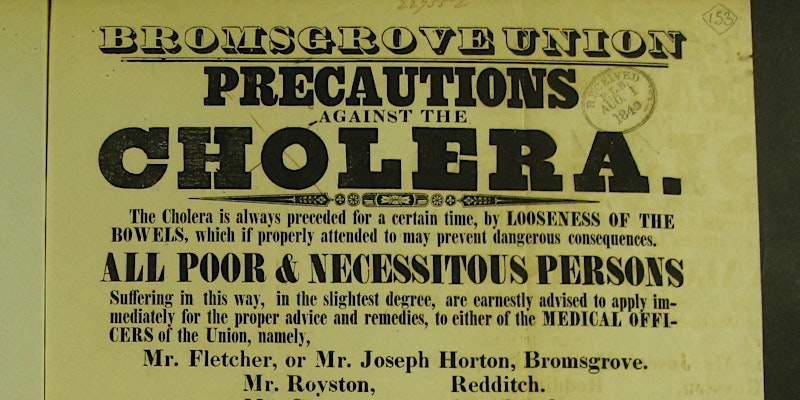
ONLINE LECTURE: Paul CARTER, Pauper Patients and the New Poor Law, 1834-1900 (The National Archives, 14 JAN 2022)

(image source: The National Archives)

On the lecture: 

Discover the drastically different health and welfare services available to the poor in Victorian society. How did the sick alert local poor law medical officers of their needs, and what services were they entitled to? Did the poor and their families have a right to medical care, and what happened when their expectations of such rights were not reached? Join Paul Carter as he delves into Victorian welfares services, more specifically the health service of the time, and provides a fascinating insight into the medical care available to the poor.

On the speaker:

Paul Carter is the co-investigator and The National Archives' lead on In Their Own Write, a major Arts and Humanities Research Council funded research project undertaken with Professor Steve King at (initially) the University of Leicester, and (now) at Nottingham Trent University.

On the digital lecture series:

What’s Online is a series of talks, in conversation events and webinars delivered by our experts and special guests. Events last approximately one hour, including an audience Q&A. This event will be presented on Microsoft Teams. You do not need a Teams account to join an event, and can select the Join anonymously option to join from your browser if preferred. If you are accessing the event from a mobile device, you will need to download the Teams app. For the best experience we recommend using either a laptop or desktop computer. You will receive a reminder email, including a link to join in advance of the event. 

(source: The National Archives) 

03 July 2018

BOOK: Aditya SARKAR, Trouble at the Mill. Factory Law and the Emergence of Labour Question in Late Nineteenth-Century Bombay. (Oxford: Oxford University Press, 2018). ISBN 9780199474424, £37.99


Oxford University Press has published a new book on labour history and factory law in late 19th century Bombay.

ABOUT THE BOOK

The book uses the Factory Acts of the late nineteenth century as an entry point into the early history of labour relations in India, specifically the mill industry of Bombay. It unites legal and social history in a manner which differs from most social histories of labour, and offers a new perspective on the constitution of industrial relations in colonial India.

The Factory Act passed by the Government of British India in 1881 produced the first official definition of 'factories' in modern Indian history as workplaces using steam power and regularly employing over 100 workers. It imposed certain minimal restrictions upon the freedom of employers in a limited range of industrial workplaces and invested factory workers, most explicitly children, with a slim set of immunities and entitlements. In 1891, the Factory Act was amended: factories were redefined as workplaces employing over 50 workers, the upper age limit of legal 'protection' was raised, weekly holidays were established, and women mill-workers were brought within its ambit. In its own time, factory law was experienced as a minor official initiative, but it connected with some of the most potent ideological debates and political oppositions of the age.

This book takes these two pieces of labour legislation as an entry point into the history of 'industrial relations' (the term did not yet exist in its present sense) in colonial India, in the last quarter of the nineteenth century combining the legal and social history which diverges from most studies of Indian workers. It identifies an emergent 'factory question' built on the problem of protective labour legislation. The cotton-mill industry of Bombay, long familiar to labour historians as one of the nodal points of modern Indian capitalism, is the principal focal point of this investigation. While this is a book about law and regulation, it is neither a legislative nor a policy history. While it is preoccupied with the history of factory legislation, it does not offer a full narrative that takes this as its 'object'. And while the book focuses on Bombay's cotton mills, it contains significant departures both from the city and its major industry. A number of questions which have only rarely been thematized by labour historians-the ideologies of factory reform, the politics of factory commissions, the routines of factory inspection, and the earliest waves of strike action in the cotton textile industry-are raised in this book.

ABOUT THE AUTHOR

Aditya Sarkar is a social historian working on the history of modern South Asia, with specific expertise and interest in the social histories of labour and capitalism.

TABLE OF CONTENTS

Introduction
Part I THE BIRTH OF FACTORY REGULATION
1: Imperial Entanglements
2: The Emergence of Factory Law: Bombay, 1874-1881
Part II THE LIFE OF A LAW
3: The Work of Law: Factory Inspection in Bombay, 1881-1887
4: Law, Age, and the Factory Child
Part III FACTORY LAW AND INDUSTRIAL POLITICS
5: The Antinomies of Industrial Relations, 1884-1895.
6: Snapping The Tie: Chronicles of the Plague Years, 1896-98
Conclusion
Bibliography
Index
About the author

More information here

07 May 2015

BOOK: "Le travail en prison. Mise en perspective d’une problématique contemporaine", dir. by R. Eckert et J.-M. Tuffery-Andrieu (Strasbourg, 2015)


Le travail en prison. 
Mise en perspective d’une problématique contemporaine, dir. by R. Eckert et J.-M. Tuffery-Andrieu (Strasbourg, 2015)

all information here
Le travail des détenus, hier et aujourd’hui. Le travail en prison est, depuis plusieurs années, au coeur de l’actualité juridique. Ce volume propose pour la première fois en France une synthèse sur les fondements juridiques et historiques du travail en prison et ses enjeux contemporains. 
Le travail carcéral est ici analysé dans une perspective pluridisciplinaire et comparée, française comme internationale, par des spécialistes d’histoire du droit, de droit contemporain ou encore de sociologie historique. 
Initialement envisagé comme un moyen d’amendement moral du condamné, le travail en prison devient progressivement un instrument d’administration et de réinsertion du travailleur incarcéré. Les études ici réunies apportent un éclairage nouveau sur la question – droit applicable au travailleur incarcéré, rôle dans la réinsertion des détenus – afin de mieux comprendre les enjeux actuels du travail en détention. 
L’ouvrage entend contribuer à la réflexion des juristes et aider au travail du juge et du législateur de demain. 
Table of contents

05 December 2014

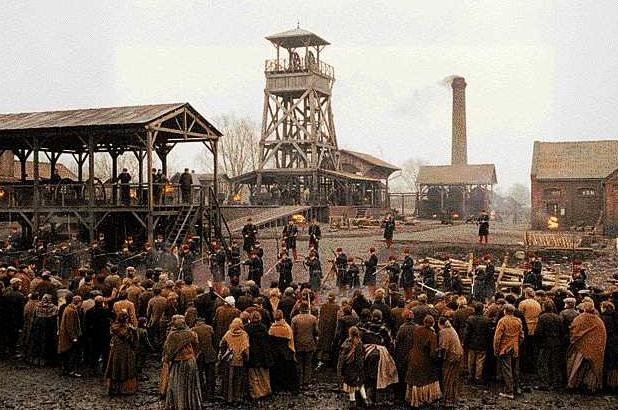
CONFERENCE: Labour Accidents and Social Law. Comparative Belgo-French Perspectives (Lille, 15 December 2014)


 (image source: libcom.org)


The Centre d'Histoire Judiciaire (Université Lille-II) organizes a conference dedicated to social and civil responsibility law in the 19th and 20th centuries.

Abstract:
En posant le principe de la responsabilité patronale fondée sur le risque professionnel, les lois française du 9 avril 1898 et belge du 24 décembre 1903, subvertissent les principes traditionnels du droit de la responsabilité civile hérités du Code Napoléon de 1804. En vertu du principe consacré par ces textes, la personne supportant le risque est celle qui tire bénéfice de l’activité, indépendamment de l’origine de la faute. Ainsi, à la fin du XIXe siècle, la loi française du 9 avril 1898, adoptée après de très longs débats de tous ordres, bouleverse radicalement le socle du droit commun de la responsabilité. 
Le projet scientifique de l’Université de Lille, «Accident du travail et droit social: approche historique comparée France – Belgique, Logiques juridiques et pratiques judiciaires», s’intéresse aux sources judiciaires et administratives afin de tester la validité du diagnostic traditionnellement établi selon lequel ces lois auraient bouleversé la logique juridique dominante en inaugurant une nouvelle manière de penser la question sociale. Il s’agirait d’évaluer, de part et d’autre de la frontière, l’adéquation entre les principes juridiques affichés ou sous-tendus par les débats ayant présidé à l’adoption de ces lois, et la pratique judiciaire. La question sous-jacente serait celle d’un éventuel déplacement du centre de gravité de la question sociale du champ politique au champ judiciaire, le juge étant potentiellement susceptible d’apparaître — en fonction des dépouillements, — comme le régulateur éminent de l’un des versants les plus saillants de la question sociale, la réparation des accidents du travail. 
Le Centre d’Histoire Judiciaire (CHJ) de l’Université de Lille organise le 15 décembre 2014 une journée d'études consacrée à «La réparation des accidents du travail», qui s’inscrit dans le projet scientifique «Accident du travail et droit social: approche historique comparée France – Belgique, Logiques juridiques et pratiques judiciaires». L’angle retenu se propose d’identifier les pratiques mises en œuvre par les acteurs dans ce cadre, dans une double logique comparée : chronologique d’une part, afin d’éclairer l’avant et l’après 1898 ; géographique, d’autre part, dans une région s’articulant autour des bassins industriels du Nord de la France et de la Belgique, mais qui peut s’élargir au-delà. A partir de 1898 de nouveaux acteurs et de nouvelles pratiques vont être sollicités au titre de la réparation. Les sources dépouillées permettent de les saisir dans leur quotidien, au-delà du simple principe posé par le cadre légal. L’objet de cette journée d’études est de les mettre perspective avec les approches déjà menées, dans d’autres contextes, ou via d’autres sources. 
 Program
Programme
9h30 Accueil des participants
  • 10h00 Ouverture de la journée, Monsieur le Professeur Bernard BOSSU, Doyen de la Faculté des Sciences Juridiques, Politiques et Sociales
  • Introduction de la thématique
    • Serge DAUCHY, Directeur de recherche CNRS, Directeur du CHJ
    • Farid LEKEAL, Professeur à l’Université de Lille, CHJ
  • Présentation du fonds documentaire
    • Bruno DUBOIS, Maître de conférences, Université de Lille, CHJ
    • Nathalie CROCHEPEYRE, Ingénieure d’études, Université de Lille, CHJ
  • 10h30. - La logique juridique à l’épreuve de la pratique: à propos de la loi du 9 avril 1898, Farid LEKEAL, Professeur à l’Université de Lille, CHJ
  • 10h50. - Les accidents du travail en Belgique avant la loi de 1903: les acteurs saisis à travers les sources d’archives, Bruno DEBAENST, Chargé de recherches, Université de Gand, FWO
11h10. - Discussion
11h20. - Pause
  • 11h40. - Les pratiques entrepreneuriales en matière d’accidents du travail: entre stratégie d’évitement et conciliation, Bruno DUBOIS, Maître de conférences, Université de Lille, CHJ
  • 12h. - Médecins des mines/médecins des mineurs: nouveaux acteurs autour de l’accident du travail (premier XXe siècle), Judith RAINHORN, Maître de conférences en Histoire, Université de Valenciennes et du Hainaut-Cambrésis, CALHISTE / ESOPP (EHESS SciencesPo)
12h20. - Discussion
12h30 -14h30 Pause déjeuner
  • 14h30. - Le tarif des corps accidentés : genèse, mobilisations et pratiques judiciaires - France-Belgique (première moitié du XXe siècle), Eric GEERKENS, Chargé de cours, Université de Liège, Anne -Sophie BRUNO, Maître de conférences en Histoire contemporaine, Université Paris 13, CEE
  • 15h. - La casuistique judiciaire et médico-légale à l’épreuve de l’égalité réelle dans le contentieux des accidents du travail (Belle Epoque), Olivier THOLOZAN, Maître de conférences, HDR, Université Aix-Marseille, LTD
15h20. - Discussion
15h30. - Pause
  • 15h50. - Juge de paix ou tribunal civil: querelle de compétence autour de l’indemnisation des victimes, Nathalie CROCHEPEYRE, Ingénieure d’études, Université de Lille, CHJ
  • 16h10. - L’accident du travail en droit social international et européen, Jean-Philippe TRICOIT, Maître de conférences, HDR, Université de Lille, CRDP-LEREDS
16h30. - Discussion

16h45. - Cocktail de clôture

Lieu
  • Salle Guy Debeyre, Faculté des Sciences juridiques, politiques et sociales, 1 place Déliot, 59000 Lille
Accès: métro Porte de Douai

Contact
 Source: Nomôdos.

04 December 2014

CONFERENCE AND CFA: "Ab Servi Usque Ad Operari History of Labour Law and Social Policy" (Kraków 24-25 January 2015)


WHAT: Ab Servi Usque Ad Operari History of Labour Law and Social Policy, the 9th international Conference of the Student Learned Society of State and Law History of the Faculty of Law and Administration at Jagiellonian University, Chair of History of Polish Law, Faculty of Law and Administration, Conference and Call for applications

WHERE: Krakov

WHEN: 24-25 January 2015

Deadline 
7th December 2014