Search

Showing posts with label history of human rights. Show all posts

19 January 2026

BOOK: Jost DÜLFFER, Frieden und Menschenrechte. Studien zur Internationalen Geschichte (Köln: Böhlau, 2023), 318 p., ISBN 978-3-412-52739-6

 978-3-412-52739-6.jpg

ABOUT THE BOOK:

Frieden ist nie selbstverständlich, er muss immer wieder gestiftet werden. So heißt es schon bei Immanuel Kant. Die internationalen Beziehungen der letzten beiden Jahrhunderte veranschaulichen dies besonders eindrücklich. Jost Dülffer forscht seit Jahrzehnten zur internationalen Friedenspolitik. Die hier versammelten Studien umreißen exemplarisch die Bemühungen um Frieden in unterschiedlichen Spannungsverhältnissen. Dazu gehören Machtpolitik und Völkerrecht, Menschenrechte und Friedensbewegungen, transnationale Organisationen und Vereinte Nationen, Friedensschlüsse und Umwelt. Darüber hinaus geht es um den wechselnden historiographischen Umgang in markanten Fallstudien. Dieser Band bündelt bislang teils unveröffentlichte Beiträge des bekannten Kölner Historikers aus den letzten 20 Jahren.

ABOUT THE AUTHOR:

Jost Dülffer ist emeritierter Professor für Neuere Geschichte am Historischen Seminar der Universität zu Köln mit dem Forschungsschwerpunkt Internationale Beziehungen.  

Find more here

08 March 2024

BOOK: FIlippo ROSSI, Justice, Freedom, Rights. An introduction to the history of human rights (Turin: Giappichelli, 2024). ISBN: 9791221106190

(Image source: Giappichelli Editore)


ABOUT THE BOOK

Although it is practically impossible not to encounter human rights on a near-daily basis, many fail to grasp the foundation of a concept that is necessarily defined through history. This manual aims to shed light on the emergence of the human rights and to address the current challenges in their recognition and implementation. It offers students a chronological overview leading to the establishment of the United Nations system, tracing the evolution of key conceptual paradigms such as justice, freedom, and rights. 

The initial part of the volume delves with an investigation into the ancient ethical values of justice, which eventually evolved into the legal recognition of collective freedoms from the late Middle Ages to the early Modern Era (chapters 1-3). Subsequent chapters trace the historical trajectory of rights within the framework of the modern state, beginning with the conceptualization of universal natural rights and culminating in the formalization of the rights of man following the revolutions of the late 17th and 18th centuries (chapters 4 and 5). In the final segment, the manual examines pivotal moments in the development of human rights in the Contemporary Era. This includes an analysis of efforts to bolster socioeconomic rights, the emergence of supranational protective mechanisms, the humanitarian movement, as well as critical examinations of colonialism and nationalism in the 19th century (chapters 6 and 7). Additionally, it scrutinizes strategies for addressing rights violations at both domestic and international level in the 20th century, alongside the establishment of international human rights law, with an emphasis on its inherent and forthcoming challenges (chapter 10).


ABOUT THE AUTHOR

Filippo Rossi, Ph.D. (Milan, 1983) is professor of Medieval and Modern Legal History at the University of Milan, where he teaches History of Human Rights. His research interests encompass various aspects of legal history, including labour law, obligations and contract law, and the history of migration during the contemporary age. Among his notable works, he athored the following books: Il cattivo funzionario nel Regno Lombardo-Veneto (2013), La costruzione giuridica del licenziamento (2017), and Ragionevoli dubbi. Percorsi storici del recesso unilaterale (2022).


More information can be found here.


04 February 2022

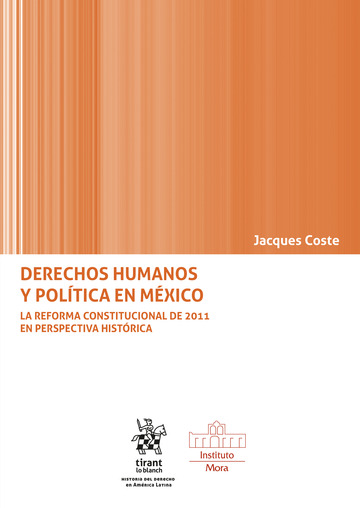
BOOK: Jacques COSTE, Derechos Humanos y Política en México. La reforma constitucional de 2011 en perspectiva histórica (Mexico : Tirant Mexico, 2021). ISBN 9788411131131, 289.00 MXN


(Source: Tirant Mexico)

Tirant Mexico published a new book on the history of human rights law in Mexico.

ABOUT THE BOOK

Si bien sus efectos en la realidad cotidiana de los mexicanos son discutibles, la reforma de 2011 marcó un parteaguas en términos jurídicos para México, pues amplió la protección de los derechos humanos al amparo de la Constitución. No obstante, llama la atención que este gran avance legal se aprobó durante la presidencia de Felipe Calderón, cuyo sello distintivo fue el combate frontal y armado a los cárteles de la droga, política que derivó en una espiral de violencia y violaciones a derechos humanos. En otras palabras, el mismo presidente que inició la guerra contra el narcotráfico también promulgó una reforma constitucional para reforzar el respeto a los derechos humanos. ¿Por qué? El libro intenta responder esa pregunta por medio del análisis de las causas estructurales y coyunturales que desembocaron en la reforma. Así pues, el presente volumen analiza, por un lado, la institucionalización de los derechos humanos en relación con la democratización del sistema político y la liberalización de la economía de México y, por el otro, el escenario político-social en que se aprobó la reforma y cómo esos elementos circunstanciales influyeron en la promulgación de la legislación.  

ABOUT THE AUTHOR

JACQUES COSTE es maestro en Historia Moderna y Contemporánea por el Instituto Mora y consultor senior de Integralia Consultores.


More info here

23 November 2021

BOOK: Isabel TRUJILLO (Ed.), Storie dei diritti umani (Torino: Giappichelli Editore, 2021). ISBN: 9788892139275, pp.192, € 20,00


ABOUT THE BOOK

Collana: Recta Ratio | Settima serie

ABOU THE EDITOR

Isabel Trujillo is full professor of Philosophy of Law at the Department of Law, University of Palermo.

TABLE OF CONTENTS

Introduzione - di Isabel Trujillo   p. 1 
Diritti, storia, critica - di Martti Koskenniemi   p. 15 
I diritti umani e la tradizione tomista - di Annabel Brett   p. 43 
I diritti umani e la crisi del liberalismo - di Samuel Moyn   p. 71 
Diritti umani, diritti culturali e copywrongs - di Fiona Macmillan   p. 101 
La natura dei diritti umani e il loro fondamento - di Francesco Viola   p. 131 
I diritti umani e lo ius gentium del nostro tempo - di Isabel Trujillo   p. 145 
Venticinque anni di diritti umani - di Francesco Viola   p. 165 
Gli autori e le autrici del volume   p. 175 


More information with the publisher.

08 June 2021

JOB: Lecturer in the International History of Modern Human Rights (University of Glasgow) (DEADLINE: 24 June 2021)


(Source: Jobs.ac.uk)

The University of Glasgow has a vacancy for a lecturer in the international history of modern human rights.

This post is full time (35 hours per week) and is offered on an open-ended basis.

The University of Glasgow is recruiting an early career scholar for a permanent, full-time Research and Teaching position in the international history of modern human rights. We seek an individual with a developing research profile, excellent teaching and communication skills and the ability to foster and sustain collaborative partnerships with internal and external parties. The successful candidate will have research expertise in the nineteenth and twentieth century history of human rights in at least two national contexts. Expertise in one or more of the following is desirable: the histories of race, international law, supranational institutions, international relations, gender and citizenship.

The Lecturer will lead a cross-disciplinary team to create and launch a MSc in Global Human Rights and will contribute to the activities of a new multi-institutional Scottish Council on Global Affairs hosted by the University of Glasgow in 2021-23. Working with the Council's Director, the postholder will participate in strategic planning and policy formulation and assist in the design and delivery of projects to further the Council's agenda of engagement with policy stakeholders and the wider public. The Lecturer will pursue ambitious research and publishing in their subject area and contribute to undergraduate and postgraduate teaching (solo and team taught) for programmes including our undergraduate MA (Hons) in History and MSc degrees in Global History and Human Rights.

The full job announcement can be found here

29 March 2021

BOOK: Ulrike CAPDEPÓN & Rosario FIGARI LAYÚS, (Eds.)The Impact of Human Rights Prosecutions. Insights from European, Latin American, and African Post-Conflict Societies (Leuven: University Press, 2021). ISBN: 9789462702493, pp. 244, € 55,00


ABOUT THE BOOK

Human rights prosecutions are the most prominent mechanisms that victims demand to obtain accountability. Dealing with a legacy of gross human rights violations presents opportunities to enhance the right to justice and promote a more equal application of criminal law, a fundamental condition for a more substantive democracy in societies. This book seeks to analyse the impact, advances, and difficulties of prosecuting perpetrators of mass atrocities at national and international levels. What role does criminal justice play in redressing victims’ wrongs, guaranteeing the non-repetition of mass atrocities, and attempting to overcome the damage caused by systematic human rights violations? This volume addresses critical issues in the field of human rights prosecution by drawing on the experiences of a variety of post-conflict and authoritarian countries covering three world regions. Contributing authors cover prosecutions in post-Nazi Germany, post-Communist Romania, and transnational legal complaints by victims of the Franco dictatorship, as well as domestic and third-country prosecutions for human rights violations in the pioneering South American countries of Argentina, Chile, Peru, and Uruguay, prosecutions in Darfur and Kenya, and the work of the International Criminal Court.

The Impact of Human Rights Prosecutions offers insights into the difficulties human rights trials face in different contexts and regions, and also illustrates the development of these legal procedures over time. The volume will be of interest to human rights scholars as well as legal practitioners, participants, justice system actors, and policy makers.

ABOUT THE EDITORS

Rosario Figari Layús is postdoctoral researcher in social sciences and lecturer at the Chair for Peace Studies at the Law Faculty at the Justus Liebig University of Giessen.

Ulrike Capdepón holds a PhD in political science and is a researcher and project coordinator at the Center for Cultural Inquiry (ZKF), University of Konstanz.

TABLE OF CONTENTS

Prologue- Aleida Assmann

Introduction: Do Human Rights Trials Make a Difference after Conflict, Dictatorship and State-Sponsored Violence? - Rosario Figari Layús and Ulrike Capdepón

Human Rights Trials without Human Rights Law: Prosecuting Nazi Crimes in Postwar Germany After Nuremberg - Annette Weinke

Courts as a Site to Tell the “Truth”: The Case of Former Prison Commander Alexandru Vişinescu - Kristine Avram

Seeking Justice for the Crimes of the Franco Dictatorship: The Politics of Victimhood in the “Argentine Legal Complaint” - Ulrike Capdepón

The Struggle of Victims for Human Rights Trials in Post-Dictatorship Chile - Boris Hau

The State Against the State: The Impact of Governmental Contradictions on Human Rights Trials and Victims in Argentina - Rosario Figari Layús

Operation Condor Trials Abroad: The Innovation and Domestic Constraints of Transnational Prosecution - Debbie Sharnak

Tensions Between Criminal Trials and the Sense of Justice in Post-Conflict Peru - Iris Jave

The International Criminal Court’s “Africa Problem” and Suppression of the “Justice Cascade” - Geoffrey Lugano

Conditions and Cultural Consequences of International Criminal Justice Intervention: The Case of Darfur - Joachim J. Savelsberg

The Effects of Seeking Justice on Behalf of the Victim: A Critical Analysis of Criminal Trials in the Kenyan Post-Election Violence Transitional Justice Process - Valeria Vegh Weis

Concluding Reflections: Towards the End of Impunity? The Scope and Impact of Human Rights Trials - Rosario Figari Layús and Ulrike Capdepón


Mor information with the publisher.

06 November 2020

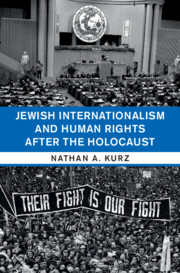
BOOK: Nathan A. KURZ, Jewish Internationalism and Human Rights after the Holocaust (Cambridge: Cambridge University Press, 2020). ISBN 9781108834926, 29.99 GBP


(Source: CUP)

Cambridge University Press is publishing a book on the relationship between Jewish internationalism and international rights protection in the second half of the twentieth century.

ABOUT THE BOOK

Nathan A. Kurz charts the fraught relationship between Jewish internationalism and international rights protection in the second half of the twentieth century. For nearly a century, Jewish lawyers and advocacy groups in Western Europe and the United States had pioneered forms of international rights protection, tying the defense of Jews to norms and rules that aspired to curb the worst behavior of rapacious nation-states. In the wake of the Holocaust and the creation of the State of Israel, however, Jewish activists discovered they could no longer promote the same norms, laws and innovations without fear they could soon apply to the Jewish state. Using previously unexamined sources, Nathan Kurz examines the transformation of Jewish internationalism from an effort to constrain the power of nation-states to one focused on cementing Israel's legitimacy and its status as a haven for refugees from across the Jewish diaspora.

ABOUT THE AUTHOR

Nathan A. Kurz, Birkbeck College, University of London

Nathan A. Kurz has taught at Yale University and Birkbeck College, University of London and has served a visiting fellow at Oxford University.

TABLE OF CONTENTS

Dramatis Personae

Introduction

1. “Individual rights were not enough for true freedom”

2. Who Will Tame the Will to Defy Humanity?

3. The Consequences of 1948

4. Exit from North Africa

5. From Antisemitism to “Zionism is Racism”

6. The Inadequacy of Madison Avenue Methods

7.“Good words have become the servants of evil masters”

Conclusion

Bibliography.


More info here

07 July 2020

BOOK: David A. WALLACE et al., eds., Archives, Recordkeeping and Social Justice (London: Routledge, 2020). ISBN 9781472483881, 120.00 GBP


(Source: Routledge)

Routledge is publishing a new book on archival social justice and impact.

ABOUT THE BOOK

Archives, Recordkeeping, and Social Justice expands the burgeoning literature on archival social justice and impact. Illuminating how diverse factors shape the relationship between archives, recordkeeping systems, and recordkeepers, this book depicts struggles for different social justice objectives.

Discussions and debates about social justice are playing out across many disciplines, fields of practice, societal sectors, and governments, and yet one dimension cross-cutting these actors and engagement spaces has remained unexplored: the role of recordkeeping and archiving. To clarify and elaborate this connection, this volume provides a rigorous account of the engagement of archives and records—and their keepers—in struggles for social justice. Drawing upon multidisciplinary praxis and scholarship, contributors to the volume examine social justice from historical and contemporary perspectives and promote impact methodologies that align with culturally responsive, democratic, Indigenous, and transformative assessment. Underscoring the multiplicity of transformative social justice impacts influenced by recordmaking, recordkeeping, and archiving, the book presents nine case studies from around the world that link the past to the present and offer pathways towards a more just future.

Archives, Recordkeeping, and Social Justice will be an essential reading for researchers and students engaged in the study of archives, truth and reconciliation processes, social justice, and human rights. It should also be of great interest to archivists, records managers, and information professionals.

ABOUT THE EDITORS

David A. Wallace is Clinical Associate Professor at the School of Information, University of Michigan. He is editor of “Archives and the Ethics of Memory Construction” (2011); co-editor of Archives and the Public Good: Accountability and Records in Modern Society (2002); and series technical editor for 12 volumes of the National Security Archive’s The Making of U.S. Policy series (1989–1992).
Wendy M. Duff is a Professor and Dean of the Faculty of Information, University of Toronto. Her most recent research has focused on the emotional responses to archives. Recently, she has conducted impact studies of two different community  archives, the Ontario Jewish Archives and the Living Archives on Eugenics in Western Canada.
Renée Saucier is an Archivist at the Archives of Ontario and a volunteer at The ArQuives: Canada’s LGBTQ2+ Archives. She has a graduate degree in information studies with a specialisation in archives and records management. Her paper “Medical Cartography in Ontario, 1890–1920” won the Association of Canadian Archivists’ Gordon Dodds Prize.
Andrew Flinn is a Reader in Archival Studies and Oral History at University College London, a member of the UK Community Archives and Heritage Group and author of a number of papers relating to community-led and counter archives, including “Working with the past: making history of struggle part of the struggle” in Reflections on Knowledge, Learning and Social Movements (eds Aziz & Vally, 2018).

TABLE OF CONTENTS

Section 1
Chapter 1: Introduction to Archives, Recordkeeping and Social Justice
Renée Saucier and David A. Wallace
Chapter 2: Defining the Relationship between Archives and Social Justice
David A. Wallace
Chapter 3: Methodologies for Archival Impact Studies
Wendy M. Duff and Michelle Caswell
 
Section 2
Preface to Section Two: Categorizations and Patterns in the Case Studies
Renée Saucier
Chapter 4: Archives, Records, and Land Restitution in South Africa
Anthea Josias
Chapter 5: "Hang Onto These Words:" Aboriginal Title and the Social Meanings of Archival Custody
Raymond Frogner
Chapter 6: "All I Want To Know Is Who I Am": Archival Justice for Australian Care Leavers
Joanne Evans, Frank Golding, Cate O’Neill, Rachel Tropea
Chapter 7: Justice for the 96!: The Impact of Archives in the Fight for Justice for the 96 Victims of the Hillsborough Disaster
Andrew Flinn and Wendy M. Duff
Chapter 8: Social Justice and Historical Accountability in Latin America: Access to the Records of the Truth Commissions in Chile
Joel A. Blanco-Rivera
Chapter 9: Documenting the Fight for the City: The Impact of Activist Archives on Anti-Gentrification Campaigns
Susan Pell
Chapter 10: Social Justice Struggles for Rights, Equality and Identity: The Role of Lesbian and Gay Archives
Rebecka Taves Sheffield
Chapter 11: Social Justice and Hearing Voices: Co-Constructing an Archive of Mental Health Recovery
Anna Sexton, Stuart Baker-Brown, Peter Bullimore, Dolly Sen and Andrew Voyce
Chapter 12: Archives "Act Back": Re-configuring Palestinian Archival Constellations and Visions of Social Justice
Beverley Butler
Chapter 13: Conclusion
David A. Wallace, Wendy M. Duff and Andrew Flinn

More info here