Search

09 June 2021

CALL FOR PAPERS: Perspectives on the sovereignty (Italian review of legal history (Italian Review of Legal History; 31 december 2021 first proposal)

(Source: Italian Review of Legal History) 


The Board of the Italian Review of Legal History invites all scholars to publish to the next issue of the review (num. 8 2022) in order to contribute to the debate on the topic of the sovereignty, in a historical perspective or with regard to current events in Europe and outside Europe.

The concept of sovereignty has been at the center of legal, political, philosophical and economic debate for centuries and few terms concerning institutions have taken on such a wide range of meanings in history. In different cultural spheres and from a variety of perspectives, the reflection on the polysemic content and on the various declinations of this concept in the diverse areas of the world, not only between past and present, but also regarding the possible frameworks that it could assume in the more or less near future, continues.


Submission deadline: June 30th, 2022.


Papers can be written in the following languages: Italian, English, French, German, Spanish, Portuguese.

At the choice of the author, papers will be published:

  • in Italian (or in another of the languages above mentioned) and English
  • only in Italian language (or in another of the languages above mentioned) with an abstract in English of at least 4.000 characters.

For author guidelines and additional information, please visit the website of the Journal https://riviste.unimi.it/index.php/irlh, in particular, https://riviste.unimi.it/index.php/irlh/about and https://riviste.unimi.it/index.php/irlh/about/submissions

Please, fill the form by December 31st, 2021 (pdf file to be filled with Acrobat Reader) and submit it to segreteria.irlh@unimi.it and to claudia.storti@unimi.it

In order to encourage the debate between scholars, the Board suggests, in counterpoint, two reflection schemes:


1. Sovereignty and Feudality (proposed by A. Sciumè)

The charm and at the same time the drama of the current era, now identified with the status of postmodern, can be summed up in the term crisis. This term represents the present time in a synthetic form: crisis of knowledge, crisis of certainties, even crisis of the parameters of the daily life development of existence, that man thought he had protected from profound alterations, through the neutralization of the unexpected in the path between the alpha and the omega of individual and collective life. (Hartmut Rosa).

A consolidated historical interpretation of the relationship between Sovereignty and Feudality, places one in relationship with the other in a diachronic perspective, so that the first appears as the result of the progressive abandonment of the second form of relationship between subjects and between subjects and goods, that took place between the end of the medieval age and the modern age, to allow Sovereignty to become the exclusive paradigm of ownership of power and the forms of its exercise, destined to give society a very different order from the feudal one (Montesquieu).

In this direction, Sovereignty asserts itself as the pivot of a political and juridical system together (until the age of revolutions the two terms proceed side by side) "that allows the modern state to assert itself on the medieval organization of power" based on particular/universal dialectic. By freeing itself from the intertwining of mutual dependencies, which made it a relative power in an essentially pluralistic context, the sovereign eliminates thus feudal powers, the privileges of the classes and of the local autonomies, to reduce their role of mediation between state and individual. Between the end of the modern era and the beginning of the contemporary one, absolute and original character thus become the foundations of Sovereignty, destined to be declined in inalienability, imprescriptibility, perpetuity. (Matteucci).

All this, even though attempts to identify escape routes from it are not absent in the contemporary age (triumphal era to the category of state sovereignty), in the form of exceptional solutions (Carl Schmitt).

The exclusively diachronic perspective of reading the dialectic between Sovereignty and Feudality now appears questioned by the consideration of the forms assumed by certain social and political phenomena of the present time. It seems to orient the reflection on the relationship between the two categories unfolded through their simultaneous presence on of a synchronic plane, so that the current society, the political strategies and the juridical architectures that distinguish it seem to see Sovereignty and Feudalism intertwined without interruption, in the construction of intersubjective relationships and of relationships between subjects and goods (Guido Rossi, 2015, Ricolfi, 2019).

On the law terrain then, the effect could be that of the affirmation of a "polycentric system", with an order characterized by the presence, alongside the equal law of revolutionary origin, of an "additional unequal law", able to coexist with the first. According to this interpretation, the current time would then be marked by a complete replacement also of a similar plural order with a dynamic dominated by contingency: a phase of decadence that "seems to overwhelm the same conceivability order ", producing "equilibriums that are always provisional and unstable and that respond, from time to time, to equally temporary and unstable compatibilities” (Mario Barcellona).

All this leads to a renewed attention to the Sovereignty and Feudal categories on a historical level, to verify, in particular, the levels of intersection between one and the other category, both on the level of the history of law and on that of institutional history, and finally on the level of the history of thought. In conclusion, here are some issues which, obviously without exhausting the panorama of problematic issues attributable to the Sovereignty / Feudal dialectic, represent the proposal of many suggestive lines of the development of reflection:

  • The relationship between the two models of power management and the secularization process achieved between the Middle Ages and the Contemporary Age;
  • The influence of the two categories on the articulation of public/private law between the Modern Age and the Contemporary Age;
  • Sovereignty, Feudality and pluralistic forms of institutions between the Middle Ages and the Contemporary Age;
  • Sovereignty and Feudality in front of the law ordering function (security and legal certainty in front of the dialectic between Sovereignty and Feudality);
  • Sovereignty, Feudality, universalization and globalization. (Bauman, Luhmann, Ratzinger, Habermas).


2. Sovereignty, Subsidiarity, Identity (proposed by A. Padoa Schioppa)

Few words regarding institutions have known a range of meanings as wide as ‘sovereignty’. Even today, on this front reality shows clear cases of transformation for which an idea that is variously declined both in a historical and in a political perspective needs to be rethought. By now, the prevailing acceptance of the idea of popular sovereignty, which has ancient and modern roots from Aristotle to Rousseau and which finds an essential anchor in the Christian idea of the equal dignity of each person, involves the fundamental principle according to which in the human world the individual is sovereign - each individual, both as a single man and as a free member of a community. Any other form of attribution and exercise of power – starting from the different models of representative democracy – has, in this sense, to be considered as deriving from it.

Even in the age of absolutism, in the presence of ecclesiastical jurisdiction, superior courts, intermediate bodies and class institutions, sovereignty was not in the hands of the sovereign alone. In the early modern period, the absolute ruler (theorized by Jean Bodin) still had natural law above him, as divine law limited medieval emperors and kings in their powers. Instead, the enlightened sovereigns exerted actual absolutism, but then, starting from the 17th-century English revolution, modern constitutionalism, had theorized the distinction and balance of powers, albeit in very different forms in Europe and in America. Later the principle of the sovereignty of the nation became manifest in 1789 and led, after the Napoleonic interlude and the Restoration, to the progressive achievement of various forms of representative democracy in 1848. In the era of Nations, the prevailing legal idea, which attributed the exclusive prerogative of sovereignty to the State – a theory shared and enhanced by the two tragic world wars and shared by modern dictatorships – was actually already outdated both theoretically and historically. In the second half of the twentieth century, a higher level than the legislative sovereignty of the state was set by the Constitutions, whose principles were imposed by the modern constitutional courts also towards national legislators. However, in Europe and outside Europe each of these transitions has known several manifestations, which lead the historian to repeatedly research into the idea of sovereignty after the end of the ancient world.

Furthermore, the contemporary world is experiencing the transfer of functions, once considered typical of national sovereignty, to levels of government other than that of the State-nation: consider, for example, the member states of the European Union, which waived their monetary sovereignty by creating the euro; and the euro itself was legitimated by a treaty that had been democratically approved and managed. Downwards, beneath the State, in many states a share of sovereignty is democratically transferred (by constitution) to regions and municipalities. Other functions are instead transferred and carried out, although in a limited and imperfect form, at the global supranational level, including international jurisdictions authorized to adjudicate, sometimes even on the claim lodged by individuals, in the case of very serious crimes, which are not prosecuted by the State where they have been committed; so do the International Criminal Court (since 1998) and the European Court of Human Rights and other international courts.

This plurality of levels can be variously defined but are to be connected – without excluding other possible theorizations – to the idea of vertical subsidiarity between the different levels of the territory (Bartolus de Saxoferrato already defined populus both that of the city, that of the kingdoms and that of the Empire), which are therefore at least five, from the municipality to the region, the nation state, the federations among states and the world institutions, starting from the United Nations. It is not surprising that up to today the powers of nation states have prevailed over those wielded by the other territorial levels: suffice it to consider that the nation state is responsible for civil and criminal justice, taxes and the army, which in the event of a war can even decide over life and death of each of us. Yet, as already said, some of these powers, which are also legitimate because directly or indirectly delegated by citizens, exist within federal states as well as at supranational level, for example in the UN peacekeeping missions.

However, there are also other dimensions, which intensely complete and define the powers that individuals and communities experience and that are democratically recognized (where democratic regimes act) by the political institutions of various territorial levels. These are the prerogatives of intermediate and transversal communities, consisting of family, ethnic, religious, professional, economic, political or other affiliations. Feudal bonds also belonged to this category; they still belong to it, where they still work in the world, although in different forms; when in different contexts, including – but not only – the world of crime, someone says he is “the man of ...” (another man), feudal terminology is still used, albeit unconsciously.

As long as they are not detrimental to their own and others’ rights or to constitutional principles, each of these affiliations is legitimate and is interwoven, in a deep network of relationships, rules and behaviours, with the regulations and customs in force at various territorial levels; they are collective identities, each one rooted in ancient and recent history. In every individual at least some of these different identities are present together, naturally including those of the territory; by virtue of them I am at the same time Milanese, Lombard, Italian, European, and citizen of the world. Their combination, together with the features genetically created by Mother Nature and with those deriving (by adhesion or by contrast) from one’s own family and from individual experiences of life and thought, constitutes the weave and the warp of the identity of each of us, the first and last holder of sovereignty. While in the physical world the sum of colours is white, in the individual and collective human world this range of identities is visible and constitutes a very rich spectrum that makes each individual different from anyone else and each community different from any other – within each of the aforementioned territorial and not territorial dimensions.

If it is true that the monocratic idea of sovereignty is to  be considered obsolete, it is interesting to investigate about the different levels – vertical and horizontal, contiguous and transversal – to which the many original and derivatives dimensions of sovereignty belong, in history as well as in theory.


Detailed information can be found at the following page: https://riviste.unimi.it/index.php/irlh/announcement/view/683.


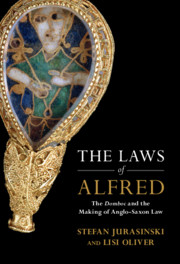
BOOK: Stefan JURASINSKI & Lisi OLIVER, The Laws of Alfred - The Domboc and the Making of Anglo-Saxon Law (Cambridge: CUP, 2021). ISBN 9781108840903, 75.00 GBP


(Source: CUP)

CUP has published a new book on Alfred the Great's domboc ('book of laws'), including a new translation.

ABOUT THE BOOK

Alfred the Great's domboc ('book of laws') is the longest and most ambitious legal text of the Anglo-Saxon period. Alfred places his own laws, dealing with everything from sanctuary to feuding to the theft of bees, between a lengthy translation of legal passages from the Bible and the legislation of the West-Saxon King Ine (r. 688–726), which rival his own in length and scope. This book is the first critical edition of the domboc published in over a century, as well as a new translation. Five introductory chapters offer fresh insights into the laws of Alfred and Ine, considering their backgrounds, their relationship to early medieval legal culture, their manuscript evidence and their reception in later centuries. Rather than a haphazard accumulation of ordinances, the domboc is shown to issue from deep reflection on the nature of law itself, whose effects would permanently alter the development of early English legislation.

ABOUT THE AUTHORS

Stefan Jurasinski, State University College, Brockport, New York
Stefan Jurasinski is Professor of English at State University College, Brockport, New York. He is the author of The Old English Penitentials and Anglo-Saxon Law (Cambridge, 2015) and, with R. D. Fulk, The Old English Canons of Theodore (2012). With Andrew Rabin, he edited Languages of the Law in Early Medieval England: Essays in Memory of Lisi Oliver.

Lisi Oliver, Louisiana State University
Lisi Oliver, author of The Beginnings of English Law (2013) and The Body Legal and Barbarian Law (2011), was Houston Alumni Professor of English and Distinguished Research Master at Louisiana State University. With Andrew Rabin and Stefan Jurasinski, she edited English Law Before Magna Carta.

TABLE OF CONTENTS

List of Figures

List of Tables

Acknowledgments

Preface

Part I.:

1. The emergence of written law in early England

2. Legal erudition in seventh- and ninth-century Wessex

3. Reshaping tradition: oaths, ordeals, and the 'innovations' of the domboc

4. The transmission of the domboc: old English manuscripts and other early witnesses

5. Reception, editorial history, and interpretative legacies

Part II. Editions:

6. Rubrics in Cambridge, Corpus Christi College MSS 173 and 383

7. Alfred's prologue

8. The laws of Alfred

9. The laws of Ine

Appendix I: handlist of prior editions

Bibliography

Index.


More info here

BOOK: Bruce W. FRIER, A Casebook on the Roman Law of Contracts (Oxford: OUP, 2021). ISBN 9780197573211, 99.00 USD


(Source: OUP)

OUP is publishing a new casebook on the Roman law of contracts.

ABOUT THE BOOK

Roman contract law has profoundly influenced subsequent legal systems throughout the world, but is inarguably an important subject in its own right. This casebook introduces students to the rich body of Roman law concerning contracts between private individuals.

In order to bring out the intricacy of Roman contract law, the casebook employs the case-law method--actual Roman texts, drawn from Justinian's Digest and other sources, are presented both in Latin and English, along with introductions and discussions that fill out the background of the cases and explore related legal issues. This method reflects the casuistic practices of the jurists themselves: concentrating on the fact-rich environment in which contracts are made and enforced, while never losing sight of the broader principles upon which the jurists constructed the law.

The casebook concentrates especially on stipulation and sale, which are particularly well represented in surviving sources. Beyond these and other standard contracts, the book also has chapters on the capacity to contract, the creation of third-party rights and duties, and the main forms of unjustified enrichment. What students can hope to learn from this casebook is not only the general outlines and details of Roman contract law, but also how the jurists developed such law out of rudimentary civil procedures.

ABOUT THE AUTHOR

Bruce W. Frier is John and Teresa D'Arms Distinguished University Professor of Classics and Roman Law at the University of Michigan. His publications include A Casebook on the Roman Law of Delict, A Casebook on Roman Family Law (with Thomas A. J. McGinn), and The Modern Law of Contracts (with J. J. White). He is also the general editor of the annotated translation of The Codex of Justinian.

TABLE OF CONTENTS

Preface for Students

Introduction to Roman Contract Law

Chapter I. Capacity to Contract

Chapter II. Stipulation: A Formal Contract

Chapter III. Contracts Created Through Delivery (“Real Contracts”)

Chapter IV. Sale: A Contract Created Through Informal Agreement

Chapter V. Other Consensual Contracts: Problems in Execution

Chapter VI. Filling in the Gaps: Contracts Created Through One Party's Performance

Chapter VII. Third Party Rights and Responsibilities

Chapter VIII. Quasi-Contract

Glossary

Short Biographies of the Jurists

Suggested Further Reading

Index of Sources


More info here

JOURNAL: Revue Historique de Droit Français et Étranger, 2020/1


(Source: https://www.dalloz-revues.fr/revues/Revue_historique_de_droit_francais_et_etranger-29.htm)

Table of contents of the number 2020/1 of the Revue Historique de Droit Français et Étranger:


08 June 2021

JOURNAL: Forum Historiae Iuris, 2020 (Open Access)


(Source: https://forhistiur.net/)

Articles

Rafael Lamera Giesta Cabral
The 1934 Brazilian Constitution and the regulation experience of labor in Brazil (1930-1934)

Andrea Mazzoleni
Brevi note in tema di administratio peculii: un concetto classico o un’introduzione giustinianea?

Giacomo Demarchi
Zwischen Rationalisierung und Integration: Der Estado Integral der zweiten spanischen Republik und seine Wurzeln in der Weimarer Republik

Claudia Passarella
From Scotland to Italy and Back: Enrico Ferri, the Verdict of Not Proven and its Consequences on the Accused

Anastasja A. Stepkine
Aspetti dell’affectio maritalis nelle dinamiche del matrimonio romano

Maurilio Felici
Spunti di ricerca sull’interpretatio dei giuristi e il destino del legatum penoris

Mariagrazia Rizzi
Appunti a margine del rapporto tra edictum divi Claudii e senatus consultum Neronianum in tema di aliquid sibi adscribere in testamento alieno

Giulietta Rossetti
Alle origini della moderna responsabilità extracontrattuale. L’actio ex lege Aquilia tra “natura penale” e “funzione reipersecutoria”.

Federica Bertoldi
Inadempimenti del comodatario e profili di responsabilità nel diritto romano

Book reviews: 

Reviewed by: Elisabetta Fiocchi Malaspina
Antonio Banfi, Massimo Brutti, Emanuele Stolfi (a cura di), Dall’esegesi giuridica alla teoria dell’interpretazione: Emilio Betti (1890-1968)

Reviewed by: Jonas Fischer
Stephan Meder, Rechtsmaschinen. Von Subsumtionsautomaten, Künstlicher Intelligenz und der Suche nach dem „richtigen“ Urteil

Reviewed by: Lena Oetzel
Cornel Zwierlein, Politische Theorie und Herrschaft in der Frühen Neuzeit

Reviewed by: Karl Härter
Ariadne Schmidt, Prosecuting Women. A Comparative Perspective on Crime and Gender Before the Dutch Criminal Courts, c.1600-1810

Reviewed by: Simona Tarozzi
Wolfgang Ernst, Justinian’s Digest 9.2.51 in the Western Legal Canon. Roman Legal Thought and Modern Causality Concepts

Reviewed by: Saskia Lettmaier
Barbara J Shapiro, Law Reform in Early Modern England. Crown, Parliament and the Press

Reviewed by: Andreas Kley
Thomas Olechowski, Hans Kelsen. Biographie eines Rechtswissenschaftlers

Reviewed by: Elisabetta Fiocchi Malaspina
Paolo Amorosa, Rewriting the History of the Law of Nations. How James Brown Scott Made Francisco de Vitoria the Founder of International Law

Reviewed by: Frederik Dhondt
Maris Köpcke, A Short History of Legal Validity and Invalidity. Foundations of Private and Public Law


More information: https://forhistiur.net/

JOB: Lecturer in the International History of Modern Human Rights (University of Glasgow) (DEADLINE: 24 June 2021)


(Source: Jobs.ac.uk)

The University of Glasgow has a vacancy for a lecturer in the international history of modern human rights.

This post is full time (35 hours per week) and is offered on an open-ended basis.

The University of Glasgow is recruiting an early career scholar for a permanent, full-time Research and Teaching position in the international history of modern human rights. We seek an individual with a developing research profile, excellent teaching and communication skills and the ability to foster and sustain collaborative partnerships with internal and external parties. The successful candidate will have research expertise in the nineteenth and twentieth century history of human rights in at least two national contexts. Expertise in one or more of the following is desirable: the histories of race, international law, supranational institutions, international relations, gender and citizenship.

The Lecturer will lead a cross-disciplinary team to create and launch a MSc in Global Human Rights and will contribute to the activities of a new multi-institutional Scottish Council on Global Affairs hosted by the University of Glasgow in 2021-23. Working with the Council's Director, the postholder will participate in strategic planning and policy formulation and assist in the design and delivery of projects to further the Council's agenda of engagement with policy stakeholders and the wider public. The Lecturer will pursue ambitious research and publishing in their subject area and contribute to undergraduate and postgraduate teaching (solo and team taught) for programmes including our undergraduate MA (Hons) in History and MSc degrees in Global History and Human Rights.

The full job announcement can be found here

BOOK: Laura L. FORD, The Intellectual Property of Nations - Sociological and Historical Perspectives on a Modern Legal Institution (Cambridge: CUP, 2021). ISBN 9781316648483, 39.99 USD


(Source: CUP) 

CUP is publishing a new book on the history of intellectual property law.

ABOUT THE BOOK

Drawing on macro-historical sociological theories, this book traces the development of intellectual property as a new type of legal property in the modern nation-state system. In its current form, intellectual property is considered part of an infrastructure of state power that incentivizes innovation, creativity, and scientific development, all engines of economic growth. To show how this infrastructure of power emerged, Laura Ford follows macro-historical social theorists, including Michael Mann and Max Weber, back to antiquity, revealing that legal instruments very similar to modern intellectual property have existed for a long time and have also been deployed for similar purposes. Using comparative and historical evidence, this groundbreaking work reflects on the role of intellectual property in our contemporary political communities and societies; on the close relationship between law and religion; and on the extent to which law's obliging force depends on ancient, written traditions.

ABOUT THE AUTHOR

Laura R. Ford, Bard College, New York

Laura R. Ford is Assistant Professor of Sociology at Bard College. Professor Ford is a former attorney turned sociologist, specializing in historical sociology and the sociological theory of Max Weber.

TABLE OF CONTENTS

Introduction

1. Legal Institutions and Social Power: Setting the Stage

2. Legal Orders and Social Performance: Founding Facebook

3. Instruments of Legal Power in the Roman Republic

4. Semantic Legal Ordering: Idealizing Roman Law

5. Cultural Transformations: Christianizing Legal Power

6. Privileges and Immunities in a Sacramentalizing Order

7. Administrative Kingship and Covenantal Bonds: Early Roots of Intellectual Property in England

8. Intellectual Property in a Nationalizing Order

9. Cultural Transformations: Naturalizing Intellectual Property

10. Semantic Legal Ordering: Idealizing Intellectual Property

11. Instruments of Legal Power in the American Republic

12. Legal Institutions and Social Performance: Founding a Global Order

Conclusion – The Intellectual Property of Nations.


More info here

JOURNAL: Historia et ius - Num. 19 - June 2021 (Opena access)


Temi e questioni

1) Dario Luongo, Contro lo "spirito di severità": garanzie e mitigazione dei dispositivi penali in Tommaso Briganti - DOI 10.32064/19.2021.01 - 15 dicembre 2020 - paper 1 


Studi (valutati tramite blind peer review)

2) Alessandro Agrì, Lo ‘Stato di Fiume’ e il suo diritto (1918-1924) - DOI 10.32064/19.2021.16 - 1 maggio 2021 - paper 16 

3) Andrés Botero Bernal, El juramento (procesal) en el Antiguo Régimen hispanoamericano.  Conceptualización, delimitación y clasificación - DOI 10.32064/19.2021.10 - 1 marzo 2021 - paper 10 

4) Angelina Cirillo, Due consulte ‘gemelle’ del vicereame austriaco: conflitti istituzionali partenopei e irenismo imperiale - DOI 10.32064/19.2020.05 - 15 febbraio 2021 - paper 5

5) Tiziana Ferreri, Usi civici a Viterbo tra XVI e XVII secolo: la riforma di Paolo III e lo Statuto comunale del 1649 - DOI 10.32064/19.2021.13 - 15 aprile 2021 - paper 13 

6) Marco P. Geri, Tra codice e «osservanze giudiciali»: Giuseppe Puccioni al crepuscolo del diritto penale del Granducato (1838-1860) - DOI 10.32064/19.2021.11 - 1 aprile 2021 - paper 11 

7) Ferruccio Maradei, "Dal foro alle cattedre". Itinerari della manualistica penale nel Settecento napoletano tra autonomia didattica e sperimentazioni sistematiche - DOI 10.32064/19.2021.08 - 1 marzo 2021 - paper 8 

8) Paola Mastrolia, Legal transfer. La disciplina dello spazio nella Milano napoleonica - DOI 10.32064/19.2021.06 - 15 febbraio 2021 - paper 6 

9) Marianna Pignata, La cura dei folli nel Progetto di Stabilimento per alienati proposto da Biagio Gioacchino Miraglia - DOI 10.32064/19.2021.18 - 1 giugno 2021 - paper 18

10) Paolo Rondini, I respingimenti degli stranieri nell’Italia postunitaria, DOI 10.32064/19.2021.20 - 1 giugno 2021 - paper 20 

11) Gian Paolo Trifone, Una rilevante sentenza, una risalente questione ed una (sfortunata) relazione inaugurale di un anno giudiziario in Cassazione - DOI 10.32064/19.2021.15 - 1 maggio 2021 - paper 15

12) Natale Vescio, Felice Battaglia e l’eredità politica della Destra Storica. Stato liberale e ‘democrazia’ nel pensiero di Francesco Fiorentino e di Angelo Camillo De Meis - DOI 10.32064/19.2021.17 - 1 giugno 2021 - paper 17 


​Interventi

13) Paolo Alvazzi del Frate, Le droit et «l’invention» de la nature au XVIIIe siècle - DOI 10.32064/19.2021.14 - 1 maggio 2021 - paper 14 

14) Mario Ascheri, Una comunità umbra di confine e la normativa più antica conservata: Gaiche - DOI 10.32064/19.2021.03 - 1 febbraio 2021 - paper 3 

15) Francesco Eriberto d’Ippolito, Considerazioni sulla nascita dell’economia mercantile a Napoli tra Sette e Ottocento - DOI 10.32064/19.2021.12 - 20 marzo 2021 - paper 12 

16) Giordano Ferri, Una lezione uruguaiana di Francesco Carnelutti. La sintesi del suo pensiero - DOI 10.32064/19.2021.07 - 1 marzo 2021 

17) Salvatore Prisco, Delle epidemie. Un (per)corso fra letteratura e diritto. Primi appunti di viaggio - DOI 10.32064/19.2021.04 - 1 febbraio 2021 - paper 4 

18) Francesco Romano, Antonio Cammelli, La storia di un istituto giuridico attraverso i documenti della banca dati IS-LeGI: il lemma ‘contumacia’ - DOI 10.32064/19.2021.09 - 1 marzo 2021 - paper 9 

19) Giovanni Rossi, Alciato’s defense of Justinian: an exemplary use of historical sources  10.32064/19.2021.19 - 1 giugno 2021 - paper 19 

20) Elio Tavilla, Bartolomeo Valdrighi (1738-1787): una rivisitazione biografica - DOI 10.32064/19.2021.02 - 1 febbraio 2021 - paper 2 


All contributions are available here in PDF format.

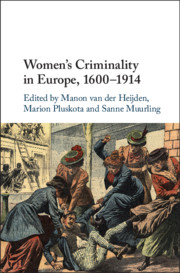
BOOK: Manon VAN DER HEIJDEN, Marion PLUSKOTA & Sanne MUURLING, Women's Criminality in Europe, 1600–1914 (Cambridge: CUP, 2021). ISBN 9781108477710, $ 99.99


(Source: CUP)

CUP is publishing an edited collection on women’s criminality in Europe.

ABOUT THE BOOK

Bringing together the most current research on the relationship between crime and gender in the West between 1600 and 1914, this authoritative volume places female criminality within its everyday context. It reveals how their socio-economic and cultural contexts provided women with 'agency' against a range of European backdrops, despite a fundamentally patriarchal criminal justice system, and includes in-depth analysis of original sources to show how changing living standards, employment, schooling and welfare arrangements had a direct impact on the quality of life of working class women, their risk of becoming involved in crime, and the likelihood of being prosecuted for it. Rather than treating women's criminality as always exceptional, this study draws out the similarities between female and male criminality, demonstrating how an understanding of specific cultural and socio-economic contexts is essential to explain female criminality, both why their criminal patterns changed, and how their crimes were represented by contemporaries.

ABOUT THE EDITORS

Manon van der Heijden, Universiteit Leiden

Manon van der Heijden is Professor of Comparative Urban History at Universiteit Leiden. Her research interests include crime and justice, marriage and the family, urban finances and public services. In 2012, she was granted a NWO VICI project Crime and Gender 1600–1900. She is a member of the Academia Europaea and author of Women and Crime in Early Modern Holland (2016).


Marion Pluskota, Universiteit Leiden

Marion Pluskota is Assistant Professor in Social History at Universiteit Leiden. She has published extensively on prostitution and criminality in the eighteenth and nineteenth centuries. She is the author of Prostitution and Social Control in Eighteenth-Century Port (2015).


Sanne Muurling, Universiteit Leiden

Sanne Muurling recently completed her Ph.D. at Universiteit Leiden with a dissertation on everyday crime and gender in early modern Bologna, Italy. Her research focuses on the social history of everyday life, including crime and deviance, single motherhood, welfare institutions, poverty and living culture.

TABLE OF CONTENTS

1. Introduction: women and crime in history Sanne Muurling, Marion Pluskota and Manon van der Heijden

2. Explaining crime and gender in Europe between 1600 and 1900 Manon van der Heijden

Part I. Violence, Space and Gender:

3. Women, violence and the uses of justice before the Criminal Court of early modern Bologna Sanne Muurling

4. The 'vanishing' female perpetrator of common assault Jo Turner

Part II. Prosecution and Punishment:

5. Gender and the prosecution of adultery in Geneva, 1550–1700 Sara Beam

6. 'Find the lady': tracing and describing the incarcerated female population of London in 1881 Lucy Williams and Barry Godfrey

7. Gender and release from imprisonment: convict licensing systems in mid- to late-nineteenth-century England Helen Johnston and David J. Cox

8. Female and male prisoners in Queensland 1880–1899: re-entry, risk factors, recidivism Alana Piper, Catrien Bijleveld, Susan Dennison and Jonathan de Bruin

Part III. Representation of Crime:

9. Girls, young women and crime: perceptions, realities and responses in a long-term perspective Sarah Auspert, Margo de Koster and Veerle Massin

10. 'Monstrous and indefensible'? Newspaper accounts of sexual assaults on children in nineteenth-century England and Wales Daniel J. R. Grey

11. Gender and Dutch newspaper reports of intimate violence, 1880–1910 Clare Wilkinson.


More info here

07 June 2021

SEMINAR: Miseria e nobiltà delle istituzioni. Identità italiana e storia dello Stato - 11 giugno 2021, Società di Studi in Storia delle Istituzioni - Le Carte e la Storia - Il Mulino


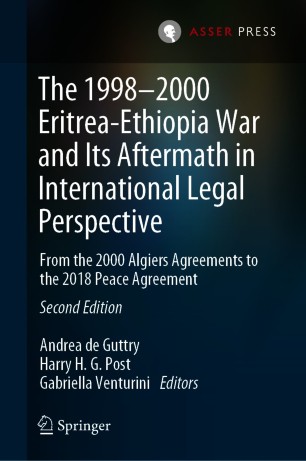
BOOK: Andrea DE GUTTRY, Harry H.G. POST & Gabriella VENTURINI (Eds.), The 1998–2000 Eritrea-Ethiopia War and Its Aftermath in International Legal Perspective (The Hague: TMC Asser Press). ISBN 978-94-6265-439-6, open access


(Source: Springer)

Springer has published a new book on the 1998-2000 Eritrea-Ethiopia War in international legal perspective.

ABOUT THE BOOK

This book centres on the war that raged between Eritrea and Ethiopia from 1998 to 2000, a war that caused great loss of life and tremendous devastation. It analyses the war in great detail from an international legal perspective: the nature and the state of the boundary conflict preceding the actual armed conflict, the military actions themselves, the role of the UN peace-keeping mission, the responsibility for the multitude of explosive remnants of the war left behind. Ample attention is paid to the decisions of the Eritrea-Ethiopia Claims Commission and the Eritrea-Ethiopia Boundary Commission. 

This study is not limited to the war and the period immediately following it, it also examines its more extended aftermath prolonging the analysis as far as the more recent improvement in the relations between Eritrea and Ethiopia, away from a situation of ‘no war, no peace’ that prevailed after the armed conflict ended. The analysis of the war and its aftermath is not only in terms of international legal issues, it has been placed in a wider than strictly legal perspective. 

The book is a valuable work for academics and practitioners in international law, human rights and humanitarian law in particular, for political scientists, diplomats, civil servants, historians, and all those others seriously interested in the Horn of Africa.

ABOUT THE EDITORS

Andrea de Guttry is Full Professor of Public International Law at the Scuola Superiore Sant'Anna in Pisa, Italy.

Harry H.G. Post is Adjunct Professor in the Faculté Libre de Droit of the Université Catholique de Lille in Lille, France.

Gabriella Venturini is Professor Emerita in the Dipartimento di Studi internazionali, giuridici e storico-politici of the Università degli Studi di Milano in Milan, Italy.


More info and the ToC can be found here

JOURNAL: Passagens: Revista de História Política e Cultura Jurídica, nº 12, v. 3, September/December 2020. (Open Access)


(Source: https://periodicos.uff.br/revistapassagens/issue/view/v12n3)

A CORTE INTERNACIONAL DE JUSTIÇA E O CONFLITO DO SAARA OCIDENTAL: O RESPALDO JURÍDICO COMO MOTRIZ DA AUTODETERMINAÇÃO
Adriano Alberto Smolarek, João Irineu de Resende Miranda
A Teologia da Libertação e a censura militar: as concepções políticas do jornal O São Paulo na década de 1970
Fabio Lanza, José Wilson Assis Neves Jr.
Memória traumática e direito à verdade: o legado da ditadura militar no Brasil
Maria Beatriz Nader, Ayala Rodrigues Oliveira Pelegrine
A polarização identitária e a pulverização programática no Brasil atual
Maria Alice Nunes Costa
DO AMOR PELA OBEDIÊNCIA: COMENTÁRIOS SOBRE A LIBERDADE E A IRRACIONALIDADE DO DIREITO
Ana Maria Lombardi Daibem, Matheus Bento Costa
O PAPEL DAS EXPERIÊNCIAS REVOLUCIONÁRIAS DO FIM DA IDADE MODERNA PARA A REORIENTAÇÃO DO CONCEITO DE LIBERDADE EM HANNAH ARENDT
Diego Avelino de Moraes Carvalho
Coerção, punição e Estado ampliado no Brasil
Ricardo Augusto dos Santos
“Onde o cidadão perdia o nome’: A Colônia Correcional de Dois Rios e o estado de exceção.
Ana Carolina Huguenin Pereira
More information: https://periodicos.uff.br/revistapassagens/issue/view/v12n3 

04 June 2021

WEBINAR: Grotian Theory Talks with Nehal BHUTA (Heidelberg: MPIL, 11 JUN 2021)


(image source: Twitter)

The MPIL in Heidelberg hosts the 'Grotian' Theory Talks. Prof. Nehal Bhuta (Edinburgh) is announced for the 11 June at 15:00 CET.

More information by clicking on the image.

(source: ESILHIL Blog)

JOURNAL: Revista de Historia del Derecho, nº 60, July/December 2020 (Open Access)


(Source: http://www.scielo.org.ar/scielo.php?script=sci_serial&pid=1853-1784&lng=es&nrm=iso)


Investigaciones

La Audiencia de Buenos Aires y la Gobernación del Tucumán: tensiones entre políticas provinciales y regionales, 1660-1674
Dainotto, Rodolfo Edgardo

El congreso penitenciario de Cincinnati de 1870. Su trascendencia en el plano internacional e Iberoamericano
García Basalo, Alejo

Evangelización de los indios de Maynas y “acomodación” del Tridentino en el “Ynforme” del jesuita Francisco de Figueroa (1661)
Locatelli, Fabio Giovanni

Origen y evolución de las cámaras federales de apelaciones en la República Argentina
Ratti, Florencia


Material audiovisual

“Mujeres y autonomía. La ciudadanía desmentida”. Discurso de recepción del Doctorado Honoris Causa concedido por la Universidad Nacional de Córdoba, 30 de octubre de 2019
Maffía, Diana


Reseñas de libros

Barriera, D. (2019). Historia y justicia. Cultura, política y sociedad en el Río de la Plata (Siglos XVI-XIX). Prometeo Libros.
Molina, Eugenia

More information: http://www.scielo.org.ar/scielo.php?script=sci_issuetoc&pid=1853-178420200002&lng=es&nrm=iso 

03 June 2021

BOOK: Michèle BEGOU-DAVIA, Florence DEMOULIN-AUZARY & François JANKOWIAK, Rerum novarum ac veterum scientia - Mélanges en l'honneur de Brigitte Basdevant-Gaudemet (Paris: LGDJ, 2021). ISBN 978-2-84934-472-9, 110.00 EUR


(Source: LGDJ)

LGDJ has published an edited collection in honor of Professor Brigitte Basdevant-Gaudemet.

ABOUT THE BOOK

Éminente historienne du droit canonique et experte des relations entre les religions et les États, Brigitte Basdevant-Gaudemet a, au long de sa carrière universitaire et de ses engagements académiques, profondément marqué la communauté des juristes et des historiens. Ses collègues, qu’elle a côtoyés dans un dialogue fécond et, pour certains d’entre eux, qu’elle a formés, ont tenu à lui rendre hommage par ces volumes de Mélanges. La grande diversité des thèmes abordés par ces soixante-seize contributions reflète à la fois l’aura scientifique de la dédicataire et son insatiable curiosité d’esprit, non moins que l’intérêt qu’elle porte constamment à l’autre. Les deux tomes de cet ouvrage sont réunis dans un coffret.


More info here

JOURNAL: Passagens: Revista de História Política e Cultura Jurídica. nº 12, v.2, May-August 2020 (Open Access)


(Source: https://periodicos.uff.br/revistapassagens/issue/view/v12n2)

Articles

A emergência do campo penal global: Desconstrução do direito penal moderno

Wanda Capeller
Em busca da paz: Sobre o ‘Dar das pedras brilhantes”, de João Guimarães Rosa
Gisálio Cerqueira Filho
Spinoza para criminalistas
Nilo Batista
A Regulação Global para Combate à COVID-19: Riscos de captura, ruptura e adaptação
Pedro Fortes
Constitucionalizando a conectividade: a articulação constitucional da sociedade mundial
Poul F. Kjaer - Traduzido por Ana Carolina Paranhos de Campos Ribeiro
Abrindo as portas da Casa de Rilhafoles: Os lazaristas e o movimento jacobeu em Portugal no século XVIII
Jefferson de Almeida Pinto
O sistema prisional moçambicano: Entre a previsão normativa e a realidade prática
Diogo de Calasans Melo Andrade

O surgimento do ‘estado” e da ‘propriedade privada” na Idade Antiga e na Idade Média

Domingos Nhamboca Hale Bacião, Julio Rocha


More information: https://periodicos.uff.br/revistapassagens/issue/view/v12n2


02 June 2021

BOOK: Damiano IULIANO, Una Costituzione per l'Italia: Mimesi e alterità nel progetto di Giuseppe Abbamonte (1797) (Napoli: Editoriale Scientifica, 2020). ISBN 978-88-9391-991-3, pp. 296, € 18,00


(Source: Editoriale Scientifica)


ABOUT THE BOOK

Collana: IusRegni. Collana di Storia del diritto medievale, moderno e contemporaneo- n. 14

Giuseppe Abbamonte, esule e latore del pensiero illuministico meridionale, si rende, nel frangente vagliato, protagonista di una sperimentazione costituzionale; l’analisi della sua produzione offre lo spunto per ripercorrere le vicende genetiche e i caratteri giuridici di cui si andava appropriando un incipiente costituzionalismo italiano post rivoluzionario. Occorre, tuttavia, comprendere se questa produzione possa effettivamente porsi all’esponente di un’idea costituzionale giuridicamente compiuta e condivisa, pur in presenza di pensieri antagonisti; se sia solidamente fondata in termini dottrinari e giuridici o non invece una delle manifestazioni emozionali del convulso momento storico, un ibrido letterario, poetico e politico, ammantato di giuri­dicità e sorto in quel fervore. Il presente studio si è posto questi obiettivi: verificare la effettiva consistenza giuridica dell’opera abbamontiana; individuare i tratti del suo orizzonte costituzionale; saggiarne la tenuta e coerenza istituzionale a fronte di schemi pubblicistici; infine, indagarne la contestualizzazione e gli apporti all’interno del dibattito giuridico italiano ed europeo del tardo Settecento.


ABOUT THE AUTHOR

Damiano Iuliano è Avvocato cassazionista e Dottore di Ricerca in Storia del Diritto, insegna quale docente incaricato Storia delle Codificazioni presso il Dipartimento di Scienze Politiche Jean Monnet dell’Università degli Studi della Campania Luigi Vanvitelli. è autore di articoli e saggi su tematiche di storia del diritto pubblico, della giurisdizione e dell’avvocatura; tra questi, Unità e finanza: l’intro­duzione del credito fondiario. Gli avvocati meridionali nel nuovo corso economico (Bologna 2014); Avvocati di regime, Avvocati nel regime. L’Avvocatura di fronte al Ventennio fascista (Torino 2014); Patrocinio legale e istituzioni giudiziarie nel Mezzogiorno d’Italia tra riforme francesi e restaurazione (Napoli 2018).


More information with the publisher.

BOOK: Anne BONZON & Caroline GALLAND (Eds.), Justices croisées - Histoire et enjeux de l'appel comme d'abus (XIVe-XVIIIe siècle) (Paris : LGDJ, 2021). ISBN 978-2-7535-8120-3, EUR 30.00


(Source: LGDJ)

LGDJ has published ‘Justices croisées - Histoire et enjeux de l'appel comme d'abus (XIVe-XVIIIe siècle)’.

ABOUT THE BOOK

Au premier abord, l'expression appel comme d'abus sonne étrangement à des oreilles profanes, combinant deux vocables qui ne semblent pas bien s'accorder. L'expression et le recours juridique qu'elle désigne sont pourtant familiers aux hommes et femmes de la fin du Moyen Age et de l'époque moderne. Utilisé au départ comme une procédure garantissant l'équilibre et le respect mutuel des juridictions royale et ecclésiastique, l'appel comme d'abus se banalise assez rapidement en recours à la justice royale face à la décision d'une instance ecclésiastique.

Il a souvent été considéré par l'historiographie comme une arme employée par le roi ou sa justice pour dépouiller le juge d'Eglise de sa juridiction. Pourtant, son usage ne se résume pas à un conflit entre juge ecclésiastique et juge royal, mais témoigne plutôt de chevauchements : le croisement des justices ne s'analyse pas toujours en termes d'affrontement ou de conquête. Etudier l'appel comme d'abus oblige donc à distinguer sa mise en oeuvre effective, sa construction théorique, son instrumentalisation politique..., dans une contextualisation fine qui en explique les enjeux.

Autant de dimensions qu'explore cet ouvrage, issu d'une enquête collective qui a fait dialoguer historiens et juristes.


More info here

BOOK: Matthew H. KRAMER, Freedom of Expression as Self-Restraint (Oxford: University Press, 2021). ISBN: 9780198868651, pp. 368, £ 80.00

 
(Source: OUP)

ABOUT THE BOOK

Freedom of Expression as Self-Restraint provides a novel justificatory foundation for the principle of freedom of expression. As the book argues, such a principle is absolute in that it is exceptionless; it imposes general duties that are binding always and everywere on every system of governance. In addition to injecting a new level of philosophical sophistication into the debates over freedom of expression, the book ties the principle to an ideal of governmental self-restraint, and it shows how that ideal connects to the paramount moral responsibility of every system of governance: the responsibility to bring about the political, social, and economic conditions under which every member of society can be warranted in harbouring an ample sense of self-respect. In short, compliance by a system of governance with the principle of freedom of expression is integral to the fulfilment of that paramount responsibility.

ABOUT THE AUTHOR

Matthew H. Kramer is Professor of Legal and Political Philosophy at the University of Cambridge, and is a Fellow of Churchill College, Cambridge. He is the Director of the Cambridge Forum for Legal & Political Philosophy, and he has been a Fellow of the British Academy since 2014. He is the author of 16 previous books and co-editor of 4 additional books.

TABLE OF CONTENTS

Table of Contents

1:Introduction: Philosophical Preliminaries

2:Components of a Theory of Freedom of Expression

3:Legitimate Restrictions

4:Governmental Self-Restraint and Individual Self-Respect

5:Pornography, Subordination, and Silencing

6:Hatred, Dignity, and Freedom of Expression

7:Conclusion: The Principle of Freedom of Expression in Practice


More information with the publisher

01 June 2021

BOOK: Dante FEDELE, The Medieval Foundations of International Law. Baldus de Ubaldis (1327–1400). Doctrine and Practice of the Ius Gentium (Leiden: Brill, 2021). ISBN: 978-90-04-44711-0, €183.00


(Source: Brill)

ABOUT THE BOOK

Series: Legal History Library, Studies in the History of International Law, Volume: 49/17

Dante Fedele’s new work of reference reveals the medieval foundations of international law through a comprehensive study of a key figure of late medieval legal scholarship: Baldus de Ubaldis (1327-1400). A student of Bartolus de Sassoferrato, Baldus wrote both extensive commentaries on Roman, canon and feudal law and thousands of consilia originating from particular cases. His writings dealt with numerous issues related to sovereignty, territorial jurisdiction, diplomacy and war, combining a rich conspectus of earlier scholarship with highly creative ideas that exercised a profound influence on later juristic thought. The detailed picture of the international law doctrines elaborated by a prominent medieval jurist offered in this study contributes to our understanding of the intellectual archaeology of international law.

ABOUT THE AUTHOR

Dante Fedele Ph.D. (2014), is Research Fellow at the CNRS (CHJ UMR 8025 - Lille). His publications on the history of diplomacy and international law include Naissance de la diplomatie moderne (XIIIe-XVIIe siècles). L’ambassadeur au croisement du droit, de l’éthique et de la politique (Nomos, 2017).


TABLE OF CONTENTS

Exergue 

Preface 

Acknowledgements 

1 Introduction 

 1 ‘International Law’ in the Middle Ages 

 2 The ‘Medieval Foundations’ of International Law 

 3 Baldus de Ubaldis 

 4 Structure 

 5 A Note on the Sources 

2 Universal Authorities and Territorial Polities 

 1 The Emperor’s Sovereignty 

  1.1  The Emperor ‘Lord of the World’ 

  1.2  The Universality of Imperial Sovereignty 

  1.3  Summary 

 2 The Pope’s Sovereignty and the Relationship between the Emperor and the Pope 

  2.1  The Pope’s Sovereignty 

  2.2  The Relationship between the Emperor and the Pope 

   2.2.1 Imperial Coronation 

   2.2.2 The Pope’s Exercise of the Imperial Vicariate During a Vacancy in the Empire 

   2.2.3 The Papal Right to Depose the Emperor 

  2.3  The Pope’s Sovereignty in the Lands of St Peter 

  2.4  Summary 

 3 Kingdoms 

  3.1  ‘Rex Superiorem Non Recognoscens in Regno Suo Est Imperator’ 

  3.2  The Relationship between Kingdoms and the Empire 

  3.3  The Relationship between Kingdoms and the Church 

  3.4  Summary 

 4  Signorie and Vicariates 

  4.1  The Legitimation of Seigneurial Rule 

  4.2  Giangaleazzo Visconti and His Ducal Titles 

  4.3  Summary 

 5 Cities That Recognise No Superior 

  5.1  The Juristic Debate on Cities’ Autonomy 

  5.2  The Foundations of Cities’ Autonomy 

  5.3  Cities belonging to the Papal Lands 

  5.4  Summary 

3 Feudo-Vassalic Relations and Territorial Jurisdiction 

 1 Feudo-Vassalic Relations 

  1.1 ‘Feudum a Fidelitate’ 

  1.2  The Vassal’s Obligation to Respond to the Lord’s Call to Arms 

  1.3  The Prohibition against the Alienation of Fiefs, and the Resolution of Feudal Disputes 

  1.4  The Public Character of Feuda Dignitatum 

  1.5  Summary 

 2 Territory and Jurisdiction (i) 

  2.1 ‘Territorium a Terrendo’ 

  2.2  ‘Iurisdictio Cohaeret Territorio’ 

  2.3  The Grant of a Castrum 

  2.4  The Prescription of Jurisdiction 

 3 Territory and Jurisdiction (ii) 

  3.1  The Boundaries of Territory 

  3.2  The Sea 

  3.3  Summary 

  4 Conflicts of Laws and Jurisdiction 

 4.1  Citizenship and Foreignness 

  4.1.1 Native and Naturalised Citizens 

 4.1.2 Foreigners 

 4.2  The Conflict of Laws 

 4.3  Conflicts of Laws and Jurisdiction in Criminal Matters 

 4.3.1  The Forum Loci Delicti 

 4.3.2  The Forum of the Defendant’s Place of Origin 

 4.3.3  The Forum of the Defendant’s Place of Residence, and the Prosecution of Foreigners for Offences Committed Abroad 

 4.3.4 Summons and Extraditions 

 4.3.5  Bis in Idem 

 4.4  Summary 

4  Diplomacy 

 1 The Office of Ambassador 

 1.1  The Ambassador and the Papal Legate 

 1.2  The Actors Entitled to Send Ambassadors 

 1.3  The Ambassador’s Appointment and the Compulsory Nature of the Office 

 1.4  The Right to a Salary or Reimbursement for Losses 

 1.5  The Capacity to Accept or Solicit Gifts 

 1.6  Inviolability, Immunities and Other Privileges 

 1.7  Summary 

 2 The Ambassador’s Negotiating Powers and the Ratification of Treaties 

 2.1  Nuntius, Procurator and Syndicus 

 2.2  Procurations 

 2.3  The Ratification of Treaties 

 2.4  The Effects of Treaties on Individual Citizens 

 2.5  Summary 

 3 The Observance of Treaties 

 3.1  The Binding Force of Agreements 

 3.1.1 Agreements Concluded by the Emperor or the Pope 

 3.1.2 Agreements Concluded by Kings 

 3.1.3 Agreements Concluded by Cities 

 3.2  Exceptions to the Principle 

 3.2.1 Vices of Consent, Causa, and the Public Utility 

 3.2.2 The Implied Clauses Rebus sic se Habentibusand Frangenti Fidem Fides Frangitur 

 3.3  Summary 

 4  Leagues, Adhaerentiae and Submissions 

 4.1  Leagues 

 4.1.1 The Legitimacy of Leagues 

 4.1.2 Leagues as Corporate Bodies 

 4.1.3 League Treaties as ‘Contracts of Strict Law’ 

 4.1.4 The Rights and Obligations of Allies 

 4.2 Adhaerentiae 

 4.3  Submissions 

 4.4  Summary 

5  War and Reprisals 

 1 The Conditions of Just War 

 1.1  Late Medieval Categorizations of Just War Conditions 

 1.2  Legitimate Authority 

 1.3  Just Cause 

 1.3.1 War of Aggression 

 1.3.2 Defensive War 

 1.3.3 War of Recovery 

 1.3.4 Unilateral or Bilateral Justice 

 1.4  Summary 

 2 The Conduct of War 

 2.1  The Scope of Diffidatio and the Obligation to Serve in the Army 

 2.2  The Soldiers’ Responsibility, Obligations and Rights 

 2.3  The Limitation of Violence in War (Moderamen, Pax Dei and Treuga Dei) 

 2.4  Truces between War and Peace 

 2.5  Summary 

 3 The Law of Booty and Captives 

 3.1  General Principles 

 3.2  The Law of Booty 

 3.3  The Occupation of Foreign Territory 

 3.4  The Law of Captives 

 3.4.1 The Status of Captives 

 3.4.2 Captives and Captors 

 3.4.3  Postliminium and the Redemption of Captives 

 3.5  Summary 

 4 Peacemaking and the Safeguarding of Peace 

 4.1  The Meaning of Pax 

 4.2  Arbitrations 

 4.3  Amnesty and Restitution Clauses 

 4.4  The Status of Conquered Territories 

 4.5  The Safeguarding of Peace 

 4.6  Summary 

 5 Reprisals 

 5.1  Reprisals between Practice and Doctrine 

 5.2  The Legitimacy of Reprisals 

 5.3  Reprisals and Citizenship 

 5.4  The Granting and the Execution of Reprisals 

 5.5  Summary 

Conclusion 

Bibliography 

Index 


More information with the publisher.

JOURNAL: Studia Gratiana (XXX, 2020). "Gratianus magister decretorum. Il Decretum tra storia, attualità e prospettive di universalità"


(Source: Biblioteca Apostolica Vaticana)

We learned of the publication of a new issue of the Studia Gratiana.


TABLE OF CONTENTS

  • Brian Ferme, Presentazione;
  • Manlio Sodi, Francesco Reali, Introduzione;
  • Francesco Reali, Alle origini del diritto civile europeo;
  • Giovanna Murano, Graziano, monaco benedettino, magister e vescovo di Chiusi: le testimonianze iconografiche;
  • Francesco Giammarresi, Fonti romanistiche del Decretum;
  • Manlio Sodi, Teologia sacramentaria e Diritto tra XI e XII secolo. A proposito di alcune tematiche del Decretum;
  • Orazio Antonio Bologna, La lingua del Decretum e la prima traduzione italiana;
  • Anders Winroth, L'universale Graziano da Chiusi: un uomo per il suo e per tutti i tempi;
  • Francesco Reali, Istituti alternativi al testamento: tra alto Medio Evo e oggi;
  • Giovanni Luchetti, Graziano e la cultura europea oggi;
  • Cecilia Natalini, Graziano e l'Europa del diritto;
  • Isabella Gagliardi, Confessione e direzione spirituale. Alcune note a margine del Decretum;
  • Mario Ascheri, Per un primo orizzonte di sintesi