Search

Showing posts with label Roman legal history. Show all posts

10 January 2022

BOOK: Roberto MASCELLARI. La lingua delle petizioni nell’Egitto romano Evoluzione di lessico, formule e procedure dal 30 a.C. al 300 d.C. (Firenze: FUP, 2021). DOI: 10.36253/978-88-5518-446-5. OPEN ACCESS


(Source: https://fupress.com/catalogo/la-lingua-delle-petizioni-nell-egitto-romano/7342)

This book investigates the linguistic and formal aspects of more than a thousand requests for justice and protection preserved in Egyptian papyri of the Roman Principate, mainly written in Greek. For many centuries in Egypt, from the Ptolemaic period to the late Roman Empire, petitions addressed to the judicial authorities shared the same textual structure and made use of recurring lexical formulas. Such uniformity was the result of the adherence by scribes and legal advisers to repertoires that had wide circulation. This study evaluates the correspondence between the formulas of the petitions and legislation, normative conventions, and spoken and literary language, and how these factors interacted with each other over the centuries.


More information: https://fupress.com/catalogo/la-lingua-delle-petizioni-nell-egitto-romano/7342 

09 June 2021

BOOK: Bruce W. FRIER, A Casebook on the Roman Law of Contracts (Oxford: OUP, 2021). ISBN 9780197573211, 99.00 USD


(Source: OUP)

OUP is publishing a new casebook on the Roman law of contracts.

ABOUT THE BOOK

Roman contract law has profoundly influenced subsequent legal systems throughout the world, but is inarguably an important subject in its own right. This casebook introduces students to the rich body of Roman law concerning contracts between private individuals.

In order to bring out the intricacy of Roman contract law, the casebook employs the case-law method--actual Roman texts, drawn from Justinian's Digest and other sources, are presented both in Latin and English, along with introductions and discussions that fill out the background of the cases and explore related legal issues. This method reflects the casuistic practices of the jurists themselves: concentrating on the fact-rich environment in which contracts are made and enforced, while never losing sight of the broader principles upon which the jurists constructed the law.

The casebook concentrates especially on stipulation and sale, which are particularly well represented in surviving sources. Beyond these and other standard contracts, the book also has chapters on the capacity to contract, the creation of third-party rights and duties, and the main forms of unjustified enrichment. What students can hope to learn from this casebook is not only the general outlines and details of Roman contract law, but also how the jurists developed such law out of rudimentary civil procedures.

ABOUT THE AUTHOR

Bruce W. Frier is John and Teresa D'Arms Distinguished University Professor of Classics and Roman Law at the University of Michigan. His publications include A Casebook on the Roman Law of Delict, A Casebook on Roman Family Law (with Thomas A. J. McGinn), and The Modern Law of Contracts (with J. J. White). He is also the general editor of the annotated translation of The Codex of Justinian.

TABLE OF CONTENTS

Preface for Students

Introduction to Roman Contract Law

Chapter I. Capacity to Contract

Chapter II. Stipulation: A Formal Contract

Chapter III. Contracts Created Through Delivery (“Real Contracts”)

Chapter IV. Sale: A Contract Created Through Informal Agreement

Chapter V. Other Consensual Contracts: Problems in Execution

Chapter VI. Filling in the Gaps: Contracts Created Through One Party's Performance

Chapter VII. Third Party Rights and Responsibilities

Chapter VIII. Quasi-Contract

Glossary

Short Biographies of the Jurists

Suggested Further Reading

Index of Sources


More info here

30 July 2020

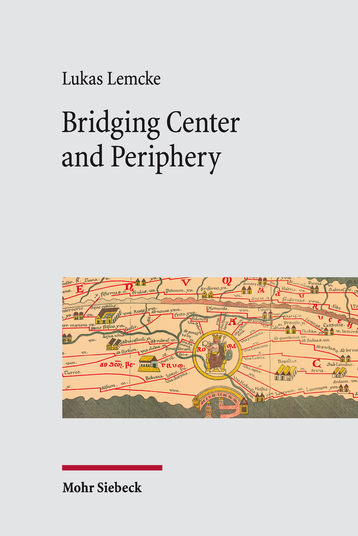
BOOK: Lukas LEMCKE, Bridging Center and Periphery : Administrative Communication from Constantine to Justinian (Tübingen: Mohr Siebeck, 2020). ISBN 978-3-16-158945-4, 69.00 EUR


(Source: Mohr Siebeck)

Brill is publishing a new book on administrative communication channels in the late Roman Empire.

ABOUT THE BOOK

Lukas Lemcke challenges the conventional understanding of the Late Roman administration as a three-tiered system by demonstrating that its hierarchy of communication was distinctly two-tiered. In so doing, he offers a new perspective on the functional and organizational structure of this administrative system and advances our understanding of the vicariate by introducing a new functional dimension and by reassessing its development during the fifth and early sixth centuries. Based on a comprehensive collection of legal, epigraphic and other literary documents to which the concept of »formal communication« is applied, the author explores the forms and development of administrative communication channels that facilitated the official exchange of information from Constantine to Justinian and thus reveals how emperors actively sought to regulate the centripetal and centrifugal flow of official information.

ABOUT THE AUTHOR

Lukas Lemcke Born 1990; 2012 BA (Classical Studies) and 2013 MA (Ancient Mediterranean Cultures), University of Waterloo, Canada; 2014–19 PhD studies in Ancient History, University of Cologne.

The table of contents can be found here

More info here