Search

Showing posts with label modern history. Show all posts

13 September 2023

CFP: Nuova Antologia Militare (NAM): Modern Military History Issues (1400-1815), Vol. 5, Issue 19 (Summer 2024), NAM Vol. 6, Issue 23 (Summer 2025)


Call for Papers: Nuova Antologia Militare (NAM)

Modern Military History Issues (1400-1815)

NAM Vol. 5, Issue 19 (Summer 2024); NAM Vol. 6, Issue 23 (Summer 2025)

www.nam-sism.org


Publication date: No. 19 Summer 2024; No. 22 Summer 2025

Last date for submission: No. 19 End March 2024, No. 23 End March 2025


We are inviting submissions of original papers and book reviews to be considered for publication in
the fifth and sixth NAM issues specialized in Early Modern and Modern Military History.

Papers should deal with warfare and military. Papers may cover different topics: not only military art and science (tactics, strategy, operations, campaigns and battles, technology, fortifications and siege, naval warfare, intelligence, statistics, topography) but also on all field concerning war studies and polemology, as diplomatic, political, legal, philosophical, economic, social, religious, gender aspects of war. Including literature, iconography, memory, commemoration, anthropology of conflict, and s. o. from Early Modern Era to 1815.

Submissions can be made in Italian, English, French, German, or Spanish; they should be no less than 6 000 and no more than 8000 words in length and should be accompanied by an abstract of 100-250 words in English, and final bibliography.

NAM is an open access, double blind peer-reviewed, DOI indexed journal in the Scopus list, which publishes scholarly articles in the field Military History and publishes 4 issues a year respectively devoted to Ancient, Medieval, Modern and Contemporary MH. It was founded in November 2019 by the Italian Society of Military History and is co-directed by Virgilio Ilari and Giovanni Brizzi. So far NAM has published 243 articles and 216 book reviews (10,000 pages), including 72 and 71 of Modern Military History (3.378 pages).


Please address submissions to virgilio.ilari@gmail.com

NAM Ethics: Articles will be submitted to a double-blind peer review. The articles are indexed with DOI and stored. The authors retain the copyright of their articles. More: https://www.nam-sism.org/2.2%20codice%20etico.html

NAM Guidelines: https://www.nam-sism.org/2.1%20linee%20guida.html


Previous NAM Ancient MH issues published here: https://www.nam-sism.org/3.2%20%20fascicoli.html


28 April 2020

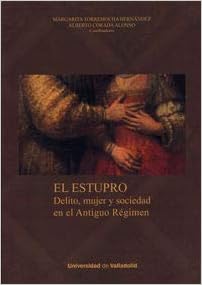
BOOK: Margarita TORREMOCHA HERNANDEZ & Alberto CORADA ALONSO, El estupro: delito, mujer y sociedad en el Antiguo Régimen (Valladolid, Ediciones Universidad de Valladolid, 2018). ISBN: 8484489892, pp. 314, 21 €


ABOUT THE BOOK

Este trabajo sobre el estupro, es un intento de dar respuesta a una realidad muy frecuente en la sociedad de la Edad Moderna, aunque no por común menos compleja, que afectaba al matrimonio, al mercado matrimonial, a las posibilidades de tomar estado, etc. El estupro es un delito definido por dos coordenadas: engaño y mujer honrada y/o doncella honesta. Ambos parámetros fueron obligatorios en su concepción jurídica. A partir de ellos, en los tribunales, su tratamiento se fue ramificando a cuestiones en principio no intrínsecas, tales como la violencia, el incumplimiento de la palabra de matrimonio, el embarazo y la obligación subsiguiente de alimentos, etc. Las fuentes procesales contribuyen a través de los discursos de los agentes de la justicia a crear una imagen en la que la mujer era una víctima por engaño, a la cual se le puede resarcir. Así, el desequilibrio de las relaciones entre hombre y mujer se pone de manifiesto en los planteamientos que los jueces, abogados, fiscales e incluso testigos presentan para la resolución del conflicto, y nos sitúa en los múltiples escenarios del estupro, en Castilla, Aragón, Portugal e Italia.

ABOUT THE AUTHORS

Margarita Torremocha Hernández es catedrática de Historia Moderna en la Universidad de Valladolid. Entre sus líneas de investigación destacan la Historia social de la delincuencia; la Historia de la Universidad de Valladolid; la fiesta como expresión de poder; las fórmulas de sociabilidad del Antiguo Régimen y la mujer en las sociedades modernas.
Alberto Corada Alonso es investigador en el Departamento de Historia Moderna de la Universidad de Valladolid.

TABLE OF CONTENTS

You can download the table of contents here


More information here

17 April 2020

BOOK: Irene FOSI, Inquisition, Conversion, and Foreigners in Baroque Rome (Leiden: Brill, 2020). ISBN: 9789004422667, pp. 260, € 125.00

Cover Inquisition, Conversion, and Foreigners in Baroque Rome
(Source: Brill)

ABOUT THE BOOK

In Rome, where strategies to re-establish Roman Catholic orthodoxy were formulated, the problem of how to deal with foreigners and particularly with ‘heretics’ coming from Northern Europe was an important priority throughout the early modern period. Converting foreigners had a special significance for the Papacy. This volume, which includes several case studies, explores the meaning of conversion and the changes of policy adopted by the church bodies set up to protect orthodoxy. It uses inquisitorial documents (from Archivio della Congregazione per la dottrina della Fede) and sources from other archives and libraries, both in Rome and elsewhere. The book includes an updated bibliography with a particular attention paid to anglophone historiography.

ABOUT THE AUTHOR

Irene Fosi is professor of Modern History at the University “G. d’Annunzio” of Chieti-Pescara in Italy. She is author of many original studies on Renaissance and Baroque Rome: All’ombra dei Barberini. Fedeltà e servizio nella Roma barocca (Rome 1997); Papal Justice. Subjects and Courts in the Papal States, 1500-1750 (Washington D.C., 2011); Conversion and Autobiography: Telling Tales before the Roman Inquisition, in “Journal of Early Modern History”, 17, 2013, pp. 437- 456; 'The Hospital as a Space of Conversion: Roman Examples from the Seventeenth Century', in Space of Conversion in Global Perspective, ed. by G. Marcocci, W. de Boer, A. Maldavsky, I. Pavan, pp. 154-174 (Brill, Leiden-Boston, 2014).

TABLE OF CONTENTS

Introduction. Winds of the North
1 Rome, a Patria Comune?
 1 Rules and Procedures: Defining the Foreigner
 2 Religious Identity
 3 Protection, Integration, Exclusion: National Confraternities, Hospices and Colleges
 4 Conversions and Reconquests: The Venerable English College in the Late Sixteenth and Seventeenth Centuries
2 Not Only Pilgrims: Reception and Conversion
 1 Conversion and the Holy Years
 2 Abjuring Heresy and Creating a New Identity
 3 Clement VIII’s “Womb of Paternal Compassion”
 4 Rome, a Den of Spies
3 Cristoforo Gaspare Fischer: a Goldsmith, his Inheritance and the Inquisition
 1 Cristoforo “Piscator aurifex in Urbe”
 2 Between Nuremberg and Rome
 3 Lengthy Negotiations and Powerful Intermediaries
4 Johannes Faber, “One of Italy’s Seven Sages”
 1 Johannes Faber’s Roman Career
 2 “Acquiring the Souls of Others”
 3 Friends and Compatriots
 4 Echoes of War
 5 A Dubious Reputation
5 Guillaume Reboul: a Troublesome Convert
 1 A Restless Pamphleteer
 2 Rivalry and “loathing”
 3 Between Paris and Rome
6 Unsettling Mobility: Foreign Heretics in Italy
 1 The Inquisitor’s Doubts
 2 Merchants in the Duchies of Mantua and Savoy
 3 At the Border of the Papal States
 4 From Leghorn to Florence by Way of Siena
 5 Naples: a Port City
7 Between Intransigence and Tolerance
 1 Alexander VII: New Conversion Politics
 2 Difficult Control
 3 A Cultural Conversion Project
 4 The Heretic’s Language
8 Petitions, Enclosures, Burials
 1 Petitions and Intermediaries
 2 Enclosing: the Ospizio Apostolico dei Convertendi
 3 Burials
 4 Onward to the Eighteenth Century
 5 Exiled Princes, Traveling Princes
Conclusion
Bibliography
Index


More information here

04 March 2020

BOOK: Antonio MERLINO, Interpretazioni di Montesquieu (Foligno, Il Formichiere, 2018). ISBN: 8894805522, pp. 177, €18,00

(Source: Il Formichiere)


ABOUT THE BOOK

Quarto volume della collana "Piccola Biblioteca del Pensiero Giuridico", prefazione di Diego Quaglioni.

Era dalla complessiva revisione del giudizio su Montesquieu giurista, proposta da Giovanni Tarello in un lungo saggio del 1971 (Per una interpretazione sistematica di Montesquieu) poi rifuso nel suo fortunato e controverso volume su Assolutismo politico e codificazione del diritto (1976), che non si facevano più i conti con le interpretazioni di Montesquieu in una maniera così schietta e salutare. A quaranta anni e più dalla pubblicazione di quelle pagine, il bisogno di una visione d’insieme sui restauri del ritratto di Montesquieu si era fatto ancora più urgente. Antonio Merlino ha scelto la sola via possibile, che è sempre quella del ritorno alla genuinità dei testi e delle fonti, a cominciare dalle Lettres Persanes. Ne risulta un Montesquieu a più facce, lontanissimo dalla stereotipia in cui tanta letteratura (manualistica e no) lo ha fissato nella fisionomia pacificata di un “classico del costituzionalismo moderno” (dalla Prefazione di Diego Quaglioni).

ABOUT THE AUTHOR

Antonio Merlino insegna nella facoltà di Giurisprudenza dell’Università di Salisburgo (FB Öffentliches Recht). Si è laureato in Giurisprudenza a Trento con una tesi sul pensiero giuridico di Vittorio Frosini. Si è quindi addottorato con lode nell’Università «Suor Orsola Benincasa» di Napoli e nell’Università «Paris Lodron» di Salisburgo. Ha conseguito l’abilitazione scientifica nazionale come professore associato in Storia del diritto medievale e moderno.
È autore di diversi saggi e delle monografie Storia di Kelsen. La recezione della reine Rechtslehre in Italia (Napoli, Editoriale Scientifica, 2012) e Kelsen im Spiegel der italienischen Rechtslehre (Frankfurt am Main, Peter Lang, 2013).


More information here

07 February 2020

BOOK : Barbara J. SHAPIRO, Law Reform in Early Modern England, (Hart publishing), ISBN : 9781509934218, £63.18

(Source : Hart publishing


ABOUT THE BOOK : Law Reform in Early Modern England, Crown, Parliament and the Press.

This book provides an illuminating commentary of law reform in the early modern era (1500–1740) and views the moves to improve law and legal institutions in the context of changing political and governmental environments.
Although lawyers have often been seen as the chief obstacles to law reform, this book emphasises their contributions – particularly their role in legislation and in reforming the corpus of legal materials – and highlights the previously ignored reform efforts of Lord Chancellors.

ABOUT THE AUTHOR : Barbara J Shapiro is Professor Emerita and Professor in the Graduate School at the University of California, Berkeley.

TABLE OF CONTENTS :

1. Introduction
2. The Early Tudors and Law Reform 1509–58
3. The Elizabethan Era 1558–1603
4. The Early Stuarts 1603–40
5. The Civil War and Parliamentary Rule 1640–49
6. Commonwealth and Protectorate 1649–60
7. The Restoration Era 1660–88
8. Revolution and Beyond 1688–1740
9. Conclusion


31 January 2020

REMINDER, CONFERENCE: Waging war and making peace. European ways of inciting and containing armed conflict, 1648-2020 (Venice, 24-26 JUN 2020)

(Source: Stefano Cattelan)

Summary:
The history of Europe is as much about violence and divisions – including religious wars, national clashes and ideological conflicts – as it is about shared cultural, social and economic accomplishments. If war has been such a constant presence in the history unfolding on the continent, the incessant efforts to limit its destructiveness are also an undeniable fact. It was such efforts that eventually led to the birth of Jus ad bellum and, ultimately, laid down the foundations of modern international law. From such a viewpoint, one might even find another definition of what European history might be. Some scholars have suggested that if war has structured a common European space, the containment of violence and the art of peacemaking have constituted ‘Europe’ in thought and practice.

Argument:
The history of Europe is as much about violence and divisions – including religious wars, national clashes and ideological conflicts – as it is about shared cultural, social and economic accomplishments. If war has been such a constant presence in the history unfolding on the continent, the incessant efforts to limit its destructiveness are also an undeniable fact. It was such efforts that eventually led to the birth of Jus ad bellum and, ultimately, laid down the foundations of modern international law. From such a viewpoint, one might even find another definition of what European history might be. Some scholars have suggested that if war has structured a common European space, the containment of violence and the art of peacemaking have constituted ‘Europe’ in thought and practice. In the second half of the eighteenth century, however, Voltaire asserted that the propensity to war and destruction had taken much less possession of the minds of the people of India and China, than of the minds of Europeans, arguing that war has also constituted ‘Europe’ in thought and practice. All this raises the question what, if anything, may be regarded as ‘typically European’ in ideas of war and peace that referred to, or originated within, Europe and its space. Scholars interested in participating in the eleventh annual conference of the Research Network on the History of the Idea of Europe are invited to consider their research with regards to the meaning and function that concepts such as ‘Europe’, ‘European’, ‘European civilization’ etc. have within the treatises, treaty texts, minutes, speeches, propaganda material, and so on. In our conference discussion, we will try to find out whether there are long-term patterns of ‘Europe’-related discourses concerning peace and war, and if so, what they consist of. These aspects may be considered in relation to a number of narrower questions, including, but not limited to: How do Jus ad bellum and the various peace treaties, from Westphalia 1648 to Paris 1947, and the international conflict-reducing arrangements, like Minsk 2015, conceive of the nature of war in relation to ideas of Europe? What were and are the ideas of legitimate, just, and unlawful war? Who were or are seen as legitimate and illegitimate actors in wartime? What is the role of terrorism in European perceptions of threat after the 2004–2005 al-Qaeda attacks and the 2015–2017 Islamic State attacks on European soil? How have the differences between war crimes and the crime of war been defined? What are, historically, the legal and philosophical bases of peace treaties? In the European mind, has peace been considered a state of exception, the prevalent and desirable normality, or a utopian ideal that humanity should strive for under European leadership? What have been the conceptual differences between wars amongst Europeans and wars against extra-European populations? Is there a European long-term pattern of war propaganda and enemy depiction? How are peace and war related to moral claims within discourses about Europe? How are efforts to bridge the divide between ‘us’ and the ‘other’ been related to Europe? How are initiatives of reconciliation and understanding construed in connection to ideas of Europe?

Submission guidelines:
Deadline for submission expired (2 December 2019). Please note that the working language will be English. There will be no fees for participating.

Sponsorship:
Fondazione Venezia per la Ricerca sulla Pace; Regional Council of Veneto; Venice City Council; Ca’ Foscari University of Venice; Institute for the Study of Ideas of Europe (University of East Anglia)

Scientific commitee:
Matthew D’Auria (University of East Anglia); Fernanda Gallo (University of Cambridge); Florian Greiner (University of Augsburg); Rolf Petri (Ca' Foscari University of Venice); Laura Picchio Forlati (University of Padua); Peter Pichler (Karl-Franzens-University Graz); Jan Vermeiren (University of East Anglia); Anita Ziegerhofer (Karl-Franzens-University Graz)

Organising committee:
Matthew D’Auria (University of East Anglia); Rolf Petri (Ca' Foscari University of Venice); Jan Vermeiren (University of East Anglia)

For the original post, see the blog of the ESIL Interest Group History of International Law
(Source: Calenda)

25 January 2020

CALL FOR PROPOSALS: XI JORNADAS DE HISTORIA MODERNA Y CONTEMPORÁNEA “Gobierno y representación en la Edad Moderna y Contemporánea” (Universidad Nacional del Sur, Argentina - DEADLINE 30 April 2020)

CALL FOR PROPOSALS

XI JORNADAS DE HISTORIA MODERNA Y CONTEMPORÁNEA Gobierno y representación en la Edad Moderna y Contemporánea”

Universidad Nacional del Sur, Argentina
Deadline 30 DE ABRIL DE 2020

Gobierno y representación en la Edad Moderna y Contemporánea” es el tema principal con el que se presenta esta convocatoria, teniendo en cuenta que en el año 2020 se cumple el segundo centenario de la revolución liberal que abrió el ciclo de las que se produjeran en Europa y el mundo occidental a lo largo del siglo XIX: la protagonizada por Rafael de Riego. Las Revoluciones Liberales cambiaron el concepto de representación que había sido hasta entonces estamental como estipulaba la tradición en el Antiguo Régimen a través de las asambleas, o personal por medio de la agregación en las cortes monárquicas. En el siglo XIX encontramos un nuevo actor, el pueblo, que gobierna a través de sus representantes. La Revolución de 1820 puede ser vista como un verdadero parteaguas en la historia de la modernidad, si se considera que desde entonces dejó de ser posible volver a las fórmulas tradicionales de política y representación en España e Hispanoamérica. En resumidas, se trata de un hito ilustrativo de los profundos procesos iniciados a comienzos del siglo XIX, los cuales crearon las condiciones que dieron origen al mundo contemporáneo, sin romper totalmente con la tradición política de la modernidad. De este modo, se aúnan estudios de historia moderna que explican los contextos de donde partieron los impulsos de las Revoluciones del siglo XIX, como de historia contemporánea, que no sólo observan las consecuencias sino que a la vez analizan ese nuevo mundo que lentamente empezó a crearse durante ese período de cambio.

Coordinadores generales: Dra. Ana Mónica González Fasani (UNS) – Dr. Guillermo Nieva Ocampo (UNSa./CONICET) – Dra. Carolina Biernat (UNQ/CONICET).

Organizan: Consejo Nacional de Investigaciones Científicas y Técnicas; Cátedra Historia de América II, Cátedra Historia Moderna y Cátedra Historia Contemporánea (Departamento de Humanidades – Universidad Nacional del Sur); Proyecto de investigación “Agentes de gobierno en el mundo hispano. Microanálisis del poder monárquico (ss. XV-XVIII)”, del Consejo de Investigación de la Universidad Nacional de Salta; Instituto Universitario “La Corte en Europa” de la Universidad Autónoma de Madrid; Carrera de Licenciatura en Historia de la Universidad Nacional de QuilmesCentro de Estudios Sociales de América Latina (Facultad de Ciencias Humanas – Universidad Nacional del Centro de la Provincia de Buenos Aires/Comisión de Investigaciones Científicas).

Información de interés

Fecha de celebración: 26 al 28 de agosto de 2020
Lugar de celebración: Universidad Nacional del Sur.
Presentación de ponencias: Los resúmenes deberán enviarse a los coordinadores de Mesa y a la coordinación de las Jornadas al correo jhmcuns2020@gmail.com, hasta el 30 de abril de 2020. Los mismos podrán ser elaborados por hasta dos autores y no deberán superar las 250 palabras. El formato solicitado es el siguiente:
  1. Título de la ponencia.
  2. Nombre y apellido de los autores.
  3. Pertenencia institucional de los autores.
  4. Correo electrónico de contacto.
  5. Texto del resumen, letra Times New Roman 12, justificado.
MesasTemáticas y más información


Source: http://iulce.es/call-proposals-xi-jornadas-historia-moderna-contemporanea/

17 January 2020

BOOK: Aryo MAKKO, European Small States and the Role of Consuls in the Age of Empire (Leiden/Boston: Nijhoff/Brill, 2019). ISBN: 9789004414372, € 145.00

Cover European Small States and the Role of Consuls in the Age of Empire
(Source: Brill)

ABOUT THE BOOK

In European Small States and the Role of Consuls in the Age of Empire Aryo Makko argues that Sweden and Norway participated in the New Imperialism in the late 18th and early 19th centuries through consular services. Usually portrayed as nations without an imperial past, Makko demonstrates that their role in the processes of imperialism and colonialism during that period can be understood by including consular affairs and practices of informal imperialism into the analysis. With this, he contributes to our understanding of the role of smaller states in the so-called Age of Empire. 

ABOUT THE AUTHOR

Aryo Makko, Ph.D. (2012), Stockholm University, is Associate Professor of History at that university and a Pro Futura Scientia Fellow at the Swedish Collegium for Advanced Study (SCAS). He is also a member of the Young Academy of Sweden.

TABLE OF CONTENTS

Acknowledgements 
List of Tables 
List of Abbreviations 
Introduction 
 1 Focus of This Book 
 2 Sources 
 3 Structure 
 4 Prior Research 
1 Power in the Age of Empire 
 1 Sweden-Norway during the Age of Empire: Shipping, Trade and Globalization 
 2 Trade, Diplomacy and Security? Consuls and Foreign Policy 
2 Years of Ambition, 1875–1884 
 1 The Consular Committee of 1875 and the Backlog of Reforms 
 2 Africa: Economic Stagnation and Mixed Courts 
 3 Eastern and Southern Asia: the “Opening” of a Continent 
 4 West Indies: Old Ambitions, New Realities 
 5 Conclusions 
3 Disillusionment and Years of Conflict, 1884–1905 
 1 The Consular Regulation of 1886 and Renewed Failures 
 2 After Berlin: the Scramble for Africa 
 3 Eastern and Southern Asia: Growth, Tension and Hesitation 
 4 West Indies: Colonial Periphery and Merchant Consuls 
 5 Conclusions 
4 From Informal Empire to Small State Realism, 1905–1914 
 1 Zero Hour: Reorganizing the Foreign Service 
 2 Africa: Maintaining the Status Quo 
 3 Eastern and Southern Asia: Concentrating Efforts 
 4 West Indies: Falling into Oblivion 
 5 Conclusions 
Conclusion 
Appendix 
Bibliography 
Index 

More information here


25 March 2019

LECTURE: Prof. dr. Jean-Louis HALPERIN, "L'état des juristes en Allemagne, XIXe-XXe siècles. Une réflexion sur la sociologie historique des juristes" (Brussels: Royal Flemish Academy for the Arts and Sciences/Committee for Legal History - VUB/French Embassy, 3 April 2019)

(image source: Prof. Halpérin at the Sarton Medal for Legal History, UGent)

On Wednesday 3 April, prof. dr. Jean-Louis Halpérin (Ecole Normale Supérieure, Paris) will hold a lecture at the Royal Flemish Academy for the Arts and Sciences, at the joint invitation of the Commitee for Legal History (President prof. dr. D. Heirbaut) and the Vrije Universiteit Brussel (Prof. dr. F. Dhondt/CORE), in the framework of the Année de la France à la VUB, a joint initiative between the French Embassy in Brussels and the Rector of the VUB.

Topic: L'état des juristes en Allemagne, XIXe-XXe siècles. Une réflexion sur la sociologie historique des juristes.

The lecture will start at 17:00 in the Rubens Room, with an introduction of the speaker (Prof. dr. D. Heirbaut).

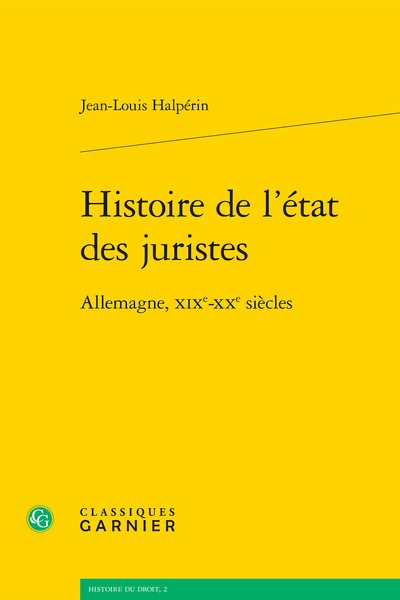
Those interested can prepare the lecture with Prof. Halpérin's monography on the topic (Histoire de l'Etat des juristes. Allemagne, XIXe-XXe siècles [Histoire du Droit], Paris: Classiques Garnier, 2015).
(image source: Classiques Garnier)

RSVP with drs. Wouter De Rycke (academic assistant, VUB/CORE).

The Academy Palace (Hertogstraat - Rue Ducale 1, 1000 BRUSSELS) is easily accessible by metro, bus, or on foot from the Central Station.

25 November 2016

WORKSHOP: Labour Accidents, 19th-20th Century, France/Belgium (Lille, Lille II University/CNRS, 9 Dec 2016)


The Centre d'Histoire Judiciaire (Lille II/CNRS) organizes a workshop on labour accidents, with the support of the Belgian Scientific Policy IAP Justice & Populations.

All persons interested should register on nathalie.flament@univ-lille2.fr.

The full program can be consulted here.


17 August 2016

PAPER on SSRN: Annamaria MONTI, 'Interdisciplinary' Legal Studies and the Emergence of New Academic Teachings: A Research Project on Law Courses in 19th-20th Century Italy

 (image source: SSRN)

Annamaria Monti (Bocconi University, Milan) posted 'Interdisciplinary' Legal Studies and the Emergence of New Academic Teachings: A Research Project on Law Courses in 19th-20th Century Italy on SSRN.

Abstract:
English Abstract: The profound change in thinking about the law experienced by European jurists at the turning of the 20th century is well known: they renewed their methods, also through the influence of German legal thought and the impact of new social sciences. Focusing on the Italian experience, the research intends to investigate how this innovative change was linked to the teaching of law. Most certainly, new courses were introduced. Concerning the contents of the teachings, another point to investigate are the connections with the legal thought circulating at a transnational level in those times.

Spanish Abstract: El cambio profundo en la manera en la que se pensaba el derecho que experimentaron los juristas europeos a principios del siglo XX es bien conocido: renovaron sus métodos, en parte bajo la influencia del pensamiento jurídico alemán y el impacto de nuevas ciencias sociales. Nuestra investigación, que se centra en la experiencia italiana busca determinar el modo en que aquella innovación estuvo vinculada a la enseñanza del derecho. Seguramente se introdujeron nuevas asignaturas. En cuanto al contenido de aquella enseñanza, otro aspecto a investigar consiste en su conexión con el pensamiento jurídico que circulaba en aquel entonces a nivel transnacional.
See fulltext here.
(source: Legal History Blog)