Search

Showing posts with label Law and Religion. Show all posts

16 July 2026

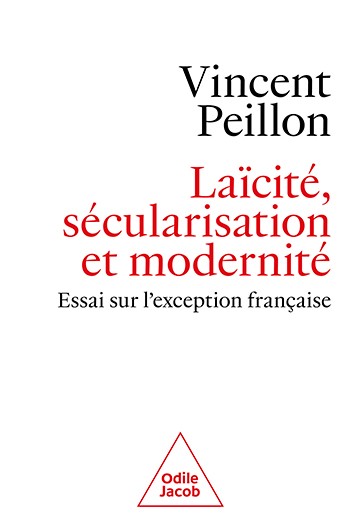
BOOK: Vincent PEILLON, Laïcité, sécularisation et modernité. Essai sur l'exception française (Paris: Odile Jacob, 2026), 272 p. ISBN 9782415015435, € 24,9


(image source: Odile Jacob)

Abstract:

La laïcité donne lieu aujourd’hui à de nombreux débats, à de vigoureuses polémiques et à bien des contresens. Dans ce livre érudit et exigeant, où il noue un dialogue serré avec les fondateurs ainsi qu’avec de nombreux interprètes contemporains, Vincent Peillon montre comment la laïcité française propose une version absolument singulière de la sécularisation. Ni rejet et éviction du religieux, ni réinvestissement à l’identique du religieux dans le séculier, pas davantage bricolage individuel qui permettrait à chacun de se forger ses propres croyances, la laïcité française met en œuvre un modèle de sécularisation jusqu’ici curieusement peu étudié. Ce modèle, qui définit au plus près l’exception française, est inséparablement religieux et politique, rationnel et mystique. La laïcité française ne peut se résumer à un dispositif juridique de neutralité et de séparation des Églises et de l’État. Pensée comme nécessaire pour fonder le lien civique, garantir la démocratie, émanciper l’individu et réaliser la justice sociale, elle est une religion civile qui engage une compréhension nouvelle de la modernité. Celle-ci serait le produit d’une longue histoire, celle des hérésies.

On the author:

Philosophe et homme politique, Vincent Peillon a consacré de nombreux ouvrages à Maurice Merleau-Ponty, au républicanisme, à la laïcité et à la philosophie juive française. Comme ministre de l’éducation nationale, il a mis en place la Charte de la laïcité et relancé l’enseignement moral et civique. 

 (source: univ-droit)


26 February 2026

BOOK: Oscar FERREIRA & Elsa FOREY (dir.), Le Religieux, gardien des institutions et des libertés [Rencontres, 700] (Paris: Classiques Garnier, 2026), ISBN 9782406197539

(image source: Classiques Garnier)

Abstract:
Une exploration des doctrines cléricales, politiques et juridiques de toutes confessions (chrétiennes, judaïque, musulmane...), dans une perspective transdisciplinaire, comparée et historique répondant à la question : la démocratie et les libertés ont-elles besoin d’une garantie religieuse ? 

Read more here: DOI 10.48611/isbn.978-2-406-19755-3.

18 February 2026

BOOK: Brigitte BASDEVANT-GAUDEMET, Gallicanisme et laïcité. Le droit français des religions à travers l’histoire (XIVe – XXIe siècle) (Paris: MDD Éditions, 2026), ISBN 978-2-8453-9081-2

(image source: MDD)

Abstract:
Si chacun est sujet d’un Prince ou citoyen d’un État, nombreux sont aussi les fidèles, adeptes d’une religion. Comment autorité publique et responsables religieux coexistent-ils sur un même territoire, en s’adressant aux mêmes individus, mais en diffusant des messages distincts, par leur nature et leur contenu ? Le défi de l’organisation des relations entre un État et les religions traverse toutes les époques et toutes les civilisations. Fusion des deux pouvoirs ? Persécutions ? Reconnaissance ou Séparation ? tous les schémas existent, seule l’ignorance est impossible. Dans l’Occident chrétien, une tradition s’est instaurée, distinguant deux puissances, entretenant des liens plus ou moins étroits. Cette ligne générale persiste depuis vingt siècles, mêlant éléments de continuités et nombreuses mutations. Le royaume de France connut – et connaît peut-être encore – le gallicanisme dans lequel les pouvoirs publics exercent une certaine autorité sur la religion, pour les questions temporelles. Quelle autorité ? sur quelles religions ? et que sont ces questions temporelles? Les réponses sont multiples. Notre laïcité actuelle s’est lentement construite à partir du gallicanisme qui prit forme lors du conflit opposant le roi Philippe le Bel au pape Boniface VIII, qui marqua le Concordat du Bologne de 1516, la Déclaration des quatre articles de 1682, la Révolution, le régime des cultes reconnus, celui de la Séparation, puis la loi de 2021 confortant les principes de la République. Gallicanisme ou laïcité ? Deux termes a priori peu compatibles et pourtant l’histoire du régime juridique des cultes en France connut certaines continuités que cet ouvrage explicite, sans méconnaître les évolutions et adaptations, dues aux hommes et aux faits, parfois plus qu’aux lois.
(source: storiadeldiritto)

10 February 2026

BOOK: Diederik BURGERSDIJK, Henk J.M. NELLEN & Marc DE WILDE (eds.), Hugo Grotius’s On Public Partnership with Unbelievers (De societate publica cum infidelibus). Introduction, Transcription and English Translation [Mini-monographs in Medieval and Early Modern Studies; 5] (Leiden/Boston: Brill, 2025), viii + 146 p. ISBN 9789004744592, € 102,85


(image source: Brill)

Abstract:

In this hitherto unpublished treatise, Hugo Grotius examines what kinds of partnerships between Christians and non-Christians are legally permissible. These include public partnerships, such as treaties and alliances, but also private associations, such as commercial contracts, marriages, and relations of servitude. Grotius’s treatise is indispensable for understanding his ideas about legal relations between Christians and non-Christians, both in international and domestic contexts. This is the first edition of the annotated Latin text with an English translation and introduction.

 On the editors:

Diederik Burgersdijk, Ph.D. (2010), University of Amsterdam, is a lecturer in classics and ancient history at Utrecht University. His research focuses on the rhetoric and historiography of the later Roman empire, with a special interest in the reception of antiquity in later eras. His most recent co-edited volume is Constantinople Through the Ages: The Visible City from its Foundation to Contemporary Istanbul (Brill, 2025). Henk Nellen, Ph.D. (1980), Catholic University of Nijmegen, is a guest researcher at the Huygens Institute in Amsterdam. He co-edited the final five of the seventeen volumes in the series of Hugo Grotius’s correspondence. In 2007, he completed a biography of Grotius (English translation published by Brill, 2014). In 2021, he published a second biographical study: Geen vredestichter is zonder tegensprekers. Hugo de Groot, geleerde, staatsman, verguisd verzoener (Athenaeum, 2021). Marc de Wilde, Ph.D. (2008), University of Amsterdam, is a professor of jurisprudence at the University of Amsterdam with a focus on the history of legal thought. He has published several articles on Grotius, including on his letters to East-Indian rulers and his draft regulations for Jews.

Read more here: DOI  10.1163/9789004744592.

08 January 2026

CONFERENCE: Minorités protestantes et droit(s) en Europe (17e-18e S.) (Le Mans: Le Mans Université, 11-12 DEC 2025)


(image source: IMHC)

On 11 and 12 December 2025, the following conference took place in Le Mans:

Programme

11 décembre 2025

9 h 30 – 10 h | Accueil café

10 h – 10 h 15 | Ouverture du colloque

Session 1 – Droit et justice autour des guerres de Religion

10 h 15 – 10 h 45 | Réparations pour un massacre : la justice transitionnelle et la minorité protestante pendant les guerres de Religion

David van der Linden (université de Groningue)

10 h 45 – 11 h 15 | Le droit à une justice équitable : les justiciables protestants à la chambre de l’édit de Castres (1598-1679)

Sherylin Bouyer (université de Groningue)

11 h 15 – 11 h 45 | La conversion du protestantisme français à l’absolutisme des Bourbons : entre accommodements politiques et fermeté spirituelle (1629-1661)

Laurent Bouchard (université de Poitiers)

11 h 45 – 12 h 30 | Discussion collective

Session 2 – Contraintes et interprétations de la loi

14 h – 14 h 30 | Faire échec à la qualification de relaps pour préserver ses droits en Languedoc autour de la Révocation de 1685

Julien Broch (Aix-Marseille Université –CERHIIP)

14 h 30 – 15 h | “En attendant qu’il plaise à Dieu les éclairer comme les autres” : l’article XII de l’édit de Fontainebleau et la minorité de la minorité huguenote

Hubert Bost (EPHE-PSL – LEM)

15 h – 15 h 15 | Pause café

15 h 15 – 15 h 45 | Beaucoup de bruit pour rien ? Réactions huguenotes à la déclaration royale de 1724

Pauline Haour (EPHE-PSL)

15 h 45 – 16 h 15 | Interpréter l’édit de Versailles de 1787

Didier Boisson (université d’Angers – TEMOS)

16 h 15 – 17 h 30 | Discussion collective

Vendredi 12 décembre 2025

Session 3 – Les acteurs protestants face au droit

9 h – 9 h 30 | Avocats et experts : les protestants saumurois et leur rôle dans l’application du droit et de la justice sous l’édit de Nantes

Léo Maillé (Le Mans Université – TEMOS)

9 h 30 – 10 h | Pasteurs et droit(s) : usages, médiations et enjeux dans les protestantismes minoritaires (xviie-xviiie siècles)

Céline Borello (Le Mans Université – TEMOS)

10h15 – 10h45 | Le pasteur doit-il se faire avocat ? Le Tabernacle de Dieu sous la nuée d’Alexandre Brissac (1666)

Julien Léonard (université de Lorraine – CRULH)

10 h 45 – 11 h | Pause café

11 h – 11 h 30 | La concurrence des capitulations. Les privilèges religieux des troupes étrangères dans les villes de garnison de la dorsale catholique (France, xviie-xviiie siècles)

Paul Vo-Ha (université Paris 1 Panthéon Sorbonne – IHMC/IUF)

11 h 30 – 12 h | Une diplomatie pour les droits des exilés : le cas des réfugiés huguenots (v. 1680 – v. 1720)

Naïma Ghermani (université Grenoble-Alpes – LAHRHA)

12 h – 12 h 45 | Discussion collective

Session 4 – Circulations et héritages du droit

14 h – 14 h 30 | L’Église réformée au Brésil : cadres institutionnels et enjeux coloniaux (1630-1654)

Matheus Vila Nova (EPHE-PSL – LEM)

14 h 30 – 15 h | D’une émancipation à l’autre : convergences entre non conformistes et anglicans autour de l’Émancipation des catholiques en Irlande (1791-1829)

Karina Bénazech Wendling (université de Lorraine)

15 h – 15 h 30 | La laïcité et l’intégration républicaine des minorités religieuses : le choix des protestants (xviiie-xxie siècles)

Valentine Zuber (EPHE-PSL – GSRL)

15 h 30 – 16 h 15 | Discussion collective

Conclusion générale

(source: IMHC

12 December 2025

CONFERENCE: Protestantisme et pensée juridique (Malakoff: Université Paris Cité, 15-16 DEC 2025)

(image source: Wikimedia Commons)

Lundi 15 décembre, 14 h 00, sous la présidence de Pierre-Yves Quiviger, directeur de l’UFR de philosophie, Université Paris 1 Panthéon-Sorbonne


Guerric Meylan, maître de conférences en histoire du droit, université Paris-Saclay, Les Termes de l’Alliance selon Jean Calvin : proposition de lecture institutionnelle du Décalogue (Ex., 20)
Attila Pokecz Kovacs, professeur d’histoire du droit, université nationale du service public et université réformée Károli Gáspár de Budapest, L'influence du calvinisme sur la pensée juridique européenne et la jurisprudence : le cas de la Hongrie
Fabrice Bin, professeur de droit public, Science po Toulouse, Le devoir du contribuable et la légitimité de la loi fiscale à partir de Luther et Calvin
Paolo Astorri, professeur associé d’histoire du droit, université de Copenhague, Reforming Marriage, Reforming Law: Parental Consent and the Juridical Culture of Lutheranism 

Sous la présidence de Marianne Carbonnier-Burkard, maître de conférences honoraire à l’Institut protestant de théologie
Arnaud Le Gonidec, docteur en histoire du droit, université Toulouse Capitole, La condamnation de l'Eucharistie par les juristes protestants français de la seconde moitié du XVIe siècle: arguments juridiques
David El Kenz, maître de conférences en histoire moderne, université Bourgogne Europe, Les « héros de la foi » au XVIe siècle : le droit, à l’origine de la martyrologie protestante
Romain Dubos, docteur en histoire du droit, université Paris 1 Panthéon-Sorbonne, Un combat humaniste contre l'absolutisme : la Prinicipum monitrix musa d'Henri Estienne (1590)
Adrien Boniteau, docteur en théologie protestante, université de Strasbourg, Protestantisme et contractualisme : de l'alliance théologico-juridique des monarchomaques au contrat social de Thomas Hobbes 


Mardi 16 décembre, 09 h 30, sous la présidence d’Anne Rousselet-Pimont, codirectrice de l’École de droit de la Sorbonne, université Paris 1 Panthéon-Sorbonne


Clara Cwikowski, enseignante contractuelle en histoire du droit, université de Toulon, La conception de la loi et du contrat dans la littérature protestante sur la tolérance civile en France au XVIIIe siècle
Alexis Verhassel, doctorant en histoire du droit, université de Montpellier, Kant et le renversement des catégories du droit romain
Florian Reverchon, professeur d’histoire du droit, université de Toulouse, Enseigner le droit canonique en terre protestante : le Kirchenrecht dans les facultés de droit allemandes (XVIIe-XXe siècle)
Julien Broch, maître de conférences en histoire du droit, Aix-Marseille université, La part protestante de l’esprit du droit républicain : Jules Simon et la doctrine de la liberté dans l’ordre
Franck Zarlenga, docteur en histoire du droit et chercheur associé à Institut d’histoire du droit, Université Paris Cité, L’influence du droit protestant sur la nature juridique de l’Église dans le processus de séparation des Églises et de l’État
Jean-Pierre Jézéquel, directeur de recherche émérite, Institut national de l’audiovisuel, Ellul protestant et juriste

14 h 30, sous la présidence de Bruno Daugeron, directeur de Centre Maurice Hauriou, université Paris Cité
Isabelle Kalinowski, directrice de recherche, UMR Pays Germaniques (UMR 8547, CNRS/ENS), Les références au droit dans L'Éthique protestante et l'esprit du capitalisme de Max Weber
Quentin Roueche, doctorant en philosophie, université Paris 1 Panthéon-Sorbonne, Le paradoxe de l'individualisme politique protestant selon le juge Jerome Frank : éléments pour une théologie réformiste et réaliste
Adrien Aracil, docteur en histoire moderne, Sorbonne université, Le régime de l’édit de Nantes peut-il être un régime juridique ? Institutions réformées et pensée juridique dans la France du premier XVIIe siècle
Cyril Selzner, maître de conférences en langue et littératures anglaises et anglosaxonnes, université Paris 1 Panthéon-Sorbonne, Droit et radicalité de la conscience : les quakers et le serment au XVIIe siècle
Gilles Dumont, professeur de droit public, université Paris Cité, Existe-t-il une science administrative protestante ?
Sylvain Bloquet, maître de conférences en histoire du droit, université Paris Cité, Protestantisme et doctrine civiliste du XIXe siècle à Jean Carbonnier
Céline Borello, professeur d’histoire moderne, université du Mans, Conclusion


Practicalities:

Salle Jean-Pierre Machelon, Faculté de Droit, d’Économie et de Gestion, Université Paris Cité (10 avenue Pierre Larousse, 92240 Malakoff)

04 November 2025

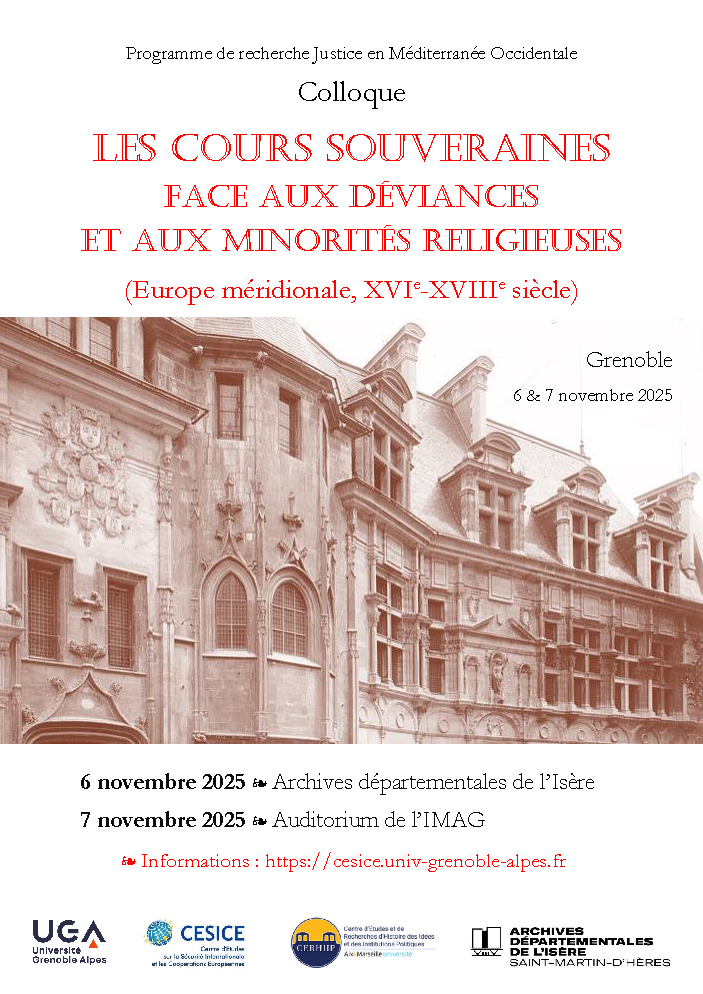
CONFERENCE: "Les cours souveraines face aux déviances et aux minorités religieuses" (Grenoble: CESICE, 6-7 NOV 2025)


(image source: CESICE)

Description:

Du 6 novembre 2025 au 7 novembre 2025 Complément date Le CESICE co-organise avec le CERHIIP un colloque portant sur la thématique "Les cours souveraines face aux déviances et aux minorités religieuses". Ce colloque aura lieu à l'auditorium des Archives départementales le jeudi 6 novembre de 2025 de 9h00 à 12h00 et de 14h00 à 17h00 ainsi que le vendredi 7 novembre 2025 à l'auditorium de l'IMAG de 9h00 à 12h00.

See here for program. 

21 May 2025

BOOK: Orazio CONDORELLI, Trittico siciliano. Diritto, religione e sovranità nel Regno di Sicilia in età normanno-sveva (Cosenza: Luigi Pellegrini Editore, 2025). ISBN: 979-12-205-0389-1, 20,00 €, pp. 208


ABOUT THE BOOK

Tra i secoli XII e XIII, il Regnum Siciliae emerse in Europa come istituzione che diede forte coesione politica, sotto l’idea di un potere pubblico unitario, a una vasta area territoriale dotata di una popolazione multietnica e multireligiosa. La Chiesa Romana diede legittimazione religiosa alle imprese militari dei Normanni nell’Italia meridionale e in Sicilia, e alla loro ascesa politica, che culminò con l’istituzione del Regno nel 1130. Nelle rappresentazioni testuali e iconografiche, la sovranità dei re di Sicilia si colloca al crocevia della concezione biblica di regalità e dell’idea di maiestas ereditata dalla tradizione romano-bizantina. Da Ruggero II a Federico II, la legislazione fu primaria ed essenziale espressione della concezione normanno-sveva dei compiti della regalità. In questo quadro si colloca la Legazia apostolica, istituzione che ha caratterizzato la storia delle relazioni tra potere ecclesiastico e potere politico in Sicilia dal secolo XI fino al 1871. Al di sopra dei ricorrenti conflitti tra Regno e Papato, la religione e l’idea dell’alleanza fra trono e altare furono concepite come fondamentali strumenti di governo.

ABOUT THE  AUTHOR

Orazio Condorelli è professore ordinario di Diritto e religione nell’Università di Catania e codirettore della Rivista Internazionale di Diritto Comune e della International School of Ius Commune (Erice).


More information with the publisher.

09 October 2024

CFP: 'Rediscovering Inquisition Research and new perspectives from the Archives of the Inquisition(s)' (Naples, 17-18 SEPT 2025 ) [DEADLINE 30 NOV 2024]

(Source: EEHAR)


The inquisitorial archives have undergone a process of dispersal over the past two centuries, the outcomes of which are only partly known. While some large inquisitorial funds are still preserved in public and private institutions, the destination of many other archives (or archival series) has been more troubled and, in some cases, not well known. 

This call for papers intends to gather contributions, especially from young researchers, regarding new studies and/or new discoveries on inquisitorial archives, with a focus on the archives of the local courts of the (Roman, Spanish or Portuguese) Inquisition. 

Contributions could be focused on: 

- little-known or not yet studied funds or archival series of inquisitorial courts; 

- newly discovered funds that survived documentary dispersion (e.g., correspondence, instructions, etc.); 

- trials or files that shed new lights on the history of the Inquisition; 

- new discoveries on the libraries of local courts of the Inquisition; 

- the history of documentary funds of inquisitorial origin. All speakers will be required to give a brief preliminary overview on the history of the inquisitorial court investigated, from the origin to the suppression phase. 

The conference will take place on 17-18 September 2025 in Naples. Reimbursement of travel expenses (up to a maximum of 200 euros from Italy and 400 euros from abroad) and lodging will be provided. Selected papers will be published in a final volume. The article submissions are due by 1st November 2025. 

Each proposal should contain an abstract of the content to be illustrated (400-500 words) and a short cv of the proposer (200 words). Deadline for proposal submission: November 30, 2024. Acceptance will be communicated by December 15, 2024. Infos and proposal submission (Organization): Silvia Toppetta - silvia.toppetta@unimore.it (University of Modena and Reggio Emilia)

Issued by: DIGITAL INQUISITION. Tools for multimedia access and exploitation of the Archive of the Congregation for the Doctrine of the Faith; NETEX - NETworks and EXchanges within the Congregations of the Roman Curia: a Digital Analysis of the Early Roman Church Archives; in collaboration with: INQUIRE - International Centre for Research on Inquisitions.

Scientific Commettee (members of DIGITAL INQUISITION/NETEX projects): Matteo Al Kalak, Nicoletta Bazzano, Massimo Carlo Giannini, Vittoria Fiorelli. 


10 April 2024

BOOK: Francesco DI CHIARA (ed.), Tra diritto e religione. Dialoghi e influenze nella storia giuridica [Collana di Studi di storia del diritto medievale e moderno, eds. Paolo ALVAZZI DEL FRATE, Giovanni ROSSI & Elio TAVILA; 11] (Roma: Historia et Ius, 2023), 282 p. ISBN 979-12-81621-02-2 [OPEN ACCESS]


(image source: historia et ius)

First paragraph (preface by Emanuele Conte):
In traduzione inglese, una parte di questo testo machiavelliano compare in epigrafe di un capitolo di un libro scientifico destinato a un pubblico vasto, che si inserisce nel filone di studi divulgativi che, a partire dal successo di pubblico riscontrato dai best-seller di Juval Noah Harari e Jared Diamond, ha proposto di reinterpretare le strutture sociali e le istituzioni alla luce del sapere antropologico, storico ed economico, integrato ora da quello biologico, neurologico, psicologico. Una interdisciplinarità “presa sul serio”, si direbbe, per offrire teorie nuove per spiegare il mondo.

Read the full book here in open access. 


28 March 2024

REMINDER CFP: XXVIII Annual Forum of Young Legal Historians, Religion and Ethics in Legal History (Milan: University of Milan/University of Milan-Bicocca, 4-7 September 2024) (DEADLINE: 31 MAR 2024)


(Source: AYLH)


The call for papers for the next Annual Forum of Young Legal Historians has just been published on the conference website.

Introduction

We are delighted to announce that the University of Milan and the University of Milan-Bicocca are hosting the 28th Annual Forum of Young Legal Historians (AFYLH).

The purpose of this forum is to bring together young legal scholars to share ideas, foster collaborations and contribute to the expansion of academic research and knowledge in the field of legal history.

The forum will be composed of three days: the first day as welcoming day with keynote speakers, and numerous parallel sessions over the following two days.

The broad theme of the 28th Forum is Religion and Ethics in Legal History.

The full call for papers, including information on submissions (DEADLINE: 31 March 2024) can be found on the conference website.


11 March 2024

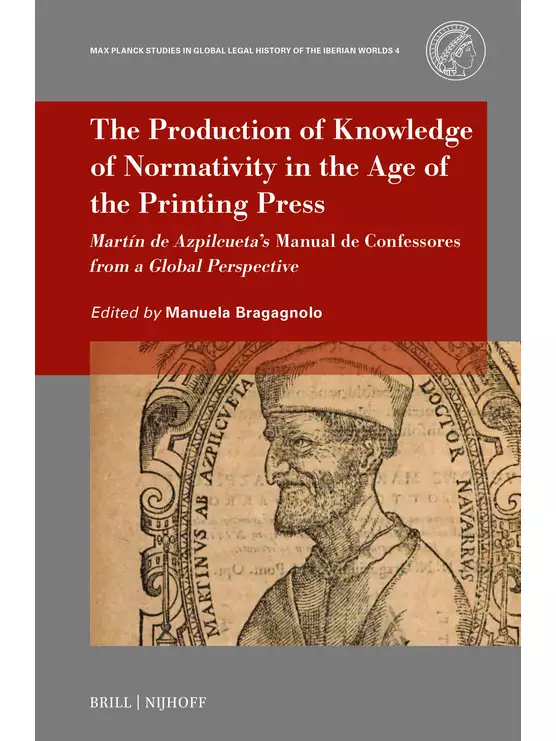
BOOK: Manuela BRAGAGNOLO, The Production of Knowledge of Normativity in the Age of the Printing Press. Martín de Azpilcueta’s Manual de Confessores from a Global Perspective (Leiden-Boston: Brill, 2024). ISBN: 9789004685789 [OPEN ACCESS]


ABOUT THE BOOK

This volume explores the production of knowledge of normativity in the age of early modern globalisation by looking at an extraordinarily pragmatic and normative book: Manual de Confessores, by the Spanish canon law professor Martín de Azpilcueta (1492-1586). Intertwining expertise, methods, and questions of legal history and book history, this book follows the actors and analyses the factors involved in the production, circulation, and use of the Manual, both in printed and manuscript forms, in the territories of the early modern Iberian Empires and of the Catholic Church. It convincingly illustrates the different dynamics related to the materiality of this object that contributed to “glocal” knowledge production.


TABLE OF CONTENTS

  • Preface: Coordinates of an Experiment
  • Books and the Production of Knowledge of Normativity in the Early Modern Period: The Case of Martín de Azpilcueta’s Manual de Confessores (Manuela Bragagnolo)
  • Legal Authorship in the Age of the Printing Press: Manual De Confessores by Martín de Azpilcueta (1492–1586) (Manuela Bragagnolo)
  • The Flemish Reeditions of Martín de Azpilcueta’s Works: A Paratextual Study (César Manrique Figueroa)
  • Professional Book Trade Networks and Azpilcueta’s Manual in 16th-Century Europe (Natalia Maillard Álvarez)
  • Translating Normative Knowledge: Martín de Azpilcueta and Jesuits in Portuguese America (16th Century) (Samuel Barbosa)
  • Sed talentum commissum non abscondere: Moral Obligations of an Author (Christiane Birr)
  • Martín de Azpilcueta Navarro in the Andes (16th–17th Centuries) (Pedro Guibovich Perez)
  • Azpilcueta in the Atlantic Book Trade of the Early Modern Period (1583–1700) (Pedro Rueda Ramírez)
  • The Path of Doctor Navarro in Colonial Mexico: The Circulation of Martín Azpilcueta’s Works (Idalia García Aguilar)
  • The Presence of Azpilcueta’s Manual de Confessores in Portuguese America (16th to 18th Centuries) (Airton Ribeiro)
  • Reading Azpilcueta in the Valley of Mexico (Byron Ellsworth Hamann)
  • Doctor Navarro in the Americas: The Circulation and Use of Martín de Azpilcueta’s Work in Early-Modern Mexico (David Rex Galindo)
  • Martín de Azpilcueta on Trade and Slavery in Jesuit Legal Manuscripts from Iberian Asia (Stuart M. McManus)
  • Pietro Alagona’s Compendium Manualis Navarri Published by the Jesuit Mission Press in Early Modern Japan (Yoshimi Orii)
  • Making Women Sinners: Guilt and Repentance of Converted Japanese Women in the Application of Alagona’s Compendium Manualis Navarri in Japan (16th Century) (Luisa Stella de Oliveira Coutinho Silva)


The publication can be found in open access here.


23 February 2024

BOOK: John Jr. WITTE, The Blessings of Liberty. Human Rights and Religious Freedom in the Western Legal Tradition (Cambridge: Cambridge University Press, 2021). ISBN: 9781108652841


ABOUT THE BOOK

Leading legal scholar John Witte, Jr. explores the role religion played in the development of rights in the Western legal tradition and traces the complex interplay between human rights and religious freedom norms in modern domestic and international law. He examines how US courts are moving towards greater religious freedom, while recent decisions of the pan-European courts in Strasbourg and Luxembourg have harmed new religious minorities and threatened old religious traditions in Europe. Witte argues that the robust promotion and protection of religious freedom is the best way to protect many other fundamental rights today, even though religious freedom and other fundamental rights sometimes clash and need judicious balancing. He also responds to various modern critics who see human rights as a betrayal of Christianity and religious freedom as a betrayal of human rights.


ABOUT THE AUTHOR

John Witte, Jr. is Woodruff University Professor, McDonald Distinguished Professor, and Director of the Center for the Study of Law and Religion at Emory University. A world-class scholar of legal history, human rights, and law and religion, he has published 300 articles and forty books. Recent works include The Western Case for the Monogamy Over Polygamy (Cambridge, 2015), Christianity and Family Law (Cambridge, 2017), and Church, State, and Family (Cambridge, 2021).


TABLE OF CONTENTS

Introduction

1. Christian contributions to the development of rights and liberties in the Western legal tradition

2. Magna Cartas old and new: rights and liberties in the Anglo-American common law

3. Natural law and natural rights in the early Protestant tradition

4. 'A most mild and equitable establishment of religion': religious freedom in Massachusetts, 1780–1833

5. Historical foundations and enduring fundamentals of American religious freedom

6. Balancing the guarantees of no establishment and free exercise of religion in American education

7. Tax exemption of religious property: historical anomaly or valid constitutional practice? 8. Faith in Strasbourg? Religious freedom in the European Court of Human Rights

9. Meet the new boss of religious freedom: the new cases of the Court of Justice of the European Union

Concluding reflections: toward a Christian defense of human rights and religious freedom today

Index.


More information can be found here

05 February 2024

CALL FOR PAPERS: XXVIII Annual Forum of Young Legal Historians, Religion and Ethics in Legal History (Milan: University of Milan/University of Milan-Bicocca, 4-7 September 2024) (DEADLINE: 31 MAR 2024)

(Source: AYLH)


The call for papers for the next Annual Forum of Young Legal Historians has just been published on the conference website.

Introduction

We are delighted to announce that the University of Milan and the University of Milan-Bicocca are hosting the 28th Annual Forum of Young Legal Historians (AFYLH).

The purpose of this forum is to bring together young legal scholars to share ideas, foster collaborations and contribute to the expansion of academic research and knowledge in the field of legal history.

The forum will be composed of three days: the first day as welcoming day with keynote speakers, and numerous parallel sessions over the following two days.

The broad theme of the 28th Forum is Religion and Ethics in Legal History.

The full call for papers, including information on submissions (DEADLINE: 31 March 2024) can be found on the conference website.


14 December 2023

SEMINAR SERIES: Sécularités, dialogue entre théologiens et juristes (Paris: Institut de recherche juridique de la Sorbonne, JAN-MAR 2024)


« Sécularités, dialogue entre théologiens et juristes » réunit depuis cinq ans à l’Institut de Recherches Juridiques de la Sorbonne, en partenariat avec le Centre d’études du Saulchoir, des représentants des deux disciplines, en prenant acte de l'achèvement de la sécularisation de notre société. Les séances ont lieu (avec quelques exceptions…) le deuxième vendredi de chaque mois, de 16 h 30 à 19 h 30, afin d’entendre un théologien et un juriste sur un thème commun, de leur permettre de dialoguer, puis de discuter avec eux. Elles se tiennent dans la salle des séminaires de l’IRJS (au deuxième étage du 4 rue Valette, 75005 Paris).

Animé par Bernard Bourdin, dominicain, professeur d'histoire des idées et de philosophie politique, Institut catholique de Paris, directeur du Centre d'étude du Saulchoir ; Pierre Bonin, professeur d'histoire du droit, Ecole de droit de la Sorbonne ; François-Guy Trébulle, professeur de droit privé, Ecole de droit de la Sorbonne


Programme:

  • Vendredi 12 janvier : La légitimité, avec Bernard Bourdin, dominicain, professeur d'histoire des idées et de philosophie politique, Institut catholique de Paris, directeur du Centre d'étude du Saulchoir, et Aïda Manouguian, docteur en droit public, université Lyon 3 Jean Moulin
  • Jeudi 8 février : L'obéissance, avec Bruno Cadoré, ancien maître de l'Ordre des Dominicains, et Nicolas Sild, professeur de droit public, université de Toulouse Capitole
  • Vendredi 8 mars : Loi et bien commun, avec don Jean-Rémi Lanavère, directeur adjoint de l'Ecole Supérieure de Philosophie et de Théologie de la Communauté Saint-Martin, et Jimmy Meersman, maître de conférences en droit public, université de Lorraine


More information can be found here.


14 November 2023

BOOK: Gijs KRUIJTZER, Justifying Transgression. Muslims, Christians, and the Law - 1200 to 1700 (Berlin: DeGruyter, 2023), 12 + 344 p, ISBN 9783111215907 [OPEN ACCESS]


(image source: DeGruyter)

Abstract:
How do people justify what others see as transgression? Taking that question to the Persian-Muslim and Latin-Christian worlds over the period 1200 to 1700, this book shows that people in both these worlds invested considerable energy in worrying, debating, and writing about proscribed practices. It compares how people in the two worlds came to terms with the proscriptions of sodomy, idolatry, and usury. When historians speak of the gap between premodern practice and the legal theory of the time, they tend to ignore the myriad of justifications that filled this gap. Moreover, a focus on justification evens out many of the contrasts that have been alleged to exist between the two worlds, or the Muslim and Christian worlds more generally. The similarities outweigh the differences in the ways people came to terms with the various rules of divine law. The level of flexibility of the theologians and jurists in charge of divine law varied more over time and by topic than between the two worlds. Both worlds also saw the development of ever more sophisticated justifications. Amid the increasing complexity of justifications, a particular kind of reasoning emerged: that good outcomes are more important than upholding rules for their own sake.

Author:

Gijs Kruijtzer, University of Vienna, Austria.

Read or download the book here (DOI  10.1515/9783111218014).


29 June 2023

BOOK: Rabiat AKANDE, Entangled Domains: Empire, Law, and Religion in Northern Nigeria (Cambridge: Cambridge University Press, 2023), 202 pp, ISBN 9781316511558, £95


(image courtesy: Cambridge University Press)

Book description: 
Set in Colonial Northern Nigeria, this book confronts a paradox: the state insisted on its separation from religion even as it governed its multireligious population through what remained of the precolonial caliphate. Entangled Domains grapple with this history to offer a provocative account of secularism as a contested yet contingent mode of governing religion and religious difference. Drawing on detailed archival research, Rabiat Akande vividly illustrates constitutional struggles triggered by the colonial state's governance of religion and interrogates the legacy of that governance agenda in the postcolonial state. This book is a novel commentary on the dynamic interplay between law, faith, identity, and power in the context of the modern state's emergence from colonial processes.
Table of contents: 
Introduction
Part I. Governing Faith:
1. Jousting for souls: indirect rule, Christian missions and the governance of religious difference
2. Governing Shari'a
Part II. Constituting Difference:
3. The construction of minorities: late imperial secularity and the constitutional politics of decolonization
4. The making of the 1958 Penal Code
5. Constituting rights: Christian religious liberty in the late colonial state
Part III. Imagining the Past:
6. The 1977 Constitutional Conference and beyond
Conclusion.
About the author: 
Rabiat Akande is Assistant Professor at Osgoode Hall Law School in Toronto. She works in the fields of legal history, law and religion, constitutional and comparative constitutional law, Islamic law, International law, and (post)colonial African law and society.
More information can be found here

28 September 2022

ARTICLE: Marta CERRITO, "Boundaries between law and religion" (Forum Historiae Iuris 30 AUG 2022)


(image source: FHI)

Abstract:

The word ‘boundary’ does not only indicate a physical division between different worlds. The border often represents a point of contact. This concept of a ‘boundary’ is particularly critical in the field of legal history because often the plurality of iura contributes not only to the fusion of different cultures but also to the creation of new ones. The purpose of this paper is to investigate the relevance and the meaning of expressions of Anathema and curse it’s possible to find in some Latin documents that date back to the Norman period of Sicily. This period is pivotal for the consolidation of the secular and spiritual power of the Church and the use of curses by the lay power highlights a blurred line between the ecclesiastical and the temporal power. This idea of power makes the very strong ecclesiastical character of early political thought understandable. Going through some documents, this paper aims at understanding, from a legal point of view, the meaning of these curses: are they simple notary formulas, without legal significance or, as penalty clauses, a fundamental part of legal documents?

Read more here: DOI 10.26032/fhi-2022-008 

18 July 2022

BOOK: Till VAN RAHDEN & Michael STOLLEIS (eds.), Emanzipation und Recht. Zur Geschichte der Rechtswissenschaft und der jüdischen Gleichberechtigung [Studien zur europäischen Rechtsgeschichte; 329] (Frankfurt am Main: Vittorio Klostermann, 2021), VIII + 314 p. ISBN 9783456045359, € 69


(image source: Vittorio Klostermann)

Abstract:

In the course of Jewish emancipation in Germany from the 18th century to World War I, many Jewish students chose to study law. The subject offered access to diverse fields of activity, and it contained a liberal promise of equality. However, this promise was fulfilled only slowly until 1914 and was broken by National Socialist Germany. But as long as the prospect of emancipation still seemed realistic, some branches of jurisprudence proved particularly attractive, such as Roman legal history, legal theory and comparative law, commercial and international business law, and, not least, the new labor and social law. The contributions in this volume, the result of a conference at the Forschungskolleg Humanwissenschaften in Bad Homburg in May 2019, attempt to explore the reasons for these preferences.

Read more with the publisher