Search

Showing posts with label Magna Charta. Show all posts

06 March 2020

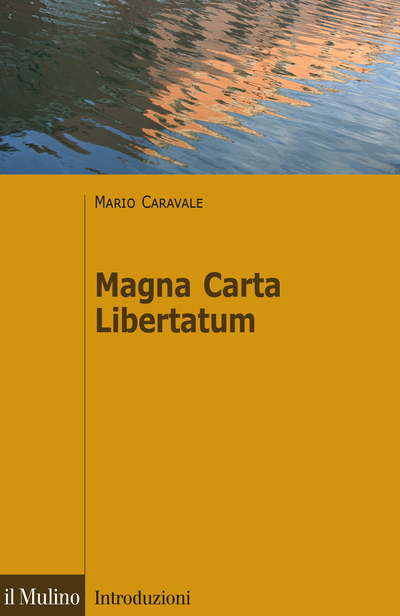
BOOK: Mario CARAVALE, Magna Charta Libertatum (Bologna: Il Mulino, 2020). ISBN: 9788815286093, pp. 136, € 12.00


Cover Magna Charta Libertatum
(Source Il Mulino)

ABOUT THE BOOK

Questo libro analizza il contesto storico e giuridico in cui venne promulgata la Magna Carta del 1215, uno dei documenti più celebri del periodo medievale. Quest'ultima consolidava alcuni dei diritti consuetudinari degli ordinamenti vigenti nel regno inglese all’inizio del secolo XIII. Ancora oggi la Magna Carta è considerata come fonte di princìpi per gli ordinamenti giuridici. Inoltre essa continua a rappresentare un manifesto del valore universale delle libertà individuali.

ABOUT THE AUTHOR

Mario Caravale è professore ordinario di Storia del diritto italiano nella Facoltà di Giurisprudenza dell'Università di Roma “La Sapienza”, dopo avere insegnato nella Università di Camerino e, nella stessa sede romana, nella Facoltà di Scienze politiche. E’ direttore del Dizionario Biografico degli Italiani pubblicato dall'Istituto
dell'Enciclopedia Italiana.

TABLE OF CONTENTS

Introduzione
Parte prima: Fondamenti ed evoluzione storica della Magna Carta
I. Gli ordinamenti giuridici del regno d’Inghilterra
II. L’autorità unitaria del re
III. Gli avvenimenti che portarono alla Magna Carta 1215
IV. La Magna Carta Libertatum 1215
V. Inghilterra e Sicilia a confronto
VI. Gli avvenimenti successivi all’accordo di Runnymede: le Cartae del 1216, del 1217 e la Carta de Foresta
VII. La Magna Carta 1225 e i suoi rinnovi
VIII. Il mito della Magna Carta
Parte seconda: Appendice documentale
«Articuli Baronum. Ista sunt Capitula quae Barones petunt et dominus Rex concedit»
Magna Carta Libertatum 1215
Carta de Foresta 1217
Magna Carta 1225
Confirmatio cartae 1297
Riferimenti bibliografici

More information here


16 October 2019

BOOK: Jennifer JAHNER, Literature and Law in the Era of Magna Carta (Oxford: Oxford University Press, 2019). ISBN 9780198847724, £65.00


(Source: Wildy & Sons)

Oxford University Press is publishing a book on literature and law in the era of the Magna Carta.

ABOUT THE BOOK

Oxford Studies in Medieval Literature and Culture showcases the plurilingual and multicultural quality of medieval literature and promotes work that not only focuses on the whole array of subjects medievalists now pursue—in literature, theology, philosophy, social, political, jurisprudential, and intellectual history, the history of art, and the history of science—but also work that combines these subjects productively. It offers innovative and interdisciplinary studies of every kind, including but not limited to manuscript and book history, linguistics and literature, post-colonial and global studies, the digital humanities and media studies, performance studies, the history of affect and the emotion, the theory and history of sexuality, ecocriticism and environmental studies, theories of the lyric, of aesthetics, of the practices of devotion, and ideas of medievalism.

Literature and Law in the Era of Magna Carta traces processes of literary training and experimentation across the early history of the English common law, from its beginnings in the reign of Henry II to its tumultuous consolidations under the reigns of John and Henry III. The period from the mid-twelfth through the thirteenth centuries witnessed an outpouring of innovative legal writing in England, from Magna Carta to the scores of statute books that preserved its provisions. An era of civil war and imperial fracture, it also proved a time of intensive self-definition, as communities both lay and ecclesiastic used law to articulate collective identities. Literature and Law in the Era of Magna Carta uncovers the role that grammatical and rhetorical training played in shaping these arguments for legal self-definition. Beginning with the life of Archbishop Thomas Becket, the book interweaves the histories of literary pedagogy and English law, showing how foundational lessons in poetics helped generate both a language and theory of corporate autonomy. In this book, Geoffrey of Vinsauf's phenomenally popular Latin compositional handbook, the Poetria nova, finds its place against the diplomatic backdrop of the English Interdict, while Robert Grosseteste's Anglo-French devotional poem, the Château d'Amour, is situated within the landscape of property law and Jewish-Christian interactions. Exploring a shared vocabulary across legal and grammatical fields, this book argues that poetic habits of thought proved central to constructing the narratives that medieval law tells about itself and that later scholars tell about the origins of English constitutionalism.

ABOUT THE AUTHOR

Jennifer Jahner’s research focuses on the interaction of literary, legal, and textual cultures in the high and later Middle Ages, especially in Britain and France. She is the author of Literature and Law in the Era of Magna Carta, forthcoming from Oxford University Press, which explores the ways that literary training shaped political vocabularies and legal communities in twelfth- and thirteenth-century England. With Emily Steiner and Elizabeth Tyler, she is the editor of Historical Writing in Britain and Ireland, 500–1550, forthcoming from Cambridge University Press. Her current research considers how multilingual book production in later medieval England made use of the burgeoning concept of the “experiment.” Research for this project is currently supported by a Graves/ACLS Award in the Humanities (2018–2019).

At Caltech, Jahner teaches courses on Geoffrey Chaucer, on poetry and theories of justice, on premodern sexualities, and on medieval romance. She is recipient of the ASCIT Teaching Award (2013) and the HSS Division Teaching Award (2015). In January 2019, she will join Studies in the Age of Chaucer as the book review editor.

TABLE OF CONTENTS

Introduction: The Poetics of Jurisdiction
1: The Grammar of Sacrifice: Becket, Learning, and Libertas
2: Classroom Historicisms: Interdict and the Poetria nova
3: Inventing Magna Carta
4: Jurisdictional Formalism: Robert Grosseteste and the Pastoral Model of Governance
5: Conjuring England: Crusade, Violence, and Communitas
Coda: The Jurisdictions of Form
Bibliography

More info here

08 October 2019

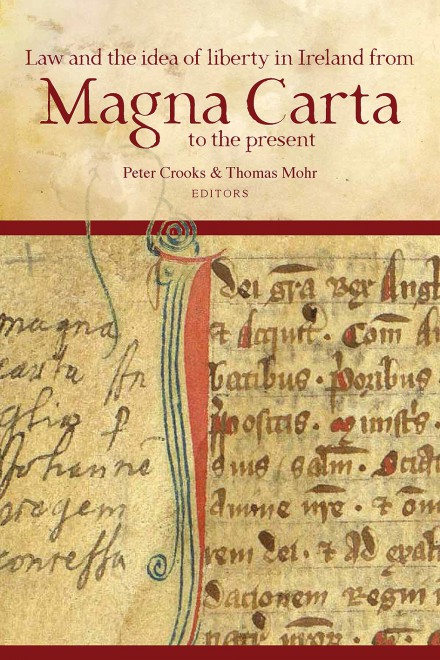
BOOK: Peter CROOKS and Thomas MOHR, eds., Law and the idea of liberty in Ireland from Magna Carta to the present (Dublin: Four Courts Press, 2019). ISBN 978-1-84682-740-2, €49.95


Four Courts Press has published an edited volume on the importance of the Magna Carta’s dissemination in Ireland.

ABOUT THE BOOK

Magna Carta is among the most famous documents in the history of the world, credited with being the first effective check in writing on arbitrary, oppressive and unjust rule – in a word, on tyranny. The fame of Magna Carta spread as England, and later Britain, came to girdle the globe in its power. This volume is the first to examine the importance of Ireland in the story of Magna Carta’s dissemination. Four centuries before Magna Carta crossed the Atlantic, it had already been implanted across the Irish Sea. A version of the charter, issued in November 1216 in the name of the boy-king Henry III, was sent to Ireland, where it became fundamental to the English common law tradition in Ireland that survives to the present. This volume – the proceedings of a conference marking the 800th anniversary of the transmission of Magna Carta to Ireland – explores the paradoxes presented by the reception of Magna Carta into Irish law, above all the contested idea of ‘liberty’ that developed in Ireland. Contributors examine the legal, political and polemical uses to which Magna Carta was put from the thirteenth century onwards, as well as its twentieth- and twentieth-first century invocations as a living presence in contemporary Irish law. The volume also includes a new edition and translation of the Magna Carta Hibernie (‘The Great Charter of Ireland’) — an adaptation of the 1216 issue of Magna Carta found in the Red Book of the Irish Exchequer, which was destroyed in 1922.
Contributors: Sparky Booker (QUB), Paul Brand (U Oxford), Ian Campbell (QUB), Coleman Dennehy (UCL/UCD), Seán Duffy (TCD), Adrian Empey (Church of Ireland Historical Society), Patrick Geoghegan (TCD), James Kelly (DCU), Colum Kenny (DCU), John Larkin (Attorney General for Northern Ireland), Bláthna Ruane SC.

ABOUT THE EDITOR

Peter Crooks is a lecturer in medieval history at TCD, and a fellow of the Royal Historical Society. He is co-editor of The Geraldines and medieval Ireland: the making of a myth (Dublin, 2016). Thomas Mohr is a lecturer at the School of Law, UCD. He is honorary secretary of the Irish Legal History Society and the author of Guardian of the Treaty: the Privy Council appeal and Irish sovereignty (Dublin, 2016).

All information to be found here

08 October 2018

BOOK: Peter CROOKS and Thomas MOHR, eds., Law and the idea of liberty in Ireland from Magna Carta to the present (Dublin: Four Courts Press, 2018). ISBN 978-1-84682-740-2, €49.95


Four Courts Press is publishing a book on the influence of Magna Carta in Irish legal history next month.

ABOUT THE BOOK

Magna Carta is among the most famous documents in the history of the world, credited with being the first effective check in writing on arbitrary, oppressive and unjust rule – in a word, on tyranny. The fame of Magna Carta spread as England, and later Britain, came to girdle the globe in its power. This volume is the first to examine the importance of Ireland in the story of Magna Carta’s dissemination. Four centuries before Magna Carta crossed the Atlantic, it had already been implanted across the Irish Sea. A version of the charter, issued in November 1216 in the name of the boy-king Henry III, was sent to Ireland, where it became fundamental to the English common law tradition in Ireland that survives to the present. This volume – the proceedings of a conference marking the 800th anniversary of the transmission of Magna Carta to Ireland – explores the paradoxes presented by the reception of Magna Carta into Irish law, above all the contested idea of ‘liberty’ that developed in Ireland. Contributors examine the legal, political and polemical uses to which Magna Carta was put from the thirteenth century onwards, as well as its twentieth- and twentieth-first century invocations as a living presence in contemporary Irish law. The volume also includes a new edition and translation of the Magna Carta Hibernie (‘The Great Charter of Ireland’) — an adaptation of the 1216 issue of Magna Carta found in the Red Book of the Irish Exchequer, which was destroyed in 1922.

ABOUT THE AUTHOR

Peter Crooks is a lecturer in medieval history at TCD, and a fellow of the Royal Historical Society. He is co-editor of The Geraldines and medieval Ireland: the making of a myth (Dublin, 2016). Thomas Mohr is a lecturer at the School of Law, UCD. He is honorary secretary of the Irish Legal History Society and the author of Guardian of the Treaty: the Privy Council appeal and Irish sovereignty (Dublin, 2016).

More information here

18 July 2018

BOOK: Lawrence GOLDMAN, ed., Magna Carta: History, Context and Influence (London: Institute of Historical Research, 2018). ISBN 978-1-909646-87-2, £30.00


Next month, the University of London’s Institute of Historical Research will publish a new book on the history and influence of Magna Carta in British and American history

ABOUT THE BOOK

This book examines the history and influence of Magna Carta in British and American history. In a series of essays written by notable British specialists, it considers the origins of the document in the political and religious contexts of the thirteenth century, the relevance of its principles to the seventeenth century disputes that led to the Civil War, the uses made of Magna Carta to justify the American Revolution, and its inspiration of the radical-democratic movement in Britain in the early nineteenth century. The introductory essay considers the celebration of Magna Carta's 800th anniversary in 2015 in relation to ceremonials and remembrance in Britain in general. Given as papers to a joint conference of British and Chinese historians in Beijing in 2015, these essays provide a clear and insightful overview of the origins and impact of a medieval document that has shaped the history of the world. 

ABOUT THE EDITOR

Lawrence Goldman was born and raised in London and attended the Haberdashers’ Aske’s Boys’ School in Elstree (of which he is now a governor). He went to Jesus College, Cambridge in 1976 to read History, graduating with a double first in 1979. Awarded a Harkness Fellowship, he studied American History at Yale before returning to begin doctoral research at Trinity College, Cambridge on the history of social science in the Victorian period. He was elected to a Junior Research Fellowship in Trinity in 1982 and was then appointed to a university lectureship teaching History in the Oxford Department of Continuing Education in 1985. In 1990 he became a tutorial fellow in History at St. Peter’s College, Oxford, where he remained for 24 years teaching modern British and American History. Between 2004 and 2014 he was the Editor of the newly-published Oxford Dictionary of National Biography, the record, in more than 65 million words, of the most notable figures in British history. He took up the Directorship of the Institute of Historical Research in 2014. He has contributed articles to leading journals like the English Historical Review, the Historical Journal and Past & Present and he is the author of books on Victorian Social Science, the history of Workers’ Education in Britain, and most recently, on the life of the political thinker and historian, R. H. Tawney. He is currently at work on a study of the development of social statistics and their impact on culture, politics and social thought in Britain under the title ‘Victorians and Numbers’.

More information here

05 July 2018

BOOK: Catharine MacMillan and Charlotte Smith, eds., Challenges to Authority and the Recognition of Rights : From Magna Carta to Modernity (Cambridge: Cambridge University Press, 2018). ISBN 9781108429238, £ 95.00


Later this month, Cambridge University Press will publish a book on “challenges to authority” in history, focusing on the Magna Charta.

ABOUT THE BOOK

While challenges to authority are generally perceived as destructive to legal order, this original collection of essays, with Magna Carta at its heart, questions this assumption. In a series of chapters concerned with different forms of challenges to legal authority - over time, geographical place, and subject matters both public and private - this volume demonstrates that challenges to authority which seek the recognition of rights actually change the existing legal order rather than destroying it. The chapters further explore how the myth of Magna Carta emerged and its role in the pre-modern world; how challenges to authority formed the basis of the recognition of rights in particular areas within England; and how challenges to authority resulted in the recognition of particular rights in the United States, Canada, Australia and Germany. This is a uniquely insightful thematic collection which proposes a new view into the processes of legal change.

ABOUT THE EDITORS

Catharine MacMillanKing's College London
Catharine MacMillan is Professor of Private Law at the Dickson Poon School of Law, King's College London.
Charlotte SmithUniversity of Reading
Charlotte Smith is Associate Professor in Law at the University of Reading.

TABLE OF CONTENTS

Introduction Catharine MacMillan
Part I. Magna Carta, Challenges to Authority and the Recognition of Rights in England:
1. Magna Carta: the emergence of the myth John Baker
2. Benefit of clergy and the authority of Magna Carta Margaret McGlynn
3. How to get rid of a king: lawyering the Revolution of 1399 David Seipp
4. Magna Carta and the fragmented authorities of the later Middle Ages Anthony Musson
5. Revolution principles and the revolution bench Mike Macnair
Part II. Broader Challenges to Authority and the Recognition of Rights in England:
6. Magna Carta Clauses 4 and 5 and the problem of account Joshua Getzler
7. Some effects of war on the law in late eighteenth and early nineteenth-century England James Oldham
8. Tax, freedom and social expectations: fiscal impact on the built environment in nineteenth-century England Chantal Stebbings
Part III. Magna Carta, Challenges to Authority and the Recognition (and Rejection) of Rights beyond England:
9. The Magna Carta in the German discourse about English constitutional law between the eighteenth and the early twentieth century Andreas Thier
10. A Magna Carta for the world? The constitutional protection of foreign subjects in the age of revolution Daniel Hulsebosch
11. 'The state of slavery': the slave, grace, and the rise of pro-slavery constitutionalism in the nineteenth-century Atlantic world Patricia Hagler Minter
12. The Royal Proclamation of 1763: an indigenous Magna Carta's rough ride in British Columbia Hamar Foster
13. 'Law: challenges to authority and the recognition of rights': examples from British India Raymond Cocks
14. 'Unfortunate necessities of warfare?': Australia's national security regulations and the right to free speech during World War I Diane Kirkby.

More information to be found here

10 May 2015

ROUNDTABLE: "Una cultura delle libertà: Magna Carta Libertatum 1215-2015" (Rome, May 21, 2015)


WHAT Una cultura delle libertà: Magna Carta Libertatum 1215-2015, roundtable

WHEN May 21, 2015 - 3:00 pm

WHERE Roma Tre University, Law Faculty, Sala del Consiglio, first floor

29 March 2015

BOOK: "Magna Carta Uncovered", by Anthony Arlidge and Igor Judge (2015)


Magna Carta Uncovered, by Anthony Arlidge and Igor Judge
all information here.
2015 marks the 800th anniversary of the grant at Runnymede of Magna Carta.The story of how Magna Carta came into being, and has been interpreted since, and its impact on individual rights and constitutional developments has more twists and turns than any work of historical fiction.

The authors bring their wide legal experience and forensic skills to uncover the original meaning of the liberties enshrined in Magna Carta, and to trace their development in later centuries up to the drafting of the Constitution of the United States of America. By providing that the powers of the King were not unlimited, the Charter was groundbreaking, yet it was also a conservative document, following the form of Anglo-Saxon charters and seeking to return government to the ways of the Norman kings.

This book tells the enthralling, ultimately inspirational, story of Magna Carta in a concise and readable fashion and will captivate laymen and lawyers alike.