Search

Showing posts with label public domain. Show all posts

09 July 2019

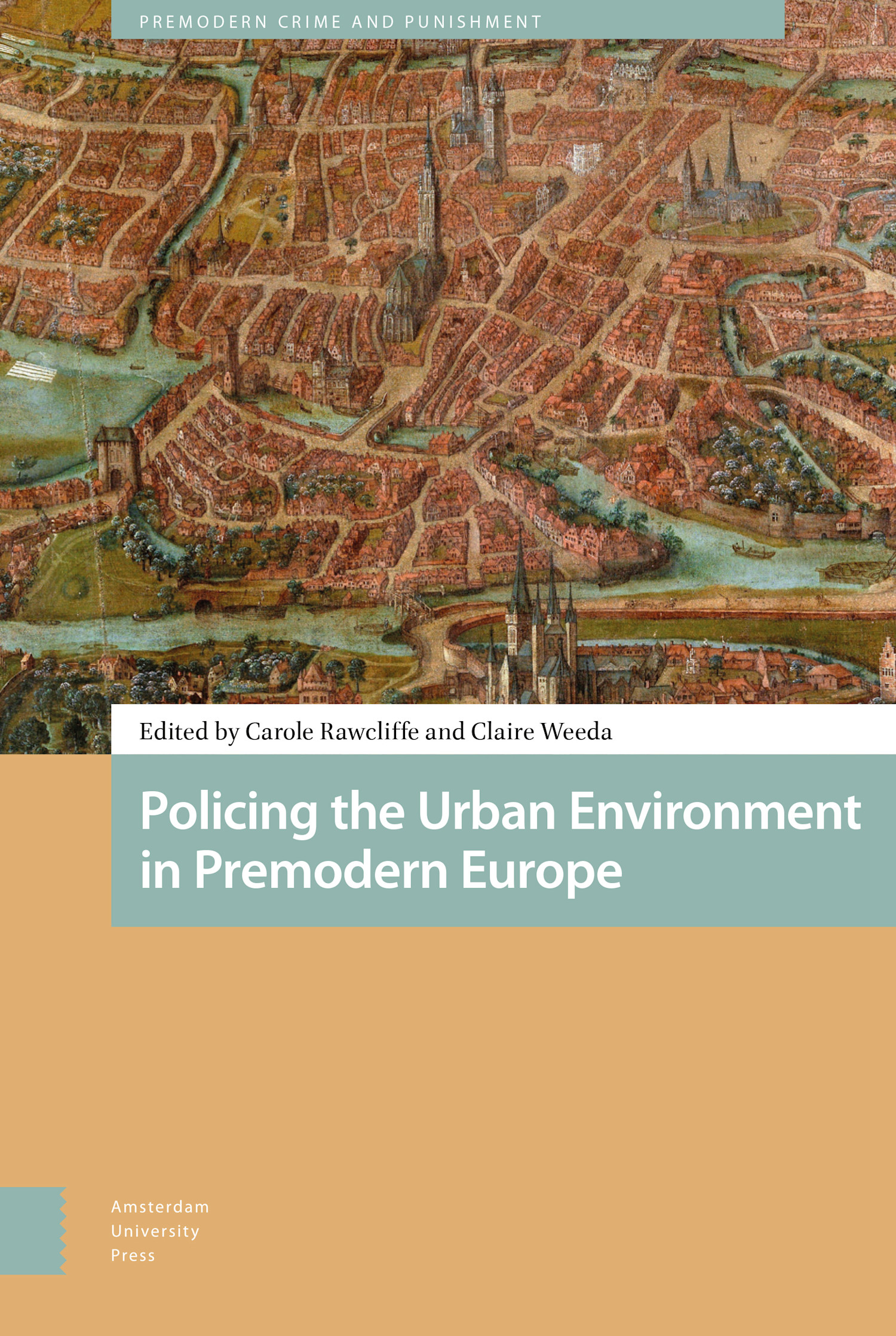
BOOK: Carole RAWCLIFFE and Claire WEEDA, eds., Policing the Urban Environment in Premodern Europe (Amsterdam: Amsterdam University Press, 2019). ISBN 9789462985193, € 109,00


Amsterdam University Press has published a new book on the attempts by public authorities in premodern Europe to create a clean, healthy environment.

ABOUT THE BOOK

Tapping into a combination of court documents, urban statutes, material artefacts, health guides and treatises, Policing the Urban Environment in Premodern Europe offers a unique perspective on how premodern public authorities tried to create a clean, healthy environment. Overturning many preconceptions about medieval dirt and squalor, it presents the most outstanding recent scholarship on how public health norms were enforced in the judicial, religious and socio-cultural sphere before the advent of modern medicine and the nation-state, crossing geographical and linguistic boundaries and engaging with factors such as spiritual purity, civic pride and good neighbourliness.

ABOUT THE EDITORS:  

Carole Rawcliffe

Carole Rawcliffe is Professor Emerita of Medieval History at the University of East Anglia, and is the author of many books and articles on health, medicine and disease in the Middle Ages, especially in an urban context.

Claire Weeda

Claire Weeda works as an assistant professor at the History Department of Leiden University. She is specialized in ethnic identity, medicine, and community formation in the period 1100-1500.

The introduction and table of contents can be found here

More information here

07 January 2015

ARTICLE: Simon Stern's "Towards a Pre-History of the Public Domain: Copyright Law and its Limits in Eighteenth-Century England" (2014)

Simon Stern, University of Toronto Faculty of Law, on Towards a Pre-History of the Public Domain: Copyright Law and its Limits in Eighteenth-Century England, forthcoming in the Oxford Literature Handbooks series.  


Full text here

Abstract

The advent of statutory copyright in eighteenth-century England raised questions about ensuring access to the materials that writers need to produce new books. The public domain did not spring into being as the obverse of the rights afforded by the Act of Anne (1710), nor was it created by nineteenth-century doctrines such as fair use; rather, it developed out of practices and assumptions predating the Act of Anne, and others that emerged in the statute’s wake. To explore these ideas, the essay considers booksellers’ and authors’ conceptions of copyright as property, the metaphors proposed by advocates of anti-piracy measures, arguments about copyright’s duration and its basis in the common law, and analogies between copyright and patent law during this period. Finally, the essay discusses the booksellers’ strategic litigation in the equity courts, where pleading could rely on imaginative premises that, in some respects, rival those of contemporaneous novelists.