Search

Showing posts with label Europe. Show all posts

26 September 2024

BOOK: Michał GIERYCZ, Piotr MAZURKIEWICZ (eds.), Faces of the rule of law in Europe (Göttingen: Vandenhoeck & Ruprecht, 2024), 306 p., ISBN 978-3-525-30258-3

 978-3-525-3025-3.jpg978-3-525-3025-3.jpg

ABOUT THE BOOK:

The current discussion on the rule of law, especially in the EU, seems to be developing because the terms that express the idea of the rule of law in different European languages do not convey the same content. The rule of law, der Rechtsstaat, l'état de droit, to name just three language versions, were coined in different historical contexts and within different traditions of political thought. The question then becomes, to what extent is diversity in the understanding of the rule of law still legitimate today? The answer is sought in the book we have edited, whose authors are academically recognized individuals representing these different traditions of legal and political thinking. The publication is divided into three parts. The first part explains the concept of the rule of law and outlines the development of the idea of the rule of law. The analyses presented also address the issue of legal positivism seen as a minimization of the idea of the rule of law. In addition, this part includes articles on the problem of the rule of law from the perspective of Catholic social thought, as well as a consideration of the transformation of the legal concept of the rule of law into a kind of political fetish. Part two is devoted to various European traditions of understanding the rule of law. In this part of the book, the reader will find articles on approaches to the issue of the rule of law from the Anglo-Saxon, French, German, and Polish perspectives. The third part of the book deals with the issue of the rule of law from the perspective of the European Union. It is about the mechanisms of control of the rule of law in the Member States and the possibility of applying this concept to the EU.

ABOUT THE AUTHORS:

Michał Gierycz is an Associate Professor of Political Science and dean of the Faculty of Social and Economic Science at Cardinal Stefan Wyszynski University in Warsaw (Poland).  

Piotr Mazurkiewicz is a Full Professor of Political Science at Cardinal Stefan Wyszynski University in Warsaw (Poland). 
 
Read more here.

24 August 2023

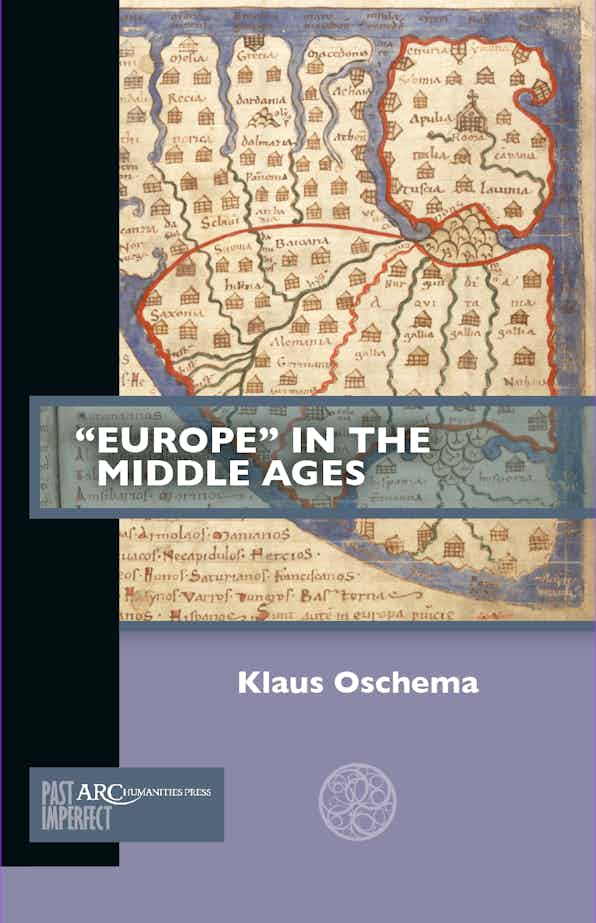
BOOK: Klaus OSCHEMA, "Europe” in the Middle Ages (Leeds: ARC Humanities Press, 2023). ISBN: 9781641891592

(Image source: ARC Humanities Press)


ABOUT THE BOOK

From the nineteenth century onwards, historians described the Middle Ages as the « cradle » of the nation state—then, after World War II, they increasingly identified the period as the « cradle » of Europe. A close look at the sources demonstrates that both interpretations are misleading: while « Europe » was not a rare word, its use simply does not follow modern expectations. This volume contrasts modern historians’ constructions of « Europe in the Middle Ages » with a fresh analysis of the medieval sources and discourses. The results force us to recognize that medieval ideas of ordering the world differ from modern expectations, thereby inviting us to reflect upon the use and limits of history in contemporary political discourse.


ABOUT THE AUTHOR

Klaus Oschema is Professor in Late Medieval History at the Ruhr-University Bochum. He researches medieval concepts of social, geographic, and political order. Recent publications include Order into Action (ed., with C. Mauntel, 2022).


TABLE OF CONTENTS

Preface and Acknowledgements

Chapter 1: Why Europe? A Concept Crossing History and Politics

Chapter 2: Foundations in Antiquity

Chapter 3: Moments of Transformation—Europe in the Early Middle Ages

Chapter 4: Europe, Christianity, or Something Completely Different? Impressions from the Central Middle Ages

Chapter 5: Our Last Hope? Entangling Europe and Christianity in the Late Middle Ages

Chapter 6: Perspectives from Outside? Byzantium and the Arabic World

Conclusion: No Roadmap for Europe—History, Politics, and the Way to Global History

Further Reading


More information can be found here.

29 April 2022

BOOK: Guillaume GRÉGOIRE & Xavier MINY (Eds.), The Idea of Economic Constitution in Europe Genealogy and Overview (Leiden: Brill, 2022). ISBN: 978-90-04-51933-6, € 188.00

(Source: Brill)

ABOUT THE BOOK 

Series: Legal History Library, Volume: 61

Behind the controversies that have marked the history of the idea of Economic Constitution emerges the highly political issue of the room for manoeuvre left to public authorities in the economic sphere. The notion thus encapsulates a fundamental tension: between democracy and rule of law, which model of legal ordering of the economy should prevail?
From physiocrats to neo-liberals, from the Weimar Republic to European integration, from national constitutions to Global Governance, this collective book invites us to explore the genealogy of the controversial concept of Economic Constitution. The result of this interdisciplinary dialogue is a comprehensive reflection on the legal and political issues at stake in the current constitutionalization of the market order in Europe.

Contributors are: Philippe Steiner, Guillaume Grégoire, Hugues Rabault, Peter C. Caldwell, Thomas Biebricher, Werner Bonefeld, Serge Audier, Vincent Valentin, Pieter van Cleynenbreugel, Xavier Miny, Frédéric Marty, Claire Mongouachon, Hans-Wolfgang Micklitz, Francesco Martucci, Michael Wilkinson, Hjalte Lokdam, Susanna Maria Cafaro, Peter Lindseth, Cristina Fasone, Pierre Nihoul, François Colly, Peter-Christian Müller-Graff, Tony Prosser, Damien Piron, Mahmoud Mohamed Salah, Stephen Gill, Thibault Biscahie, Sebastien Adalid, and Christian Joerges.

ABOUT THE EDITORS

Guillaume Grégoire is pursuing a doctoral research in Economic Law and Legal Theory at the Université de Liège. He was invited as visiting scholar at the Université Paris-Panthéon-Assas and at the Max Planck Institute for Innovation and Competition of Munich. He is the author of L’économie de Karlsruhe. L’intégration européenne à l’épreuve du juge constitutionnel allemand (CRISP, 2021).

Xavier Miny is pursuing a doctoral research in public law at the Faculty of Law of the University of Liege. He was awarded a FRESH grant from the Belgian Fund for Scientific Research (F.R.S.-FNRS) from 2018 to 2021. He is the co-author of the handbook Introduction au droit public. Considérations générales et particularités belges (Larcier, 2021).


More information with the publisher.


18 March 2022

BOOK: Cristiano PAIXÃO & Massimo MECCARELLI (Eds.), Comparing Transitions to Democracy. Law and Justice in South America and Europe (New York: Springer, 2021). ISBN: 978-3-030-67501-1, pp. 323, EUR 137


(Source: Springer)

ABOUT THE BOOK

This present book examines some of the key features of the interplay between legal history, authoritarian rule and political transitions in Brazil and other countries from the end of 20th Century until today. This book casts light on these aspects of the role of law and legal actors/institutions. In the context of transition from authoritarian rule to democratic state, Brazil has produced a significant literature on the challenges and shortcomings of the transition, but little attention has been given to the role of law and legal actors/institutions. Different approaches focus on the legal mechanisms, discourses and practices used by the military regime and by the players involved in the political transition process in Brazil. A comparative perspective that takes into account different political transitions – and their legal consequences – in Europe and Latin America complements the analysis.

Part 1 (4 essays) discusses some of the central issues of political transition and legal history in contemporary Brazil, focusing on the time of the transition (and its effects on transitional justice) with different perspectives, from racial and gender issues to constitutional reform and police repression. Part 2 (3 essays) brings the comparative studies on South American experiences. Part 3 (4 essays) analyses different cases of transition to democracy in Chile, Portugal, Spain and Italy. Part 4 (3 essays) proposes a historiographical and methodological approach, considering the politics of time involved in the interplay between political transitions and legal history.

ABOUT THE EDITORS

Cristiano Paixão in Professor of legal history at the University of Brasília Law School. Doctor in Law degree from Federal University of Minas Gerais, with post-doctoral studies in historiography at Ecole des Hautes Etudes en Sciences Sociales de Paris and in modern history at Scuola Normale Superiore di Pisa. He was a visiting professor at Macerata University School of Law and at the Master’s Program in Constitutional Law at Seville University, and has published extensively about constitutional history. He was a member of the Brazilian Amnesty Committee (Ministry of Justice), was one of the coordinators of the Anísio Teixeira Memory and Truth Commission (University of Brasília). His main research interests are constitutional history, law and literature, and interdisciplinary studies in law.

Massimo Meccarelli is Professor of Legal History at the University of Macerata (Italy), and affiliate researcher of the Max Planck Institute for European Legal History (Frankfurt am Main). He was visiting professor at: Universidad Autónoma de Madrid, Johann Wolfgang Goethe-Universität in Frankfurt am Main, Universität Wien, Universität Luzern. He is author of several works on history of legal thought, history of justice, historiography and methodology of legal history. Most recently research interests: law and diversity, legal pluralism, constitution making process, time and law, law and humanities.


More information with the pubisher.

30 November 2021

CALL FOR APPLICATIONS: Turin Humanities Programme - 2nd Call for Applications, 2021 - 2022-2024 Research Cycle: “Political Thought and the Body: Europe and East Asia, ca. 1100-1650” (deadline 15 February 2022)

(Source: Fondazione 1563)

TURIN HUMANITIES PROGRAMME

 2nd CALL FOR APPLICATIONS - 2021 

2022-2024 RESEARCH CYCLE 

“Political Thought and the Body: Europe and East Asia, ca. 1100-1650” 


INTRODUCTION 

Fondazione 1563 per l’Arte e la Cultura della Compagnia di San Paolo (hereinafter “Fondazione 1563”) has since 2013 supported research and advanced training in the field of the humanities. In a wider effort to pursue this goal, in 2020 Fondazione 1563 has launched the Turin Humanities Programme, a research initiative that allows junior scholars to work on interrelated research projects under the guidance of especially appointed Senior Fellows. THP aims at promoting two-year research projects about relevant global history topics. Under THP in 2020 Fondazione 1563 launched a first call for application for research on the Enlightenment legacy: the rights of man in a global perspective. 

SUBJECT OF THE CALL 

Fondazione 1563 is now pleased to launch the second call for applications to award up to 4 two-year fellowships for advanced studies on Political Thought and the Body: Europe and East Asia, ca. 1100-1650. 

The Director of Studies for this programme (2022-2024) will be Serena Ferente, Professor of Medieval History at the University of Amsterdam. For information and questions please email: info@fondazione1563.it

Applicants are invited to submit research projects of a maximum of 3000 words, plus bibliography. Projects are expected to engage with one or more aspects of the general research framework Political Thought and the Body: Europe and East Asia, ca. 1100-1650. Proposals are expected to focus on the symbolic use of the body in political discourse through the analysis of texts, objects and images produced in the Euro-Mediterranean and/or East Asian world during the period between ca. 1100 and ca. 1650. Proposals should also contain an illustration of the different project phases, the relevant sources and methodologies and the expected outcomes, which will be considered an integral part of the project itself. Details of the research framework can be found here. 

In addition to the research proposal, applicants must submit their Curriculum vitae et studiorum and: - an article-length piece of writing, published or unpublished, which demonstrates innovative thinking (written in English, French, German, Italian, or Spanish) and - the contact information of two scholars familiar with the applicant’s work and willing to act as their referees (one of whom can be their PhD supervisor); only the referees of shortlisted candidates will be contacted by the Fondazione 1563. Successful candidates will carry out their individual research projects under the supervision of the Director of Studies. They will also collaborate to the organization of activities such as seminars, conferences, exhibitions and summer schools, during which they will be invited to share their research projects with a wider community of academics as well as students and the general public. 

ELIGIBLE APPLICATIONS 

The call is open to applicants holding a doctorate in History or in any discipline in the Humanities. Applicants who will be awarded their doctoral title before 31 July 2022 are also eligible to apply. Applicants should normally be within 7 years of the award of their Ph.D. They must be fluent in English, both spoken and written. English will be the working language of THP. There are no nationality requirements. Fondazione 1563 encourages applications from scholars of all backgrounds. We welcome diversity and are committed to creating an inclusive work environment. 

FELLOWSHIP GRANTS 

Each of the 4 Fellowships consists of an overall grant of € 50.000 (before taxes) to be paid according to the terms and conditions available here. The grant will last two years, starting on September 1, 2022 until August 31, 2024. These grants may not be held in conjunction with any other award. Fellows will be requested to reside in Turin for the duration of the fellowship and Fondazione 1563 will provide accommodation according to the terms and conditions available here. If the fellow is awarded any other grant during the THP fellowship, Fondazione 1563 reserves the right to withdraw and cancel the remaining part of the grant to be disbursed. For any further information on the grants please refer to the THP Terms and Conditions of Grant, that can be found here. 

HOW TO SUBMIT A PROPOSAL 

Applications must be submitted online by filling out the form available on the website of Fondazione 1563 at www.fondazione1563.it/application-form-thp-2021/ under THP/Call for applications/THP-2021. Applications submitted by other means will not be considered. For the application instructions please visit the following page. 

Applications must be submitted by February 15, 2022 (11.00 PM CET).

EVALUATION CRITERIA 

The Scientific Committee of the THP and the Director of Studies of the second research cycle of the THP will evaluate eligible applications according to the applicant’s qualifications and the quality and feasibility of the research project proposed. The committee will make its decisions on the basis of a comprehensive evaluation of the dossiers. The research proposals will be evaluated based on the following criteria (in no particular order): 1) coherence with the call and the research framework; 2) originality, quality, and scientific relevance of the research proposal; 3) clarity of the research questions, methods, and expected outcomes; 4) contribution to the geographical and chronological remit of the project; 5) appropriate planning in terms of research and implementation. Applicants shortlisted after the first selection will be contacted by email in order to arrange online interviews that will focus on the research proposal and the applicant’s curriculum. The interviews will be held in English and will take place remotely in early March 2022. Once the interview has been scheduled, it will not be possible to reschedule it. Candidates who do not attend the interview will be deemed to have withdrawn. 

HOW THE FELLOWSHIPS ARE AWARDED 

The fellowships will be awarded by the Scientific Committee of the THP, by the Director of Studies of the second research cycle and with the approval of the Board of Directors of Fondazione 1563. Successful applicants will be notified in writing via email and will be required to fill out and return the fellowship acceptance form, accepting the terms contained therein, within 7 working days from the notification. Candidates who do not return this form will be deemed to have withdrawn.


More information is available here.

04 November 2020

SYMPOSIUM : "Abroger, conserver ou trier. Que faire du faire du droit privé dans un territoire libéré ?", Université de Bretagne Sud (And Online), 6-7 NOVEMBER 2020

PROGRAMME: 

 6 NOVEMBRE: 

9h15 : Accueil des congressistes 

9h45 : Ouverture du Congrès - Allocutions d’ouverture Anne-Sophie Lamblin-Goudin, Doyen de la Faculté de Droit, des Sciences Économiques et de Gestion de l’Université Bretagne Sud Raphaël Reneau, Directeur du Département Droit, Faculté de Droit, des Sciences Économiques et de Gestion de l’Université Bretagne Sud 1er Panel - L’Europe post-napoléonienne Présidence : Sylvain Soleil, Université de Rennes 1 Entre rejet et séduction : le droit privé étranger dans le Royaume de Piémont-Sardaigne sous la Restauration Marc Ortolani, Université de Nice Sophia-Antipolis Abroger, Conserver ou Trier : le droit privé à l’épreuve du feu dans l’Italie du Nord après la chute de Napoléon Gigliola Di Renzo Vilata (en visioconférence), Università Cattolica Milano What to do with the foreign legal codes ? Incomplete elements of French legal culture and their perception in Polish territories Anna Klimaszewska, Uniwersytet Gdański La persistance territoriale partielle du Code Napoléon en Lituanie (1808-2000) Thierry Hamon, Université de Rennes 1 

11h15 : Pause 2ème Panel - L’Amérique des indépendances Présidence : Romain Bareau, Université Bretagne Sud 11h30 : Maintenir ou rejeter la common law d’origine anglaise ? La controverse nord-américaine des années 1820 Sylvain Soleil, Université de Rennes 1 Le Code civil en Amérique espagnole au XIXème siècle : droit privé et les nouvelles républiques Javier Barrientos Grandon, Université de Madrid Maintenir ou rejeter le droit privé portugais au Brésil Mariane Tenório Alves Nunes, Université de Lille 2 

Après-Midi 14h30 : Reprise des travaux La liberté... dans les chaines ? Le tri du droit privé français dans les mains de la common law David Gilles, Université de Sherbrooke  3ème Panel - L’Europe des nations et des nationalismes Présidence : Eric Gasparini, Université d’Aix-Marseille La Belgique des années 1830 Dirk Heirbaut, Universiteit Gent La Roumanie des années 1860 Manuel Gutan, Universitatea Lucian Blaga din Sibiu Maintenir le droit privé applicable en Alsace- Lorraine recouvrée, un enjeu juridique et politique Elodie Coutant, Université de Bordeaux 

16h00 : Pause 4ème Panel - Le monde de la décolonisation Présidence : Eric Gasparini, Université d’Aix-Marseille 

16h15 : L’Indochine Alexandre Deroche, Université de Tours L’Afrique française (1) Eric Gasparini, Université d’Aix-Marseille L’Afrique française (2) Séraphin Nene Bi Boti, Université Alassane Ouattara de Bouaké Le Commonwealth Gwenaël Guyon, Écoles de Saint-Cyr Coëtquidan 

17h45 : Fin de la 1ère journée 

7 Novembre 2020 Matinée 9h00 : Accueil des congressistes 4ème Panel (Suite) -

 Le monde de la décolonisation 9h15 : De la Syrie ottomane à l’indépendance. Conflits de droits dans les mandats français Olivier Hanne, Écoles militaires de Saint-Cyr Coëtquidan 5ème Panel - La question traitée par la doctrine La doctrine de droit privé (1813-1830) Catherine Touche, Université de Rennes 1 La doctrine de droit international public et la question des Pays-Bas septentrionaux Dominique Gaurier, Université de Nantes La doctrine de droit international privé Baudouin Ancel, Université de Paris II 

11h00 : Pause Table Ronde - La synthèse comparative Présidence : Patrice Davost, magistrat 

11h15 : Synthèse et problématiques Hugo Beuvant, Université de Rennes 1 Débats en vue d’aboutir à une synthèse collective 

12h30 : Clôture des travaux : Droit privé japonais au Laos et réformes des années 2000. Retour d’expérience Patrice Davost, Magistrat, Ancien Directeur des Services judiciaires du Ministère de la Justice 

CONTACT AND REGISTRATION:  marie.paulin@univ-ubs.fr You can also attend this symposium online.

19 September 2018

BOOK: Jan Wouters et al., International Law: A European Perspective (Oxford: Hart Publishing, 2018). ISBN 9781849464161, £39.99


(Source: Hart Publishing)

Coming November, Hart Publishing is publishing a new book on international law from a European perpective.

ABOUT THE BOOK

This textbook offers for the first time a comprehensive analysis of the classic doctrines and main areas of international law from a European perspective, meeting the needs of the many European law schools teaching public international law in English. Special attention is devoted to the practice of the European Union, the Council of Europe and European States – both civil law and common law countries – with regard to international law. In particular the book analyses the interplay between international law, EU law and national law in the case law of the Court of Justice of the EU, the European Court of Human Rights and national jurisdictions in Europe. It provides the reader with insights into how the international legal practice of the EU and its Member States impacts the development of international law, both in terms of doctrines such as treaty-making and customary law, the exercise of (extraterritorial) jurisdiction, state responsibility and the settlement of disputes, as well as particular sub-fields of international law, such as human rights law and international economic law. In addition the book covers other important areas such as the use of force and collective security, the law of armed conflict, and global and regional international organisations. It provides European perspectives on all these issues and will be of great value to students, scholars and practitioners.

ABOUT THE AUTHORS

Jan Wouters
Jan Wouters is Full Professor of International Law and International Organizations, Jean Monnet Chair and Director of the Institute for International Law and Leuven Centre for Global Governance Studies, KU Leuven.
Cedric Ryngaert
Cedric Ryngaert is Professor of Public International Law and Director of the Master Programme Public International Law, Utrecht University.
Tom Ruys
Tom Ruys is Assistant Professor in International Law at the Ghent Rolin-Jaequemyns International Law Institute (GRILI), Ghent University.
Geert De Baere
Geert De Baere is Judge at the General Court of the EU and Associate Professor of EU Law and International Law, KU Leuven.

More information here

26 June 2018

CALL FOR PANELS/PAPERS: Sovereignties in Contention: Nations, Regions and Citizens in Europe (Madrid: 20-22 JUN 2019); DEADLINE 5 OCT 2018


(image source: UC3M)
The Council for European Studies (CES) at Columbia University invites proposal submissions for the 26thth International Conference of Europeanists on the themes of Sovereignties in Contention: Nations, Regions and Citizens in Europe. The conference will be held at the Universidad Carlos III de Madrid on June 20-22, 2019.
Conference Information:
Sovereignty is at the crux of current developments in Europe and at the center of political debate—of which the 2016 referendum on Brexit is just one example.  The claim to regain national sovereignty vis-a-vis EU policy-making is common to populist movements throughout Europe today, and it currently dominates the rhetoric of the national governments of Hungary and Poland as well.  Anxieties about sovereignty are also key to understanding the demands put forward by regional entities such as Scotland, Catalonia, and Lombardy.

These fights for new forms of sovereignty – or the restoration of old ones – are surprising, even bewildering, to those who imagined that the process of European integration would render the concept of sovereignty obsolete.  Yet recent developments clearly show that sovereignty again has become a crucial concept in political, social and cultural fields.  It is increasingly invoked not only by regions, nations, and Europe itself, but also by minority populations, marginalized groups, and even individuals as the reason justifying their claims of self-governance, emancipation, or political empowerment.

Recent developments and the material challenges that complicate them – globalization, the digital revolution, mobility – call upon us to reflect on the motives, polities, concepts, and rhetorics of sovereignty more profoundly and, given the complexity of the challenges, to seek fresh approaches that transcend disciplinary boundaries.  “Sovereignties in Contention in Europe: Nations, Regions and Citizens” aims to provide an opportunity to bridge the gap between different models for the study of sovereignty: from a governmental and institutional perspective to looking at bottom-up processes, from socio-economic and legal aspects to questions of identity, nationhood, and historical memory.
Submission Information:
We particularly welcome proposals in these areas, including cross-thematic and interdisciplinary papers, as well as proposals in other areas relevant to contemporary Europe.
Proposals may be submitted from August 10 to October 5, 2018. Priority will be given to panel submissions. Participants will be notified of the Program Committee’s decision by December 14, 2018.

Information on how to submit proposals will be posted on the CES website and disseminated through its newsletter. To subscribe to the CES newsletter visit: https://councilforeuropeanstudies.org/publications
.  For information on how to submit a proposal, please consult the Submission Help page or our newsletter.
For more details:

Founded in 1970, the Council for European Studies (CES) produces, supports, and recognizes outstanding, multi-disciplinary research on Europe through a wide range of programs and initiatives.


(source: H-Diplo)

13 May 2015

NOTICE: "Réformer les facultés de droit en Europe au XXe siècle" (Paris, May 15 2015)


WHAT Réformer les facultés de droit en Europe au XXe siècle, Journée d'étude
 
WHEN May 15 2015 - 10:30 - 16:30
 
WHERE Université Panthéon-Assas    
Salle des Conseils, 12, place du Panthéon - Paris
 
all information here

29 March 2015

BOOK: " “The Best in the West”: Educator, Jurist, Arbitrator: Liber Amicorum in Honour of Professor William Butler" ed. Erpyleva N. Iu., Gashi-Butler M.E. (2014)

The Best in the West”: Educator, Jurist, Arbitrator: Liber Amicorum in Honour of Professor William Butler

Natalia Iu ErpylevaMaryannn Gashi-ButlerWildy, Simmonds & Hill, Publishers, 2014

All information here

Concepts of Justness in Aristotle and Cicero are analysed. Both follow formal approach to Justness, proper to legal science. Looking for model of moral perfection and dignity Cicero appeals to the findings of Quintus Mucius Scaevola (II-I BC), founder of European legal science, who revealed the nature of just in proper application of formal equality (bonum et aequum). For Roman lawyers just person was a person that was following a model of a 'vir bonus' (good man). Abstract qualities of a good man were products of law and at the same time elemenst of legal system. The very conformity to the principles of law makes a participant of legal interaction 'good man'. Abstract notion of 'aequity' (justness) was seen as a source of law. In Byzantine times 'aequity' became a quality of the Emperor, while the just nature of law was substituted by 'justness' of the ruler. Some scholars connect the abstraction of 'aequity' with this new approach and deem Roman law texts corrupted in later times. However, the authenticity of the traditional texts can be proved.

07 January 2015

BOOK: "Property in East Central Europe: Notions, Institutions, and Practices of Landownership in the Twentieth Century", edited by Hannes Siegrist and Dietmar Müller

Property in East Central Europe: Notions, Institutions, and Practices of Landownership in the Twentieth Century, edited by Hannes Siegrist (University of Leipzig) and Dietmar Müller (University of Leipzig)

All information here

Property is a complex phenomenon comprising cultural, social, and legal rules. During the twentieth century, property rights in land suffered massive interference in Central and Eastern Europe. The promise of universal and formally equal rights of land ownership, ensuring predictability of social processes and individual autonomy, was largely not fulfilled. The national appropriation of property in the interwar period and the communist era represent an onerous legacy for the postcommunist (re)construction of a liberal-individualist property regime. However, as the scholars in this collection show, after the demise of communism in Eastern Europe property is again a major factor in shaping individual identity and in providing the political order and culture with a foundational institution. This volume analyzes both historical and contemporary forms of land ownership in Poland, Romania, and Yugoslavia in a multidisciplinary framework including economic history, legal and political studies, and social anthropology.

Table of Contents:

13 November 2014

BOOK: "Protocols of Justice: The Pinkas of the Metz Rabbinic Court, 1771-1789", by Jay R. Berkovitz


Jay R. Berkovitz, University of Massachusetts, Protocols of Justice: The Pinkas of the Metz Rabbinic Court, 1771-1789,  Brill Academic Publishers

all information here

Presented here to the public for the first time, the Pinkas of the Metz Beit Din is the official register of civil cases that came before the Metz rabbinic court in the two decades prior to the French Revolution. Brimming with details of commercial transactions, inheritance disputes, women's roles in economic life, and the interplay between French law and Jewish law, the Metz Pinkas offers remarkable evidence of the engagement of Jews with the surrounding society and culture. The two volumes of Protocols of Justice comprise the complete text of the Metz Pinkas Beit Din, which is fully annotated by the author, and a thorough analysis of its significance for history and law at the threshold of modernity.