Search

Showing posts with label Book. Show all posts

17 August 2026

BOOK: Mathias SIEMS, Legal Transplants. An Interdisciplinary Approach (Oxford: Oxford university Press, 2026), 320 p., ISBN 9780198884125, 105 GBP


(image source: OUP)


Abstract:

Fifty years after Alan Watson's Legal Transplants: An Approach to Comparative Law, the concept of legal transplants remains central to comparative legal scholarship. Over time, the literature has expanded to explore how laws are drafted, interpreted, and understood across jurisdictions-revealing legal transplants as a complex and multifaceted phenomenon. This book offers a nuanced and balanced analysis of the evolution of legal transplants, engaging with both foundational texts and recent developments. It goes beyond traditional legal discourse to incorporate insights from other disciplines, including policy studies, cultural transfer, entangled history, and the diffusion of ideas. By doing so, it broadens the scope of the debate and encourages a more interdisciplinary approach to understanding how legal norms travel and take root. Importantly, the book makes a strong case for the continued relevance and effectiveness of legal transplants in modern lawmaking. While acknowledging valid criticisms, it challenges the notion that such concerns should lead to legal isolationism. Instead, it argues that legal transplants are not only common but often successful-and should remain a key tool for lawmakers seeking to innovate and reform.
Table of contents:
Chapter 1:Introduction
Chapter 2:A Bibliometric Assessment of the Use of the Term 'Legal Transplants'
Chapter 3:An Anatomy of Legal Transplants
Chapter 4:Why Do Legal Transplants Take Place?
Chapter 5:Do Legal Transplants 'Work'?
Chapter 6:Is it Desirable to Use Legal Transplants?
Chapter 7:How Should the Design of Transplants be Pursued?
Chapter 8:Conclusion

 On the author:

Mathias Siems is Professor of Private Law and Market Regulation at the European University Institute (EUI) in Florence, Italy. He previously taught at Durham University, the University of East Anglia, the University of Edinburgh and the Riga Graduate School of Law. He was also a Fulbright Scholar at Harvard Law School and a Jean Monnet Fellow at the EUI. He is a graduate of the universities of Munich, London, and Edinburgh.

 Read more with OUP.


17 July 2026

BOOK: Quentin LOHOU, Marc BONINCHI, Katia BARRAGAN & Stève DESGRÉ (dir.), Quelles histoires du droit social ? [Histoire, ed. Noëlline CASTAGNEZ, Frédéric CHAUVAUD, Philippe HAMON, Florian MAZEL & Francis PROST] (Rennes: Presses universitaires de Rennes, 2026), 324 p. ISBN 9791041304660, €25


Abstract:

La condition ouvrière, les formes de solidarités à travers le syndicalisme et le mutualisme, la période de l’entre deux-guerres et le régime de l’État français entre 1940 et 1944, les territoires anciennement colonisés par la France, tels sont les thèmes traités ici et constitutifs du droit social et de son histoire. La diversité des contributions témoigne des multiples façons dont le droit et ses acteurs peuvent être appréhendés, tout particulièrement en matière de relations du travail et de protection sociale. Avec des approches différentes, des formes et supports variés, juristes, historiens et sociologues explorent des thématiques qui ont constamment retenu l’attention de Jean-Pierre Le Crom, historien du droit, directeur de recherche émérite au Centre national de la recherche scientifique et membre du laboratoire Droit et changement social de Nantes Université (Unité mixte de recherche CNRS 6297). Publié avec le soutien de Nantes Université

Indicative table of contents:

L'Entre-deux-guerres et le régime de Vichy Le droit des colonies L'histoire du droit social La condition ouvrière Le syndicalisme et le mutualisme 

See publisher's website for Table of Contents and free excerpt.

16 July 2026

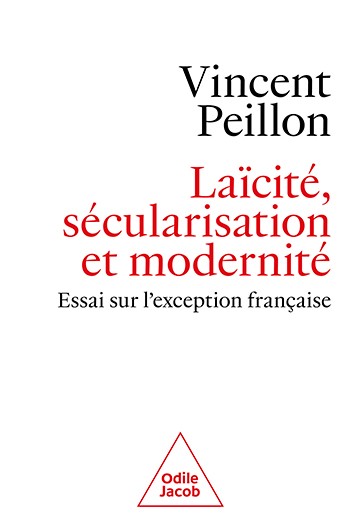
BOOK: Vincent PEILLON, Laïcité, sécularisation et modernité. Essai sur l'exception française (Paris: Odile Jacob, 2026), 272 p. ISBN 9782415015435, € 24,9


(image source: Odile Jacob)

Abstract:

La laïcité donne lieu aujourd’hui à de nombreux débats, à de vigoureuses polémiques et à bien des contresens. Dans ce livre érudit et exigeant, où il noue un dialogue serré avec les fondateurs ainsi qu’avec de nombreux interprètes contemporains, Vincent Peillon montre comment la laïcité française propose une version absolument singulière de la sécularisation. Ni rejet et éviction du religieux, ni réinvestissement à l’identique du religieux dans le séculier, pas davantage bricolage individuel qui permettrait à chacun de se forger ses propres croyances, la laïcité française met en œuvre un modèle de sécularisation jusqu’ici curieusement peu étudié. Ce modèle, qui définit au plus près l’exception française, est inséparablement religieux et politique, rationnel et mystique. La laïcité française ne peut se résumer à un dispositif juridique de neutralité et de séparation des Églises et de l’État. Pensée comme nécessaire pour fonder le lien civique, garantir la démocratie, émanciper l’individu et réaliser la justice sociale, elle est une religion civile qui engage une compréhension nouvelle de la modernité. Celle-ci serait le produit d’une longue histoire, celle des hérésies.

On the author:

Philosophe et homme politique, Vincent Peillon a consacré de nombreux ouvrages à Maurice Merleau-Ponty, au républicanisme, à la laïcité et à la philosophie juive française. Comme ministre de l’éducation nationale, il a mis en place la Charte de la laïcité et relancé l’enseignement moral et civique. 

 (source: univ-droit)


OPEN ACCESS: Sébastien DUBOIS, Bruno DEMOULIN, & Jean-Louis KUPPER (Eds.). Les institutions publiques de la principauté de Liège (980-1794). [Studia, 133] (Brussels: State Archives of Belgium, 2012), 2 vol.

(image: Joseph Clement of Bavaria, Prince-Bishop of Liège; source: Wikimedia Commons)

 Abstract:

Bonne nouvelle ! Le guide 𝘓𝘦𝘴 𝘪𝘯𝘴𝘵𝘪𝘵𝘶𝘵𝘪𝘰𝘯𝘴 𝘱𝘶𝘣𝘭𝘪𝘲𝘶𝘦𝘴 𝘥𝘦 𝘭𝘢 𝘱𝘳𝘪𝘯𝘤𝘪𝘱𝘢𝘶𝘵é 𝘥𝘦 𝘓𝘪è𝘨𝘦 (980-1794) est désormais consultable en ligne et téléchargeable gratuitement ! Les Archives de l’État à Liège conservent de riches fonds d’archives de la principauté de Liège, mais pour y accéder, il faut connaître l’histoire, l’organisation, les compétences et les activités des institutions de l’un des États les plus singuliers de l’Europe d’Ancien Régime. L’organisation politique et administrative liégeoise (où pouvoirs temporel et spirituel s’entrecroisent) est complexe et différente des autres états d’Ancien Régime et, bien sûr, des institutions contemporaines. L’ouvrage offre une synthèse complète et structurée des institutions liégeoises -administratives, judiciaires, financières et militaires ; tant centrales (Conseil privé, États, Chambre des comptes, Cour allodiale, Cour féodale, etc.) que régionales (duché de Bouillon, comté de Looz, condominium de Maastricht, etc.) et locales (villes, métiers, échevinages, etc.). Chaque ville fait l’objet d’une notice spécifique. Chaque notice suit un cadre clair : histoire, organisation, compétences, activités, principaux textes normatifs, listes de fonctionnaires, sources archivistiques et éditions, bibliographie.

Read more here

(source: Celida [Centre liégeois de documentation archivistique)

15 July 2026

BOOK: Maria Adèle CARRAI & Surabhi RANGANATHAN (eds.), The Cambridge History of International Law, vol. II: International Law in Asia [The Cambridge History of International Law, ed. Randall LESAFFER] (Cambridge: Cambridge University Press, 2026), ISBN 9781009121972, € 163,39

(image source: CUP)

Abstract:
Volume II of The Cambridge History of International Law breaks the mould of Eurocentric histories in the field by exploring international law in Asia from antiquity to decolonisation. Its twenty-six chapters span a vast geography, covering both the landmass and the oceans; offering accounts of statecraft and diplomacy, war and trade; marriage and gift-giving; treaty-making and dispute settlement; ideas of the human and 'the other'; and entanglements of political authority with mercantile, corporate and religious orders. The chapters introduce readers to a diverse cast of characters, from scholars, scientists, geographers, mapmakers; to traders, merchants, shipowners and entrepreneurs; and to women, revolutionaries, pirates, labourers, and monks. The volume explains leading historiographical trends, ponders the challenges of writing Asian histories of international law, highlights available materials and methods, and showcases the conceptual purchase of Asian histories for thinking about international law.

Read more here: DOI  10.1017/9781009121972.


14 July 2026

BOOK: Haakon A. IKONOMOU, Karin VAN LEEUWEN & Morten RASMUSSEN (eds.), The Cambridge Handbook of the League of Nations and International Law (Cambridge: Cambridge University Press, 2026), 558 p. ISBN 9781009655187


(image source: CUP)

Abstract:

Established in the wake of the First World War, the League of Nations fundamentally transformed international politics, global governance and multilateral cooperation in a multitude of fields from the economy, labour and social affairs to colonial, minority and security questions. This Handbook analyses the central role of law in the construction of a new international order under the League of Nations. Drawing from innovative research of recent years that analyses the League of Nations through the prism of ultimate success and failure, it offers twenty-one rich chapters that showcase an interdisciplinary, contextual and archive-based approach with brand new and unexplored case studies that address key topics of the legal history of the League, the International Labour Organization and the Permanent Court of International Justice. Finally, it offers a new historical synthesis of how to understand the role of international law in international organizations during the interwar period.

Read more here: DOI 10.1017/9781009655149

13 July 2026

BOOK: Jesse JAMES, Laws of All the Greeks. International Law as Social Reality in Ancient Greece [The History and Theory of International Law, eds. Nehal BHUTA, Francesca IURLARO, Anthony PAGDEN & Benjamin STRAUMANN] (Oxford: OUP, 2026), 456 p. ISBN 9780197838525, 130 GBP


(image source: OUP)

Abstract:

The ancient Greek world was permeated with international law, the binding rules of behavior that Greeks across the Mediterranean followed and enforced for centuries. But why was international law effective in this world? Laws of All the Greeks offers an original answer rooted in contemporary social theory, presenting a definitive account of ancient Greek international law while delving into the social and psychological foundations that made it potent and durable. Challenging recent claims that international law did not exist in the Greek world, Laws of All the Greeks makes a robust case not only for its existence, but for the importance of taking ancient Greek international law as an historical subject in the first place. It provides an updated history of select elements of that law, including the right to private self-help; judicial treaties known as symbola; and piracy. Combining the findings of recent scholarship on Greek history, identity, and social networks, novel readings of documentary and literary sources, and the lessons of sociology and psychology, Jesse James demonstrates how the webs of identity binding the Greek world together affected both the rules of international law and their effectiveness at guiding legal and economic behavior. This study thus complicates and enriches prevailing approaches that emphasize formal institutions, structural features, or economic rationalism, offering instead a model for applying legal sociology to the historical study of international law.

Table of contents:

Part I. Background and Framework
1:Introducing Greek International Law
2:The Reality of Greek International Law
3:Psychology, States, and International Legal Socialization
4:International Identity and Socialization in Ancient Greece
Part II. Syla and Symbola: International Law and Commerce
5:Syla: Approaching Legal Self-Help in the Greek World
6:Syla as Self-Help in Greek International Law
7:Symbola: Social Origins of a Legal Institution
8:Symbola from the Athenian Empire to the Hegemony of Rome
Postscript
Part III. Expanding the View
9:Piracy
10:Oaths
11:The Thessalian Koinon as an International Legal Structure

12:Conclusion

On the author:

Jesse James is a historian, lawyer, and Classicist. He earned his J.D. at the University of California, Berkeley School of Law and practiced law for several years in Manhattan, litigating disputes at state, federal, and international levels. He then earned his Ph.D. in Classics at Columbia University. He has held fellowships at Harvard Law School, the American School for Classical Studies at Athens, the Columbia Institute for Ideas and Imagination in Paris, and the Kommission für Alte Geschichte in Munich.

Read more here.


10 July 2026

BOOK: Patrick CHARLOT, Nathalie DROIN, Delphine ESPGNO-ABADIE & Anne-Sophie CHAMBOST (dir.), Le socialisme par le droit (fin XIXe-début XXe siècle) [Contextes. Culture du droit, ed. Anne-Sophie CHAMBOST] (Paris: La Mémoire du Droit, 2026), € 47


(image source: MDD)

Abstract:

Comment « abolir la misère par une réforme du droit » ? Cette définition surprenante du socialisme, proposée en 1897 par Charles Andler, ouvre sur une voie méconnue de la pensée sociale : le socialisme juridique. Loin des révolutions violentes et des transformations économiques radicales, ce courant intellectuel mise sur l’État et ses instruments juridiques pour parvenir à la justice sociale. Cet ouvrage collectif explore un moment charnière de l’histoire des idées, ces « années électriques » du tournant du XXe siècle où socialistes et juristes français découvrent, souvent à travers l’œuvre d’Anton Menger, que le droit peut devenir un levier de transformation sociale. Des balbutiements avec les jugements du « bon juge » Magnaud et les travaux de la première Internationale socialiste, aux vives réactions suscitées par cette approche réformiste, jusqu’à l’examen de sa postérité, l’enquête révèle une richesse théorique largement oubliée. Réunissant historiens du droit et spécialistes de la pensée socialiste, cette recherche collective restitue un pan méconnu de la culture intellectuelle française et interroge la capacité du droit à porter un projet de société. Elle éclaire d’un jour nouveau les débats contemporains sur le rôle de l’État social et la portée transformatrice des normes juridiques.

Read more here

09 July 2026

BOOK: Xavier PRÉVOST, Rafael RAMIS BARCELÒ, Luigi Alberto SANCHI (eds.), Qu’est-ce que l’humanisme juridique? - Che cos’è l’umanesimo giuridico? - ¿Qué es el humanismo jurídico? (Madrid: Dykinson, 2026). ISBN: 979-13-7047-310-5, 202 p. [OPEN ACCESS]


(Source: uc3m)

Abstract:

El presente libro tiene como objetivo responder a una pregunta fundamental: ¿Qué es el humanismo jurídico? Tras la introducción de Xavier Prévost y Luigi Alberto Sanchi, se recogen las reflexiones de Patrick Arabeyre, Mario Ascheri, Diego Quaglioni, Italo Birocchi, Wouter Druwé y Rafael Ramis Barceló, quienes abordan las cuestiones esenciales desde una amplia perspectiva europea. A continuación, se presentan, como estudios de caso, dos traducciones al francés —realizadas por Philippe Cocatre Zilgien y Théo Crea— de obras de dos célebres humanistas: François Douaren y Eguiner Baron. The present book seeks to answer a fundamental question: What is legal humanism? Following the introduction by Xavier Prévost and Luigi Alberto Sanchi, the volume brings together contributions by Patrick Arabeyre, Mario Ascheri, Diego Quaglioni, Italo Birocchi, Wouter Druwé and Rafael Ramis Barceló, who address the essential issues from a broad European perspective. The book then offers, as case studies, two French translations—prepared by Philippe Cocatre Zilgien and Théo Crea—of works by two renowned humanists: François Douaren and Eguiner Baron.

Table of contents:

Introduction / Xavier Prévost, Luigi Alberto Sanchi (pp. 9-18). -- De quoi le bartolisme est-il le nom? / Patrick Arabeyre (pp. 19-40). -- Umanesimo giuridico e crisi del diritto comune / Mario Ascheri (pp. 41-50). -- Umanesimo giuridico e senso della tradizione / Diego Quaglioni, Saxum Sysyphi (pp. 51-62). -- Il problema della definizione dell’umanesimo giuridico: uno specchio per lo storico del diritto / Italo Birocchi (pp. 63-82). -- L’humanisme juridique dans le contexte des Pays-Bas méridionaux / Wouter Druwé (pp. 83-98). -- El humanismo jurídico: definición, etapas y categorías para su estudio / Rafael Ramis-Barceló (pp. 99-134). -- François Douaren, De docendi discendique iuris ratione (1544) : proposition de traduction / Philippe Cocatre-Zilgien (pp. 135-194). -- La préface De ratione docendi discendique iuris civilis, ad iuventutem écrite par Eguiner Baron / Théo Crea (pp. 195-202)

More information and open access PDF available here

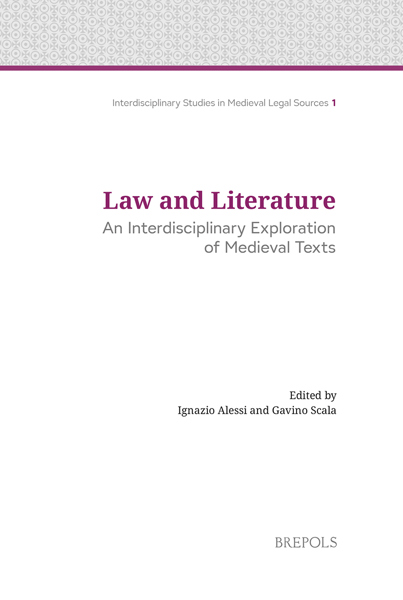
BOOK: Ignazio ALESSI & Gavino SCALA (eds.), Law and Literature. An Interdisciplinary Exploration of Medieval Texts [Interdisciplinary Studies in Medieval Legal Sources, ed. Ignazio ALESSI; 1] (Turnhout: Brepols, 2026), 243 p. ISBN 9782503620343, € 80


(image source: Brepols)

Abstract:

Throughout history, law and literature have always been in constant dialogue, sharing significant connections and exerting mutual influences. Both are artificial creations, products of human imagination that use language and metaphors to build meanings and shape the world around us. In the Middle Ages, the proximity of these two genres is even more pronounced. This is not only because many literary figures were also jurists, but also because medieval legal texts can be classified as a distinct literary genre known as ‘legal literature’. Additionally, medieval jurists did not hesitate to draw upon literary texts, understood as genuine sources of law (‘auctoritates morales’), to fill gaps in their legal knowledge. The contributions collected in this volume examine precisely this intersection between law and literature in medieval literary and legal texts. The volume follows four axes: law in literature, law as literature, literature in law, and literature as Law. The volume aims to raise awareness of the proximity of two apparently distant worlds and to provide a perspective for interdisciplinary analysis that transcends traditional rigid barriers.

Table of contents: 

Foreword Sara MENZINGER Introduction Ignazio ALESSI and Gavino SCALA ‘Par bataille ou par juise’. Ordeal by Combat in Thirteenth-Century Arthurian Prose Romances Claudio LAGOMARSINI La fiction judiciaire amoureuse (XIIe-XVe s.). Enjeux procéduraux Cassandre CRESPIN (Don’t) call me by your name. Lexical Gleanings of Droit Non Marta MILAZZO Procès du loup, procès de l’homme. La justice dans ‘Le valet aus douze femes’ Federico NOVELLO Le meurtre de Lancelot Ier dans la fin particulière des témoins Paris, Ars. 3348 et New Haven, Beineke Library, MS 227 de l’Estoire del Saint Graal. Une vendetta à l'épreuve du droit féodal Davide NOVATI Acoustic Effects and Kinesic Imagination in Archbishop Wulfstan of York’s Legal Writing Chen CUI Exploring Legal and Linguistic Dimensions in Late Medieval English Jurisprudence. William Lyndwood’s Provinciale and Inheritance Practices Matthew CLEARY Conclusions. Literature as a Field of Legal Experimentation Noëlle-Laetitia PERRET and Adrien WYSSBROD

On the editors:

Ignazio Alessi is a Research Fellow at the Centre for Research in the Arts, Social Sciences and Humanities (CRASSH), University of Cambridge, and a Postdoctoral Research Associate at Trinity Hall. He holds a joint Ph.D. in legal history from the EHESS in Paris and the University of Palermo. He was a postdoctoral researcher at the Universities of Fribourg and Geneva, and a visiting scholar at the Centre Relais Culture Europe in Paris and at Wolfson College, University of Oxford. Gavino Scala is a postdoctoral researcher at University of Geneva. He has a joint Ph.D. in Romance Philology at University of Siena and University of Zurich. He was postdoctoral researcher at University of Fribourg (CH).

Read more here

08 July 2026

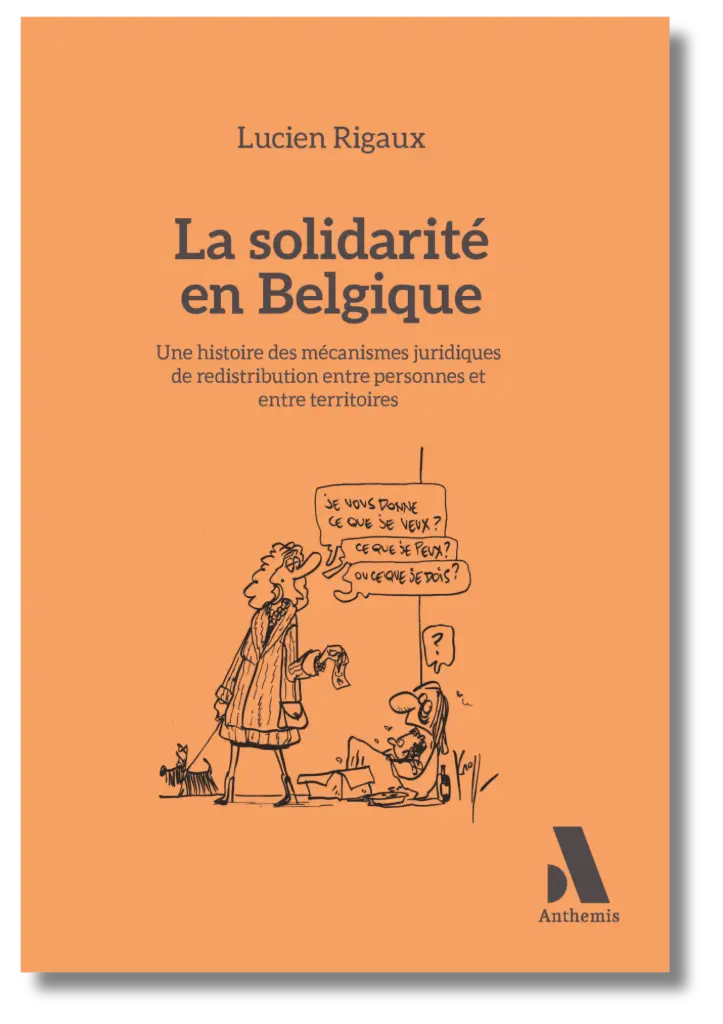
BOOK: Lucien RIGAUX, La solidarité en Belgique. Une histoire des mécanismes juridiques de redistribution entre personnes et territoires (Wavre: Anthémis, 2026), 660 p. ISBN 978-2-8072-1598-6, € 119

(image source: Anthémis)

On the author:
Pourquoi payons-nous des impôts ? Pourquoi la solidarité est-elle devenue un droit… et une obligation ? De la charité volontaire à l’État social, cet ouvrage retrace l’histoire fascinante de la solidarité en Belgique et interroge son avenir à l’heure des crises, du fédéralisme et de la mondialisation. Aux origines de nos impôts, de notre sécurité sociale et des transferts entre territoires : un principe essentiel, celui de la solidarité. Comment la Belgique est-elle passée d’un modèle de charité libre et volontaire à un régime de solidarité structuré, fondé sur des droits et des obligations ? Quels événements, quels choix politiques et économiques ont façonné notre système de redistribution entre personnes et entre territoires ? Issu d’une thèse de doctorat en droit saluée pour son originalité et la richesse de sa documentation historique, juridique et économique, cet ouvrage retrace les grandes transformations de la solidarité en Belgique, des origines aux défis contemporains. Lucien Rigaux explore les moments de ruptures – crises économiques, guerres, montée du libéralisme, revendications nationalistes – qui ont redéfini les contours de la redistribution, tout en mettant en lumière les dynamiques paradoxales qui traversent l’État belge : désintégration fédérale d’un côté, intégration européenne de l’autre. À travers une plongée passionnante dans les mécanismes fiscaux, les dispositifs de sécurité sociale et les transferts interterritoriaux, l’auteur interroge les rapports entre capacités contributives et besoins sociaux, tout en se livrant à l’exercice ambitieux de mettre en perspective la solidarité interpersonnelle et la solidarité interterritoriale. À travers l’étude des régimes de solidarité, il offre ainsi une lecture vivante et nuancée de l’histoire sociale, économique et institutionnelle de la Belgique, et surtout une réflexion plus large sur le rôle de la redistribution dans une économie de marché mondialisée où les interdépendances se renforcent, mais où persistent des défis majeurs : concurrence fiscale, soutenabilité des systèmes sociaux, replis identitaires et quête de justice sociale. Destiné aux juristes, économistes, chercheurs en sciences sociales ainsi qu’à tout lecteur curieux de comprendre les inégalités et les outils dont nos sociétés disposent pour y répondre, ce livre propose des clés précieuses pour appréhender les enjeux actuels de la solidarité et imaginer ses évolutions possibles. Au-delà des chiffres et des normes, il invite à réfléchir sur ce qui, collectivement, nous relie.

On the author:

Lucien Rigaux s'est vu décerner le Prix Joseph Hubert HELSEN en mai 2025. Plus qu'une analyse technique, son étude a été récompensée pour sa vision novatrice et son engagement en faveur du progrès humain, offrant des pistes de réforme audacieuses pour l'évolution de notre société.

Read more with the publisher.


07 July 2026

BOOK: Dieter GRIMM, Constitutional Effectiveness. The Case of Germany's Basic Law (London: Bloomsbury, 2026), 232 p. ISBN 9781509988891


(image source: Bloomsbury)

Abstract:

This book presents a unique account of the social and political impacts of the German Basic Law on the German Republic from 1949 to the present day. It considers the way in which the history of the Federal Republic of Germany has been decisively influenced by its Constitution, the Basic Law of 1949, and by the jurisprudence of the Federal Constitutional Court. The book argues that the historiography of the Federal Republic does little to reflect this influence. The Basic Law is mentioned and so occasionally rulings of the Federal Constitutional Court. But the reader does not get the impression that they were of specific importance in Germany before and after reunification. Legal scholars, on the other hand, are concerned about the legal consequences of the Basic Law, but do not analyse its impact in the real world. There is, thus, a gap between the two disciplines – one not being familiar with social reality, the other not familiar with the normativity of the law. The history of the effectiveness of the constitution falls into this gap. In this book, Dieter Grimm, himself a Justice of the Federal Constitutional Court from 1987 to 1999 and an expert on interdisciplinary research in law, history and political science, guides the reader through important developments and events that were determined or influenced by the constitution and its judicial interpretation.

Table of contents:

Preface
Preliminary Remark on the Selection of Historical Literature for Examination
1. Constitutional History and General History
2. Genesis and Content of the Basic Law3. The Beginnings of Constitutional Adjudication4. Constitutional Evolution Through Amendments5. Moves Towards a Total Revision of the Basic Law6. The Constitutional Question in the Reunification Process7. The Liberalisation of Society as a Question of Fundamental Rights8. Influence of the Constitution on the Media System9. The Social Democratic-Liberal Reforms under Scrutiny10. The Taming of the Party State11. Achieving Gender Equality12. The Basic Law in the Risk Society13. The Constitution in the East-West Approximation Process14. The Federal Republic as Member State of the European Union15. The Underestimated Constitutionalisation of PoliticsAppendix: The Significance of Law in the History of Society: A Query

 Read more here.


06 July 2026

BOOK: Fidel J. TAVÁREZ, Assembling an Imperial Machine: Spanish Commercial Reform in the Age of Enlightenment (Oxford: OUP, 2026), ISBN 9780197755051


(image source: OUP)


Abstract:
In the eighteenth century, a host of Spanish statesmen compared well-ordered empires to harmonious machines and devised a comprehensive plan to liberalize and integrate the imperial economy. The main initiative of this economic plan was a commercial policy that contemporaries called comercio libre, which entailed replacing the traditional fleets and galleons with a new system of free trade within the empire. The statesmen who designed this new imperial vision became convinced that the pursuit of markets, rather than military power alone, was the key to succeeding in a modern commercial society. But where their European counterparts remained committed to international trade, Spanish ministers focused on integrating Spain’s metropolitan and colonial territories. In fact, Spanish statesmen reasoned that the Hispanic world’s vast territories were a microcosm of the global economy that could become both self-sufficient and impervious to international commercial pressures. They also recognized that the viability of this closed commercial empire depended on synergizing millions of subjects across Spain’s dominions, which is why they insisted on the importance of integrating Indigenous and Afro-descendant wage workers and consumers. Combining intellectual history, Atlantic history, and the history of the Bourbon reforms, Assembling an Imperial Machine shows that, rather than a mercantilist atavism, the Hispanic world’s commercial reforms represented a genuine attempt to solve the dilemmas of early modern globalization, an endeavor that, in turn, inaugurated the enduring fascination with erecting a free trade bloc in Latin America.

Read more here: 10.1093/9780197755082.001.0001.


02 July 2026

BOOK: Arthur EYFFINGER, A World Court Trilogy (Soesterberg: Uitgeverij Aspekt, 2026), 3 vol. (€ 185 each)


(image source: Guy Clémart)

Abstract:

Three decades after his ASIL Award–winning studies on the International Court of Justice (1996) and the First Hague Peace Conference (1999), Arthur Eyffinger now presents a monumental, richly illustrated trilogy charting the complete history of the World Court. The landmark publication offers a panoramic view of the Court’s intellectual origins, institutional development, jurisprudence, and human legacy. Meticulously researched and lavishly documented, A World Court Trilogy is a captivating homage to one of the most critical institutions in upholding the global legal order. The publication marks the eightieth anniversary of the ICJ in mid-April 2026. In anticipation of the eightieth anniversary of the ICJ in 2026, Arthur Eyffinger produced A World Court Trilogy. The ambitious project covers the concept of the idea, the  genesis and the first century of operation of the ‘World Court’ (the International Court of Justice in the Peace Palace at The Hague) in three substantial volumes. The project is twofold. It provides for volumes that feature a lavishly illustrated presentation of the subject-matter, next to volumes that present the texts only. This latter version includes ample documentation sections and full indexes for reference purposes to the student of the law. All volumes include a wealth of  biographies and including reviews of the lives of all the judges who ever served on the Court.

Volumes:

(1) Volume I: The Constitution (1870-1920) This volume assesses the period of constitution of the Court from the wider historical perspective and in light 
of the time-honoured aspiration to improve on the condition of mankind.

(2) Volume II: The Permanent Court of International Justice (1921-1946) This volume covers the implementation of the 
concept and the pioneering years of the PCIJ in 
the Interbellum Years.

(3) Volume III: The World Court Judges, the First Century (1921-2026) This volume introduces eighty years of operation of 
the ICJ, then to focus on the members of the Court. 
It provides biographical sketches of all the Judges, who have served on the Bench of the institution from 
1921 - 2026.

Read more on Guy Clémart's website. [Guy Clémart is Arthur Eyffinger's pseudonym] 


30 June 2026

BOOK: Paolo CALCAGNO, La Repubblica di Genova (1528-1797) [Gli antichi stati italiani] (Bologna: il Mulinoa/Upm, 2026), ISBN 9788815419484, € 9,99


(image source: IBS)

Abstract:

Dal 1528 alla caduta nel 1797 in seguito all’ascesa napoleonica, questo libro ricostruisce la storia della Repubblica di Genova seguendo la trasformazione di una città marinara in una solida potenza aristocratica. Liberatasi dalle dominazioni straniere, Genova consolidò un sistema politico fondato sull’oligarchia e sul legame con il Banco di San Giorgio, cuore finanziario della Repubblica. Alleata della Spagna asburgica, seppe ritagliarsi un ruolo centrale nello scacchiere italiano ed europeo, tra crisi interne, guerre con Savoia e Francia, e rinnovate ambizioni marittime. Lungi dall’essere un secolo di decadenza, il Settecento genovese vide una sorprendente vitalità economica e portuale, preludio alla fine di uno Stato antico nelle forme ma ancora vitale nello spirito.

19 June 2026

BOOK: Bill DAVIES & Morten RASMUSSEN (eds.), The History of European Union Law. Constitutional Practice, 1950 to 1993 (Cambridge: Cambridge University Press, 2026), ISBN 9781009673891, € 122,55


(image source: CUP)

Abstract:

This formative period of EU law witnessed an intense struggle over the emergence of a constitutional practice. While the supranational institutions, including the European Commission, the European Court of Justice and the European Parliament, as well as EU law academics helped to develop and promote the constitutional practice, member state governments and judiciaries were generally reluctant to embrace it. The struggle resulted in an uneasy stalemate in which the constitutional practice was allowed to influence the doctrines, shape and functioning of the European legal order that now underpins the EU, but a majority of member state governments rejected European constitutionalism as the legitimating principle of the new EU formed on basis of the Treaty of Maastricht (1992). The struggle and eventual stalemate over the constitutional practice traced in this book accounts for the fragile and partial system of rule of law that exists in the EU today.

Read more here: DOI 10.1017/9781009673891

18 June 2026

BOOK: Daniel ALLEMANN, Empires of Slavery: Rights and Power in the Early Modern Iberian World [Max Planck Studies in Global Legal History of the Iberian Worlds, ed. Thomas DUVE; 7] (Leiden/Boston: Martinus Nijhoff/Brill, 2026), [OPEN ACCESS]


(image source: Brill)

Abstract:
Enslavement was central to the early modern Iberian empires. No one at the time seriously questioned its legality, yet widespread reports of violent practices of captivity and human trafficking contrasted sharply with the Christian ideal of charity. This volume explores how Spanish and Portuguese theologians, jurists, and missionaries grappled with this moral dilemma. These thinkers developed ideological tools to protect the souls of those who appeared to be in a state of mortal damnation. Slavery prompted Iberian intellectuals to rethink the boundaries between property and person, law and religion, and household and commonwealth. By reconstructing these debates, this volume offers a new narrative about the relationship between individual rights and political power in the early modern Iberian world.

On the author:

Daniel Allemann, Ph.D. (2020), University of Cambridge, is Scientific Collaborator at the University of Geneva. A historian of the late medieval and early modern periods, he studies how intellectual traditions shaped ideas of empire, rights, and religion. He co-edited Conceptions of Space in Intellectual History (2018). 

Read more here: DOI  10.1163/9789004760592.


16 June 2026

BOOK: Horatia MUIR WATT & Geoffrey SAMUEL, Producing Legal Knowledge. Comparative Methods, Models and Schemes (Cheltenham: E. Elgar, 2026), 266 p. ISBN 9781035318469, 105 GBP


(image source: Elgar)


Abstract:


This thought-provoking book opens up a distinctive and original framework of analysis of the relationship between legal methodologies and the social and human sciences. Rich in implications both for comparative legal theory and for the understanding of legal reasoning in practice, it adopts a critical epistemological perspective by enlarging the focus of comparative legal studies and allowing for a much-needed decentering of conventional approaches to law across cultures and disciplines. Using a novel lens, leading scholars Horatia Muir Watt and Geoffrey Samuel explore modes of knowledge, reasoning and veridiction that are usually taken for granted within the law. They investigate interdisciplinary insights from areas as diverse as algorithmic governance, symmetrical anthropology or cinema studies to suggest alternative knowledge frameworks better attuned to our culturally diverse world. Building on well known examples from Roman law, private international law and contemporary orientations in legal comparison, they highlight both the resistance of traditional legal epistemology to transformative moves in other fields as well as how other areas of knowledge incorporate in turn contributions from legal doctrines and juridical argument. Producing Legal Knowledge is a beneficial read for scholars and students of comparative legal studies and legal epistemology, particularly those interested in legal research methods.


Table of contents:

Contents
Preface
1 Introduction: comparative legal methodology in context
PART I OVERVIEW
Introduction to Part I: Overview
2 Threshold epistemological conundra
3 Comparative law’s conceptual language
4 Models of legal knowledge (1): the canon
5 Models of legal knowledge (2): further variations
PART II SCHEMES OF INTELLIGIBILITY
Introduction to Part II: schemes of intelligility
6 Causal scheme: an uncommon notion
7 Functional scheme: theory, heuristic, or just part of the
problem?
8 Structuralist scheme: preparing for the era of the ‘post-
structuralist’?
9 Hermeneutical scheme: what (if anything) is beyond the ‘text’?
10 Dialectical scheme: comparison, opposition and critique
11 Actionalist (and interactionalist) scheme: individuals, society,
actor-networks
12 Ontologies and open conclusions
Bibliography

 Read more here.


12 June 2026

BOOK: Benjamin SCHONTHAL, Courts, Constitutions and Karma. Buddhism, Law and the Practices of Legal Pluralism in Sri Lanka [Cambridge Studies in Law & Society, eds. Mark FATHI MASSOUD & Jens MEIERHENRICH] (Cambridge: CUP, 2026)

(image source: CUP)


 Abstract:

Although rarely acknowledged, Buddhist monastics are among the most active lawmakers and jurists in Asia, operating sophisticated networks of courts and constitutions while also navigating—and shaping—secular legal systems. This book provides the first in-depth study of Buddhist monastic law and its entanglements with state law in Sri Lanka from 1800 to the present. Rather than a top-down account of colliding legal orders, Schonthal draws on nearly a decade of archival, ethnographic and empirical research to document the ways that Buddhist monks, colonial officials and contemporary lawmakers reconcile the laws of the Buddha and the laws of the land using practices of legal pluralism. Comparative in outlook and accessible in style, this book not only offers a portrait of Buddhist monastic law in action, it also yields new insights into how societies manage multi-legality and why legal pluralism leads to conflict in some settings and to compromise in others.

Table of contents:

  • 1. Monastic law, state law and the plurality of legal pluralism in Sri Lanka
  • Part I:
  • 2. The unity and diversity of Buddhist monastic law
  • 3. Jurisdictionalising Buddhism in colonial Ceylon
  • 4. Practising legal pluralism in the monastery
  • Part II:
  • 5. Like and unlike 'Law': making a monastic judiciary
  • 6. Law's Karmas: Nirvana, rebirth and the cosmological consequences of monastic law
  • Part III:
  • 7. Legalising' monastic law: the politics of legal recognition in post-colonial Sri Lanka
  • 8. Constitutionalising Vinaya
  • Conclusion: pluralising legal pluralism
  • Glossary
  • References.

On the author:

Benjamin Schonthal, University of Otago, New Zealand

(source: Legal History Blog)

10 June 2026

BOOK: Anna O. LAW, Migration and the Origins of American Citizenship. African Americans, Native Americans, and Immigrants (Oxford: OUP, 2026), 304 p. ISBN 9780197660096, 19,99 GBP


(image source: OUP)

Abstract:

Since the late nineteenth century, the US federal government has enjoyed exclusive authority to decide whether someone has the ability to enter and stay in US territory. But freedom of movement was not guaranteed in the British colonies or early US. By contrast, voluntary migrants were met with strict laws and policies created by colonies and states, which denied free mobility and settlement in their territories to unwanted populations. Migration and the Origins of American Citizenship presents a story of constitutional development that traces the confluence of the logics of slavery and settler colonialism in early legal rulings and public policy about migration and citizenship. The book examines the division of labor between the national and state governments that endured for over a century, reasons why that arrangement changed in the late nineteenth century, and what the transformation meant for people subject to those regimes of control. Drawing into one study the migration policy histories of groups of people that are usually studied separately, and combining the methodologies of political science, history, and law, Anna O. Law reveals the unmistakable effects of slavery and Native American dispossession in modern US immigration policy.

Table of contents:

Introduction
1:Sifting Migrants
2:Belonging
3:Migration and Citizenship at the Founding
4:Regulating International Borders
5:Regulating Interstate Borders
6:Formal Citizenship Defined
7:Historical Antecedents and Legal Precedents

Epilogue: Continuity, Change, and Constitutional Memory

 On the author:

is the Herbert Kurz Chair in Constitutional Rights in the Department of Political Science at CUNY Brooklyn College. She completed her PhD in Government at the University of Texas at Austin. Her publications appear in political science, history, and law journals and investigate the interaction between law, legal institutions, and politics. Her first book, The Immigration Battle in American Courts (2010), examined the role of the federal judiciary in U.S. immigration. She teaches and researches in U.S. constitutional law, federal courts, U.S. immigration policy history, federalism, American Political Development, and race/ethnicity.

 Read more here.