Search

Showing posts with label late medieval/early modern history. Show all posts

28 August 2025

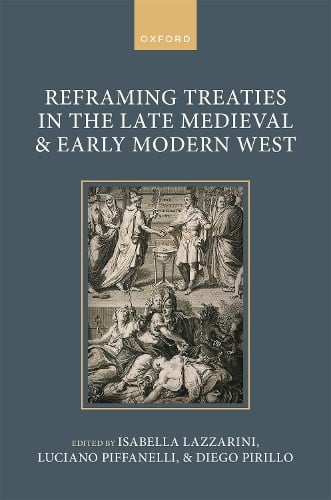
BOOK: Isabella LAZZARINI, Luciano PIFFANELLI & Diego PIRILLO (eds.), Reframing Treaties in the Late Medieval and Early Modern West (Oxford: Oxford University Press, 2025), 496 p. ISBN 9780198958475, 119 GBP


(image source: Waterstones)

Abstract:

Peace treaties were an important, dynamic, and varied element of late medieval and early modern diplomacy and international relations. But study of peace-making in the pre-modern period has often been limited to a focus on singular treaties and case studies, or presented as the historical prelude to the singular and inevitable 'universal' international order of the modern period. Seeking to counter this one-dimensional and Eurocentric teleology, this multi-authored volume conceives of peace treaties very broadly—as a range of successful and failed agreements, settlements, truces, oaths, and other forms conflict resolution—across a wide geopolitical and constitutional range of case studies not limited to Europe, but including also the Mediterranean and Atlantic worlds. Considered in this way, they become a means to reevaluate thoroughly the premodern peace-making process and the broader flow of negotiations that shaped late medieval and early modern political interactions; not as a discrete series of treaties but as a constitutive element of politics (a 'political grammar'), both within and outside frontiers and borders, whose complexity and adaptability are reflected in the diversity of its forms and the variety of the sources that recorded it. In so doing, and across 21 multi-disciplinary chapters, contributors show pre-modern peace-making to have been a multi-layered and varied phenomenon, the understanding of which has important implications for all those working on medieval and early modern international relations, diplomacy, and the new diplomatic history.

(source: Waterstones

10 December 2024

BOOK: Wim BLOCKMANS, The Voice of the People? Political Participation before the Revolutions (London: Routledge, 2024), 458 p. ISBN 9781003202066


(image source: Routledge)


Abstract:

Over the last two centuries, Europe has developed various forms of political representation from which democratic parliamentary systems gradually emerged. This book unravels the conditions, scale and impact under which political participation of common burghers and peasants emerged. Political participation in Europe before the Revolutions moved away from the traditional focus on ‘Three Estates’ which has often blurred the interpretation of popular participation’s role in societies. This book instead examines Europe’s key political variants such as high levels of commercialization and urbanization, combined with a balance of powers between competing categories of actors in society controlling relatively independent resources which lead to political participation forming across the continent. Instead of starting from any ideal type of political participation, this book focuses on the variation through time and space, its composition and activity, helps to explain the functions particular institutional settings fulfilled. The time frame 1100–1800 sheds light on the long-term evolutions such as institutional inertia and processes of oligarchizing. To reveal a correlation of economic and demographical growth with the claim of rising social classes to voice their interests. It also points to the opposite tendency: the formation of fiscalmilitary monarchical states. This book is essential reading for those interested in the formation of Europe’s political structures and students of premodern political history.

More information here: DOI 10.4324/9781003202066.

20 November 2024

BOOK: Dante FEDELE, Randall LESAFFER, Pierre SAVY (eds.), Avant l'État. Droit international et pluralisme politico-juridique en Europe, XIIIe-XVIIe siècle (Rome: Historia et ius, 2024). ISBN: 9791281621077 [OPEN ACCESS]

(Image source: Historia et Ius)


TABLE OF CONTENTS

  • Dante Fedele, Randall Lesaffer, Pierre Savy, Introduction;
Souveraineté et gouvernement
  • Armand Jamme, Non ratione feudi, sed occasione peccati. Formes et motifs du devoir d’ingérence pontifical (XIIIe-XIVe siècles);
  • Robert von Friedeburg, The Protection of the Subject: Allegedly «Civilized» vs Allegedly «Despotic» Patterns of the Treatment of Subjects as Described in Arguments 1570s to 1650s;
Guerre et représailles
  • Andrea Padovani, I peccati del guerriero nelle Summae confessorum medievali e protomoderne;
  • Philippine Christina, Van den Brande, Reprisal in Theory and Practice: The Seventeenth-Century Case of Robert Powlett;
Conflits et frontières
  • Pierre-Anne Forcadet, Arbitrage, justice internationale et souveraineté au XIIIe siècle;
  • Romain Goudjil, La juridiction du podestat génois de Péra au prisme du registre du patriarcat de Constantinople;
  • Giovanni Chiodi, Nisi in terris quae sunt sub uno principe generali. Per una storia del diritto di estradizione nel medioevo e nella prima età moderna;
  • Andrew Vidali, Borders, Criminal Justice, and International Law: Extradition Agreements in Renaissance Italy;
Rapports extra-européens
  • Bart Wauters, Aquinas on «Infidel» Dominium;
  • Dominique Valérian, Traités de paix et normes juridico-religieuses en Méditerranée à la fin du Moyen Âge. Entre pluralisme normatif et hiérarchie des normes;
  • Marc de Wilde, Protecting Non-Christian Allies: Hugo Grotius’s Justification of Dutch Overseas Expansion in the East Indies;
  • Gaëlle Demelemestre, Conflits et controverses sur le statut des mers aux XVIe-XVIIe siècles : La délicate question des territoires sans maître;
  • Luisa Brunori, Le Livre IX de la Recopilación de Leyes de las Indias entre souveraineté commerciale et droit « proto-colonial »;
Commerces et péages
  • Nicola Carotenuto, La giustizia dei mercanti. Il caso di Venezia medievale;
  • Cédric Quertier, Florence, entre problème portuaire et diplomatie économique : quelques remarques sur les traités commerciaux et sur les instances de régulation des conflits (XIIIe-XIVe siècle);
  • Bastien Carpentier, Jeux d’appartenances, logiques de concurrence et construction sociale des institutions de juridiction. Filippo Centurione Cantelli, marchand génois de Séville, et la monarchie des Habsbourg (XVIe siècle);
  • Charlotte Backerra, Tolls, Rights, Laws, and Brothers: the Rhine and Hesse at the Intersection of Legal Pluralism in the Sixteenth and Seventeenth Centuries;
Politique et diplomatie
  • Stéphane Péquignot, Faire fi du pluralisme juridico-politique ? À propos de quelques « singulier[s] messaige[s] » (Lulle, Villeneuve, Mézières);
  • Esther Tello-Hernández, Entre activité publique et activité privée : l’activité diplomatique et financière des banquiers de la couronne d’Aragon à la curie d’Avignon au XIVe siècle;
  • Francesco Bozzi, Videtur maxima inequalitas. Note sulle aderenze dei Gonzaga (XIV-XV secolo);
  • Isabella Lazzarini, A Spider’s Web. Agreements, Pacts and Alliances before, around and after the Peace of Lodi (Northern Italy, 1454-1455);
  • Jean Sénié, L’enchevêtrement des droits dans le gouvernement à distance : les territoires français des petits États italiens (XVIe-XVIIe siècles);
  • Alain Wijffels, Épilogue : L’État avant l’État.

The entire volume can be downloaded for free at this link.


23 August 2024

BOOK: Daniele EDIGATI, Elisabetta FUSAR POLI, Alessandro TIRA (eds.), Municipalia Cremae. Studi e percorsi di ricerca sugli statuti di Crema in età veneziana. Con edizione della fonte (Torino: Giappichelli, 2024). ISBN: 9791221106619, pp. 496, € 58,00

(Source: Giappichelli)


ABOUT THE BOOK

Gli statuti municipali di Crema del 1535, il cui testo trascritto viene presentato nel confronto con l'edizione del 1723, ressero la vita della città della Lombardia veneziana fino alla caduta della Repubblica del Leone, nel 1797. I Municipalia disciplinavano i più vari ambiti del diritto e - questione assai delicata - delineavano nel concreto della vita locale i rapporti con Venezia, a cui Crema si era legata con patti di dedizione fin dal 1449. Il Podestà e la sua piccola corte di funzionari, nominati dalla Dominante, si trovavano a interagire con la folta schiera delle magistrature municipali, in una dialettica imperniata sul Consiglio cittadino, ma che si svolgeva sotto il controllo delle istituzioni centrali della Serenissima. I saggi che affiancano l'edizione del testo statutario tracciano una ricca illustrazione del sistema che così si componeva, offrendone per la prima volta il quadro complessivo al pubblico di studiosi e lettori.

TABLE OF CONTENTS

Premessa [Daniele Edigati, Elisabetta Fusar Poli, Alessandro Tira]
SEZIONE PRIMA: STUDI E PERCORSI DI RICERCA SUGLI STATUTI DI CREMA IN ETÀ VENEZIANA
1. La conversazione della città con le sue norme. I Municipalia del 1535 e la vita civica cremasca [Marco Castelli]
2. Gli statuti di Crema in tipografia. Dalla princeps del 1484 ai Municipalia Cremae del 1536 [Enrico Valseriati]
3. I Municipalia Cremae e le magistrature cittadine: note su statuti e governo del territorio ai tempi della Serenissima [Elisabetta Fusar Poli]
4. Un’exclave veneziana in territorio milanese: i Municipalia Cremae ed il sistema delle fonti nella Serenissima Repubblica [Claudia Passarella]
5. Vicende e forme del processo civile cremasco in età veneta [Alan Sandonà]
6. Il libro terzo: appunti sulla parte criminalistica dei Municipalia cremaschi [Daniele Edigati]
7. «Spiritus Sancti invocato suffragio». Elementi religiosi nei Municipalia Cremae [Alessandro Tira]
SEZIONE SECONDA: GLI STATUTI DI CREMA (1535, 1723)
Note alla trascrizione [Marco Castelli]
MUNICIPALIA CREMAE
Liber primus extraordinariorum
Liber secundus
Liber tertius criminalium
Liber quartus de damnis datis
Liber quintus victualium


More information with the publisher.

12 February 2024

BOOK: Rudi BEAULANT, Les Pratiques de la grâce des ducs et duchesses de Bourgogne à la fin du Moyen Âge (Paris: Classiques Garnier, 2024), ISBN : 978-2-4061-5946-9, pp. 674, 48,00 €


ABOUT THE BOOK

Les ducs de Bourgogne ont usé d’un droit de grâce à l’égard des criminels, à l’instar des rois de France. Cet ouvrage en examine les modalités ainsi que les enjeux sociaux, politiques, juridiques et financiers, depuis les derniers ducs Capétiens jusqu’à la mort de Charles le Téméraire en 1477.

Prix Jean-Claude Vimont

Préface de Bruno Lemesle


ABOUT THE AUTHOR

Rudi Beaulant est postdoctorant au LabEx Hastec, rattaché au LaMOP (UMR 8589). Son projet de recherche porte actuellement sur l’office de bourreau dans le duché de Bourgogne à la fin du Moyen Âge. Sa thèse de doctorat, intitulée Les lettres de rémission des ducs de Bourgogne. Étude sur les normativités sociales, politiques et juridiques, réalisée sous la direction de Bruno Lemesle et soutenue en 2018, est en cours de publication. Ses travaux portent plus généralement sur les pratiques judiciaires urbaines et princières à la fin du Moyen Âge, ainsi que sur le trésor de l’Épargne des ducs de Bourgogne


TABLE OF CONTENTS

PREMIÈRE PARTIE. LE CADRE INSTITUTIONNEL ET LES PRATIQUES DE LA GRÂCE DANS L’ESPACE BOURGUIGNON

Rassemblement du corpus, méthodologie et limites de l’étude

L’exercice du droit de grâce dans les principautés bourguignonnes et ses évolutions

Le processus de grâce criminelle dans l’espace bourguignon et les évolutions structurelles de la lettre de rémission

Conclusion de la première partie


DEUXIÈME PARTIE. CRIME, SOCIÉTÉ ET ARGENT. LES ENJEUX JURIDIQUES, SOCIAUX ET FINANCIERS DES LETTRES DE RÉMISSION BOURGUIGNONNES

Rémission et criminalité dans l’espace bourguignon

La construction du sujet idéal, entre normes sociales et juridiques

Le prix de la miséricorde princière, une économie de la grâce ?

Conclusion de la deuxième partie


TROISIÈME PARTIE. LES ENJEUX POLITIQUES DE LA GRÂCE DES DUCS DE BOURGOGNE

La rémission, outil d’intégration et vecteur de la souveraineté princière

Grâce princière et pouvoir urbain. Le cas de la ville de Dijon

Conclusion de la troisième partie


Conclusion générale

Sources d’archives

Outils de travail et sources imprimées


More information with the publisher.

02 February 2024

PODCAST: 'The Hanseatic League' - BBC Radio 4, In Our Times (1 February 2024)


(Source: BBC Sounds)

Released On: 01 Feb 2024 

Melvyn Bragg and guests discuss the Hanseatic League or Hansa which dominated North European trade in the medieval period. With a trading network that stretched from Iceland to Novgorod via London and Bruges, these German-speaking Hansa merchants benefitted from tax exemptions and monopolies. Over time, the Hansa became immensely influential as rulers felt the need to treat it well. Kings and princes sometimes relied on loans from the Hansa to finance their wars and an embargo by the Hansa could lead to famine. Eventually, though, the Hansa went into decline with the rise in the nation state’s power, greater competition from other merchants and the development of trade across the Atlantic.


With

Justyna Wubs-Mrozewicz: Associate Professor of Medieval History at the University of Amsterdam

Georg Christ: Senior Lecturer in Medieval and Early Modern History at the University of Manchester

Sheilagh Ogilvie: Chichele Professor of Economic History at All Souls College, University of Oxford


Producer: Victoria Brignell

30 November 2023

BOOK: Cátia ANTUNES & Eric TAGLIACOZZO (eds.), Vol. I, Migration, 1400-1800 [The Cambridge History of Global Migrations, ed. Donna GARACCIA] (Cambridge: Cambridge University Press, 2023), 650 p. ISBN 9781108767095, 120 GBP

(image source: CUP)

Abstract:
Volume I documents the lives and experiences of everyday people through the lens of human movement and mobility from 1400–1800. Focusing on the most important typologies of pre-industrial global migrations, this volume reveals how these movements transformed global paths of mobility, the impacts of which we still see in societies today. Case studies include those that arose from the demand of free, forced and unfree labour, long and short distance trade, rural/urban displacement, religious mobility and the rise of the number of refugees worldwide. With thirty chapters from leading experts in the field, this authoritative volume is an essential and detailed study of how migration shaped the nature of global human interactions before the age of modern globalization.

Table of contents:

Introduction Cátia Antunes and Eric Tagliacozzo
Part I. Slavery/Forced Migration:
1. Slavery, captivity and mobilities in the early modern Mediterranean Guillaume Calafat and Mathieu Grenet
2. Africans on the move: the transatlantic slave trade Damian Alan Pargas
3. Debt, bondage and indentured labour in land and maritime empires Alessandro Stanzani
Part II. Long Distance Trade:
4. Long-distance trade, the Pacific Paul D'Arcy
5. Long-distance Japanese trade in the early modern era Adam Clulow
6. Long-distance trade and migration in Central Asia, 1500-1850 Magnus Marsden
Part III. Short Distance Trade:
7. Maritime migrations of the Eastern Mediterranean and the Black Sea Gelina Harlaftis and Katerina Galani
8. Mobility and migration around the Bay of Bengal David Ludden
9. Early modern Japan: a state with limited migration Robert Hellyer
Part IV. Migration by Land:
10. Indigenous mobility in the lowlands of South America Cristina Pompa
11. Chinese expansion in eighteenth-century central Eurasia Peter C. Perdue
12. Persianate peregrinations: elite migration in Eurasia, from the eleventh to nineteenth centuries James Pickett
Part V. Migration by Sea:
13. Western European long-distance movements Erik Odegard
14. Emigration, displacement, and forced migration in Indian Ocean Africa Jeremy Prestholdt
15. Migration by Sea in the Arabian Sea and the Persian Gulf, 1700–1800 Seema Alavi
Part VI. Rural/Urban Migrations:
16. Urban migration and gender diversity in Eurasia, 1600–1800 Manon van der Heijden
17. Urbanization and emigration in Coastal South China Steven Miles
18. Migration in Colonial Latin America Roberta Stumpf
Part VII. Labour Migration:
19. The globality of the Local – (Im)Mobilizing labor regimes under early capitalism and European colonial expansion Matthias van Rossum
20. Afro-India migrations and the Indianization of East Africa 5000 BCE to 1900 CE Nidhi Mahajan
21. Labour migration in Sub-Saharan Africa Before 1800 Filipa Ribeiro da Silva
Part VIII. Settler Migration:
22. North America: migrations and settlement (c. 1600 – c. 1800) Bertrand Van Ruymbeke
23. Turkish migrations in the Greater Turkic-Speaking World, 1450–1830 Suraiya Faroqhi
24. Dynamics of mobility and settlement in Africa: the horn of Africa, 13th – 19th Centuries Deresse Ayenachew Woldetsadik
Part IX. Religious Migrations:
25. Early modern diasporas Natalia Muchnik
26. Religious components of Southeast Asian migration Francis R. Bradley
27. Migrant clerics going East and West José Pedro Paiva
Part X. Refugees:
28. Refugees in Europe and the Atlantic World Geert H. Janssen
29. 'Mongol' and 'Manchu' and the great conquest enterprises of Eurasia, 1200–1800 Pamela Kyle Crossley

30. Refugees in Africa (1490–1820) Rémi Dewière. 

On the editors:

Cátia Atunes is Professor of History and Global Economic Networks at Leiden University. She has published, edited, and translated monographs and articles on the exploitation of early modern empires and the transition from colonialism to imperialism. She is co-editor, with Francisco Bethencourt, of Merchant Cultures: A Global Approach to Spaces, Representations and Worlds of Trade, 1500–1800 (2022).

Eric Tagliacozzo is John Stambaugh Professor of History at Cornell University. He is the director of the Comparative Muslim Societies Program at Cornell University. His book Secret Trades, Porous Borders: Smuggling and States Along a Southeast Asian Frontier, 1865–1915 (2005)won the Harry Benda Prize from the Association for Asian Studies (AAS).

Contributors:

Cátia Antunes, Eric Tagliacozzo, Guillaume Calafat, Mathieu Grenet, Damian Alan Pargas, Alessandro Stanzani, Paul D'Arcy, Adam Clulow, Magnus Marsden, Gelina Harlaftis, Katerina Galani, David Ludden, Robert Hellyer, Cristina Pompa, Peter C. Perdue, James Pickett, Erik Odegard, Jeremy Prestholdt, Seema Alavi, Manon van der Heijden, Steven Miles, Roberta Stumpf, Matthias van Rossum, Nidhi Mahajan, Filipa Ribeiro da Silva, Bertrand Van Ruymbeke, Suraiya Faroqhi, Deresse Ayenachew Woldetsadik, Natalia Muchnik, Francis R. Bradley, José Pedro Paiva, Geert H. Janssen, Pamela Kyle Crossley, Rémi Dewière 

Read more here: DOI 10.1017/9781108767095.

22 November 2023

CALL FOR APPLICATIONS: Atelier doctoral "The ‘Intention’ in Western Theological-Legal Culture" - École française de Rome, 26 février-2 mars 2024 [deadline 20/12/2023]


CALL FOR APPLICATIONS

Atelier doctoral


The ‘Intention’ in Western Theological-Legal Culture


École française de Rome  

26 février-2 mars 2024


The École française de Rome, in collaboration with the LIER-Fonds 'Yan Thomas' of the École des hautes études en sciences sociales, the Department of Law of the University of 'Roma Tre', the ARN CiSaMe project ('Circulation des savoirs médiévaux au XIIe siècle') and the ‘CIHAM | UMR 5648 | Histoire, Archéologie, Littératures des mondes chrétiens et musulmans médiévaux’, is organising a doctoral seminar in Rome from 26 February to 2 March 2024 on The ‘Intention’ in Western Theological-Legal Culture.

The advent of Christianity marked from the earliest centuries a profound appreciation of the inner human sphere and a new framing of the dialectic between interiority and exteriority. The fundamental contribution coming from Late Antique monastic culture, which by exalting the private dialogue between man and God pushed, on the one hand, towards the identification of the soul as the true ground of divine judgement, and on the other towards an exaltation of the body as the testing ground of spiritual values, encouraged an early relection on these themes by the main Church Fathers. The invisible sphere of intention - enlivened by the influence exerted by the neoplatonic perspective on patristic production - experienced an unprecedented valorisation since Late Antiquity, stimulating interest in new questions and challenging previous certainties. Were women and men to be judged for their thoughts or their actions? What margin of freedom could be recognised to subjective intention for the regulation of relationships on this Earth? How did the subjective will interact with the normative dimension? Did the law continue to represent an objective and immutable sphere or could it be modified as a consequence of the enhancement of the intentional sphere? 

Reflection on these themes, which recurred incessantly in early medieval thought, experienced an extraordinary intensification in the 12th century. The exaltation of the inner dimension and the profound devaluation of the outer one, preached by Abelard in France in the field of theology, met and clashed with the birth of learned law, thanks to the rediscovery of the Justinian Corpus Iuris Civilis and the blossoming of Canon Law in Italy and in Europe. If on the one hand the power of the intentional dimension contaminated European legal thought, marking the definitive entry of the valorisation of intention into medieval and early modern law, the confrontation with classical culture, where the spiritual dimension was framed in radically different terms, kept alive a dialectic that continued to be unsolved in the centuries that followed. The Atelier aims to extend the medieval perspective to the most current challenges that the subject of intention poses to the Humanities and Social Sciences. 


The course of the doctoral seminar will be as follow: a presentation by the organisers (Emanuele Conte, Sara Menzinger, Paolo Napoli) will open the proceedings on Monday 26/2/2024 morning, which will continue throughout Monday, Tuesday and Friday with the presentation of the doctoral students’ research (approx. 20 minutes for each presentation). 


Presentations must be held in one of the three languages accepted by the Atelier: Italian, French and English. Wednesday 28/2/2024 will be entirely devoted to seminars by specialists,  who will tackle the theme of intention at the intersection of theology and law, exploring three lines: private law (debate between the free will of the parties and moral values/legal clauses in the history of contracts and wills); criminal law (imputability of intentions, liability for acts performed but not intended, or for acts intended but not carried out); public law, (dialogue between the subjective intention of the legislator and the objective intention of the law, authentic interpretation). 


The École française de Rome offers 12 grants for young researchers (PhD students and post-docs from the European Union and other countries) who have carried out or are still carrying out research on the themes and problems at the heart of the seminar. The scholarships cover the costs of the stay in Rome; participants will cover their travel expenses. 


APPLICATION 

Applicants must send in PDF format: 

- a covering letter explaining the reasons for submitting an application; 

- a brief curriculum vitae specifying language skills and any publications; 

- a summary of the project (2 pages, ca. 6000 characters); 

- a letter of support 


SENDING THE APPLICATION FILE 

Applications files must be submitted online by 20/12/2023 at 4.00p.m to the following address: 

https://candidatures.efrome.it/atelier_doctoral_l_intention_dans_la_culture_theologico_juridique_occidentale   

⚠ _ATTENTION: no application can be cancelled after submission. 

⚠ _ATTENTION: to avoid any technical problems, be sure not to submit your application at the last moment. 

The Scientific Committee reserves the right to welcome applicants not selected to benefit from one of the fellowships, who will therefore be self-funding. Applicants will be selected on the basis of their project and will be notified of the grant by January the 10th 2024. After notification, by February the 5th 2024, they shall provide: 

- the text of their presentation (ca. 10 pages, in one of the following languages: Italian, French or English); 

- an abstract of at least 3 pages in Italian, French, or English. 

Selected applicants are expected to attend the sessions assiduously. Their presentation will be commented by an expert in the field before the general discussion. The presentations deemed of the highest quality may be submitted to the editors of the École’s review, Mélanges de l’École française de Rome. 


Scientific Committee: 

Emanuele Conte 

Sara Menzinger 

Paolo Napoli 

Clément Lenoble 

Vivien Prigent


21 August 2023

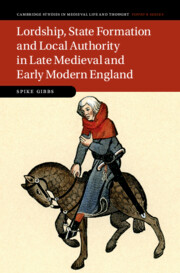
BOOK: Spike Gibbs, Lordship, State Formation and Local Authority in Late Medieval and Early Modern England (Cambridge: Cambridge University Press, 2023). ISBN: 9781009311830


ABOUT THE BOOK

Providing a new narrative of how local authority and social structures adapted in response to the decline of lordship and the process of state formation, Spike Gibbs uses manorial officeholding – where officials were chosen from among tenants to help run the lord's manorial estate – as a prism through which to examine political and social change in the late medieval and early modern English village. Drawing on micro-studies of previously untapped archival records, the book spans the medieval/early modern divide to examine changes between 1300 and 1650. In doing so, Gibbs demonstrates the vitality of manorial structures across the medieval and early modern era, the active and willing participation of tenants in these frameworks, and the way this created inequalities within communities


ABOUT THE AUTHOR

Spike Gibbs is Junior Professor for the Economic History of the Middle Ages at the University of Mannheim. His writing on manorial officials, felony forfeiture and managing stray animals has been published in journals such as the Journal of British Studies and the English Historical Review. This is his first book.


TABLE OF CONTENTS

Introduction

1. The changing role of manorial officers and manor courts

2. Manorial officeholding and selection processes: participation or restriction?

3. Manorial officeholding and unfreedom

4. Manorial officeholding and village governance: misconduct and landscape control

5. State formation I: the parish

6. State formation II: vills, quarter sessions and constables

Conclusion

Appendix 1: Categorising presentments

Appendix 2: Identifying individuals

Appendix 3: Population estimates.


More information can be found here.

17 August 2023

BOOK: Ermanno ORLANDO, Matrimoni medievali. Sposarsi in Italia nei secoli XIII-XVI (Rome: Viella, 2023). ISBN: 9791254692332

(Image source: Viella Editore)


ABOUT THE BOOK

Prima che il concilio di Trento (1563) lo codificasse rigidamente, nel basso medioevo il matrimonio mantenne a lungo una natura laica, mutevole e versatile, caratterizzata da una grande variabilità di pratiche e modelli. Pare quindi più opportuno parlare di matrimoni al plurale, abbandonando la visione univoca dell’istituto affermatasi solo dopo Trento.

Nel volume si farà, pertanto, ampio riferimento non solo ai matrimoni legittimi e codificati, ma anche all’esteso ventaglio di quelli incerti e irregolari, come i matrimoni a tempo, le unioni di fatto, i matrimoni plurimi, le convivenze more uxorio o i rapporti concubinari; si passeranno in rassegna le diverse forme di unioni trasgressive, dal ratto all’adulterio, dai matrimoni finti e simulati sino a quelli violenti e forzati; si rifletterà, infine, sulle forme proibite o a stento tollerate, come i matrimoni interconfessionali, la promiscuità interreligiosa e le unioni con gli esclusi e i marginali.


ABOUT THE AUTHOR

Ermanno Orlando insegna Storia medievale nell’Università per Stranieri di Siena. Fra le sue monografie ricordiamo Altre Venezie. Il Dogado veneziano nei secoli XIII e XIV (Venezia 2008); Sposarsi nel medioevo (Roma 2010); Migrazioni mediterranee (Bologna 2014); Venezia e il mare nel Medioevo (Bologna 2014); Strutture e pratiche di una comunità urbana. Spalato, 1420-1479 (Venezia-Wien 2019); Le repubbliche marinare (Bologna 2021); Medioevo migratorio (Bologna 2022).


TABLE OF CONTENTS

Prefazione

1. Introduzione

1. Paradigmi matrimoniali

2. Altre fonti, altri matrimoni

3. Una nuova stagione storiografica

4. Il matrimonio pretridentino: una pluralità di modelli

5. Variabili matrimoniali

2. Tra disciplinamento e indisciplina: il matrimonio pretridentino

1. Consensus facit nuptias

2. Il matrimonio consensuale nel diritto canonico

3. L’affermazione della teoria consensualistica

4. Un matrimonio aformale?

5. Il matrimonio nel diritto civile e la centralità della dote

6. La questione dei matrimoni clandestini

7. Verso il matrimonio formale: il concilio di Trento

3. Tempi, spazi e riti del matrimonio

1. Il modello ecclesiastico: storia di un sostanziale fallimento

2. La dimensione laica, familiare e comunitaria del matrimonio

3. Il modello notarile di matrimonio

4. Pubblico e celebrativo: il matrimonio aristocratico

5. Altre variabili matrimoniali

4. Dai preliminari alla scelta: mediazioni, modelli e reti

1. La funzione della famiglia e del matrimonio

2. Mediazioni e reti

3. La dimensione circolare e collettiva della mediazione

4. La scelta della sposa

5. Matrimoni incerti, irregolari e trasgressivi

1. Unioni incerte e controverse

2. I matrimoni a tempo e le separazioni di fatto

3. I matrimoni plurimi e in successione

4. I delicta carnis: ratto, adulterio e stupro

5. Adulterio e stupro nelle prassi giudiziarie

6. I surrogati del matrimonio (o quasi matrimoni)

1. Le convivenze more uxorio

2. I rapporti concubinari

3. Il concubinato tra tolleranza e reato

4. Il concubinato d’élite

7. Seduzione e finzione

1. Il finto matrimonio a scopo di seduzione

2. Imposture e raggiri

3. Simulazione e gioco

4. Il matrimonio delle beffe

8. Spose bambine

1. Pubertà e matrimonio

2. Tra infanzia e adolescenza: i signa indubitate pubertatis

3. La maturità psichica e biologica

4. Il matrimonio tra bambini

9. Matrimoni forzati e violenza domestica

1. Nozze forzate, nozze combinate

2. L’annullamento del vincolo propter metum

3. La violenza coniugale

4. Le sevizie come causa di separazione

10. I matrimoni misti

1. Le unioni interconfessionali

2. Cristiani orientali e matrimonio

3. Confronti

4. Affinità

5. L’impatto disciplinante del concilio di Trento

11. Il fascino delle unioni proibite

1. Il matrimonio interdetto: gli infedeli

2. Separazioni, matrimoni di fatto e conversioni

3. Promiscuità e trasgressioni

12. Marginalità e matrimonio

1. Il matrimonio con gli schiavi

2. Legami irregolari e surrogati

3. Il matrimonio con i lebbrosi

Bibliografia

Indice dei nomi e dei luoghi


More information can be found here.

12 April 2023

JOURNÉE D'ÉTUDES: La Principauté de Liège: une histoire finie? - Centre Liégeois d'Histoire du Droit - Liège, 19 avril 2023


Une journée transdisciplinaire pour dresser un bilan et envisager des perspectives dans le champ des disciplines historique et juridique

Depuis plusieurs années, la Principauté de Liège (IXe s. – 1795) fait l’objet de nouveaux travaux de recherche dans le domaine des relations internationales, du droit ou encore de l’économie (DE-MOULIN, 2022 ; DRECOURT, 2019 ; LAGASSE, 2018). De nouveaux projets viennent continuellement améliorer nos connaissances dans cette thématique (PUCCIO, 2019). Pourtant, l’histoire de Liège a connu des moments de tensions (GENIN, 2022).

La journée d’étude proposée par le Centre liégeois d’histoire du droit et l’Unité de Recherche Groupe étude sur le 18e siècle, les Lumières et les Révolutions propose de parcourir les projets passés, en cours et futurs afin de dresser un bilan des découvertes dans le champ de l’histoire liégeoise. Plusieurs questions viennent alimenter la réflexion. Quels sont les enjeux de l’histoire de la Principauté de Liège dans la recherche actuelle ? Quelles avancées et découvertes restent à faire ? Quelles avancées ont été réalisées depuis ces dernières années ?

L’objectif de cette journée d’étude est donc triple. Elle vise à pointer les enjeux spécifiques de la recherche sur la Principauté de Liège dans le milieu scientifique, à dresser le bilan historiographique dans les domaines du droit et de l’histoire concernant la Principauté de Liège et enfin à développer les champs en cours d’exploration en histoire liégeoise.

Programme

8h45 : Accueil des participant·es

9h15 : Mot d’ouverture par Vincent GENIN, docteur en histoire

10h : Communication par Christophe MASSON, chargé de recherche FNRS en histoire du moyen-âge tardif

10h45-11h : Pause

11h-11h45 : Communication par Wim DECOCK, professeur d'histoire du droit et co-président du Centre Liégeois d'Histoire du Droit

11h45-12h30 : Communication par Benoït LAGASSE, professeur invité de la Faculté de Philosophie et Lettres, docteur en Droit

12h30-13h30 : Pause de midi

13h30-14h15 : Communication par Laetizia PUCCIO, chargée de recherche aux Archives de l’État et co-présidente du Centre Liégeois d'Histoire du Droit

14-15-15h: Communication par Charlotte SÉAUX, doctorante en droit constitutionnel

15h-15h15 : Pause

15h15-16h : Communication par Marie-Sophie SILAN, aspirante FNRS en histoire du droit liégeois

16h-16h45 : Communication par Antoine LECLÈRE, doctorant en Histoire

16h45-17h30 : Mot de fermeture par Philippe RAXHON, co-président de l'UR GEDLER, professeur en histoire contemporaine et critique historique

17h30-18h : Clôture de la journée


Une journée soutenue par l'Unité de recherche Groupe d'étude du 18e siècle, des Lumières et des Révolutions (GEDLER) de la Faculté de Philosophie et Lettres ainsi que par le Centre liégeois d'histoire du droit, de l'UR CITÉ (Faculté de Droit, de Science politique et de Criminologie) et qui profite d'un soutien logistique des Archives de l'État de Liège.

20 October 2022

BOOK: Susan LONGFIELD KARR, Jus Gentium in Humanist Jurisprudence. On Justice and Right (Leiden: Brill, 2022). ISBN: 978-90-04-52366-1, €130.38


(Source: Brill)

ABOUT THE BOOK

Series: History of European Political and Constitutional Thought, Volume: 9

This book explores how the fathers of humanist jurisprudence contributed to the emergence of ius gentium as the common law not simply of Europe, but of all mankind, in the early sixteenth century. They did so by so thoroughly reinterpreting terms, idioms, and categories preserved within Justinian’s Digest that they fundamentally transformed them to address sources and limits of political and legal authority in the broader context of early-modern state formation.

In the process, they offered theories of universal jurisprudence grounded in the attributes and actions of man and states that anticipated some of the most salient features of modern sovereignty and rights. Theories that we tend to identify with post-Reformation political and legal thought, rather than the early Renaissance.


ABOUT THE AUTHOR

Susan Longfield Karr, Ph.D. (2008), University of Chicago, is an Assistant Professor of History at the University of Cincinnati, where she teaches courses on the European Renaissance, the intersections of political and legal thought, the history and development of rights, and Early Modern Europe.


TABLE OF CONTENTS

Acknowledgements

List of Figures

Introduction Historical Imagination, Collective Memory, and the Historicization of Roman Law

part 1
Guillaume Budé: Jus, Justice, and Dignity
1Setting the Scene Justinian’s Digest and University-Based Jurisprudence
 1 Corpus iuris civilis: Composition and Transmission

 2 Law before Lawyers

 3 Reform, Revolution, and Rediscovery

 4 Modus docendi: The Methods of the Schoolmen and the Advent of the Studia humanitatis


2Excavating, Restoring, and Redefining Jus at the Foundations of Humanist Jurisprudence
 1 A Humanist, Not a Lawyer

 2 The 1508 Annotationes: Answering—and Amplifying—the Call for Change

 3 Hidden in Plain View: Radical Departure, Traditional Scholarship

 4 Splitting Good from Fair: Accursius’ Error and Budé’s Entanglement

 5 The Proper Method for Studying and Interpreting the Law

 6 Jus as a Defining Characteristic of Justice and Man qua Man

 7 Jus Has Been Given to All Mankind

 8 Significance of Budé’s Re-interpretation of Jus and Jus Gentium


part 2
Ulrich Zasius: Jus, Jus Gentium, and Rights
3Re-defining Jus to Restore Justitia Ulrich Zasius’ Methods in Word and in Action
 1 Humanist First, a Lawyer Second

 2 Combining Methods: Historicizing Law to Observe Justice

 3 In Praise of the Law: A True and Useful Science

 4 Theory Meets Practice: Zasius Explains His Methods

 5 Ordinary Lecture, Exceptional Interpretation

 6 ‘What Is Justice; What Is Jus?’

 7 The Historical Necessity for and the Moral Authority of Lawyers and Jurists

 8 ‘In What Manner Is Justice Divided?’

 9 Methods in Action: Ex fontibus ad initium


4Breaking with Tradition Jus Gentium as a Source of Universal Rights and Obligations
 1 Disentangling Jus Gentium, Defining Natural Law

 2 Defining Natural Law and Jus Gentium

 3 The First Three Qualities of Natural Law: Instruction, Sociability, and Preservation

 4 Jus Gentium as the Fourth Quality of Natural Law

 5 Before and Beyond the Lectern: Pairing Zasius’ Lecture and Lucubrationes

 6 Elevating Jus Gentium

 7 Distinct, but Not Divided: The Double-Aspect of Jus Gentium

 8 Universal, but Not Unlimited: The Right to Resist and the Power to Punish

 9 Jus Gentium as a Cache of Universal Rights

 10 Jus Gentium as a Cache of Universal Obligations

 11 The Limits of Slavery

 12 The Trouble with Tyranny

 13 Implications of Zasius’ Re-interpretation of Jus Gentium


part 3
Andrea Alciati: Jus, Violence, and Imperium
5Self-Evident Truths and Demonstrable Facts Power, Politics, and Persuasion
 1 Lawyer First, Humanist Second

 2 Law and Violence: Alciati’s Career in Context

 3 The Art of Justice, the Power of Speech, and the Necessity of Jurists


6The Tenacity of Violence and the Parity of Right Alciati’s [Re-] Interpretation ofJus, Jus Gentium, and Natural Law
 1 Equality Through Enmity: War-Making as State-Making

 2 Changing the Subject: Alciati’s Radical Departure from His Humanist Peers

 3 The Trouble with Imperium: Alciati’s Novel Departure from His Scholastic Predecessors

 4 Jus as Necessity in Action

 5 Homicide, Commerce, and War: Meticulous Meditations on Proximate and Remote Cause

 6 Slavery as a Marker of Imperium

 7 Rulers and Brigands; Superior and Inferior Princes

 8 Universal Empire Rejected

 9 Imperium Interrupted

 10 Contests Among Equals: Dueling as an Analogy to War

 11 The Practical Significance of Alciati’s Novel Re-interpretation of Jus Gentium in Context

 12 Jus as a Marker of Equality in Humanist Jurisprudence


Conclusion The Re-formation of Europe and the Turn to Jus Gentium

Appendix: Select Emblems


Bibliography

Index


More information with the publisher.


22 September 2022

BOOK: Scritti di Diego QUAGLIONI - scelti e raccolti da Lucia Bianchin, Giuliano Marchetto, Cecilia Natalini, Christian Zendri (Foligno: Il Formichiere, 2022). 2 volumes, pp. 1419, 90,00 €


ABOUT THE BOOK

Lucia Bianchin, Giuliano Marchetto, Cecilia Natalini e Christian Zendri hanno raccolto una parte dei lavori di Diego Quaglioni in due volumi cartonati con sovra coperta a colori, f.to 16,8×24,0 cm, pp. XLIX-1370
La presente raccolta di scritti, apparsi in svariate sedi scientifiche in un arco di tempo che va dalla seconda metà degli anni Settanta fino ai giorni nostri, rappresenta solo una parte dei lavori di Diego Quaglioni. La scelta, di fronte alla vasta produzione scientifica dell’Autore, è stata orientata dal desiderio di offrire ai lettori un panorama di ricerche che fin dai primi studi era rivolto alle fonti dottrinali caratterizzanti lo sviluppo della storia giuridica occidentale, con un’estensione che dal Tardo Antico giunge all’età contemporanea, ma che ha il suo centro nel lungo Medioevo del diritto, con attenzione costante per il problema del rapporto tra giustizia e potere, come lascito fondamentale dell’età intermedia al mondo moderno.
Con questa raccolta, preparata nell’occasione del suo settantesimo compleanno, si è inteso offrire un momento di riflessione che supera nel suo insieme i singoli contributi e che mette in rilievo i motivi comuni di una lunga esperienza di ricerca nel confronto con le altre discipline storiche.

ABOUT THE AUTHOR
Diego Quaglioni (Tempio Pausania, 1951) è stato ordinario di Storia delle dottrine politiche nell’Università di Sassari e di Storia del diritto medievale e moderno nell’Università di Trento, dove ha diretto il Dipartimento di Scienze Giuridiche ed è stato preside della Facoltà di Giurisprudenza. Dopo gli studi liceali a Sassari e quelli universitari a Cagliari è stato borsista nell’Istituto italiano di studi storici (Napoli) e ricercatore presso il Consiglio Nazionale delle Ricerche e nell’Università di Roma “La Sapienza”. Ha tenuto corsi e seminari presso l’Université Paris I (Panthéon-Sorbonne), l’Ecole Normale Supérieure di Lione, il Max-Planck Institut für europäische Rechtsgeschichte di Francoforte, la Rechtswissenschaftliche Fakultät dell’Università di Salisburgo e la Faculté des Sciences Juridiques, Politiques et Sociales dell’Università di Lille, dove tiene un corso di Histoire des Systèmes juridiques européens. È stato inoltre visiting researcher presso la Robbins Collection a Boalt Hall (Berkeley, California) e ha tenuto lezioni e conferenze in America, in Cina e in tutta Europa. I suoi studi riguardano principalmente il pensiero giuridico e politico dell’età intermedia e della prima modernità. Tra i suoi lavori più recenti c’è l’edizione commentata della Monarchia di Dante nei “Meridiani” (2014, 2015) e negli “Oscar Classici” Mondadori (2021).

More information with the publisher.

02 September 2022

REMINDER ONLINE SEMINAR: on Martti Koskenniemi's book "To the Uttermost Parts of the Earth: Legal Imagination and International Power, 1300-1870" (Cambridge University Press, 2021) - 6th September 2022 - organised by the Journal of the History of International Law (on ZOOM)


On 6 September 2022, the Journal of the History of International Law is organising an online evening symposium (CET 20.00h-22.00) to celebrate the publication of Martti Koskenniemi's book 'To the Uttermost Parts of the Earth: Legal Imagination and International Power, 1300-1870 (Cambridge University Press, 2021). The event will take place on Zoom.


This is the program:


Chair: Dr. Inge Van Hulle (Max Planck Institute for Legal History and Legal Theory)


20.00h: Welcome by Prof. Randall Lesaffer (KU Leuven/Tilburg University) 

20.05h: Presentation of book by Prof. Martti Koskenniemi (University of Helsinki)

20.30h: Comments by Prof. Koen Stapelbroek (James Cook University): 'Commerce, capitalism and the law of nations'

20.45h: Comments by Prof. Jennifer Pitts (University of Chicago): 'The struggle between statehood and civil society'

21.00h: Comments by Prof. Wim Decock (UCLouvain): 'Theology and the justification of sovereignty and property'

21.15h: Response by Prof. Martti Koskenniemi

21.30h: Open discussion and questions


Please register by sending an email to: vanhulle@lhlt.mpg.de

29 August 2022

ONLINE SEMINAR: on Martti Koskenniemi's book "To the Uttermost Parts of the Earth: Legal Imagination and International Power, 1300-1870" (CUP, 2021) - 6 September 2022 - organised by the Journal of the History of International Law (on ZOOM)


On 6 September 2022, the Journal of the History of International Law is organising an online evening symposium (CET 20.00h-22.00) to celebrate the publication of Martti Koskenniemi's book 'To the Uttermost Parts of the Earth: Legal Imagination and International Power, 1300-1870 (Cambridge University Press, 2021). The event will take place on Zoom.


This is the program:


Chair: Dr. Inge Van Hulle (Max Planck Institute for Legal History and Legal Theory)


20.00h: Welcome by Prof. Randall Lesaffer (KU Leuven/Tilburg University) 

20.05h: Presentation of book by Prof. Martti Koskenniemi (University of Helsinki)

20.30h: Comments by Prof. Koen Stapelbroek (James Cook University): 'Commerce, capitalism and the law of nations'

20.45h: Comments by Prof. Jennifer Pitts (University of Chicago): 'The struggle between statehood and civil society'

21.00h: Comments by Prof. Wim Decock (UCLouvain): 'Theology and the justification of sovereignty and property'

21.15h: Response by Prof. Martti Koskenniemi

21.30h: Open discussion and questions


Please register by sending an email to: vanhulle@lhlt.mpg.de