Applications are now open for the Great Little Ideas: Corpus Christi Graduate Legal Research Course, which will take place at Corpus Christi College, Oxford, from 1 to 27 September 2026.
The research-led course is designed for graduate law students working on a PhD or equivalent legal research project and aims to support participants in developing a “Great Little Idea” — whether a chapter of a thesis, a broader doctoral theme, or another focused legal research question worth pursuing.
The course is a non-degree academic opportunity resulting in a certificate of completion and seeks to foster independent legal research through seminars, discussion, and engagement with Oxford’s intellectual environment.
Participants will benefit from:
seminars on research methods and the craft of legal scholarship delivered by College Law Fellows;
extensive access to Oxford library resources;
access to Corpus Christi College facilities; and
opportunities to engage with the broader academic atmosphere of Oxford.
The course further aims to strengthen participants’ abilities in:
- analysing and refining abstract legal questions;
- constructing and critically assessing complex arguments;
- advancing significant research and writing projects; and
- developing academic communication and presentation skills.
The participation fee is £375, while accommodation at a College property is available separately for £50.25 per night (inclusive of VAT).
Applications are open to graduate research students working on a PhD or equivalent legal topic. The organisers particularly encourage applications from candidates from underrepresented or disadvantaged backgrounds.
Applicants should submit:
- a short CV (maximum 4 pages), and
- a statement of up to 500 words describing their “Great Little Idea” and explaining why the Oxford course would be an appropriate setting for its development.
The deadline for applications is Monday, 8 June 2026. Applications and informal inquiries should be directed to Professor Matt Dyson (matthew.dyson@law.ox.ac.uk).
More information is available via the official announcement by Corpus Christi College, Oxford.
Search
03 June 2026
CALL FOR APPLICATIONS: “Great Little Ideas” – Corpus Christi Graduate Legal Research Course (Oxford: Corpus Christi College, September 2026)
07 May 2026
CALL FOR APPLICATIONS: Alan Rodger Postgraduate Visiting Researcher (Glasgow: University of Glasgow, DEADLINE 26 JUN 2026)
The Alan Rodger Endowment at the University of Glasgow invites applications for the post of Alan Rodger Postgraduate Visiting Researcher, tenable for one semester at the University of Glasgow School of Law, during the 2026/27 academic year. The successful applicant will reside in Glasgow for the duration of the post, and will receive full access to the physical and electronic resources of the University’s libraries, as well as a stipend of £2,000. The successful applicant will be encouraged to speak to students and at research seminars. The successful applicant will be working towards a Ph.D. (or equivalent research doctorate) in Roman law or legal history, and will not have earned a Ph.D. (or equivalent research doctorate), nor attained a permanent academic appointment, by the time he or she takes up residence in Glasgow. Within the broad fields of Roman law or legal history, any subject is acceptable, but please be aware that the successful applicant is expected to conduct research in areas where the resources of the University of Glasgow may profitably serve. Good facility with spoken English is desirable but not required. Candidates from the University of Glasgow are not eligible.
Procedure:
Full information on the post is available from the flyer at the link to the right. Briefly, an application includes: – a cover letter; – a curriculum vitae; and – a piece of written work (5,000 – 10,000 words). The cover letter should give (1) the applicant’s name, postal address, and email address; (2) the expected date of completion of the doctorate; (3) a description of the applicant’s area of research (ca. 500–1,000 words); and (4) the names, and contact details, of two persons who are willing to serve as referees. Applicants should not submit references themselves, nor ask their referees to supply them. Applications will be reviewed by an academic panel.
Materials are submitted electronically to Prof E. Metzger at ernest.metzger@glasgow.ac.uk, with the subject line ‘Alan Rodger PVR’. The deadline is 26 June 2026.
(source: Glasgow University)
24 April 2025
CALL FOR APPLICATIONS: Copy Editors (Comparative Legal History) [DEADLINE 30 MAY 2025]
Journal Comparative Legal
History
Call for Copy Editors
Deadline: 30 May 2025
The
European Society for Comparative Legal History (ESCLH) is seeking applications
for the position of Copy Editor of its flagship journal, Comparative Legal History. A maximum of three Copy Editors will be
appointed.
Evidence
of scholarly ability, willingness to learn quickly, and membership (or a
commitment to become a member if appointed) of the ESCLH are requirements. Full
training in the journal's processes will be provided as needed.
You
would contribute to the advancement of comparative legal history as part of a
supportive and dedicated team.
The
journal is an official academic forum of the ESCLH. It was first published in
2013 and aims to offer a space for the development of comparative legal
history. Based in Europe, it welcomes contributions that explore law in
different times and jurisdictions from across the globe.
Applications,
with a brief cover letter and short CV (no more than 4 pages), should be sent
to Merike Ristikivi, (Vice-President of the ESCLH), merike.ristikivi@ut.ee, by 30 May 2025.
The
ESCLH particularly welcomes applications from people underrepresented in
academia generally, and in the ESCLH and the journal particularly.
This
position is not paid.
04 March 2024
PRIZE: Human Solvency Historical Research Prize 2024 (DEADLINE: 15 MAR 2024)
The Fondazione Istituto Internazionale di Storia Economica “F. Datini” bans the: Human Solvency Historical Research Prize 2024
CALL - REGULATION
1. The prize aims to enhance the historical research of scholars who focus their investigations on the question of economic solvency considered in all its implications, starting from those of the languages, the theological, philosophical and legal lexicons that have structured concepts key such as poverty, common good, public debt, taxation, monetary institution. The intention is to promote a long-term approach by evaluating research and analysis of historical phenomena that developed between the 11th and 18th centuries. In the specific section of the website of the Fondazione Istituto Internazionale di Storia Economica “F. Datini” contains further insights into the research topics covered by the award.
2. The publications and texts of the works may be in one of the official languages of the Fondazione Istituto Internazionale di Storia Economica “F. Datini” (Italian, French, English, Spanish, German) and must be received by 15 March 2024. Unpublished texts must be sent in PDF format while published volumes must be sent in both paper and PDF format. The products must be accompanied by the curriculum vitae and any other scientific title that the candidate deems useful to attach. The address to which to send the copies in PDF format is the following letizia@istitutodatini.it, while the paper format must be sent to the address of the Foundation via Ser Lapo Mazzei 37, 59100 Prato (Italy). In case of delay in the delivery of the paper copy, the date of shipment will be valid.
3. The prize amounts to € 10.000,00 (the amount must be declared for taxation by the person receiving it) paid in a single payment at the time of the award ceremony.
4. Only completed research, prepared in its final version or already published in the period starting from 1January 2022 and until the expiry date of the call for proposals, 15 March 2024 (criterion adopted for this first edition) may be submitted.
The members of the Prize Jury are: Erik Aerts (University of Leuven), Guido Alfani (University of Milan), Philippe Bernardi (University of Paris), Bruno Callegher (University of Trieste), Hilario Casado Alonso (University of Valladolid), Markus A. Denzel (University of Leipzig), Maria Diez Yañez (University Complutense Madrid), Miriam Davide (University of Trieste), Maria Teresa Dolso (University of Padua), Paolo Evangelisti (University of Lleida), Luca Fantacci (State University of Milan), Riccardo Finozzi (Bank of Italy), Antoni Furió (University of Valencia), Roberto Lambertini (University of Macerata), Clement Lenoble (CNRS-CIHAM Lyon-Avignon), Maryanne Kowaleski (University of Fordham, New York ), Angela Orlandi (University of Florence), Maria Clara Rossi (University of Verona), Petra Schulte (University of Trier), Alessandro Silvestri (University of Salerno), Naresh Singh (University of Ottawa), Lorenzo Tanzini (University of Cagliari), Giacomo Todeschini (independent researcher). The Jury is coordinated by the General Secretary of the Prize Paolo Evangelisti (University of Lleida).
5. The Jury will decide by April 23, 2024 which research will be rewarded, sending a communication to the winner.
In the opinion of the Commission, the special mention may be approved for a second research deemed worthy of attention. The work in question does not receive any monetary prize. The Commission's judgment is unquestionable; it may also decide not to award the prize if none of the submitted works has been judged adequate.
6. The Commission may also consider publications not sent but reported by qualified scholars to the Commission. 7. Awarding of the Prize. The prize will be awarded at the opening ceremony of the 55th Study Week entitled “La mobilità sociale nelle società preindustriali: tendenze, cause ed effetti (secc. XIII-XVIII) • Social Mobility in pre-industrial societies: trends, causes and effects (13th-18th centuries)”, organized by the "F. Datini" Foundation, on May 12, 2024.
Further information can be found here.
22 November 2023
CALL FOR APPLICATIONS: Atelier doctoral "The ‘Intention’ in Western Theological-Legal Culture" - École française de Rome, 26 février-2 mars 2024 [deadline 20/12/2023]
CALL FOR APPLICATIONS
Atelier doctoral
The ‘Intention’ in Western Theological-Legal Culture
École française de Rome
26 février-2 mars 2024
The École française de Rome, in collaboration with the LIER-Fonds 'Yan Thomas' of the École des hautes études en sciences sociales, the Department of Law of the University of 'Roma Tre', the ARN CiSaMe project ('Circulation des savoirs médiévaux au XIIe siècle') and the ‘CIHAM | UMR 5648 | Histoire, Archéologie, Littératures des mondes chrétiens et musulmans médiévaux’, is organising a doctoral seminar in Rome from 26 February to 2 March 2024 on The ‘Intention’ in Western Theological-Legal Culture.
The advent of Christianity marked from the earliest centuries a profound appreciation of the inner human sphere and a new framing of the dialectic between interiority and exteriority. The fundamental contribution coming from Late Antique monastic culture, which by exalting the private dialogue between man and God pushed, on the one hand, towards the identification of the soul as the true ground of divine judgement, and on the other towards an exaltation of the body as the testing ground of spiritual values, encouraged an early relection on these themes by the main Church Fathers. The invisible sphere of intention - enlivened by the influence exerted by the neoplatonic perspective on patristic production - experienced an unprecedented valorisation since Late Antiquity, stimulating interest in new questions and challenging previous certainties. Were women and men to be judged for their thoughts or their actions? What margin of freedom could be recognised to subjective intention for the regulation of relationships on this Earth? How did the subjective will interact with the normative dimension? Did the law continue to represent an objective and immutable sphere or could it be modified as a consequence of the enhancement of the intentional sphere?
Reflection on these themes, which recurred incessantly in early medieval thought, experienced an extraordinary intensification in the 12th century. The exaltation of the inner dimension and the profound devaluation of the outer one, preached by Abelard in France in the field of theology, met and clashed with the birth of learned law, thanks to the rediscovery of the Justinian Corpus Iuris Civilis and the blossoming of Canon Law in Italy and in Europe. If on the one hand the power of the intentional dimension contaminated European legal thought, marking the definitive entry of the valorisation of intention into medieval and early modern law, the confrontation with classical culture, where the spiritual dimension was framed in radically different terms, kept alive a dialectic that continued to be unsolved in the centuries that followed. The Atelier aims to extend the medieval perspective to the most current challenges that the subject of intention poses to the Humanities and Social Sciences.
The course of the doctoral seminar will be as follow: a presentation by the organisers (Emanuele Conte, Sara Menzinger, Paolo Napoli) will open the proceedings on Monday 26/2/2024 morning, which will continue throughout Monday, Tuesday and Friday with the presentation of the doctoral students’ research (approx. 20 minutes for each presentation).
Presentations must be held in one of the three languages accepted by the Atelier: Italian, French and English. Wednesday 28/2/2024 will be entirely devoted to seminars by specialists, who will tackle the theme of intention at the intersection of theology and law, exploring three lines: private law (debate between the free will of the parties and moral values/legal clauses in the history of contracts and wills); criminal law (imputability of intentions, liability for acts performed but not intended, or for acts intended but not carried out); public law, (dialogue between the subjective intention of the legislator and the objective intention of the law, authentic interpretation).
The École française de Rome offers 12 grants for young researchers (PhD students and post-docs from the European Union and other countries) who have carried out or are still carrying out research on the themes and problems at the heart of the seminar. The scholarships cover the costs of the stay in Rome; participants will cover their travel expenses.
APPLICATION
Applicants must send in PDF format:
- a covering letter explaining the reasons for submitting an application;
- a brief curriculum vitae specifying language skills and any publications;
- a summary of the project (2 pages, ca. 6000 characters);
- a letter of support
SENDING THE APPLICATION FILE
Applications files must be submitted online by 20/12/2023 at 4.00p.m to the following address:
⚠ _ATTENTION: no application can be cancelled after submission.
⚠ _ATTENTION: to avoid any technical problems, be sure not to submit your application at the last moment.
The Scientific Committee reserves the right to welcome applicants not selected to benefit from one of the fellowships, who will therefore be self-funding. Applicants will be selected on the basis of their project and will be notified of the grant by January the 10th 2024. After notification, by February the 5th 2024, they shall provide:
- the text of their presentation (ca. 10 pages, in one of the following languages: Italian, French or English);
- an abstract of at least 3 pages in Italian, French, or English.
Selected applicants are expected to attend the sessions assiduously. Their presentation will be commented by an expert in the field before the general discussion. The presentations deemed of the highest quality may be submitted to the editors of the École’s review, Mélanges de l’École française de Rome.
Scientific Committee:
Emanuele Conte
Sara Menzinger
Paolo Napoli
Clément Lenoble
Vivien Prigent
02 May 2023
CALL FOR COPY EDITORS: Comparative Legal History (DEADLINE 1 JUN 2023)
The European
Society for Comparative Legal History (ESCLH) is seeking applications for the
position of Copy Editor of its flagship journal, Comparative Legal History. A maximum of three Copy Editors will be
appointed.
Evidence of
scholarly ability, willingness to learn quickly, and membership (or a
commitment to become a member if appointed) of the ESCLH are requirements. Full
training in the journal's processes will be provided as needed.
You would
contribute to the advancement of comparative legal history as part of a warm,
supportive, and dedicated team.
The journal
is an official academic forum of the ESCLH. It was first published in 2013 and
aims to offer a space for the development of comparative legal history. Based
in Europe, it welcomes contributions that explore law in different times and
jurisdictions from across the globe.
Applications,
with a brief cover letter and short CV (no more than 4 pages), should be sent
to Merike Ristikivi, (Vice-President of the ESCLH), merike.ristikivi@ut.ee, by
1 June 2023.
The ESCLH
particularly welcomes applications from people underrepresented in academia
generally, and in the ESCLH and the journal particularly.
This
position is not paid.
12 October 2022
CALL FOR CONTRIBUTIONS : International Databasa on Customary Law Project
We received a message from Professor Sylvain
Soleil (Univ Rennes 1) regarding the International Databasa on Customary Law
Project.
Dear colleagues, Dear friends,
Today we are officially launching the
International Database on Customary Law project, which is funded by the French
Institute for Studies and Research on Law and Justice. This IDDLR project
consists of :
1/ to provide the public with free online
access to the maximum number of customary sets published in the world to date
2/ to accompany this online access with a vast
epistemological, international and interdisciplinary reflection on the
phenomena that are at work when customs, which are by nature evolving and oral,
are put in writing, and therefore fixed, controllable and partly distorted
3/ to bring together researchers from all over
the world around this dual documentary and scientific challenge
Summary :
Anthropologists and legal historians agree on
the fact that all the civilisations of the world have, yesterday, the day
before yesterday, or today, adopted a traditional legal system that has been
classified as "customs". Several tens of thousands of customary
systems have thus developed on earth, some of which continue to be applied on
the fringes of or in addition to the modern legal system: in Asia, Oceania,
Africa, North America and Latin America. By their very nature, these systems
should only be known experimentally, since they have most often developed
orally, thanks on the one hand to precepts shared by communities and their
leaders, and on the other hand to imitations of foreign norms and judicial
precedents which, in settling disputes, modify, if not the rule, at least its interpretation.
However, the development of writing has captured the traditional, oral and
customary phenomenon for various political, legal or sociological reasons.
This, on the one hand, makes it possible not only to know the content of
ancient and current customs, to exploit them, to study them and to compare
them. On the other hand, it has profoundly modified the very concept of
customs: they are now fixed and formalised by written signs.
For more info on the project as well as
expressions of interest, kindly reach out to Professor
Soleil.
31 May 2022
CALL FOR APPLICATIONS: Turin Humanities programme, “Enlightenment legacy: the rights of man in a global perspective” (1-3 SEPTEMBER 2022, Turin, deadline 20 JUNE 2022)
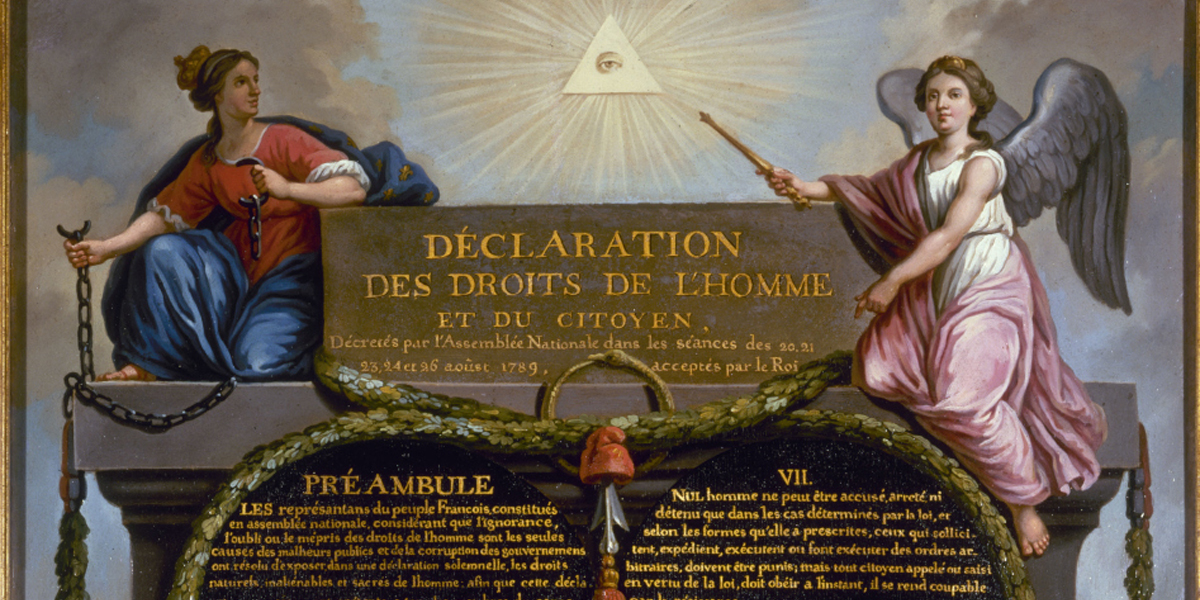
The Turin Humanities Programme and Fondazione1563 are pleased to invite postgraduate students and early career researchers to submit their applications to the Summer School “Enlightenment legacy: the rights of man in a global perspective”.
The Summer School intends to elucidate, from a global perspective, a fundamental – although often neglected – aspect of the legacy of the Enlightenment to better understand its enduring and controversial presence over time in the fields of politics, society, law, and economics.
Namely, the Summer School will focus on the political and constitutional language of the rights of man, seen as the most lasting legacy of the cultural revolution through which the Enlightenment changed the course of global history, acting as a “laboratory of modernity”.
The Summer School will engage with the Enlightenment’s transformation of the old moral concept of natural rights into the modern political language of the “rights of man” and the ambitious Enlightenment project of bringing about the constitutionalization of the rights of man as part of a modern politics of emancipation that began well ahead of the French Revolution.
Moreover, the Summer School will explore the controversial affirmation and metamorphoses of the Enlightenment’s culture of the rights of man in a global context throughout the Nineteenth and Twentieth centuries. By so doing, the Summer School aims at shedding light on the Enlightenment’s relevance to deal with issues raised by the contemporary evolutions of global constitutionalism and governance, that still require to be addressed.
The THP Summer School provides a forum for postgraduate students and early career researchers in the field of humanities and the social sciences (history, philosophy, law, economics, political science and international relations) to engage with the most up-to-date academic debates and global historiographical currents on the Enlightenment and its cultural, political and legal legacy.
We encourage applications from researchers with a strong interest in human rights/rights of man and woman/natural rights in an historical, global and interdisciplinary setting. In particular, but not limited to:
- constitutions and the constitutionalization of human rights
- the development of representative democracy
- ancient and modern republicanism
- political economy and commerce
- the law of nations and international law
- race, slavery, colonialism
English will be the default language of the Summer School.
The Summer School programme includes keynote lectures of Professor Nicholas Cronk (Voltaire Foundation, University of Oxford), Professor Dan Edelstein (Stanford University), Professor Serena Ferente (University of Amsterdam), Professor Vincenzo Ferrone (University of Torino), Professor Franco Motta (University of Torino), Professor Céline Spector (Sorbonne Université), Giovanni Bietti (composer, pianist and musicologist), early career researchers’ presentations of original manuscripts/book projects, workshops and roundtable discussions.
To foster dialogue between senior and young scholars, the Summer School offers its participants a unique opportunity to contribute to the broader discussion on the human rights theme with their own ideas and to test their research.
Successful applicants will also have the chance to present their papers in panel sessions which will be followed by a Q&A led by a panel discussant.
The full call for application can be found here.
25 May 2022
CALL FOR APPLICATIONS: Catania Young Investigator Training Program (YITP) | Visiting fellowships 2022 (Deadline 1/6/2022)
CATANIA YOUNG INVESTIGATOR TRAINING PROGRAM | YITP*
CALL FOR APPLICATIONS:
VISITING FELLOWSHIPS 2022
with the contribution of
ASSOCIAZIONE DI FONDAZIONI E CASSE DI RISPARMIO ITALIANE SpA (ACRI)
(deadline for applications: June 1st 2022)
The Young Investigator Training Program (YITP) at the Department of Law of the University of Catania welcomes applications for 9 visiting fellowships to be awarded to early stage scholars of any nationality from any European (non-Italian) or extra-European academic institutions (with preference to Ukrainian or other nationalities under international protection). The applicants shall be within 10 years of the award of the PhD or currently PhD students when starting the fellowship. Research proposals shall be related to the fields covered by the Catania YITP, namely international law, EU law, history of international law and legal history of European integration. The fellows will be hosted by the University of Catania Law Department (Prof. A. Di Stefano) or one of the academic institutions part of the 2022 YITP Network (UniBologna, Prof. F. Casolari; UniFerrara, prof. A. Annoni; UniFirenze, Prof. Micaela Frulli; UniNapoli Federico II, prof. F.M. Palombino; UniRomaTre, Prof. G. Bartolini; UniTrento, Prof. M. Pertile) and mentored by a faculty member from one of these research centers.
Please check the UniCt webpage for more details: IT Bando | ENG Call and submit all you application documents by accessing the UniCt on line application system
Further information about the Catania YITP can be found at
http://www.2020esilcatania.unict.it/acri-young-investigator-training-programme.html
Please contact us at risorse.internazionali@lex.unict.it and 2021esil.rf.catania@lex.unict.it
* Early Scholars Initiative sponsored by the UniCt Research Project ExTemPoRe | Exceptionally Bad Times. Memory, Policy and Regulation of Transnational Crisis and associated to the programme of the Catania ESIL Research Forum (Solidarity: the Quest for Founding Utopias of International Law, 15-16 April 2021).
30 November 2021
CALL FOR APPLICATIONS: Turin Humanities Programme - 2nd Call for Applications, 2021 - 2022-2024 Research Cycle: “Political Thought and the Body: Europe and East Asia, ca. 1100-1650” (deadline 15 February 2022)
TURIN HUMANITIES PROGRAMME
2nd CALL FOR APPLICATIONS - 2021
2022-2024 RESEARCH CYCLE
“Political Thought and the Body: Europe and East Asia, ca. 1100-1650”
INTRODUCTION
Fondazione 1563 per l’Arte e la Cultura della Compagnia di San Paolo (hereinafter “Fondazione 1563”) has since 2013 supported research and advanced training in the field of the humanities. In a wider effort to pursue this goal, in 2020 Fondazione 1563 has launched the Turin Humanities Programme, a research initiative that allows junior scholars to work on interrelated research projects under the guidance of especially appointed Senior Fellows. THP aims at promoting two-year research projects about relevant global history topics. Under THP in 2020 Fondazione 1563 launched a first call for application for research on the Enlightenment legacy: the rights of man in a global perspective.
SUBJECT OF THE CALL
Fondazione 1563 is now pleased to launch the second call for applications to award up to 4 two-year fellowships for advanced studies on Political Thought and the Body: Europe and East Asia, ca. 1100-1650.
The Director of Studies for this programme (2022-2024) will be Serena Ferente, Professor of Medieval History at the University of Amsterdam. For information and questions please email: info@fondazione1563.it
Applicants are invited to submit research projects of a maximum of 3000 words, plus bibliography. Projects are expected to engage with one or more aspects of the general research framework Political Thought and the Body: Europe and East Asia, ca. 1100-1650. Proposals are expected to focus on the symbolic use of the body in political discourse through the analysis of texts, objects and images produced in the Euro-Mediterranean and/or East Asian world during the period between ca. 1100 and ca. 1650. Proposals should also contain an illustration of the different project phases, the relevant sources and methodologies and the expected outcomes, which will be considered an integral part of the project itself. Details of the research framework can be found here.
In addition to the research proposal, applicants must submit their Curriculum vitae et studiorum and: - an article-length piece of writing, published or unpublished, which demonstrates innovative thinking (written in English, French, German, Italian, or Spanish) and - the contact information of two scholars familiar with the applicant’s work and willing to act as their referees (one of whom can be their PhD supervisor); only the referees of shortlisted candidates will be contacted by the Fondazione 1563. Successful candidates will carry out their individual research projects under the supervision of the Director of Studies. They will also collaborate to the organization of activities such as seminars, conferences, exhibitions and summer schools, during which they will be invited to share their research projects with a wider community of academics as well as students and the general public.
ELIGIBLE APPLICATIONS
The call is open to applicants holding a doctorate in History or in any discipline in the Humanities. Applicants who will be awarded their doctoral title before 31 July 2022 are also eligible to apply. Applicants should normally be within 7 years of the award of their Ph.D. They must be fluent in English, both spoken and written. English will be the working language of THP. There are no nationality requirements. Fondazione 1563 encourages applications from scholars of all backgrounds. We welcome diversity and are committed to creating an inclusive work environment.
FELLOWSHIP GRANTS
Each of the 4 Fellowships consists of an overall grant of € 50.000 (before taxes) to be paid according to the terms and conditions available here. The grant will last two years, starting on September 1, 2022 until August 31, 2024. These grants may not be held in conjunction with any other award. Fellows will be requested to reside in Turin for the duration of the fellowship and Fondazione 1563 will provide accommodation according to the terms and conditions available here. If the fellow is awarded any other grant during the THP fellowship, Fondazione 1563 reserves the right to withdraw and cancel the remaining part of the grant to be disbursed. For any further information on the grants please refer to the THP Terms and Conditions of Grant, that can be found here.
HOW TO SUBMIT A PROPOSAL
Applications must be submitted online by filling out the form available on the website of Fondazione 1563 at www.fondazione1563.it/application-form-thp-2021/ under THP/Call for applications/THP-2021. Applications submitted by other means will not be considered. For the application instructions please visit the following page.
Applications must be submitted by February 15, 2022 (11.00 PM CET).
EVALUATION CRITERIA
The Scientific Committee of the THP and the Director of Studies of the second research cycle of the THP will evaluate eligible applications according to the applicant’s qualifications and the quality and feasibility of the research project proposed. The committee will make its decisions on the basis of a comprehensive evaluation of the dossiers. The research proposals will be evaluated based on the following criteria (in no particular order): 1) coherence with the call and the research framework; 2) originality, quality, and scientific relevance of the research proposal; 3) clarity of the research questions, methods, and expected outcomes; 4) contribution to the geographical and chronological remit of the project; 5) appropriate planning in terms of research and implementation. Applicants shortlisted after the first selection will be contacted by email in order to arrange online interviews that will focus on the research proposal and the applicant’s curriculum. The interviews will be held in English and will take place remotely in early March 2022. Once the interview has been scheduled, it will not be possible to reschedule it. Candidates who do not attend the interview will be deemed to have withdrawn.
HOW THE FELLOWSHIPS ARE AWARDED
The fellowships will be awarded by the Scientific Committee of the THP, by the Director of Studies of the second research cycle and with the approval of the Board of Directors of Fondazione 1563. Successful applicants will be notified in writing via email and will be required to fill out and return the fellowship acceptance form, accepting the terms contained therein, within 7 working days from the notification. Candidates who do not return this form will be deemed to have withdrawn.
More information is available here.