Search

Showing posts with label enlightenment. Show all posts

05 June 2026

BOOK: Benoît CARRÉ, Distribuer l’argent du roi au XVIIIe siècle. La monarchie dévoilée (Villeneuve d'Asq: Presses universitaires du Septentrion, 2025), ISBN 978-2-7574-4486-3 [OPEN ACCESS]

(image souce: OpenEdition)


Abstract:

Under the Ancien Régime, the finances of the King of France were shrouded in secrecy until the famous Necker decided to publish estimates of the monarchy’s income and, above all, expenditure. The public then discovered the staggering amount of the pensions that Louis XVI was paying to a large proportion of the nobility. At the time of the Revolution, the National Assembly decided to investigate and revealed the way in which public funds derived from tax coercion had been used to subsidise courtiers. This book tells the story both of the investigation and of the object investigated. By describing for the first time, using unpublished archives, the uses of this social practice that linked the king to the nobility, the author casts a new light on the forces behind the final crisis of the Ancien Régime and traces the genesis of the first retirement system for the State civil service.

On the author:

Chercheur en histoire moderne, spécialiste de l’Ancien Régime et de la Révolution. Il est docteur de l’université de Lille depuis 2018. Distribuer l’argent du roi au xviiie siècle. La monarchie dévoilée est son premier livre.

Read the book here: DOI  10.4000/14c77.

01 June 2026

CONFERENCE: L’antiesclavagisme : un idéal cosmopolite ? (1730-1830) (Paris: Collège de France, 18-19 JUN 2026)


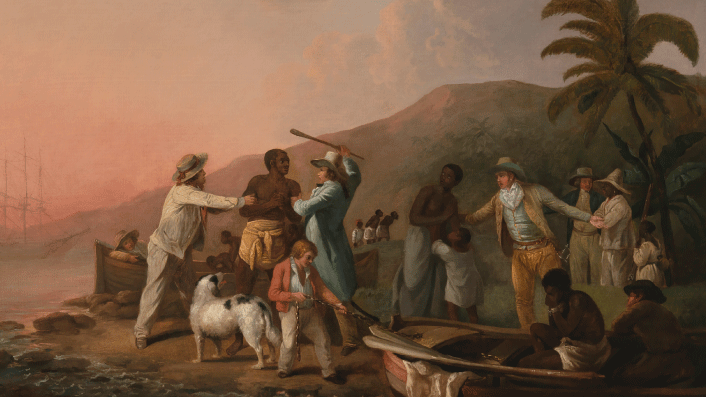
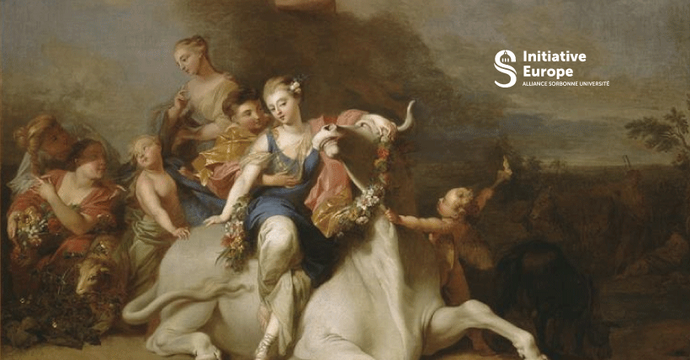
(image source: Georges Morland, Slave Trade (Execrable Human Traffick, or The Affectionate Slaves) c. 1788. Collection of the Smithsonian National Museum of African American History and Culture. Domaine public/Initiative Europe/Sorbonne)


Abstract:

liée à la mondialisation des échanges commerciaux et à l’expansion des empires coloniaux, la diffusion de l’esclavage colonial a contribué à remettre en question la pertinence du cadre national dans les débats politiques. Qu’il s’agisse de la révolution haïtienne ou de l’appel au boycott des produits coloniaux, la plupart des événements et des décisions politiques étaient pensés en fonction de leurs répercussions à l’échelle mondiale. Longtemps centrée sur le cas britannique, l’historiographie s’est progressivement ouverte à la dimension transnationale de la lutte contre l’esclavage colonial. Aujourd’hui, l’antiesclavagisme apparaît comme un mouvement d’ampleur mondiale, qui s’est diffusé non seulement en Europe et aux États-Unis, mais aussi dans les Caraïbes, en Amérique latine et en Afrique. La conscience et la dimension mondiale du combat contre l’esclavage sont-elles liées à la défense d’un idéal cosmopolite ? La question se pose d’autant plus que l’esclavage colonial et la traite, qui atteignent un point culminant à la fin du XVIIIe siècle, incarnent plus que tout autre phénomène les contradictions de l’expansion de l’horizon du monde. En effet, la domination et l’exploitation d’une partie de l’humanité par une autre semblent rendre impossible l’émergence d’une communauté mondiale, morale et politique, enracinée dans l’idée d’une commune humanité, qui est au coeur de l’idéal cosmopolite. Le colloque international, qui se tiendra les jeudi 18 et vendredi 19 juin 2026 (respectivement à la Bibliothèque nationale de France, site Richelieu, et au Collège de France), poursuit trois objectifs principaux. Il s’agira, premièrement, d’évaluer la place et les enjeux de la mobilisation de l’idéal cosmopolite dans les débats sur l’esclavage colonial. Deuxièmement, il conviendra d’analyser les contradictions internes de l’antiesclavagisme, entre la revendication de l’égale dignité de tous les êtres humains et une approche différenciée des processus d’émancipation, fondée sur une vision hiérarchisée du monde. Enfin, nous montrerons comment l’étude de la diversité des mouvements antiesclavagistes à travers le monde permet de défendre une approche plurielle du cosmopolitisme, qui rompt avec son identification exclusive à la tradition philosophique occidentale.


Speakers:

ACKERMANN-KOENIGS Mathilde, Bielefeld University | EHESS | IHA Paris BESSONE Magali, Université Paris I Panthéon Sorbonne CABOT Andy, Université Polytechnique Hauts de France – Valenciennes DARRIULAT Gabriel, Collège de France | Bibliothèque nationale de France FERRADOU Matthieu, Université Paris Nanterre HOQUET Thierry, Université Paris Nanterre PITTS Jennifer, Université de Chicago RENARD Nils, Université Paris I Panthéon Sorbonne ROSSI Benedetta, University College de Londres SPIELER Miranda, The American University of Paris TUCCILLO Alessandro, Université de Turin VIDAL Cécile, EHESS 

See here for further details

15 May 2026

SEMINAR: Cécile VIDAL, "L’argument du suicide dans le débat sur l’abolition de la traite et de l’esclavage en Grande-Bretagne et en France au XVIIIe siècle" (Paris: Sorbonne Université, 15 MAY 2026)


(image source: Sorbonne Université)

Cécile Vidal will intervene in the seminar hosted by the "Pôle Europe des Lumières" at Sorbonne Université on Wednesday 27 May at 17:30.

Title:

L’argument du suicide dans le débat sur l’abolition de la traite et de l’esclavage en Grande-Bretagne et en France au XVIIIe siècle.

More information here.

12 May 2026

BOOK: Bianca PREMO, La Ilustración a juicio. Litigantes y colonialismo en el imperio español [Historia del Derecho en América Latina, 1ª Edición] (México: Tirant lo Blanch, 2026), 514 p., ISBN 9788491198727

(image source: Tirant)

Abstract:
Este libro examina cómo las ideas ilustradas se pusieron a prueba en el mundo cotidiano de la justicia iberoamericana entre las personas esclavizadas e indígenas, y entre las mujeres del siglo XVIII. Se centra en los tribunales civiles, tanto en América como en España, como espacios clave de debate sobre los derechos naturales, la expansión de la esfera secular, el historicismo y la libertad.  El libro enseña cómo leer el archivo judicial para sacar a la luz las ideas de personas no letradas, y redibuja la geografía de la modernidad para replantear el origen de nociones habitualmente atribuidas a Europa del Norte.  Al entablar un diálogo con la historia del derecho, la historia intelectual y la historia social, subraya cómo la práctica legal transformó filosofías abstractas en herramientas prácticas. En conjunto, ofrece una reinterpretación poderosa de la Ilustración como un fenómeno forjado en el derecho colonial.
On the author:
Bianca Premo es Profesora Distinguida Universitaria de Historia en la Florida International University, en Miami, Estados Unidos.
Table of contents:

Introducción ¿Por qué es Ilustración?       

Ilustración sin el siglo XVIII        

Escritura, historia y escritura de la historia del Imperio español       

La república de los iletrados        

Una definición        

Verificable y refutable: Un panorama del libro       

Método comparativo        

Regiones       

Periodo de tiempo        

Casos y litigantes         

PARTE I: LIMONES Y LIMONADA: DEMANDAR EN EL IMPERIO ESPAÑOL

1. Agentes y poderes. Litigantes y escritores en los tribunales        

Poderes: Papel y protocolo        

Agentes: autoría y opciones de los litigantes        

“Dios no paga”        

Conclusión         

2. Derecho y Ley: Ilustración jurídica en la filosofía y las políticas      

El árbol de limones: Ilustración jurídica ecléctica        

Limones: Derecho moderno temprano en el Imperio español        

El árbol: Pensamiento jurídico de la ilustración        

Jurisprudencia colonial        

Bravo de Lagunas y la jurisdicción secular        

Bravo de Lagunas y la esclavitud        

Leyes sobre leyes        

“Desembarazados y libres”: Leyes sobre eficiencia judicial        

Jueces de bronce        

El crecimiento de la jurisdicción secular   

Agentes y poderes revisados        

Conclusión         

3. Números y valores: Conteo de casos en el imperio español        

Números        

Conteo de casos        

Conteo de causas        

Valores        

La cultura orientada a la justicia de los Montes de Toledo        

Umbrales y puertas: Las demandas de los subordinados coloniales 

Conclusión        

PARTE II: LUCES A PARTIR DE LITIGANTES 

4. Pleitos y demandas. Conflictos conyugales en tribunales civiles    

Justicia        

Derechos        

Una breve historia sobre los alimentos     

Secularización e individualidad: Jurisdicción y disputas maritales      

Derechos naturales y otras fuentes de derecho        

Los casos civiles de las mujeres como Ilustración        

Conclusión         

5. Ayer y hoy. Estatus y costumbres indígenas        

Ayer            

Armonía y justicia        

La lengua de la ley: Disputas legales en lengua zapoteca        

Hoy                

El mérito o la nueva ciencia del estatus    

Costumbre hoy        

Casos civiles indígenas como Ilustración   

Conclusión         

6. Ser y devenir: Libertad y demandas de esclavos        

El comienzo de la libertad: Periodización e historiografía        

Fines de las demandas por esclavitud       

Jurisprudencia        

Los esclavos en los tribunales eclesiásticos y civiles        

Del amparo a los papeles        

Autoconservación y sevicia        

La personalidad jurídica de los esclavos   

“La libertad que requieran los juicios”       

La etapa de libertad         

Conclusión: Los litigios de esclavos como Ilustración        

Conclusión. ¿Por qué no Ilustración?

Find more on: Tirant.

30 March 2026

CONFERENCE: ISECS Conference ‘Reframing the Enlightenment’ [ISECS/SIEDS] (Paris: DHI/Collège de France/Maison de la Recherche, 10-12 June 2026)


(image source: ISECS-SIEDS)

Abstract:

Both ISECS and most of its member societies were founded when the Enlightenment movement of the 18th century enjoyed the highest reputation among scholars and perhaps even more so in society: as fighters for freedom of thought and self-determination, as advocates of progress and as pioneers of a democratic society. This of course was a view that experts always knew to be idealising, but it suited the mood of the democratisation push in Western societies and beyond in the last third of the 20th century. Since around the turn of the millennium, the winds of scholars’s and society’s favour towards the Enlightenment have changed. Today, it seems that the society that the Enlightenment thinkers envisioned has not been realized. We are still facing fundamental inequalities: namely a power imbalance between the sexes, between elites and the people, between Europeans and the ‘rest’ of the world. Some exponents of the post-colonial agenda see the Enlightenment, not only in its racial doctrines but also in its standards of rationality, primarily as a justification of European colonial domination and exploitation. On the other side of the political spectrum, the Enlightenment is also criticised by those who see it as an arbitrary destruction of traditions or the self-serving empowerment of a small group of the intellectual elite. The current situation can be summarised in a variation of Jonathan Israel’s well-known book title: “Enlightenment contested again”. Anyone studying the 18th century is doubly challenged by this development. Firstly, the research in the 18th century is not unaffected by the respective social conditions. Secondly, the experts of the 18th century are able to substantially contribute to current debates on the role of the Enlightenment in the history of humanity. Organizing a conference, titled “Reframing the Enlightenment / Le défi des Lumières”, ISECS is consciously taking on these challenges. This conference reflects the contemporary context in which we conduct our research and takes a well-founded position on the assessment of the Enlightenment in today’s debates based on our research. The focus of the contributions should therefore be both on the historical subjects and on the assessment of the Enlightenment in our present day. The aim of the conference is to overcome the too simple positioning oneself either for or against the Enlightenment and to emphasise the complexity of both the Enlightenment as a historical phenomenon and its legacy for the present and the future.

Discover the program here

(source: Werkgroep de 18de eeuw)

24 March 2026

SEMINAR: Romain CUTTAT, "Burlamaqui face à Montesquieu : les conceptions contrariées du principe de la balance des pouvoirs" [Europe et Lumières] (Paris: Sorbonne Université, 27 MAR 2026]


(image source: Sorbonne Université)

Romain Cuttat will intervene in the seminar hosted by the "Pôle Europe des Lumières" at Sorbonne Université on Friday 27 March at 16:30.

Title:

Burlamaqui face à Montesquieu : les conceptions contrariées du principe de la balance des pouvoirs

More information here.

19 March 2026

SEMINAR: Luigi DELIA, "Les Lumières du droit pénal: principes et projets de réforme" [Europe et Lumières] (Paris: Sorbonne Universite, 20 MAR 2026]

(image source: Sorbonne Université)

Luigi Delia will intervene in the seminar hosted by the "Pôle Europe des Lumières" at Sorbonne Université on Friday 20 March at 17:30.

Title:

Les Lumières du droit pénal: principes et projets de réforme

More information here.

09 March 2026

DATABASE: ERC Consolidator Grant "Pamphlets and Patrons"

(image source: PaPa Uni Trier)

The ERC Consolidator Grant "Pamphlets and Patrons. How Courtiers Shaped the Public Sphere in Ancien Regime France" (PI: Damien Tricoire, Universität Trier), awarded in the 2020 call, launched a database. The database allows to identify actors based on their links with a legal profession (e.g. avocat, procureur), and much more.

Description:

Pamphlets and Patrons: How Courtiers shaped the Public Sphere in Ancien Régime France

Welcome to the Pamphlets and Patrons (PaPa) database! This database was created as part of a project funded by the European Research Council (ERC) (2021–2026), carried out at the Department of History of the University of Trier under the direction of Damien Tricoire. We provide data on French intellectual and political elites as well as on eighteenth-century prints.

The project explores how the public sphere, and particularly unauthorised political literature, was shaped by interdependencies and collaborations between aristocrats, authorities, authors and printers in the eighteenth century. It focuses on influential networks, in particular on the patron-client relationships linking members of the court nobility with writers.


Collaboration with the MPCE project (Mapping Print, Charting Enlightenment) 

The PaPa team collaborated intensively with Simon Burrows (Western Sydney University, Australia) and his MPCE project (Mapping Print, Charting Enlightenment).

This collaboration allowed the PaPa team to build upon the extensive data assembled by Simon Burrows and his team over nearly two decades. As a result, the database contains a large amount of information on printers, booksellers, translators, editors, and authors.

It also includes extensive data on books and their editions, such as information on print runs, inspections, confiscations, licensing applications and decisions, and the type of authorisation granted for publication.

Through this cooperation, Simon Burrows’ database, originally designed to measure the diffusion of prints by examining the book trade and evidence of book circulation created by policing institutions, now also includes data related to networks that influenced print culture. We have placed a special emphasis on entering data about relationships between persons, that is kinship, friendship, patronage, membership in societies, among others.

For a complete list of the sources used by the PaPa database, please consult the Sources section of this website.

For a full list of publications produced by the PaPa project, please see the Publications page of the project website.

For more information about the MPCE (Mapping Print, Charting Enlightenment) project, please consult Simon Burrows’ project project website.


How to use this database

Persons

You can explore individuals involved in print production, diffusion, and policing, as well as connected with the French court.

Users may browse:

  • individual persons or groups of persons (societies)

  • professional groups or economic sectors

  • types of occupations

Network visualisation tools allow users to explore connections between actors within the court and the world of print. You may combine the networks of different persons.

Works (books and editions)

Users can browse printed works:

  • by title

  • by genre

  • by author

  • by editor, translator, or other contributors

Book Policy and Policing

The database records actions taken regarding printed works and editions, including:

  • actions by printers or booksellers (such as print runs or applications for licenses)

  • actions by French authorities (such as inspections, confiscations and licensing decisions

Patronage and Protection

Users can explore how influential individuals gave resources (e. g. money) to writers, and how they recommended the authors to the authorities.


How to cite this database

Please use the following citation form to quote the database:

Damien Tricoire, Benoît Carré, Simon Dagenais, Nele Dentinger, Pamphlets and Patrons database, 2026, https://heurist.huma-num.fr/MPCE_Mapping_Print_Charting_Enlightenment/web/220687?ver=2, [date accessed].


License

Except where otherwise noted, all content on this site is licensed under a Creative Commons Attribution-Non-Commercial International 4.0 Licence  https://creativecommons.org/licenses/by-nc/4.0/  


Contributors

Such a work would not have been possible without the work of many researchers and research assistants.

We are grateful to the work done by Simon Burrows and his team from Leeds University and then in Western Sydney University, who added data for almost two decades. We are especially thankful to Hamish Graham, who entered data regarding censors as well as permissions tacites.

We would like to aknowledge the work done by researchers and research assistants on the Pamhlets and Patrons database:

  • Pamphlets and Patrons team: Damien Tricoire, Benoît Carré, Simon Dagenais, Nele Dentinger, Miranda Kam
  • Research assistants who gathered data in the Archives nationales (Paris): Benjamin Alvarez Araujo, Juliette Eyméoud and Julie Özcan
  • Student research assistants from the University of Trier who entered data into Heurist: Cassandra Dostert, Ivo Köth, Nils Rath, Luke Ströhla, Tom Strauch, Sarah Wieland, Felix Wójcik and Ian Wolff

We would like to acknowledge the work done by the Heurist team, who helped us in the conception of the database (especially Ian Johnson and Michael Falk), as well as the team members who helped us to conceive the website of our database (especially Ian Johnson and Brandon McKay).


About Heurist

Heurist is a free, flexible, open-source (on gitHub) data management application and website builder specifically designed for researchers in the Humanities. It was developed at the University of Sydney from 2005 - 2015, and since then as a non-profit project, under the direction of Dr Ian Johnson. Its design has been informed by the needs of hundreds of research projects. It is now maintained by the non-profit association , based in Paris.

Heurist is available as free, non-commercial web services available to researchers worldwide. Please visit HeuristNetwork.org to find a service in your region.

Heurist allows researchers to design, build, analyse, visualise, publish (via the web) and archive their own databases without coding or technical support, including the automatic generation of a 'vanilla' website which can be used as-is or customised extensively to fit a specific graphic design. Websites are edited through the Heurist website editor, stored as an integral part of the database and generated directly by the Heurist software. This allows for reliability and sustainability, and for optimal interaction with the data including images, and the use of Heurist's interface components (widgets such as facet searches, result lists, maps, timelines, custom reports and network diagrams) directly in the website.

The development team provides support to all Heurist users, including free email support and bug fixing for unfunded projects and consultancy services for database modelling, database construction, conversion of existing databases and websites, code development, website construction and training. Heurist is entirely non-profit; consultancy work provides the funding required to run the project.

See database here: Damien Tricoire, Benoît Carré, Simon Dagenais, Nele Dentinger, Pamphlets and Patrons database, 2026, https://heurist.huma-num.fr/MPCE_Mapping_Print_Charting_Enlightenment/web/220687?ver=2.

More information on the project on its website.

04 December 2025

BOOK: Edern DE BARROS, Condillac et Mably. Deux frères théoriciens d'une démocratie tempérée [Politique de l'Esprit] (Paris: Mare & Martin, 2025), 510 p. ISBN 978-2-36222-137-8, € 45


(image source: Mare & Martin)

Abstract:
Condillac (1714-1780) et Mably (1709-1785) sont deux frères dont l’influence sur la Révolution française fut considérable. Figures majeures des Lumières, ils furent durablement séparés par l’historiographie depuis 1789. Condillac, associé aux Idéologues, serait le père du libéralisme français ; Mably, figure de la démocratie égalitaire, un précurseur du communisme. Cette étude déconstruit cette opposition et révèle leur républicanisme libéral commun. À la croisée du droit, de l’histoire et de la philosophie, l’ouvrage articule trois volets : une méthode empiriste fondée sur le lien entre droit naturel et histoire ; une théorie politique de la « démocratie tempérée » fondée sur la souveraineté populaire ; et une critique du « despotisme légal » des physiocrates, au nom d’une liberté économique républicaine. Appuyé sur une lecture comparée de leurs oeuvres complètes, ce livre renouvelle en profondeur notre compréhension des Lumières.

Read more with the publisher


01 December 2025

SEMINAR: Catherine VOLPILHAC-AUGER, "Montesquieu et les "exilés"" (Séminaire Parlement(s) et cours souveraines, 12 DEC) [HYBRID]


Séminaire Parlement(s) et cours souveraines

La prochaine séance du séminaire “Parlement(s) et cours souveraines”  aura lieu :

                                      Vendredi 12 décembre 2025 (16h30-18h30)

Catherine VOLPILHAC-AUGER (ENS Lyon, IHRIM, UMR 5317), « La grande crise de 1753 : Montesquieu et les parlementaires exilés à Bourges  ».

Répondant : Thibault BARBIEUX ( Université Versailles -Saint Quentin)

Le séminaire se tiendra dans les locaux de l’Institut d’Histoire du Droit-Jean Gaudemet (salle Administration ou salle Collinet, selon la disponibilité), 4 rue Valette, 75005 Paris, esc. de gauche sous le hall, 3e étage.

Voici le lien de connexion ZOOM pour toutes les personnes qui ne pourraient pas se déplacer à l’Institut, sachant que nous vous remercions, lorsque vous le pouvez bien sûr, de privilégier la présence dans nos locaux.

Participer à la réunion Zoom

https://us02web.zoom.us/j/83968347357?pwd=z1uP60q7oK5ekpzbYAEmqnF8M5Wtzk.1

ID de réunion: 839 6834 7357

Code secret: 35560

(source: Parlementdeparis)

23 October 2025

JOURNAL: LUMI. Rivista di Studii Nantu à l'Età di i Lumi à di e Rivoluzioni VI (2025): Le "Droit au bonheur", une idée toujours neuve ? [OPEN ACCESS]


(image source: Lumi/Università di Corsica)

Conférence inaugurale (Antonio Trampus)

À propos de la felicità pubblica des révolutionnaires corses du XVIIIe siècle (Erick Miceli)
Abstract:

This paper arises from the interaction between a methodological approach rooted in the history of ideas (through the study of fragments of libraries owned by Corsican revolutionaries and unpublished texts) and a political history based on archival sources. What was the reality of political ideas on the ground? Our aim is to reflect on one of the key terms of the constitution of 16–18 November 1755: felicità. But what does this felicità, elevated alongside libertà as one of the main aims of the new national government, actually represent? Often associated with the term pubblica, the felicità of the Paolists is not individual (as it might have been for the ancient Romans), but collective. The Felicità pubblica is above all a concept or project mobilized by a few in the name of others; it reflects a society that is unmistakably vertical in structure. Although the idea of a nation’s right to happiness is formally proclaimed in a series of little-known printed texts from 1767, the transfer of the idea of collective happiness to the individual level does not unfold in the same way as it did in Anglo-Saxon liberal societies, particularly during the American Revolution, which enshrined the individual pursuit of happiness as a constitutional value. Nevertheless, the Corsican revolutionaries were not unaware of the Enlightenment-era debates on Happiness, one of the central themes of the eighteenth century. While the insurgent islanders’ understanding of this concept remained within the orbit of the Italian Enlightenment—where the notion of happiness was often translated into a Catholic idiom—the Corsicans took a different path, entrusting the collective with the management of Happiness. This approach is a shared feature of Italian republicanisms, which grant felicità a central value. Felicità pubblica is one of the common stakes of the res publica. Where the Paolists introduce a substantial innovation, however, is in the conjunction of felicità with another term: tranquillità. Public happiness can only emerge in a territory where—thanks to the State—populations live in a state of tranquillità! In this aspect of the Paolist conceptual corpus, the island’s republican experiment reuses and reshapes preexisting intellectual material, reformulating it in the process. Ideas are not fixed but alive. The study of the importance of felicità helps us better understand the place of the Corsican Republic in the long continuum of Mediterranean and global republican histories.

Le droit au bonheur comme fondement des droits sociaux (Jean-Guy Talamoni)
Abstract:

The right to happiness, an idea that originated in Corsica in the 18th century, has had a considerable following, from the United States to Bhutan, via many countries including France. This right has generated an interesting body of case law, particularly in the United States, and many researchers have examined the subject. However, a number of questions remain unanswered: its actual nature – is the happiness in question private or public? – the question of its legal scope – how justiciable is it ? Among the avenues that are attracting the most attention, we will focus here on a hypothesis that is attractive in many respects : could the right to happiness be the foundation of all social rights ?

Le droit au bonheur chez les princes des Lumières : une approche comparative (XVIIIème-XIXème siècles) (Thibaut Dauphin)
Abstract:

This article examines the intellectual and political genealogy of the right to happiness, a modern construct closely tied to Enlightenment thought. Through a comparative lens, it analyses how various “princes of the Enlightenment” – monarchs or republican leaders – invoked the notion of happiness in political discourse and constitutional texts, from Sweden to Corsica, from the United States to Latin America, and from Canada to Japan. The study contrasts collective (public felicity) and individual (right to pursue happiness) conceptions, emphasising the rhetorical malleability of happiness, often used as a tool for political legitimation. It reveals the transatlantic circulation of the idea and its adaptation across regimes, revolutionary moments, and political cultures.

Au risque de l’oxymore ? Napoléon Bonaparte et le droit au bonheur (Pierre-Antoine Tomasi)
Abstract:

Examiner l’existence d’un « droit au bonheur » à l’aune de l’action de Napoléon Bonaparte peut apparaître comme une gageure tant, accusé d’avoir été la cause des malheurs de l’Europe, l’héritage de l’Empereur reste controversé. Le « droit au bonheur » s’affirme pourtant comme un élément structurant du constitutionnalisme napoléonien. En effet, pour Napoléon, le but premier d’une Constitution consiste à assurer le bonheur des peuples. L’idée est énoncée avec constance, de ses écrits de jeunesse jusqu’aux Constitutions de l’Empire et de ses Etats satellites. Cet article se propose aussi bien d’interroger la genèse des idées de Bonaparte sur ce point, en insistant sur la part trop méconnue des textes révolutionnaires corses du XVIIIe siècle, ainsi que d’en mesurer les implications concrètes sur le plan du droit constitutionnel. Sur ce dernier aspect, l’élément le plus instructif de l’expérience napoléonienne réside certainement dans le fait que « le droit au bonheur », gravée dans le serment de la Constitution de l’an XII, servit de norme de référence à une sanction juridique, et non des moindres, à savoir le décret de déchéance de l’Empereur adopté par le Sénat en avril 1814.

La recherche du bonheur, de la Constitution de Paoli à la Déclaration d’indépendance des États-Unis (Wanda Mastor)
Abstract:

This article examines the pursuit of happiness as crystallized in two major texts, one of which is much better known than the other, even though it is more recent. The Constitution of Independent Corsica of 1755 on the one hand, and the United States Declaration of Independence of 1776 on the other. While the Corsican and American revolutionaries shared a common passion for freedom and the pursuit of happiness rather than the proclamation of its right, the contours of happiness were significantly different. The American conception of happiness, inspired by liberal individualism, contrasts with the happiness of the Corsican Nation.

Penser la République comme écrin du bonheur et de la liberté : l’Idéologie de Destutt de Tracy et Cabanis (Laura André Lombard)
Abstract:

The Ideologues, whose core members were Destutt de Tracy and Cabanis, intended to found the republic on a sensualist theory of knowledge fuelled by the physiological studies of Cabanis. The purpose of the science of man that they developed was to gain a better understanding of man so as to be able to teach him the means to achieve happiness and freedom, two terms which, for Destutt de Tracy, were synonymous. This access to freedom involves directing desires towards happiness and presupposes that everyone acquires the ability to judge. This programme can only be achieved if it is supported by the State, in particular through education.

L’ île-utopie comme « lieu de bonheur » dans la pensée d’Étienne Cabet (Deborah Paci)
Abstract:

The small size of the island makes it a laboratory for social experimentation. The geographical characteristics of the island space, namely its separation from other lands, contribute to the preservation of a specificity that lends itself to political uses. This article examines the island utopia as a “place of happiness”, focusing in particular on the work of the utopian socialist Étienne Cabet, author of Voyage en Icarie (1840).

Le bonheur, une ambition déçue du constitutionnalisme révolutionnaire (Ludovic de Thy)
Abstract:

The main part of the actors of the French revolutionary constitutionalism believed that they could bring general and permanent happiness to French society, simply by adopting a constitution. However, when we look at the content of the latter, neither the general principles nor the more specific mechanisms that are presented as leading to happiness are a consensus.

Le revenu universel, préalable nécessaire au droit au bonheur ? (Martine Long)
Abstract:

Although universal income is now widely regarded as a “left-wing idea”, historically it has been defended by very diverse currents of thought ranging from ultra-liberals to orthodox communists. Despite different names and assumptions, three elements characterize this notion: the individual character, the universal character and finally the unconditionality. Beyond controversies, at a time when the main inequality is that of wealth, universal income would be a means to rebuild society, to fight against the categorization of devices and individuals and to restore some equity.

Entre bonheur privé et bonheur commun : l’inévidence constitutive de l’intérêt général à la française. (Lino Castex) 
Abstract:

To hold together the force of interest and the force of generality—this is the particularly ambivalent engine of the French doctrine of the general interest. Understanding the meaning of the “happiness of all,” as inscribed in the preamble of the 1789 Declaration, requires a historical recontextualization of this conception of the general. Situated between two theoretical specters—on the one hand, a utilitarianism in the service of “the greatest happiness for the greatest number,” and on the other, a Rousseauist vision of education toward “public happiness”—the French path to the general rests on a constitutive ambiguity that relinquishes neither the value of the individual nor the objective of transcending particular wills. We propose to reconstruct the theoretical crucible of the French conception of the general, in order to better grasp the delicate balance in the political pursuit of happiness, between the right to well-being and the quest for a shared felicity. In doing so, we highlight the persistence of this modern ambivalence within our own political vocabulary.

Le droit au bonheur, une idée émergente en droit comparé (Carine David)
Abstract:

The right to happiness occupies a unique place among fundamental rights and freedoms, as a fundamental right. As the foundation of state organization, yet it is rarely included in constitutions. However, the right to happiness is experiencing significant growth within the framework of the happiness world movement, political decision-makers and civil society, returning to the foundations of social organization, promote the happiness of the greatest number.

La poursuite du droit au bonheur en Chine, au Japon, et dans les deux Corées : Reflets d’une pluralité de modèles de société (Alicia Vanderpotte)
Abstract:

The expression and understanding of emotional experience are neither universal nor unambiguous. Emotional experience arises from the complex interaction of cultural, sociological, economic, historical and legal determinants. The conceptualization of happiness thus differs considerably between China, North Korea, South Korea and Japan, revealing a plurality of distinct social models. In China, although an individualistic conception of happiness is emerging among the population, the Constitution reflects a syncretism between the Confucian ideal of social harmony and Marxistcommunist ideology, articulated through the notion of common prosperity and well-being. This framework structures political discourse and long-term development plans, prioritizing collective happiness. In North Korea, while the founding texts of the regime initially drew upon a Marxist conception of happiness, this later evolved into the Juche doctrine, adopting a nationalist vision of the nation’s prosperity, though reality starkly contrasts with its constitutional claims. Unlike China and North Korea, which rejected the Western individualistic notion of happiness, South Korea and Japan embraced it by incorporating the “right to the pursuit of happiness” into their constitutions. However, they preserved the Confucian cultural dimension through the inclusion of the common good. This right has been effectively implemented through Japan’s decentralized constitutional system and South Korea’s centralized system, with the latter yielding more significant results.

Bonheur individuel et bonheur collectif, à propos des deux faces de la conception juridique du bonheur (Félicien Lemaire)
Abstract:

The legal perception of happiness, inherited from American and French revolutionary declarations, encourages us to consider individual happiness and collective happiness in solidarity, juxtaposing the two approaches. In States that refer to the notions of happiness and well-being in their constitutions, as well as in international texts, the pursuit of collective happiness is, however, more commonly sought by introducing a hierarchy between the two conceptions. Contemporary individualism, concretely displayed in Western societies, disrupts this hierarchy, with the observation of a rise in individual rights. But legal analysis in this area is not limited to the ebb and flow of individualism. The enabling standards contained in constitutions and international law weigh on States. They require them to develop public policies facilitating the pursuit of happiness and well-being, not only on the individual level but also in the collective dimension of rights.

De la chance au choix : La transformation du bonheur sous le prisme de la distance (Mohamed Outahar)
Abstract:

This article offers a critical reinterpretation of the notion of happiness through the lens of an original theoretical framework: The Distance Theory. In contrast to the contemporary conception of happiness rooted in the injunction to constant satisfaction, emotional performance, and self-control, I argue that true happiness lies neither in immediacy nor in achievement, but in the quality of distance between the self and its desires. Here, distance is not understood as absence or rupture, but as a relational, ontological, and reflective space; one that enables awareness, transformation, and the emergence of meaning. From this perspective, happiness is neither a fleeting emotion nor a final state to be reached; it becomes a rhythm of existence, an inner posture grounded in the right positioning between attachment and withdrawal. To rethink happiness in the light of distance is to restore its freedom, the freedom to arise within openness and the in-between. This framework thus invites us to conceive of happiness not as a right to be claimed, but as a quality of being to be cultivated.

L’urbanisme du futur pour accéder au bonheur ? Les leçons à tirer des utopies urbaines depuis le XVe siècle (Emmanuelle Bornet)
Abstract:

Urban utopias are « cities born from a human ideal of thinkers or designers ». They have been developing in literature since the 15th century, and all emphasize the same condition for access to a happy life : the presence of nature in living spaces. The general reflection carried out in this contribution will be essentially anchored in the history of ideas and the philosophy of urban planning. We will study quotes from the main utopian works written since the 15th century and their concrete experiments undertaken during the four industrial revolutions (coal, oil, green energy and the internet). This will allow us to recontextualize historically, sociologically and politically the place of nature in living spaces. We will then perceive its historical importance in access to a happy (urban) life. Finally, we will see that in the 21st century, utopian urban construction is giving rise to new debates : the place of natural heritage and sustainable development in societies and the relevance of generic cities generating standardized happiness for their inhabitants.

L’épanouissement humain dans la forme de vie démocratique (Gaël Berthier)
Abstract:

This article examines the nature of democratic happiness and its moral and political conditions. It argues that one of the promises of democracy is to enable each individual to emancipate themselves and to lead a dignified life, grounded in individual autonomy. This autonomy implies the ability to choose one’s values and to construct a reflective relationship to oneself and to others. This framework allows us to conceive of a form of deep happiness, distinct from immediate satisfactions and connected to virtuous activity. It thus leads to a just way of inhabiting the world. Such happiness presupposes integrity—that is, fidelity to what truly matters to oneself—even in the face of value conflicts linked to our vulnerability, and it requires a form of practical wisdom to guide one’s choices. Democratic flourishing also requires a society that protects individuals from domination, understood as arbitrary interference, and that cultivates non-domination as a moral disposition enriching interpersonal relations. This involves attention to others and their claims, to justice, and to nature. Democratic happiness thus appears as a shared task, engaging both individuals and institutions, and oriented by justice, autonomy, and non-domination.

“Les jours heureux”. Normes et droits universalistes du bonheur, de la Résistance à la Vème République. (Remy Badouî)
Abstract:

Happiness has been a legitimate aspiration of politicians and governments since modern times. In the face of the disasters and misfortunes of war, it represents an issue of collective cohesion and good government.  In contrast to the Vichy regime, which set the conditions for the country’s rebirth in the misfortune of the Defeat, from 1942 onwards the internal and external Resistance set out the challenges of the French rebirth of a nation freed from the German yoke under the concept of happiness. The de Gaulle and Pompidou years were devoted to this construction.

Potentialités inexplorées. Pour une reconceptualisation normative des catégories actuelles du travail à la lumière du droit au bonheur (Alessio Belli)
Abstract:

This article begins by examining the normative foundations of the right to happiness, attributing to it the status of a constitutional interest: a systematic and teleological reading of constitutional rights and freedoms implies the establishment of the conditions necessary for individuals to determine and pursue autonomously the ends by which they intend to seek happiness and give meaning to their lives. Based on the recognition of the current centrality of work as a crucial area of personal fulfilment, the article then analyses the link between work and the constitutional interest in happiness, drawing on the Aristotelian concept ofeudaimonia – happiness through the exercise of one’s abilities and the cultivation of one’s virtues – and highlighting the emancipatory scope inscribed in this sense in the development of labour law. At the same time, the economic-competitive reorganisation of work and labour law on the basis of categories such as “flexibility”, “employability”, “activation”, etc., is gradually weakening the emancipatory normativity mentioned above, producing widespread forms of commodification. And yet these categories offer potential for individual self-determination that is little or never exploited, and which could foster the free construction of capabilities and the individual pursuit of happiness at work. Thus, in the final sections, the article proposes an update of the emancipatory normativity of labour law through a reconceptualisation of work on Hegelian and Honnethian foundations that could widen the margins of freedom in and of work and construct a legal concept of professionality that can be interpreted as the subject’s self-constitution and self-appropriation, and as a transition towards a right to work that is propitious to the pursuit of personal happiness.

Cultiver le bonheur dans l’éducation : perspectives interdisciplinaires et orientations futures (MIhaela Vancea)
Abstract:

 In today’s increasingly complex and fast-paced world, marked by challenges such as climate change, wars, global poverty and rising inequalities, the pursuit of happiness and well-being has become a fundamental goal of education. This paper aims to explore the concept of  happiness within the educational context, drawing on insights from various disciplines to highlight its multidimensional nature. Happiness is more than a fleeting emotion; it is a fundamental human aspiration that has been studied across various fields for centuries. From ancient philosophers to modern scientists, understanding what constitutes a ‘good life’ has been central to the study of happiness. In recent decades, interest in well-being has grown, recognising happiness as a fundamental human right with profound implications for policy, society, and individual lives. Within the educational sphere, happiness influences students’ academic performance, social and emotional development, and overall life satisfaction. This paper adopts an interdisciplinary approach, integrating insights from philosophy, psychology, sociology, and education to develop a holistic understanding of happiness in education. It argues that fostering happiness through interdisciplinary thinking is essential for promoting well-being and cultivating flourishing individuals.

Changer le cours de la justice ? Une famille de la petite notabilité urbaine face à l’institution judiciaire (Laetizia Castellani)

Read all articles for free here.