

Search

Showing posts with label European Legal Cultures. Show all posts

28 March 2024

REMINDER CFP: XXVIII Annual Forum of Young Legal Historians, Religion and Ethics in Legal History (Milan: University of Milan/University of Milan-Bicocca, 4-7 September 2024) (DEADLINE: 31 MAR 2024)


(Source: AYLH)


The call for papers for the next Annual Forum of Young Legal Historians has just been published on the conference website.

Introduction

We are delighted to announce that the University of Milan and the University of Milan-Bicocca are hosting the 28th Annual Forum of Young Legal Historians (AFYLH).

The purpose of this forum is to bring together young legal scholars to share ideas, foster collaborations and contribute to the expansion of academic research and knowledge in the field of legal history.

The forum will be composed of three days: the first day as welcoming day with keynote speakers, and numerous parallel sessions over the following two days.

The broad theme of the 28th Forum is Religion and Ethics in Legal History.

The full call for papers, including information on submissions (DEADLINE: 31 March 2024) can be found on the conference website.


27 February 2024

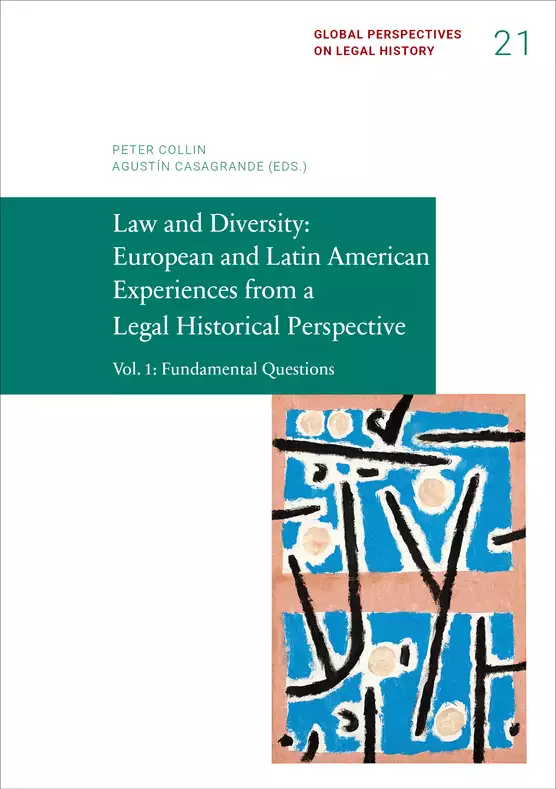
BOOK: Peter COLLIN, Agustín CASAGRANDE (eds.), Law and Diversity: European and Latin American Experiences from a Legal Historical Perspective. Vol. 1: Fundamental Questions (Frankfurt am Main: Max-Planck-Institut für Rechtsgeschichte und Rechtstheorie, 2023). ISBN: 9783944773407 [OPEN ACCESS]


ABOUT THE BOOK

Eine Grundfeste der Rechtssysteme der modernen Gesellschaft ist der Gleichheitsgrundsatz: Modernes Recht ist gleichheitsbasiert. Damit wird ein scharfer Trennungsstrich zum Recht der ständischen Gesellschaft mit ihren Sonderrechtsregimen für bestimmte Gruppen und Personen gezogen. Doch lässt sich diese strikte Gegenüberstellung nur dann durchhalten, wenn man lediglich auf die fundamentalen Postulate und die großen Kodifikationen mit ihren gleichheitsorientierten Systembildungen blickt? Auch die „Moderne“ ist sozial hoch ausdifferenziert und tradiert bzw. transformiert in einem nicht unerheblichen Maße „vormoderne“ Unterscheidungen. All dies bildet sich oft ab in Sonderrecht, das vom Staat oder den Gruppen selbst – wenn auch in diesem Fall oft nicht als Recht anerkannt – geschaffen wird.

Konstellationen normativ relevanter sozialer Differenz sollen mit dem Begriff „Diversität“ umschrieben werden. Das dabei zugrunde gelegte Diversitätsverständnis weist nur Teilüberschneidungen mit den Kategorien postmoderner Diversitätsdiskurse auf. Vielmehr wird die Grundfrage ins Zentrum gestellt: Welche sozialen Unterschiede sind in welchem Maße und in welcher Hinsicht relevant – oder, um es konkreter auf das Verhältnis von Recht und Diversität zu beziehen: Welche sozialen Unterschiede machen auch einen Unterschied für das Recht aus?

Eine erweiterte Perspektive auf dieses Problemfeld gewinnt man durch die vergleichende Betrachtung von europäischen und außereuropäischen Entwicklungen. Dabei erweist sich Lateinamerika als besonders wichtiges Untersuchungsfeld. Einerseits fand eine Translation europäischer Rechtstraditionen schon in kolonialer Zeit statt und nach der Unabhängigkeit war das lateinamerikanische Streben nach Modernität oft durch den Rückgriff auf europäische Rechtsideen und Regelungsmodelle geprägt. Andererseits blieb das Erbe der kolonialen Vergangenheit weiter prägend und die soziale Differenzierung, auf die das Recht reagieren musste, wies zu einem Gutteil andere Züge auf als in den europäischen Gesellschaften.

Damit sich der Ertrag des Zusammenführens europäischer und lateinamerikanischer Perspektiven nicht lediglich auf eine Aneinanderreihung verschiedener Beiträge beschränkt, wurde folgender Weg gewählt: Einem Hauptbeitrag, der sich auf die Entwicklung einer bestimmten nationalen Rechtsordnung bezieht, werden Kommentare aus anderen nationalen Rechtsordnungen zur Seite gestellt, die einerseits  ihre nationalen Entwicklung skizzieren und andererseits Bezug auf die Ausführungen des Hauptbeitrags nehmen, um so Unterschiede und Gemeinsamkeiten deutlich zu machen. Europäische und lateinamerikanische Autoren wechseln sich dabei ab. Der zeitliche Rahmen sind die letzten 200 Jahre.   

In Band 1 beschäftigen sich die Autoren mit Grundfragen von Recht und Diversität. Weitere Bände zum öffentlichen Recht, zum Privatrecht und zum Strafrecht werden folgen.


TABLE OF CONTENTS

  • Introduction


First Part: Thinking on Diversity and Law

Section I: National Traditions of Social Theoretical Contouring of Social Differences

  • Social Differentiation, Inequality, and Diversity in the Sociological Theory of Law – An Outline of the German Debate (Alfons Bora)
  • Comment: Law, Diversity and Sociological Imagination in Argentina (20th–21st Centuries) (Augustín Casagrande)

Section II: Traditions of Pluralistic Legal Thinking

  • Traditions of Pluralistic Legal Thought: The Example of Germany (Ralf Seinecke)
  • Comment: Monist or Pluralist Legal Tradition in 19th-Century Peru? (Armando Guvara Gil)
  • Comment: Pluralistic Legal Thought in Chile: A Critical Overview (Rodrigo Míguez Núñez)


Second Part: Tendencies

Section I: Diversity and Nation-building

  • National Identity through Diversity – Brazilian Nation Building Ideas and Theories, 1920–1948 (and their Aftermath) (Pedro Henrique Ribeiro)
  • Comment: The Tower of Babelgium. The Never-ending Belgian Nation-building (Bruno Debaenst)
  • Comment: The “cuestión foral”: Legal Diversity and Nation-building in Spain (Alfons Aragoneses)
  • Comment: Diversity and Nation Building in the Periphery: Some Thoughts from Argentina (Ezequiel Adamovsky)

Section II: Legal Lines of Development of Discrimination and Anti-Discrimination

  • Discrimination: On the Constitutional History of a Fundamental Concept – a Chilean Perspective (Fernando Muñoz)
  • Comment: The Different Meanings of Discrimination from a Czech Perspective (Barbara Havelková)

Section III: Anthropological Approaches

  • Juridification and the Indigenous Peoples in Brazil: The Ambivalence of a Complex Process (Orlando Villas Bôas Filho)
  • Comment: Racial Thinking and Ethnic Minorities in Latin America (Eduardo Zimmermann)
  • Comment: The Juridification of Indigenous Claims in Latin America: Obstacles and Challenges (Nancy Yáñez Fuenzalida)


Third Part: Legal Frameworks

Section I: The Constitutional Embedding of Differences

  • The Constitutional Embedding of Differences: Chile (1810–1980) (Manuel Bastias Saavedra)
  • Comment: The Constitutional Embedding of Differences, 1921–1997: The Polish Example (Agnieszka Bień-Kacała and Anna Tarnowska)

Section II: System and Codification – Exclusion or Inclusion of Special Law?

  • The Limits of Equality: Special Law in the Age of Legal Monism in Italy (19th–20th Centuries) (Massimo Meccarelli)
  • System and Codification – Exclusion or Inclusion of Special Law? A German Perspective (Carsten Fischer and Hans-Peter Haferkamp)
  • Comment: A French Perspective about the Limits of Equality in 19th–20th Centuries Law (Jean-Louis Halpérin)
  • Comment: Diversity, Codification and Political Representation: Comments from the Brazilian Perspective (Thiago Reis)

Section III: Autonomy

  • German Discourses on Autonomy from the Beginning of the 19th Century Until Today (Peter Collin)
  • Comment: Construction and De-construction of Legal Identity: Different Notions of Autonomy in Italian Legal Thought (19th–20th Centuries) (Michele Pifferi)
  • Comment: Autonomy, Subjectivity and Diversity: Genesis and Logic of a Juridical-political Concept in Argentina (19th–20th Centuries) (Agustín Casagrande)

Section IV: Legal Person and Legal Personality

  • Mask of Legal Subjectivity: Equality and Difference within Personal Regimes in Brazil (1824–1988) (Samuel Barbosa)
  • Comment: The Theory and Ethics of the Person in Law: The German Perspective (Stephan Kirste)
  • Comment: Legal Person and Legal Personality: A View from English Legal History (Victoria Barnes)

Section V: Linguistic Diversity and the Language of Law

  • Linguistic Diversity and the Language of State Law in Colombia, 1819–2019 (Gloria Patricia Lopera-Mesa)
  • Comment: Austria-Cisleithania – a Non-nation Multi-ethnic State and its Language Policy (Thomas Simon)
  • Comment: From Pragmatic Overtness to Legal Taxonomy of Equality. Ottoman-Turkish Perspectives on Colombian Linguistic Diversity and Law (Zülâl Muslu)
  • Comment: Linguistic and Cultural Diversity in the Legal Sphere: Insights from Late Imperial Russia (Stefan B. Kirmse)


Conclusion

  • Categories and Concepts, Themes, References, and Outlooks in the Conference Discussions on “Law and Diversity”. A Structured Summary (Leonard Wolckenhaar)


The publication can be found in open access here.

26 October 2023

BOOK: Simon LEBOUTEILLER, Louisa TAYLOR (eds.), Peacemaking and the Restraint of Violence in High Medieval Europe (Londres: Routledge, 2023). ISBN: 9780367142568

(Image source: Routledge)


ABOUT THE BOOK

The High Middle Ages have been seen as an important point within the development of governmental and administrative bureaucracy, as well as a time in which there was frequent conflict. This volume addresses the methods by which violence was regulated and mitigated, and peaceful relations were re-established in high medieval Europe. By studying the restraint of violence and the imposition of peace, the chapters in this volume contribute to interdisciplinary discussions about the effects that violence had on medieval societies. The wide-ranging geographical scope of this volume invites comparisons to be made in relation to how violence was restrained, and peace established, in different settings.

The chapters in the first part of this volume address the issue of how violence was moderated and curbed during and following periods of conflict. The second part explores attempts to maintain peace and the processes which developed to deal with those viewed as having broken the peace. The final part of this volume explores the ways in which conflict was avoided through the maintenance of positive relationships between individuals and groups.

This book will be of interest to both academics and students interested in conflict, the restraint of violence, and peacemaking in medieval societies as well as those working on ritual and conflict resolution in any historical period.


ABOUT THE EDITORS

Simon Lebouteiller holds a PhD in Medieval History and taught History and Scandinavian Studies at the Universities of Oslo and Sorbonne. He is currently an Associate Professor of Old Norse and Icelandic Studies at the University of Caen, Normandy, and a member of the research centre ERLIS (Équipe de Recherche sur les Littératures, les Imaginaires et les Sociétés). His research investigates peacemaking, rituals, political practices, and ideologies in medieval Scandinavia, as well as Norse historiography. He has also translated Icelandic sagas into French, such as Knýtlinga saga (La saga des rois de Danemark: Knýtlinga saga. Transl. Simon Lebouteiller. Toulouse: 2021).

Louisa Taylor is Lecturer in Medieval History at Aberystwyth University and Lecturer in History at the University of the Highlands and Islands (UHI). Her research explores elite culture and behaviour during conflict in high and late medieval Scandinavia, Iceland, England, Wales, and the Baltic region using comparative perspectives.


TABLE OF CONTENTS

Introduction: Peacemaking and the Restraint of Violence in High Medieval Europe (Simon Lebouteiller and Louisa Taylor)

Part 1 – Restraining Violence: Ideas and Practices

Chapter 1 – The Submission of Rebellious Cities in the Roman-German Empire (Hermann Kamp)

Chapter 2 – Peace or Punishment in Medieval England: From 1215 to 1322 (Stephen D. White)

Chapter 3 – ‘Be at peace with God and me’: Violence, War, and Royal Responses to Insurrection in Medieval Scotland, c. 1100–1286 (Iain MacIness)

Chapter 4 – Conflicts and the Use of Exile as a Means of Restraining Violence in Eleventh- and Twelfth-Century Castile-León (Harald Endre Tafjord)

Part 2 – Negotiating and Defining Peace

Chapter 5 – The ‘Old Peace’ as a Peacemaking Institution in Thirteenth-Century German-Russian Trade Treaties (Tobias Boestad)

Chapter 6 – Encounters at the Water’s Edge: Peace Meetings on Rivers, Bridges, and Islands in Medieval Scandinavia (Simon Lebouteiller)

Chapter 7 – God’s Peace and the King’s Peace in High Medieval Norway (David Brégaint)

Part 3 – Establishing and Maintaining Relationships

Chapter 8 – Food, Peacemaking, and Maintenance in Twelfth- and Thirteenth-Century England (Lars Kjær)

Chapter 9 – Food and Clothing in Rituals of Peacemaking in Medieval Europe and the Latin East (Yvonne Friedman)

Chapter 10 – Cloth, Clothing, and Peacemaking in Byzantium: From the Second Part of the Eleventh Century to the Middle of the Thirteenth Century (Nicolas Drocourt)


More information can be found here.

01 September 2023

REMINDER JOB OFFER: Two PhD Positions - ANR CiSaMe Project - Circulation of medieval knowledge in the 12th century [DEADLINE 30 SEPTEMBER 2023]


Job offer – Two PhD Positions


ANR CiSaMe Project - Circulation of medieval knowledge in the 12th century


The ANR CiSaMe project ("Circulation of medieval knowledge in the 12th century", 2023-2027) is recruiting two PhD students from November 1, 2023.


CiSaMe is a collaborative research project (EPHE /PSL Paris - Université d'Orléans - Université de Strasbourg) that aims to elucidate the interactions between knowledge (law, theology, philosophy) in the 12th century, prior to their constitution as disciplines. CiSaMe is based, in particular, on the analysis of a large corpus of 12th-century manuscripts using digital humanities (automated transcription of manuscripts, regular expressions, etc.).

For further information on the project, please contact Professor Raphaël Eckert: raphael.eckert@unistra.fr


First topic: “Law and theology in Bologna in the mid-12th century”


Presentation


The aim of this thesis is to study the genesis of disciplinary knowledge (law and theology) in Bologna in the middle of the 12th century. The PhD student is invited to focus in particular on the few authors (Omnebene, Rolandus, Gandulphus) who wrote works of both canon law (Abreviatio or Summa on Gratian’s Decretum) and theology (Sentences). The aim of the work is to understand, through case studies, how the tools and problems specific to each discipline were mutually nourished, while gradually acquiring autonomy. This does not mean neglecting the analysis of the social and intellectual environment in which the works were produced, particularly from a prosopographical perspective.

The thesis is part of the CiSaMe project and will benefit from the tools developed within it. The work will draw not only on the methods of intellectual history (sources of works, interactions between law and theology, influence) but also on those of cultural and social history. In addition, the thesis will include the editing of at least one of the as yet unpublished works (e.g. Omnebene’s Abreviatio or Sentences) using the digital tools of the CiSaMe project.


The work will be supervised by Professors Raphaël Eckert (University of Strasbourg) and Christophe Grellard (EPHE-Paris Sciences et Lettres), and prepared within the “École doctorale” 472 (Paris, EPHE-PSL).


The person recruited will be part of the CiSaMe research team, which includes another PhD student, a post-doc and a specialist in digital humanities.


Second topic: “Justice in the theological and legal thought of the Anglo-Norman area (1150-1215)”


Presentation


The thesis will focus on the question of justice in the intellectual productions of the Anglo-Norman area in the 12th century (exegetical and theological writings, glosses, legal treatises), identifying the authors, networks, circulations and influences. The theme of justice will be addressed in its theoretical, moral, penitential and procedural dimensions. It will be illuminated by the reading of theological and legal manuscripts identified and transcribed as part of the CiSaMe project.

The Anglo-Norman area, broadly defined as an interface for intellectual exchange rather than a political territory, offers a privileged vantage point from which to grasp decisive developments in Western thought. 

Two key periods could be the focus of our source research: the years 1120-1130, around the reception of the methods, exegetical commentaries and reflections of the School of Laon; the reign of Henry II, and in particular the years 1150-1180, marked by the writings produced in the entourage of the Archbishop of Canterbury, Thomas Becket.


The work will be supervised by Professors Corinne Leveleux (Université d'Orléans/EPHE-Paris Sciences et Lettres) and Christophe Grellard (EPHE-Paris Sciences et Lettres) and prepared within the “École doctorale 617” (Université d'Orléans).

The person recruited will be part of the CiSaMe research team, which includes another PhD student, a post-doc and a specialist in digital humanities.


Information for both positions:


Profile required


The person recruited must:


- Hold a research master’s degree in medieval history, history of law, philosophy, theology, philology or classics (if the master’s degree is in progress, an attestation from the degree supervisor must be submitted).

- Good knowledge of Latin and Latin paleography.

- If possible, knowledge of digital humanities (HTR, XML, digital publishing).


The thesis may be written in French or English.


Remuneration


The person will be recruited for three years from the date of 1st registration.

The minimum monthly salary is €2044.12 gross.


Application form


The application must include the following documents:

  • Certificate of Master's degree or equivalent, accompanied by transcript (or certificate from degree director) 

  • Letter of application and motivation

  • Detailed curriculum vitae


Application procedure


Candidates must send their applications by September 30, 2023 in electronic form (pdf format) to the following address: raphael.eckert@unistra.fr


Following an initial selection, auditions may be organized by videoconference between early October, 2023. Candidates may be asked to provide additional documents for the audition.


For further information on this vacancy and the recruitment procedure, please contact Professor Raphaël Eckert: raphael.eckert@unistra.fr


Results will be announced by October 15, 2023 at the latest.

24 August 2023

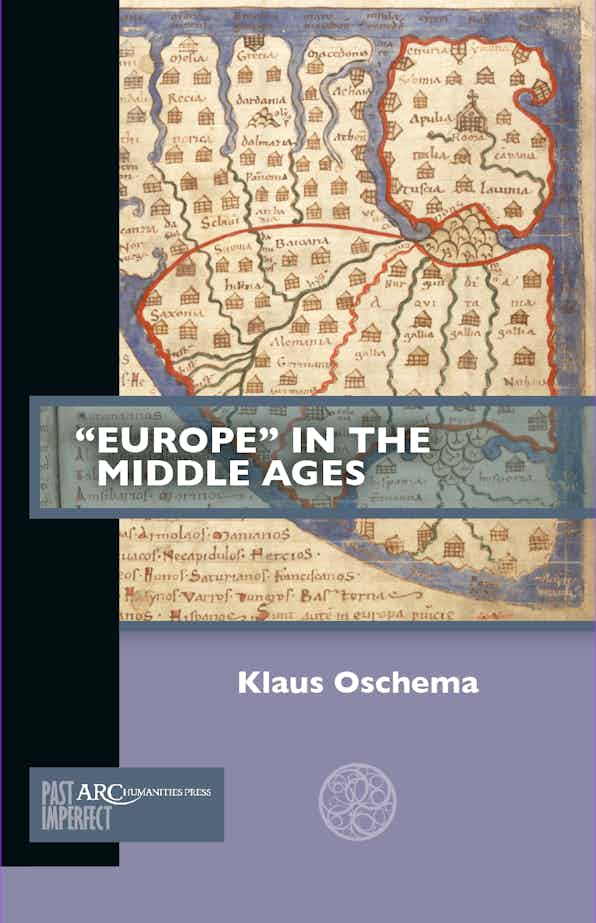
BOOK: Klaus OSCHEMA, "Europe” in the Middle Ages (Leeds: ARC Humanities Press, 2023). ISBN: 9781641891592

(Image source: ARC Humanities Press)


ABOUT THE BOOK

From the nineteenth century onwards, historians described the Middle Ages as the « cradle » of the nation state—then, after World War II, they increasingly identified the period as the « cradle » of Europe. A close look at the sources demonstrates that both interpretations are misleading: while « Europe » was not a rare word, its use simply does not follow modern expectations. This volume contrasts modern historians’ constructions of « Europe in the Middle Ages » with a fresh analysis of the medieval sources and discourses. The results force us to recognize that medieval ideas of ordering the world differ from modern expectations, thereby inviting us to reflect upon the use and limits of history in contemporary political discourse.


ABOUT THE AUTHOR

Klaus Oschema is Professor in Late Medieval History at the Ruhr-University Bochum. He researches medieval concepts of social, geographic, and political order. Recent publications include Order into Action (ed., with C. Mauntel, 2022).


TABLE OF CONTENTS

Preface and Acknowledgements

Chapter 1: Why Europe? A Concept Crossing History and Politics

Chapter 2: Foundations in Antiquity

Chapter 3: Moments of Transformation—Europe in the Early Middle Ages

Chapter 4: Europe, Christianity, or Something Completely Different? Impressions from the Central Middle Ages

Chapter 5: Our Last Hope? Entangling Europe and Christianity in the Late Middle Ages

Chapter 6: Perspectives from Outside? Byzantium and the Arabic World

Conclusion: No Roadmap for Europe—History, Politics, and the Way to Global History

Further Reading


More information can be found here.

14 July 2023

JOB OFFER: Two PhD Positions - ANR CiSaMe Project - Circulation of medieval knowledge in the 12th century [DEADLINE 30 SEPTEMBER 2023]


Job offer – Two PhD Positions


ANR CiSaMe Project - Circulation of medieval knowledge in the 12th century


The ANR CiSaMe project ("Circulation of medieval knowledge in the 12th century", 2023-2027) is recruiting two PhD students from November 1, 2023.


CiSaMe is a collaborative research project (EPHE /PSL Paris - Université d'Orléans - Université de Strasbourg) that aims to elucidate the interactions between knowledge (law, theology, philosophy) in the 12th century, prior to their constitution as disciplines. CiSaMe is based, in particular, on the analysis of a large corpus of 12th-century manuscripts using digital humanities (automated transcription of manuscripts, regular expressions, etc.).

For further information on the project, please contact Professor Raphaël Eckert: raphael.eckert@unistra.fr


First topic: “Law and theology in Bologna in the mid-12th century”


Presentation


The aim of this thesis is to study the genesis of disciplinary knowledge (law and theology) in Bologna in the middle of the 12th century. The PhD student is invited to focus in particular on the few authors (Omnebene, Rolandus, Gandulphus) who wrote works of both canon law (Abreviatio or Summa on Gratian’s Decretum) and theology (Sentences). The aim of the work is to understand, through case studies, how the tools and problems specific to each discipline were mutually nourished, while gradually acquiring autonomy. This does not mean neglecting the analysis of the social and intellectual environment in which the works were produced, particularly from a prosopographical perspective.

The thesis is part of the CiSaMe project and will benefit from the tools developed within it. The work will draw not only on the methods of intellectual history (sources of works, interactions between law and theology, influence) but also on those of cultural and social history. In addition, the thesis will include the editing of at least one of the as yet unpublished works (e.g. Omnebene’s Abreviatio or Sentences) using the digital tools of the CiSaMe project.


The work will be supervised by Professors Raphaël Eckert (University of Strasbourg) and Christophe Grellard (EPHE-Paris Sciences et Lettres), and prepared within the “École doctorale” 472 (Paris, EPHE-PSL).


The person recruited will be part of the CiSaMe research team, which includes another PhD student, a post-doc and a specialist in digital humanities.


Second topic: “Justice in the theological and legal thought of the Anglo-Norman area (1150-1215)”


Presentation


The thesis will focus on the question of justice in the intellectual productions of the Anglo-Norman area in the 12th century (exegetical and theological writings, glosses, legal treatises), identifying the authors, networks, circulations and influences. The theme of justice will be addressed in its theoretical, moral, penitential and procedural dimensions. It will be illuminated by the reading of theological and legal manuscripts identified and transcribed as part of the CiSaMe project.

The Anglo-Norman area, broadly defined as an interface for intellectual exchange rather than a political territory, offers a privileged vantage point from which to grasp decisive developments in Western thought. 

Two key periods could be the focus of our source research: the years 1120-1130, around the reception of the methods, exegetical commentaries and reflections of the School of Laon; the reign of Henry II, and in particular the years 1150-1180, marked by the writings produced in the entourage of the Archbishop of Canterbury, Thomas Becket.


The work will be supervised by Professors Corinne Leveleux (Université d'Orléans/EPHE-Paris Sciences et Lettres) and Christophe Grellard (EPHE-Paris Sciences et Lettres) and prepared within the “École doctorale 617” (Université d'Orléans).

The person recruited will be part of the CiSaMe research team, which includes another PhD student, a post-doc and a specialist in digital humanities.


Information for both positions:


Profile required


The person recruited must:


- Hold a research master’s degree in medieval history, history of law, philosophy, theology, philology or classics (if the master’s degree is in progress, an attestation from the degree supervisor must be submitted).

- Good knowledge of Latin and Latin paleography.

- If possible, knowledge of digital humanities (HTR, XML, digital publishing).


The thesis may be written in French or English.


Remuneration


The person will be recruited for three years from the date of 1st registration.

The minimum monthly salary is €2044.12 gross.


Application form


The application must include the following documents:

  • Certificate of Master's degree or equivalent, accompanied by transcript (or certificate from degree director) 

  • Letter of application and motivation

  • Detailed curriculum vitae


Application procedure


Candidates must send their applications by September 30, 2023 in electronic form (pdf format) to the following address: raphael.eckert@unistra.fr


Following an initial selection, auditions may be organized by videoconference between early October, 2023. Candidates may be asked to provide additional documents for the audition.


For further information on this vacancy and the recruitment procedure, please contact Professor Raphaël Eckert: raphael.eckert@unistra.fr


Results will be announced by October 15, 2023 at the latest.