Search

Showing posts with label Constitutional Legal History. Show all posts

03 March 2026

BOOK: Christian HILLGRUBER, Souveränität oder Nation? Die politische und rechtliche Schlüsselfrage der Revolution von 1848/49 oder: Der lange deutsche Weg zur Anerkennung der Volkssouveränität [Schönburger Gespräche zu Recht und Staat] (Tübingen: Mohr Siebeck, 2025), 55 p., ISBN 978-3-16-164892-2

 Cover von 'undefined'

 
ABOUT THE BOOK:
 
Die deutsche Revolution von 1848/49 war verfassungsrechtlich wie politisch vom Ringen um die verfassunggebende Gewalt geprägt. Das von der Frankfurter Nationalversammlung reklamierte Prinzip der Volkssouveränität forderte das überkommene monarchische Prinzip heraus. In der Folge stand dem vom Paulskirchenparlament geltend gemachten Alleinentscheidungsrecht über eine neue gesamtdeutsche Verfassung das von den monarchischen Regierungen der Einzelstaaten verfochtene Mitentscheidungsrecht gegenüber, das auf eine Vereinbarungslösung drängte. In dieser Auseinandersetzung konnte sich der Grundsatz der Volkssouveränität gegen die überlegenen Kräfte der Beharrung noch nicht durchsetzen. Erst die mit der Novemberrevolution 1918 errungene verfassunggebende Gewalt des deutschen Volkes schuf die Basis der Weimarer Reichsverfassung. Sie bildet auch die Legitimationsgrundlage des Grundgesetzes.
 
TABLE OF CONTENT:
 
I. Einleitung
II. Die Spaltung der nationalen Verfassungsbewegung in Liberale und Demokraten
III. Die Spannungen zwischen Demokraten und Liberalen in der Heidelberger Versammlung und die unterschiedliche Haltung gegenüber dem Bundestag
IV. Die Perspektive einer Verständigungslösung
V. Die Debatten im Vorparlament
VI. Der „kühne Griff" nach der politischen Macht im Namen der Volkssouveränität
VII. Der tiefere Grunddissens: Ganze oder geteilte Souveränität?
VIII. Das Ende aller Hoffnungen: Weder Republik noch konstitutionelle Monarchie
IX. Nachspiel: Von Frankfurt über Erfurt nach Berlin/Versailles
X. Weimar: Das Reich, das sind wir.
XI. Bonn: Das Grundgesetz als Ausprägung des Prinzips der Volkssouveränität
 
ABOUT THE AUTHOR:
 
Christian Hillgruber Geboren 1963; Studium der Rechtswissenschaft an der Universität zu Köln; 1988 Erste Juristische Staatsprüfung; 1991 Promotion (Köln); 1997 Habilitation (Köln); Professur an den Universitäten Heidelberg und Erlangen-Nürnberg; Inhaber eines Lehrstuhls für Öffentliches Recht an der Universität Bonn und Direktor des dortigen Instituts für Kirchenrecht.
 
Find more here.  
 

16 July 2025

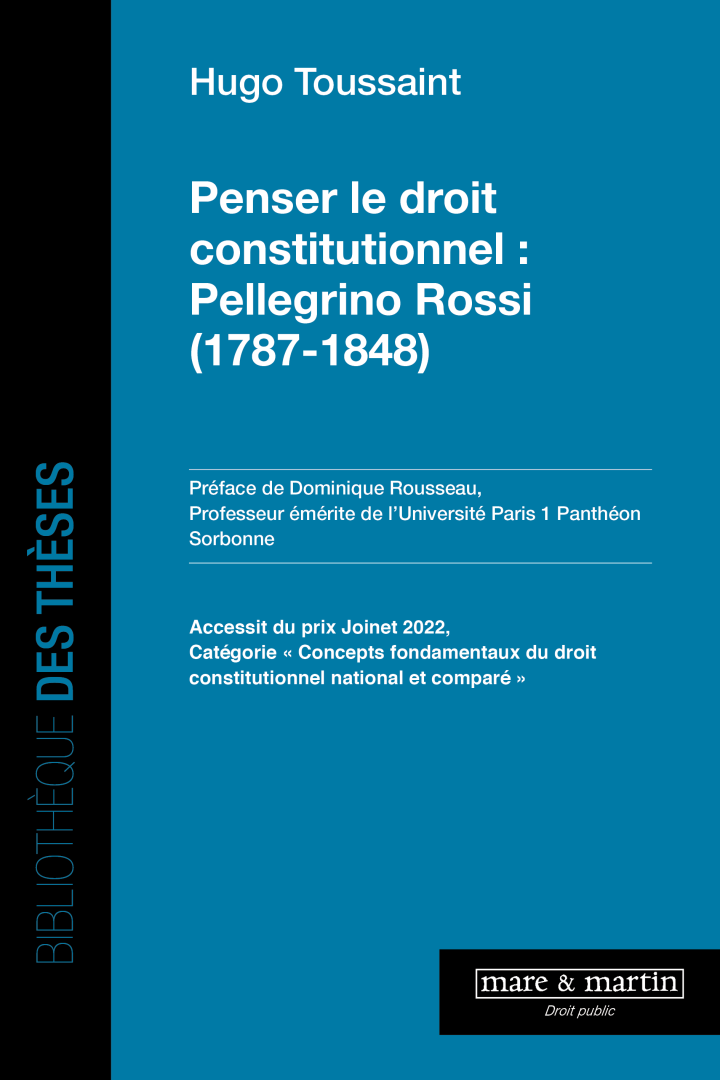
BOOK: Hugo TOUSSAINT, Penser le droit constitutionnel: Pellegrino Rossi (1787-1848) [Droit public - Bibliothèque des Thèses] (Paris: Mare & Martin, 2025), 592 p. ISBN 9782386000980, € 54

(image source: Mare & Martin)


Abstract:

Premier titulaire de la chaire de droit constitutionnel de la Faculté de droit à Paris, Pellegrino Rossi (1787-1848) demeure aujourd’hui encore une figure méconnue. Doyen de la Faculté, pair de France, académicien puis ministre du Pape Pie IX, le constitutionnaliste est une figure incontournable de la doctrine juridique du XIXe siècle. L’ouvrage se propose de mettre au jour les outils épistémologiques avec lesquels Pellegrino Rossi construit sa pensée constitutionnelle et politique. À travers l’étude des notions de personne humaine, de société et d’État, l’ouvrage démontre le ralliement de Rossi à l’éclectisme philosophiquede son temps en soulignant ses diverses inspirations comme l’historicisme et l’organicisme allemands ainsi que l’utilitarisme anglais. L’ouvrage reconstitue également le logique juridique mais également politique de la pensée de Pellegrino Rossi. En ce sens, est mis au jour le but politique de la pensée constitutionnelle de Rossi entièrement tournée vers la promotion de l’unité nationale. Enfin, l’étude se propose d’interroger la figure - communément répandue - d’un Pellegrino Rossi « libéral ». En effet, sa vision inégalitaire de la société politique, sa conception capacitaire du gouvernement représentatif ainsi que sa virulente critique de l’égalité des conditions décrite par Tocqueville dans la Démocratie en Amérique interrogent de plus en plus sa stature de « penseur libéral ».

Read more here

28 October 2024

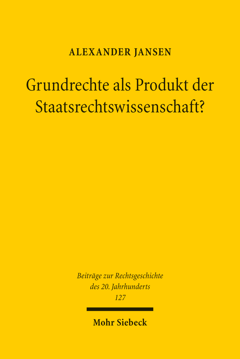
BOOK: Alexander JANSEN, Grundrechte als Produkt der Staatsrechtswissenschaft? [Beiträge zur Rechtsgeschichte des 20. Jahrhunderts; 127] (Tübingen: Mohr Siebeck, 2024), 193 p., ISBN 978-3-16-163845-9


 Cover von 'undefined'
ABOUT THE BOOK:
 
Die Grundrechte des Grundgesetzes werden oft als Ergebnis eines Kompromisses verstanden. Dennoch postuliert das Bundesverfassungsgericht, dass sie »eine verfassungsrechtliche Grundentscheidung« enthalten und als solche »für alle Bereiche des Rechts« gelten. Der Aussage liegt damit der Gedanke einer bewussten Entscheidung des Verfassungsgebers zugrunde. Die Grundlage für die Entscheidung des Verfassungsgebers sucht Alexander Jansen in der Staatsrechtslehre. Er untersucht, ob die Lehren der Staatsrechtler Rudolf Smend, Carl Schmitt und Richard Thoma die Entstehung der Grundrechte des Grundgesetzes beeinflusst haben. Im Mittelpunkt stehen die Beratungen des Parlamentarischen Rates über die Grundrechte, die Aufschluss über die Vorstellungen dieser Wissenschaftler geben.
 
TABLE OF CONTENTS:
 
Einleitung
A. Hinführung
B. Untersuchungsgegenstand
C. Fragestellung
D. Thesen
E. Forschungsstand
F. Gang der Untersuchung
G. Methodenfragen: Wissenschafts- und Dogmengeschichte

Kapitel 1: Integration durch Grundrechte (Rudolf Smend)
A. Vorbemerkung: Die Integrationslehre als Grundlage der Grundrechtskonzeption?
B. Wissenschaftliche Kurzbiographie
C. Die Integrationslehre als Ausgangspunkt der Grundrechtslehre
D. Die Integrationslehre im Parlamentarischen Rat
E. Fazit: Wider die integrative Grundrechtstheorie

Kapitel 2: Dezision und Grundrechte (Carl Schmitt)
A. Vorbemerkung: Der Mythos Carl Schmitt
B. Wissenschaftliche Kurzbiographie
C. Die Grundrechtslehre Carl Schmitts im Parlamentarischen Rat
D. Fazit: Der, dessen Name nicht genannt werden darf

Kapitel 3: Rechtsstaat und Grundrechte (Richard Thoma
A. Vorbemerkung: Thoma als Transporteur liberaler Grundrechtslehren?
B. Wissenschaftliche Kurzbiographie
C. Grundrechtstheorie: Grundrechte als individuelle Abwehrrechte
D. Rolle im Parlamentarischen Rat
E. Die Vorbehaltslehre Thomas im Parlamentarischen Rat
F. Fazit: Lösungsdivergenz trotz Systemkonvergenz

Schluss
A. Kenner der Grundrechtslehren
B. Grundrechte ohne Staatsrechtswissenschaft
C. Grundrechte als Vergangenheitsbewältigung
D. Verwaiste Verfassungsväter
 
Read more here

23 September 2024

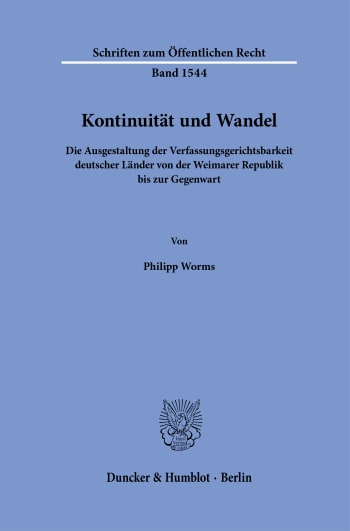
BOOK: Philipp WORMS, Kontinuität und Wandel. Die Ausgestaltung der Verfassungsgerichtsbarkeit deutscher Länder von der Weimarer Republik bis zur Gegenwart [Schriften zum Öffentlichen Recht; 1544] (Berlin: Duncker & Humblot, 2024), 310 p., ISBN 978-3-428-19237-3

 Cover: Kontinuität und Wandel

ABOUT THE BOOK:

Die Abhandlung widmet sich der geschichtlichen Entwicklung der Verfassungsgerichte der Länder, um auf diese Weise einen Beitrag zur näheren Bestimmung des Verhältnisses zwischen der gegenwärtigen Landesverfassungsgerichtsbarkeit und ihren historischen Vorbildern zu leisten. Dabei untersucht der Autor in einem ersten Schritt, inwieweit die Weimarer Landesstaatsgerichtshöfe prägend waren für die Entwicklung und die Ausgestaltung der Landesverfassungsgerichte wie wir sie heute kennen. Anhand der Länder Baden-Württemberg, Bayern, Hessen und Thüringen zeigt der Autor auf, dass die Weimarer Landesstaatsgerichtshöfe trotz ihrer vergleichsweise schmalen Kompetenzkataloge den Vätern und Müttern der westdeutschen Landesverfassungen nach 1945 als Anknüpfungspunkt für die Konzeption der Landesverfassungsgerichte dienten. Dass die Weimarer Landesstaatsgerichtshöfe gleichwohl nicht den einzigen Traditionsstrang darstellten, wird ebenso deutlich. Daher beleuchtet der Autor in einem zweiten Schritt, welchen übrigen Einflussfaktoren die Ausgestaltung der Verfassungsgerichtsbarkeit nach 1945 ausgesetzt war und wie unterschiedlich stark sich diese Faktoren in den jeweiligen Ländern auswirkten.

TABLE OF CONTENTS:

A. Einleitung

B. Methodik

Zur Auswahl der betrachteten Länder – Vorgehensweise – Maßstabsbestimmung

C. Historische Wurzeln der Verfassungsgerichtsbarkeit seit 1815
Auf Ebene des Bundes und des Reiches – Auf Ebene der Gliedstaaten

D. Staatsgerichtsbarkeit in der Weimarer Republik
Der Staatsgerichtshof für das Deutsche Reich – Allgemeine Situation der Staatsgerichtsbarkeit in den Ländern

E. Entwicklung und Ausgestaltung ausgewählter Landesverfassungsgerichte
Baden-Württemberg – Bayern – Hessen – Thüringen

F. Landesübergreifende Parallelen
Landesverfassungsgerichte als solitäre Institutionen – Parallele Entwicklungslinien

G. Landesspezifische Aspekte
Baden-Württemberg – Bayern – Hessen – Thüringen

H. Maßgebliche Einflussfaktoren
Grundgesetz und Bundesverfassungsgericht – Eigene historische Landesverfassungen – Weimarer Reichsverfassung – Andere Landesverfassungen – Ausländische Vorbilder – Besatzungsmächte – Persönlichkeiten – Gesamtwürdigung der Einflussfaktoren

I. Schlussbetrachtung

Anlage: Relevante Vorschriften zur Verfassungsgerichtsbarkeit seit 1919

Read more here.


25 April 2023

BOOK: Cristiano PAIXÃO and Cláudia Paiva CARVALHO. História Constitucional Brasileira - da Primeira República à Constituição de 1988 (Almeidina 2023). ISBN: 9786556277912. R$ 191,20


(Source: https://www.almedina.com.br/produto/historia-constitucional-brasileira-11445)

A obra que apresentamos ao público se propõe a refletir sobre o passado constitucional brasileiro no período republicano. Os textos do livro, escritos por professores/as e pesquisadoras/es que integram ou colaboram com o grupo de pesquisa 'Percursos, Fragmentos, Narrativas', da Universidade de Brasília (UnB), reivindicam à nossa história constitucional um papel de destaque para compreendermos os desafios postos no presente, no campo da política, do direito e da sociedade. A história constitucional coloca no centro das suas indagações a Constituição, entendida como documento que responde às demandas de organização das sociedades modernas, que estrutura a comunicação entre o direito e a política, que interage com as ideologias e projetos de poder, com os diferentes anseios e disputas entre atores e sujeitos na vida social. Por isso, em variados recortes e temporalidades, as pesquisas falam sobre como nos constituímos como comunidade política e jurídica.

Table of contents: https://www.academia.edu/98905896/Hist%C3%B3ria_Constitucional_Brasileira_da_Primeira_Rep%C3%BAblica_%C3%A0_Constitui%C3%A7%C3%A3o_de_1988?email_work_card=title

09 December 2022

BOOK: Laura KALMAN, FDR's Gambit The Court Packing Fight and the Rise of Legal Liberalism (Oxford: University Press, 2022). ISBN: 9780197539293, pp. 440, £22.99


(Source: OUP)


ABOUT THE BOOK

In the last past few years, liberals concerned about the prospect of long-term conservative dominance of the federal courts have revived an idea that famously crashed and burned in the 1930s: court packing. Not surprisingly, today's court packing advocates have run into a wall of opposition, with most citing the 1930s episode as one FDR's greatest failures. In early 1937, Roosevelt-fresh off a landslide victory-stunned the country when he proposed a plan to expand the size of the court by up to six justices. Today, that scheme is generally seen as an act of hubris-an instance where FDR failed to read Congress and the public properly.

In FDR's Gambit, the eminent legal historian Laura Kalman challenges the conventional wisdom by telling the story as it unfolded, without the distortions of hindsight. Indeed, while scholars have portrayed the Court Bill as the ill-fated brainchild of a hubristic President made overbold by victory, Kalman argues to the contrary that acumen, not arrogance, accounted for Roosevelt's actions. Far from erring tragically from the beginning, FDR came very close to getting additional justices, and the Court itself changed course. As Kalman shows, the episode suggests that proposing a change in the Court might give the justices reason to consider whether their present course is endangering the institution and its vital role in a liberal democracy.

Based on extensive archival research, FDR's Gambit offers a novel perspective on the long-term effects of court packing's failure, as a legacy that remains with us today. Whether or not it is the right remedy for today's troubles, Kalman argues that court packing does not deserve to be recalled as one fated for failure in 1937.

ABOUT THE AUTHOR

Laura Kalman is Distinguished Research Professor of History at the University of California, Santa Barbara, a member of the California Bar, and Past President of the American Society for Legal History. She is the author of The Long Reach of the Sixties: LBJ, Nixon, and the Making of the Contemporary Supreme Court; Right Star Rising: A New Politics, 1974-1980; Yale Law School and the Sixties: Revolt and Reverberations; The Strange Career of Legal Liberalism; Abe Fortas: A Biography; and Legal Realism at Yale, 1927-1960.

TABLE OF CONTENTS

Acknowledgments
Preface Court Packing as History and Memory
1. Roosevelt v. "The Nine Old Men": March 1933-February 1936
2. Victory-and Its Fruits: April 6-December 26, 1936
3. Bright Prospects, Bold Opposition: January 1-March 3, 1937
4. A Change in Tune at the White House—and at the Court?: March 4-April 11, 1937
5. "Talk of Compromise...Heard Everywhere": April 12-May 25, 1937
6. "Prestige": May 18, 1937-November 8, 1938
7. Afterlife: 1937-2021
Afterword About those "later historians": Historians, Political Scientists, and Law Professors Confront "1937"
Notes
Index


More information with the publisher.

28 October 2022

ARTICLE: Giuseppe MECCA, “ ‘Discorso’ costituzionale e progetti istituzionali: il caso di Giuseppe Vacca (1808-1876)” (Forum Historiae Iuris, 26 OCT 2022) OPEN ACCESS


(Image source: blogger)

Abstract:

Il saggio prende in considerazione il processo di unificazione nazionale italiano attraverso il punto di vista di Giuseppe Vacca, esponente della classe dirigente risorgimentale, impegnato nel progetto di State Building e nel ruolo di mediazione tra potere governativo centrale e poteri locali. A ben vedere, il progetto istituzionale di Vacca si muove lungo tre principali direttrici ovvero il tema della buona amministrazione, dell’unificazione legislativa e del rapporto del potere giudiziario con gli altri poteri costituzionali. Il ‘discorso costituzionale’ di Vacca è di rilevante interesse anche per la sua coerenza interna e costituisce un punto privilegiato di osservazione per interpretare ideologie e programmi di una fase decisiva della storia istituzionale italiana.

Read more here (DOI 10.26032/FHI-2022-012). 

29 September 2022

ARTICLE: Raúl MORENO-ALMENDRAL, "Independence and Constitution: The Spanish Nationalization of Personal Experience During the Peninsular War and its Aftermath" (European History Quarterly LII (2022), nr. 4, 699-719)


(image source: Sage)

Abstract:

The deconstruction of the ?War of Independence? (1808?1814) as a Spanish nationalist myth was a necessary step in advancing our knowledge of the history of the Age of Revolutions in Spain and of Spanish nation-building itself. However, it set aside those who had in fact experienced those events through a genuine Spanish nationalized lens. Using a corpus of autobiographical sources written between the 1780s and the 1830s, this paper argues that political concepts of Spanish nationhood were already available before the liberal revolution unleashed by the French invasion, that anti-liberals used the language of nationhood in their ego-documents too, and that ideas of independence and constitution pervaded social cleavages and ideological divides. Arguably, then, the War of Independence had both mythical and real dimensions in terms of the history of national identities. Therefore, the great issue in nineteenth-century Spanish nation-building would have not been a congenital ?lack? or ?weakness? of nationhood but an intense cultural war for its definition along political lines.

Read more here (DOI 10.1177/02656914221120150). 

30 April 2021

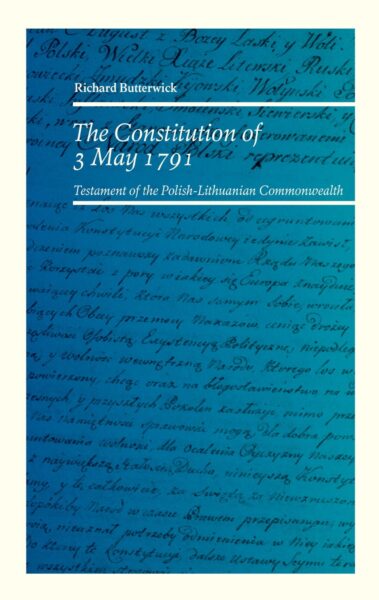
BOOK: Richard BUTTERWICK, The Constitution of 3 May 1791. Testament of the Polish-Lithuanian Commonwealth (Warsaw: Museum for Polish History, 2021), 183 p. ISBN 978-83-65248-48-0, OPEN ACCESS


The Museum for Polish History published a free ebook by Prof. Richard Butterwick (UCL) on the Constitution of 3 May 1791.

An interview with the author accompanies the publication.

Download the book for free here.


BOOK: Jana OSTERKAMP, Vielfalt ordnen - Das föderale Europa der Habsburgermonarchie (Vormärz bis 1918) (Göttingen: Vandenhoeck & Ruprecht, 2020). ISBN 978-3-525-37093-3, 80.00 EUR


Vandenhoeck & Ruprecht is publishing a new book on the Habsburg federalism.

ABOUT THE BOOK


Die Habsburgermonarchie mit der Vielfalt ihrer Völker, Sprachen und historischen Räume war ein faszinierendes „Europa im Kleinen". Föderalismus wurde im 19. Jahrhundert zur umkämpften Leitidee. Das föderale Laboratorium reichte von Metternichs »Föderativstaat« über die Personalautonomie der Austromarxisten bis zu Verfassungsentwürfen unter Franz Ferdinand und Kaiser Karls Nationalitätenbundesstaat von 1918.

Neben föderalen Reformentwürfen beschreibt das Buch das Habsburgerreich als gelebte Föderation. Diese umfasste eine gemeinsame Außen- und Sicherheitspolitik, die dualistische Konkurrenz von Österreich und Ungarn und eine zunehmende Eigenständigkeit und Zusammenarbeit der österreichischen Kronländer gerade in modernen Politikbereichen wie Bildung, Gesundheit, Fürsorge und Infrastruktur. Diese föderale Geschichte im europäischen 19. Jahrhundert führt weit über die Geschichte des habsburgischen Reichs hinaus bis in die europäische Gegenwart.

ABOUT THE AUTHOR

PD Dr. Jana Osterkamp ist Historikerin und Juristin. Sie ist wissenschaftliche Mitarbeiterin des Collegium Carolinum und lehrt an der Ludwig-Maximilians-Universität München.


More info here

13 January 2021

ZOOM TALK: Thomas SIMON, Christlich", "deutsch", "ständisch": Die sog. "Maiverfassung" 1934 und der "Autoritäre Ständestaat". Versuch einer verfassungsgeschichtlichen Einordnung (Vienna: Universität Wien, 19 JAN 2021)

(image source: Universität Wien)

The Viennese Legal History Society (Wiener Rechtsgeschichtliche Gesellschaft) holds its events online via Zoom during the pandemic and opens the talks now for the wider public.


On 19 January, Prof. Thomas Simon (Vienna) will give a talk in German with the title: "Christlich", "deutsch", "ständisch": Die sog. "Maiverfassung" 1934 und der "Autoritäre Ständestaat". Versuch einer verfassungsgeschichtlichen Einordnung


Everyone is warmly invited to join the event via Zoom. Contact rechtsgeschicht@univie.ac.at to enroll.

01 June 2020

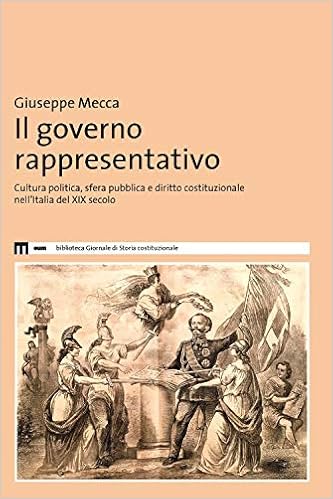
BOOK: Giuseppe MECCA, Il governo rappresentativo. Cultura politica, sfera pubblica e diritto costituzionale nell’Italia del XIX secolo (Macerata: EUM, 2019). ISBN: 9788860566232, pp. 240, € 16,00

(Source: EUM)

ABOUT THE BOOK

La storia del governo rappresentativo è la narrazione di una strategia comunicativa e di come questo concetto sia il prodotto dell'autoaffermazione delle élite liberali italiane. Il concetto storico di governo rappresentativo è uno "spazio" aperto alla dimensione dinamica della circolazione di idee, saperi, norme e pratiche. Assumere come oggetto d'osservazione la categoria del governo rappresentativo, accompagnata dalla sua complessa e ambigua rete concettuale, ha significato entrare nell'officina della prassi costituzionale italiana, ripercorrere le idee che hanno portato alla sua formazione e cogliere il consolidamento della prima dottrina costituzionale.

ABOUT THE AUTHOR

Giuseppe Mecca è dottore di ricerca in storia del diritto e abilitato alla professione d’avvocato. È stato più volte borsista presso il Max-Planck-Institut für europäische Rechtsgeschichte di Frankfurt am Main. Dal 2014 è membro del progetto “Reconsidering Constitutional Formation” (ReConFort – www.reconfort.eu) finanziato dall’European Research Council e Wissenschaftliche Mitarbeiter dell’Università di Passau presso la cattedra di storia del diritto e diritto civile della Prof.ssa Dr. Ulrike Müßig. Collabora anche con la cattedra di Storia del diritto dell’Università Luiss “Guido Carli” di Roma.

TABLE OF CONTENTS

Indice
Prefazione di Ulrike Müßig

Introduzione. Il ‘governo rappresentativo’ tra storia e storiografia
1. Il contesto della ricerca e i caratteri ‘originari’ della storiografia italiana
2. Chiaroscuro
3. Nuove tendenze
4. Dentro un «cantiere» della storia risorgimentale
5. Il nesso tra ‘governo rappresentativo’ e ‘comunicazione’ costituzionale
6. Il «tempo» e i «tempi» del governo rappresentativo

Parte prima. Il ‘governo rappresentativo’: origine, figure e campi di tensione

Capitolo primo. Il ‘governo rappresentativo’ come problema storico-concettuale
1. Potenzialità della nozione di ‘governo rappresentativo’
2. Le “fonti” europee sul governo rappresentativo
2.1. La riflessione dottrinale francese durante la Restaurazione
2.2. Il mito inglese del governo rappresentativo
3. Figure e forme del ‘governo rappresentativo’ nella cultura giuridica italiana
3.1. ‘Governo misto’ o ‘governo rappresentativo’? La forma di governo nei primi commenti allo Statuto
3.2. La ‘monarchia rappresentativa popolare’
3.3. Le condizioni per un ‘governo di gabinetto’
3.4. Per una teoria giuridica del ‘governo parlamentare’?

Capitolo secondo. La questione della legittimazione del potere
1. Premessa
2. Un grande assente nei dibattiti del Consiglio di Conferenza: la sovranità popolare
3. L’origine del potere legittimo: un patto tra Sovrano e Nazione?
4. La difficile coabitazione del ‘principio monarchico’ con il ‘principio rappresentativo’
5. La ‘sovranità costituente’
5.1. La scoperta del potere costituente
5.2. Il Parlamento come ‘costituente perpetua’
5.3. Forma di governo e revisione costituzionale
6. La ‘sovranità rappresentativa’

Capitolo terzo. Il governo rappresentativo tra norme scritte e norme consuetudinarie
1. Natura e fondamento del governo rappresentativo
2. L’interpretazione costituzionale come principale meccanismo per lo sviluppo della forma rappresentativa
2.1. Implementare/sviluppare la Costituzione
2.2. Correggere gli errori
2.3. «Mantenere le istituzioni in armonia con lo Spirito dello Statuto» preservando l’ordine costituzionale
3. Una forma di ‘governo flessibile’?

Parte seconda. Il ‘governo rappresentativo’ nella pratica costituzionale ossia l’equilibrio tra i Poteri

Capitolo quarto. Governo rappresentativo e forme di costituzionalizzazione
1. Considerazioni preliminari sul ‘governo libero’
2. I primi passi del ‘governo legittimo’
2.1. La difesa del governo rappresentativo e il liberalismo del marchese Massimo D’Azeglio
3. Un difficile equilibrio costituzionale tra ‘partito di corte’ e ‘partito di governo’
4. Il governo rappresentativo durante l’Unificazione politica
5. Oltre la contrapposizione Destra/Sinistra storica. Una nuova fase del governo rappresentativo?

Capitolo quinto. La responsabilità ministeriale, pietra angolare del governo rappresentativo
1. La responsabilità ministeriale come forma di responsabilità dei governanti verso i governati
2. Il dibattito pubblico sulla responsabilità ministeriale tra il 1848 e il 1861
3. I tentativi di codificare le norme sulla responsabilità ministeriale
4. Il Re e il «potere moderatore»
5. Irresponsabilità del Re versus responsabilità dei Ministri
6. Responsabilità politica e responsabilità giuridica
7. I Ministri dinnanzi al Parlamento

Capitolo sesto. Controlli del potere esecutivo sul Parlamento
1. Scioglimento della Camera dei deputati
2. Nomina dei Componenti della Camera Alta

Conclusioni

Indice dei nomi


More information with the publisher.

26 May 2020

BOOK: Maurizio FIORAVANTI, Il cerchio e l'ellisse. I fondamenti dello Stato costituzionale (Bari: Editori Laterza, 2020). ISBN: 9788858141229, pp. 120, € 15,00.

Amazon.it: Il cerchio e l'ellisse. I fondamenti dello Stato ...
(Source: Editori Laterza)


ABOUT THE BOOK

L’ordine costituzionale non può avere padroni. È pertanto in pericolo ogni volta che qualcuno pretenda di appropriarsene. Uno dei più autorevoli storici del costituzionalismo indica con chiarezza le basi costituzionali su cui si fonda la nostra democrazia.

ABOUT THE AUTHOR

Maurizio Fioravanti è professore emerito di storia del diritto medievale e moderno nell’Università di Firenze. Ha insegnato anche nelle Università di Macerata e di Modena e si è occupato soprattutto di storia delle dottrine costituzionali. Per Laterza ha pubblicato: Lo Stato moderno in Europa. Istituzioni e diritto (a cura di, 2002), Costituzionalismo. Percorsi della storia e tendenze attuali (2009) e Il valore della Costituzione. L’esperienza della democrazia repubblicana (a cura di, 2009).

TABLE OF CONTENTS

Prefazione: La mano di Giotto, p. v
I. Lo Stato moderno e lo Stato costituzionale, p. 3
II. Le Costituzioni democratiche del Novecento, p. 43
III. La vera storia della prima sentenza della Corte, p. 79
Indice dei nomi, p. 99

More information with the publisher.

09 April 2020

BOOK: La Costituzione italiana alla prova della politica e della storia 1948-2018 (Soveria Mannelli: Rubbettino Editore, 2019). ISBN: 9788849859072, pp. 246, € 16,00

Foto

ABOUT THE BOOK

Collana: Fondazione Giacomo Matteotti

Il presente volume espone, in una dimensione interdisciplinare, i contributi di autorevoli studiosi di diversa formazione – storici, giuristi, filosofi ed economisti – sui principi fondativi della Carta costituzionale italiana nell’intento di verificarne, in alcuni settori specifici, il grado di attuazione a settanta anni dalla sua entrata in vigore. La pubblicazione è stata realizzata con il contributo del Ministero per i Beni e le attività culturali, Direzione generale per le Biblioteche, gli istituti culturali ed il diritto d’autore.


More information with the publisher.

26 March 2020

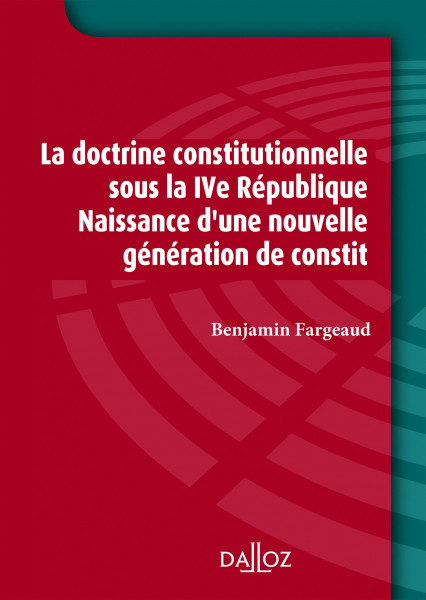
BOOK: Benjamin FARGEAUD, La doctrine constitutionnelle sous la IVe République (Paris: Dalloz, 2020), 564 p. ISBN 978-2-2471-9603-6, € 70

(image source: Univ-droit)

Abstract:
En 1945, la période de la Libération devait également être un moment de rénovation pour le droit constitutionnel. Au moment même où la France se dotait d’une nouvelle Constitution, une nouvelle génération de constitutionnalistes accède au devant de la scène. À la génération des « disciples » succède celle que Marcel Prélot avait baptisée la « troisième génération de constitutionnalistes » et qui devait être la génération des « novateurs ». La rénovation du droit constitutionnel s’avéra toutefois un programme difficile à mettre en œuvre. La IVe République, malgré l’adoption d’une Constitution nouvelle, est rapidement revenue aux pratiques et usages de la IIIe République antérieure, décevant ainsi les espoirs de la doctrine constitutionnelle et les tentatives de façonner un droit constitutionnel propre au nouveau régime. Constatant l’échec du droit constitutionnel à encadrer la vie parlementaire, les constitutionnalistes ont alors délaissé le terrain de la technique constitutionnelle et se sont tournés vers la science politique afin de refonder leur discipline. Si cette voie politiste a permis à la « jeune école de droit public » d’aborder des champs de recherches nouveaux, tels que les partis politiques ou l’histoire des idées politiques, elle l’a toutefois détournée du terrain de la technique constitutionnelle sur lequel allait finalement se jouer la révision constitutionnelle de 1958, qui a consacré la Constitution de la Ve République.
(source: univ-droit)

11 December 2019

JOURNAL: Giornale di Storia Costituzionale - Journal of Constitutional History 38 (2019): Costituzione e mutamento. Crisi delle istituzioni rappresentative e nuove sfide della democrazia / Constitution and Change. Crisis of representative Institutions and new Challenges of Democracy


Giornale di
Storia
costituzionale
n. 38 / II semestre 2019


Costituzione e mutamento. Crisi delle istituzioni
rappresentative e nuove sfide della democrazia
Constitution and Change. Crisis of representative Institutions
and new Challenges of Democracy


 (image source: storiacostituzionale.it)


eum > edizioni università di macerata


Sommario /
Contents
giornale di storia costituzionale n. 38 / II semestre 2019
journal of constitutional history n. 38 / II semester 2019


   Costituzione e mutamento. Crisi delle istituzioni rappresentative e nuove sfide della democrazia / Constitution and Change. Crisis of representative Institutions and new Challenges of Democracy
5 Introduzione / Introduction
marco fioravanti
Lezioni
13 What to Celebrate? The Place of the Weimar Constitution within the History of Modern Constitutionalism / Cosa celebrare? Il posto della Costituzione di Weimar nella storia del costituzionalismo moderno
horst dippel
Itinerari
27 Democrazia e conflitti / Democracy and Conflicts
pietro costa
39 Les Droits de la nature et la personnalité juridique des entités naturelles en Nouvelle-Zélande: un commun qui s’ignore? / Rights of Nature and Legal Personality of Natural Entities in New Zeland: Making a Commons?
pierre brunet
55 Fragilità della Costituzione e nichilismo giuridico / The Fragility of Constitution and Legal Nihilism
massimo vogliotti
79 How to defend the democratic principle when elections and parchment barriers fail. A realistic approach to constitutional democracy / Come difendere il principio democratico quando le elezioni e i limiti al potere falliscono: un approccio realista alla democrazia costituzionale 
matteo laruffa
93 Rappresentanza e responsabilità. Il controllo democratico nell’epoca del risentimento / Political Representation and Responsibility: Democratic Control in the Age of Distrust
marco fioravanti


103 L’introduction du tirage au sort dans les démocraties représentatives / The introduction of sortition in representative democracies
arnaud le pillouer
121 La Cina e la storia globale del diritto internazionale / The History of International Law in China from a Chinese perspective
maria adele carrai
135 d’Annunzio, la Carta del Carnaro e la crisi dello Stato liberale, tra rappresentanza e antiparlamentarismo / d’Annunzio, the Charter of Carnaro, and the crisis of the liberal State, between representation and anti-parliamentarianism
davide rossi
Ricerche
151 Jovellanos y el constitucionalismo de la ilustración española / Jovellanos and the Spanish Enligthenment Constitutionalism
ignacio fernández sarasola
173 La Realpolitik del populismo moderno: potere e consenso in Ludwig von Rochau / The Realpolitik of modern populism: Ludwig von Rochau’s view on power and consensus
ronald car
187 Dei tanti e diversi confini dell’amministrazione coloniale / Borders and boundaries in Italy’s colonial administration
chiara giorgi
Librido
Primo piano / In the foreground
201 Francesco Guarino legge / reads Patrick
O’Meara, The Russian Nobility in The Age of Alexander I
205 Ventidue proposte di lettura / Twenty-two reading proposals
229 Autori / Authors
231 Abstracts


13 November 2019

LECTURE: "Les idées constitutionnelles, idées itinérantes ?" (Département de droit romain et d'histoire du droit, université Paris II Panthéon-Assas, 2 DEC 2019)

(image source: Brill)

Prof. Ulrike Müssig (Passau) will hold a talk entitled "Les idées constitutionnelles, des idées itinérantes ?" at the Centre Sainte-Barbe (4 rue Valette, 75005 PARIS) on Monday 2 December, at 18:00.


09 September 2019

ARTICLE: Clara MAIER, "The Weimar Origins of the West German Rechtsstaat, 1919-1969" (The Historical Journal 2019)

(image source: Cambridge Core)

Abstract:
The article explores the key components of the political project of West Germany and the role of the Rechtsstaat within it. It shows how the German Federal Republic developed a specific reading of the rule of law as an order founded on basic rights as supra-legal values and judicial authority, which had to be defended even against democratic government. This did not signify a departure from the constitutional theory of the Weimar period, as constitutional lawyers such as Gustav Radbruch and Carlo Schmid claimed at the time. Instead, the decisive innovations in constitutional thought stemmed from the Weimar era. Judicial review and basic rights had been instruments in a political and legal struggle over the social question and the boundaries of democratic decision-making in the 1920s. They had been invoked by conservative lawyers such as Carl Schmitt and been the subject of a substantial critique mounted by social democrat interpreters of the Weimar Constitution such as Hermann Heller and Franz Neumann. As such the Rechtsstaat, which is so strongly associated with the renewal of German democracy, carries with it a tradition of legal thought which systematically and successfully expanded judicial power to the detriment of the legislature and democratic action.
Read more on Cambridge Core.

06 August 2019

BOOK: Frank O. BOWMAN, High Crimes and Misdemeanors: A History of Impeachment for the Age of Trump (Cambridge: Cambridge University Press, 2019). ISBN 9781108481052, $ 29.95


(Source: CUP)

Cambridge University Press has published a new book on the history of impeachment.

ABOUT THE BOOK

For the third time in forty-five years, America is talking about impeaching a president, but the impeachment provisions of the American constitution are widely misunderstood. In High Crimes and Misdemeanors, constitutional scholar Frank O. Bowman, III offers unprecedented clarity to the question of impeachment, tracing its roots to medieval England through its adoption in the Constitution and 250 years of American experience. By examining the human and political history of those who have faced impeachment, Bowman demonstrates that the Framers intended impeachment to be a flexible tool, adaptable to the needs of any age. Written in a lively, engaging style, the book combines a deep historical and constitutional analysis of the impeachment clauses, a coherent theory of when impeachment should be used to protect constitutional order against presidential misconduct, and a comprehensive presentation of the case for and against impeachment of President Trump. It is an indispensable work for the present moment.

ABOUT THE AUTHOR

Frank O. Bowman IIIUniversity of Missouri

Frank O. Bowman, III is a law professor, legal historian, and former federal and state prosecutor. He has written extensively on impeachment in legal journals and the popular press, including the New York Times, Politico, and Slate, where he is regular contributor. He has provided testimony to both Houses of Congress on multiple subjects including the meaning of 'high crimes and misdemeanors' during the Clinton impeachment crisis.

TABLE OF CONTENTS

1. How to interpret the Constitution's impeachment clauses
2. British impeachments (1376–1787)
3. American impeachments before 1787
4. The Founders' impeachment
5. Impeaching legislators and lesser executive branch officials
6. Impeachment of judges
7. The impeachment of Andrew Johnson
8. The fall of President Richard Nixon
9. The strange case of William Jefferson Clinton
10. The scope of impeachable presidential conduct: general principles
11. Impeachment for obstruction of justice
12. Impeachment for abuse of the pardon power
13. Impeachment for lying
14. Impeachment for corruption – schemes of peculation, the emoluments clauses, and the avaricious president
15. The twenty-fifth amendment as an alternative to impeachment
16. Impeaching Donald Trump

More information here

31 July 2019

CALL FOR PAPERS: Weimar and the Constitutional Cycle Post Great War - In the Centenary of the Weimar Constitution, 1919-2019 (Lisbon: Lisbon Geographic Society, 28-29 NOV 2019); DEADLINE 30 SEP 2019

(image source: Bayern Radio)

Abstract:
Elapsing in 2019, a century since the creation and implementation of the Weimar Constitution, the Lisbon Geographic Society promotes, in co-organization with the European Centre for the Study of Constitutional History (CHC), with the Institute of Contemporary History (IHC) of NOVA University Lisbon, with the CEDIS – Research Centre on Law and Society of NOVA University Lisbon, and with the Universidade Europeia, the holding of an International Congress dedicated to this event. The Congress will take place on 28 and 29 November, seeking to bring together the contribution of researchers and interested, around the following thematic areas:
I – Weimar Constitution Weimar in constitutional history and historiography II – The historical-political context of the Weimar Constitution III – The Weimar Constitution: sources, works and constituents IV – The organization of political power in the Weimar Constitution V – The fundamental rights in the Weimar Constitution VI – The coeval Constitutions of Weimar: The Constitutions of the End of the Great War VII – The coeval Constitutions of Weimar: The Constitutions of the immediate post War VIII – The influence of the Weimar Constitution 
Practical details:
 Experts and interested in participating are invited to send, until September 30, to the congress email: congressoweimar2019@hotmail.com, the theme and the respective abstract (maximum of two pages), accompanied by a biographical note. After examination by the Scientific Council, the authors will be duly notified until October 10. The final program, as well as the volume with abstracts of the communications, will be available from November 9. Participants in the Congress are requested to send their final text by December 31. The official languages of the Congress are Portuguese, Spanish, French, English and German.
Scientific Committee:
Profs. Doutores Luís Aires de Barros, Armando Marques Guedes, Diogo Freitas do Amaral, Eduardo Vera Cruz, Fernando Larcher, Isabel Graes, José João Abrantes, Jorge Bacelar Gouveia, Miguel Ayuso, Paula Borges Santos e Pedro Velez 
(source: calenda)