(image source: UCLouvain)
ERC Grantee Prof. dr. Xavier Prévost (Bordeaux) will present his project "ISTHisFrench" at UCLouvain on 10 November 2025 at 17:30.
More information here.

The ESCLH aims to promote comparative legal history and seeks affiliation with individuals and organisations with complementary aims.

Abstract:
This volume brings together the study of the rule of law—the idea that the law should protect citizens from arbitrary exercises of power—and the study of ancient Rome. Its chapters apply insights and approaches drawn from modern legal theory in order to understand the ways in which Romans thought about law and the place of law in their community, the extent to which Roman institutions and political norms protected citizens against the arbitrary exercise of power, and how these ideas and practices changed with Rome’s transition from republic to empire. Part I offers an overview of the modern concept of the rule of law and some of the challenges and possibilities of seeking a rule of law in ancient Rome. Part II focuses on the Roman republic and the relationship between key institutions and the law (including the senate, magistrates, people, and state religion), as well as the attitudes of some prominent late republican individuals towards the rule of law. Part III on the principate and empire explores aspirations for the rule of law in the wake of civil war, the relationship between the emperor and the law, and the nature of the emperor’s role as above the law but guarantor of justice. Together, the chapters reveal a world where elements of the rule of law are recognizable but inconsistently realized and sometimes subordinate to alternative ideals of justice, popular sovereignty, or the personal authority of individuals.
Table of contents:
Introduction
Framing Questions
1:The Rule of Law: A Thought Pattern, Michael Sevel
2:In Search of a Roman Rule of Law, Michael Peachin
The Republic
3:Cato and the Rule of Law, Kit Morrell
4:The Populus and the Rule of Law, Amy Russell
5:'Rule of Law' and the Gods in the Late Republic, Catherine Steel
6:The Praetor's Edict and the Rule of Law, Andrew Pettinger
7:Non Iure Rogata: The People, the Senate, and the Rule of Law in Republican Rome, W. Jeffrey Tatum
8:Not in the Last Instance, Andrew M. Riggsby
Principate and Empire
9:Aspiration, Accountability, and Abuse: Augustus and the Law in Post-Conflict Rome, Eleanor Cowan
10:Princeps legibus solutus est an non? Cultures of Legality in the Roman Empire, Tristan S. Taylor
11:The Emperor as the Good Judge: The Emergence of Roman Imperial Jurisdiction as a Discourse on Justice and Rule of Law, Kaius Tuori
12:Some Remarks on Certainty Roman Law, Cosimo Cascione
Read more here: DOI 10.1093/9780198959359.001.0001.

Abstract:
This volume is the first anthology to address the topic of the regulae iuris, or maxims of law, from a uniform methodological point of view. It approaches the regulae iuris as a dynamic system with an ever-evolving structure. The contributors of this volume, being among the leading experts in the field, look at the regulae both in their essence and in their expanding interrelationships, taking account of their changing social and cultural contexts. This volume places the crystallisation and evolution of legal rules within a history of ideas, spanning a wide historical period and going beyond the narrow confines of the history of legal thought.
Contributors:
Ilya A. Kotlyar, Adolfo Giuliani, Maria Kola, David Deroussin, Piotr Alexandrowicz, Ger Coffey, Harry Dondorp, Emanuel G.D. van Dongen, and James R. Gordley.
On the editor:
University of Edinburgh, is an independent researcher who has worked as a postdoctoral researcher at the Universities of Tilburg and Ghent. His primary research interest lies in the mutual interaction of legal doctrine and legal practice in European legal history, particularly in the areas of the law of succession and the law of obligations.
Read more here: DOI 10.1163/9789004736092.

(image source: University of Vienna)
The EUTopia Connected Learning Community Legal History is delighted to welcome Prof. dr. Miloš Vec (Universität Wien) for its annual opening lecture on Friday 14 November 2025.
Within the framework of this year's theme The End of War, Prof. Vec will address the following topic:
After 1919 and after 1945: How two World Wars shaped German Thinking on International Law
Prof. Vec is currently at the Universität zu Köln as the Second Hans Kelsen Visiting Professor. Prior to being appointed at the Universität Wien in 2012, he taught and carried out research in Frankfurt, Hamburg, Bonn, Konstanz, Tübingen, Lyon II, Vilnius and at the Humboldt University in Berlin. He is a renowned legal historian.
His publications include the monographs Zeremonialwissenschaft im Fürstenstaat. Studien zur juristischen und politischen Theorie absolutistischer Herrschaftsrepräsentation (Klostermann, 1998), Recht und Normierung in der Industriellen Revolution. Neue Strukturen der Normsetzung im Völkerrecht, staatlicher Gesetzgebung und gesellfschaftlicher Selbstnormierung (Klostermann, 2006) and -recently- Wolfgang Preiser (1903-1997) und sein "Institut für Geschichte des Völkerrechts" an der Universität Frankfurt Denkräume und Sozialwelten eines Völkerrechtshistorikers im 20. Jahrhundert (Nomos, 2025). He obtained the prestigious Otto Hahn Medal of the Max Planck Society in 1997, the Academy Prize of the Berlin-Brandenburg Academy of Sciences in 2008 and has been a senior Global Hauser Fellow at New York University in 2017. Between 2016 and 2020, he wass a permanent fellow at the Institut für die Wissenschaften vom Menschen in Vienna.
Prof. Vec is co-editor of Constructing International Law – The Birth of a Discipline (with Luigi Nuzzo, Klostermann, 2012), Paradoxes of Peace in Nineteenth Century Europe (with Thomas Hippler, Oxford, 2015), The Transformation of Foreign Policy (with Andreas Fahrmeir and Gunther Hellmann, Oxford, 2015), Western International Law, 1776-1870 (vol. VII of The Cambridge History of International Law, ed. Randall Lesaffer; with Paulina Starski, Cambridge, forthcoming) and The Congress of Vienna and the Transformation of International Law (with Matthias Schmoeckel, Brill, forthcoming). Prof. Vec equally is a member of the editorial board of the book series Studien zur Geschichte des Völkerrechts (Nomos) as well as of the Journal of the History of International Law/Revue d'histoire du droit international (Brill).
Prof. Vec contributes regularily to the leading German newspaper Frankfurter Allgemeine Zeitung, since 1989.
Interested listeners or auditors can contact Frederik dot Dhondt at vub dot be for registration.
More information is available on the website of the EUTopia learning community.

Abstract:
En 13 chapitres, couvrant les temps les anciens jusqu’en 1940, cet HyperCours propose au lecteur d'étudier d’une part l’Antiquité et le droit romain et d’autre part l’Époque contemporaine, en particulier post-1804. Ce manuel présente une connaissance historique des sources juridiques qui, au fil du temps, ont concouru à la formation du système français contemporain. Chaque chapitre porte sur les sources du droit à l’époque envisagée, sur la justice et sur la façon de penser le droit pour envisager philosophes et doctrines, correspondant aux différentes évolutions du cours d’histoire du droit de première année qui ont eu lieu de la fin des années 2000 à aujourd’hui.
Read more with the publisher.

The Association des Historiens des Facultés de Droit attributed its 2025 PhD Thesis Prize to Joseph MANN for the dissertation De l'histoire des corporations au corporatisme. Evolutions méthodologiques et recompositions idéologiques chez les histoires du droit en France (1830 - 1945).
This work was defended at the Université de Strasbourg on 21 November 2024, under supervision of prof. dr. Raphaël ECKERT. The jury was presided by Prof. dr. Emanuele CONTE. Prof. dr. Jean-Louis HALPÉRIN and prof. dr. David DEROUSSIN acted as reporters, while prof. dr. Céline PAUTHIER and Prof. dr. Jean-Marie TUFFERY-ANDRIEU were examiners.
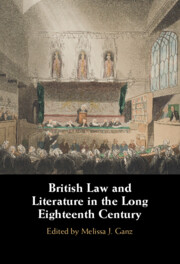
The law underwent significant changes in eighteenth-century Britain as jurists and legislators adapted doctrines to fit the needs of an increasingly commercial, industrial, and imperial society. This volume reveals how legal developments of the period shaped and were shaped by imaginative writing. Reading canonical and lesserknown texts from the Restoration to the Romantic era, the chapters explore literary engagements with libel law, plague law, marriage law, naturalization law, the poor laws, the law of slavery and abolition, and the practice of common-law decision-making. The volume also considers the language and form of legal treatises and judicial decisions, as well as recent appropriations of the period's literature and legal norms by the Christian right. Through these varied case studies, the volume deepens our knowledge of law and literature's mutual entanglements in the long eighteenth century while shedding light on legal and ethical questions that remain of concern to this day.
On the editor:
Marquette University, Wisconsin
Read more here: DOI 10.1017/9781009224185.

Abstract:
This book provides a strong introduction to the principal domains of legal knowledge by examining a structured list of legal maxims, many originating in medieval Roman and canon law. Oriented by historical and methodological approaches, it explores legal thought and reasoning through a comparative lens. Geoffrey Samuel explains the differences between common law and civil continental traditions, outlining preceding works on regulae iuris across the centuries. With an emphasis on English law, the book analyses basic principles and addresses the law of obligations, the law of actions and the law of property and public law. Delving into fundamental legal remedies, substantive law and legal institutions, Samuel questions whether some maxims are more memorable or indisposable than others and shows the impact they have had on legal theory. Exploring historical developments, the book also maps the original sources of key theories, utilising a civil law taxonomical plan to classify them. Principia Iuris is an invaluable resource for students and academics in law, legal theory and legal history. Its unique insights into common law mentalities will also greatly benefit legal educators and practising lawyers.
Contents:
Contents
Preface
Introductory remarks
1 Law as a discipline
2 Historical considerations and the development of English law
and its institutions
3 Procedure and appeals
4 Legal taxonomy and legal theory
5 Public law
6 Law of persons
7 Law of things
8 Law of obligations (1)
9 Law of obligations (2)
10 Law of actions
11 Legal method and reasoning
Final thoughts
Bibliography
Read more here.

Dans l’Europe de la Renaissance, les humanistes ont investi le domaine du droit, notamment les textes romains compilés sous Justinien, et les juristes ont intégré à leur savoir le renouveau encyclopédique des lettres. Ce mouvement convergent a donné lieu à un phénomène culturel multiforme, l’humanisme juridique, qui a transformé tant la science du droit moderne que la connaissance de l’Antiquité. Les noms de Lorenzo Valla, Guillaume Budé, André Alciat, Jacques Cujas, Jean Bodin ou encore Johannes Althusius illustrent l’apport de ce courant intellectuel ; d’autres, comme Pétrarque, Érasme, Thomas More, Luther, Calvin, Machiavel ou Montaigne, y sont pour partie associés. Les contributions ici présentes entendent offrir à un large public une synthèse méthodique pour s’initier aux rapports entre droit et humanisme à travers les figures et les œuvres de ce mouvement, en questionnant ses enjeux grâce à l’ensemble des savoirs et des formes d’expression mobilisés, ainsi que sa réception jusqu’à nos jours.
Table of contents:
SOMMAIRE : X. PRÉVOST et L.-A. SANCHI « Au lecteur » – PREMIÈRE PARTIE Figures de l’humanisme juridique (coord. Gaëlle DEMELEMESTRE) – L.-A. SANCHI « Introduction » ; D. QUAGLIONI « Aire italienne » ; X. GODIN « Aire française » ; M. SCHMOECKEL et R. CUTTAT « Aire germanique et genevoise » ; I. WILLIAMS et A. SIMPSON « Aire britannique » ; G. DEMELEMESTRE et L. BRUNORI « Aire ibérique » – DEUXIÈME PARTIE, Textes marquants de l’humanisme juridique (coord. Shingo AKIMOTO) – S. AKIMOTO « Introduction » ; F. WAQUET « Fondements intellectuels : éloges de l’humanisme et encyclopédisme humaniste » ; X. PRÉVOST « Pédagogie et enseignement universitaire » ; A. BARBAGLI « Établissement philologique des sources du droit » ; S. AKIMOTO « Systématisation du droit » ; B. ROBAGLIA « Institutions publiques » – TROISIÈME PARTIE, Savoirs de l’encyclopaedia et humanisme juridique (coord. Xavier PRÉVOST) – X. PRÉVOST « Introduction » ; S. GEONGET et C. MARTENS « Histoire et sources littéraires » ; G. DEMELEMESTRE « Philosophie » ; P. ASTORRI et L. C. NØRGAARD « Théologie » ; M. BRAGAGNOLO « Médecine » ; G. CIFOLETTI « Sciences mathématiques » – QUATRIÈME PARTIE, Genres de l’humanisme juridique (coord. : Valérie HAYAERT) – V. HAYAERT « Introduction » ; G. A. NOBILE MATTEI « Consultations et actes de la pratique » ; V. HAYAERT « Adages » ; V. HAYAERT « Emblèmes » ; V. HAYAERT « Lexiques juridiques » – CINQUIÈME PARTIE, Réceptions de l’humanisme juridique (coord. : Géraldine CAZALS) – G. CAZALS « Introduction » ; R. R. BARCELÓ « La réception au temps de l’humanisme » ; R. CUTTAT « La réception au temps du rationalisme et des Lumières » ; G. CAZALS « La réception à l’époque contemporaine » – Bibliographie – Index des noms
Abstract:
This insightful book examines the U.S. Supreme Court in a broad historical context, concentrating on the influence of political movements, military and economic developments, the arts and technology on the law and vice versa. Exploring major case law in each period from the Age of Enlightenment and the Civil War to the Watergate Scandal and the present day, James Hart illustrates the role of the Supreme Court in American society.
Table of contents:
Contents
Preface
1 The beginning
2 The country forms its identity
3 Antebellum and the Civil War
4 Reconstruction
5 The Court, wartime, and free speech
6 The Great Depression
7 The Warren Court and Civil Rights
8 Watergate and presidential power9 To the present and the future of individual rights
Read more here: DOI 10.4337/9781035349272.
Sarton Medal 2025 –
Sartonmedaille 2025
on Thursday, November 13th at 4 pm
in Auditorium
Leon De Meyer of the University Forum
Sint-Pietersnieuwstraat
33, 9000 GENT
The Ghent University Sarton Committee,
Prof. Dr. Michel Tison, Dean of the Faculty of Law and
Criminology
have the honour to invite you to the Sarton Lecture,
the laudatio and the handing over of the Sarton
Medal to
Prof. Dr. Lucien
Bély
(Institut de France –
Sorbonne Université)

Programme
- Welcome by dean Michel Tison.
- Laudatio of Prof. Dr. Lucien Bély by Prof.
Dr. Rik Opsommer.
- Sarton lecture, in French, by Prof. Dr. Lucien Bély
on
Les femmes dans la diplomatie aux temps modernes
to
be published in Sartoniana as:
Women in diplomacy in the
Early Modern Era
- Handing over of the Sarton Medal by Prof. Dr. Maarten
Van Dyck, Academic Secretary of the Sarton Committee
- Drink offered by the Faculty of Law and Criminology.

Abstract:
The legal models developed within Italian international law doctrines began arriving in Brazil in the 19th century, taking on different forms depending on their context and the authors who used them. This article aims to analyze the circulation of these legal models between 1822 and 1946, that is, from the year of independence of this great Latin American country until the promulgation of its fifth constitution. These periods saw Italian doctrinal heritage compete with French and German ones in its dialogue with Brazilian realities. Furthermore, it aims to highlight how the theoretical models proposed by the protagonists of Italian international law were received and interpreted by their Brazilian counterparts. This research draws on the writings of Pierre Bourdieu on the international circulation of ideas.
Read more here.

Abstract:
Ce colloque organisé par le Centre Toulousain d’Histoire du Droit et des Idées Politiques, en partenariat avec les Archives départementales de la Haute-Garonne, la Cour d’appel de Toulouse, les Archives nationales et l’Association française pour l’histoire de la justice s’intéresse à la genèse, à la rédaction et à la pratique de cette loi depuis 40 ans. Originellement portée par Robert Badinter, alors ministre de la Justice, elle autorise exceptionnellement un retour des caméras dans le prétoire. Elle s’inscrit dans un héritage tout en portant une dimension inédite : la création d’archives audiovisuelles de la justice en France. De 1985 à 2025, une trentaine de procès ont ainsi été filmés depuis l’inaugural procès de Klaus Barbie à Lyon. L’exemple des procès filmés de la catastrophe AZF en est une illustration locale de son application. Cette journée d’étude questionnera la relation entre les professionnels du droit et la captation audiovisuelle au regard des fins historiques ou scientifiques prévues en 1985 et plus récemment avec la loi du 22 décembre 2021 pour un motif d’intérêt public d’ordre pédagogique, informatif, culturel ou scientifique. Enfin, ces nouvelles archives entre passé, présent et avenir envisageront les enjeux d’archivage et de conservation spécifiques prévus.
More information here.

How and why did the European Convention turn from a neglected legal tool into one of the most important human rights documents in legal practice? This book argues this remarkable development wasn't merely the result of a top-down movement initiated by the European Court, but of a far more dynamic process in which the national and European spheres engaged in constant co-creation. Focusing on the Netherlands and uncovering little known archival sources, it lays bare how the Convention was received over time throughout the entire Kingdom. In doing so, it incorporates insight into how European human rights were perceived in Europe and beyond. A much more varied story comes to light in which contingency and interaction take centre stage, and which uncovers the choices that continue to shape the character of the Convention as we know it today.
Table of contents:
- Introduction
- 1. 1945–1954 Constructing the moral basis for European integration
- 2. 1954–1962 The open beginning of the Convention
- 3. 1962–1968 From European rights to human rights
- 4:
- 1968–1979 European human rights in the age of activism
- 5. 1979–1989 The defining decade: How the Convention became 'mainstream'
- 6. 1989–2022 From permissive consensus to persistent critique
On the author:
Wiebe Hommes , Universiteit van Amsterdam
Read more here: DOI 10.1017/9781009676809.
Mary Ziegler wrote Roe: The History of a National Obsession at the start of 2022. By the year’s end, the US Supreme Court overturned Roe v Wade.
Yet for Ziegler, Roe was not – and has never been – simply a judicial decision that could be overturned. Roe ‘is a symbol of everything that divides us’ (xii). The us are activists, lawyers, lobbyists, politicians, judges and ordinary Americans who, for the last half-century, have used Roe as a symbol to express and to hold cultural differences and political disagreements, ambiguities, and even contradictions, over basic national values (xi). There is no overturning Roe because Roe has been turning and turning in a national obsession over the United States of America itself.
The chapters name these national values: democracy, liberty, and equality, with liberties of choice and religion, and equalities of gender, class and race, as questions of law, science, and justice. The chapters are written chronologically, punctuated by US Supreme Court judgments, when decade by decade, ideas about Roe were tested and challenged, accepted, dismissed, or simply never acknowledged. Yet again Ziegler does not let the court write this history. Narrative, not authority, structures the book. Roe is carried through time as a symbol of choice and coercion, judicial activism and restraint, scientific truth and perversion, social justice and neglect, religious liberty and strife. ‘When we talk about Roe, we contradict ourselves and one another’ (158). These contradictions only show the complexity of ideas about abortion, ideas which sometimes switched sides in political debates, debates that rarely reduced to two sides. Ziegler captures this ‘robust popular constitutional practice’ (158) in Roe as a cultural object of obsessive attachment and struggle, promise and provocation. Of course, as Roe travelled through time, Roe also travelled around the world and carried the contradictions of its meaning into comparative constitutional abortion law and politics, making this national history recognisable and relatable transnationally.
To read the full review, please click here. Online access is free for members of the European Society for Comparative Legal History. For further information about the volume on our blog, please visit here
DOI: 10.1080/2049677X.2025.2500221

Conférence inaugurale (Antonio Trampus)
À propos de la felicità pubblica des révolutionnaires corses du XVIIIe siècle (Erick Miceli)
Abstract:
This paper arises from the interaction between a methodological approach rooted in the history of ideas (through the study of fragments of libraries owned by Corsican revolutionaries and unpublished texts) and a political history based on archival sources. What was the reality of political ideas on the ground? Our aim is to reflect on one of the key terms of the constitution of 16–18 November 1755: felicità. But what does this felicità, elevated alongside libertà as one of the main aims of the new national government, actually represent? Often associated with the term pubblica, the felicità of the Paolists is not individual (as it might have been for the ancient Romans), but collective. The Felicità pubblica is above all a concept or project mobilized by a few in the name of others; it reflects a society that is unmistakably vertical in structure. Although the idea of a nation’s right to happiness is formally proclaimed in a series of little-known printed texts from 1767, the transfer of the idea of collective happiness to the individual level does not unfold in the same way as it did in Anglo-Saxon liberal societies, particularly during the American Revolution, which enshrined the individual pursuit of happiness as a constitutional value. Nevertheless, the Corsican revolutionaries were not unaware of the Enlightenment-era debates on Happiness, one of the central themes of the eighteenth century. While the insurgent islanders’ understanding of this concept remained within the orbit of the Italian Enlightenment—where the notion of happiness was often translated into a Catholic idiom—the Corsicans took a different path, entrusting the collective with the management of Happiness. This approach is a shared feature of Italian republicanisms, which grant felicità a central value. Felicità pubblica is one of the common stakes of the res publica. Where the Paolists introduce a substantial innovation, however, is in the conjunction of felicità with another term: tranquillità. Public happiness can only emerge in a territory where—thanks to the State—populations live in a state of tranquillità! In this aspect of the Paolist conceptual corpus, the island’s republican experiment reuses and reshapes preexisting intellectual material, reformulating it in the process. Ideas are not fixed but alive. The study of the importance of felicità helps us better understand the place of the Corsican Republic in the long continuum of Mediterranean and global republican histories.
Le droit au bonheur comme fondement des droits sociaux (Jean-Guy Talamoni)
Abstract:
The right to happiness, an idea that originated in Corsica in the 18th century, has had a considerable following, from the United States to Bhutan, via many countries including France. This right has generated an interesting body of case law, particularly in the United States, and many researchers have examined the subject. However, a number of questions remain unanswered: its actual nature – is the happiness in question private or public? – the question of its legal scope – how justiciable is it ? Among the avenues that are attracting the most attention, we will focus here on a hypothesis that is attractive in many respects : could the right to happiness be the foundation of all social rights ?
Le droit au bonheur chez les princes des Lumières : une approche comparative (XVIIIème-XIXème siècles) (Thibaut Dauphin)
Abstract:
This article examines the intellectual and political genealogy of the right to happiness, a modern construct closely tied to Enlightenment thought. Through a comparative lens, it analyses how various “princes of the Enlightenment” – monarchs or republican leaders – invoked the notion of happiness in political discourse and constitutional texts, from Sweden to Corsica, from the United States to Latin America, and from Canada to Japan. The study contrasts collective (public felicity) and individual (right to pursue happiness) conceptions, emphasising the rhetorical malleability of happiness, often used as a tool for political legitimation. It reveals the transatlantic circulation of the idea and its adaptation across regimes, revolutionary moments, and political cultures.
Au risque de l’oxymore ? Napoléon Bonaparte et le droit au bonheur (Pierre-Antoine Tomasi)
Abstract:
Examiner l’existence d’un « droit au bonheur » à l’aune de l’action de Napoléon Bonaparte peut apparaître comme une gageure tant, accusé d’avoir été la cause des malheurs de l’Europe, l’héritage de l’Empereur reste controversé. Le « droit au bonheur » s’affirme pourtant comme un élément structurant du constitutionnalisme napoléonien. En effet, pour Napoléon, le but premier d’une Constitution consiste à assurer le bonheur des peuples. L’idée est énoncée avec constance, de ses écrits de jeunesse jusqu’aux Constitutions de l’Empire et de ses Etats satellites. Cet article se propose aussi bien d’interroger la genèse des idées de Bonaparte sur ce point, en insistant sur la part trop méconnue des textes révolutionnaires corses du XVIIIe siècle, ainsi que d’en mesurer les implications concrètes sur le plan du droit constitutionnel. Sur ce dernier aspect, l’élément le plus instructif de l’expérience napoléonienne réside certainement dans le fait que « le droit au bonheur », gravée dans le serment de la Constitution de l’an XII, servit de norme de référence à une sanction juridique, et non des moindres, à savoir le décret de déchéance de l’Empereur adopté par le Sénat en avril 1814.
La recherche du bonheur, de la Constitution de Paoli à la Déclaration d’indépendance des États-Unis (Wanda Mastor)
Abstract:
This article examines the pursuit of happiness as crystallized in two major texts, one of which is much better known than the other, even though it is more recent. The Constitution of Independent Corsica of 1755 on the one hand, and the United States Declaration of Independence of 1776 on the other. While the Corsican and American revolutionaries shared a common passion for freedom and the pursuit of happiness rather than the proclamation of its right, the contours of happiness were significantly different. The American conception of happiness, inspired by liberal individualism, contrasts with the happiness of the Corsican Nation.
Penser la République comme écrin du bonheur et de la liberté : l’Idéologie de Destutt de Tracy et Cabanis (Laura André Lombard)
Abstract:
The Ideologues, whose core members were Destutt de Tracy and Cabanis, intended to found the republic on a sensualist theory of knowledge fuelled by the physiological studies of Cabanis. The purpose of the science of man that they developed was to gain a better understanding of man so as to be able to teach him the means to achieve happiness and freedom, two terms which, for Destutt de Tracy, were synonymous. This access to freedom involves directing desires towards happiness and presupposes that everyone acquires the ability to judge. This programme can only be achieved if it is supported by the State, in particular through education.
L’ île-utopie comme « lieu de bonheur » dans la pensée d’Étienne Cabet (Deborah Paci)
Abstract:
The small size of the island makes it a laboratory for social experimentation. The geographical characteristics of the island space, namely its separation from other lands, contribute to the preservation of a specificity that lends itself to political uses. This article examines the island utopia as a “place of happiness”, focusing in particular on the work of the utopian socialist Étienne Cabet, author of Voyage en Icarie (1840).
Le bonheur, une ambition déçue du constitutionnalisme révolutionnaire (Ludovic de Thy)
Abstract:
The main part of the actors of the French revolutionary constitutionalism believed that they could bring general and permanent happiness to French society, simply by adopting a constitution. However, when we look at the content of the latter, neither the general principles nor the more specific mechanisms that are presented as leading to happiness are a consensus.
Le revenu universel, préalable nécessaire au droit au bonheur ? (Martine Long)
Abstract:
Although universal income is now widely regarded as a “left-wing idea”, historically it has been defended by very diverse currents of thought ranging from ultra-liberals to orthodox communists. Despite different names and assumptions, three elements characterize this notion: the individual character, the universal character and finally the unconditionality. Beyond controversies, at a time when the main inequality is that of wealth, universal income would be a means to rebuild society, to fight against the categorization of devices and individuals and to restore some equity.
Entre bonheur privé et bonheur commun : l’inévidence constitutive de l’intérêt général à la française. (Lino Castex)
Abstract:
To hold together the force of interest and the force of generality—this is the particularly ambivalent engine of the French doctrine of the general interest. Understanding the meaning of the “happiness of all,” as inscribed in the preamble of the 1789 Declaration, requires a historical recontextualization of this conception of the general. Situated between two theoretical specters—on the one hand, a utilitarianism in the service of “the greatest happiness for the greatest number,” and on the other, a Rousseauist vision of education toward “public happiness”—the French path to the general rests on a constitutive ambiguity that relinquishes neither the value of the individual nor the objective of transcending particular wills. We propose to reconstruct the theoretical crucible of the French conception of the general, in order to better grasp the delicate balance in the political pursuit of happiness, between the right to well-being and the quest for a shared felicity. In doing so, we highlight the persistence of this modern ambivalence within our own political vocabulary.
Le droit au bonheur, une idée émergente en droit comparé (Carine David)
Abstract:
The right to happiness occupies a unique place among fundamental rights and freedoms, as a fundamental right. As the foundation of state organization, yet it is rarely included in constitutions. However, the right to happiness is experiencing significant growth within the framework of the happiness world movement, political decision-makers and civil society, returning to the foundations of social organization, promote the happiness of the greatest number.
La poursuite du droit au bonheur en Chine, au Japon, et dans les deux Corées : Reflets d’une pluralité de modèles de société (Alicia Vanderpotte)
Abstract:
The expression and understanding of emotional experience are neither universal nor unambiguous. Emotional experience arises from the complex interaction of cultural, sociological, economic, historical and legal determinants. The conceptualization of happiness thus differs considerably between China, North Korea, South Korea and Japan, revealing a plurality of distinct social models. In China, although an individualistic conception of happiness is emerging among the population, the Constitution reflects a syncretism between the Confucian ideal of social harmony and Marxistcommunist ideology, articulated through the notion of common prosperity and well-being. This framework structures political discourse and long-term development plans, prioritizing collective happiness. In North Korea, while the founding texts of the regime initially drew upon a Marxist conception of happiness, this later evolved into the Juche doctrine, adopting a nationalist vision of the nation’s prosperity, though reality starkly contrasts with its constitutional claims. Unlike China and North Korea, which rejected the Western individualistic notion of happiness, South Korea and Japan embraced it by incorporating the “right to the pursuit of happiness” into their constitutions. However, they preserved the Confucian cultural dimension through the inclusion of the common good. This right has been effectively implemented through Japan’s decentralized constitutional system and South Korea’s centralized system, with the latter yielding more significant results.
Bonheur individuel et bonheur collectif, à propos des deux faces de la conception juridique du bonheur (Félicien Lemaire)
Abstract:
The legal perception of happiness, inherited from American and French revolutionary declarations, encourages us to consider individual happiness and collective happiness in solidarity, juxtaposing the two approaches. In States that refer to the notions of happiness and well-being in their constitutions, as well as in international texts, the pursuit of collective happiness is, however, more commonly sought by introducing a hierarchy between the two conceptions. Contemporary individualism, concretely displayed in Western societies, disrupts this hierarchy, with the observation of a rise in individual rights. But legal analysis in this area is not limited to the ebb and flow of individualism. The enabling standards contained in constitutions and international law weigh on States. They require them to develop public policies facilitating the pursuit of happiness and well-being, not only on the individual level but also in the collective dimension of rights.
De la chance au choix : La transformation du bonheur sous le prisme de la distance (Mohamed Outahar)
Abstract:
This article offers a critical reinterpretation of the notion of happiness through the lens of an original theoretical framework: The Distance Theory. In contrast to the contemporary conception of happiness rooted in the injunction to constant satisfaction, emotional performance, and self-control, I argue that true happiness lies neither in immediacy nor in achievement, but in the quality of distance between the self and its desires. Here, distance is not understood as absence or rupture, but as a relational, ontological, and reflective space; one that enables awareness, transformation, and the emergence of meaning. From this perspective, happiness is neither a fleeting emotion nor a final state to be reached; it becomes a rhythm of existence, an inner posture grounded in the right positioning between attachment and withdrawal. To rethink happiness in the light of distance is to restore its freedom, the freedom to arise within openness and the in-between. This framework thus invites us to conceive of happiness not as a right to be claimed, but as a quality of being to be cultivated.
L’urbanisme du futur pour accéder au bonheur ? Les leçons à tirer des utopies urbaines depuis le XVe siècle (Emmanuelle Bornet)
Abstract:
Urban utopias are « cities born from a human ideal of thinkers or designers ». They have been developing in literature since the 15th century, and all emphasize the same condition for access to a happy life : the presence of nature in living spaces. The general reflection carried out in this contribution will be essentially anchored in the history of ideas and the philosophy of urban planning. We will study quotes from the main utopian works written since the 15th century and their concrete experiments undertaken during the four industrial revolutions (coal, oil, green energy and the internet). This will allow us to recontextualize historically, sociologically and politically the place of nature in living spaces. We will then perceive its historical importance in access to a happy (urban) life. Finally, we will see that in the 21st century, utopian urban construction is giving rise to new debates : the place of natural heritage and sustainable development in societies and the relevance of generic cities generating standardized happiness for their inhabitants.
L’épanouissement humain dans la forme de vie démocratique (Gaël Berthier)
Abstract:
This article examines the nature of democratic happiness and its moral and political conditions. It argues that one of the promises of democracy is to enable each individual to emancipate themselves and to lead a dignified life, grounded in individual autonomy. This autonomy implies the ability to choose one’s values and to construct a reflective relationship to oneself and to others. This framework allows us to conceive of a form of deep happiness, distinct from immediate satisfactions and connected to virtuous activity. It thus leads to a just way of inhabiting the world. Such happiness presupposes integrity—that is, fidelity to what truly matters to oneself—even in the face of value conflicts linked to our vulnerability, and it requires a form of practical wisdom to guide one’s choices. Democratic flourishing also requires a society that protects individuals from domination, understood as arbitrary interference, and that cultivates non-domination as a moral disposition enriching interpersonal relations. This involves attention to others and their claims, to justice, and to nature. Democratic happiness thus appears as a shared task, engaging both individuals and institutions, and oriented by justice, autonomy, and non-domination.
“Les jours heureux”. Normes et droits universalistes du bonheur, de la Résistance à la Vème République. (Remy Badouî)
Abstract:
Happiness has been a legitimate aspiration of politicians and governments since modern times. In the face of the disasters and misfortunes of war, it represents an issue of collective cohesion and good government. In contrast to the Vichy regime, which set the conditions for the country’s rebirth in the misfortune of the Defeat, from 1942 onwards the internal and external Resistance set out the challenges of the French rebirth of a nation freed from the German yoke under the concept of happiness. The de Gaulle and Pompidou years were devoted to this construction.
Potentialités inexplorées. Pour une reconceptualisation normative des catégories actuelles du travail à la lumière du droit au bonheur (Alessio Belli)
Abstract:
This article begins by examining the normative foundations of the right to happiness, attributing to it the status of a constitutional interest: a systematic and teleological reading of constitutional rights and freedoms implies the establishment of the conditions necessary for individuals to determine and pursue autonomously the ends by which they intend to seek happiness and give meaning to their lives. Based on the recognition of the current centrality of work as a crucial area of personal fulfilment, the article then analyses the link between work and the constitutional interest in happiness, drawing on the Aristotelian concept ofeudaimonia – happiness through the exercise of one’s abilities and the cultivation of one’s virtues – and highlighting the emancipatory scope inscribed in this sense in the development of labour law. At the same time, the economic-competitive reorganisation of work and labour law on the basis of categories such as “flexibility”, “employability”, “activation”, etc., is gradually weakening the emancipatory normativity mentioned above, producing widespread forms of commodification. And yet these categories offer potential for individual self-determination that is little or never exploited, and which could foster the free construction of capabilities and the individual pursuit of happiness at work. Thus, in the final sections, the article proposes an update of the emancipatory normativity of labour law through a reconceptualisation of work on Hegelian and Honnethian foundations that could widen the margins of freedom in and of work and construct a legal concept of professionality that can be interpreted as the subject’s self-constitution and self-appropriation, and as a transition towards a right to work that is propitious to the pursuit of personal happiness.
Cultiver le bonheur dans l’éducation : perspectives interdisciplinaires et orientations futures (MIhaela Vancea)
Abstract:
In today’s increasingly complex and fast-paced world, marked by challenges such as climate change, wars, global poverty and rising inequalities, the pursuit of happiness and well-being has become a fundamental goal of education. This paper aims to explore the concept of happiness within the educational context, drawing on insights from various disciplines to highlight its multidimensional nature. Happiness is more than a fleeting emotion; it is a fundamental human aspiration that has been studied across various fields for centuries. From ancient philosophers to modern scientists, understanding what constitutes a ‘good life’ has been central to the study of happiness. In recent decades, interest in well-being has grown, recognising happiness as a fundamental human right with profound implications for policy, society, and individual lives. Within the educational sphere, happiness influences students’ academic performance, social and emotional development, and overall life satisfaction. This paper adopts an interdisciplinary approach, integrating insights from philosophy, psychology, sociology, and education to develop a holistic understanding of happiness in education. It argues that fostering happiness through interdisciplinary thinking is essential for promoting well-being and cultivating flourishing individuals.
Changer le cours de la justice ? Une famille de la petite notabilité urbaine face à l’institution judiciaire (Laetizia Castellani)
Read all articles for free here.