Search

20 October 2025

REMINDER ONLINE SEMINAR: Journal Comparative Legal History - Dialogues on Customary Law - 5 NOV 2025: 17:00-18:00 (CET) [TEAMS]


Comparative Legal History

Dialogues on Customary Law

5 November 2025 – 17:00-18:00hs (CET)


The journal Comparative Legal History is an official academic forum of the European Society for Comparative Legal History. Based in Europe, it welcomes contributions that explore law in different times and jurisdictions from across the globe. Submissions are currently welcome and are being assessed on a rolling basis.

The journal will host a one-hour public session to discuss customary law in the context of comparative legal history. Editors (past and present) will present exploratory points, and all attendees will be invited to join in a general discussion.

Customary laws were prevalent in Europe during the Middle Ages. In recent years there has been a resurgence in research projects concerning customary laws, and a number of questions need to be raised. To what extent are customary laws something that still needs to be studied? To what extent customary laws ought to be taught at universities to complement core modules such as family law, the laws of inheritance and property law to frame these topics in their historical context? To what extent is there merit in having journals and monograph series concentrate on comparative customary law? How should studies be undertaken? These, and other questions will be explored during this public session.

The event is free and open to the public, and it will take place via Teams.

Registration is required by sending an email to clhdialogues@gmail.com.

17 October 2025

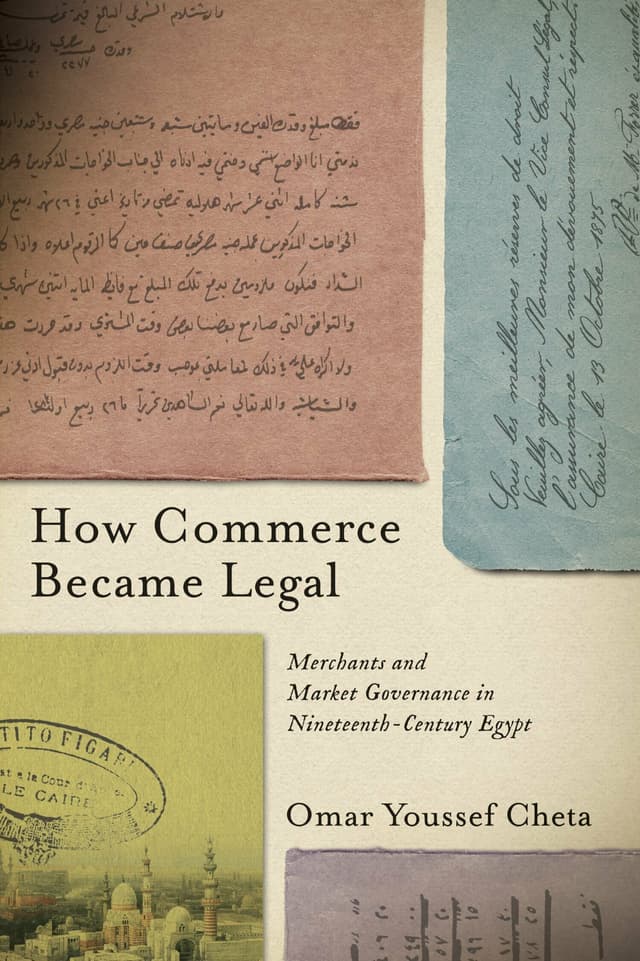
BOOK: Omar Youssef CHETA, How Commerce Became Legal. Merchants and Market Governance in Nineteenth-Century Egypt (Stanford: Stanford University Press, 2025), 268 p. ISBN 9781503643390, 70 USD


(image source: Stanford UP)

Abstract:

When Egypt's markets opened to private capital in the 1840s, a new infrastructure of commercial laws and institutions emerged. Egypt became the site of profound legal experimentation, and the resulting commercial sphere reflected the political contestations among the governors of Egypt, European consulates, Ottoman rulers, and a growing number of private entrepreneurs, both foreign and local. How Commerce Became Legal explores the legal and business practices that resulted from this fusion of Ottoman, French, and Islamic legal concepts and governed commerce in Egypt. Focusing on the decades between the formalization of Cairo's practical autonomy within the Ottoman Empire in the 1840s and its incorporation into the British Empire in the 1880s, Omar Cheta considers how modern laws redefined the commercial sphere, shaping a mode of market governance that would persist for decades to come. He highlights the demarcation of a new law-defined commercial realm separate from the land regime and from civil or family-centered exchanges, and reconstructs these changes through both legal codes and state orders, as well as individual merchant voices preserved in court documents. As this book documents both individual experiences and structural explanations, it offers a rare perspective on the scope and reach of market governance over the mid nineteenth century, revealing changes simultaneously from within and without state institutions.

On the author:

 Omar Youssef Cheta is Assistant Professor of History at Syracuse University.

Read more with the publisher. 

BOOK REVIEW: Rotem GILADI on Nazi antisemitism and Jewish legal self-defense: the turn to law in liberal democracies, 1932–39 by David Fraser (Comparative Legal History, XIII (2025), nr. 1 (June), pp. 169-173)

(Image source: Taylor&Francis)

Jewish turns to law – whether as a profession, a means of social mobility and integration, or a venue where emancipatory claims could be formulated or put forward to negotiate the challenges of modernity – remain largely unexplored in legal-historical research. There is no denying the rich insights displayed by biographies, prosopographies, institutional histories, and works focusing on particular case studies written over the past three decades or so; yet browsing through the catalogues of Jewish personal or institutional archives recording the past two centuries reveals that this richness serves to obfuscate many more lives (in particular of those who have not reached the status of luminaries), associations, foci of advocacy, legal strategies, court cases, or lawmaking enterprises. At the same time, studies of Jewish legal responses to the rise of National Socialism have recently inclined towards international law, international institutions, and international advocacy action. While certain episodes of Jewish legal activism at the national level are well-documented, many others remain under-researched (9).
David Fraser’s meticulously researched comparative legal history represents an important contribution to these lacunas in the extant literature. It narrates not only a range of what may be described as Jewish ‘legal self-defence’ across various jurisdictions but also how Jewish individuals and institutions communicated across national borders to share information, knowledge and advice when responding to the rise of the antisemitism of the 1930s. Throughout the book, action and reaction are juxtaposed to frame Jewish legal advocacy as a local, but also inter- and trans-national, response to a local and inter- and trans-national threat. To that end, Fraser first carefully recreates the thick socio-political contexts, discourses, and imaginations of Catholic police officers, conservative nationalists, journalists, army veterans, fringe and mainstream politicians, and professionals of the ‘Antisemitic international’ (11) to foreground a ‘socio-legal comparative history of … Jewish attempts in the 1930s “Anglosphere” to counter the rise in fascist and Nazi antisemitism’ (1). To that end, the first two chapters (2–3) provide a convenient, compact comparative survey of some of the features of the ‘Antisemitic international’: its tropes, texts – in particular, the Protocols of the Elders of Zion – German ties, circulation, agents, the networks they formed, and their modus operandi. These chapters also reflect on the challenges, choices, and pitfalls of Jewish legal resistance in jurisdictions outside the Anglosphere.

To read the full review, please click here. Online access is free for members of the European Society for Comparative Legal History. For further information about the volume on our blog, please visit here.
DOI: 10.1080/2049677X.2025.2500220

16 October 2025

ONLINE BOOK DISCUSSION: Hendrik SIMON & Lauri MÄLKSOO in conversation about "A Century of Anarchy? War, Normativity, and the Birth of Modern International Order" (OUP, 2024), (ESILHIL: 22 OCT 2025)


(image source: ESILHIL)

The Interest Group History of International Law of the European Society of International Law organizes an online discussion on Hendrik Simon's OUP monograph A Century of Anarchy (see earlier on our blog), with the author as well as Prof. dr. Lauri Mälksoo (Tartu).

Read more here.

15 October 2025

CALL FOR PAPERS: Proclaiming, Affixing, Distributing: Disseminating the Law in Early Modern Europe [2nd COMLAWEU conference] (St Andrews: University of St Andrews, 5-6 MAY 2026) [DEADLINE 31 OCT 2025]


Call for Papers

Proclaiming, Affixing, Distributing: Disseminating the Law in Early Modern Europe

The 2nd COMLAWEU conference, 5-6 May 2026, University of St Andrews


Proposals for papers (max. 20 minutes) are invited on the subject of ‘Proclaiming, Affixing, Distributing: Disseminating the Law in Early Modern Europe’ to be presented at the second COMLAWEU (Communicating the Law in Europe, 1500-1750) conference at St Andrews, to be held on Tuesday 5 and Wednesday 6 May 2025.

Abstracts (max. 350 words) and a short bio (max. 150 words) are due to Dr Arthur der Weduwen, Principal Investigator of the COMLAWEU project, by 31 October 2025, at adw7@st-andrews.ac.uk.

This conference seeks to build on the small but rapidly growing body of work on the manifold ways in which early modern Europeans could listen to, see, read and inform themselves of the law in the public and private spaces of their communities. It will seek to determine how various authorities sought to disseminate their laws; and how different audiences received or were exposed to information about the law. We welcome contributions on any part of early modern Europe or its colonies, within the time frame of c. 1450-1800.

Papers are invited on any aspect of the conference, which will seek to provide answers to some of the following questions:

·        How did European authorities disseminate the law within and beyond their territories?

·        What was the role and relative importance of criers, heralds, messengers, affixers and other officials tasked with the proclamation and further dissemination of laws?

·        How many copies of laws would regularly be distributed, in what forms and to what audiences? How commonly were laws affixed as physical exemplars, and where could they be consulted?

·        How did physical geography, infrastructure, postal routes and the size of urban communities affect state communication? How different was the communication of law in cities and villages or rural communities?

·        How did multiple media interact in the dissemination of political and legal information?

·        To what extent did the ceremony of state communication develop over time?

·        To what extent did news of laws, as well as physical copies of manuscript and printed texts, travel across jurisdictions?

·        How did crisis, unrest and war affect the dissemination of the law?

·        How frequently did acts of communication and dissemination spark unrest or conflict?

·        To what extent did copies of laws and other state publications circulate commercially? In what other forms were they republished or altered?

It is expected that papers presented at the conference will also be published by the end of 2027 in an edited volume.


Conference context

In early modern Europe it was a ubiquitous norm that law had to be published to be valid. In his thirteenth-century Treatise on Law (part of his Summa Theologiae), Thomas Aquinas considered that the promulgation of law (‘an ordinance of reason for the common good’) was inherent to its essence. In early modern Europe, laws were issued and promulgated by a great variety of political authorities (kings, governors, councils, representative assemblies, executive bodies and so forth). Most of these authorities relied on an inherited system of communication that required laws to be read out (proclaimed) and distributed in handwritten or printed documents. The extent of these efforts naturally depended on the extent of the jurisdiction of the issuing authority: edicts issued by the King of France would have to be published across a country of almost twenty million people, while laws issued by the Parlement of Bordeaux would be restricted to a much smaller region. Municipal laws often extended only to a single urban community, as well as any rural territory owned by the city beyond its walls; at the same time, many pieces of municipal legislation travelled far and wide, serving as warnings to people in other jurisdictions, or models to other authorities for their own programme of legislation. Many people would also have been subject to overlapping jurisdictions, each with a need to communicate their laws: for instance, a citizen of seventeenth-century Rotterdam would be faced with ordinances issued by their town council, but also the local Admiralty, the States of Holland, the States General, and multiple other administrative and financial bodies.


If most ordinary people were excluded from the chambers of the state where policy was formulated, they were fully involved in the enactment of the law, which demanded public communication and placed the rulers and ruled in shared communal spaces, such as the market square. The communication of law was steeped in ritual ceremonies, but these were by no means ceremonies in which only the rulers played an active role. The announcement of a new edict provided subjects with an occasion to voice their concerns or disapproval.


The practice of verbal proclamation was rarely sufficient to reach all of those to whom the law applied. In many towns across Europe, use was made of town criers, who would sometimes also be charged with the affixing of copies of new laws at locations where they made their announcements. These locations were both practical and symbolic, places where many people would congregate: they generally included the town hall, market squares, churches, town gates, other notable buildings and busy commercial streets. After the crier had moved on, affixed copies of the law could be consulted by literate inhabitants, scrutinised or read out to the illiterate. Many were also reprinted for commercial distribution.

Affixing the law was a highly figurative act, as it represented the presence of government and the threat of the enforcement of order. From the perspective of the authorities it was also politically perilous. The distinctive style of ordinances and the prominent locations in the cityscape where they were posted were chosen by the magistrates for maximum publicity. This meant that ordinances were often targeted by indignant citizens. Unfortunate town criers could be abused or assaulted by unreceptive citizens, especially as criers were not ordinarily accompanied by guards. Citizens could also express their dissent by counter-posting libels, poems, songs, images or even animal parts in public spaces. Increasing efforts to communicate the law ensured that it could be examined, tested or ripped down in protest. Proclaiming and affixing ordinances could reassure but also embolden an attentive and engaged public.

VIDEO: The Legal System of the Channel Islands (FranceTv, des Racines et des Ailes, 8 OCT 2025)

(image source: Francetv)
 

The well-known culture and heritage program Des Racines et des Ailes devoted an episode to the Channel Islands, including the legal system inherited from the Duchy of Normandy. Legal historian Sophie Poirey (Université de Caen) visits the Guersney courthouse with a local judge. The financial and legal industry of Jersey is treated as well. See here.

VIDEO: Michel TROPER, "J'ai fait très peu de droit à Sciences Po" (En Chair(e)) [YOUTUBE]

The Youtube-channel "EnChair(e)" publishes a long video interview with renowned French legal theorist and specialist of constitutional law Michel Troper. 

See above for the first chapter. Youtube-channel here.

14 October 2025

BOOK: Frédéric ROLIN, Mettre en scène le Conseil d'État. Iconographie et scénographie juridiques du Palais Royal 1875-2025 (Paris: MDD, 2025), 290 p.


(image source: MDD)

Abstract:
En 1871 le Conseil d’État est en mauvaise posture. Il a été « suspendu » par la République et les locaux qu’il occupait au Palais d’Orsay ont été incendiés par les Communards. La décision est cependant prise de la rétablir et de lui attribuer les locaux du Palais­Royal où il siège encore aujourd’hui. Dans ce livre, Frédéric Rolin emprunte des chemins nouveaux pour raconter l’histoire de cette installation et des cent cinquante années qui l’ont suivie et montrer la relation à la fois profonde et complexe qui va se nouer entre l’institution et les murs qui l’entourent. Il s’agit d’une histoire des images, des symboles, de la scénographie des espaces et des réseaux de significations qui les entourent. L’utilisation de l’iconographie et de la scénographie juridiques permet de pénétrer certains des ressorts intimes de l’institution : les difficultés de sa républicanisation au moment où elle s’installe au Palais, la manière dont elle va progressivement secouer le joug des administrations qui lui imposent des choix décoratifs qui ne sont pas les siens, mais aussi la manière dont elle va, dans ce palais, construire une politique mémorielle, choisir, par les images et les noms donnés à des salles l’image qu’elle entend donner d’elle­-même. Cette évolution continue du Palais­Royal depuis 1875 devient ainsi l’histoire d’une mise en scène. Mise en scène d’une des institutions les plus importantes de la République, mise en scène de ses rapports avec le pouvoir politique et administratif, mise en scène du droit qu’elle y fabrique. Fondé sur une lecture attentive des sources et une approche transdisciplinaire cet ouvrage intéressera autant les juristes, qui regarderont différemment des lieux qu’ils connaissent ou fréquentent, qu’un public plus large intéressé par les relations entre l’art, le pouvoir et les institutions dans l’histoire des deux derniers siècles.

Read more here. 


CONFERENCE: Autour du Trésor historique de l'État en France - Pierre Legendre (Nantes: Université de Nantes, 17 OCT 2025) [HYBRID]


Announcement:
Pierre Legendre, né le 15 juin 1930, est décédé le 2 mars 2023, à quelques mois de la réédition augmentée d’un de ces « maîtres ouvrages », le Trésor historique de l’État en France. Initialement publiée sous le titre, plus sobre, d’Histoire de l’Administration de 1750 à nos jours (Paris, PUF, 1968), avant une première réédition sous le nouveau titre de Trésor historique de l’État en France (Paris, Fayard, 1992), l’édition de 2023, sous le simple titre de « L’État », constitue, non seulement une réédition mais également une oeuvre nouvelle, par l’adjonction de textes inédits de Pierre Legendre, mais aussi par la republication d’un recueil de sources historiques demeuré jusqu’alors complètement méconnu. L’oeuvre de Pierre Legendre se trouve à la croisée des disciplines que sont l’histoire du droit, la science administrative, la psychanalyse mais aussi le management, au service d’une discipline dénommée « anthropologie dogmatique ».

See here for program and further details. 

13 October 2025

REMINDER CALL FOR EDITOR: Journal Comparative Legal History [DEADLINE 31 OCT 2025]


 Journal Comparative Legal History

Call for Editor

Deadline: 31 October 2025


The European Society for Comparative Legal History (ESCLH) is seeking applications for the position of Editor of its flagship journal, Comparative Legal History. The journal is an official academic forum of the ESCLH. It was first published in 2013 and aims to offer a space for the development of comparative legal history. Based in Europe, it welcomes contributions that explore law in different times and jurisdictions from across the globe.

Evidence of scholarly ability, experience in editing, and membership (or a commitment to become a member if appointed) of the ESCLH are requirements. Full training in the journal’s processes will be provided as needed.

You would become part of a tradition of scholars and contribute to the advancement of comparative legal history as part of a warm, supportive, and dedicated team. The ESCLH particularly welcomes applications from people with backgrounds which are underrepresented in academia generally, and in the ESCLH and the journal particularly.

This position is not paid.

Applications, with a brief cover letter and short CV (no more than 6 pages) should be sent to Matthew Dyson, matthew.dyson@law.ox.ac.uk (President of the ESCLH) by 31 October 2025.

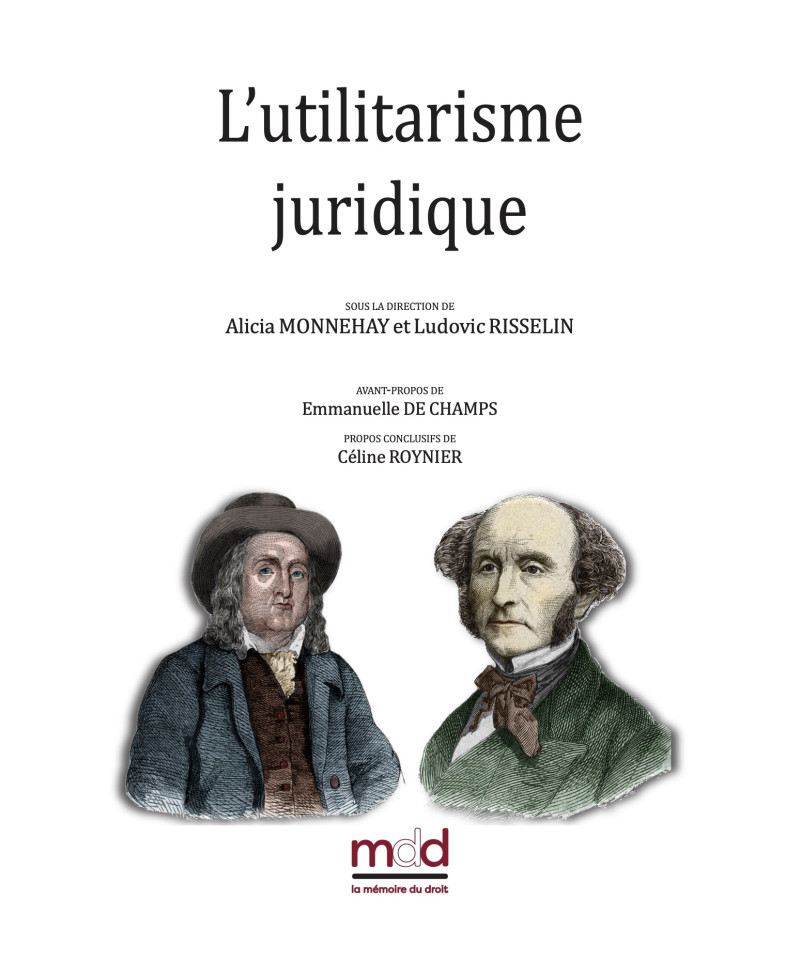
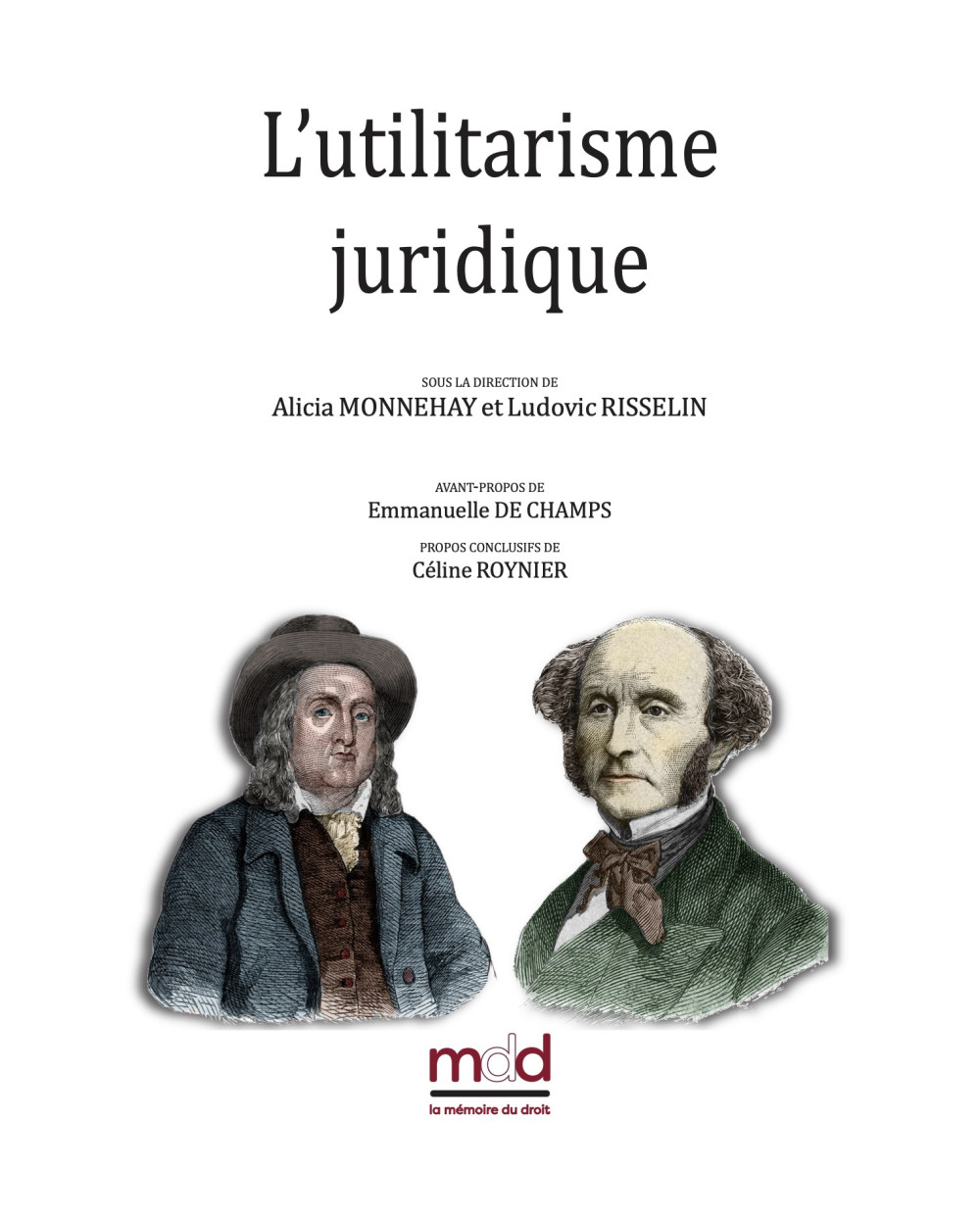
BOOK: Alicia MONNEHAY & Ludovic RISSELIN (dir.), L'utilitarisme juridique. Actes du colloque de la jeune recherche organisé le jeudi 7 septembre 2023 à CY Cergy Université (Paris: La Mémoire du Droit, 2025), 216 p.


(image source: MDD)

Abstract;

L’utilitarisme est cette philosophie morale qui érige l’utilité en principe. Enraciné dans la culture politique anglo-saxonne et trop souvent réduit à la théorie économique qui l’a favorablement accueilli, il entretient des relations privilégiées avec le droit. La philosophie utilitariste, en se prolongeant dans l’organisation sociale pour atteindre la félicité publique, innerve le système juridique. Un tel mouvement s’observe dans le droit français. À travers l’expression de « l’utilitarisme juridique », l’ouvrage porte l’ambition de retranscrire les actes du colloque, qui s’est tenu le 7 décembre 2023 à l’Université de Cergy Paris, au cours duquel les contributeurs ont intégré la question de l’utilité dans leur raisonnement. Une convergence de méthode s’est alors dessinée pour se saisir du droit positif et de ses évolutions. Qu’il s’agisse de déterminer le rapport de fondamentalité qu’entretiennent le droit et la morale ou de révéler l’instrumentalisation de l’utilité dans l’appréhension des conséquences des normes, l’utilitarisme offre une grille d’analyse pertinente. Les articles qui rythment la structure de l’ouvrage l’illustrent.

Read more here. 

PRIZE: Robert Feenstra Prize to Christian VIA BALOLE (UCLouvain)

(image source: UCLouvain)

On the prize:

Le chercheur Christian Via Balole a reçu le prestigieux Prix Robert Feenstra, décerné par le comité de rédaction de la Tijdschrift voor Rechtsgeschiedenis (Revue d’Histoire du Droit), pour son article intitulé « Le travail forcé au Congo (1960–2001) : entre décolonisation du droit et vestiges du joug du droit colonial belge », publié en 2024. Ce prix, créé en hommage au professeur Robert Feenstra, récompense tous les deux ans un article exceptionnel portant sur l’histoire du droit occidental. La remise officielle aura lieu lors des Journées belgo-néerlandaises d’histoire du droit, les 27 et 28 novembre 2025 à la Radboud Université de Nimègue (Pays-Bas).

Article summary:

Cet article démontre qu’à peine sortis du joug du droit colonial belge, les travailleurs congolais ont immédiatement fait les frais du joug du droit postcolonial qui les a maintenus, contre leur gré, au travail. A l’instar du droit colonial, la mobilisation forcée de la main-d’œuvre congolaise a fait l’objet d’une réglementation après la colonisation afin qu’elle obtienne un habillage juridique non seulement de légalité, mais aussi de légitimité. Néanmoins, à rebours du droit colonial, le droit mis en place par le Congo indépendant pour astreindre les travailleurs au travail s’est révélé contraire au droit international du travail fondé dorénavant sur l’idéologie des droits humains (liberté et dignité) et non plus sur la « civilisation ».

Read more here. Read the article here: DOI 10.1163/15718190-20243409.

10 October 2025

SYMPOSIUM: Cartografías de la memoria jurídica. Palabra, pensamiento y pasiõn. Celebrando los 70 años de Carlos Petit (Huelva: Universidad de Huelva/Universidad Internacional de Andalucia, 9-10 OCT 2025)


(image source: SEHD)

Description:
Los próximos días 9 y 10 de octubre de 2025 se celebrará, con motivo del 70º aniversario del prof. Carlos Petit, el homenaje titulado «Cartografías de la memoria jurídica. Palabra, pensamiento y pasión. Celebrando los 70 años de Carlos Petit». El acto dará comienzo el 9 de octubre, a las 10:30 horas en el Salón de Grados de la Facultad de Derecho de la Universidad de Huelva. La segunda jornada, el 10 de octubre, tendrá lugaren la Sede Santa María de La Rábida de la Universidad Internacional de Andalucía. La Comisión organizadora de este encuentro está conformada por los profs. Manuel Bermejo Castrillo, Aurora Mª López Medina, Sebastián Martín y Cristina Vano.
Read more here.


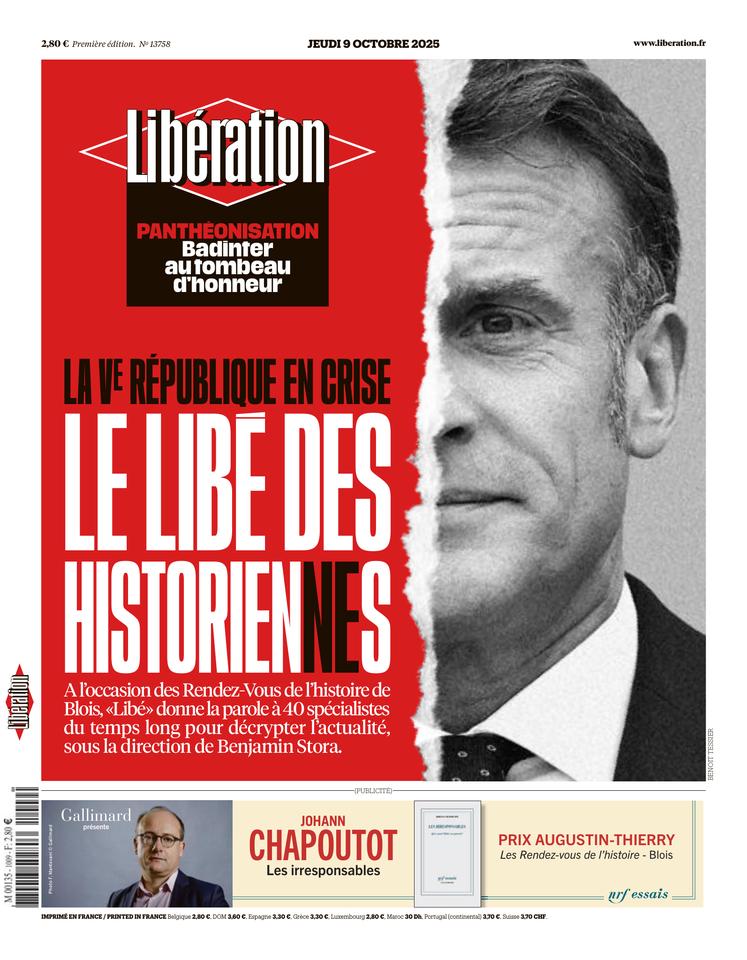
MAGAZINE: Le Libé des historien.nes (9 OCT 2025)


(image source: Libération)

A team of French historians filled Thursday's edition of the newspaper Libération. Contributions on the press ('chronique judiciaire') and former Minister of Justice Robert Badinter (who entered the Panthéon on the same day, and is remembered for abolishing the 'délit d'homosexualité', the death penalty and the introduction of alternative punishment to incarceration) might interest legal historians as well.

Read more here and here.

HONOUR: Martti Koskenniemi celebrated for Rule of Law Day (Helsinki: University of Helsinki, 8 OCT 2025)


Event description:

Rule of Law Day is a free event open to everyone. It brings together leading domestic and international experts in development cooperation and the rule of law from the public sector, NGOs, and academia to discuss successes and challenges in promoting the rule of law. Participation requires registration on the Rule of Law Centre’s website. 

Each year, in connection with Rule of Law Day, the University of Helsinki’s Rule of Law Centre and the Leo Mechelin Foundation award the Leo Mechelin Medal to a distinguished advocate of the rule of law. The programme also includes the recipient’s Leo Mechelin Keynote Lecture. 

The 2025 Leo Mechelin Keynote Lecturer will be Academician, Professor Emeritus Martti Koskenniemi. Previous keynote lecturers include Professor Emeritus Kaarlo Tuori (2022), Professor and Nobel Laureate James A. Robinson (2023), and Professor Alina Mungiu-Pippidi (2024). 

Koskenniemi has served as Professor of International Law at the University of Helsinki since 1994 and as Director of the Erik Castrén Institute of International Law and Human Rights, which he founded, since 1997. He is one of the world’s leading scholars of the rules-based international order and an influential public intellectual. 

He received his doctorate at the University of Turku in 1989. He has held visiting or part-time professorships at the University of Cambridge, the London School of Economics, the University of Melbourne and Sorbonne University in Paris. He is a Fellow of the British Academy and a member of the American Academy of Arts and Sciences. He has honorary doctorates from several universities. He has also served as a member of the UN International Law Commission. He was Academy Professor in 2005–2009 and 2013–2017. He received the Finnish Science Award in 2021 and he was granted the honorary title of Academician of Science in 2023. 

In addition to the Leo Mechelin Keynote Lecture, the Rule of Law Day panel discussion will focus on the role of academic freedom in upholding the rule of law. 

The Rule of Law Centre, established in 2021 under the Faculty of Law at the University of Helsinki, supports the development of the rule of law in developing countries. Its operations are funded in part by development cooperation funds from the Ministry for Foreign Affairs of Finland. 

Read more here. 

CONFERENCE: Laboulaye et la galaxie libérale (Paris: Senate, 20 OCT 2025)


(source: UNJF)

On 20 October, an international colloquium takes place in the French Senate (Palais du Luxembourg) on Laboulaye et la galaxie libérale, featuring numerous established legal historians.


More information here.

BOOK REVIEW: Mateusz BIECZYŃSKI on Artistic canons and legal protection: developing policies to preserve, administer and trade artworks in 19th-century Rome and Athens by Chiara Mannoni (Comparative Legal History, XIII (2025), nr. 1 (June), pp. 164-169)

(Image source: Taylor&Francis)


Chiara Mannoni’s Artistic Canons and Legal Protection: Developing Policies to Preserve, Administer and Trade Artworks in 19th-Century Rome and Athens offers an exploration of the interplay between law, culture, and art during a transformative historical period. Focusing on two pivotal European cities, Rome and Athens, Mannoni argues that nineteenth-century legal frameworks were not merely reactive to the burgeoning art market but actively shaped the artistic canonsFootnote1 they aimed to safeguard. Her analysis bridges legal and art history, providing a fresh perspective on how laws influenced both the preservation of national heritage and the circulation of art within an evolving international market.

The book consists of an introduction, three chapters, and a conclusion. Each chapter presents a different aspect of the trade in antiquities and the legal restrictions imposed upon it, following a chronological order. The first chapter focuses on protective legislation, with particular emphasis on the significance of the Chirografo Chiaramonti (1802), an Act that introduced early preventive measures to regulate the export of antiquities and established the groundwork for cultural heritage protection in the Papal States, and the Edict Pacca (1834), which expanded these protections by introducing stricter controls on the removal and sale of cultural artifacts, emphasising the public interest in preserving Rome’s historical legacy. Both were designed to safeguard the cultural heritage of Rome. Similarly, the Gesetz of 1834 for Greece marked an important milestone in codifying legal protections for antiquities, aiming to prevent the widespread looting and unauthorised export of Greece’s rich archaeological heritage. Chapter two examines administrative chronicles, detailing the practical application of these legal measures within the Papal States, Athens, and the Greek provinces. Finally, in the third chapter, the author moves on to analyse the practices surrounding the trade of ancient artworks in both territorial contexts, discussing their influence on the shaping of the European art market and aesthetic preferences.


To read the full review, please click here. Online access is free for members of the European Society for Comparative Legal History. For further information about the volume on our blog, please visit here.
DOI: 10.1080/2049677X.2025.2500219

09 October 2025

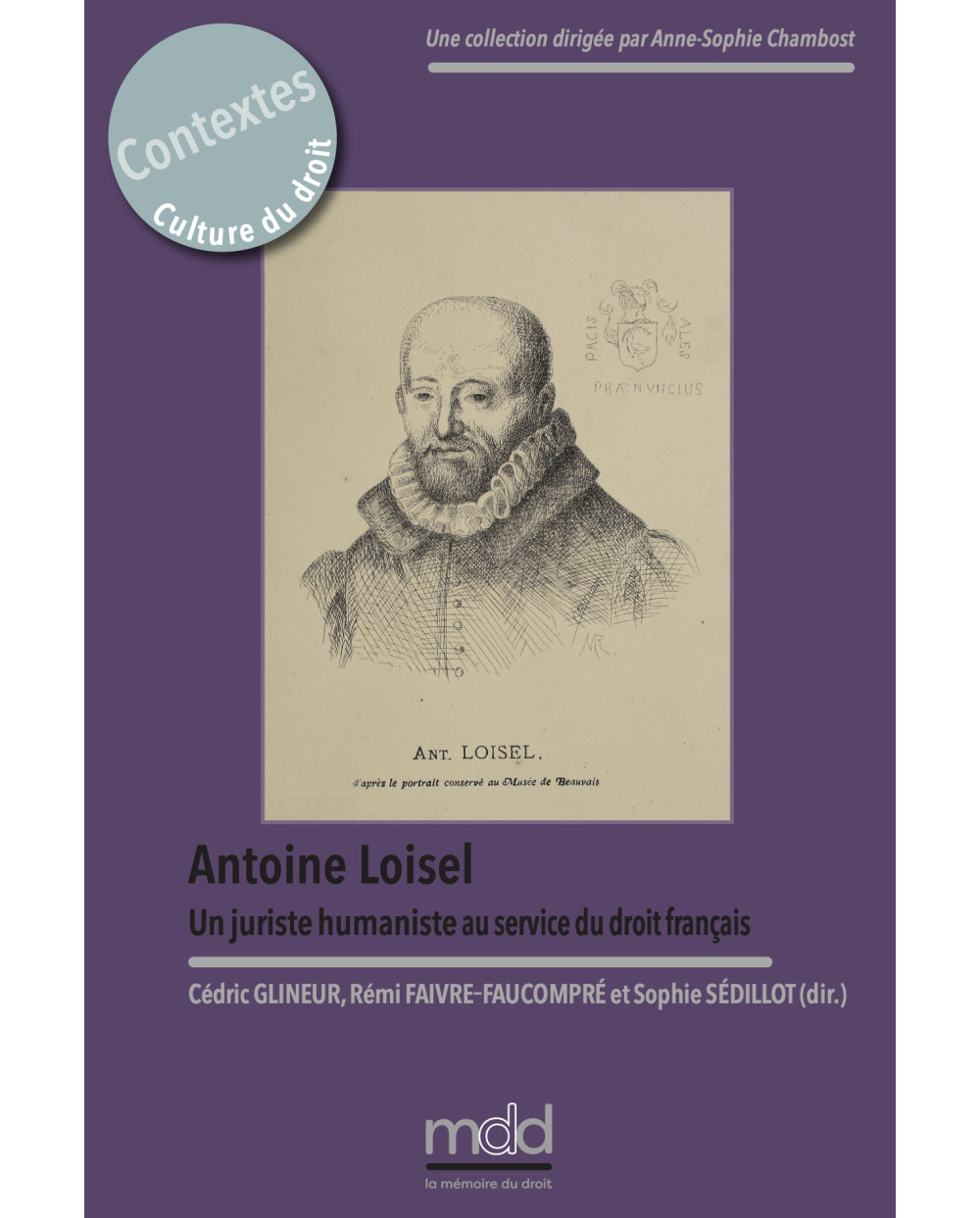
BOOK: Cédric GLINEUR, Rémi FAIVRE-FAUCOMPRÉ & Sophie SÉDILLOT (dir.), Antoine Loisel. Un juriste humaniste au service du droit français [Contextes. Culture du droit, dir. Anne-Sophie CHAMBOST] (Paris: La Mémoire du Droit, 2025), 478 p. ISBN 9782845390829

(image source: MDD)

Abstract:
Quel juriste, ancien ou moderne, privatiste ou publiciste, n’a pas été confronté aux célèbres adages d’Antoine Loisel ? Cette figure majeure de l’humanisme juridique, formé par La Ramée et Cujas, a profondément marqué l’histoire du droit et de la pensée juridique par ses célèbres Institutes coutumières. Ce chef-d’œuvre de la littérature juridique réunit neuf cent huit maximes dont la concision et la sonorité charmante, confinant parfois à la poésie, tranche avec la rudesse et l’âpreté des règles qu’elles dissimulent. Certaines résonnent encore dans les facultés de droit, qu’elles soient employées par les enseignants pour faire comprendre aux étudiants quelque coriace raisonnement juridique ou par les chercheurs pour situer un problème de droit dans la longue tradition juridique. Les Institutes coutumières s’inscrivent dans une œuvre bien plus vaste et foisonnante, l’œuvre d’une vie consacrée à l’écriture et faite d’une multitude de plaidoyers, de harangues, de mémoires ou de remontrances. Elle montre un Loisel plus politique, tout dévoué au pouvoir royal, qu’il considère comme le seul à même de reconstituer l’unité d’une Nation déchirée par les querelles religieuses. Le droit occupe une place essentielle au sein de ce processus. Derrière les adages et les maximes transparaît une certaine vision du droit coutumier dont le Beauvaisien, dans la lignée de juristes comme Du Moulin ou Coquille, voudrait montrer qu’il est commun à l’ensemble d’un royaume alors marqué par la diversité et le morcellement juridique.

Read more here. 


08 October 2025

BOOK: Noémie GOURDE-BOUCHARD, Mark ANTAKI, Marie-Andrée PLANTE & Alexandra POPOVICI (dir.), Les bibliothèques des juristes [Contextes. Culture du droit, dir. Anne-Sophie CHAMBOST] (Paris: MDD, 2025), 458 p., € 54


(image source: MDD)

Abstract:

Comment dresse-t-on les bibliothèques des juristes ? Comment les livres qui les composent sont-ils produits, sélectionnés, classés, disposés ? Comment – et pourquoi – tenter de décrire les bibliothèques actuelles ou de reconstituer celles du passé, alors qu’elles sont foncièrement changeantes et sujettes à la dispersion, voire à la destruction ? En prenant la bibliothèque comme point de départ, mais à travers une large gamme d’approches et de lieux d’enquête, cet ouvrage propose de réfléchir aux objets, aux gestes et aux opérations mentales qui occupent la vie quotidienne des juristes. Chacune à leur manière, les études rassemblées ici examinent la place qu’occupent les bibliothèques – qu’elles soient personnelles ou collectives, matérielles ou intellectuelles, vivantes ou évanouies – dans la production, la circulation et la réception des savoirs juridiques.Rassemble les contributions de Frédéric Audren, Luisa Brunori, Anne-Sophie Chambost, Emanuele Conte, Michelle Cumyn, Prune Decoux, Alexandra Gottely, Vincent Forray, Mireille Fournier, Noémie Gourde-Bouchard, Nader Hakim, Jean-Louis Halpérin, Dario Mantovani, Sylvio Normand, François Ost, Genevieve Renard Painter, Amy Preston-Samson, Augustin Simard et Lionel Smith.

Read more here. 

07 October 2025

ADVANCE ARTICLE: Kevin BYRNE KELLER, "From Legal Transplants to Policy Irritants: Chinese Economic Expansion and Global Legal Change " (The American Journal of Comparative Law 2025)


(image source: OUP)

Abstract:


Since the 1970s, comparative law scholars have studied “legal transplants”: legal institutions that emerged in one location and then were moved to (or forced upon) another. This research agenda offers little traction on one of today’s most pressing questions of global legal change. For several decades, Chinese leaders have encouraged Chinese enterprises to increase their international engagement. Those leaders insist that they have no desire to alter the legal systems of their economic partners, but China’s growing global economic presence does seem to affect legal systems elsewhere. To make sense of this pattern, this Article draws on and extends Gunther Teubner’s concept of a “legal irritant.” It introduces the idea of a “policy irritant”: a policy that a country implements, inspired by policies elsewhere, that places pressure on and potentially reshapes the country’s legal regime. To demonstrate how the concept of a policy irritant improves our understanding of theoretical questions about legal change and concrete questions about current global conflicts, this Article offers a case study of the Madaraka Express, a China-funded railroad project in Kenya. From a theoretical perspective, the Article makes two contributions to the literature on legal transplants. First, it reveals that policy emulation can catalyze legal change. Second, it observes that policy emulation can result in changes both to the recipient legal system and to the policy being emulated. At a more concrete level, the Article offers two insights into China’s engagement with the Global South. First, the introduction of China-inspired policies caused controversy in Kenya not because those policies were inherently insidious, but because they rubbed roughly against features of Kenya’s legal system that many Kenyans value highly. Second, Kenya’s legal system has shown strength in the face of pressures introduced by China-inspired policies, and has in some instances forced changes in those policies.

Read more here: DOI  10.1093/ajcl/avaf021.

(source: Legal History Blog)

06 October 2025

CALL FOR EDITOR: Journal Comparative Legal History [DEADLINE 31 OCT 2025]


 Journal Comparative Legal History

Call for Editor

Deadline: 31 October 2025


The European Society for Comparative Legal History (ESCLH) is seeking applications for the position of Editor of its flagship journal, Comparative Legal History. The journal is an official academic forum of the ESCLH. It was first published in 2013 and aims to offer a space for the development of comparative legal history. Based in Europe, it welcomes contributions that explore law in different times and jurisdictions from across the globe.

Evidence of scholarly ability, experience in editing, and membership (or a commitment to become a member if appointed) of the ESCLH are requirements. Full training in the journal’s processes will be provided as needed.

You would become part of a tradition of scholars and contribute to the advancement of comparative legal history as part of a warm, supportive, and dedicated team. The ESCLH particularly welcomes applications from people with backgrounds which are underrepresented in academia generally, and in the ESCLH and the journal particularly.

This position is not paid.

Applications, with a brief cover letter and short CV (no more than 6 pages) should be sent to Matthew Dyson, matthew.dyson@law.ox.ac.uk (President of the ESCLH) by 31 October 2025.

ONLINE SEMINAR: Journal Comparative Legal History - Dialogues on Customary Law - 5 NOV 2025: 17:00-18:00 (CET) [TEAMS]


Comparative Legal History

Dialogues on Customary Law

5 November 2025 – 17:00-18:00hs (CET)


The journal Comparative Legal History is an official academic forum of the European Society for Comparative Legal History. Based in Europe, it welcomes contributions that explore law in different times and jurisdictions from across the globe. Submissions are currently welcome and are being assessed on a rolling basis.

The journal will host a one-hour public session to discuss customary law in the context of comparative legal history. Editors (past and present) will present exploratory points, and all attendees will be invited to join in a general discussion.

Customary laws were prevalent in Europe during the Middle Ages. In recent years there has been a resurgence in research projects concerning customary laws, and a number of questions need to be raised. To what extent are customary laws something that still needs to be studied? To what extent customary laws ought to be taught at universities to complement core modules such as family law, the laws of inheritance and property law to frame these topics in their historical context? To what extent is there merit in having journals and monograph series concentrate on comparative customary law? How should studies be undertaken? These, and other questions will be explored during this public session.

The event is free and open to the public, and it will take place via Teams.

Registration is required by sending an email to clhdialogues@gmail.com.

CONFERENCE SERIES: Société d'Histoire du Droit (Paris: Faculté de Droit, 2025-2026)


 The Société d'Histoire du Droit published its program of public lectures for 2025-2026. More information here.

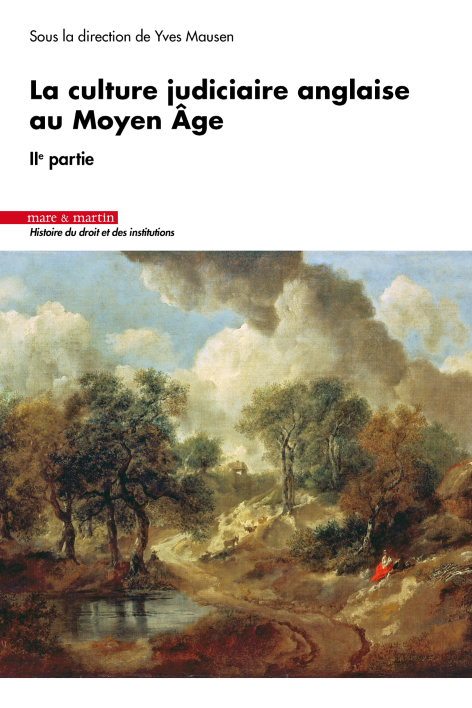
BOOK: Yves MAUSEN (dir.), La culture judiciaire anglaise au Moyen Âge, IIe partie [Histoire du droit et des institutions] (Paris: Mare & Martin, 2024), 406 p. ISBN 978-2-38600-031-7, € 39


(image source: Mare & Martin)

Abstract:
Le présent volume prend la suite d’un précédent recueil d’articles consacré, déjà, à l’histoire de la procédure du common law. S’il se concentre plus exclusivement sur les origines médiévales de celle-ci et sur ses mécanismes propres, il ne s’interdit cependant pas d’étendre par ailleurs son champ d’investigation à des aspects matériels. Telle est en effet la nature du droit anglais, que sa substance se nourrit des actions judiciaires. Le lecteur retrouvera ainsi un certain nombre de thèmes, abordés d’un point de vue complémentaire au premier volume, comme le droit du témoignage ou le trespass. Il en découvrira d’autres, qui jettent une lumière nouvelle sur des questions pourtant aussi classiques que les rapports du common law avec la coutume ou avec le droit romain, ou encore le sens originel du due process of law. Toujours suivant la méthodologie éprouvée, qui allie l’exploitation des fonds d’archives à la présentation de cas d’espèce, s’y ajoutent des considérations plus techniques sur les bills of privilege, le privilège de clergie, ou le duel judiciaire.

On the editor:

Yves Mausen, professeur agrégé des Facultés de droit, est titulaire de la Chaire d’histoire du droit et de droit des religions à l’Université de Fribourg (Suisse). Il a été élève de l’Ecole normale supérieure et membre de l’Institut universitaire de France. 

 Read more here.

03 October 2025

BOOK: Sébastien NEUVILLE (dir.), Duc in altum! Mélanges en l'honneur de Jean-Louis Gazzaniga (Paris: Mare & Martin, 2025), 840 p. 978-2-38600-038-6, €89


(image source: Mare & Martin)

Abstract:

Les contributeurs du présent ouvrage désirent rendre hommage à une personnalité aussi attachante qu’exemplaire et d’une très grande fidélité en amitié. Par ses nombreux écrits, par ses cours et ses prédications devant des publics nombreux mais en touchant individuellement et personnellement chacun des auditeurs, Jean-Louis Gazzaniga a rayonné dans les différentes missions qui lui ont été confiées. De l’Alma Mater à la Mater Ecclesia, son parcours a toujours été au service de la communauté.

Read more here. 


BOOK REVIEW: Lyndsay CAMPBELL on English law, the legal profession, and colonialism: histories, parallels, and influences edited by Cerian Griffiths and Łukasz Jan Korporowicz (Comparative Legal History, XIII (2025), nr. 1, June, pp. 150-153)

(Image source: Taylor&Francis)

Originating in and building on a 2021 conference, this collection contributes to the growing literature on the histories of empire, focusing on the movement of English law and the history of the legal profession in the colonial context. It features chapters from scholars around the world at a whole range of career stages. The conclusion, by Cerian Griffiths and Łukasz Jan Korporowicz, indicates that the project is an attempt to tug British Empire history into the theoretical orbit of European-style Global Legal History, to shed light on a field that ‘has traditionally been the poor relation to its civil law cousin’ (258) and to present research on the ‘early modern and modern eras which often receive less interest than medieval historical studies’ (259). I had to chew on these statements for a bit, and also the omission, in the same paragraph, of the forty-six-year-old Osgoode Society for Canadian Legal History from the editors’ list of academic associations that have contributed to the development of the history of the common law world over the past 40 years (Canada is mostly absent from the book, which perhaps explains this omission). In any case, although at least in theory Global Legal History seems to purport to do everything, a single collection cannot. More importantly, I take it that the editors’ point is to underline the focus on the mobility of law and people, to look beyond the nation and the local in our questions and approaches.
English Law, the Legal Profession, and Colonialism opens with a helpful introduction by Michael Lobban, who describes the book's major thematic preoccupations, including how legal ideas travelled within the British Empire (between the ‘centre’ and the ‘periphery’ and also among colonies), the tension between authoritarianism and liberalism, and how that tension wove through conceptions of the nature and purpose of the rule of law, given that the law and legal principles that travelled around the empire landed in places that were unlike England, to varying degrees and in various ways. The chapters that follow, although somewhat uneven in readability, direct our attention not only to public law and notable juridical personalities but also to the network of personal and commercial relationships – structured through legal rights and principles – that were so crucial to the decisions individual people made in shaping legality in the British Empire.

To read the full review, please click here. Online access is free for members of the European Society for Comparative Legal History. For further information about the volume on our blog, please visit here
DOI: 10.1080/2049677X.2025.2500210


02 October 2025

CALL FOR POSTER PRESENTATIONS: Deutscher Rechtshistorikertag (Wien: Universität Wien, 18 SEPT 2026) [DEADLINE 31 OCT 2025]


Wien, am 19. September 2025


Wie bereits im ersten Rundschreiben angekündigt, wird es beim 45. Rechtshistorikertag 2026 in Wien auch die Möglichkeit zu Posterpräsentationen und Kurzvorträgen (10 Minuten) geben.

Jedes der beiden Formate eröffnet die Chance, sich mit einem laufenden Projekt, sei es einer akademischen Qualifikationsarbeit, sei es einem anderen wissenschaftlichen Vorhaben, Drittmittel- Projekt oder Forschungsnetzwerk aus dem Bereich der Rechtsgeschichte und benachbarter Disziplinen, am Rechtshistorikertag vorzustellen und dieses kurz zu diskutieren.

Adressiert wird nicht ausschließlich der rechtshistorische Nachwuchs.

Doktorandinnen und Doktoranden, die eingeladen werden, ihr Dissertationsvorhaben vorzustellen, können dank einer von der Doktoratsschule der Rechtswissenschaftlichen Fakultät der Universität Wien (Ars Iuris Vienna – Advanced Research School in Law and Jurisprudence) bereitgestellten Förderung vom Tagungsbeitrag befreit werden.

Als Termin für die Posterpräsentationen und die Kurzvorträge, welche in Parallelsektionen erfolgen werden, ist Donnerstag, der 18. September 2026 vormittags vorgesehen.

Detaillierte Angaben zu Organisation und Umsetzung werden wir nach dem 31.10. 2025 auf Grundlage der eingegangenen Zusendungen und nach Auswahl der Beiträge machen können und sodann kommunizieren.

Bitte richten Sie Ihre Bewerbungen bis zum 31. Oktober 2025 an: rht2026@univie.ac.at Wir freuen uns auf zahlreiche Einreichungen!


Das Organisationsteam für den Rechtshistorikertag Wien 2026

BOOK: Silvia FALCONIERI (dir.), Fou et indigène. L'altérité au prisme du droit colonial en Afrique [Histoire du droit et des institutions] (Paris: Mare & Martin, 2025), 274 p. ISBN 9782386001284, € 31


Abstract:
Issu d’une recherche collective financée par l’Agence nationale de la recherche, le présent ouvrage propose une histoire juridique de la folie dans les territoires africains colonisés par la France entre la fin du XIXe siècle et les années 1960. Que se passe-t-il lorsque la condition juridique spécifique à l’« indigène » se double d’une différence supplémentaire qui touche à la sphère de la pathologie mentale ? Qu’en est-il du traitement juridique de la folie des populations colonisées ? Voyageant à travers les différents territoires africains occupés par la France, cet ouvrage interroge l’intersection de deux formes d’altérité, celles de « fou » et d’« indigène ». Les chapitres qui le composent montrent comment la prise en charge juridique et administrative, mais aussi médicale, de la « folie » de l’« Autre » se fait dans une variété de contextes et suivant des procédures, souvent atypiques, qui peuvent s’écarter du droit commun.

Read more here. 


01 October 2025

SEMINARS: Due incontri, Due Maestri (Università di Firenze, 17 OCT 2025 - Università di Macerata, 24 OCT 2025)


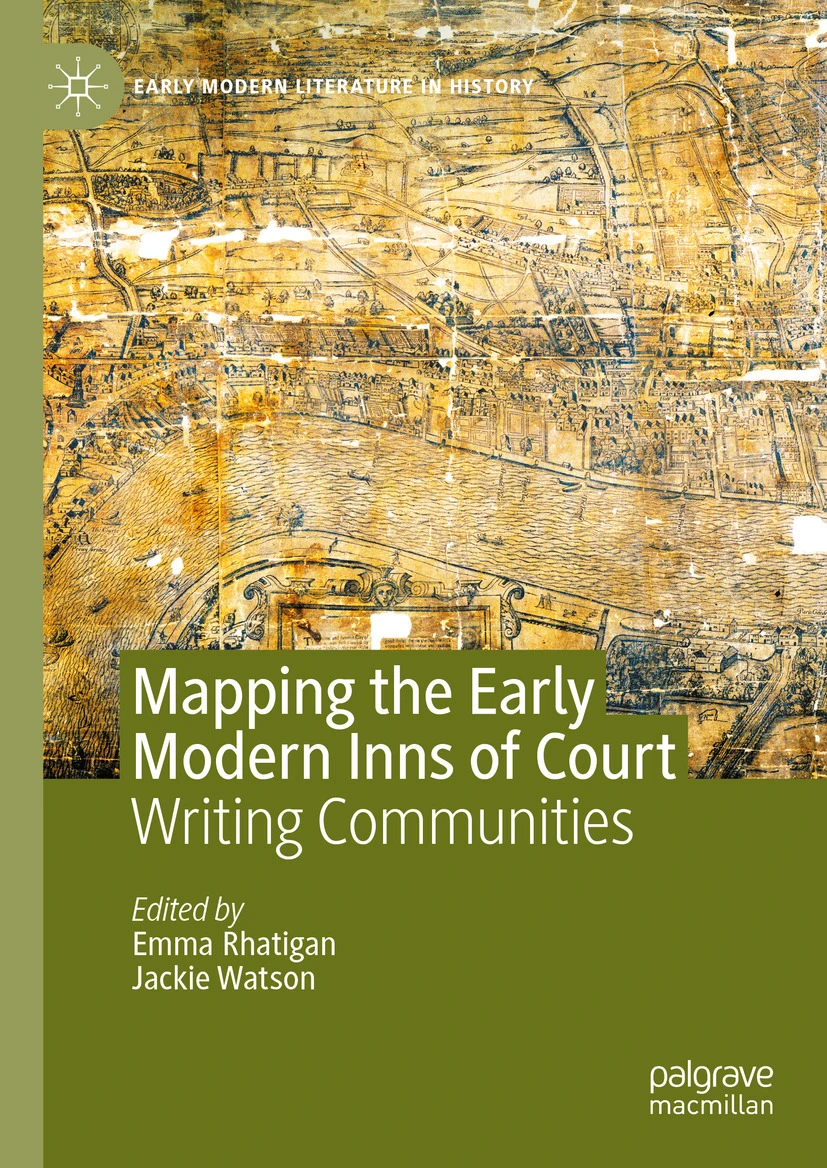
BOOK: Emma RHATIGAN, Jackie WATSON (eds.), Mapping the Early Modern Inns of Court. Writing Communities [Early Modern Literature in History] (London: Palgrave Macmillan, 2025), 295 p. 9783031774447

(Image source: Springer Nature)

About the book

This collection of essays presents recent research on the Inns of Court and their place in the literature and culture of the early modern world. The volume is structured in three sections. Section One looks at the institutional spaces of the Inns themselves. The chapters consider how the Innsmen’s identities and writings were shaped by their participation in the communal life of the legal Societies. Section Two looks at the Inns in the context of early modern London. The chapters attend to the intellectual and cultural traffic between the Inns and the city in which they were located by examining the role of Innsmen in the book trade, the circulation of manuscripts, playhouses, and musical culture. Finally, Section Three sets a wider international context. The chapters focus on the role of Innsmen in translation, nation-building, and early colonisation. Together these sections attend to the Innsmen not only as writing communities in themselves, but as participants in a complex of intersecting networks reaching out into London and beyond.


Table of contents:

Introduction: Mapping the Early Modern Inns of Court (Emma Rhatigan, Jackie Watson)

WITHIN THE INNS

  • Acting Like a Lawyer: Mooting, The Misfortunes of Arthur, and Legal Professional Identity (Jessica Winston)
  • A ‘Fellowship in Sin’: John Donne and Community in the Lincoln’s Inn Pulpit (Emma Rhatigan)
  • ‘Observe Him for the Love of Mockery’: Revelry, Satire, and Performance in the Late Elizabethan Middle Temple (Jackie Watson)
  • Notebooks, Play, and Legal Education at Middle Temple (Blessin Adams)

WITHOUT THE INNS

  • The Mad Butler of Gray’s Inn: Service, Mental Disability, and the Limits of Institutional Care (Penelope Geng)
  • From Inns of Court Revels and Masques to John Playford’s The English Dancing Master (Sharon J. Harris)
  • Mapping Selden’s Library (Joshua Eckhardt, Julian T. S. Neuhauser)
  • Lewiston Fitzjames and Other Stray Poets of the Inns of Court (Arthur F. Marotti)

BEYOND THE INNS 

  • George Gascoigne’s Proliferative Poetics (Felicity Brown)
  • Gender, Revenge, and Legal Performance at the Inns of Court (Jessica Apolloni)
  • Robert Ashley’s Translations and Paratexts (1589–1639) (Renae Satterley)
  • Between Ship and Library: Global Knowledge and Spaces of Exchange at the Middle Temple, 1586–1636 (Lauren Working, Emily Stevenson)


About the editors

Emma Rhatigan is Senior Lecturer in English at the University of Sheffield, UK. Her research and publications focus on early modern texts in performance and their audiences. She is co-editor of The Oxford Handbook of the Early Modern Sermon (2011) and is editing a volume of John Donne’s Inns of Court sermons for The Oxford Edition of the Sermons of John Donne.

Jackie Watson holds a PhD from Birkbeck College, UK, and is an independent scholar. Author of Epistolary Courtiership and Dramatic Letters: Thomas Overbury and the Jacobean Playhouse (2024), she publishes on the intersection between law and drama, including essays in recent collections such as Playing and Playgoing in Early Modern England: Actor, Audience and Performance (2022) and Shakespeare/Sense (2020).


More information can be found here.