About the book
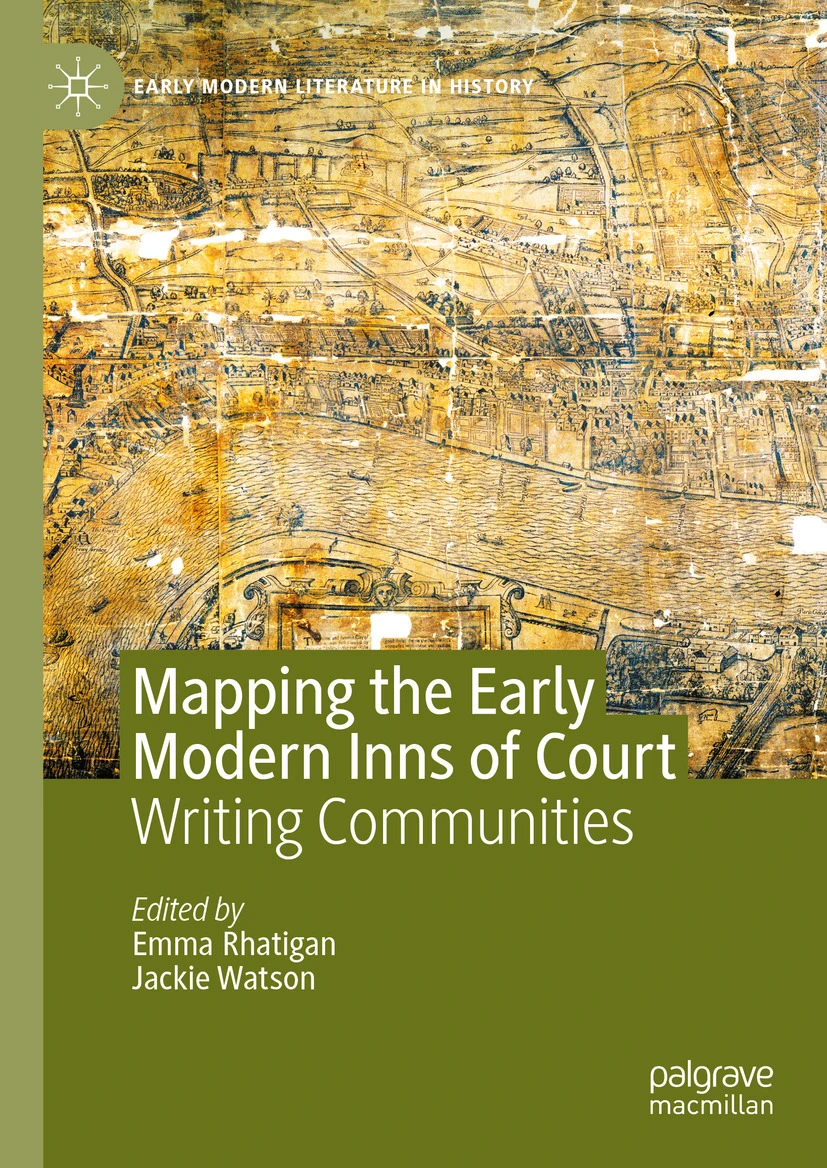
This collection of essays presents recent research on the Inns of Court and their place in the literature and culture of the early modern world. The volume is structured in three sections. Section One looks at the institutional spaces of the Inns themselves. The chapters consider how the Innsmen’s identities and writings were shaped by their participation in the communal life of the legal Societies. Section Two looks at the Inns in the context of early modern London. The chapters attend to the intellectual and cultural traffic between the Inns and the city in which they were located by examining the role of Innsmen in the book trade, the circulation of manuscripts, playhouses, and musical culture. Finally, Section Three sets a wider international context. The chapters focus on the role of Innsmen in translation, nation-building, and early colonisation. Together these sections attend to the Innsmen not only as writing communities in themselves, but as participants in a complex of intersecting networks reaching out into London and beyond.
Table of contents:
Introduction: Mapping the Early Modern Inns of Court (Emma Rhatigan, Jackie Watson)
WITHIN THE INNS
- Acting Like a Lawyer: Mooting, The Misfortunes of Arthur, and Legal Professional Identity (Jessica Winston)
- A ‘Fellowship in Sin’: John Donne and Community in the Lincoln’s Inn Pulpit (Emma Rhatigan)
- ‘Observe Him for the Love of Mockery’: Revelry, Satire, and Performance in the Late Elizabethan Middle Temple (Jackie Watson)
- Notebooks, Play, and Legal Education at Middle Temple (Blessin Adams)
WITHOUT THE INNS
- The Mad Butler of Gray’s Inn: Service, Mental Disability, and the Limits of Institutional Care (Penelope Geng)
- From Inns of Court Revels and Masques to John Playford’s The English Dancing Master (Sharon J. Harris)
- Mapping Selden’s Library (Joshua Eckhardt, Julian T. S. Neuhauser)
- Lewiston Fitzjames and Other Stray Poets of the Inns of Court (Arthur F. Marotti)
BEYOND THE INNS
- George Gascoigne’s Proliferative Poetics (Felicity Brown)
- Gender, Revenge, and Legal Performance at the Inns of Court (Jessica Apolloni)
- Robert Ashley’s Translations and Paratexts (1589–1639) (Renae Satterley)
- Between Ship and Library: Global Knowledge and Spaces of Exchange at the Middle Temple, 1586–1636 (Lauren Working, Emily Stevenson)
About the editors
Emma Rhatigan is Senior Lecturer in English at the University of Sheffield, UK. Her research and publications focus on early modern texts in performance and their audiences. She is co-editor of The Oxford Handbook of the Early Modern Sermon (2011) and is editing a volume of John Donne’s Inns of Court sermons for The Oxford Edition of the Sermons of John Donne.
Jackie Watson holds a PhD from Birkbeck College, UK, and is an independent scholar. Author of Epistolary Courtiership and Dramatic Letters: Thomas Overbury and the Jacobean Playhouse (2024), she publishes on the intersection between law and drama, including essays in recent collections such as Playing and Playgoing in Early Modern England: Actor, Audience and Performance (2022) and Shakespeare/Sense (2020).
More information can be found here.