Search

Showing posts with label Modern Age. Show all posts

14 March 2025

BOOK: Simona FECI, L’acquetta di Giulia. Mogli avvelenatrici e mariti violenti nella Roma del Seicento (Rome: Viella, 2024). ISBN: 9791254696699

(Image source: Viella Editore


About the book

Nella Roma di metà Seicento, pochi anni dopo l’epidemia di peste, viene scoperta in modo rocambolesco l’esistenza di una rete di avvelenatrici: alcune preparano un veleno “perfetto”, conosciuto in tutta Italia come l’«acqua tofana», altre lo acquistano e se ne servono per liberarsi dei loro mariti. È il più clamoroso fatto di cronaca nera del secolo e uno dei pochissimi complotti tutti al femminile della storia. La trama collettiva che viene alla luce ci accompagna nelle pieghe di una città barocca dove trovano posto tutti gli elementi di un potenziale romanzo: amore e veleno, violenza, crimine e morte, sotterfugi ed esibizionismo, denaro e solidarietà. Pronte a sfidare il potere dei padri, il sapere dei medici e l’azione degli inquirenti, le protagoniste e le loro storie offrono uno straordinario passepartout per raccontare la condizione delle donne nel secolo di Artemisia Gentileschi, della monaca di Monza, di Cristina di Svezia.


About the author

Simona Feci is Associate Professor of Medieval and Modern Legal History in the Department of Law at the University of Palermo. She is a member of the PhD Committee on “Human Rights: Evolution, Protection and Limits” at the University of Palermo. She is President of the Società italiana delle storiche (Italian Association of Women Historians) (2016-2020), after serving on the executive board for two years (2014-2016). Her current research projects focus on the history of the family, domestic violence in the early modern period and women’s rights in Italy. Among her publications, see: Pesci fuor d’acqua. Donne a Roma in età moderna: diritti e patrimoni, Rome, Viella, 2004; La violenza contro le donne nella storia. Contesti, linguaggi, politiche del diritto (sec. XV-XXI), ed. with Laura Schettini, Rome, Viella, 2017.


Table of contents

Introduzione

  1. Veleno e violenza
  2. Venefici e narrazioni

1. Vite barocche di donne (quasi) comuni

  1. Giovanna de Grandis
  2. Le intermediarie
  3. Girolama Spana
  4. Veleni, fattucchierie, curiosità
  5. L’acquetta

2. Un affare di donne

  1. Una rappresentazione attendibile?
  2. Identità, mobilità e socialità
  3. La rete
  4. Conflitti e violenza coniugale
  5. Sottrarsi alla violenza, coltivare aspirazioni, inseguire desideri
  6. Madri e figlie
  7. Il prezzo della colpa
  8. Brodini, minestre e altre prelibatezze
  9. Congedarsi dal mondo
  10. Brusii e sospetti

3. Il processo

  1. Entra la corte
  2. Veneficio e parricidio
  3. La scoperta della trama
  4. Il corpo del reato
  5. Interrogatori, confessioni, testimonianze
  6. «Per sradicar simil sorte di genti»
  7. Cecilia Bossi «ucello di campagna»
  8. La duchessa di Ceri

4. Memoria e fortuna dell’acquetta

  1. La morte per via di giustizia
  2. Storie cantate, relazioni e cronache
  3. Il veleno e la peste
  4. Il regime delle professioni
  5. L’emulazione e la fama

Ringraziamenti

Bibliografia


More information can be found here.

12 November 2024

REMINDER CFP:CALL FOR PAPERS: Workshop 'Freedom of the seas and freedom of the individual: a historical appraisal' (London: School of Oriental and African Studies University of London, 7 FEB 2025) [DEADLINE 20 NOV 2024]


Call for papers

Freedom of the seas is a time-honoured principle of international law and the dogma of old and new maritime powers. Traditionally associated with Western-dominated legal doctrine and imperialist mindset, freedom of the seas allowed European states to expand and engage in direct trade with East and West, eventually leading to imperialism and colonisation. Conceptually, its genesis is generally attributed to the Dutch jurist Hugo Grotius and his advocacy in favour of Dutch trade interests in the Indian Ocean in the early XVII century. However, this narrative entirely overlooks forms of State practice and customs developed in other regions of the world, let alone other contemporary or pre-existing scholars.

Generally portrayed in a positive light and recognised as an inherent right of states, freedom of the seas has also benefitted peoples and individuals. Many people oppressed on land have turned to the sea in an effort to leave war and discrimination and to seek refuge and a better future. Starting with Aeneas escaping by ship from the burning Troy, down to the pilgrims of the Mayflower and the thousands of people who have used maritime routes for migration, the free seas have always been the means for trying to reach safety and protection and a way to be able to freely pursue one’s opinions and beliefs, ultimately furthering societal change and visions of a fairer world. 

However, freedom of the seas has also its dark side. The principle has underpinned colonial domination and allowed the slave trade in the Atlantic Ocean and other seas. These lesser known aspects have remained unresearched for many decades. Only recently did they start coming to the forefront, with scholars drawing parallels between old and new state practices to limit free use of the seas by individuals, while allowing slavery and forced labour.

Starting from these premises, the research project on freedom of the seas and protection of human rights, funded by the British Academy and led by Professor Irini Papanicolopulu at SOAS, organises a Workshop, bringing together leading experts and emerging young scholars to debate the relationship between freedom of the seas and individual freedom in a historical perspective. The workshop will take place at SOAS, University of London (UK) on 7 February 2025.

This call for papers invites young scholars to explore various aspects of the relationship between freedom of the seas and individual freedom in a historical perspective, focusing on the XV-XIX centuries. Thematically, we invite participants to deal with aspects relating but not limited to the following topics:

- Historically, who could benefit from the freedom of the seas? And to what purpose? 
- What consequences did this produce upon the determination of the rights (and the duties) that states and individuals had at sea and over the sea? 
- How does the freedom of the seas reflect the deeply entrenched patterns of domination that characterise much of early international law? 
- To what extent (if any) could it be considered to embody also different values? 
- What legal tools were developed to allow some actors to freely use the seas while limiting the freedom of others? 
- Which actors were most relevant at sea, and how does the private/public divide factor into this?
- Why were some empires/State powers particularly proactive in attempting to legally defend their arguments?

Papers may focus on a specific jurist, geographic area, school of thought, historical period, or may address more transversal aspects across the identified timeframe and regions, and may do so from a variety of approaches. We particularly encourage papers from young scholars based in the Global South.

Abstracts of 800-1000 words, addressing the theme and methodology of the proposed paper, and accompanied by an academic CV are to be submitted to al77@soas.ac.uk and ip14@soas.ac.uk by Wednesday 20 November 2024. Selected candidates will be informed by Wednesday 27 November 2024 and must submitted a 7000-8000 words paper by 6 January 2025. The draft papers will be then distributed to the discussants and will be presented and discussed in the course of the Workshop of 7 February 2025. 

Selected participants may be offered a scholarship to cover their travel and accommodation expenses for participating in the workshop. Scholars from the Global South, at early career stage, or belonging to underrepresented groups in Higher Education will be prioritised for the scholarship.

Key Dates 
20 November 2024: deadline for the submission of abstracts
27 November 2024: communication of selection outcome
6 January 2025: deadline for the submission of draft papers
7 February 2025: workshop
For further information please contact Dr Andrea Longo at al77@soas.ac.uk 

01 November 2024

CALL FOR PAPERS: Workshop 'Freedom of the seas and freedom of the individual: a historical appraisal' (London: School of Oriental and African Studies University of London, 7 FEB 2025) [DEADLINE 20 NOV 2024]


Call for papers

Freedom of the seas is a time-honoured principle of international law and the dogma of old and new maritime powers. Traditionally associated with Western-dominated legal doctrine and imperialist mindset, freedom of the seas allowed European states to expand and engage in direct trade with East and West, eventually leading to imperialism and colonisation. Conceptually, its genesis is generally attributed to the Dutch jurist Hugo Grotius and his advocacy in favour of Dutch trade interests in the Indian Ocean in the early XVII century. However, this narrative entirely overlooks forms of State practice and customs developed in other regions of the world, let alone other contemporary or pre-existing scholars.

Generally portrayed in a positive light and recognised as an inherent right of states, freedom of the seas has also benefitted peoples and individuals. Many people oppressed on land have turned to the sea in an effort to leave war and discrimination and to seek refuge and a better future. Starting with Aeneas escaping by ship from the burning Troy, down to the pilgrims of the Mayflower and the thousands of people who have used maritime routes for migration, the free seas have always been the means for trying to reach safety and protection and a way to be able to freely pursue one’s opinions and beliefs, ultimately furthering societal change and visions of a fairer world. 

However, freedom of the seas has also its dark side. The principle has underpinned colonial domination and allowed the slave trade in the Atlantic Ocean and other seas. These lesser known aspects have remained unresearched for many decades. Only recently did they start coming to the forefront, with scholars drawing parallels between old and new state practices to limit free use of the seas by individuals, while allowing slavery and forced labour.

Starting from these premises, the research project on freedom of the seas and protection of human rights, funded by the British Academy and led by Professor Irini Papanicolopulu at SOAS, organises a Workshop, bringing together leading experts and emerging young scholars to debate the relationship between freedom of the seas and individual freedom in a historical perspective. The workshop will take place at SOAS, University of London (UK) on 7 February 2025.

This call for papers invites young scholars to explore various aspects of the relationship between freedom of the seas and individual freedom in a historical perspective, focusing on the XV-XIX centuries. Thematically, we invite participants to deal with aspects relating but not limited to the following topics:

- Historically, who could benefit from the freedom of the seas? And to what purpose? 
- What consequences did this produce upon the determination of the rights (and the duties) that states and individuals had at sea and over the sea? 
- How does the freedom of the seas reflect the deeply entrenched patterns of domination that characterise much of early international law? 
- To what extent (if any) could it be considered to embody also different values? 
- What legal tools were developed to allow some actors to freely use the seas while limiting the freedom of others? 
- Which actors were most relevant at sea, and how does the private/public divide factor into this?
- Why were some empires/State powers particularly proactive in attempting to legally defend their arguments?

Papers may focus on a specific jurist, geographic area, school of thought, historical period, or may address more transversal aspects across the identified timeframe and regions, and may do so from a variety of approaches. We particularly encourage papers from young scholars based in the Global South.

Abstracts of 800-1000 words, addressing the theme and methodology of the proposed paper, and accompanied by an academic CV are to be submitted to al77@soas.ac.uk and ip14@soas.ac.uk by Wednesday 20 November 2024. Selected candidates will be informed by Wednesday 27 November 2024 and must submitted a 7000-8000 words paper by 6 January 2025. The draft papers will be then distributed to the discussants and will be presented and discussed in the course of the Workshop of 7 February 2025. 

Selected participants may be offered a scholarship to cover their travel and accommodation expenses for participating in the workshop. Scholars from the Global South, at early career stage, or belonging to underrepresented groups in Higher Education will be prioritised for the scholarship.

Key Dates 
20 November 2024: deadline for the submission of abstracts
27 November 2024: communication of selection outcome
6 January 2025: deadline for the submission of draft papers
7 February 2025: workshop
For further information please contact Dr Andrea Longo at al77@soas.ac.uk 

18 July 2024

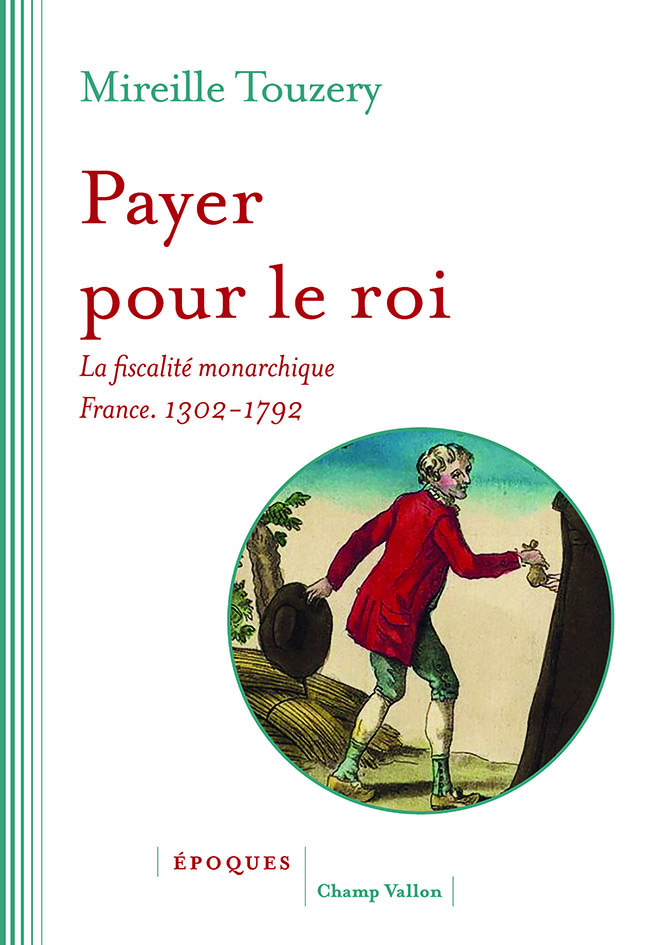
BOOK: Mireille TOUZERY, Payer pour le roi. La fiscalité monarchique 1302-1792 (Paris: Champ Vallon, 2024). ISBN: 9791026711780

(Image source: Champ Vallon)


ABOUT THE BOOK

Saviez-vous que le duc de Bretagne voulut taxer une baleine échouée à Morlaix, comme « poisson ducal » ? Saviez-vous qu’en Aquitaine au temps de François Ier et dans le Cotentin au temps de Louis XIII, des milliers de paysans combattirent jusqu’à la mort pour refuser la gabelle du sel ? La fiscalité, ce n’est pas que de l’argent : elle révèle toute une société et retrace son histoire. Durant cinq siècles, de Philippe le Bel à la Révolution, chaque sujet du roi a été concerné par l’impôt, pour le payer ou pour ne pas le payer. Souvent pour s’y opposer. Comment comprendre cette acceptation ou ce refus ? Quand ? Comment ? Pourquoi ? Où ?

Voici, pour la première fois raconté, dans l’ensemble du territoire français dans ses frontières de 1789, le combat de chaque région, de chaque cité, de chaque paroisse (4 000 sont ici étudiées), de chaque corps pour maintenir son statut fiscal particulier et, au-delà, pour affirmer une singularité que seule la Révolution a su intégrer dans une identité unique en transformant chaque sujet en citoyen.

L’État royal n’a pas été que répressif : tantôt absolue, tantôt négociatrice, cette monarchie à deux visages a eu pour interlocuteurs des habitants qui se sont impliqués, à l’échelle du village ou de la ville, par la fiscalité, dans la gestion de la chose publique. La levée de l’impôt direct principal, la taille, leur a été laissée, en toute autonomie, par le roi, contre l’obligation de payer solidairement, « le fort portant le faible », ce qui a entraîné choix économiques, rapports de force, solidarités, intérêts bien compris. Avant que les inégalités, devenues insupportables au siècle des Lumières, ne fassent exploser la société des trois ordres.

Grâce à une documentation chiffrée inédite, une cartographie abondante (129 cartes dont 84 originales), des graphiques (84) et des tableaux (77) éclairants, Mireille Touzery nous offre le fruit de plus de vingt ans de recherche : la première histoire de la fiscalité royale, de sa naissance (1302) à sa mort (1792). Cette histoire est aussi celle de l’État, colonne vertébrale de la « nation France ».


ABOUT THE AUTHOR

Mireille Touzery est professeure d’histoire moderne à l’université de Paris-Est-Créteil et membre du Comité pour l’histoire économique et financière de la France et de la Société de l’histoire de France.


More information can be found here.

25 June 2021

BOOK: Michelle MCKINLEY, Libertades fraccionadas. Esclavitud, intimidad y movilización jurídica en la Lima colonial, 1600-1700 (Valencia: Tirant lo Blanch, 2021). ISBN: 9788413365565, pp. 372, $ 449.00 MXN


ABOUT THE BOOK

‘Libertades fraccionadas’ explora el modo como miles de esclavas en el Perú colonial aprovecharon los instrumentos jurídicos a su disposición para asegurar su libertad, mantener intactas sus familias, negociar precios bajos para auto-comprarse y planificar transferencias de propiedad. Mediante una extensa investigación en archivos, Michelle McKinley explora las experiencias de mujeres esclavizadas cuya huella histórica es apenas visible en los registros oficiales y demuestra hasta qué punto los esclavos podían actuar por voluntad propia, a pesar de estar atrapados en las redes del tráfico de seres humanos del mundo Atlántico. La autora presenta a las mujeres esclavizadas como actores legales con identidades superpuestas: esposas, madres, amantes, nodrizas y sirvientas que recibían un jornal, y muestra cómo esas experiencias en el ambiente laboral urbano condicionaron su identidad como esclavas. Si bien los procesos judiciales no siempre eran exitosos para las esclavas, en ‘Libertades fraccionadas’ se demuestra la forma en que estas mujeres utilizaron los canales del afecto y la intimidad para presionar y obtener su libertad, y evitar así la transmisión generacional de la esclavitud a sus hijos.

ABOUT THE AUTHOR

Michelle A. McKinley es catedrática en la Escuela de Derecho de la Universidad de Oregon. Ha publicado numerosos trabajos sobre legislación internacional, globalización e historia jurídica, y en el año 2011 fue galardonada con el Surrency Prize de la American Society for Legal History. 

TABLE OF CONTENTS

Contenido

Agradecimientos        9

Prólogo        13

Bianca Premo

Introducción        17

1    Litigando por la libertad        49

2    Cadenas conyugales        109

3    Dependencias peligrosas        153

4    Libertad en la pila bautismal        195

5    Hasta que la muerte nos separe        237

6    Comprador, cuidado        271

Conclusión        313

Nota sobre las referencias y la bibliografía        327

Índice        353


More information with the publisher.

23 November 2020

BOOK: Giuseppina DE GIUDICI, Sanctitas legatorum. Sul "fondamento" dell'indipendenza giurisdizionale in età moderna (Roma: Edizioni Scientifiche Italiane, 2020). ISBN: 9788849542332, pp. 198, € 30,00

 Nessuna immagine impostata

(Source: ESI)

ABOUT THE BOOK

Collana: Pubblicazioni del Dipartimento di Giurisprudenza dell'Università degli Studi di Cagliari - Serie II, vol. 26.

Interrogarsi sulla sanctitas legatorum, e specialmente sull’indipendenza giurisdizionale dei diplomatici durante l’età moderna, non significa solo far emergere contenuti e limiti a essa assegnati dai “costruttori” del diritto delle genti. Considerato che il riconoscimento della tutela dei moderni ambasciatori scaturiva dall’esigenza di garantire la libera comunicazione tra Stati, è opportuno allargare lo studio al diritto di legazione attivo e passivo per mettere in luce il fondamentale ruolo che esso ha svolto. Grazie al suo esercizio le organizzazioni politiche si scoprivano parte della communitas, riconoscendosi e legittimandosi reciprocamente. In più, la progressiva diffusione delle ambascerie permanenti, anche in forza della loro stabilizzazione e istituzionalizzazione, ha permesso al jus legationis di ottenere puntuali informazioni politiche utili alla ricerca di nuovi equilibri e di contribuire alla formazione di una parte notevole del patrimonio normativo comune. È per questo che le peculiari concezioni sulla communitas e sul suo ordinamento costituiscono l’irrinunciabile orizzonte di senso anche per chi si occupa delle prerogative diplomatiche.

ABOUT THE AUTHOR

Giuseppina De Giudici è professore associato di Storia del diritto medievale e moderno presso il Dipartimento di Giurisprudenza dell’Università degli Studi di Cagliari. Tra i suoi lavori si segnalano: Il governo ecclesiastico nella Sardegna sabauda (1720-61), Napoli, 2007; Interessi e usure nella Sardegna di Carlo Emanuele III, Pisa, 2010; Le istituzioni prefettizie nella Sardegna dell’Ottocento. Le vie dell’accentramento giurisdizionale e amministrativo (1807-1861), Cagliari, 2012. Sul tema della condizione giuridica dei moderni ambasciatori e sui legati in età bassomedievale ha pubblicato i saggi: Sullo statuto dell’ambasciatore in età moderna: l’inviolabilità tra sacralità e indipendenza giurisdizionale, 2012; «Quando imbassiadores saen mandare». A proposito del cap. XXXV del primo libro degli Statuti sassaresi, 2018.

TABL OF CONTENTS

Prefazione

«Quel est ce droit des gens?». Il diritto di legazione nel suo orizzonte di senso

Capitolo I - Il diritto di legazione in età moderna

1. Una pietra miliare: Le droit des gens di Emer de Vattel

2. Per un droit des gens distante «dalle chimere e dagli equivoci»

3. Senza la civitas maxima. Il ruolo della diplomazia permanente

4. Il diritto di legazione e l’ordine orizzontale

5. La soggettività interstatale e la peculiare declinazione dell’uguaglianza

Capitolo II - La trattatistica de legato e la sanctitas legatorum

1. L’irruzione della moderna diplomazia

2. Incertezze linguistiche: dall’ambasciatore ai ministri pubblici

3. Tra diritto, politica e interessi letterari. L’eterogenea produzione de legato

4. Lo status giuridico dei ministri pubblici

5. Condizione giuridica dei ministri pubblici e funzione diplomatica, una storia da scrivere

Capitolo III - La sanctitas e l’indipendenza giurisdizionale

1. Gentili e la trattatistica tardo-cinquecentesca

2. Lo statuto minimo dell’ambasciatore e la «quasi extraterritorialità» groziana

3. Oltre la rappresentanza: Bynkershoek e l’ordine giuridico interstatale

4. La soluzione vatteliana tra rappresentanza e mutuo consenso

5. La misura delle immunità: le prerogative del sovrano all’estero

6. Il “fondamento” dell’indipendenza giurisdizionale

7. L’extraterritorialità groziana, una fictio dai molti usi


More information with the publisher.