Search

Showing posts with label American constitution. Show all posts

06 May 2026

BOOK: Mark PETERSON, The Making and Breaking of the American Constitution: A Thousand-Year History (Princeton: Princeton University Press, 2026), 408 p. ISBN 9780691180014, 25 GBP


(image source: Princeton)

Abstract:
The American Revolution occurred at a time when Britain’s constitutional order failed to adapt to the extraordinary growth of its colonies. The framers designed an American constitution to succeed where Britain’s had faltered, planning for continuous population and territorial expansion that would eventually cross the continent. Yet by the end of the nineteenth century, it was already ill-suited for an increasingly urban, industrialized society, and the transformations of the twentieth century have pushed it to a breaking point. This book charts the history and aims of the American constitution from its origins in an agrarian past to the grave crisis we face today. Mark Peterson traces the American constitutional tradition to the control of land in medieval England, showing how the founders incorporated the aspirations of Magna Carta with the administrative principles of the Domesday Book, a meticulous survey and valuation of landed property commissioned by William the Conqueror. This framework encouraged the growth of democratic self-government in a young nation. It also institutionalized the colonization of territory and the expulsion of Indigenous peoples, establishing a legal blueprint for transforming tribal lands into revenue-yielding real estate for settlers. Peterson’s riveting narrative paints an arresting picture of a dynamic republic whose frame of government has changed enormously to meet the challenges of the modern age but whose written constitution has changed very little. Marking the 250th anniversary of American independence, The Making and Breaking of the American Constitution reveals how this widening disconnect threatens the very existence of our democracy. It calls for a constitution that sustains the ideals developed over the past thousand years while meeting the challenges of the future.

 On the author:

Mark Peterson is the Edmund S. Morgan Professor of History at Yale University. He is the author of The City-State of Boston: The Rise and Fall of an Atlantic Power, 1630–1865 (Princeton) and The Price of Redemption: The Spiritual Economy of Puritan New England.

Read more here

16 January 2025

BOOK: Maximilian SCHNEIDER, Delegierte Verfassungsentwicklung. Eine Studie über das Verhältnis von Entstehungs- und Geltungszeit in der Verfassungsanwendung unter besonderer Berücksichtigung der jüngeren US-amerikanischen Methodendebatte [Rechtstheorie; 12] (Tübingen: Mohr Siebeck, 2024), 430 p., ISBN 978-3-16-163775-9

Cover von 'undefined'
ABOUT THE BOOK:
 
Die Anwendung des Verfassungsrechts auf die sich stetig wandelnde Lebenswirklichkeit ist historisch gebunden, nicht aber historisch determiniert. Der Verfassungsnormsetzer delegiert Konkretisierungsspielräume an künftige Generationen, in denen sie die Entwicklung der Verfassung ohne Änderung ihres Textes vollziehen. Maximilian Schneider arbeitet das komplexe Zusammenspiel entstehungs- und geltungszeitlicher Momente in der Verfassungsanwendung heraus. Dafür nutzt er die in der deutschen Rechtswissenschaft bislang weitgehend unbeachtet gebliebenen Erkenntnispotenziale der jüngeren US-amerikanischen Methodendebatte um den Originalism. Er zeigt, wie methodologisch konsistent von entstehungszeitlicher Auslegung gesprochen werden kann, ohne dass diese in eine Versteinerung der Verfassungsanwendung mündet, und warum sie normativ geboten ist.
 
TABLE OF CONTENTS:
 
Einführung
§ 1 Verfassungsrecht im Wandel der Zeit - Ein rechtsgewinnungstheoretisches Problem
§ 2 Juristische Argumentationskriterien und die Auslegungszieldebatte in Deutschland und den USA

Erster Teil: Entstehungszeitliche Bindung
§ 3 Konzeptionen entstehungszeitlicher Verfassungsauslegung
§ 4 Entstehungszeitlich autorisierte Verfassungsdynamik - Entkräftung des Versteinerungsarguments
§ 5 Normative Bindung an die kommunikativen Intentionen des Verfassungsnormsetzers

Zweiter Teil: Geltungszeitliche Gestaltung
§ 6 Theorie des (Verfassungs-)Richterrechts
§ 7 Begründung judikativer Verfassungsentwicklung
§ 8 Die Rolle der Verfassungsrechtsprechung im Prozess der Verfassungsentwicklung
 
Find more here.

14 February 2023

SSRN PAPER: Gregory ABLAVSKY & W. Tanner ALLREAD, "We the (Native) People?: How Indigenous Peoples Debated the U.S. Constitution" (Columbia Law Review (forthcoming))


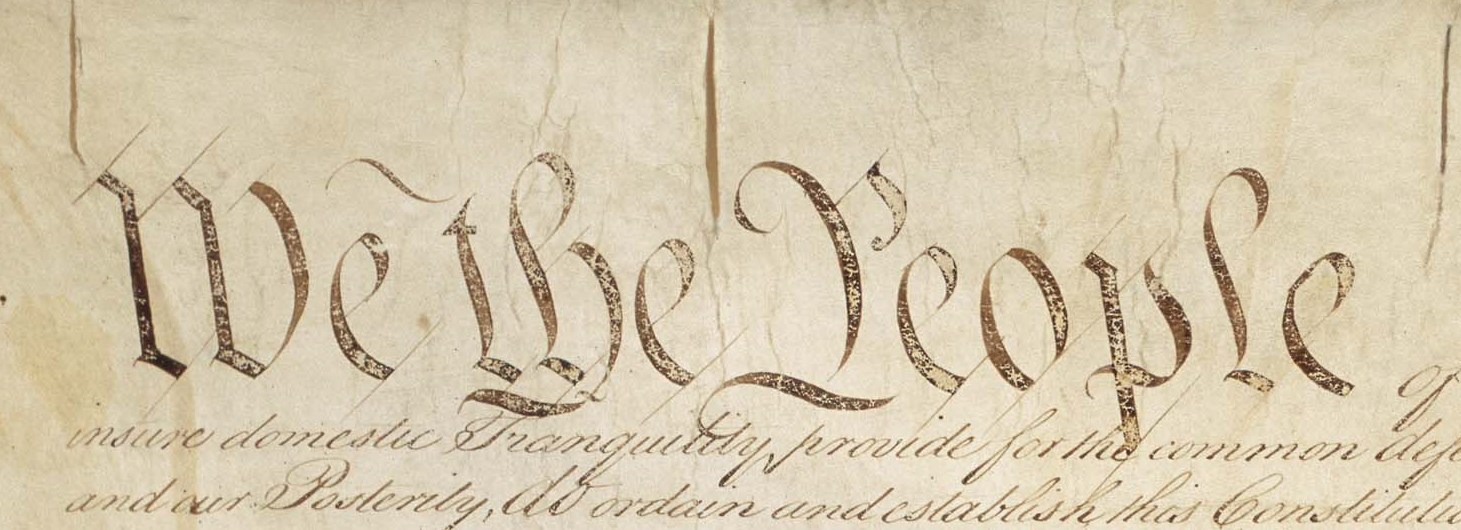
(image source: Wikimedia Commons)

Abstract:

The Constitution was written in the name of the “People of the United States.” And yet, many of the nation’s actual people were excluded from the document’s drafting and ratification based on race, gender, and class. But these groups were far from silent. A more inclusive constitutional history might capture marginalized communities’ roles as actors, not just subjects, in constitutional debates. This Article uses the tools of legal and Native history to examine how one such group, Indigenous peoples, argued about and with the U.S. Constitution. It analogizes Native engagement to some of the foundational frames of the “Founding” to underscore its significance for current constitutional discourse. Like their Anglo-American neighbors, Native peoples, too, had a prerevolutionary constitutional order—what we here dub the “diplomatic constitution”—that experienced a crisis during and after the Revolution. After the Constitution’s drafting, Native peoples engaged in their own version of the ratification debates. And then, in the early republic, Native peoples both invoked and critiqued the document as they faced Removal. This Article’s most important contribution is proof of concept, illustrating what a more inclusive constitutional history might look like. Still, some of the payoffs are doctrinal: broadening the “public” in original public meaning, for instance. But the more significant stakes are theoretical. As this Article contends, by recognizing Indigenous law and constitutional interpretations as part of “our law”—in other words, the pre- and post-constitutional legal heritage of the United States—Native peoples can claim their role as co-creators of constitutional law.

Read the paper on SSRN

23 February 2022

BOOK: Andrew J. CECCHINATO, L’educazione giuridica di Thomas Jefferson (Foligno: Il Formichiere, 2021). ISBN: 9788831248860, pp. 238, €20,00


(Source: Il Formichiere)


ABOUT THE BOOK

Nella galleria di antenati che illustra la storia del costituzionalismo, il ritratto più scontato è forse quello di Thomas Jefferson. Ma il manierismo della raffigurazione corrente poco si accorda con l’opalescenza di un pensiero compartecipe al destino di un’intera tradizione.
Proponendosi di leggere Jefferson di concerto alla sue letture, il libro indaga l’«emersione del costituzionalismo dalle conversioni della tradizione» e assume a coordinate della sua inchiesta le «opere che hanno segnato gli estremi ideali della speculazione jeffersoniana»: le Vindiciae contra tyrannos e Les six livres de la République di Jean Bodin. Queste inesplorate ascendenze europee rischiarano di nuova luce il nascente costituzionalismo statunitense. E delineano un profilo inedito, che restituisce a Jefferson la forza rivoluzionaria di una dottrina pensata per dialettizzare, su base storico-comparativa, le forme giuridiche e antigiuridiche del potere.

Prefazione di Diego Quaglioni.

ABOUT THE AUTHOR

Andrew Cecchinato is a Marie Skłodowska-Curie Global Fellow at the University of Michigan Law School and the School of History at the University of St Andrews. He is a book review editor for the American Journal of Legal History. Andrew has received scholarships from the Max-Planck-Institute für europäische Rechtsgeschichte and the Robert H. Smith International Center for Jefferson Studies. He has also been a visiting researcher at the Robbins Collection in Civil and Religious Law, the Georgetown University Law Center, and the Library of Congress. He studied law at the University of Trento, where his Ph.D. on The Legal Education of Thomas Jefferson won the faculty prize.


More information with the publisher.


22 January 2019

CALL FOR APPLICATIONS: Post-doctoral Fellowship, Northwestern Center For Legal Studies and Jack Miller Center for Teaching America's Founding Principles and History (DEADLINE: 15 February 2019)


Via Law & Humanities Blog, we learned of a call for applications for a post-doctoral fellowship at Northwestern University.

Northwestern’s Center for Legal Studies is pleased to continue a collaborative partnership with the Jack Miller Center for Teaching America’s Founding Principles and History. We seek applications for the centerpiece of the partnership: a two-year post-doctoral fellowship held in residence at Northwestern University’s Center for Legal Studies beginning September 1, 2019.

A strong preference will be given to candidates working at the intersections of constitutional innovation, politics, and law in the context of the rise of eighteenth century invention, new understandings of property, the Enlightenment, and the creation of the United States. Particularly encouraged to apply are candidates in legal history, the history of political and economic thought, and/or political theory whose work is empirically grounded in the eighteenth century but has significant contemporary implications for questions of constitutionalism, liberty, equality, and democracy.

The post-doctoral fellow will offer three courses per year on topics pertaining to early American and Atlantic Enlightenment history, political and economic thought, and/or social science. In addition to engaging in an active research and publishing agenda, the candidate is expected to provide a reasonable amount of assistance with organizing other activities associated with the Fellowship and the Legal Studies Program. The annual salary for the fellow is $50,000, plus fringe benefits and a $1,500 renewable annual research budget. The fellow is required to organize and participate in several activities associated with Jack Miller Center events at Northwestern. These activities include producing an essay on the fellow’s work; participating in the Annual Jack Miller Faculty Development Summer Institute for professors; working with Legal Studies faculty hosting a website that features the fellow’s work and other activities related to the Jack Miller Center; and planning, attending, and participating in the Law in Motion Lecture series. Generous funds are available to bring in scholars central to the fellow’s own scholarship for such events. This is a nine-month faculty appointment, and applicant must have a Ph.D. in hand by September 1, 2019.

Applicants should submit a cover letter stating qualifications and field of interest, a CV, a writing sample, a sample syllabus of a proposed course, and two letters of recommendation. Northwestern University is an Equal Opportunity, Affirmative Action Employer of all protected classes, including veterans and individuals with disabilities. Women, racial and ethnic minorities, individuals with disabilities, and veterans are encouraged to apply. Hiring is contingent upon eligibility to work in the United States. Applications should be submitted no later than February 15, 2019.

Please contact Ann Kelchner a-kelchner@northwestern.edu with questions.

07 November 2018

BOOK: James L. ROBERSTON, Heroes, Rascals and the Law: Constitutional Encounters in Mississippi History (Jackson: University Press of Mississippi , 2018). ISBN 9781496819949, $50.00


The University Press of Missisippi is publishing a book on the popular understanding of laws and the constitution in Mississippi next month.

ABOUT THE BOOK

James L. Robertson focuses on folk encountering their constitutions and laws, in their courthouses and country stores, and in their daily lives, animating otherwise dry and inaccessible parchments. Robertson begins at statehood and continues through war and depression, well into the 1940s. He tells of slaves petitioning for freedom, populist sentiments fueling abnegation of the rule of law, the state's many schemes for enticing Yankee capital to lift a people from poverty, and its sometimes tragic, always colorful romance with whiskey after the demise of national Prohibition. Each story is sprinkled with fascinating but heretofore unearthed facts and circumstances.

Robertson delves into the prejudices and practices of the times, local landscapes, and daily life and its dependence on our social compact. He offers the unique perspective of a judge, lawyer, scholar, and history buff, each role having tempered the lessons of the others. He focuses on a people, enriching encounters most know little about. Tales of understanding and humanity covering 130 years of heroes, rascals, and ordinary folk--with a bundle of engaging surprises--leave the reader pretty sure there's nothing quite like Mississippi history told by a sage observer.

ABOUT THE AUTHOR

JAMES L. ROBERTSON, Jackson, Mississippi, is a practicing lawyer and active life member of the American Law Institute. A graduate of the Harvard Law School, he served on the Supreme Court of Mississippi for ten years and taught law at the University of Mississippi and elsewhere.

More information here

05 September 2018

BOOK: Jonathan GIENAPP, The Second Creation : Fixing the American Constitution in the Founding Era (Cambridge: Harvard University Press, 2018). ISBN 9780674185043, €31.50


(Source: HUP)

Harvard University Press is publishing a book on the early history of the American constitution later this month.

ABOUT THE BOOK

A stunning revision of our founding document’s evolving history that forces us to confront anew the question that animated the founders so long ago: What is our Constitution?

Americans widely believe that the United States Constitution was created when it was drafted in 1787 and ratified in 1788. But in a shrewd rereading of the founding era, Jonathan Gienapp upends this long-held assumption, recovering the unknown story of American constitutional creation in the decade after its adoption—a story with explosive implications for current debates over constitutional originalism and interpretation.

When the Constitution first appeared, it was shrouded in uncertainty. Not only was its meaning unclear, but so too was its essential nature. Was the American Constitution a written text, or something else? Was it a legal text? Was it finished or unfinished? What rules would guide its interpretation? Who would adjudicate competing readings? As political leaders put the Constitution to work, none of these questions had answers. Through vigorous debates they confronted the document’s uncertainty, and—over time—how these leaders imagined the Constitution radically changed. They had begun trying to fix, or resolve, an imperfect document, but they ended up fixing, or cementing, a very particular notion of the Constitution as a distinctively textual and historical artifact circumscribed in space and time. This means that some of the Constitution’s most definitive characteristics, ones which are often treated as innate, were only added later and were thus contingent and optional.

ABOUT THE AUTHOR

Jonathan Gienapp is Assistant Professor of History at Stanford University. A scholar of early American political culture, he has written several articles on early constitutional history and modern constitutional theory and interpretation that speak to current political concerns.

TABLE OF CONTENTS

Introduction: Reimagining the Creation of the American Constitution
1. The Uncertainty of Written Constitutionalism
2. Language and Power
3. The Unfinished Constitution
4. The Sacred Text
5. The Rules of the Constitution
6. The “People’s” Constitution
7. The Apotheosis of the Fixed Constitution
Epilogue: The Endurance of Fixity
Notes
Acknowledgments
Index

More information here