Search

Showing posts with label British Legal History. Show all posts

28 October 2024

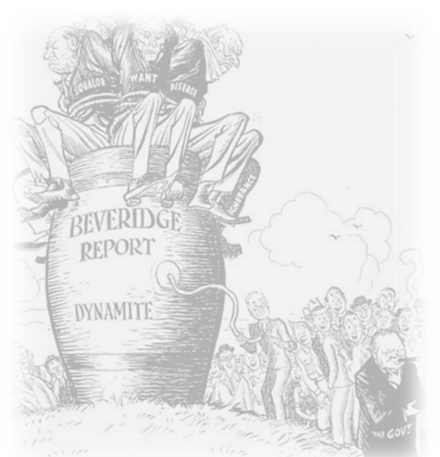
SEMINAR: La Gran Bretagna Novecentesca. Tra la cittadinanza sociale e la tradizione giuridica individualistica (Naples: Università degli Studi di Napoli Federico II, 29 OCT 2024)

 UNIVERSITÀ DEGLI STUDI DI NAPOLI FEDERICO II 

DIPARTIMENTO DI GIURISPRUDENZA 

SEMINARI DI STORIA COMPARATA DEL DIRITTO 2024/2025 

Martedì 29 ottobre, ore 12.30 

Aula Conforti – Via Porta di Massa 32 

La Gran Bretagna Novecentesca Tra la cittadinanza sociale e la tradizione giuridica  individualistica 

Illingworth Leslie, The Daily Mail, February 17° 1943. Tutti i diritti d’autore sono in capo al titolare del copyright.

Lorenzo Pacinotti 

Università degli Studi di Firenze 

Introduce e coordina 

Dolores Freda 

Discute 

Virginia Amorosi 

Segreteria organizzativa: 

Giulio Abbate (giulio.abbate@unina.it)  

Gli incontri integrano i corsi di Storia del diritto medievale e moderno, di Storia della Giustizia e delle discipline storico-giuridiche affini 


02 May 2024

BOOK: Peter CANE & H. KUMARASINGHAM (eds.), The Cambridge Constitutional History of the United Kingdom (Cambridge: Cambridge University Press, 2023), ISBN 9781009277778 and 9781009277105, € 116,17 and € 116,71


(image source: CUP)

Vol. 1: Exploring the Constitution (eds. Peter Cane & H. Humarasingham)
DOI 10.1017/9781009277778

Part I - Perspectives
1 - The Historical Constitution 3-34 By H. Kumarasingham
2 - Law and the Constitution 35-58 By Peter Cane
3 - Political Constitutionalism 59-87 By Richard Bellamy
4 - The Economic Constitution 88-112 By Tony Prosser
5 - Religion and the Constitution to 1688 113-139 By Pippa Catterall
6 - Religion and the Constitution since the Glorious Revolution 140-167 By Pippa Catterall
7 - The Social Democratic Constitution 168-194 By K. D. Ewing
8 - The Constitution of Rights 195-220 By Peter Cane
9 - The People and the Constitution 221-253 By Vernon Bogdanor
10 - Constitutional Theory and Thought 254-282 By Jeffrey Goldsworthy

Part II - Actors and Institutions
11 - Monarchy 285-308 By Edward Cavanagh
12 - Legislatures 309-334 By Michael Gordon
13 - The Executive and the Administration 335-358 By Janet McLean
14 - Judiciaries 359-385 By Joshua Getzler
15 - Coercive Institutions 386-405 By Brice Dickson
16 - Locality, Regionality and Centrality 406-430 By Luke Blaxill
17 - Political Parties 431-454 By Robert Crowcroft

Part III - Politics
18 - Conservatism 457-479 By Asanga Welikala
19 - Liberalism 480-498 By Emily Jones
20 - Socialism 499-519 By Stephen Sedley
21 - Unionism 520-539 By James Mitchell, Alan Convery
22 - Nationalism 540-560 By Michael Keating

Read more with CUP.

Vol. 2: The Changing Constitution (eds. Peter Cane & H. Kumarasingham)
DOI 10.1017/9781009277105

1 - The Kingdoms of Anglo-Saxon England (450–1066) 1-29 By Simon Keynes
2 - England after the Conquestpp 30-62 By George Garnett
3 - England in the Thirteenth Centurypp 63-83 By Paul Brand
4 - England in the Fourteenth Centurypp 84-107 By Christine Carpenter, Andrew M. Spencer
5 - England in the Fifteenth Centurypp 108-130 By David J. Seipp
6 - England in the Sixteenth Centurypp 131-159 By David Chan Smith
7 - The English Constitution in the Seventeenth Centurypp 160-186 Crises of Inadequacy By Glenn Burgess
8 - A European Perspectivepp 187-206 By Tamar Herzog
9 - Wales before Annexationpp 207-230 By Robin Chapman Stacey
10 - The Scottish Constitution before 1707 231-258 By Laura A. M. Stewart
11 - The Eighteenth-Century Constitution 259-287 Settlement and Resettlement By R. A. Melikan
12 - The Constitutional and Parliamentary History of Ireland till the Union 288-316 By Thomas Bartlett
13 - The United Kingdom in the Nineteenth Century 317-342 By Ewen A. Cameron
14 - The United Kingdom in the Twentieth Century 343-369 By Andrew Blick
15 - The Twenty-First-Century Constitution 370-397 By Vernon Bogdanor
16 - Wales since the Annexation 398-421 By Matthew Cragoe
17 - Scotland in the Union 422-442 By Stephen Tierney
18 - Ireland in the Union 443-467 By Donal K. Coffey
19 - The Making of Empire 468-495 By Coel Kirkby
20 - Constitution and Empire 496-528 By H. Kumarasingham

Read more with CUP.


04 May 2023

BOOK: John D. FORD, The Emergence of Privateering (Leiden: Brill, 2023). ISBN: 978-90-04-54140-5, € 148.40

(Source: Brill)

ABOUT THE BOOK

Privateering was legal whereas piracy was illegal. That much everyone knows. But what exactly was privateering? Answering this question turns out to depend not so much on the relationship between privateering and piracy as on the relationship between privateering and other forms of maritime raiding that had been considered legal long before the word ‘privateering’, or the practice it denoted, came into existence. This book clarifies all these relationships and explains how privateering emerged as a new legal category in the late sixteenth and early seventeenth centuries. The subject is approached from a British perspective, in the light of developments elsewhere, including the movement towards a new understanding of the law regulating relations between nations.

ABOUT THE AUTHOR

J. D. Ford is Professor of Civil Law at the University of Aberdeen. His edition of Alexander King’s Treatise on Maritime Law was published by the Stair Society in 2018.

TABLE OF CONTENTS

Preface

Introduction

1Seizures of Ships and Goods at Sea before Privateering
 1 Seizures of Ships and Goods at Sea as Plunder

 2 Acquisition of Prizes in Sixteenth-Century Scotland

 3 Seizures of Ships and Goods at Sea as Reprisal

 4 Authorisation of Reprisals in Sixteenth-Century Scotland

 5 Seizures of Ships and Goods at Sea as Piracy

 6 Apprehension of Pirates in Sixteenth-Century Scotland


2From Licit Plunder towards Licensed Privateering
 1 Regulation of Maritime Warfare in England

 2 Innovation during the Reign of Elizabeth

 3 Justification in Terms of the Practice of Nations

 4 Justification in Terms of the Law of God

 5 Justification in Terms of the Law of Policy

 6 Condemnation of Pirates as Common Enemies


3Privateering in Theory and Practice avant la lettre
 1 Licensed Raiding in Jacobean Scotland

 2 Licensed Raiding in Jacobean England

 3 Towards a New Theory of Prize Acquisition

 4 Towards a New Theory of International Law

 5 Prize Litigation in Caroline England

 6 Prize Litigation in Caroline Scotland


Conclusion

Bibliography

Index

14 June 2021

BOOK: Sakiko KAIGA, Britain and the Intellectual Origins of the League of Nations, 1914–1919 (Cambridge: CUP, 2021). ISBN 9781108489171, £ 75.00


(Source: CUP)

CUP has published a new book on the British origins of the League of Nations.

ABOUT THE BOOK

In this innovative account of the origins of the idea of the League of Nations, Sakiko Kaiga casts new light on the pro-League of Nations movement in Britain in the era of the First World War, revealing its unexpected consequences for the development of the first international organisation for peace. Combining international, social, intellectual history and international relations, she challenges two misunderstandings about the role of the movement: that their ideas about a league were utopian and that its peaceful ideal appealed to the war-weary public. Kaiga demonstrates how the original post-war plan consisted of both realistic and idealistic views of international relations, and shows how it evolved and changed in tandem with the war. She provides a comprehensive analysis of the unknown origins of the League of Nations and highlights the transformation of international society and of ideas about war prevention in the twentieth century to the present.

ABOUT THE AUTHOR

Sakiko KaigaUniversity of Tokyo
Sakiko Kaiga is a Research Fellow at the Institute of Social Science, University of Tokyo.

TABLE OF CONTENTS

Introduction

1. Precursors: Thinking about War and Peace before 1914

2. The Use of Force to Prevent War? The Bryce Group's Proposals for the Avoidance of War, 1914-15

3. Strategies for Winning Public Opinion: The Success and the Loss of the League of Nations Society, 1915-17

4. A Transnational Movement? The British and American Pro-League of Nations Groups, 1914-18

5. No Peace without Victory: The League of Victorious Allies, 1917-18

Conclusion.


More info here

22 March 2021

CALL FOR PAPERS: 25th British Legal History Conference (6-9 July 2022, Belfast) (DEADLINE: 30 August 2021)


(Source: QUB)

We learned of the call for papers for the British Legal History Conference 2022

 LAW AND CONSTITUTIONAL CHANGE


Abstracts are invited for the 25th BRITISH LEGAL HISTORY CONFERENCE which is being run jointly with the Irish Legal History Society and hosted by Queen’s University Belfast, on Wednesday 6 July – Saturday 9 July 2022. 


The conference was originally scheduled for 2021. Queen’s, Belfast, was given the honour of hosting the BLHC in 2021, because it is a significant year in the “Decade of Centenaries”[1] in Ireland, north and south, marking both the centenary of the opening in June 1921 of the Parliament of Northern Ireland, established under the Government of Ireland Act 1920, and the centenary of the signing of articles of agreement for the Anglo-Irish Treaty in December 1921, leading to the establishment of the Irish Free State.   The conference theme, “Law and Constitutional Change”, was chosen against this background.  The Covid-19 pandemic intervened, making postponement unavoidable. 


Organising the conference in 2022 will, however, allow us to celebrate the half-centenary of the British Legal History Conference, first held in Aberystwyth in 1972.  Our hope is that attendance at the conference can be in person, but this will be kept under review and, if necessary, the option of online attendance/participation will be considered.


Conference papers can examine from any historical perspective the relationship between law and constitutional change. The difficulty of defining constitutional change was noted by the Select Committee on the Constitution in their report, The Process of Constitutional Change (HL Paper 177, 2011, para. 10), but they identified several examples, without being exhaustive: parliamentary sovereignty; the rule of law and the rights and liberties of the individual; the union state; representative government; and state membership of international organisations, such as (then) the EU and the Commonwealth.  These are, of course, only examples and the conference theme will be interpreted in all its breadth.


In the context of present-day analysis of the political and constitutional upheavals in British-Irish relations in the early 1920s, the President of Ireland, Michael D. Higgins, has adopted the Irish word, Machnamh, meaning reflection, contemplation, meditation and thought, for a series of online reflections – https://president.ie/en/diary/details/president-hosts-machnamh-100-event  In the spirit of Machnamh, we invite you to join the conversation on law and constitutional change in Queen’s, Belfast, in July 2022.


--------------


Please note the following rules:

-          If you submitted an abstract in 2020, you must make a fresh submission.

-          Abstracts must be for individual papers only, not for panels. Co-authored papers are acceptable.

-          Only one abstract should be submitted per person.

-          Abstracts must be submitted as Microsoft Word documents using the online portal on the Call for Papers page of the conference website.  Please do not submit by email.

-          Abstracts must not exceed 500 words.

-          Please indicate if your proposal is contingent on the availability of an option of online participation.

-          The deadline for submission of abstracts is Monday 30 August 2021.

-          Queries can be emailed to BLHC-2022-info@qub.ac.uk    

-          At the conference, individual oral presentations will last 15-20 minutes.


We hope to publish the programme on the conference website in October 2021.  Details of plenary speakers will also appear there in due course.


Proposals from postgraduate and early career researchers are welcome.


Further information about travel to Belfast, accommodation, and so on, will be added to the conference website during 2021-2022:  https://www.qub.ac.uk/sites/BLH-Conference-2022/


Poster competition


This, the second joint BLHC - ILHS conference, was proposed by Sir Anthony Hart, retired High Court judge, former president of ILHS and enthusiastic supporter of BLHCs, who died suddenly in July 2019.  A poster competition is planned during the 2022 conference as a tribute to Tony.  There will be two prizes, including one for the PGR/early career category. The prizes are generously funded by the Journal of Legal History and by the Irish Legal History Society.  Details of the competition will be posted on the conference website. 


[1] See https://www.decadeofcentenaries.com, a website sponsored by the Irish Department of Culture, Heritage and the Gaeltacht, and other websites linked to it.

07 December 2020

BOOK: Valerio TORREGIANI, Stato e culture corporative nel Regno Unito. Progetti per una rappresentanza degli interessi economici nella riflessione inglese della prima metà del XX secolo (Milano: Giuffrè, 2018). ISBN: 9788814225994, pp. 300, € 28,00


(Source: Giuffrè)

ABOUT THE BOOK

Il volume offre una ricostruzione dello sviluppo e della diffusione di culture politico-giuridiche corporative nel Regno Unito durante la prima metà del XX secolo. A partire dalla fine del XIX secolo, l'emergere delle strutture associative collettive tipiche della modernità industriale - partiti, sindacati operai, federazioni industriali, etc. - inizia a mettere in crisi il modello individualista di convivenza politica, economica e sociale, provocando un ricco dibattito teorico sul tema della rappresentanza degli interessi economici. La ricerca analizza il percorso di elaborazione di proposte di riforma istituzionale di tipo corporativo nel contesto politico-culturale inglese, interpretate come parte integrante di quella policentrica famiglia di somiglianze corporative che, dichiarandosi alternativa alle ideologie liberale e socialista, caratterizzò molti contesti nazionali durante la prima metà del XX secolo.

ABOUT THE AUTHOR

Valerio Torreggiani is research fellow at the Institute of Social Sciences of the University of Lisbon. His main research interests include: (a) the trans-national diffusion of corporatist ideas, analysed under an interdisciplinary political, economic, juridical and cultural perspective; (b) the history of trade unions and employers' federations in the 19th and 20th centuries; (c) the history of contemporary financial systems; and (d) the history of international organizations, specifically the International Labour Organization. He is a member of NETCOR (Network for the Analysis of Corporatism and Organized Interests), ESHET (European Society for the History of Economic Thought), HION (History of International Organization Network), COMFAS (International Association for Comparative Fascist Studies), SISSCO (Società Italiana per lo Studio della Storia Contemporanea), SISLav (Società Italiana di Storia del Lavoro) and LISE (Laboratorio Italiano di Storia Economica).

TABLE OF CONTENTS

It can be downloaded in PDF version, here.


More information with the publisher.

21 July 2020

BOOK: Peter RUSHTON and Gwenda MORGAN, Treason and Rebellion in the British Atlantic, 1685-1800 - Legal Responses to Threatening the State (London: Bloomsbury, 2020). ISBN 9781350005327, £73.44


(Source: Bloomsbury)

Bloomsbury is publishing a new book on treason and rebellion in the British Atlantic.

ABOUT THE BOOK

This book examines internal political conflicts in the British Empire within the legal framework of treason and sedition. The threat of treason and rebellion pervaded the British Atlantic in the 17th and 18th centuries; Britain's control of its territories was continually threatened by rebellion and war, both at home and in North America. Even after American independence, Britain and its former colony continued to be fearful that opposition and revolution might follow the French example, and both took legal measures to control both speech and political action.

This study places these conflicts within a political and legal framework of the laws of treason and sedition as they developed in the British Atlantic. The treason laws originated in the reign of Edward III, and were adapted and modified in the 16th and 17th centuries. They were exported to the colonies, where they underwent both adaptation and elaboration in application in the slave societies as well as those dominated by free settlers. Relationships with natives and European rivals in the Americas affected the definitions of treason in practice, and the divided loyalties of the American revolutionary war added further problems of defining loyalty and treachery.

Treason and Rebellion in the British Atlantic, 1685-1800 offers a new study of treason and sedition in the period by placing them in a truly transatlantic perspective, making it a valuable study for those interested in the legal and political of Britain's empire and 18th-century revolutions.

ABOUT THE AUTHOR

Peter Rushton is Professor of Historical Sociology at the University of Sunderland, UK. He has published widely on witchcraft, problems of marriage and family life, the poor law and crime in C18th England. He is the joint author of Eighteenth Century Criminal Transportation (Palgrave, 2004).
Dr Gwenda Morgan is Honorary Research Fellow in the Department of History at the University of Durham, UK.  She has published widely on law and society in early America.  Her latest book is The Debate on the Modern American Revolution: Issues in Historiography (MUP 2007).

TABLE OF CONTENTS

Part One: Origins - Theory, Doctrine and Practice 1500-1700
1. Treason and Rebellion
2. The Practice: Treason, Civil Wars, Rebellions and Law in Seventeenth-Century Britain and Ireland
Part Two: Development - Rebellion and Treason in Eighteenth-Century Britain and Ireland
3. Treason and Rebellion in the Eighteenth Century
4. Treason and the Laws of War in Domestic Revolts
5. Rebellion and Retaliation
Part Three: Crisis - The American Revolution and the British Atlantic
6. Precursors to Rebellion
7. Rebellion and Revolution
8. Patriots and Loyalists
9. Revolutionary War and the Laws of Nations
Part Four: Revolution - Parallels and Contrast in Response to the Revolutionary Years of the 1790s
10. The 1790s – The Age of Revolution
11. Conclusion – Treason and Rebellion in the Transatlantic World
Bibliography
Index

More info here

15 July 2020

BOOK: Atle L. WOLD, Privateering and Diplomacy, 1793–1807 Great Britain, Denmark-Norway and the Question of Neutral Ports (London: Palgrave Macmillan, 2020). ISBN 978-3-030-45185-1, 79,49 EUR


(Source: Palgrave)

Palgrave is publishing a new book on the British-Danish diplomatic debate on privateering and neutral ports in the period 1793-1807.

ABOUT THE BOOK

This book addresses the British-Danish diplomatic debate on privateering and neutral ports in the period 1793-1807, when Denmark-Norway remained neutral in the war between Britain and France. The British government protested against the use French privateers made of Norwegian ports as bases for their attacks on the British Baltic Sea and Archangel Trades, but the Danish government insisted on keeping the ports open. This led to a running dispute on the relative rights and duties of belligerents and neutrals, but also on violations of the tentative agreement that the two governments reached in 1793. The three main chapters in the book address the principled debate on privateering and neutral ports; the central role played in the debate by the British diplomatic and consular representatives in Denmark-Norway; and privateering in practice. The final two chapters look at the impact of the Dutch change of sides in the war in 1795, and the development from the official closure of the Norwegian ports to privateers in 1799 until Denmark-Norway’s entry into the war on the side of France in 1807.

ABOUT THE AUTHOR

Atle L. Wold is Associate Professor of British Studies at the Department of Literature, Area Studies and European Languages at the University of Oslo, Norway. He is the author of Scotland and the French Revolutionary War, 1792-1802 (2015).

More info here

14 July 2020

BOOK: Mike MCCONVILLE and Luke MARSH, The Myth of Judicial Independence (Oxford: Oxford University Press, 2020). ISBN 9780198822103, $99.00


(Source: OUP)

OUP is publishing a new book on the regulation of policing in the UK and across the commonwealth in modern times, on the basis of Home Office archival files.

ABOUT THE BOOK

Through an examination of the history of the rules that regulate police interrogation (the Judges' Rules) in conjunction with plea bargaining and the Criminal Procedure Rules, this book explores the 'Westminster Model' under which three arms of the State (parliament, the executive, and the judiciary) operate independently of one another. It reveals how policy was framed in secret meetings with the executive which then actively misled parliament in contradiction to its ostensible formal relationship with the legislature.

This analysis of Home Office archives shows how the worldwide significance of the Judges' Rules was secured not simply by the standing of the English judiciary and the political power of the empire but more significantly by the false representation that the Rules were the handiwork of judges rather than civil servants and politicians.

The book critically examines the claim repeatedly advanced by judges that "judicial independence" is justified by principles arising from the "rule of law" and instead shows that the "rule of law" depends upon basic principles of the common law, including an adversarial process and trial by jury, and that the underpinnings of judicial action in criminal justice today may be ideological rather than based on principles.

ABOUT THE AUTHORS

Mike McConville is Honorary Professor at the University of Nottingham and Founding Dean of the faculty of law, at the Chinese University of Hong Kong. Mike has been the Head of Law at the University of Warwick, the City University of Hong Kong, and the Chinese University of Hong Kong. He has researched and published widely in the area of socio-legal research in England and Wales, the USA, and China. Areas that he has covered include, the investigative and prosecution process, plea bargaining, the jury, policing, neighbourhood watch, criminal defence.

Luke Marsh is Associate Professor at the faculty of law at the Chinese University of Hong Kong and Door Tenant at 25 Bedford Row, London. He has held visiting appointments at the Universities of Oxford, Cambridge, Columbia (New York), Auckland, Waseda (Tokyo), Nottingham, and UCL. Luke was the co-founding General Editor of Archbold News (Hong Kong) and is widely published in the area of criminal justice and human rights. His most recent work examines the erosion of the adversarial process in the English criminal justice system.

TABLE OF CONTENTS

1. Introduction and Overview
2. The Management of Criminal Justice: An Early Challenge
3. The Origin of the Judges' Rules
4. The Aftermath: 1918-1960
5. The First Draft: The Judges and the Home Office
6. The War of Attrition and the Vanquishing of the Judges
7. The Legacy of the 1964 Rules
8. Rule of Law and Common Law
9. Constitutionalism and the Westminster Model
10. The Politics of the Judiciary
11. The Global Diaspora
12. Appraisal and Review

More info here

30 June 2020

NEWS: British Legal History Conference 2021 postponed (NEW DATE: 6-9 July 2022)


Via the Edinburgh Legal History Blog, we learned that as a result of uncertainty due to the corona pandemic, the British legal history has been postponed from 2021 to 2022. Here the original post:

As a result of continuing uncertainty caused by the coronavirus pandemic, in particular in relation to international travel, the organisers of the British Legal History Conference 2021 have decided to postpone the conference to 6-9 July 2022. This decision has been taken in consultation with the BLHC Continuation Committee.

The theme for BLHC 2022 is unchanged: Law and Constitutional Change and, as originally planned, the conference will be organised in association with the Irish Legal History Society.

A fresh call for papers will be made on 15 March, 2021.

Registration will open in February 2022.

The conference website will shortly be updated: the amended web address is expected to be https://www.qub.ac.uk/sites/BLH-Conference-2022/

To preserve the usual biennial pattern of BLHCs, arrangements will be made by the BLHC Continuation Committee for the conference following the Queen’s, Belfast event to be held in 2024.


22 June 2020

BOOK: Keith EWING, Joan MAHONEY, and Andrew MORETTA, MI5, the Cold War, and the Rule of Law (Oxford: Oxford University Press, 2020). ISBN 9780198818625, $105.00


(Source: OUP)

Oxford University Press is publishing a new book on the MI5 and the rule of law during the Cold War.

ABOUT THE BOOK

This book explores the powers, activities, and accountability of MI5 from the end of the Second World War to 1964. It argues that MI5 acted with neither statutory authority nor statutory powers, and with no obvious forms of statutory accountability. It was established as a counter-espionage agency, yet was beset by espionage scandals on a frequency that suggested if not high levels of incompetence, then high levels of distraction and the squandering of resources.

The book addresses the evolution of MI5's mandate after the Second World War which set out its role and functions, and to a limited extent the lines of accountability, the surveillance targets of MI5 and the surveillance methods that it used for this purpose, with a focus in two chapters on MPs and lawyers respectively; the purposes for which this information was used, principally to exclude people from certain forms of employment; and the accountability of MI5 or the lack thereof for the way in which it discharged its responsibilities under the mandate.

As lawyers the authors' concern is to consider these questions within the context of the rule of law, one of the core principles of the British constitution, the values of which it was the duty of the Security Service to uphold. Based on extensive archival research, it suggests that MI5 operated without legal authority or exceeded the legal authority it did have.

ABOUT THE AUTHOR

Keith EwingProfessor of Public Law, King's College LondonJoan MahoneyUniversity of SouthamptonAndrew Morettapostgraduate research student, University of Liverpool

Keith Ewing is professor of public law at King's College London. He is co-editor of the Oxford Labour Law series and author of numerous books and articles, including Bonfire of the Liberties (OUP 2010) and The Struggle for Civil Liberties (OUP 2001).

Joan Mahoney now teaches at the University of Southampton, having taught for many years in the United States where she was Dean of Wayne State University Law School.

Andrew Moretta is a postgraduate research student at the University of Liverpool. He received his LLM from King's College London in 2012.

More info here

19 June 2020

BOOK: Saul DUBOW and Richard DRAYTON, eds., Commonwealth History in the Twenty-First Century (London: Palgrave Macmillan, 2020). ISBN 978-3-030-41787-1, EUR 105,99


(Source: Routledge)

Routledge has published a new edited collection on historical writing on the Commonwealth.

ABOUT THE BOOK

This edited collection draws together new historical writing on the Commonwealth. It features the work of younger scholars, as well as established academics, and highlights themes such as law and sovereignty, republicanism and the monarchy, French engagement with the Commonwealth, the anti-apartheid struggle, race and immigration, memory and commemoration, and banking. The volume focusses less on the Commonwealth as an institution than on the relevance and meaning of the Commonwealth to its member countries and peoples. By adopting oblique, de-centred, approaches to Commonwealth history, unusual or overlooked connections are brought to the fore while old problems are looked at from fresh vantage points – be this turning points like the relationship between ‘old’ and `new’ Commonwealth members from 1949, or the distinctive roles of major figures like Jawaharlal Nehru or Jan Smuts. The volume thereby aims to refresh interest in Commonwealth history as a field of comparative international history.

ABOUT THE EDITORS

Saul Dubow is Smuts Professor of Commonwealth History at the University of Cambridge, UK, and an expert on South Africa.   
Richard Drayton is Rhodes Professor of Imperial History at King's College London, UK, with a special interest in the Caribbean. 

Both teach and write about global and imperial history.  

More info here

16 June 2020

BOOK: Michael LOBBAN & Ian WILLIAMS (eds.), Networks and Connections in Legal History (Cambridge: University Press, 2020). ISBN: 1108490883, £ 85.00

Networks and Connections in Legal History
(Source: CUP)


ABOUT THE BOOK

Network and Connections in Legal History examines networks of lawyers, legislators and litigators, and how they shaped legal development in Britain and the world. It explores how particular networks of lawyers - from Scotland to East Florida and India - shaped the culture of the forums in which they operated, and how personal connections could be crucial in pressuring the legislature to institute reform - as with twentieth century feminist campaigns. It explores the transmission of legal ideas; what happened to those ideas was not predetermined, but when new connections were made, they could assume a new life. In some cases, new thinkers made intellectual connections not previously conceived, in others it was the new purposes to which ideas and practices were applied which made them adapt. This book shows how networks and connections between people and places have shaped the way that legal ideas and practices are transmitted across time and space.

ABOUT THE EDITORS

Michael Lobban is Professor of Legal History at the London School of Economics and Political Science, England. He is the author of The Common Law and English Jurisprudence, 1760-1850 (1991) and A History of the Philosophy of Law in the Common Law World, 1600-1900 (2007), as well as one of the authors of volumes XI-XIII of The Oxford History of the Laws of England. 
Ian Williams is Associate Professor at the University College London Faculty of Laws, England. His research interests are principally in legal history, particularly early-modern English legal history. He is co-editor of Landmark Cases in Criminal Law.

TABLE OF CONTENTS

1. Introduction - Michael Lobban and Ian Williams
2. Networks and Influences: Contextualising Personnel and Procedures in the Court of Chivalry - Anthony Musson 
3. Men of law and legal networks in Aberdeen, principally in 1600-1650 - Adelyn Wilson 
4. Calling Time at the Bar: First women barristers and their networks and connections - Judith Bourne
5. The Thistle, the Rose, and the Palm: Scottish and English Judges in British East Florida - M. C. Mirow; 
6. 'The Bengal Boiler': Legal Networks in Colonial Calcutta - Raymond Cocks; 
7. The White Ensign on Land: The Royal Navy and Legal Authority in Early Sierra Leone - Tim Soriano; 
8. A Broker's Advice: Credit Networks and Mortgage Risk in the Eighteenth-century Empire - Julia Rudolph; 
9. Trans-Atlantic connections: The many networks and the enduring legacy of J.P. Benjamin -  Catharine MacMillan; 
10. Interpretatio ex aequo et bono, the emergence of equitable interpretation in European legal scholarship -  Lorenzo Maniscalco; 
11. Shakespeare and the European Ius Commune - R. H. Helmholz; 
12. Law Reporting and Law Making: the Missing Link in Nineteenth-century Tax Law - Chantal Stebbings; 
13. John Taylor Coleridge and English Criminal Law - Philip Handler


More information here


16 April 2020

BOOK: Gabriela A. FREI, Great Britain, International Law, and the Evolution of Maritime Strategic Thought, 1856 - 1914 (Oxford: Oxford University Press, 2020). ISBN 9780198859932, £60.00


(Source: OUP)

Oxford University Press is publishing a book on British state practice and the evolution of international maritime law from the aftermath of the Crimean War to World War I.

ABOUT THE BOOK

Gabriela A. Frei addresses the interaction between international maritime law and maritime strategy in a historical context, arguing that both international law and maritime strategy are based on long-term state interests. Great Britain as the predominant sea power in the nineteenth and early twentieth centuries shaped the relationship between international law and maritime strategy like no other power. This study explores how Great Britain used international maritime law as an instrument of foreign policy to protect its strategic and economic interests, and how maritime strategic thought evolved in parallel to the development of international legal norms.

Frei offers an analysis of British state practice as well as an examination of the efforts of the international community to codify international maritime law in the late nineteenth and early twentieth centuries. Great Britain as the predominant sea power as well as the world's largest carrier of goods had to balance its interests as both a belligerent and a neutral power. With the growing importance of international law in international politics, the volume examines the role of international lawyers, strategists, and government officials who shaped state practice. Great Britain's neutrality for most of the period between 1856 and 1914 influenced its state practice and its perceptions of a future maritime conflict. Yet, the codification of international maritime law at the Hague and London conferences at the beginning of the twentieth century demanded a reassessment of Great Britain's legal position.

ABOUT THE AUTHOR

Gabriela A. Frei, Early Career Fellow, TORCH, The Oxford Research Centre in the Humanities
Gabriela A. Frei is an Associate Member of the Faculty of History at the University of Oxford and an Early Career Fellow at the Oxford Research Centre in the Humanities (TORCH). She holds a DPhil in History and a MSt in Historical Research from the University of Oxford, and she was awarded a degree of Licentiata Philosophiae (history, constitutional law, and English literature) from the University of Bern, Switzerland. She held postdoctoral research positions at the University of Cambridge, the Université Libre de Bruxelles, and the University of Oxford. Her research and publications focus on the relationship between international law, maritime strategy, and politics in the nineteenth and twentieth centuries. She has a particular interest in the role of jurists in international politics, and how law shapes political agendas.

TABLE OF CONTENTS

Introduction
1: The Sea as a Legal and Strategic Space
2: The Making of the Law of Neutrality
3: The Law of Neutrality and State Practice
4: The Codification of International Maritime Law
5: The Hague and London Conferences and the Rise of an International Legal Order
6: Maritime Strategic Thought and International Law
7: International Law and the Theory of War
Conclusion: Sea Power, International Law, and Future Wars

More info here

02 April 2020

BOOK: J.R. POLE, Contract and Consent: Representation and the Jury in Anglo-American Legal History (Williamsburgh: University of Virgina Press, 2010), 280 p. ISBN 9780813928920; OPEN ACCESS

(image source: Project Muse)

Book abstract:
In Contract and Consent, the renowned legal historian J. R. Pole posits that legal history has become highly specialized, while mainstream political and social historians frequently ignore cases that figure prominently in the legal literature. Pole makes a start at remedying the situation with a series of essays that reintegrate legal with political and social history. A central theme of the essays is the link between Anglo-American common law and contract law and American political and constitutional principles. Pole also emphasizes the political functions of legal institutions in English and American history, going so far as to suggest that we need to divest ourselves of any notion of the separation of powers. Instead, we need to acknowledge the historical role of courts, juries, and the common law as agencies of political representation and as promulgators of law and policy.
(source: ProjectMuse)

26 March 2020

BOOK: Kate BATES, Crime, Broadsides and Social Change, 1800-1850 (London: Palgrave Macmillan, 2020). ISBN 978-1-137-59789-2, 63,59 EUR


(Source: Palgrave)

Palgrave is publishing a book on the form, function and meaning of crime and execution broadsides printed in nineteenth-century Britain.

ABOUT THE BOOK

This book explores the form, function and meaning of crime and execution broadsides printed in nineteenth-century Britain. By presenting a detailed discourse analysis of 650 broadsides printed across Britain between the years 1800-1850, this book provides a unique and alternative interpretation as to their narratives of crime. This criminological interpretation is based upon the social theories of Emile Durkheim, who recognised the higher utility of crime and punishment as being one of social integration and the preservation of moral boundaries. The central aim of this book is to show that broadsides relating to crime and punishment served as a form of moral communication for the masses and that they are examples of how the working class once attempted to bolster a sense of stability and community, during the transitional years of the early nineteenth century, by effectively representing both a consolidation and celebration of their core values and beliefs. 

ABOUT THE AUTHOR

Kate Bates is Senior Lecturer in Criminal Justice at Liverpool John Moores University, UK. She has extensive experience of criminal justice, having served as both a police officer and a civilian caseworker investigating police complaints, and has also served as a panel member for Children’s Hearings Scotland.

TABLE OF CONTENTS

Introduction: The Broadside Enigma and Its Historical Development
Pages 1-16
Broadsides as Sources: A Methodological Discussion and Overview of Key Findings
Pages 17-40
A ‘Barbarous’ Trade: Early-Nineteenth-Century Broadsides in Social and Historical Context
Pages 41-86
 ‘A Full and Particular Account’: Representations of Morality and Justice in Broadside Discourse
Pages 87-147
Collective Representations: A Durkheimian Interpretation of Crime Broadsides
Pages 149-186
Ballads of Blood: The Form and Function of Crime Narratives
Conclusion: The Social Significance of Crime Broadsides—Bonding Not Binding
Pages 231-238

More info here

02 March 2020

CALL FOR PAPERS : The 2021 British Legal History Conference (BLHC), in association with the Irish Legal History Society (Belfast, 7-10 July 2021) (DEADLINE: 30 August 2020)


We learned of the call for papers for the next British Legal History Conference, which will be hosted by Queen’s University Belfast in July 2021.

LAW AND CONSTITUTIONAL CHANGE

Abstracts are invited for the 2021 BRITISH LEGAL HISTORY CONFERENCE which is being run jointly with the IRISH LEGAL HISTORY SOCIETY and hosted by Queen’s University Belfast. 

2021 will be a significant year in the “Decade of Centenaries”[1] in Ireland, north and south, marking both the centenary of the opening in June 1921 of the Parliament of Northern Ireland, established under the Government of Ireland Act 1920, and the centenary of the signing of articles of agreement for the Anglo-Irish Treaty in December 1921, which led to the establishment of the Irish Free State.  Against this background, BLHC 2021 will take place in partnership with the ILHS in Belfast. 

While the conference theme – “Law and Constitutional Change” – has been chosen in the context outlined above, this is without any intention to restrict the scope of the conference papers to Anglo-Irish history.   The theme will be interpreted in all its historical breadth, examining from any historical perspective the relationship between law and law-making on the one hand and, on the other, the shaping of constitutional principles and the disruption or maintenance of constitutional balance.

Please note the following rules:

-          Abstracts must be for individual papers only, not for panels
-          Only one abstract to be submitted per person
-          Abstracts must be submitted as Microsoft Word documents using the online portal on the Call for Papers page of the conference website.  Please do not submit by email.
-          Abstracts must not exceed 500 words
-          The deadline for submission of abstracts is Friday 30 August 2020
-          Queries can be emailed to BLHC-2021-info@qub.ac.uk    
-          At the conference, individual oral presentations will last 15-20 minutes.

We hope to publish the programme on the conference website in October 2020.  Details of plenary speakers will also appear there in due course.

Proposals from postgraduate and early career researchers are welcome.

Further information about travel to Belfast, accommodation, and so on, will be added to the conference website during 2020-2021:  https://www.qub.ac.uk/sites/BLH-Conference-2021/

This, the second joint BLHC - ILHS conference, was proposed by Sir Anthony Hart, retired High Court judge, former president of ILHS and enthusiastic supporter of BLHCs, who died suddenly in July 2019.  A poster competition is planned during the 2021 conference as a tribute to Tony.  There will be two prizes, including one for the PGR/early career category. The prizes are generously funded by the Journal of Legal History and by the Irish Legal History Society.  Details of the competition will be posted on the conference website.


[1] See https://www.decadeofcentenaries.com, a website sponsored by the Irish Department of Culture, Heritage and the Gaeltacht, and other websites linked to it.