Search

Showing posts with label spanish history. Show all posts

12 May 2025

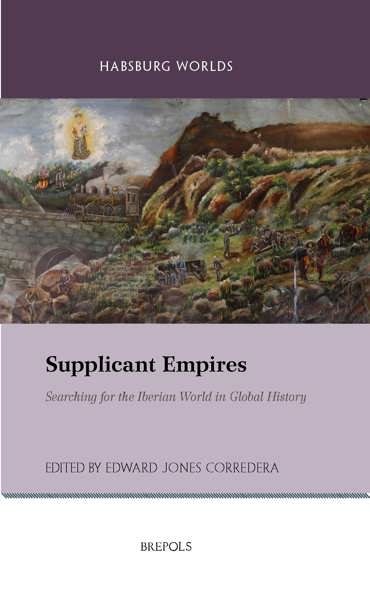
BOOK: Edward JONES CORREDERA (ed.), Supplicant Empires. Searching for the Iberian World in Global History [Habsburg Worlds] (Turnhout: Brepols, 2025), 250 p. ISBN 9782503611211


(image source: Brepols)

On the editor:

Is a Senior Research Fellow at the Max Planck Institute for Comparative Public Law and International Law (Heidelberg) and a Lecturer at the UNED (Madrid).

Table of contents:

Edward Jones Corredera (Max Planck Institute, Heidelberg, and UNED, Madrid)
Introduction: Who Prayed for the Iberian World? Incomparable Empires & Global History

Tamar Herzog (Harvard University)
Is Spain Exceptional? Reflections on Thirty Years of Research and Writing

Pedro Cardim (Universidade Nova de Lisboa)
Corporations, normative pluralism, and jurisdictions in early modern Iberia: The potential and the limitations of an interpretive framework

Marcos Reguera (Universidad del País Vasco)
From Manifest Destiny to “destino manifiesto”: the Hispanic Reception and Formulations of Manifest Destiny

Bethany Aram (Universidad Pablo de Olavide)
Comparative approaches to gender, ethnicity and empires: Britain & Spain

Marta Manzanares (Universidad Autónoma de Madrid)
Rethinking the Place of Sugar in Eighteenth-Century Spain

Fabien Montcher (University of St. Louis)
Imperial Blind Spots: Indeterminacy and Thickness across the Iberian Monarchies

David Martín Marcos (UNED)
Rustics and Barbarians: Otherness and Counter-hegemony in the Early Modern Iberian World

Interviews:

Bartolomé Yun-Casalilla (Universidad Pablo de Olavide), Amanda Scott (Pennsilvania State University), Juan Pimentel (CSIC), José Maria Portillo (Universidad del País Vasco), Maria Gago (European University Institute), Javier Rodríguez (Universidad Autónoma de Madrid), and Thiago Krause (Wayne State University)

 Read more here.

27 February 2025

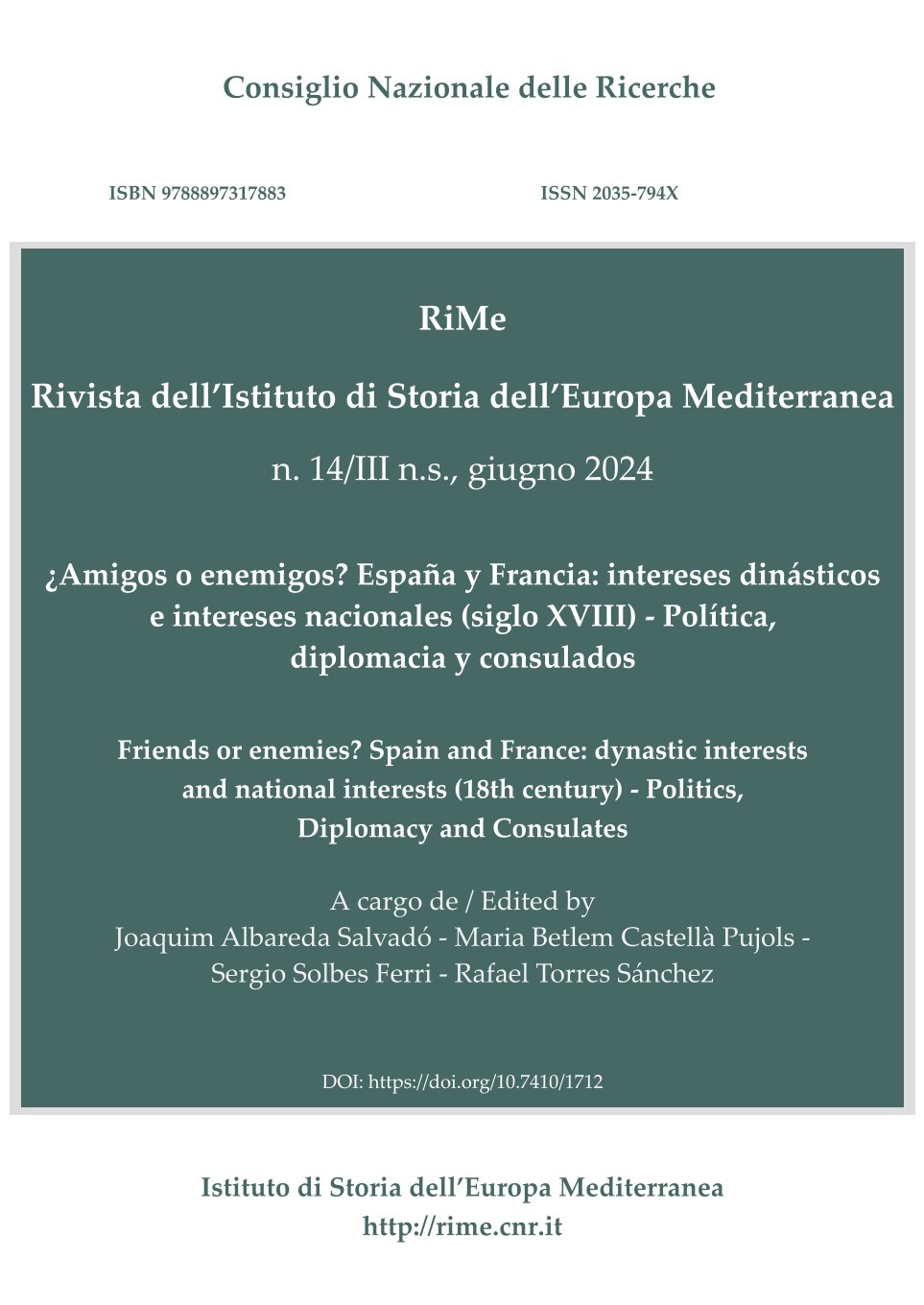
ARTICLE: Agustí ALCOBERRO PERICAY, "Sobre la guerra justa. Una interpretació catalana de la Guerra de Successió d'Espanya mitjançant De Jure Belli ac Pacis d'Hugo Grotius" [Special Issue ¿Amigos o enemigos?España y Francia: intereses dinásticos e intereses nacionales (siglo XVIII), eds. Joaquim ALBAREDA SALVADÓ, Maria Betlem CASTELLÀ PUJOLS, Sergio SOLBES FERRI, Rafael TORRES SÁNCHEZ] (RiMe. Rivista dell'Istituto di Storia dell'Europa Mediterranea 14/III (June 2024), 137-157) [OPEN ACCESS]


(image source: RiMe)

Special issue presentation:

El conocimiento historiográfico sobre la construcción del Estado en España ha avanzado significativamente en las últimas décadas. De este renovado e intenso proceso de revisión historiográfica de los principios tradicionales de la construcción del Estado surge una importante necesidad, como es la de empezar a tender puentes entre las diversas áreas que han aportado esas visiones diferentes sobre el proceso de construcción del Estado. El amplio dossier que presentamos a continuación es el resultado del desarrollo de las jornadas internacionales de estudio que tuvieron lugar en Barcelona entre los días 19 y 21 de octubre de 2022 bajo el título “¿Amigos o enemigos?  España y Francia: intereses dinásticos e intereses nacionales (siglo XVIII)”. La Universitat Pompeu Fabra de la ciudad condal se convirtió en la sede anfitriona de las mismas, bajo la coordinación de sus profesores Joaquim Albareda y Maria Betlem Castellà (UPF), contando además con el apoyo de Sergio Solbes Ferri (Universidad de Las Palmas de Gran Canaria) y Rafael Torres Sánchez (Universidad de Navarra).

Abstract:

The Catalan jurist Josep Plantí (Barcelona 1681-Milan 1743), who in exile was a judge of the Royal Court of Sardinia and the Senate of Milan, wrote a Latin chronicle of the War of the Spanish Succession. One of the objectives of the text is to invalidate the label of "rebels" that the Bourbon authors applied to the Catalans. The method used refers to the authorities of the Law, and especially to De Jure Belli ac Pacis by Hugo Grotius, from which he mentions numerous passages, all the while defining a coherent and modern discourse, which also makes it unique within the framework of Catalan journalism on war and exile.

Read more here (DOI 10.7410/1718

22 March 2023

BOOK: Adrian MASTERS, We, the King: Creating Royal Legislation in the Sixteenth-Century Spanish New World (Cambridge: Cambridge University Press, 2023), 342 pp., ISBN 9781009315418, £85


(image courtesy: Cambridge University Press)

Book description: 
We, the King challenges the dominant top-down interpretation of the Spanish Empire and its monarchs' decrees in the New World, revealing how ordinary subjects had much more say in government and law-making than previously acknowledged. During the viceregal period spanning the post-1492 conquest until 1598, the King signed more than 110,000 pages of decrees concerning state policies, minutiae, and everything in between. Through careful analysis of these decrees, Adrian Masters illustrates how law-making was aided and abetted by subjects from various backgrounds, including powerful court women, indigenous commoners, Afro-descendant raftsmen, secret saboteurs, pirates, sovereign Chiriguano Indians, and secretaries' wives. Subjects' innumerable petitions and labor prompted – and even phrased - a complex body of legislation and legal categories demonstrating the degree to which this empire was created from the “bottom up”. Innovative and unique, We, the King reimagines our understandings of kingship, imperial rule, colonialism, and the origins of racial categories.
Table of contents: 
List of figures
List of tables
Acknowledgments
Prelude: A Peruvian pestizo at the Spanish Court
Introduction: the collective making of an empire
1. Paper ceremonies for a global empire: Gobierno petitions and the collective work of Voluntad
2. The co-creation of the Imperial Logistics Network
3. Distant kings, powerful women, prudent ministers: the gendered creation of the Council of the Indies
4. Lawmaking in a portable council: Gobierno decision-making technologies before 1561
5. 'Bring the Papers:' Royal decision-making and the power of archives in Madrid, 1561–1598
6. Creating the royal decree: format, phraseology, and petitioners' transformation of Indies law
7. Pedro Rengifo's epilogue: subjects of chance
Conclusions
Index.
About the author: 
Adrian Masters is Director of the University of Trier's GloVib: Global Entanglements Project. Raised in rural Costa Rica, he has written several award-winning articles on Spanish imperial history.
More information can be found here

29 September 2022

ARTICLE: Raúl MORENO-ALMENDRAL, "Independence and Constitution: The Spanish Nationalization of Personal Experience During the Peninsular War and its Aftermath" (European History Quarterly LII (2022), nr. 4, 699-719)


(image source: Sage)

Abstract:

The deconstruction of the ?War of Independence? (1808?1814) as a Spanish nationalist myth was a necessary step in advancing our knowledge of the history of the Age of Revolutions in Spain and of Spanish nation-building itself. However, it set aside those who had in fact experienced those events through a genuine Spanish nationalized lens. Using a corpus of autobiographical sources written between the 1780s and the 1830s, this paper argues that political concepts of Spanish nationhood were already available before the liberal revolution unleashed by the French invasion, that anti-liberals used the language of nationhood in their ego-documents too, and that ideas of independence and constitution pervaded social cleavages and ideological divides. Arguably, then, the War of Independence had both mythical and real dimensions in terms of the history of national identities. Therefore, the great issue in nineteenth-century Spanish nation-building would have not been a congenital ?lack? or ?weakness? of nationhood but an intense cultural war for its definition along political lines.

Read more here (DOI 10.1177/02656914221120150). 

16 October 2019

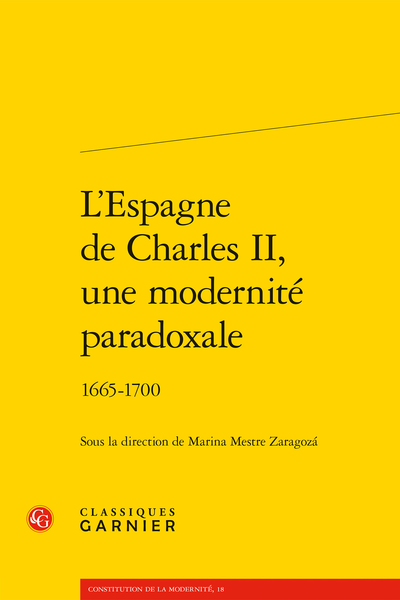
BOOK: Marina MESTRE ZARAGOZÁ, L'Espagne de Charles II, une modernité paradoxale 1665-1700 [Constitution de la mondernité, 18] (Paris: Classiques Garnier, 2019), 293 p., ISBN 978-2-406-09373-2

(image source: Classiques Garnier)

Book abstract:
Ce volume participe au renouveau historiographique d’une période où l’Espagne, loin d’être paralysée par la décadence et par sa prétendue incapacité à s’adapter aux nouveaux temps, affronte avec détermination, audace et pragmatisme un tournant dynastique décisif pour son histoire.
Table of contents here.