Search

Showing posts with label parliamentary history. Show all posts

16 July 2024

CALL FOR PAPERS: Residues and Innovations within Imperial Orders. Political Assemblies in Continental Europe, 1800-1850 (Warsaw: DHI, PAS, 23-24 JAN 2025); DEADLINE 31 AUG 2024


(image source: IHPAN)


Organizers: Piotr Kuligowski, Wiktor Marzec, Bartosz Dziewanowski-Stefańczyk Academic Committee: Marnix Beyen, Anna Grześkowiak-Krwawicz, Paulina Kewes, Judit Pál, Henk te Velde First Edition, 23-24 January 2025

The turn of the 18th and 19th centuries witnessed profound transformations in the political landscape of continental Europe, that might be dubbed a Napoleonic moment. Novel ideas regarding national community and state centralization led to the rapid decline of residual republican systems, including almost synchronous collapses of the Dutch Republic, Polish-Lithuanian Commonwealth, and Italian city-republics. Simultaneously, it paved the way for a new type of political assemblies representing a broader, modernly conceived nation, including the third estate. These newly established bodies often deviated from local political traditions, generating uncertainty but also stirring desire for change. These were, however, often created by politicians educated in the time of the 18th century ancien régime. The year 1815 marked a new wave of parliamentarization in Europe, guided by the provisions of the Congress of Vienna and subsequent treaties. Unlike in the Napoleonic era, the architects of the post- Viennese order sought to restore and adapt previously existing representative institutions.

Both pre- and post-Vienna political assemblies, characterized by limited sovereignty were integrated into a broader imperial orders but often situated in buffer zones of empires. While securing imperial rule in these diverse interfaces, these assemblies articulated national-revolutionary claims in times of upheavals and crises, which spurred on centrifugal forces. By comparing these assemblies in the context of their nascent parliamentary culture mixing old forms and innovative designs, a deeper understanding of imperial nexus of power sovereignty, and representation on heterogenous territories can be fostered.

In the first edition of the ‘Parliamentary Junctures in Continental Europe’ conference, we welcome submissions addressing various aspects of representative assemblies’ internal and external functioning during the first half of the nineteenth century. Exemplary areas of inquiry include, but are not limited to:

  • parliamentary rhetoric / discourse and concepts,
  • rearticulations of traditions,
  • procedural and conceptual innovations,
  • assemblies in interface peripheries and inter-imperial bids,
  • social composition of assemblies.

Particular attention will be given to political assemblies situated in imperial borderlands.

Submission deadline: August 31st, 2024

Please send the title, abstract (up to 300 words), and a short CV (one-two pages) at parljunctures@mail.com

Selection results: mid-September 2024

Venues:

  • German Historical Institute, Warsaw (23rd of January 2025)
  • Tadeusz Manteuffel Institute of History of the Polish Academy of Sciences, Warsaw (24th of January 2025)

Practicalities: The conference organizer will provide accommodation to all participants. If necessary, travel expenses may be covered up to 300 EUR. The conference results will be published in the form of a special issue of a respected journal in the field (in English). Participants are expected to circulate drafts of their papers at least two weeks before the workshop.

Read more here.

19 July 2022

JOURNAL: Parliaments, Estates and Representation XLII (2022), No. 2


(image source: Routledge)

Constitution-making by elected assemblies in Southern Europe during the nineteenth century (Kostas Chrysogonos) (DOI 10.1080/02606755.2022.2084295)

Abstract:

The aim of this article is to examine whether the specific method of constitution-making in Southern Europe during the nineteenth century, and in particular the entanglement of an elected assembly with it, played any role in its outcome. The conclusion, based on a country-by-country report, is that the methods of constitution-making oscillated between royal concession, co-operation between the monarch and an elected assembly, and enactment of a fundamental law by an assembly alone. The participation of an elected assembly would frequently result in a document somewhat more liberal and more democratic than in the case of fundamental laws conceded by the monarch. However, the differences were not huge. Constitutions made by an assembly seem furthermore to have fared on average somewhat better than conceded constitutions, as far as their endurance is concerned. Concession and contract were however gradually falling into disuse as methods of constitution-making, ceding their place to (constituent) assemblies on a Pan-European scale. Since consent is obviously inscribed in the genome of constitutionalism as the fundamental organizational principle of society, it is to be expected that the symbolic foundation of a political community will be laid through the institutionalized consent of the members of this community.

Fabricating opinion: the Duke of Northumberland’s subscription campaign for petitions to parliament against the 1831 Reform Bill (David Zaret) (DOI 10.1080/02606755.2022.2084292) (OPEN ACCESS)

Abstract:

During the first five months of the new Grey administration (22 November to the 22 April 1831 dissolution), parliament received more petitions over the contentious issue of parliamentary reform than in any prior episode of mass petitioning. This case study uses unusual records with granular evidence from the professional management of a reactionary campaign for petitions against the 1831 Reform Bill. The records are from the law firm that managed the campaign, underwritten by the Duke of Northumberland, one of the realms richest magnates. The duke’s initiative proceeded despite negative assessments by local Tory leaders, who correctly predicted the petitions would get few signatures and be a public relations disaster. The duke’s initiative received more derisive publicity than any other petition campaign in this first phase of the Reform Bill’s political odyssey. This study of a failed petition campaign does not alter what we know about the substance or progress of legislation that became the 1832 Reform Act. Instead, it sheds new light on the broader issue of change and continuity in public petitioning with regard to 1) the credibility of opinion represented in petitions and 2) professional management of mass petition campaigns as routine legal practice.

From the diet of estates to the parliament. The case of Transylvania (1846–69) (Judit Pál & Vlad Popovici) (DOI 10.1080/02606755.2022.2084296)

Abstract:

This article focuses on the transition from the diet of estates to the modern parliament in Transylvania – a province of the Habsburg monarchy until 1867 and part of dualist Hungary between 1867 and 1918. It discusses the evolution of the electoral legislation and its relation to the general political context of the Habsburg monarchy and that of the province, and analyses the structural changes of the body of representatives in the succession of provincial and state assemblies, diets and parliaments that took place from the late 1840s to the late 1860s. Its main aims are to highlight the dependency relationship between the provincial representative institution and the major political changes atop the monarchy, and the effects of this situation on the transition process towards a wider and more representative franchise based on modern liberal principles. This article also discusses some of the most important changes undergone by the body of provincial representatives during this period. This includes their relationship to the political dependency previously mentioned, and how the traditional elites managed to maintain and sometimes even strengthen their political standing.

Aleksander Petrino. A Greek condottiere in the Austrian Parliament (Lothar Höbelt) (DOI 10.1080/02606755.2022.2084288) (OPEN ACCESS)

Abstract:

Aleksander Petrino (1824–99) was the only Austrian government minister who came from its eastern-most ‘crown-land’, the Bukovina – the only one without a clear-cut ethnic majority. Ukrainians were the biggest group but were massively under-represented among the elites. A sizeable part of the leadership of the Rumanians consisted of Phanariot Greeks, such as Petrino. Austrian politics in the opening phase of constitutionalism during the 1860s was characterized by a cleavage between centralist German Liberals and federalist and Catholic Slavs. Bukovina representatives did not easily fit into either category. Petrino, who also worked assiduously as a lobbyist for railroad companies, initially sided with the German Liberals, then organized a gathering of minorities from different parts of the Austrian half of the Empire, including Italians and Slovenes. It was the decision of this squadrone volante to join the Czech and Polish boycott of the Vienna Parliament in March 1870 that persuaded the Emperor to finally dismiss the German Liberal Bürgerministerium (‘Citizens’ Ministry’).

The historical transformation of the Iranian parliamentary complex (Vida Janavi) (DOI 10.1080/02606755.2022.2084289)

Abstract:

This article aims to provide a better understanding of how the Iranian parliament building, as an assemblage of buildings, urban spaces, narratives and similar symbols, shapes, reshapes and negotiates the Iranian concept of its political self since the establishment of the parliamentary structure in 1906. It examines the political practices, ideologies and consciousness of people affected by different political concepts embedded in each regime. This article discusses the involvement of spaces in creating historical events. Despite similar historical studies, it focuses on where the history of constituting the Iranian Parliament happened. It does so by reviewing and analysing the archives, documents and new urban plans for the Iranian Parliament.

Book reviews:

  • Estates and constitution: the parliament in eighteenth-century Hungary by István M. Szijártó (Austrian and Habsburg studies 30), Oxford, Berghahn, 2020, illus., xii + 362 pp., £115 (hbk), ISBN 9781789208795 (András Forgó)
  • Partisan politics: looking for consensus in eighteenth-century towns by Jon Rosebank, Exeter, University of Exeter Press, 2021, ix + 297 pp., £75 (hbk), ISBN 9781905816675 (D.W. Hayton)
  •  Parliament the Mirror of the Nation: Representation, Deliberation and Democracy in Victorian Britain by Gregory Conti, Cambridge, Cambridge University Press, 2019, xi + 408, £90, ISBN 978 1 108 42873 6 (hbk) (Paul Seeaward)
  • Haldane: the forgotten statesman who shaped Britain and Canada by John Campbell, Montreal and Kingston, McGill-Queen's University Press, 2020, xxxviii + 483 pp., £30 (cloth), ISBN 9780228000938 (Martin Farr)
  • Kritisches Handbuch der österreichischen Demokratie. BürgerInnen, Verfassung, Institutionen, Verbände [Critical handbook of Austrian democracy: citizens, constitution, institutions, associations] edited by Reinhard Heinisch, Vienna, Böhlau Verlag, 2020, 334 pp., € 27.99 (pbk), ISBN 978-3-205-23183-7 (Gerald Kohl)
  • Diccionario biográfico de los diputados y diputadas del Parlamento Vasco (1980-1984) edited by Joseba Agirreazkuenaga and Mikel Urquijo, Vitoria/Gasteiz, Parlamento Vasco/Eusko Legebiltzarra, 2021, 2 vols, xii+1097 pp., €25, ISBN 9788494955969 (pbk) (Xabier Zabaltza)
Read more on T&F Online.

18 July 2022

JOURNAL: Special Issue Parliaments, Elections and Constitutions in Qing and Russian Imperial Transformations, 1860s-1920s, eds. Ivan SABLIN & Egas MONIZ BANDEIRA (Parliaments, Estates and Representation XLII (2022), nr. 1)


 (image source: Routledge)

Introduction (Ivan Sablin & Egas Moniz Bandeira) (DOI 10.1080/02606755.2022.2049097) (OPEN ACCESS)

Abstract:

This special issue explores concepts and practices related to parliamentarism in the imperial and post-imperial transformations of the Qing and Russian Empires, as well as their successor states. It demonstrates that representative institutions were a crucial factor in the establishment of modernized empires or post-imperial states. In particular, the issue explores how the ‘mining’ of own imperial past and present for concepts and practices was used in combination with the globally circulating forms of representation in the development of parliamentary institutions, how particular interest groups defined through ethnicity, region, religion, or class were represented, and, ultimately, how the parliamentary developments informed the formation of single-party regimes in the post-imperial settings.

Elections as recommendations: a historical analogy in China’s early discourse on democracy, 1860s-1910 (Joshua Hill) (DOI 10.1080/02606755.2022.2039456)

Abstract:

At the end of the nineteenth century, the first generation of Chinese intellectuals to advocate parliamentarianism re-appropriated terms and concepts from China’s own lengthy history of debates about political selection. The terms that they chose—the phrase ‘local recommendation’ in particular—brought with them their own associations and implications about the nature of parliamentary elections. This article traces the intellectual lineage of Chinese discourse on ‘local recommendation’ during the dynastic era and argues that the conflation of this classical practice with voting for parliamentary representatives created a series of misaligned expectations for elections in China and thus contributed to the failure of experiments with competitive elections during the first years of the twentieth century.

Parliamentary options for a multi-ethnic state: sovereignty, frontier governance, and representation in early twentieth-century China (Egas Moniz Bandeira)  (DOI 10.1080/02606755.2022.2039454) (OPEN ACCESS)

Abstract:

This article reconstructs two modes of parliamentary representation of (post-)imperial diversity in early twentieth-century China. One model foresaw a differentiated representation of the borderlands in the nascent parliamentary institutions, using upper house seats to garner loyalty from the nobility at the same time as it denied electoral participation. The second model stipulated electoral equality between the borderland regions and the inner provinces. While the first model parliamentarized imperial forms of governance, it was also informed by and partially conformed to global models of governance. The second was informed by notions of undivided national sovereignty. In the late Qing Empire, the government decided against the second model, for it was deemed to presuppose a degree of national integration not given in the Empire. The challenges posed by the proclamation of the Republic of China, in particular the declarations of independence of Mongolia and Tibet, led to a strong emphasis on the newly-founded state’s unity and the swift adoption of the second model. This choice, however, was neither uncontested nor was its implementation complete.

The State Conference in Moscow, 1917: class, nationality, and the building of a post-imperial community (Ivan Sablin) (DOI 10.1080/02606755.2022.2039455)

Abstract:

The State Conference in Moscow, a one-time quasi-parliamentary assembly of over 2,500 delegates, was intended to help the Provisional Government resolve the military, political, and economic crises of the First World War and the Russian Revolution by building a broad public consensus. Due to the inadequate representation at the conference, its duration and procedure, and the radically divergent platforms of major political forces, the assembly functioned as a political rally rather than a parliament. The attempt to resolve the crises by (re)constituting a Russian political community failed due to the conflicts formulated in terms of class and nationality and the contradictions between coercive discipline and self-organization as the principles of state- and nation-building. Even though the idea of the Russian nation prevailed at the conference, its participants did not agree if a post-imperial political community was to be homogeneous or composite, inclusive or exclusive, and if it was to be organized in a top-down or bottom-up manner.

The Anfu Parliament in Republican China. The life and death of a failed single-party state, 1918–20 (YanQ Quan & Ernest Ming-tak Leung) (DOI 10.1080/02606755.2022.2039458)

Abstract:

The Anfu Club, which governed China in 1918–20, has often been seen as a factionalist grouping of corrupt and incompetent politicians handpicked by the military and kept afloat by Japanese loans and state subsidies. The fact that they had achieved domination in parliament through vote-rigging was often seen as sufficient to write off their achievements. This article argues that Anfu, which was East Asia's first single-party state, oversaw one of the most accomplished periods in the legislative history of the Republic of China. It was a highly efficient legislature which passed much-needed laws, thanks to rigorous inner-party discipline. It had an internationalist diplomatic line and it hoped to participate in planning for the post-war international order. Due to a lack of consensus in the military over how a single-party state should be run, however, Anfu found itself abused and scapegoated frequently and fought back using constitutional means, impeaching officials including the Premier, slashing the military budget by 20 per cent, and demanding cabinet appointments appropriate to its status as the parliamentary majority. Eventually this caused a rupture between it and its rival forces in the military, leading to the 1920 civil war that precipitated Anfu's collapse.

Parliamentarism in one party: the trade union debate of 1921 in the Bolshevik party as a semi-parliamentary practice (Timofey Rakov) (DOI  10.1080/02606755.2022.2039457)

Abstract:

The Bolshevik trade union debate of 1921 could be seen as a semi-parliamentary practice both in its form and content. Various groups and platforms participated in this discussion, using it as a tribune for spreading their views among the members of the party. This article examines the course of the discussion in the Petrograd party organization: especially, its form, representation, and the conflicts that it produced. Petrograd Bolsheviks saw the discussion not only as a space for a free circulation of opinions but also as a place for propaganda and political conflict. During debates, both of the rival platforms in the city (the supporters of Vladimir Lenin and the supporters of Lev Trotskii) tried to impugn the actions of each other. The party press also acted not as an impartial observer of the controversy but actively formatted a vision of the domination of Lenin’s adherents in the discussion. Such a process brought discussions in the Bolshevik party close to the practice of a parliamentary debate, and produced a situation that I term ‘semi-parliamentarism in one party’.

 Read the issue on T&F Online.

22 February 2022

CALL FOR PAPERS: «Les pouvoirs parlementaires et politiques en temps de crise et d’exception», Comité d’histoire parlementaire et politique (CHPP) - DEADLINE 25 April 2022


(Source: CHPP)


SUMMARY

Dans la continuité des travaux menés par ses membres depuis les années 2000, le Comité d’histoire parlementaire et politique (CHPP) célébrera scientifiquement son vingtième anniversaire les 21, 22 et 23 septembre 2022 par la tenue d’un colloque international consacré aux pouvoirs parlementaires et politiques en temps de crise et d’exception. Il réinterrogera, dans une perspective résolument comparative et de longue durée, les notions de crise, d’exception, d’état d’urgence avec les regards croisés disciplinaires les plus larges des sciences humaines et sociales : historiens, politistes, juristes, économistes, sociologues, démographes. 

ANNOUNCEMENT

Argumentaire

Le 74e congrès de la Commission internationale pour l’histoire des assemblées d’État (CIHAE) se déroulera à Paris du 21 au 23 septembre 2022. Il est organisé par la section française de la CIHAE et le Comité d’histoire parlementaire et politique (CHPP), qui célèbrera à cette occasion son vingtième anniversaire, en partenariat avec la Société française d’histoire politique, le laboratoire POLEN (Pouvoirs, lettres, normes – université d’Orléans), le centre d’études des mondes moderne et contemporain (CEMMC – Université de Bordeaux Montaigne) et le centre de la Méditerranée moderne et contemporaine (CMMC – Université de Noce Côte d’Azur).

La coordination scientifique est assurée par Jean Garrigues (président du CHPP), Pierre Allorant, (secrétaire général du CHPP) et Walter Badier (secrétaire général du CHPP).

Dans la continuité des travaux menés par ses membres depuis les années 2000, le Comité d'histoire parlementaire et politique (CHPP) célébrera scientifiquement son vingtième anniversaire les 21, 22 et 23 septembre 2022 par la tenue d’un colloque international consacré aux pouvoirs parlementaires et politiques en temps de crise et d’exception.

Il réinterrogera, dans une perspective résolument comparative et de longue durée, les notions de crise, d’exception, d’état d’urgence avec les regards croisés disciplinaires les plus larges des sciences humaines et sociales : historiens, politistes, juristes, économistes, sociologues, démographes.

Le terme de « crise » a d’abord été employé en médecine pour évoquer le « moment d’une maladie caractérisé par un changement subit et généralement décisif, en bien ou en mal » (Ambroise Paré). Par analogie, la crise en est venue à désigner une « phase grave dans l’évolution des choses des événements, des idées, une perturbation, une rupture » d’ordre économique, financière, monétaire, politique, ministérielle, institutionnelle, morale, diplomatique, internationale, militaire, voire de civilisation, opposée aux temps d’équilibre, de calme et de prospérité. Pour Georges Duhamel, « la crise de civilisation se manifeste par des troubles politiques, sociaux, économiques, certes, et tous les observateurs s’efforcent de comprendre ces troubles, de les expliquer, d’envisager leurs conséquences ».

L’exception désigne en droit tout moyen invoqué pour faire écarter une demande judiciaire sans discuter le principe du droit sur lequel elle repose, et en procédure civile le moyen de forme invoqué pour critiquer la procédure ou en suspendre l’effet. De même un tribunal d’exception, par opposition à un tribunal de droit commun, n’est compétent que pour les matières qui lui sont expressément attribuées par une loi ; un régime ou une loi d’exception déroge au droit commun à l’égard d’une catégorie de personnes. Stendhal n’a cessé de dénoncer « le régime de terreur, d’exception, de délation, de surveillance policière » de la Restauration, là où Marcel Prélot illustre la législation d’exception par le régime de Vichy qui « disperse et éloigne des postes de commande les éléments qui sont réputés faire contrepoids à l’autorité étatique ».

L’état d’urgence est une forme de régime d’exception qui permet aux autorités administratives centrales (ministère de l’Intérieur) et déconcentrées (préfectorales) de prendre des mesures temporaires de restriction des libertés, justifiées par le risque grave d’atteinte à l’ordre public, du fait de la menace terroriste (lois françaises du 3 avril 1955, article 16 de la constitution de 1958) ou récemment sanitaire.

Le séminaire du CHPP, tenu tout au long de 2021 en dépit de…la crise sanitaire, a permis d’interroger les notions de crise, d’urgence, d’exception. De quoi la crise est-elle le nom ? Comment se manifestent crise monétaire et crise financière ? Sont-elles les ferments d’une crise économique ou des révélateurs d’une crise de régime ? Vivons-nous une nouvelle crise des élites ? Comment s’articulent crise institutionnelle et crise de régime ? Ces analyses juridiques, historiques et économiques ont été complétées par un regard renouvelé sur le phénomène révolutionnaire, grâce à deux approches, par « en haut » et par « en bas », du plan national à l’échelle locale. Si présentes dans les débats publics en France et en Europe, les questions migratoires fournissent également un terrain d’observation privilégié des crises contemporaines. Géographes, sociologues et historiens s’intéressent tout à la fois aux variations des discours et des politiques menées depuis la Seconde Guerre mondiale et aux tragédies de notre actualité, de la Manche à « l’amère Méditerranée ». Enfin, face à la confusion médiatique et aux récupérations partisanes du thème de la laïcité, un retour sur les fondements de la loi de Séparation de 1905 s’est avéré indispensable pour décrypter enjeux et instrumentalisations contemporaines des postures et des polémiques relatives à la place des cultes dans l’espace public.

Le défi que souhaite relever le Comité d’Histoire Parlementaire et Politique à la faveur de ce colloque international est de multiplier les échelles afin de tester la validité et le caractère opérationnel des questionnements soumis, au plan national, lors de ses ateliers de 2021, en les transportant et transposant à l’échelle européenne et internationale, sans laisser de côté les angles locaux, régionaux et nationaux.

  • À l’occasion de ce colloque seront revisitées les notions de crise, d’état d’urgence, de pouvoirs exceptionnels et de législations d’exception, afin de vérifier leur pertinence au-delà du cadre hexagonal et les risques de pérennisation de normes présentées à l’origine comme de nature temporaire.
  • La typologie des crises, soulignée par le séminaire, sera également réinterrogée à la lumière comparatiste : crise sanitaire, migratoire, économique, financière, monétaire, sociales, institutionnelle, de régime, gouvernementale…
  • La question des échelles, du local à l’international en passant par le régional, le national, le Conseil de l’Europe et le Parlement européen (communautaire) sera mobilisée avec pour objectif d’embrasser toutes les nuances et formes de parlementarisme.
  • Dans ce cadre résolument international, les propositions de communications présentant une dimension comparée seront favorisées et valorisées.
  • Au-delà du périmètre européen, les travaux et débats gagneront à s’élargir à la dimension coloniale et impériale, en particulier à travers l’étude des assemblées spécifiques, comme celles de l’Union française, mais aussi sous l’angle de l’impact des crises coloniales sur la vie parlementaire des pays européens (Royaume-Uni, Pays-Bas, Belgique, Portugal, France…).
  • En transversalité, la thématique du genre sera privilégiée dans le but de renouveler certaines approches.

Modalités de soumission

Les propositions de communication (résumé de 1 000 signes et bref CV scientifique) doivent être adressées à Pierre Allorant (pierre-allorant@univ-orleans.fr) et à Walter Badier (walter.badier@univ-orléans.fr) au plus tard le 25 avril 2022.

Frais d’inscription au congrès : 60 euros.

Comité scientifique

  • Jean Garrigues (président du CHPP)
  • Pierre Allorant (secrétaire général du CHPP)
  • Walter Badier (secrétaire général du CHPP)

    PLACES

    • Conseil d'État
      Paris, France (75)

    EVENT FORMAT

    Full on-site event


    KEYWORDS

    • parlement, crise, exception, état d'urgence

    CONTACT(S)

    • Pierre Allorant
      courriel : pierre [dot] allorant [at] univ-orleans [dot] fr
    • Walter Badier
      courriel : walter [dot] badier [at] univ-orleans [dot] fr

    INFORMATION SOURCE

    • Walter Badier
      courriel : walter [dot] badier [at] univ-orleans [dot] fr


    11 August 2021

    BOOK: Romano Ferrari ZUMBINI, Giulio STOLFI, Lorenzo CARNIMEO. Senato Segreto. (Macerata, EUM, 2021). ISBN 978-88-6056-679-9. EUR 14


    (Source: http://eum.unimc.it/it/catalogo/714-senato-segreto)

    È acclarato il tramonto delle ideologie. Eppure, sopravvive in tanti settori una eredità ideologica, un atteggiamento dogmatico, basato sul framing, sulla volontà di far emergere valutazioni preconcette indipendentemente dalla (banale) realtà evidente dei fatti.
    La chiave metodologica di questo libro si sintetizza nel fact checking, che porta a risultati difformi da certa dogmatica storiografica, indulgente verso schemi preventivi. Il libro presenta un apparato critico di indubbio rigore nel ricostruire - attraverso resoconti parlamentari (da sempre pubblici, ma non sempre letti), documenti d'archivio, lettere, note redatte in fretta a margine di una seduta - il ruolo del Senato del Regno dalla Torino sabauda del 1848 alla Roma occupata del 1943.
    Si svela una traiettoria istituzionale inattesa. Dal de-framing emerge un Senato tutt’altro che marginale, capace invece di concretizzare una forte stanza di compensazione del sistema e di svolgere una forte interlocuzione con la realtà sociale. Un Senato molto più importante di quanto si sia voluto pigramente sostenere nel corso del tempo.

    Note sugli Autori
    Romano Ferrari Zumbini insegna Storia del diritto presso l'Università LUISS "Guido Carli" di Roma. Abilitato a ordinario in Storia delle istituzioni politiche e Storia del diritto.
    Giulio Stolfi è dottore di ricerca e titolare di contratto d'insegnamento integrativo presso la cattedra di Storia del diritto nell'Università LUISS "Guido Carli" di Roma. Magistrato della Corte dei conti, già funzionario direttivo della Banca d'Italia.
    Lorenzo Carnimeo ha collaborato a numerose pubblicazioni di storia costituzionale italiana. È segretario parlamentare presso il Senato della Repubblica (Commissioni permanenti).

    23 March 2021

    BOOK: Giampiero SICA, Prove di fiducia. Il Presidente della Camera e il parlamentarismo nel periodo statutario (Roma, carocci Editore, 2021). ISBN: 9788829005550, pp. 224, € 25,00

    (Source: Carocci Editore)


    ABOUT THE BOOK

    Collana: Biblioteca di testi e studi

    Il parlamentarismo in Italia si sviluppa sin dal 1852, all’inizio dell’era cavouriana, e origina dalla ricerca di maggioranze parlamentari al momento dell’elezione del presidente della Camera dei deputati. Per il Governo in carica riuscire a far eleggere il proprio candidato presidente equivaleva a ottenere la fiducia del Parlamento e dunque i mezzi necessari per sopravvivere. Si trattava della cosiddetta “seconda fiducia”: la prima era quella che il re assicurava al momento del conferimento dell’incarico ministeriale. Il volume, attraverso resoconti parlamentari, cronache dell’epoca e documenti d’archivio, ricostruisce la storia delle elezioni dei presidenti della Camera dal 1848 per l’intero periodo statutario, descrivendo in particolare la genesi di questo atipico meccanismo politico-fiduciario, di natura convenzionale, e il suo superamento in età giolittiana con l’adozione di procedure fiduciarie esplicite. Ne nasce un itinerario storico-giuridico lungo un secolo, utile a cogliere le specificità del sistema parlamentare italiano, anche rispetto ai principali modelli europei ottocenteschi.

    ABOUT THE AUTHOR

    Giampiero Sica è dottore di ricerca in Diritto costituzionale e Diritto pubblico generale alla Sapienza Università di Roma, lavora alla Camera dei deputati come documentarista parlamentare.

    TABLE OF CONTENTS

    Prefazione di Gaetano Azzariti

    Ringraziamenti

    Parte prima

    Il Parlamento nello Statuto albertino

    1. Lo Statuto albertino e la questione della forma di governo

    2. Limiti costituzionali del parlamentarismo statutario

    Parte seconda

    I presidenti della Camera dei deputati dal 1848 al 1943

    3. La nascita del Parlamento

    Le Camere e i loro presidenti/I palazzi delle Camere

    4. Dalla monarchia costituzionale alla monarchia parlamentare (1848-1852)

    5. Storia parlamentare della presidenza fiduciaria (1852-1909)

    Nascita e consolidamento della presidenza fiduciaria/Il parlamentarismo dualista da Menabrea a Lanza: il primo caso di sfiducia costruttiva (1869)/La Sinistra storica da Depretis a Cairoli: il secondo caso di sfiducia costruttiva (1878)/Le presidenze Farini, Biancheri e Zanardelli (1878-1899)/La crisi di fine secolo: le presidenze Chinaglia, Colombo, Gallo e Villa/L’età giolittiana e la fine della presidenza fiduciaria

    6. Il regime fascista e la morte del Parlamento

    La fiducia preventiva del 1922/La fiducia della Camera neoeletta del 1924/Il dibattito al Senato sull’indirizzo di risposta al discorso della Corona nel 1924/Lo snaturamento del ruolo presidenziale nel periodo fascista Parte terza

    I caratteri del presidente statutario

    7. Il presidente “di maggioranza” e l’imparzialità

    8. La politicità “fiduciaria” della presidenza

    9. Dallo Statuto alla Costituzione repubblicana

    Bibliografia

    Indice dei nomi


    More information with the publisher.

    24 November 2020

    BOOK: Samuel HAYAT, Corinne PENEAU & Yves SINTOMER (Eds.), La représentation avant le gouvernement représentatif (Rennes: Presses Universitaries de Rennes, 2020). ISBN: 978-2-7535-7972-9, pp. 372, € 30,00


    ABOUT THE BOOK

    Ce livre souligne le rôle joué par la représentation symbolique dans les pratiques politiques et il éclaire, à partir d’une large palette d’exemples, les pratiques parlementaires médiévales et modernes. Il étudie les différentes manières de représenter le peuple par des procédures inscrites dans la loi ou, au contraire, apparues lors de périodes de révoltes. Ces contributions d’historiens et de politistes spécialistes de la représentation politique au sein d’espaces variés (France, Aragon, Saint-Empire, Suède, péninsule italienne, Chine, etc.) aux époques médiévale et moderne invitent à mieux évaluer, par contraste, la signification de la démocratie représentative contemporaine.

    ABOUT THE EDITORS

    Samuel Hayat est chargé de recherche CNRS au Centre d’études et de recherches administratives, politiques et sociales (CERAPS). Au croisement de l’histoire des idées, de la sociologie historique et de la théorie politique, il travaille sur la représentation politique et sur les révolutions et les mouvements ouvriers du XIXe siècle.

    Corinne Péneau est maître de conférences en histoire médiévale à l’université de Paris-Est Créteil et membre du Centre de recherche en histoire européenne comparée (CRHEC). Ses travaux portent sur la Suède médiévale, l’élection des rois et la question de la représentation au Moyen Âge.

    Yves Sintomer est professeur de science politique à l’université Paris 8 – Saint-Denis, membre du Centre de recherches sociologiques et politiques de Paris (CRESPPA) et Associate Member au Nuffield College (Oxford). Il travaille actuellement à une théorie de la représentation politique et de la démocratie dans une perspective globale et non occidentalo-centrée.

    The table of contents can be downloaded in PDF version here.

    06 October 2020

    BOOK: Hugo CONIEZ and Pierre MICHON (Eds.), Servir les assemblées, coffret de 2 volumes - Histoire et dictionnaire de l'administration parlementaire française de 1789 à la fin du XXe siècle (Paris : LGDJ, 2020). ISBN 978-2-84934-469-9, 49.00 EUR


    (Source: LGDJ)

    LGDJ is publishing a two-volume history and dictionary of the French parliamentary administration from 1789 until the end of the 20th century.

    ABOUT THE BOOK

    Depuis plus de deux siècles, l'administration parlementaire se tient au côté du pouvoir législatif. Elle n'a cessé d'épauler les représentants de la Nation, épousant les changements institutionnels et traversant, vaille que vaille, guerres, coups d'État et révolutions.


    Au service de tous les parlementaires, secrétaires généraux, administrateurs, rédacteurs des comptes rendus, bibliothécaires, huissiers, dactylographes et garçons de bureau ont concouru à la démocratisation du pays, puis à la défense de la République. Tout en vivant au rythme de la politique, nombre d'entre eux ont aussi cultivé les lettres, le droit, l'histoire ou les arts. Retrouver ces hommes et ces femmes, c'est éclairer d'un jour nouveau l'histoire du Parlement.


    Le tome premier du présent ouvrage retrace les destinées de cette administration singulière. Quant au tome second, dictionnaire biographique courant de la Révolution française aux années 1980, il ressuscite près de trois cents fonctionnaires parlementaires de tous grades et de tous horizons.

    ABOUT THE EDITORS

    Hugo Coniez, ancien élève de l'ENS et de l'ENA, fonctionnaire du Sénat, est notamment l'auteur d'Écrire la démocratie, étude consacrée au principe constitutionnel de publicité des débats.


    Pierre Michon, ancien élève de l'ENS, docteur en histoire et fonctionnaire du Sénat, a consacré sa thèse aux préfets de la Restauration.


    More info here

    29 July 2020

    BOOK: Philipp AUSTERMANN, Der Weimarer Reichstag: die schleichende Ausschaltung, Entmachtung und Zerstörung eines Parlaments (Vienna: Böhlau Verlag, 2020).ISBN 978-3-412-51985-8, EUR 30.00


    Vandenhoeck & Ruprecht is publishing a book on the German Reichstag during the Weimar period.

    ABOUT THE BOOK

    Am 24. Juni 1920 trat der erste Reichstag der Weimarer Republik zusammen. Er spiegelte stets den Zustand des Staates wider: seine politische Zerrissenheit, seine Belastung durch den verlorenen Ersten Weltkrieg und nicht zuletzt die Feindseligkeit, die der Demokratie von links und rechts entgegenschlug. Welche Chancen und Risiken für den Parlamentarismus bestanden, wie er seit 1930 immer mehr an den Rand gedrängt und schließlich zur bloßen Hülle wurde, zeigt dieses Buch.

    Im Weimarer Reichstag spiegelten sich alle Probleme der jungen Republik wider. Er stand im Zentrum heftiger gesellschaftlicher und politischer Auseinandersetzungen. Das Erbe der Kaiserzeit und die Krisen der Republik forderten die Reichstagsabgeordneten und belasteten die Parlamentsarbeit schwer. Philipp Austermann erzählt die Geschichte der Weimarer Republik zum ersten Mal vor allem aus der Sicht ihres Parlaments und seiner Abgeordneten. Er beschreibt, wie häufig die demokratischen Parteien kompromissunfähig waren, wie sehr die Todfeinde der Demokratie von rechts und links den Reichstag als Agitationsbühne nutzten, um die parlamentarische Republik zu zerstören, wie gezielt Reichspräsident Hindenburg ab 1930 den Reichstag an den Rand drängte und wie der mit jeder Wahl in den 1930er Jahren steigende Stimmenanteil der Radikalen das Parlament lähmte und aushöhlte. Das Buch appelliert angesichts stärker werdender Populisten zugleich an die demokratische Wachsamkeit.

    ABOUT THE AUTHOR

    Philipp Austermann ist promovierter Jurist und Professor für Staats- und Europarecht an der Hochschule des Bundes für öffentliche Verwaltung in Brühl. Zuvor war er zwölf Jahre als Referent in der Bundestagsverwaltung tätig. Er hat mehrere Veröffentlichungen zum Verfassungsrecht, darunter einen Kommentar zum Abgeordnetengesetz sowie ein Lehrbuch zum Parlamentsrecht verfasst.

    More info here

    17 June 2020

    BOOK: Marco VIELLA, Controllare il potere. Il mandato imperativo e la revoca degli eletti (XVIII-XX secolo) (Roma: Viella, 2020). ISBN: 9788833132921, pp. 244, € 27,00

    (Source: Viella)

    ABOUT THE BOOK

    Al centro delle rivendicazioni costituzionali democratiche, dal periodo giacobino fino alla Comune di Parigi, passando attraverso la temperie rivoluzionaria del 1848, vi furono il mandato imperativo e la revoca degli eletti, istituti giuridici che permettono di ripercorrere la vicenda della rappresentanza politica e di tracciarne una sorta di controstoria.
    Vengono così ricostruite le origini del sistema rappresentativo, partendo dalla crisi dell’Ancien régime e dalla critica illuministica attraverso la cesura delle Rivoluzioni americana e francese, per inoltrarsi nel lungo Ottocento e giungere, dopo una riflessione su esperienze e teorie novecentesche di autogoverno e sui lavori dell’Assemblea costituente italiana, a mo’ di epilogo, ai giorni nostri. L’affermazione del sistema rappresentativo avvenne proprio sulle ceneri delle dottrine e delle prassi del mandato imperativo e della revoca degli eletti, che indicavano un’alternativa alla democrazia liberale. Questa alternativa sarebbe riemersa, in un mutato contesto istituzionale, nel corso del XX secolo, quando in Europa si fece sempre più stringente la necessità di “democratizzare la democrazia”. Un’esigenza che oggi, in un’epoca di sfiducia e di risentimento verso la politica, ricompare con tutta la sua forza.

    ABOUT THE AUTHOR

    Marco Fioravanti insegna Storia del diritto medievale e moderno e Storia delle istituzioni politiche all’Università di Roma “Tor Vergata”. Attualmente è direttore di programma presso il Collège International de Philosophie di Parigi. Tra le sue pubblicazioni si ricordano: Le potestà normative del governo (Milano 2009), Il pregiudizio del colore (Roma 2012), La schiavitù (Roma 2017).

    TABLE OF CONTENTS

    Introduzione
    1. Crisi dell’Ancien régime e critica illuministica
    1. La rappresentanza medievale e d’Antico regime
    2. Rappresentanze in conflitto
    3. La cultura illuministica
    2. La rappresentanza degli antichi e dei moderni
    1. Il modello anglosassone
    2. La Rivoluzione americana
    3. Il Popular Recall
    3. La nascita dello Stato rappresentativo
    1. Gli Stati generali francesi del 1789
    2. Verso l’abolizione del mandato imperativo
    3. Emmanuel-Joseph Sieyès
    4. La rappresentanza impossibile
    1. Il “discorso” giacobino e le pratiche sanculotte
    2. Il progetto Condorcet e la Costituzione montagnarda
    3. Terminare la Rivoluzione: da Termidoro a Brumaio
    5. La Fenice democratica
    1. La Monarchia limitata
    2. Il “momento” 1848
    3. La Comune di Parigi e il mito della democrazia diretta
    Epilogo. Rappresentanza e responsabilità nel XX secolo
    1. Un dibattito mancato: il caso italiano
    2. Crisi dello ius publicum europaeum
    3. L’Assemblea costituente italiana
    Bibliografia
    Indice dei nomi

    More information here

    19 March 2020

    ARTICLE: Coleman DENNEHY: 'Parliamentary committees in seventeenth-century Ireland: a brief introduction', Parliaments, Estates and Representation 2019, 39 (3), pp. 316-327 (OPEN ACCESS)

    Abstract:
    Parliament in early modern Ireland grew in both the size of its membership and its workload, and so as the flow of business put before parliament in the early modern period increased, the parliamentary committee became a more frequent part of the institution. Committees, and the parliamentary conferences conducted by them, were used as a way of dispatching business in an increasingly efficient, targeted, and concentrated manner. The committee allowed for freer debate, concentration of expertise, and timely completion of work. Studying them is useful for our understanding of the development of the institution, but also too for observing the involvement and work-rate of individual parliamentarians, and perhaps political activity too.
    Source: Taylor&Francis.

    18 March 2020

    CALL FOR PAPERS: International Commission for the History of Representative and Parliamentary Institutions – Commission Sessions at the American Historical Association 2021 (Seattle, 7-10 January 2021)


    (Source: ICHRPI)

    The International Commission for the History of Representative & Parliamentary Institutions scholars in the United States announce the following Call for Papers to be presented at the annual conference of the American Historical Association at Seattle, 7–10 January 2021. The International Commission has been an Affiliated Society of the AHA since May, 2019.

    Topic A:

    Pacific Rim parliamentary history: 1850-1945
    The panel will survey parliamentary institutions from 1850 to 1945 in countries that face the Pacific Ocean: during this interval, what role do technological progress and economic change play in the history of these institutions?

    Topic B:

    Constitution writing and parliamentary organization in the Atlantic World 1775-1815
    In the forty year study interval (1775-1815) 523 constitutional instruments were composed or proposed.  What do they have in common? Given the high failure rate of these constitutions, what were the enduring achievements of this outburst of top-down modelling? If enough proposals are received on the subject of constitutions imposed by force of French arms or on the subject of state constitution-making in the US, we will organize separate panels directed to these topics.

    Topic C:

    Elements of European political culture from the 11th century
    Medievalists have isolated and studied specific elements in statecraft, such as consultation, negotiation, recording of disputes, choreography in ordered discourse, and the composition of procedural treatises.  What is the state of today’s scholarly art in the study of statecraft as an emerging collection of skills and logics? Presenters are invited to center their attention on an author who has made a major contribution to the elements of statecraft from the 11th century or on an interval in which notable progress was made.

    The International Commission welcomes submissions from scholars interested in the history of parliamentary institutions. The Commission is an American Historical Association Affiliated Society. Its scholars participated in AHA’s most recent conference (New York City, 3–6 January 2020). The ICHRPI was founded in Lausanne in 1936 and has been continuously active throughout the world since its re-founding in 1950 in Paris. Please see the commission webpage for further information regarding the history of the organization and its purposes, as well as updates on the evolution of this panel. Please note: H-Net does not permit the commission to update its postings on the H-Net webpages.

    Contact Dr. Peter J. Aschenbrenner, National Convenor (US) regarding this announcement: aschenbrenner.historian@gmail.com

    The Commission is also interested in hearing from scholars wishing to serve as panel chairs and commentators.

    The scholarly journal of the Commission is the Parliaments, Estates and Representation and welcomes submissions from academic or independent scholars on all aspects of parliamentary and political history throughout the world. Please refer to www.ichrpi.info/journal/ for further information on the Journal.

    More info can be found here

    07 October 2019

    JOB: Junior Researcher in Dutch Parliamentary History – Radboud Universiteit Nijmegen (DEADLINE: 13 October 2019)


    The Radboud University is looking a for a junior researcher in Dutch Parliamentary History (one year, in Dutch). Here the call:

    FUNCTIEOMSCHRIJVING

    U verricht historisch-wetenschappelijk onderzoek naar de Nederlandse parlementaire geschiedenis van de jaren zeventig (1971-1982) ten behoeve van deel 10 van de serie Parlementaire geschiedenis van Nederland na 1945. Het onderzoek richt zich op het functioneren van parlement en kabinet, geplaatst in nationale en internationale context. Aan de hand van toegespitste onderzoeksvragen bestudeert en analyseert een team van onderzoekers van het Centrum voor Parlementaire Geschiedenis een omvangrijk bronnencorpu. Dit omvat onder andere parlementaire stukken, notulen van de ministerraad en media-verslaggeving. U maakt deel uit van dit onderzoeksteam.

    FUNCTIE-EISEN

    • Een afgeronde universitaire opleiding, bij voorkeur Geschiedenis.
    • Ervaring met het verrichten van historisch onderzoek.
    • Gebleken vaardigheid in het effectief kunnen omgaan met deadlines.
    • Aantoonbare kennis van de politieke geschiedenis van Nederland vanaf 1945.
    • Het vermogen om zowel zelfstandig als in teamverband te kunnen werken.
    ARBEIDSVOORWAARDEN

    Dienstverband voor bepaalde tijd: 1 jaar.
    • Aanstelling: 32 - 40 uur per week.
    • Maximum salaris per maand € 4.274,- bruto op basis van een 38-urige werkweek (salarisschaal 10).
    • Het salaris is afhankelijk van opleiding en het aantal jaren (relevante) werkervaring.
    • Het salaris is exclusief 8% vakantietoeslag en 8,3% eindejaarsuitkering.
    • Contractduur: 1 jaar.
    • De gewenste datum indiensttreding is 1 januari 2020, of zoveel eerder als mogelijk.
    • Bekijk ook onze andere aantrekkelijke arbeidsvoorwaarden.


    More info here

    18 July 2019

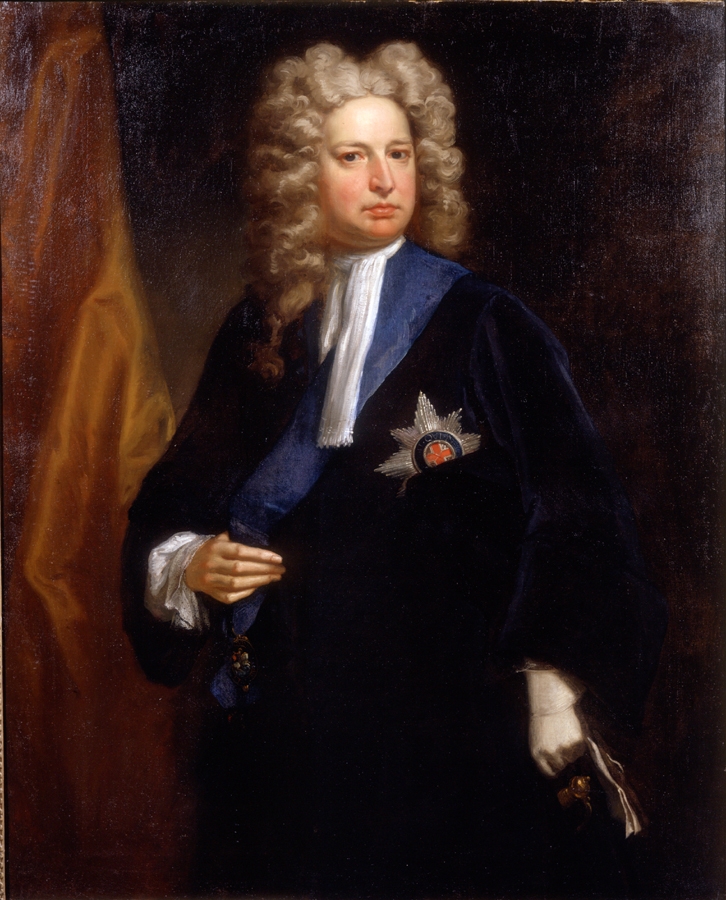
    PODCAST: Robin EAGLES (History of Parliament Trust) on the Impeachment and Trial of Robert Harley, Earl of Oxford

    (image: Robert Harley, 1st Earl of Harley and Mortimer; source: Wikimedia Commons)

    The impeachment and trial of Robert Harley, Earl of Oxford and Tory Cabinet Leader from 1710 to 1714, is a classical episode of British parliamentary and political history. Harley supported peace with France, and withdrew British troops from the front in May 1712. The Franco-British preliminaries of peace (October 1711) set out the blueprint of the later peace treaties of Utrecht (11 April 1713) and Rastatt (6 March 1714). Holy Roman Emperor Charles VI and the Dutch Republic felt betrayed by this decision. When Queen Anne died in August 1714, Hanoverian Elector Georg Ludwig von Braunschweig-Lüneburg, her closest Protestant relative, succeeded her. Shortly after his arrival in Britain, the new sovereign appointed a Whig-dominated Cabinet. Subsequently, the new majority, led by James Viscount Stanhope and the Earl of Sunderland, persecuted the previous political masters, accusing them of treason. Whereas Lord Bolingbroke (Secretary of State for the Southern Department) managed to escape to France, Lord Harley was sentenced and imprisoned in the Tower. This internal settlement of accounts, however, did not deter the new Whig-administration from pursuing a foreign policy akin to that of their predecessors.

    Robin Eagles (History of Parliament Trust) discusses this well-documented case in a recent podcast (video, above or audio, here).

    05 July 2019

    BOOK: Thomas ERSKINE MAY, Parliamentary Practice (25th edition, 2019) OPEN ACCESS


    (video source: Youtube; extract on the "1604 rule", parliamentary practice invoked by Speaker Bercow to deny Prime Minister May's "Brexit deal" a second vote in March 2019)

    House of Commons Speaker John Bercow recently rejoiced at the news that Erskine May's Bible of Parliamentary practice had become available in open access.

    To the benefit of our regular ESCLH-blog readers, we gladly share the link