Search

Showing posts with label Women. Show all posts

27 August 2026

SHORT MOVIE: "Frauenkampf ums Recht" [dir. Elisabetta FIOCCH MALASPINA] (Zürich: Universität Zürich, 30 SEP 2026)

(image source: UZH)

 Abstract:

Der szenische Dialog «Frauenkampf ums Recht» wurde 1896 von Emilie Kempin-Spyri, der ersten Privatdozentin der Universität Zürich, verfasst. Studierende der Rechtswissenschaftlichen Fakultät der Universität Zürich interpretieren Emilie Kempin-Spyris Text unter der Regie von Remo Hegglin. Der Film wurde mit Unterstützung der Initiative «Digitalisierung & Interaktives Lernen» der Rechtswissenschaftlichen Fakultät realisiert.

Practical details:

Mittwoch, 30. September 2026, um 18.15 Uhr Universität Zürich, Zentrum Rämistrasse 71, KOL-G-201 (Aula) 


More information (including a trailer) here.
Registration here.

Read Emilie Kempin's Die Rechtsstellung der Frau here.

03 April 2026

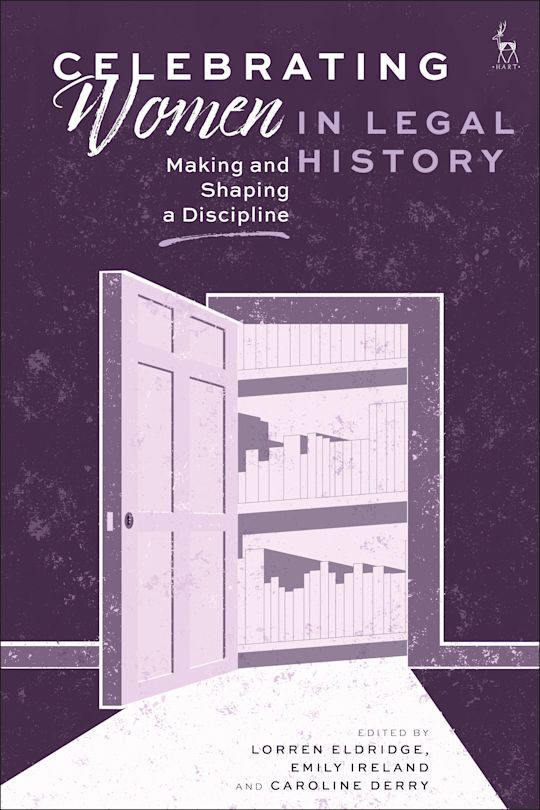
BOOK: Lorren ELDRIDGE, Emily IRELAND & Caroline DERRY (eds.), Celebrating Women in Legal History. Making and Shaping a Discipline (London: Bloomsbury, 2026), 232 p. ISBN 9781509983919


(image source: Bloomsbury)

Abstract:

This book champions the work of women in legal history, and their contributions to both the discipline and feminist activism over nearly two centuries. It considers women in academia, which was, in theory, open to women before they could become lawyers in most European countries. And it considers women working beyond the academy: many studied legal history in other ways; in local history societies, through archival work, and via activism. Women legal historians have been under-recognised or forgotten altogether, even where they made substantial scholarly contributions. In focusing on the work of women in legal history, this book lays the foundations for a transformational reassessment of the discipline. It asks searching questions about what counts as legal history. It demonstrates that work by and about women should appear in our legal history courses, be discussed in our seminars, and be cited in our academic work. If the field of legal history is lively, innovative, and wide-ranging, everyone working in it benefits. By shining a light on undervalued scholarship, and areas which have received insufficient attention, we challenge assumptions in our discipline and advance its methods. Whilst some women were pioneers and worked to change gendered aspects of the law, others led more ordinary lives, disappearing from the gaze of legal history even as they contributed to it. This book tells some of their stories.

Table of contents:

Foreword, Erika Rackley (University of Birmingham, UK)
1. Selden's Sister and Women in Legal History, 2. Unwritten Stories: Recovering and Writing Women's Legal History, 3. Missing Mildred Miles, 4. Rights and Duties of Englishwomen: The Life and Work of Erna Reiss (1888-1974), Feminist Legal Historian, 5. Aere Perennius: The Life and Legacy of Professor Olivia Robinson, 6. The First Women Scholars in Serbian and Yugoslav Legal History at the University of Belgrade Faculty of Law, 7. Jelena Danilovic: The First Woman to Teach Roman Law in Serbia, 8. Madge Easton Anderson: Making and Shaping Legal History from Scotland, 9. Scotland's Representative: Chrystal Macmillan and Suffragist Legal Historical Practice,  

10. The Marriages of Captain John Campbell of Carrick: How a Wronged Wife Changed English Marriage Law, 


 On the editors:

Lorren Eldridge is Assistant Professor at the University of Cambridge, UK; Emily Ireland is a Lecturer in Law at the University of Liverpool, UK.; Caroline Derry is Lecturer in Law at The Open University, UK.

More information here. 


23 February 2026

BOOK: J. Jarpa DUWINI, Nienke GROSSMAN, Jaya RAMJI-NOGALES & Hélène RUIZ FABRI (eds.), The Oxford Handbook of Women and International Law [Oxford Handbooks] (Oxford: OUP, 2026), 618 p. ISBN 9780197653647, 143 GBP


(image source: OUP)


On the editors:
J. Jarpa Dawuni is an Associate Professor of Political Science at Howard University and the Executive Director of the Institute for African Women in Law. She is the Founding Director of the Howard University Center for Women, Gender, and Global Leadership and Program Director for the Minor in Women, Gender, and Sexualities Studies. Professor Dawuni has held several prestigious fellowships, including two Fulbright Specialist Scholarships, the Carnegie African Diaspora Fellowship, and a Salzburg Global Fellowship. Nienke Grossman, a Professor of Law at the University of Baltimore School of Law, co-directs its Center for International and Comparative Law and serves on the OAS Inter-American Juridical Committee. She has held leadership roles at the American Society of International Law, served on an independent panel evaluating candidates for the Inter-American Human Rights System, and advised the UN Special Rapporteur on Human Rights in the DPRK and states litigating before the ICJ. Grossman has published widely on feminist approaches to international law. Jaya Ramji-Nogales is Associate Dean for Research and the I. Herman Stern Research Professor at Temple Law School. Professor Ramji-Nogales is a Counsellor of the American Society of International Law and a member of the Board of Editors of the American Journal of International Law. She has published extensively on global migration law. Hélène Ruiz Fabri is a Professor at the Sorbonne Law School, returning after a nine-year secondment as Director of the Max Planck Institute Luxembourg for Procedural Law. She is a Member of the Institute of International Law, former General Editor of the Max Planck Encyclopedia of International Procedural Law (OUP), and a former President of the European Society of International Law. Professor Ruiz Fabri holds the CNRS Silver Medal for excellence in scientific research. She also has experience in legal practice.
Contributors:
Diane Marie Amann Ruth Aura-Odhiambo Amrita Bahri Lina M. Céspedes-Báez Hilary Charlesworth Christine Chinkin J. Jarpa Dawuni Margaret M. deGuzman Alicia Ely Yamin Mtendere Mute Gondwe Nienke Grossman 'Ofakilevuka ('Ofa) Guttenbeil-Likiliki Andrea Harrington Dr. Stacey Henderson Stéphanie Hennette-Vauchez Dr. IvanaIsailović Patricia Kameri-Mbote Machiko Kanetake Viviana Krsticevic Judge Liesbeth Lijnzaad Rachel E. López Frédéric Mégret Dr. Eva Nanopoulos Ambassador Dr. Namira Negm Vasuki Nesiah Fionnuala Ní Aoláin Dr. Eki Yemisi Omorogbe Valerie Oosterveld Dr. Nilüfer Oral Tamsin Phillipa Paige Irini Papanicolopulu Mónica Pinto Mark A. Pollack Enrique Prieto-Ríos Jaya Ramji-Nogales Camille Robcis Hélène Ruiz Fabri Susana SáCouto Judge Julia Sebutinde Joanne Stagg Edoardo Stoppioni Yusra Suedi Immi Tallgren Leila Ullrich Yvonne Underhill-Sem René Urueña Dr. Patricia Viseur Sellers Adrien Katherine Wing Natasha Yacoub
Table of contents:
1) Why Women and International Law? - J. Jarpa Dawuni, Nienke Grossman, Jaya Ramji Nogales, Hélène Ruiz Fabri
2) The Woman in International Law: Centering Global Critical Race Feminism - Adrien Katherine Wing
3) A Century and More of Feminist Architects - Christine Chinkin and Patricia Viseur Sellers
4) A Look Back at the Women's Hague Peace Conference: What Contribution to International Law Today? - Frédéric Mégret
5) Absented at the Creation: Nuremberg Women and International Criminal Justice - Diane Marie Amann
6) Gender-Sensitive Adjudication in International Courts - Julia Sebutinde and Yusra Suedi
7) The 'Invisible Court': A First Look at Gender and Nationality in Registries and Secretariats - Nienke Grossman
8) Women as Highly Qualified or 'Renowned' Publicists in International Law - Nilufer Oral
9) The Legal Adviser: Gatekeeper and Torchbearer?- Liesbeth Lijnzaad
10) Women in International Organizations: Particular Focus on the United Nations and African Union - Namira Negm and Mtendere Mute Gondwe
11) Lightning in the Night/Un Relámpago en la Noche: On Women's Contributions to the Jurisprudence and Institutions of the Inter-American Court of Human Rights - Viviana Krsticevic
12) Lessons in Visibility: Victim Participation in Guatemalan Prosecutions of Conflict-Based Sexual and Gender Violence - Susan SáCouto
13) Human Rights and Women's Rights - Mónica Pinto
14) Constructing Maternal Mortality as A Human Rights Issue: Lessons for Using International Law to Advance Women's Health and Rights - Alicia Ely Yamin
15) Populism and Gender Ideology - Stéphanie Hennette Vauchez and Camille Robcis
16) Gender and Conflict of Laws: Enabling Violence - Ivana Isailovic
17) Is International Criminal Law Feminist? - Margaret M. deGuzman and Rachel López
18) The African Union and the Rights of Women in Non-international Armed Conflicts in Africa - Eki Yemisi Omorogbe
19) Women, Peace, and Security: Getting Women in the Room Is a Start Not an End Goal - Tamsin Phillipa Paige, Stacey Henderson, and Joanne Stagg
20) Where are the Women? The Law and Practice of Global Counter-terrorism - Fionnuala Ní Aoláin
21) Artificial Intelligence-Enabled Autonomous Weapon Systems: Feminist Perspectives on Meaningful Human Control - Machiko Kanetake
22) Feminist Approaches to Space Law and Governance - Andrea Harrington and Valerie Oosterveld
23) Women and Law of the Sea - Irini Papanicolopulu
24) Feminist Approaches to Recenter Humanity in International Migration Law - Natasha Yacoub
25) Women's Agency in Addressing the Crisis of Climate Change: The Missing Link - Patricia Kameri-Mbote and Ruth Aura
26) Challenging Colonialism and Patriarchy: Oceanic Pacific Feminists on Development, Women, and International Law - Yvonne Underhill-Sem and 'Ofa-Ki-Levuka Guttenbeil-Likiliki
27) Women's Empowerment and International Trade: The Same Side of the Same Coin? - Amrita Bahri
28) Women and International Investment Law - Lina M. Céspedes-Báez, Enrique Prieto-Ríos, and René Urueña
29) Feminist Approaches to International Law and International Law Approaches to Feminism: An Overview - Hilary Charlesworth and Christine Chinkin
30) Feminism and the Mainstream in International Law and International Relations - Mark Pollack
31) 'Re-enchanting the World': Feminist Critiques of Liberal Theories of International Law - Vasuki Nesiah
32) Feminizing Third World Approaches to International Law: A New Agenda for TWAIL - J. Jarpa Dawuni
33) Toward a Marxist Feminist Approach to International Law - Eva Nanopoulos and Leila Ullrich
34) Queer Approaches - Edoardo Stoppioni
35) Women and the (Hi)story of International Law: What Does Everyone Need to Know? - Immi Tallgren

Read more here.

08 March 2024

OPEN ACCESS: Christina BARD, Frédéric CHAUVAUD, Michelle PERROT & Jacques-Guy PETIT (dir.), Femmes et justice pénale, XIXe-XXe siècles (Rennes: Presses universitaires de Rennes, 2002), 382 p. ISBN 9782868477514


Abstract:

Ensemble articulé d'une trentaine d'études sur les femmes et la justice, cet ouvrage constitue la première synthèse sur ce sujet peu connu qui s'intercale entre le domaine du droit en amont, et celui de la peine – et notamment de la prison – en aval. Il se concentre sur l'histoire contemporaine de quelques pays occidentaux, particulièrement la France et le Canada. Femmes et justice : ce thème dessine d'abord les contours d'une histoire spécifique, celle des illégalismes féminins (vol domestique, infanticide, avortement, prostitution) du XIXe et du début du XXe siècle... Le fonctionnement judiciaire, marqué par la différenciation des sexes, est aussi mis en lumière. Cette asymétrie qui produit tantôt de l'indulgence, tantôt un surcroit de sévérité à rencontre des femmes jugées s'explique en partie par les représentations collectives qui érigent en modèle la femme-mère, douce et soumise. Toute déviance paraît dès lors monstrueuse : la criminelle occupe une place de choix dans l'imaginaire misogyne. Autre facette, la femme victime des violences masculines, privée du droit de se défendre, suspectée dans ses dires. Un long combat sera nécessaire pour que sa parole soit reconnue. La féminisation toute récente des métiers de justice n'est pas étrangère à cette révolution impulsée par les féministes.

Read the book here: DOI 10.4000/books.pur.16148.


16 January 2024

BOOK: Victoria BARNES, Nora HONKALA & Sally WHEELER (eds.), Women, Their Lives, and the Law. Essays in Honour of Rosemary Auchmuty (London: Routledge, 2023), 230 p. ISBN 9781509962082, 90 GBP

 (image source: Bloomsbury)


Abstract:

This collection of essays honours Rosemary Auchmuty, Professor of Law at the University of Reading, UK. She has fostered the study of women's academic careers and, more politically, advanced progress on gender and equality issues including same-sex marriage and property law. Her research promotes the case of feminist legal history as a way of revealing the place of women and challenging dominant historical narratives that cast them aside. Just as Rosemary's work does, the book seeks to end the marginalisation and exclusion of women in the legal world, by including them. The book begins fittingly with a discussion of Miss Bebb, the woman whose biography Auchmuty deployed to push feminist legal history into the mainstream. It turns then to a discussion of women known and unknown and their struggles within the legal profession offering within those chapters a critical appraisal of the role of history and biography as a methodology. From there it moves to consider feminist perspectives and critiques of the dominant structures of private law. This is followed by chapters that explore those who educate the legal profession within the academy. The chapters, and the collection as a whole, examine areas of law that have a deep significance for women's lives.

Table of contents:

1. The Recovery of a Rising Star: Miss Bebb – Broken Biography, Judith Bourne (St Mary's University, UK)
2. Women Jurists Under the Swastika, Ulrike Schultz (FernUniversität, Germany)
3. Beyond Firsts: Feminist Biography and Early Women Barristers, Caroline Derry (Open University, UK)
4. Anna van Zwanenberg – A Life History, Anonymous
5. Gender, Feminism and Unsung Workers: The Early Years of the Law Centres Movement 1970-1980, Marie Burton (University of Oxford, UK) and Linda Mulcahy (University of Oxford, UK)
6. Rosemary Auchmuty – Doing Feminist Legal Biography, Fiona Cownie (University of London, UK)
7. Spinsters, Goblins and Contract, Sally Wheeler (Australian National University, Australia)
8. The Heroines, the Underdogs, and Everything In-between: Injecting a Feminist Approach into Family Law History, Sharon Thompson (Cardiff University, UK)
9. Change, Challenge and Resistance in Family Law, Felicity Diduck (Brunel University, UK) and Alison Diduck (University College London, UK)
10. Relationship Recognition: Feminism, Law, and Transformation, Susan Boyd (University of British Columbia, Canada) and Claire Young (University of British Columbia, Canada)
11. Until Marriage Do Us Part: Women Teachers and the Marriage Bar in the 1920s, Harriet Samuels (University of Westminster, UK)
12. Women and Publishing in Family and Property Law Journals, Victoria Barnes (Queen's University Belfast, UK) and Nora Honkala (University of Reading, UK)
13. Locating Feminist Scholars and Scholarship in the Legal Academy, Rosemary Hunter (University of Kent, UK) 
14. Auchmuty, Legal Education and Equality, Lisa Webley (University of Birmingham, UK)

Read more here.


21 February 2019

BLOG SERIES: Women scholars in legal history in the spotlight (Legal History Blog): Prof. Mia Korpiola

(image source: Legal History Blog)

The Legal History Blog is currently running a series on female scholars in legal history, featuring inter alias our own Society's Vice-President, Prof. Mia Korpiola (Turku).

First paragraph:
Describe your career path. What led you to where you are today? Finnish academic life has undergone profound changes during the last two decades. After I started my postgraduate studies, post grads and post docs have become increasingly dependent on external funding. Consequently, my so-called career resembles more a patchwork of funding and research projects than a path. Between 1997 and 2014, I had 12 different contracts, including post doc funding from the Academy of Finland, the Helsinki Collegium for Advanced Studies and the Turku Institute for Advanced Studies. Practically all were acquired through competition. Young researchers have to “sell” their research ideas and themselves as realizing these to funding institutions. Only a small percentage is successful. I have been lucky not to have other career breaks than maternity/parental leaves and even more fortunate to be hired in 2014. This was my first permanent job. I am currently one of the three professors of legal history of Finland. To my knowledge, I am also the first female full professor of legal history in the Nordic Countries. As for personal qualities, I am really passionate about research. When my scientific curiosity is awakened, I will dig until I get answers. Legal history research allows me to combine many interests: history, law, languages, people, art and so on. Writing is also fun and I have no difficulties in producing text.
Read further here.

26 October 2014

BOOK: "Cohabitation and Non-Marital Births in England and Wales" (1600-2012), edited by Rebecca Probert (June 2014)


Cohabitation and Non-Marital Births in England and Wales (1600-2012), edited by Rebecca Probert, (University of Warwick) 

June 2014
All information here 

From the press:

Today, almost half of all children are born outside marriage, with cohabiting relationships accounting for the majority of such births. But what was the situation in earlier centuries? Bringing together leading historians, demographers and lawyers, this interdisciplinary collection examines the changing context of non-marital child-bearing in England and Wales since 1600. Drawing on Private Acts of Parliament, ecclesiastical court records, reported cases, sessions files, coronial records, poor law records, petitions to the London Foundling Hospital, the registers of the London Bridewell, the records of charitable institutions, surveys and modern demographic data, it not only shows the relative rarity of cohabitation in earlier periods but also discovers the nature of individual relationships. It also explores how differences in the extent of both non-marital child-bearing and cohabitation emerge depending on definition, source material, interpretation and location, building up a more nuanced picture of past practices.