Search

Showing posts with label History of Family Law. Show all posts

18 September 2026

BOOK REVIEW: Chiara VALSECCHI, Family and justice in the archives: historical perspectives on intimacy and the law, by Peter GOSSAGE and Lisa MOORE (ed.) (Montreal: Concordia University Press, 2024) (Comparative Legal History, XIV (2026), nr. 1 (June), pp. 146-152)

 (image source: Taylor&Francis)

Following the editors' introduction the volume gathers sixteen contributions (mostly unpublished), organised into five sections. These explore diverse aspects of the legal fields traditionally defined as family law and inheritance law, while more broadly extending to the realm of emotional and intimate relationships between individuals.  

The editors have identified several thematic clusters around which the essays are grouped: 'Colonial Encounters' (four essays); 'Intergenerational Justice' (three essays); 'Intimacies in the Courtroom' (three essays); 'Marriage Regulation’ (three essays); and 'Everyday Violence' (three essays). The sixteen essays were written by scholars of different backgrounds and academic positions, based in diverse locations. The largest group consists of contributions concerning Canada, but the volume also includes studies on the United States, Australia, India, Latin America, and other regions of the world. Europe, too, is represented, with research on Britain, Russia, and France. Chronologically, the studies span two full centuries - the nineteenth and twentieth - offering a remarkable breadth of perspective both geographically and historically. This richness provides numerous insights for comparative reflection, even though comparison appears less straightforward from a strictly legal or normative standpoint, and proves more fruitful when pursued through broader, interdisciplinary perspectives.  

From a general legal standpoint, it should be noted, for instance, that Fabienne Giuliani's study (Chapter 15), dedicated among other things to an 'extreme' social and legal figure - that of incestuous fathers in nineteenth-century France - represents, together with Juandrea Bates's work on Argentina (Chapter 6) and, to a lesser extent, certain analyses of Francophone Canada, a small minority of studies engaging directly with the codified systems of Civil Law countries. Indeed, while Europe's continental scholarship on family and personal law - often based on archival material such as private papers or judicial records - is already abundant, this very abundance makes the scope for technical legal comparison offered by the volume somewhat limited.

To read the full review, please click here. Online access is free for members of the European Society for Comparative Legal History.  

DOI: https://www.tandfonline.com/doi/full/10.1080/2049677X.2026.2671631

18 February 2025

PODCAST: Nobles et érudits, pour un célibat choisi ! [Le Cours de l'Histoire] (France Culture, 11 FEB 2025)

Introduction:

Les personnes célibataires ne sont pas rares au 17ᵉ siècle, même si les cas ne sont pas mis en avant dans les sources. Dans son étude Le Siècle du célibat. Des célibataires nobles en France au XVIIᵉ siècle (Presses universitaires de Rennes, 2025), l'historienne Juliette Eyméoud recense que "près d'une femme sur deux ne se marie pas, un peu moins chez les hommes." Les personnes non mariées ne sont pas encore appelées "célibataires". Pour les identifier, l'historienne repère les termes de "sans-alliance" ou "sans hoir" – ce qui signifie "sans héritier" – dans les actes notariaux. Elle n'inclut pas les veufs ou les veuves, car ces personnes ont été mariées et n'ont pas le même statut que les célibataires.

Interviewees:

Juliette Eyméoud Docteure en histoire moderne et conservatrice des bibliothèques Mathias Valverde Doctorant en histoire moderne à l’Université de Strasbourg 

 Read more here.

23 May 2024

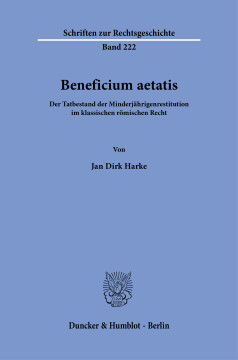
BOOK: Jan Dirk HARKE, Beneficium aetatis. Der Tatbestand der Minderjährigenrestitution im klassichen römischen Recht [Schriften zur Rechtsgeschichte; 222] (Berlin: Duncker & Humblot, 2024), 134 p. ISBN 9783428591671, € 69,9


(image source: Duncker & Humblot)

Abstract:

»Beneficium Aetatis. The Requirements for the Restitution of Minors in Roman Law«: The restitution of a person under the age of 25 was a central element of the protection of minors in Roman law. Although it is not easy to determine the conditions for this legal remedy due to the laconicism of the sources, they do allow one conclusion to be drawn: in order to obtain restitution, the minor did not have to demonstrate a concrete mental weakness. Rather, his restitution depended on the abstract criterion of whether or not the disadvantage suffered by him would also have affected a prudent adult.

Table of contents:

Inhaltsverzeichnis5
Einleitung7
Erstes Kapitel: Ein subjektiver Tatbestand der restitutio?10
I. Circumventio und facilitas10
II. Ulpians Kommentierung des Restitutionsedikts15
1. Die Ediktslaudationen15
2. Der zur Wiedereinsetzung zugelassene Personenkreis17
3. Cum minore gestum27
4. Causae cognitio und Zuständigkeit34
5. Zwischenergebnis42
III. Andere Werke43
1. Ulpian43
2. Paulus49
3. Weitere Juristen55
IV. Die Konstitutionen61
V. Ergebnis64
Zweites Kapitel: Alter als Restitutionsgrund66
I. Der entscheidende Maßstab66
II. Ein beneficium aetatis70
III. Irrelevanz der Betreuerbeteiligung81
IV. Eine Ausnahme88
V. Ergebnis93
Drittes Kapitel: Der Schaden und sein Nachweis95
I. Grande damnum und circumscriptio manifesta95
II. Schadensträchtige und neutrale Vorgänge106
III. Beweisführung und causae cognitio117
IV. Ergebnis123
Ertrag125
Literaturverzeichnis127
Quellenverzeichnis129

Read the book here: DOI 10.3790/978-3-428-59167-1.

11 September 2023

BOOK: Piotr POMIANOWSKI, Napoleonic Divorce Law in Poland (1808-1852) [Legal History Library, eds. Matthew MIROW, C.H. VAN RHEE & Dirk HEIRBAUT; 57] (Leiden/Boston: Martinus Nijhoff/Brill, 2023), ISBN 978-90-04-50731-9, € 116 (OPEN ACCESS)


(image source: Brill)

Abstrast:

In 1807 Napoleon Bonaparte created the Duchy of Warsaw from the Polish lands that had been ceded to France by Prussia. His Civil Code was enforced in the new Duchy too and, unlike the Catholic Church, it allowed the dissolution of marriage by divorce.

On the author:

Piotr Z. Pomianowski, Ph.D. (2012), habilitation (2018), University of Warsaw, is Assistant Professor at that university. In his research, he focuses on the reception of French law in Poland and on the Polish judiciary, codification, and political thought in the first half of 19th century. Among others, he published "Divorce proceedings pursuant to the Code Civil and the Code de procédure civile of 1806 in the practice of Polish Courts" (Vergentis, 2018) and "Legal Status of Women in Codes Binding in Central Polish Lands in the Early Nineteenth Century" (Journal on European History of Law, 2020). 

Table of contents:

Abbreviations

List of Illustrations

Tabula debitorum

Introduction

1 Marriage Through the Ages
 1.1 Marriage and Divorce in Judaism and Christianity
 1.1.1 Marriage and Divorce in Judaism

 1.1.2 Marriage and Divorce in Christianity


 1.2 Laicization of Marriage Law in Austria, Prussia and France
 1.2.1 Austria

 1.2.2 Prussia

 1.2.3 France


 1.3 Changing Fortunes of Law in the Polish Territories in Late 18th and Early 19th Century

 1.4 Abrogation of the Napoleonic Family Law in the Polish Territories


2 Courts and Officials Involved in Divorce Proceedings
 2.1 Divorce Court

 2.2 Prosecutor

 2.3 Huissier

 2.4 Clerk and Underclerk (pisarz and podpisarz)

 2.5 Legal Position of the Parties

 2.6 Legal Representatives

 2.7 Civil Status Officials
 2.7.1 Roman Catholic Parish Priests

 2.7.2 Parish Leaders of Other Congregations

 2.7.3 Lay Persons Responsible for the Comprehensive Maintenance of Civil Status Records

 2.7.4 Lay Persons Recording Events Contrary to Canon Law


3 Course of Divorce Proceedings
 3.1 Proceedings in Divorce Cases for a Determined Cause
 3.1.1 Pre-Divorce Formalities (Attempt at Reconciliation)

 3.1.2 Preparation of the Decision to Allow or Deny Hearing the Case

 3.1.3 Default Divorce Proceedings

 3.1.4 Provisional Measures

 3.1.5 Proceedings after Allowing the Case to Be Heard
 3.1.5.1 General Remarks on Evidentiary Proceedings

 3.1.5.2 Documents

 3.1.5.3 Witness Statements

 3.1.5.4 Presumptions

 3.1.5.5 Judicial Acknowledgement

 3.1.5.6 Oaths

 3.1.5.7 Other Evidence


 3.1.6 Proceedings in Divorce Cases Initiated due to a Spouse’s Condemnation for a Felony


 3.2 Proceedings in Divorce Cases by Mutual Consent

 3.3 Steps Immediately Preceding the Delivery of Judgement

 3.4 Judgements

 3.5 Types of Definitive Judgements
 3.5.1 Judgements Pronouncing Divorce

 3.5.2 Dismissal of Petition

 3.5.3 Judgements Prescribing a Probationary Period


 3.6 Cases Ended with No Judgement
 3.6.1 Expiry Caused by the Petitioner’s Failure to Pursue the Case (Cases with Unknown Outcome)

 3.6.2 Discontinuance of Action


 3.7 Appeal and Cassation Proceedings
 3.7.1 Appeal Proceedings

 3.7.2 Extraordinary Means of Challenging Judgements of Appellate Courts


 3.8 Pronouncement of the Divorce Judgement by a Civil Status Registrar


4 Grounds for Divorce Judgements
 4.1 Divorces due to Outrageous Conduct, Ill-Usage and Grievous Injuries

 4.2 Divorces Pronounced due to Outrageous Conduct, Ill-Usage and Grievous Injuries following a Probationary Period

 4.3 Pronouncement of Divorce on Grounds of Adultery

 4.4 Divorce due to a Spouse’s Condemnation to an Infamous Punishment

 4.5 Divorce due to Previous Separation

 4.6 Comparison with France


5 Rulings on Subsidiary Matters
 5.1 Ruling on Fault

 5.2 Custody over Children

 5.3 Property Issues

 5.4 Alimony and Child Support

 5.5 Punishment for Adultery

 5.6 Costs of Proceedings


6 Divorce Statistics

7 Characteristics of the Divorcees
 7.1 Initiators of Divorces

 7.2 Age of the Divorcees

 7.3 Duration of Marriages

 7.4 Ability to Sign

 7.5 Predicates

 7.6 Profession

 7.7 Religious Confessions

 7.8 Place of Residence

 7.9 Summary


Conclusion

Bibliography

Index

 Download the whole book on Brill's website.

11 May 2022

JOURNAL: Droits (LXXIII, 2021/1: Parenté, moeurs et droit/2)

(Image source: Cairn)


Fondée en 1985, la revue Droits s'est imposée comme la grande revue française de la culture juridique. Deux fois par an, elle propose à ses lecteurs une réflexion collective plurisdisciplinaire sur un grand thème et des variétés. Elle est ainsi devenue le lieu de rencontre de tous ceux qui, à quelque distance du flot de l'actualité législative et jurisprudentielle, souhaitent contribuer à une intelligence plus profonde des savoirs dogmatiques et des jeux de formes des juristes, en particulier en recourant à des mises en perspective historiques, philosophiques et comparatistes.


TABLE OF CONTENTS

  • Peuples romains et germaniques de la première europe entre parenté et fusion (Laura Moscati)
  • Mœurs et droit des militaires : trois siècles de débats autour de l’autorisation de mariage (Paul Chauvin-Madeira)
  • La race, le sang, le droit. La place de la filiation et du mariage dans la définition des catégories du droit antisémite (Danièle Lochak)
  • « Azmat nasab » ou la filiation mise à mal (Édouard Conte)
  • L’ordre public international comme révélateur des conceptions nationales. À propos de quelques évolutions récentes en matière familiale (Samuel Fulli-Lemaire)
  • Affiliation génétique. Perspectives et écueils d’une pratique (Elsa Supiot)
  • Du dualisme théologico-politique à la science kelsénienne du droit. Introduction à « dieu et l’état » (Bernard Bourdin)
  • Dieu et l’État (Hans Kelsen)
  • Les fonctions symboliques de la peine de mort (Francis Hamon)
  • Point de vue sur le mandat constitutionnel du président de la république française (Marie-Aimée Latournerie)
  • Les procurations, documents administratifs ou électoraux ? (Alexis Fourmont)
  • La saisine du conseil constitutionnel par le président de la république. Trois occurrences riches d’enseignements (Ferdinand Faye)
  • L’antigone de sophocle ou la justice au-delà des lois (Sylvain Ravenne)


Read these and other articles on Cairn

03 December 2021

JOURNAL: Droits n° 72 (2020/2) [Parenté, moeurs et droit/1]


(image source: Cairn)

Les empêchements au mariage au Moyen Âge : points de vue croisés (Sarah Rigaudeau)
DOI 10.3917/droit.072.0003

Lectures canoniques des alliances capétiennes : parenté et pouvoirs dans la France du premier XIIIe siècle (Carole Avignon)
DOI 10.0.15.77/droit.072.0033

De la semence et du lait : structures juridiques de la transmission de l’état de noblesse (Venise, fin du Moyen Âge) (Bernard Doumerc)
DOI 10.3917/droit.072.0053

Eugenio Rignano et le droit de tester : une proposition d’association entre le libéralisme économique et l’aspiration à l’égalité (Jean-Fabien Spitz)
DOI 10.3917/droit.072.0069

Entre nature et surnature : le célibat des prêtres catholiques (Alain Sériaux)
DOI 10.3917/droit.072.0091

Le libéralisme français contemporain et la famille (Jean-Philippe Feldman)
DOI 10.3917/droit.072.0099

Read these and other articles on cairn.

06 April 2021

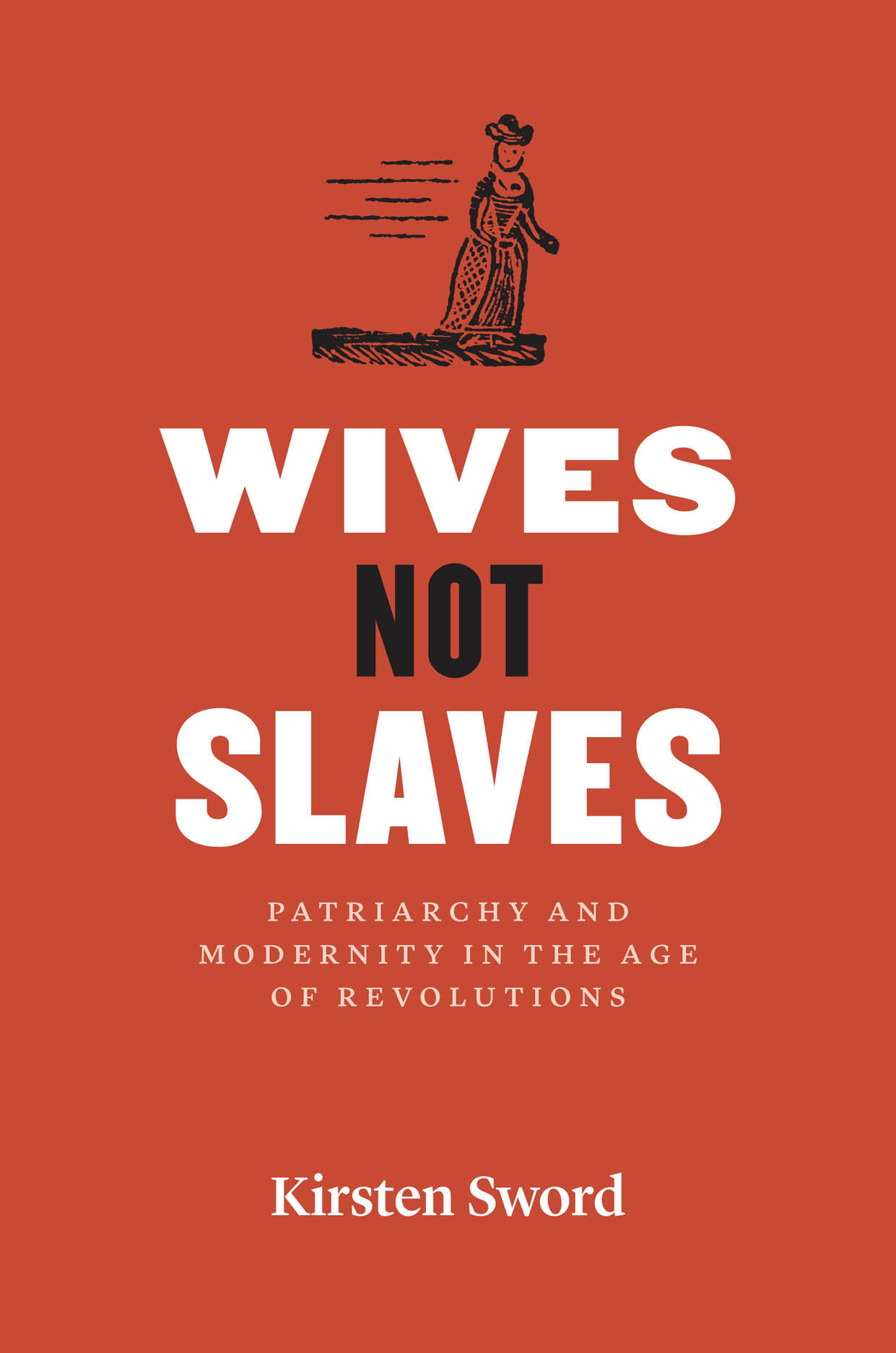
BOOK: Kirsten SWORD, Wives Not Slaves - Patriarchy and Modernity in the Age of Revolutions (Chicago: University of Chicago Press). ISBN 9780226757483, 50.00 USD


(Source: University of Chicago Press)

The University of Chicago Press is publishing “Wives Not Slaves - Patriarchy and Modernity in the Age of Revolutions”.

ABOUT THE BOOK

Wives not Slaves begins with the story of John and Eunice Davis, a colonial American couple who, in 1762, advertised their marital difficulties in the New Hampshire Gazette—a more common practice for the time and place than contemporary readers might think. John Davis began the exchange after Eunice left him, with a notice resembling the ads about runaway slaves and servants that were a common feature of eighteenth-century newspapers. John warned neighbors against “entertaining her or harbouring her. . . or giving her credit.” Eunice defiantly replied, “If I am your wife, I am not your slave.” With this pointed but problematic analogy, Eunice connected her individual challenge to her husband’s authority with the broader critiques of patriarchal power found in the politics, religion, and literature of the British Atlantic world.

Kirsten Sword’s richly researched history reconstructs the stories of wives who fled their husbands between the mid-seventeenth and early nineteenth centuries, comparing their plight with that of other runaway dependents.  Wives not Slaves explores the links between local justice, the emerging press, and transatlantic political debates about marriage, slavery and imperial power. Sword traces the relationship between the distress of ordinary households, domestic unrest, and political unrest, shedding new light on the social changes imagined by eighteenth-century revolutionaries, and on the politics that determined which patriarchal forms and customs the new American nation would—and would not—abolish.

ABOUT THE AUTHOR

Kirsten Sword is a historian of early American and women’s history affiliated with Indiana University Bloomington.

TABLE OF CONTENTS

Introduction: “If I am your Wife, I am not your Slave”

1. The Trials of Christopher and Elizabeth Lawson: An Introduction to Post-Reformation Debates about Marriage

2. Submit or Starve: Manby v. Scott and the Making of a Precedent

3. The Runaway Press

4. Marriage, Slavery, and Anglo-Imperial Jurisdictional Politics


5. A Matter of Credit: Husbands’ Claims

6. “In Justice to my Character”: Wives’ Replies

7. Wives Not Slaves

8. Rethinking the Revolutionary Road to Divorce

Epilogue: “The Rigour of the Old Rule”

Elizabeth Cady Stanton’s Legal Education

Manby v. Scott in the Nineteenth Century

Acknowledgments

Abbreviations and Source Notes

Notes

Index


More info here

08 December 2020

BOOK: Henry KHA, A History of Divorce Law: Reform in England from the Victorian to Interwar Years (London: Routledge, 2020). ISBN 9780367420062, 120.00 GBP


(Source: Routledge)

Routledge is publishing a book on the legal history of the Matrimonial Causes Act 1857.

ABOUT THE BOOK

The book explores the rise of civil divorce in Victorian England, the subsequent operation of a fault system of divorce based solely on the ground of adultery, and the eventual piecemeal repeal of the Victorian era divorce law during the Interwar years. The legal history of the Matrimonial Causes Act 1857 is at the heart of the book. The Act had a transformative impact on English law and society by introducing a secular judicial system of civil divorce. This swept aside the old system of divorce that was only obtainable from the House of Lords and inadvertently led to the creation of the modern family justice system. The book argues that only through understanding the legal doctrine in its wider cultural, political, religious and social context is it possible to fully analyse and assess the changes brought about by the Act. The major developments included the end of any pretence of the indissolubility of marriage, the statutory enshrinement of a double standard based on gender in the grounds for divorce, and the growth of divorce across all spectrums of English society. The Act was a product of political and legal compromise between conservative forces resisting the legal introduction of civil divorce and the reformers who demanded married women receive equal access to the grounds of divorce. Changing attitudes towards divorce that began in the Edwardian period led to a gradual rejection of Victorian moral values and the repeal of the Act after eighty years of existence in the Interwar years.

The book will be a valuable resource for academics and researchers with an interest in Legal History, Family Law, and Victorian Studies.

ABOUT THE AUTHOR

Henry Kha is a Lecturer in the School of Law, Macquarie University, Australia.

TABLE OF CONTENTS

1 Introduction

2 The Tripartite Divorce System

3 The Enactment of the Matrimonial Causes Act 1857

4 Divorce under the Matrimonial Causes Act 1857

5 The Divorce Courts

6 Divorce Law Reform in the Early Twentieth Century

7 Quo Vadis? The Road to Divorce


More info here

17 November 2020

BOOK: Alain LOTTIN (Ed.), La désunion du couple sous l'Ancien Régime. L'exemple du Nord (Villeneuve d'Ascq: Presses Universitaires du Septentrion, 2019 - 2e édition). ISBN: 2757424548, pp. 204, € 18,00


ABOUT THE BOOK

2e édition, collection: Histoire et civilisations

Les remises en cause de la famille et du mariage caractérisent notre époque, les débats sur la contraception, l'avortement, le divorce se succèdent. L’Histoire est « fille de son temps ». Sur le thème de la désunion du couple, les auteurs ont donc fouillé le passé. Ils étudient les ruptures de fiançailles, les concubinages, les mariages clandestins, les adultères, les « divorces », les annulations de mariage et ils retracent sur ces sujets les comportements de nos aïeux à partir des précieux documents provenant de l’archevêché de Cambrai et concernant un vaste territoire du Nord de la France et de la Belgique. À travers les complaintes des filles séduites, les justifications de séducteurs ou de maris abusifs et les témoignages de voisins curieux et bavards, des tranches de vie pittoresque et parfois truculentes sont ainsi ressuscitées.

ABOUT THE EDITOR

Alain Lottin (1935-2017) était professeur d'histoire moderne, spécialiste notamment des questions religieuses, sociales et politiques des provinces françaises du Nord, aux XVIe et XVIIe siècles.

TABLE OF CONTENTS

Préface

Philippe Guignet

Introduction

Alain Lottin

Chapitre 1.

L'obstacle surmonté : les dispenses

Philippe Malolepsy (essentiellement d'après les TER de P. Malolepsy et R. Rychalski)

Chapitre 2.

Les fiançailles rompues ou empêchées

Alain Lottin et Kathleen Pasquier (essentiellement à partir des TER de S. Delloye et K. Pasquier)

Chapitre 3.

Les mal-unis

Jean-Renaud Machuelle (essentiellement d’après les TER de J.-R. Machuelle et D. Morin)

Chapitre 4.

Séducteurs, volages et infidèles

Jean-Renaud Machuelle (essentiellement d’après les TER de J.-R. Machuelle et D. Morin)

Chapitre 5.

Les « divorces »

Alain Lottin et Guy Savelon (essentiellement d’après les travaux et TER de J.-L. Geoffroy, L. Kaczmarek, A. Lottin, G. Savelon, J.-L. Vandecavaye)

Chapitre 6.

Les demandes d’annulation de mariage

Jean-Renaud Machuelle (essentiellement d’après les TER de J.-R. Machuelle et D. Morin)

Chapitre 7.

Le couple et sa désagrégation

Alain Lottin

Conclusion

Alain Lottin

Annexes

Les auteurs


More information with the publisher.