Search

Showing posts with label Bible. Show all posts

30 November 2022

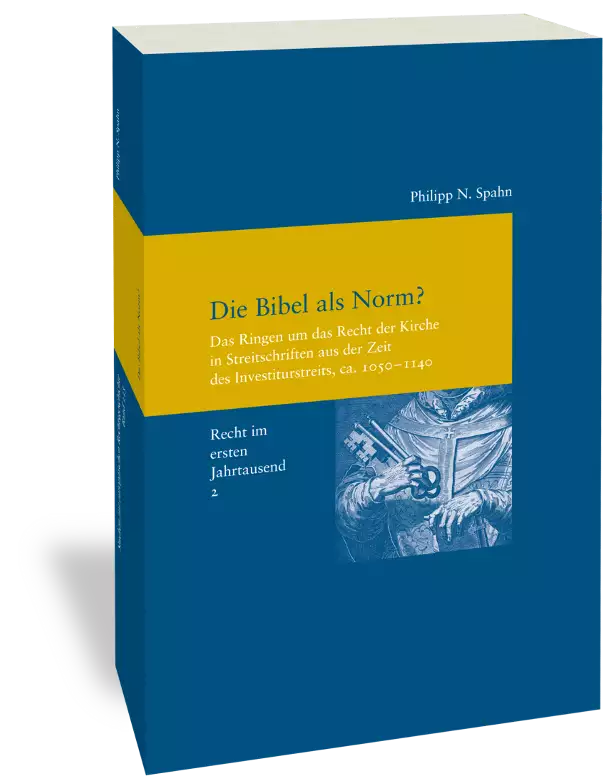
BOOK: Philipp N. SPAHN, Die Bibel als Norm? Das Ringen um das Recht der Kirche in Streitschriften aus der Zeit des Investiturstreits, ca. 1050–1140 (Frankfurt am Main: Klostermann, 2022), ISSN 9783465045441


ABOUT THE BOOK

Profound changes in the handling of texts characterised the period since the middle of the 11th century and significantly contributed to the scientification of canon law. The effects of these methodological changes on how contemporaries worked with biblical texts, however, have remained largely unexplored. This study aims to fill this research lacuna by using the example of the controversy literature produced in the context of the Investiture Contest. It shows the significance of the struggle for a correct understanding of the biblical text for the scientification of canon law, on the one hand, and that of the Bible for the law of the Church, on the other. More-over, these debates with and about the biblical texts paved the way for a paradigmatic shift away from custom as the central figure of thought in early medieval secular law. In its place, truth be-came the paradigm of a new era, and would go on to change much more than the Church and its law.


More information can be found here.


04 October 2019

BOOK: Ilan PELED, Law and Gender in the Ancient Near East and the Hebrew Bible (London: Routledge, 2019). ISBN 9780367371494, £92.00


(Source: Routledge)

Routledge is publishing a new book on the regulation of gender relations in the ancient Near East and biblical law.

ABOUT THE BOOK

This volume examines how gender relations were regulated in ancient Near Eastern and biblical law. The textual corpus examined includes the various pertinent law collections, royal decrees and instructions from Mesopotamia and Hatti, and the three biblical legal collections.

Peled explores issues beginning with the wide societal perspective of gender equality and inequality, continues to the institutional perspective of economy, palace and temple, the family, and lastly, sex crimes. All the texts mentioned or referred to in the book are given in an appendix, both in the original languages and in English translation, allowing scholars to access the primary sources for themselves.

Law and Gender in the Ancient Near East and the Hebrew Bible offers an invaluable resource for anyone working on Near Eastern society and culture, and gender in the ancient world more broadly.

ABOUT THE AUTHOR

Ilan Peled is an Assyriologist working at the University of Amsterdam, author of Masculinities and Third Gender: The Origins and Nature of an Institutionalized Gender Otherness in the Ancient Near East, and editor of Structures of Power: Law and Gender Across the Ancient Near East and Beyond.

TABLE OF CONTENTS

Introduction
1. The Societal Perspective: Social Status and Gender (In)equality
2. The Institutional Perspective: Bureaucracy and Economy: The Palace, Temple, and Beyond
3. The Familial Perspective: Regulation of Family Life
4. The Individual Perspective: Morality and Sex Crimes
5. Summary, Analysis and Conclusions
Part II
6. Texts: The Primary Sources Mentioned and Discussed in the Book

All info here

22 January 2014

ARTICLE: Miller on "Property in the Bible"

Geoffrey P. Miller's "Property in the Bible", Philosophy of Law e-Journal, vol. 7, n.9 


Abstract
The Bible is a rich source of information about the theory and practice of property law in ancient times. The text deals insightfully with the concept of the root of title and sets forth sensible rules for defining property rights, protecting those rights against infringement, and facilitating transfers of ownership. Overall, the institutions of ancient Israel responded in an efficient way to the challenge of administering a regime of private property under technological conditions which were substantially less advanced than those which prevail today.

Full text available here