Search

Showing posts with label british empire. Show all posts

23 June 2026

SSRN PAPER: Michael BIRNHACK, "Colonial Patents: Industrial Property Law and Nationality in Mandate Palestine" (The Journal of Legal History) [OPEN ACCESS]

(image source: SSRN)

Abstract:
This Article offers the first historical analysis of patent law in British Mandate Palestine (1917-1948), examining 4,395 patent applications through a reconstructed registry and archival sources. It develops Colonial Patents as a framework for analysing legal transplantation in colonial contexts. The analysis reveals Britain's hybrid imperial patent policy: rejecting empire-wide unification while creating preferential procedures for British patents. Palestine's 1924 Patent Ordinance emerged from London-Jerusalem negotiations, including London's rejected proposal to abolish local patents. The registry shows profound participation asymmetries: while foreign and local inventors each filed approximately half of applications, Jewish inventors comprised nearly all local applicants, with scant Arab Palestinians filings. Archival sources confirm British engagement with Jewish patent agents but no Arab involvement. This disparity reflects patent law's ideological foundations in Enlightenment progress and industrial capitalism, which resonated with European-educated Jewish immigrants but remained peripheral to Arab Palestinian society, demonstrating how nominally neutral colonial institutions operated differentially.

Read the article here: DOI 10.2139/ssrn.6383879.

(source: Legal History Blog)


03 June 2026

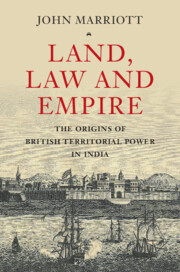
BOOK: John MARRIOTT, Land, Law and Empire. The Origins of British Territorial Power in India (Cambrige: CUP, 2025), ISBN 9781009602099, € 32,68


(image source: CUP)


Abstract:

In this innovative exploration of British rule in India, John Marriott tackles one of the most significant and unanswered questions surrounding the East India Company's success. How and when was an English joint stock company with trading interests in the East Indies transformed into a fully-fledged colonial power with control over large swathes of the Indian subcontinent? The answer, Marriott argues, is to be found much earlier than traditionally acknowledged, in the territorial acquisitions of the seventeenth century secured by small coteries of English factors. Bringing together aspects of cultural, legal and economic theory, he demonstrates the role played by land in the assembly of sovereign power, and how English discourses of land and judicial authority confronted the traditions of indigenous peoples and rival colonial authorities. By 1700, the Company had established the sites of Madras, Bombay and Calcutta, providing the practical foothold for further expansion.

Read the book here: DOI 10.1017/9781009602099 

01 June 2026

ADVANCE ARTICLE: Roxana BANU, "Constructing Imperial Authority: The Intersection of British Imperial Constitutional Law and Private International Law" (Oxford Journal of Legal Studies) [OPEN ACCESS]


(image source: OUP)

Abstract:

Historians and constitutional law scholars are starting to uncover the imperial dimensions of the British constitution. But our accounts of the nature of authority in the British imperial context remain incomplete without an engagement with private international law, which played a significant role in conceptualising imperial authority. This article focuses on the forgotten interplay between imperial constitutional law and private international law. It shows how key doctrinal principles of private international law were referenced either as alternatives to or counterparts of key imperial constitutional law principles. Imperial actors would appeal to one or another image of imperial authority constructed by either imperial constitutional law or private international law to gain more autonomy or to tighten control. Far from being a relic of the past, the significance of this history can be traced in contemporary cases and debates about the nature of authority in the UK and its overseas territories.

Read the article here: DOI 10.1093/ojls/gqag012.

08 May 2026

ADVANCE ARTICLE: Julia RUDOLPH, "William Blackstone, Family Man: New Contexts in Gender, Jurisprudence, and Jamaica" (Law & History Review) [OPEN ACCESS]


(image source: Cambridge Core)

Abstract:

While much has been written about William Blackstone, the jurist, politician, and legal writer, this article provides a critical new understanding of Blackstone, the husband, friend, and investor. It considers Blackstone’s legal and economic actions as well as ideas, analyzing his strategies for managing family wealth and comparing them to the strategies employed by a member of his extended family who was a Jamaican planter. Here, the article contributes to recent scholarship on the global dimensions of English and British legal history. It offers a fuller account of Blackstone’s proximity to the colonial plantation economy by investigating how economic change and imperial controversies impacted his personal and professional life. It also exposes Blackstone’s conventionally masculine bias by detailing the different ways in which he privileged male interests when making personal investment choices and when coming to judicial decisions about women’s property claims. A gendered ideology, which positioned male authority as central to the success of the household, state, and empire, furnished the framework within which Blackstone justified the operation of law and directed his own actions as head of his family. Placing Blackstone’s jurisprudence and experience within the contexts of patriarchy and colonialism, the article sheds new light on this influential figure, showing how he embodied the core features of an eighteenth-century family man and shaped modern ideas about male authority, property, and power.

The full article can be read here in open access: DOI 10.1017/S0738248026101618.

(Source: Legal History Blog)

13 January 2026

BOOK: Joseph Samuel HARPHAM, The Intellectual Origins of American Slavery. English Ideas in the Early Modern Atlantic World (Cambridge (Mass.): Harvard UP, 2025), ISBN9780674278370


(image source: Harvard UP)

Abstract:

A landmark account of the origins of American slavery, revealing how ancient Roman ideas were used to defend the establishment of a slave empire in the English Atlantic world. The period from 1550 to 1700 was critical in the development of slavery across the English Atlantic world. During this time, English discourse about slavery revolved around one central question: How could free persons be made into slaves? John Samuel Harpham shows that English authors found answers to this question in a tradition of ideas that stretched back to the ancient world, where they were most powerfully expressed in Roman law. These ideas, in turn, became the basis for the earliest defenses of American slavery.

On the author:

John Samuel Harpham is Assistant Professor of Classics and Letters and Wick Cary Professor in the Institute for the American Constitutional Heritage at the University of Oklahoma. 

Read more here


27 November 2025

BOOK: Nicolas BELL-ROMERO, The University of Cambridge in the Age of Atlantic Slavery (Cambridge: CUP, 2025), ISBN 9781009652544, 35 GBP [OPEN ACCESS]


(image source: CUP)

Abstract:

In this powerful history of the University of Cambridge, Nicolas Bell-Romero considers the nature and extent of Britain's connections to enslavement. His research moves beyond traditional approaches which focus on direct and indirect economic ties to enslavement or on the slave trading hubs of Liverpool and Bristol. From the beginnings of North American colonisation to the end of the American Civil War, the story of Cambridge reveals the vast spectrum of interconnections that university students, alumni, fellows, professors, and benefactors had to Britain's Atlantic slave empire - in dining halls, debating chambers, scientific societies or lobby groups. Following the stories of these middling and elite men as they became influential agents around the empire, Bell-Romero uncovers the extent to which the problem of slavery was an inextricable feature of social, economic, cultural, and intellectual life. This title is also available as open access on Cambridge Core.

On the author:

Nicolas Bell-Romero , Tulane University, Louisiana 

Read the book here: DOI 10.1017/9781009652582.

24 November 2025

BOOK: Georgios GIANNAKOPOULOS, The interpreters. British internationalism and empire in southeastern Europe, 1870-1930 (Manchester: Manchester University Press, 2025), ISBN 9781526160133, 85 GBP


Abstract:
The book offers a new interpretation of the cultural and intellectual exchanges between Britain and southeastern Europe in an age of imperial transformation. It considers systematically the question of the management of ethnic difference in multinational imperial states as diverse as Britain, Austria-Hungary and the Ottoman Empire. It traces the regional experiences and impact of British scholars and public intellectuals steering through competing nationalisms and translating regional national questions to British and international audiences. The emphasis on past attempts to reconcile liberal democracy and nationalism with imperial rule continues to resonate in our day as intellectuals confront the challenges presented the rise of ethno-nationalist politics and shifting place of Britain in Europe.

On the author:

Georgios Giannakopoulos is Senior Lecturer in Modern History at City St George's, University of London.

Read more here


10 September 2025

BOOK: Victor KATTAN & Amit RANJAN (eds.), The Breakup of India and Palestine. The Causes and Legacies of Partition [Studies in Imperialism, eds. Andrew THOPSON & Alan LESTER] (Manchester: Manchester University Press, 2025), 312 p.

(image source: Manchester UP)
 

Abstract:

This book is the first study of political and legal thinking about the partitions of India and Palestine in 1947. The chapters in the volume, authored by leading scholars of partition, draw attention to the pathways of peoples, geographic spaces, colonial policies, laws, and institutions that connect them from the vantage point of those most engaged by the process: political actors, party activists, jurists, diplomats, philosophers, and international representatives from the Middle East, South Asia, and beyond. Additionally, the volume investigates some of the underlying causes of partition in both places such as the hardening of religious fault-lines, majoritarian politics, and the failure to construct viable forms of government in deeply divided societies.

Table of contents:

Foreword by Lucy Chester
Acknowledgements

Introduction: Connecting the partitions of India and Palestine: institutions, policies, laws and people - Victor Kattan and Amit Ranjan

Part I The partition of British India
1 The Mountbatten Viceroyalty reconsidered: personality, prestige and strategic vision in the partition of India - Ian Talbot
2 The paradigmatic partition? The Pakistan demand revisited - Ayesha Jalal

Part II The partition of Palestine
3 Partition and the question of international governance: the 1947 United Nations Special Committee on Palestine - Laura Robson
4 Fighting for Palestine as a holy duty? The Syrian Muslim Brotherhood and the partition of Palestine in 1947 - Mohamed-Ali Adraoui

Part III The partitions of India and Palestine compared
5 The communal question and partition in British India and mandate Palestine - Amrita Shodhan
6 India's dilemmas of pragmatism v. principles: Nehru's preference for a partitioned India but a federal Palestine - P. R. Kumaraswamy

Part IV The consequences of partition for South Asia, the Middle East and beyond
7 The partitions of India and Palestine and the dawn of majority rule in Africa and Asia - Victor Kattan
8 'Unfinished' partition: territorial disputes, unequal citizens and the rise of majoritarian nationalism in India, Pakistan and Bangladesh - Amit Ranjan
9 Civil war, total war or a war of partition? Reassessing the 1948 war in Palestine from a global perspective - Arie M. Dubnov
10 Partitioned identities? Regional, caste and national identity in Pakistan - Iqbal Singh Sevea

Afterword: Partition as imperial inheritance - Penny Sinanoglou

 On the editors:

Victor Kattan is an Assistant Professor at the School of Law, University of Nottingham Amit Ranjan is a Research Fellow at the Institute of South Asian Studies, National University of Singapore

Read more here

30 June 2025

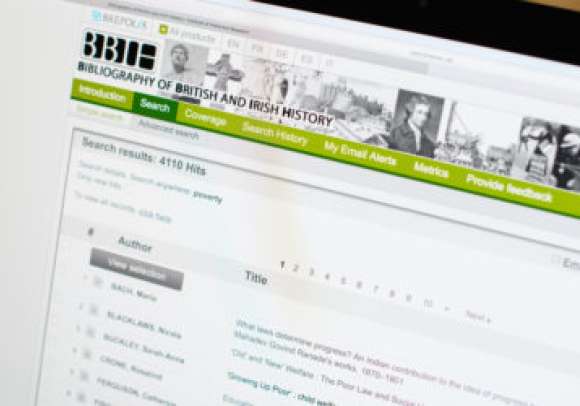
RESOURCE: Bibliography of British and Irish History


(image source: BBIH)

Presentation:

The Bibliography of British and Irish History (BBIH) is a high-quality record of over 660,000 publications relating to British and Irish History. This page helps you get the most from BBIH and shows how to use it in a blended learning environment.

The BBIH is the largest and most comprehensive record of what's been published in British and Irish History, and the British empire -- as well as on histories of migration, gender and race. BBIH has detailed records of over 660,000 books, articles, essays and theses, including thousands that were published this year. Each record has a detailed index to help discoverability. Records also provide links to locate a copy of a book in your Library, or go direct to journal article if your Library subscribes. This makes BBIH the best way to find what's been published, create reading lists, write a literature review, or swiftly identify the different kinds of academic publications used at university. 

Read more here

19 March 2025

BOOK: Donal K. COFFEY & Stefan VOGENAUER (eds.), Legal Transfer and Legal Geography in the British Empire [Global Perspectives on Legal History; 25] (Frankfurt am Main: Max-Planck-Institut für Rechtsgeschichte und Rechtstheorie, 2025), XVII + 328 p. ISBN 978-3-944773-48-3, € 20,27 [OPEN ACCESS]

(image source: MPILHLT)

Presentation:

The legal history of the British Empire is in its infancy. The research field Legal Transfer in the Common Law World in the Max Planck Institute for Legal History and Legal Theory under the Directorship of Prof Stefan Vogenauer has been engaged in scientific examination and analysis of this field. In 2021, the Third Legal Histories of Empires Conference was held in the National University of Ireland, Maynooth. A stream looking at the state of the art in Legal Transfer in the Common Law World was organized by Stefan Vogenauer and Donal Coffey, who have co-edited this volume which flows from that stream. The book argues that a comparative approach can overcome jurisdictional and ahistorical biases still often present in the legal history of empires. In an imperial legal superstructure, such as the British Empire(s), models of legislative and interpretative methods were self-consciously adopted and adapted to different jurisdictions. Moreover, the process of decolonisation disclosed similarities and divergences in the legal development of these territories. Useful insights can be gleaned from a comparison across different methodologies which are concerned with a similar normative framework between and within societies, and their relationship to the natural world. The volume has two parts. The first presents four case studies for legal transfers in chronological order. Philip Girard’s chapter traces the evolution of the law regulating employers’ liability for injured workers in Quebec. Matilde Cazzola’s work looks at the evolution of the ‘protective principle’ and its deployment through a comparative lens, with a particular focus on the United Kingdom and the Australian colonies in the 19th century. Scott A. Carrière looks at the evolution of law in colonial Newfoundland, and in particular at the relationship between contract law, charters, and Company States. In Hong Kong, Christopher Roberts and Hazel W. H. Leung analyse the evolution of vagrancy law. The second part contains a number of contributions engaging with the burgeoning field of legal geography in the context of the Empire. This is based around the ‘Property [In]Justice’ ERC group in University College Dublin headed by Amy Strecker. It includes chapters on the Caribbean by Amanda Byer, Southern Africa by Sonya Cotton, Kenya by Raphael Ng’etich, and a chapter by Sinéad Mercier on Ireland. The different areas of law covered – including inter alia public law, employment law, land law – demonstrate the vitality of the comparative method.

Table of contents:

IX         Table of Cases

XII        Table of Legislation

1          Donal K. Coffey and Stefan Vogenauer
             Preface

             Part I
             Legal Transfer in the Common Law World: From the Early Modern Period until the Present

7           Scott A. Carrière
             Law and Legalism in Corporate Newfoundland, 1583–1699

37        Matilde Cazzola
             Aboriginal Protection and parens patriae: Indigenous Youths, Juvenile Delinquents and the Reformatory Principle
             in Australia and England

73        Philip Girard
            On the Edge of Many Empires: Employers’ Liability in Quebec’s Industrial Age, 1880–1931

105      Christopher M. Roberts and Hazel W. H. Leung
            The Legacies of Vagrancy Law and the Reconstruction of the Criminal in Hong Kong, 1945–2022

             Part II
             Landscape, Law, and Spatial Justice in the former British Empire

139      Amy Strecker and Amanda Byer
             Introduction: Landscape, Law, and Spatial Justice in the former British Empire

151       Amanda Byer
              Reserving Space: Land, Nature, and Empire in the Development of
              Commonwealth Caribbean Environmental Law

187       Sonya Cotton
              Legislating “Community” in Southern Africa’s Plural Properties

239       Raphael Ng’etich
              Competing Notions of Land in Colonial Kenya and the Impact on Present-Day Land Governance

239       Sinéad Mercier
              A Haunting Absence: Tracing the Origins of International Energy Law from the Laboratory of Ireland

319       Index of Names

321       Index of Subjects

327       Contributors 

 Read more here: DOI 10.12946/gplh25.

18 October 2023

JOURNAL: Law and History Review XLI (2023), No. 2


(image source: CUP)

Law, Courts, and Constitutions in Twentieth-Century South Asia (Saumya Saxena & Alastair McClure)
DOI 10.1017/S0738248023000093 (OPEN ACCESS)
Abstract:

This special issue brings together scholars from multiple disciplines and with varied research and geographic expertise to study the historical role played by the law in governing the political, social, and cultural life of twentieth-century South Asia. These articles have not emerged in a vacuum, but rather build on an exciting turn in South Asian history that is placing new focus on the legal and constitutional work that accompanied the post-colonial moment. This introduction examines some of the important historiographical and methodological interventions made by scholars working in this field, before outlining the specific themes connecting the articles in this issue.

The Drafting of the Constitution of the Union of Burma in 1947: Dominion Status, Indo–Burmese Relations, and the Irish Example (Donal K. Coffey)
DOI 10.1017/S0738248022000487 (OPEN ACCESS)
Abstract:

This paper aims to consider four elements of Burmese constitutional history between 1946 and 1948. The first section considers the negotiations between Burma and the United Kingdom and argues that the debate about whether Burma wanted Dominion status has overlooked the crucial transitional government period. The second section gives a brief overview of the drafting process, paying particular attention to the links between the Indian Constituent Assembly in Delhi and Rangoon. The third section outlines the comparative influences on the Burmese Constitution using the digital humanities and illustrates that the biggest foreign influence was the Irish Constitution of 1937. The final section looks at the Burmese political leadership after World War II along two dimensions—at a nationalist level and at an elite level—and traces some of the links between Burma and Ireland.

Nepal's Constitutional Foundations between Revolution and Cold War (1950–60) (Mara Malagodi)
DOI 10.1017/S0738248022000724 (OPEN ACCESS)
Abstract:

The 1950s represent a foundational decade in Nepal's constitutional history. In the wake of decolonization in British India, the “year 7 revolution” (1950–51) grew out of the alliance between King Tribhuvan Shah and Nepal's democratic political parties created in India against the Rana autocratic regime in Kathmandu. Eventually the pro-democracy forces prevailed, and a crucial political transition began. Two constitutions were promulgated, the 1951 Interim Constitution and the 1959 Constitution. Both short lived and only partially implemented, these documents, however, laid the foundations of Nepal's constitutional edifice for years to come. Constitution building became a marker of sovereignty understood in terms of independence and an assertion of popular sovereignty. However, in the fraught Cold War context, the preoccupation with securing political stability by constitutional means that centered around the Shah monarchy prevailed, even at the expense of democracy. As such, the shift from a traditional notion of sovereignty from above to a modern concept of sovereignty from below remained incomplete. These aspirations, however, were not extinguished even by 30 years of royal autocracy under the Panchayat regime (1960–90) and lived on to this day to inform demands for constitutional reform, democratization, and inclusion. The present analysis is based on Nepali primary legal sources, archival material from the United Kingdom and United States National Archives, and the Ivor Jennings Private Papers. 

Constitutions and Modernity in Post-Colonial Afghanistan: Ethnolinguistic Nationalism and the Making of an Afghan Nation-State (Elisabeth Leake) 
DOI 10.1017/S0738248022000530 (OPEN ACCESS)
Abstract:

In recent decades, the rule of law has not been commonly associated with Afghanistan. Instead, its politics have been more likely to be framed in terms of lawlessness and ungovernability. But this trope does not do justice to Afghanistan's longer history of statehood or experiences of constitution-making. Over the course of the twentieth century, Afghan leaders drafted seven constitutions (in 1923, 1931, 1964, 1976, 1980, 1987, and 1990). These constitutions represented leaders’ attempts to assert their legitimacy and enforce their vision of an Afghan nation-state. This article sheds fresh light on Afghan elites’ top-down framing of Afghan national identity through ethnolinguism, exploring the legalization of Pashto as both an official and national language in Afghanistan's constitutions. Reformers intended Pashto to transgress community, kinship, and regional boundaries and act as a source of unity (though one in which ethnolinguistic minorities had little say). Tracing Afghanistan's constitutional history from 1923–90, this article reveals language as a constitutional arena for debating Afghan modernity and identity. As such, this article integrates Afghanistan into legal histories of South Asia while emphasizing how Afghan constitutionalists engaged in the process of law-making as a means of expressing Afghanistan's own independence and ideas of modernity.

Negotiating Nationhood: Constitutional Warfare, International Law, and the Birth of Bangladesh (Cynthia Farid) (OPEN ACCESS)
DOI 10.1017/S073824802300007X
Abstract:

This paper argues the Government in Exile (GIE), the first government of independent Bangladesh, played an important role in framing the founding moment in legal terms. The GIE's constitutional warfare through its adherence to legalism, and subsequent internationalization of the conflict significantly shaped the independence movement of 1971. The GIE was composed of leaders who were lawyers, economists and other intellectuals who sought refuge in neighboring India. The agency of the founders and their allegiance to constitutional principles catalyzed the founding moment, oversaw the transition to an independent state and ultimately led to a swift adoption of a constitution that endures despite much instability. This national struggle of 1971 also played out in the international arena. In the process, lawyers from the so-called Third World articulated, reshaped, and generated new debates about international legal principles such as sovereignty, territoriality, and self-determination (and criterion for legitimacy of exiled governments)—most of which were considered to be well-settled at the time.

Policing Sati: Law, Order, and Spectacle in Postcolonial India (Saumya Saxena)
DOI  10.1017/S0738248022000591 (OPEN ACCESS)
Abstract:

This article explores the response of the postcolonial state to the question of widow immolation – sati. It demonstrates that the conversation on the practice of sati at the high point of Hindu law reform in the 1950s reflected the simultaneous pressures on the new democracy to establish rule of law while also accommodating the renewed reverence for tradition and religious custom in an independent nation state. Distinct from the colonial response to sati that treated women as either “helpless and pathetic” or “brave and valiant,” post-independence police records describe women committing sati mostly as “insane” or “not in their senses,” and yet chiefly responsible for their actions. The article contrasts administrative and parliamentary narratives of the crime. Local belief in miracles surrounding the performance of sati not only obscured the experience of the woman's suffering but also made collection of evidence in such a case particularly difficult. This rendered convictions of the abettors of such “painless suicide by insane women” weaker. Legal interventions in sati eventually prompted administrative responses to shift from emphasizing the “uncontrollability” of the spectacle to deeming the spectacle a necessary precondition in distinguishing a sati from suicide.

Killing in the Name Of? Capital Punishment in Colonial and Postcolonial India (Alastair McClure)
DOI 10.1017/S0738248022000335 (OPEN ACCESS)
Abstract:

Unlike whipping, which was quickly abolished following independence, India has continued to hold tightly to the noose’s rope and remains a retentionist country to our present day. Notably, though the number of executions would fall dramatically in the first decades of India’s postcolonial history, the list of crimes made punishable by death has grown ever longer in recent years. Rather than positing the continued presence of the death penalty as an anachronism ill-suited for a modern democracy, this article takes seriously the legal and discursive developments that allowed the most infamous of penal institutions to travel safely across India’s twentieth century. From something that begun as a distilled expression of racialised colonial state power, like many other state institutions during this period, the death penalty would undergo a series of changes to remain relevant amidst new organizing political principles of representative democracy and popular will. Moving from the first formal efforts at abolition in the 1920s, through constitutional assembly debates in the 1940s, and Supreme Court judgements between 1967-83, the article positions capital punishment as a product of both deep colonial inheritances, and a particular process of postcolonial translation. Becoming fully couched in the language of popular sentiment by the culmination of this legal transformation, this violence would become well-positioned to grow within a national political culture increasingly organised around majoritarian expressions of national belonging.

Mergers and Legal Fictions: Coverture and Intermarried Women in India (Leilah Vevaina)
DOI 10.1017/S0738248023000068 (OPEN ACCESS)
Abstract:

Within India's system of plural personal laws, the rights of women in matters of marriage, divorce, and inheritance are solely based on their natal communal identity. While we see many examples of women appealing to courts to secure or improve their rights vis-à-vis personal laws, marriage outside the community has often occluded these rights completely. Marital property, inheritance, and even access to sacred space are in a gray zone of differentiated rights between natal and marital community customs. One intermarried woman, Goolrukh Gupta, sued the trust that managed the town's sacred space in the High Court to confirm her rights to enter sacred space. The Court ruled that she was removed from her natal community even though she had married under the Special Marriage Act of 1954, as she had “merged personality with her husband.” While British women's property was held under coverture through the nineteenth century, these laws were never transferred over to the Indian colony. Through the legal appeals of intermarried women, this article explores the shifting and unstable rights of intermarried women in India.

Courts and Constitutions in South Asia and the Global South: A View from the Middle East (Faiz Ahmed)
DOI 10.1017/S073824802200058X 
Abstract:

Not long ago, the study of comparative law in U.S. law schools was dominated by North American and European constitutional systems. Thanks to the contributions of a new generation of legal historians, including those canvassed in this special issue, the landscape is changing. In this special issue, scholars of courts and constitutions in twentieth century Afghanistan, Bangladesh, Burma, India, and Nepal have come together to share novel sources, perspectives, and analyses of significant constitutional experiments in the Global South, specifically twentieth century South Asia. This afterword reflects on these important scholarly contributions by highlighting common threads and divergences in the case studies presented in this volume—from the perspective of a legal historian of the late Ottoman Empire and modern Middle East. Ultimately, the author concludes that the articles in this special issue persuasively stamp modern South Asian legal history “on the map” not only for specialists of this large and populous region, but for students and scholars of comparative constitutionalism and global legal history more broadly.

Read the whole issue here.

27 June 2023

BOOK: Priyasha SAKSENA, Sovereignty, International Law, and the Princely States of Colonial South Asia (Oxford: University Press, 2023). ISBN: 9780192866585, pp. 272, £90.00


(Source: OUP)

ABOUT THE BOOK

What constitutes a sovereign state in the international legal sphere? This question has been central to international law for centuries. Sovereignty, International Law, and the Princely States of Colonial South Asia provides a compelling exploration of the history of sovereignty through an analysis of the jurisdictional politics involving a specific set of historical legal entities.

Governed by local rulers, the princely states of colonial South Asia were subject to British paramountcy whilst remaining legally distinct from directly ruled British India. Their legal status and the extent of their rights remained the subject of feverish debates through the entirety of British colonial rule. This book traces the ways in which the language of sovereignty shaped the discourse surrounding the legal status of the princely states to illustrate how the doctrine of sovereignty came to structure political imagination in colonial South Asia and the framework of the modern Indian state.

Opening with a survey of the place of the princely states in the colonial structures of South Asia, Sovereignty, International Law, and the Princely States of Colonial South Asia goes on to illustrate how international lawyers, British politicians, colonial officials, rulers and bureaucrats of princely states, and anti-colonial nationalists in British India used definitions of sovereignty to construct political orders in line with their interests and aspirations. By invoking the vernacular of sovereignty in contrasting ways to support their differing visions of imperial and world order, these actors also attempted to reconfigure the boundaries among the spheres of the national, the imperial, and the international. Throughout the eighteenth, nineteenth, and early twentieth centuries, debates and disputes over the princely states continually defined and redefined the concept of sovereignty and international legitimacy in South Asia.

Using rich material from the colonial archives,Sovereignty, International Law, and the Princely States of Colonial South Asia conveys an understanding of the history of sovereignty and the construction of the modern Indian nation-state that is still relevant today. A riveting read, this book will be of considerable interest and importance to scholars of international law and South Asia, legal historians, and political scientists.

ABOUT THE AUTHOR

Priyasha Saksena is a lecturer at the School of Law, University of Leeds, UK. Her research focuses on the historical development of legal concepts and institutions within the British empire and their contemporary effects. She is particularly interested in exploring how legal doctrines such as sovereignty have shaped the relationship between international law and colonialism.

TABLE OF CONTENTS

1: Introduction
2: Setting the Stage: The Legal Construction of British Paramountcy
3: Jousting Over Jurisdiction: Sovereignty Debates in the Aftermath of the 1857 Rebellion
4: The Controversy Over Divisible Sovereignty: The Princes and the Indian States Committee
5: Political Negotiations: The Princes in the Federation Debates
6: Building the Nation: The Princely States in the Age of Decolonization
7: Epilogue


More information with the publisher.

17 November 2022

BOOK: Robert TRAVERS, Empires of Complaints: Mughal Law and the Making of British India, 1765–1793 (Cambridge: Cambridge University Press, 2022), 314 pp., ISBN 9781009123389, £75


(image source: Cambridge University Press)

Book description: 
In this deeply researched and revealing account, Robert Travers offers a new view of the transition from Mughal to British rule in India. By focusing on processes of petitioning and judicial inquiry, Travers argues that the East India Company consolidated its territorial power in the conquered province of Bengal by co-opting and transforming late Mughal, Persianate practices of administering justice to petitioning subjects. Recasting the origins of the pivotal 'Permanent Settlement' of the Bengal revenues in 1793, Travers explores the gradual production of a new system of colonial taxation and civil law through the selective adaptation and reworking of Mughal norms and precedents. Drawing on English and Persian sources, Empires of Complaints reimagines the origins of British India by foregrounding the late Mughal context for colonial state-formation, and the ways that British rulers reinterpreted and reconstituted Persianate forms of statecraft to suit their new empire. 

Table of contents: 

Introduction 

1. Petitioning, taxation and law in eighteenth century Bengal: the context for empire

2. Recasting Mughal law: company justice after 1772

3. Zamindari succession disputes and Persianate Hindu law 

4. 'At the Durbar' in Calcutta: Banians, revenue farming, and the politics of landed debt

5. A jagirdar's lament: an Indo-Persian historian's appeal to the British empire

6. Conclusion: the making and remaking of a colonial judicial state (c. 1780-1793) 

Select bibliography

About the author: 

Robert Travers is Associate Professor of History at Cornell University. 

More information can be found here.  


18 August 2022

ARTICLE: Jake Subryan RICHARDS, "Political Thought and the Emotion of Shame: John Stuart Mill and the Jamaica Committee during the Governor Eyre Controversy" (Modern Intellectual History Firstview) (OPEN ACCESS)

(image source: Cambridge Core)

Abstract:

This article argues that the emotion of shame explains how John Stuart Mill and the Jamaica Committee developed intellectual arguments in response to the brutal suppression by Governor Edward Eyre of the Morant Bay rebellion in post-emancipation colonial Jamaica in 1865. Positioning the emotions as integral to cognitive systems, the article traces Mill and the committee's arguments against their opponents, the Eyre Defence Committee. The Jamaica Committee was not solely concerned with liberal imperial order. Instead, under Mill's leadership, the committee sought to reconstruct and defend the pre-rebellion political culture that freedpeople in Jamaica had developed. The committee also demonstrated the illegality of martial law. There were, nonetheless, differences between Mill and other committee members, including Charles Buxton and Frederic Harrison. Shame, the emotion experienced when a subject fails to meet the values to which they are attached, helps to explain these differences. Shame also helped to generate the possibility of reforming the colonial political relationship.

Read more here: DOI  10.1017/S1479244322000154.

21 March 2022

SEMINAR: Project Comparing Early Modern Colonial Law Launch Seminar


(Source: https://twitter.com/MancillaOrdenes/status/1494372509256495106/photo/1)

Developed at the university of Helsinki by the coordination of prof. Heikki Pihlajamäki, the project CoCoLaw (Comparing Early Modern Colonial Laws) aims to provide a comparative analysis of how early modern colonial laws of England, the Netherlands, Spain, and Portugal were structured. 


Our first event will happen on the 22nd of march, with Annemieke Romein and Mariana Armond Dias Paes as keynote speakers. 


Here is the registering form link:  https://www.lyyti.in/CoCoLaw_Launch_Seminar_Registration


30 September 2021

REMINDER: CALL FOR PAPERS: Third Legal Histories of Empire Conference - Beyond the Pale: Legal Histories on the Edges of Empires (Maynooth University, 29 June-1 July 2022)

(image: Maynooth (Kildare, Ireland); source: Wikimedia Commons)

We received a reminder for the call for the Third Legal Histories of Empire Conference (Maynooth, 29 June-1 July 2022, see earlier on this blog)

The Third Legal Histories of Empire Conference*: Maynooth, Ireland, 29 June -1 July 2022.


A reminder that the call for papers for the Third Legal Histories of Empire Conference is currently open!  Deadline for abstracts is 31 October 2021


The theme for the upcoming conference is /Beyond the Pale: Legal Histories on the Edges of Empires/.  There will be hybrid attendance options available (in-person and virtual).


Keynote Panel: Jane Ohlmeyer, Richard J Ross, Philip Stern:

Anglicisation of and through law in British America, Ireland, and India, c.1550-1800


All details at lhbe.org – including the CFP, information on the specialised streams offered at the conference and information on funding opportunities.


07 July 2021

BOOK: Lisa FORD, The King's Peace. Law and Order in the British Empire (Cambridge (Mass.): Harvard UP, 2021), 336 p. ISBN 9780674249073

(image source: HUP)

On the book:

How the imposition of Crown rule across the British Empire during the Age of Revolution corroded the rights of British subjects and laid the foundations of the modern police state. During the eighteenth and nineteenth centuries, the British Empire responded to numerous crises in its colonies, from North America to Jamaica, Bengal to New South Wales. This was the Age of Revolution, and the Crown, through colonial governors, tested an array of coercive peacekeeping methods in a desperate effort to maintain control. In the process these leaders transformed what it meant to be a British subject. In the decades after the American Revolution, colonial legal regimes were transformed as the king’s representatives ruled new colonies with an increasingly heavy hand. These new autocratic regimes blurred the lines between the rule of law and the rule of the sword. Safeguards of liberty and justice, developed in the wake of the Glorious Revolution, were eroded while exacting obedience and imposing order became the focus of colonial governance. In the process, many constitutional principles of empire were subordinated to a single, overarching rule: where necessary, colonial law could diverge from metropolitan law. Within decades of the American Revolution, Lisa Ford shows, the rights claimed by American rebels became unthinkable in the British Empire. Some colonial subjects fought back but, in the empire, the real winner of the American Revolution was the king. In tracing the dramatic growth of colonial executive power and the increasing deployment of arbitrary policing and military violence to maintain order, The King’s Peace provides important lessons on the relationship between peacekeeping, sovereignty, and political subjectivity—lessons that illuminate contemporary debates over the imbalance between liberty and security.

On the author:

 Lisa Ford is the author of the prizewinning Settler Sovereignty: Jurisdiction and Indigenous People in America and Australia, 1788–1836 and coauthor of Rage for Order: The British Empire and the Origins of International Law, 1800–1850. She is Professor of History at the University of New South Wales.

(source: Harvard UP)