Search

Showing posts with label open acces. Show all posts

17 July 2026

CLH ARTICLE: Ann MUMFORD, Re-enacting the judicial philosophy of Oliver Wendell Holmes, Jr.: Saunders v Vautier and Claflin v Claflin compared (Comparative Legal History, XIV (2026), nr. 1, pp. 97-125) [OPEN ACCESS]

(Image source: Taylor&Francis)
 

Abstract: 

Oliver Wendell Holmes Jr. sat on the Supreme Judicial Court of Massachusetts in 1889, when, in the case of Claflin v Claflin, he joined the decision that a trust may not be modified if the intention of the testator would be undermined. Claflin rejected Lord Cottenham’s reasoning in Saunders v Vautier that, under certain circumstances, beneficiaries may compel the termination of the trust and transfer the property to them. Claflin v Claflin and Saunders v Vautier are perhaps the two most famous cases in Anglo-American Equity. Through a detailed examination of manuscripts, this article offers a comparative expansion of the US and English histories, and particularly considers the role played by Holmes. Re-enactment theory offers the possibility of creating, or reliving, the intellectual process that led to Claflin, thus revealing a significant moment in the history of US federalism.


To read the article, please click here. The article is available in open access; the full issue is freely accessible online to members of the European Society for Comparative Legal History.

DOI: https://doi.org/10.1080/2049677X.2026.2671607


08 May 2026

ADVANCE ARTICLE: Julia RUDOLPH, "William Blackstone, Family Man: New Contexts in Gender, Jurisprudence, and Jamaica" (Law & History Review) [OPEN ACCESS]


(image source: Cambridge Core)

Abstract:

While much has been written about William Blackstone, the jurist, politician, and legal writer, this article provides a critical new understanding of Blackstone, the husband, friend, and investor. It considers Blackstone’s legal and economic actions as well as ideas, analyzing his strategies for managing family wealth and comparing them to the strategies employed by a member of his extended family who was a Jamaican planter. Here, the article contributes to recent scholarship on the global dimensions of English and British legal history. It offers a fuller account of Blackstone’s proximity to the colonial plantation economy by investigating how economic change and imperial controversies impacted his personal and professional life. It also exposes Blackstone’s conventionally masculine bias by detailing the different ways in which he privileged male interests when making personal investment choices and when coming to judicial decisions about women’s property claims. A gendered ideology, which positioned male authority as central to the success of the household, state, and empire, furnished the framework within which Blackstone justified the operation of law and directed his own actions as head of his family. Placing Blackstone’s jurisprudence and experience within the contexts of patriarchy and colonialism, the article sheds new light on this influential figure, showing how he embodied the core features of an eighteenth-century family man and shaped modern ideas about male authority, property, and power.

The full article can be read here in open access: DOI 10.1017/S0738248026101618.

(Source: Legal History Blog)

11 March 2026

JOURNAL: The Journal for Digital Legal History IV (2025) [OPEN ACCESS]

(Image source: Open Journals UGent)

The Journal for Digital Legal History has recently published its fourth issue. The full issue can be found (in open access) here.


Table of content

  • Is Sharing Research Materials Worth the Effort? (Gijs van Dijck)
  • Regulae Iuris organized by conceptual, structural, genealogical and bibliographical criteria: A dataset (Ilya Andreevich Kotlyar)
  • The 2020-Systematic, Multilingual Categorisation of Policeymaterien for Early Modern Police Ordinances (Christel Annemieke Romein; Andreas Wagner; Karl Härter)
  • Database and catalogue of the early modern differentiae iuris civilis et canonici (Paweł Dziwiński; Piotr Alexandrowicz)
  • Testing New Methodologies and Approaches in Legal History Research (Homero Chiaraba Gouveia; Luiz Guilherme Bandeira Zanino)


05 May 2025

ARTICLE: Felix LANGE, "Claiming Legality - German Lawyers under the Swastika and the Aggression against Poland", Zeitschrift für ausländisches öffentliches Recht und Völkerrecht LXXXV (2025), Nr. 1, 17-42 [OPEN ACCESS]

(image source: ZaöRV)

Abstract:

The article studies how German lawyers under the swastika justified the German aggression against Poland in 1939 and questioned the support of the United States for Poland and its Allies. It distinguishes three lines of argu- ment: First, they claimed that the Kellogg-Briand Pact was devoid of norma- tive content and thus could not bind the German Reich. This argument was coupled with a political critique of the League of Nations Covenant and the Kellogg-Briand Pact as instruments for maintaining the territorial status quo. Second, they put forward that the German Reich was acting in self-defence and that it was Poland, France, and Great Britain who had violated the Covenant and the Pact. Third, they rejected efforts to reconceptualise the existing rules of neutrality in light of the Covenant and the Pact. Reliance on a more traditional understanding of neutrality was intended to raise legal obstacles to siding with Poland, France, and Great Britain for third states such as the United States

Read more here: DOI 10.17104/0044-2348-2025-1-17

10 June 2024

CALL FOR ARTICLES: CLIO@THEMIS, No 30/2026 -- Time and Justice, Timing Justice (early modern period to contemporary history, Europe and the Americas)[DEADLINE 1 SEPT 2024]

(Source: Clio@Themis)


Coordination:

Alice Bonzom, Université Lumière Lyon 2, Triangle UMR 5206

Simon Castanié, Centre Roland Mousnier UMR 8596

Nicolas Picard, Centre d’histoire du xixe siècle UR 3550

Benoît Saint-Cast, LARHRA UMR 5190

Verónica Vallejo Flores, Mondes Américains UMR 8168


Argument

The temporality of justice is a topic that has not been explored much by social and law historians. Paradoxically, legal archives have more often been used to grasp the rhythms of ancient societies and the temporality of social practices [Voth, 2000] than to understand the relationship between justice and time. Yet the temporality of justice is no ordinary social and political time [Garapon, 1997]. Beyond the symbols and rituals that give majesty and authority to judgements, justice as a social activity has its own temporalities regulated by the law and the organisation of judicial work. The temporality of these actions is regulated by law and proceedings, which impose an order, deadlines and variable durations depending on the type of case or the status of the parties [Cerutti, 2020]. The practical dimension of this temporality can be observed in all the operations carried out daily in the courts: opening, investigating, adjourning, reassigning and closing cases. While the law imposes a timeframe on the resolution of disputes, judicial institutions remain permeable to external pressures and attentive to the needs of litigants. Far from being fixed, procedural rules are put into practice and used by the actors (judges, auxiliaries, litigants), who do not have the same interests and the same type of leeway. Judicial time is thus at the heart of a dialogue between institutions, society and the State. While the shortening of court proceedings and judgments has become a leitmotif of judicial reforms, little is known about what constitutes the time of justice.

In the wake of a conference organised in Lyon in October 2023, this Clio@Themis special issue aims to examine, from a historical perspective, the ways in which justice constructs its temporalities and how these relate to other forms of social times. The aim is not only to examine the legal and procedural dimensions of judicial time, but also to grasp its social, economic, political and even sensitive dimensions. In addition to the diversity of jurisdictions (civil, criminal, commercial, military, ecclesiastical, etc.), the chronological (early modern period to contemporary era) and geographical (Europe and the Americas) framework makes it possible to consider the varied spatial, temporal and cultural contexts on both sides of the Atlantic, to put the colonial phenomenon into perspective and to compare countries with common law and civil law traditions.

Proposals for articles may fall into one or more of the following (and non exhaustive) areas. Particular attention will be paid to proposals that emphasise both the social and legal dimensions of their subject, as wells as the actors, the practices and the spatial dimensions involved.


1. Justice and its temporalities, discourses and measurements

This first axis aims to examine the different ways in which historians and contemporaries have sought to evaluate and measure judicial time. How does the institution measure the temporality of its own actions? What are the effects of discourse on social representations, political reforms and institutional practices? Such questions also invite researchers to compare these measures with their own analyses. Reflecting on the timescale of justice requires not only the construction of empirical data but also a methodological reflection on the way in which these temporalities are apprehended. How can we count the time taken for proceedings? What tools can be used to understand the multiplicity of timeframes (those of litigants, of the procedure, of the institution)? What methods should be used to qualify these durations (compared with the average, the median, the parties’ expectations)?

2. Diversity of judicial times and uses of proceedings

Understanding judicial time means getting to the heart of the judicial proceeding mechanisms. While the civil or criminal jurisdiction, the nature of the disputes and the status of the litigants (body, class, gender, race) determine the form of the procedure and, as a result, the time limits associated with it, litigants, legal professionals and court officers nevertheless have some leeway when it comes to modulating time to suit their interests. What role do spoken words, writing, the cost of justice and legal professionals play in the construction of legal timeframes? What place does time occupy in the practices and strategies implemented by different actors? What weight does judicial time have in the reluctance to seek justice and the preference for extra-legal approaches?

3. Deciding, punishing, enforcing judgments

Judicial decisions take time and often include time provisions, whether in commercial, family or criminal matters. Is the speed or slowness of a decision correlated with its quality and effectiveness? Particularly in modern times, the question of the length of sentence has become the main instrument for responding to offences, both in the codes and in the verdicts actually pronounced. To what extent is time at the heart of the penal and/or prison experience? Into what spaces and in what ways is the sentence divided? What temporal arrangements and adjustments affect the execution of judicial decisions?

4. Reforms and crises: justice in ordinary and extra-ordinary time periods

The last axis aims to question the political dimension of judicial temporalities. To what extent does the codification of law and the unification of proceedings reduce the slowness of the judicial system? How does the modulation of the judicial network make it possible to regulate the time taken for proceedings and appeals? How does the justice system adapt its functioning to emergencies or extraordinary situations? In turn, can the inability of justice to adapt to ordinary social temporalities be seen as the symptom of a justice crisis? Or, on the contrary, is the discordance of social and judicial time an inherent contradiction in the exercise of justice?


How to submit

Proposals for articles (in French, English or Spanish) should be sent before1 September 2024 to the following address: temps.justice.2023@gmail.com.

Proposals should be approximately 500 words in length (excluding the bibliography) and should set out in detail the arguments of the proposed article, emphasising the angle of approach, the historiographical contribution, the method and the sources used. Particular attention will be paid to the way in which contributors’ proposals fit into the themes of this special issue and the spirit of the journal. A short bio-bibliography and bibliography should be included in proposals.


Publication schedule

Submission of article proposals: 1st September 2024.

Selection of proposals and coordinators’ feedbacks: 1st November 2024.

Submission of final articles on 1st April 2025 (instructions to authors are available here: https: //journals.openedition.org/cliothemis/2104).

First review of articles by the editorial board: June 2025.

Amended articles submission: 1st December 2025.

Second reviews of articles by the editorial board: 1st January 2026.

Final submission of articles: 15th April 2026.

Publication: June 2026 in Clio@Themis n°30/2026.

27 February 2024

ARTICLE: Richard C. SCHLAG, "The Imperial Court and the Localities during the Reign of Holy Roman Emperor Friedrich III" (German History XLII (2024), nr. 1 (Mar), 1-19) (OPEN ACCESS)


(image source: OUP)

Abstract:

The centrality of the territorial principalities and imperial diet is a defining feature of the historiography of the late medieval Holy Roman Empire. This tendency risks restricting discussions of the Reich’s political life to the arena of high politics and obscuring important links and relationships between the imperial monarchy and its non-princely subjects. This article sets out to examine interactions between the late medieval imperial government and its subjects in the localities. The analysis focuses on the court and government of Emperor Friedrich III of Habsburg (r. 1440–1493), whose ‘peripheral kingship’ has been interpreted by historians as the moment of the crown’s definitive alienation from the Empire’s core lands. The article presents two case studies of protracted legal disputes in which communities of different size, importance and location came into the orbit of the emperor’s court seeking to protect their rights and interests. These case studies provide illustrative examples of how routine matters and local conflicts could be inextricably bound up in the structures of the emperor’s government. This evidence suggests that a complete account of the political and governmental history of the late medieval Holy Roman Empire needs to incorporate both new insights about the effectiveness of the imperial monarchy and the complex, multi-layered and interdependent nature of local politics.

Read the full article here:  DOI 10.1093/gerhis/ghad070.

04 July 2023

JOURNAL: Droit et folie en situation coloniale. Perspectives impériales comparées (XIXe-XXe siècle) (Clio@Thémis 23 (2022)) [OPEN ACCESS]

(Image source: OpenEdition Journals)


Dossier : Droit et folie en situation coloniale. Perspectives impériales comparées (XIXe-XXe siècle)

Écrire l’histoire juridique de la folie en situation coloniale (Silvia Falconieri)

Presentation of the issue

The article gives an account of the methodological discussions that were carried out within the framework of the AMIAF research project, the purpose of which was to identify sources permitting the writing of a legal history of madness in the context of French colonization. The article thus starts by taking a look at the sources undergoing scrutiny, in particular those kept by the colonial archives. The paper then moves on to discuss the implementation of tools which facilitate both the access to and the use of documentary collections by the scientific community, or by anybody interested in the subject, by providing feedback on the construction of the AMIAF digital library.

The aim of this article is to compare the regulation regarding asylums between British and French colonies, to study their management in a peculiar colonial context and to highlight the differences between the two colonial empires. The texts might sometimes differ in content, but the regulations are alike in their evolution throughout the period, with a will to improve the legal treatment of lunatics, but not without taking higher economic interests into account, while enduring colonial constraints.

Law and medicine have known a specific development, in Egypt, at the beginning of the 19th century. The different Egyptian courts dealt with cases that implied a psychiatric dimension in both penal and civil proceedings. Through the journal al-Muhâmâ, it is aimed to give an account of the multiple intersections of knowledge and categories, their location in the contemporary Egyptian legal and judicial dynamic, and the mutations that they imply in the understanding of both law and the human psyche, at a pivotal historical moment for Egypt.

Based on an examination of the archives of the colonial authorities in French Algeria, this article aims to examine the role of the administration throughout the legal process of confinement in specialized facilities between 1933 and 1962. From the analysis of its workings, its contradictions and its relationship with the “public”, one can piece together the profile of a conscientious administration faced with various structural challenges (Overcrowded facilities, financial problems, internal quarrels or disputes with other institutional actors) which constantly required a spirit of innovation and resourcefulness. These same issues were to be found in the field of human challenges where the administration had to deal with cases of legal pluralism, discrimination and ill-treatment. From a broader perspective, based on the study of the legal and administrative management of mental illness in the context of French colonization, the article seeks to envisage the possibility of identifying the existence of an administrative system in Algeria.

This article looks at individual cases of "dangerous lunatics" in the colony of Senegal to shed new light on the legal and logistical shortcomings of the care of the insane in the territory. The management of "dangerous lunatics" is above all a matter of police and repressive management of madness, resulting in the confinement of lunatics in a multitude of often non-medical places scattered throughout the country. Rather than thinking about the treatment of individuals, the analysis of these files reveals the permanent negotiation between various authorities of the colony. They wish above all to relieve themselves of the responsibility of receiving a "dangerous madman" and the possible danger that it may pose.

This article analyses the developments of psychiatry in the Italian overseas territories in the first half of the 20th century. After an analysis of the attributes characterizing this branch of the discipline (colonial, ethnographic, comparative, racial), it describes the mental health facilities deployed in Libya : the transfer of patients to asylums in Italy first and later the opening of specific structures in situ, between penitentiary and mental prophylaxis aims. The theories developed on the “indigenous mind” and its pathological deviations are also examined, as well as the practices that linked caregivers, patients, and families.

Traductions : Droit, géographie et technique

Since the 1980 s, critical studies of law and space have fruitfully explored the insight that law’s mechanisms can be understood in part as mapping exercises. Existing work on law’s scales (especially that using a post-colonial studies frame) has delved into the qualitative as well as the quantitative dimensions of scale, thus exposing some key epistemological issues in law. This article moves the discussion forward by demonstrating that theoretical work on ‘scale’ – outside and inside legal studies – could benefit from studying specifically legal mechanisms such as ‘jurisdiction’. Recent work has shown that the various modes and rationalities of governance that coexist in every political-legal ‘interlegality’ are not necessarily tethered to any scale ; thus, exploring jurisdiction’s effects takes us beyond scale. As an example, the knowledge moves that constitute what in the USA is called ‘the police power of the state’ are briefly discussed. The fact that the gaze of police science/police regulation is not simply geographically local, but is rather specifically urban, shows the importance of understanding the complex governing manœuvres enabled by the legal game of jurisdiction – especially if work on ‘scale’ and jurisdiction is then supplemented by a consideration of the plural temporalities of governance, since temporality tends to become invisible both in analyses that privilege space and in the somewhat static diagrams of governance that make up the game of jurisdiction.
Les tactiques spatiales des tribunaux pénaux et les aspects politiques de la technique juridique (Marie-Ève Sylvestre, William Damon, Nicholas Blomley, Céline Bellot et Véronique Fortin)
This paper documents court-imposed bail and sentencing conditions with spatial dimensions, such as red zones, no contact conditions, curfews, and prohibitions to demonstrate, issued in the context of criminal proceedings. These conditional orders, which are growing in importance and have a significant impact on the lives of marginalized people, have not received the attention they deserve in the literature. As opposed to better publicized forms of spatial regulation such as legislation or policing strategies, these conditional orders are a distinctive form of spatial tactic that rely on ancient and routinized rules of criminal procedure and the practices of the courts. In order to understand this spatial tactic, as well as its impact on marginalized people’s rights and uses of spaces, we argue that it is necessary to pay attention to the legal rationalities and practices that sustain it.

After explaining how the two translated texts articulate law and geography, this article emphasizes that they take "legal technicalities" seriously. After reviewing the invisibility of legal knowledge and techniques in many social science studies, the article argues, as do these two texts, that research should focus more systematically on legal activity and knowledge. The study of the practical organization of the work of legal actors, their reasoning, their use of categories and concepts in context, lay the foundations for a social science of law. By focusing on this "work of law", on law as a real and empirically observable performance, as a concrete and situated activity, the dialogue between jurists and social sciences could be effectively and durably renewed.


More information can be found here.

06 February 2023

BOOK: Marco Paolo GERI (cur.), Condanna a una pena, condanna di una pena? Atti dell’incontro di studio di Pisa 19 novembre 2021 [Collana di Studi di storia del diritto medievale e moderno, eds. Paolo ALVAZZI DEL FRATE, Giovanni ROSSI & Elio TAVILLA; Collettanee, vol. 6] (Roma: Historia et Ius, 2022), 113 p. ISBN 9788894637663 [OPEN ACCESS]


(image source: Historia et Ius)

From the introduction:

«I libri son fatti coi libri» pare che amasse dire Francesco Carrara1. E, lasciando da parte il tipo di cultura giuridica che nel profilo intellettuale di Carrara poteva star dietro ad una frase del genere, testimoniata del resto dalla consistenza della sua biblioteca, oggi conservata presso la Biblioteca Universitaria di Pisa, il volume che si presenta oggi al pubblico, davvero, può vantare di essere nato proprio in questa maniera e, per di più, di avere pure a che fare un poco con il maestro criminalista lucchese. Nel 2021, in maniera del tutto indipendente, sono stati pubblicati i risultati di due ricerche, una di carattere marcatamente storico, da parte del sottoscritto, l’altra a firma di Paolo Passaglia, relative entrambe al tema della pena di morte. La prima riguardava l’attività di uno dei grandi padri dell’abolizionismo, Francesco Carrara, che aveva pubblicato la traduzione di una serie di opuscoli provenienti da vari paesi europei, raccogliendoli entro la Biblioteca abolizionista, la seconda, era volta a investigare le forme, i limiti e le variabili più rilevanti dei vari percorsi abolizionisti contemporanei. Gli autori, allo scambio dei libri, assieme a Ilario Belloni, ritennero di approfondire le loro ricerche con un momento seminariale da svolgersi nell’ambito del Dottorato di ricerca pisano. Capitò, però, che a forza di parlare dell’idea, si raccolsero non poche manifestazioni di interesse a contribuire all’evento. Cosicché, il seminario ideato in origine diventò l’incontro pisano del 21 novembre 2021, del quale oggi si pubblicano i contributi.

Series presentation:

The Series of Studies in medieval and modern legal history Historia et Ius, published in electronic form in open access, was created on the initiative of the same editorial board of the homonymous history journal of the medieval and modern age. It aims to constitute an instrument of diffusion, on an international basis, of the results of historical legal research and of the comparison of ideas and methodological approaches. Each volume, as well as the articles published in the journal, is subject to double blind peer-review. The book series receives texts in Italian, English, French, Spanish and German languages.

Read the book for free here.

20 May 2021

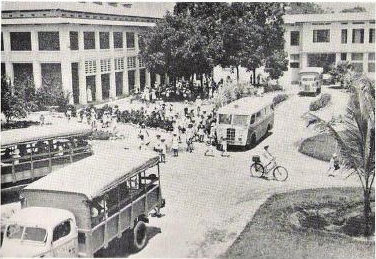
JOURNAL: C@hiers du CRHiDI. Histoire, droit, institutions, société [Special Issue Dire, appliquer et diffuser le droit. L'action des gens de justice au Congo belge (1908-1960), eds. Françoise MULLER, Bérengère PIRET, Xavier ROUSSEAUX & Nathalie TOUSIGNANT]


(image: Leopoldville; source: Wikimedia Commons)

Gouvernementalité en régime colonial : acteurs, vecteurs et pratiques du droit et de la justice en Afrique coloniale belge (Xavier Rousseaux) (DOI 10.25518/1370-2262.709)

La compénétration des magistratures métropolitaine et coloniale. Analyse du cas belge (1885-1939) (Françoise Muller, Amandine Dumont & Xavier Rousseaux) (DOI 10.25518/1370-2262.697)

Abstract:

Cet article traite de la compénétration des magistratures métropolitaine et coloniale belges durant la période 1885-1939. La compénétration de ces magistratures – c’est-à-dire les passages d’un corps à l’autre – s’observe à 51 reprises durant la période étudiée. Ces passages obéissent à des règles différentes selon qu’ils s’effectuent dans un sens ou dans l’autre. En dépit de propositions doctrinales et législatives répétées, les passages « colonie/métropole » (75% de l’effectif) n’ont pas fait, durant la période étudiée, l’objet d’une législation particulière facilitant l’intégration des magistrats coloniaux à la magistrature métropolitaine. Ceux-ci étaient contraints de recommencer une nouvelle carrière en métropole. Les passages « métropole/colonie » étaient mieux encadrés, assurant aux magistrats métropolitains de retrouver leur place au terme de leur séjour dans la colonie et leur permettant (en théorie) de conserver leurs droits à l’avancement.

Nomenclature du personnel judiciaire colonial. Dire le droit et rendre la justice à Stanleyville, 1935-1955 (Bérengère Piret) 

Abstract:

On considère généralement que la fonction fait l’homme, au Congo c’est davantage l’homme qui fait la fonction. En raison de la multiplicité des missions confiées aux fonctionnaire territoriaux (assurer le maintien de l’ordre et de la tranquillité publique, construire et entretenir les voies de communication comme les édifices publics, définir et faire exécuter les programmes agricoles, etc.), du contrôle réduit dont ils font l’objet et de l’absence de contre-pouvoir qui leur est opposé, leur formation et leur personnalité s’avèrent déterminantes. Loin de dresser la prosopographie du personnel du tribunal de district de Stanleyville, nous baliserons uniquement les principaux éléments de leur parcours. Ceux-ci doivent nous permettre de comprendre qui ils sont lorsqu’ils agissent au sein de ladite juridiction.

 Antoine Sohier, magistrat colonial au Congo belge (1910-1934). Éléments bio- et bibliographiques (Romain Landmeters) (DOI 10.25518/1370-2262.722)

Abstract:

L’article présente les éléments biographiques principaux et les productions bibliographiques d’Antoine Sohier en tant que magistrat au Congo belge. Il retrace notamment les grandes étapes de sa carrière coloniale entre 1910 et 1934.

Un barreau sur mesure ? Les enjeux de la création d’un Barreau colonial (1908-1932) (Jérôme de Brouwer & Maxime Jottrand) (DOI 10.25518/1370-2262.706)

Abstract:

Les premiers avocats s’installent dans la colonie au cours des années qui suivent la reprise du Congo par l’État belge. En l’absence de toute réglementation et parce qu’ils évoluent dans un environnement très différent de celui dont ils sont familiers, les avocats s’interrogent sur l’applicabilité à la colonie des règles organisant la profession et sa discipline en vigueur dans la métropole. Si à partir des années 1920 les avocats s’accordent sur la nécessité de l’organisation de la profession, ils s’opposent sur ces modalités. La perspective de l’institution d’un barreau colonial se heurte aux enjeux spécifiques liés au statut de la colonie et à sa géographie ainsi qu’à son administration.

 « S’il est construit à faux, tout risque de s’effondrer ». Le Journal des Tribunaux et le droit au Congo belge (Sebastiaan Vandenbogaerde) (DOI 10.25518/1370-2262.737)

Abstract:

Les revues juridiques forment un noyau dans un réseau élitaire où différents acteurs se rencontrent. Chaque titre a un programme dans lequel les rédacteurs s’inscrivent et essayaient de convaincre les lecteurs. Le Journal des Tribunaux et sa « petite sœur », le Journal des Tribunaux d’Outre-Mer, avaient l’idée de faire connaitre le droit au public qui n’avait pas vraiment un intérêt au droit congolais. Cette contribution se focalise sur les leaders, notamment les rédacteurs en chef, qui sont cruciaux pour la construction de la mentalité sur le droit congolais et l’impact du droit sur l’indépendance congolaise.

 « Pénétrer au mieux l’âme de nos sujets ». La perception des coutumes congolaises par les fonctionnaires territoriaux à travers leur contribution au Bulletin des Juridictions indigènes et de Droit coutumier congolais (Alix Sacré) (DOI 10.25518/1370-2262.675)

Absract:

Issu de recherches effectuées dans le cadre du projet Belgafrican Magistrates Social Networks, cet article se penche sur la contribution des fonctionnaires territoriaux du Congo belge à une revue juridique, le Bulletin des Juridictions indigènes et de Droit coutumier congolais. Il s’agit de montrer en quoi ces écrits sont particulièrement dépendants du contexte de leur rédaction, tant en termes de forme que de contenu ; en cela, ils nous informent sur les préoccupations des territoriaux, sur leur posture vis-à-vis des Congolais et sur la vision qu’ils ont de leurs coutumes. A travers l’analyse de quatre thématiques abordées par ces fonctionnaires, cet article propose ainsi une réponse supplémentaire à la question des liens entre savoir et pouvoir en contexte colonial. Le propos est illustré par plusieurs exemples, issus notamment de la carrière et des travaux rédigés par Fernand Grévisse, administrateur territorial puis commissaire de district du Haut-Katanga.

Prononcer et exercer le droit par l’administration coloniale. Les acteurs de la relégation au Congo Belge (1910-1960) (Valentine Dewulf) (DOI 10.25518/1370-2262.656)

Abstract:

Dès 1910 au Congo Belge, l’administration coloniale peut sanctionner d’une relégation, c’est-à-dire d’une déportation ou d’une interdiction de séjour, tout individu qui a nui à la tranquillité publique. La relégation constitue une sanction parapénale qui échappe au pouvoir judiciaire. Basé sur les correspondances tenues par les membres de l’administration coloniale, cet article interroge l’application de la relégation à partir des acteurs qui la décident ou qui l’influencent. Il met à jour le rôle fondamental du pouvoir local et des agents européens de terrain dans les prononcés de relégation. Il met également en évidence les différents points de vue et les intérêts qui coexistent parmi les autres acteurs d’influence de la relégation : missionnaires, acteurs économiques et pouvoir judiciaire.

Droit et justice en Afrique coloniale belge : acquis et perspectives (Nathalie Tousignant) (DOI 10.25518/1370-2262.802)

Read all articles here.


20 January 2021

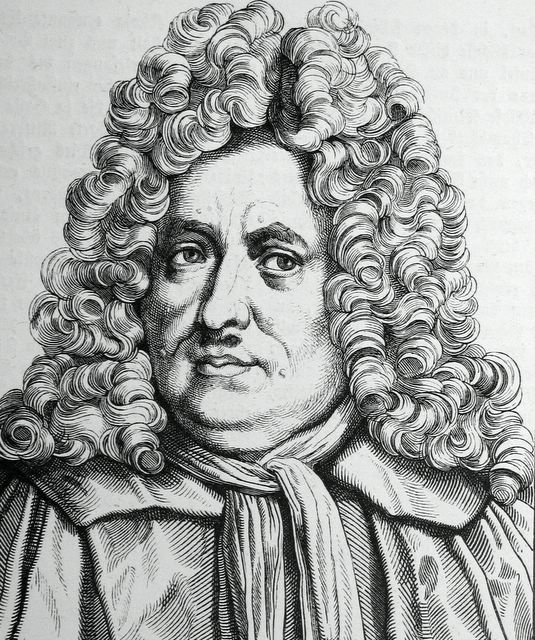
BOOK: Rafael RAMIS BARCELÓ, El nacimiento de la Filosofía del derecho. De la Philosophia iuris a la Rechtsphilosophie [Historia del Derecho, 90] (Madrid: Universidad Carlos III de Madrid, 2021), ISBN 978-84-1377-286-8, OPEN ACCESS

(image: Christian Thomasius; source: Wikimedia Commons)


Abstract: 

This book, according to the method of Begriffsgeschichte, explains the history of the notion of “Philosophy of Law”. Starting from the distinction between the “simulata” and the “vera philosophia”, the historical development continues with the Renaissance notion of “philosophia legalis” and shows that, from 1650 to 1730, treatises and manuals entitled “philosophia iuris” began to proliferate in Lutheran regions. These works (from Chopius until Reftelius, through Thomasius) had never been systematically studied. Starting from the Three-Year Course of Bachelor of Arts and from the Chair of “Natural Law”, these professors looked for some first Principles of Law and wished to establish a conceptual basis for the pedagogical transition from the Faculty of Arts and Philosophy to the Faculty of Law. After a few decades in which the notion of “ius naturale et gentium” was definitively imposed (1730-1780), because of Kant’s Philosophy there was a violent reaction against the philosophical “excesses” of rationalist Natural Law. Then Hugo and others coined the notion of “Philosophie des positiven Rechts”, to which some philosophers like Hegel responded with their “Philosophie des Rechts” or “Rechtsphilosophie”. Through this historical study, some reflections on the current dichotomy between “Theory” and “Philosophy of Law” are made and, according to the historical analysis, some solutions are proposed
 Read the full book here.

29 April 2020

OPEN ACCESS RESOURCE: Bulletin officiel du Congo belge


(Source: Kaowarsom.be)

We learned that the Royal Academy for Overseas Sciences has digitized the Official Bulletin of the Belgian Congo (1885-1959). The collection can be found, free of charge, here

03 April 2020

BOOK: Scott G. GELBER, Courtrooms and Classrooms: A Legal History of College Access, 1860−1960 (Baltimore: Johns Hopkins UP, 2015), 264 p. ISBN 9781421418841 OPEN ACCESS

(image source: Project Muse)

Book abstract:
Conventional wisdom holds that American courts historically deferred to institutions of higher learning in most matters involving student conduct and access. Historian Scott M. Gelber upends this theory, arguing that colleges and universities never really enjoyed an overriding judicial privilege. Focusing on admissions, expulsion, and tuition litigation, Courtrooms and Classrooms reveals that judicial scrutiny of college access was especially robust during the nineteenth century, when colleges struggled to differentiate themselves from common schools that were expected to educate virtually all students. During the early twentieth century, judges deferred more consistently to academia as college enrollment surged, faculty engaged more closely with the state, and legal scholars promoted widespread respect for administrative expertise. Beginning in the 1930s, civil rights activism encouraged courts to examine college access policies with renewed vigor. Gelber explores how external phenomena—especially institutional status and political movements—influenced the shifting jurisprudence of higher education over time. He also chronicles the impact of litigation on college access policies, including the rise of selectivity and institutional differentiation, the decline of de jure segregation, the spread of contractual understandings of enrollment, and the triumph of vocational emphases.
(source: ProjectMuse)