Search

Showing posts with label imperialism. Show all posts

15 December 2025

BLOG SYMPOSIUM: Imperialism, Sovereignty and the Making of International Law at 20 (National University of Singapore)


(image source: NUS)

The Centre for International Law Dialogues of the National University of Singapore hosts a blog series on Anthony Anghie's seminal monograph Imperialism, Sovereignty and the Making of International Law (CUP, series Cambridge Studies in International and Comaprative Law, eds. James Crawford and John Bell).

Read more here.

10 September 2025

BOOK: Victor KATTAN & Amit RANJAN (eds.), The Breakup of India and Palestine. The Causes and Legacies of Partition [Studies in Imperialism, eds. Andrew THOPSON & Alan LESTER] (Manchester: Manchester University Press, 2025), 312 p.

(image source: Manchester UP)
 

Abstract:

This book is the first study of political and legal thinking about the partitions of India and Palestine in 1947. The chapters in the volume, authored by leading scholars of partition, draw attention to the pathways of peoples, geographic spaces, colonial policies, laws, and institutions that connect them from the vantage point of those most engaged by the process: political actors, party activists, jurists, diplomats, philosophers, and international representatives from the Middle East, South Asia, and beyond. Additionally, the volume investigates some of the underlying causes of partition in both places such as the hardening of religious fault-lines, majoritarian politics, and the failure to construct viable forms of government in deeply divided societies.

Table of contents:

Foreword by Lucy Chester
Acknowledgements

Introduction: Connecting the partitions of India and Palestine: institutions, policies, laws and people - Victor Kattan and Amit Ranjan

Part I The partition of British India
1 The Mountbatten Viceroyalty reconsidered: personality, prestige and strategic vision in the partition of India - Ian Talbot
2 The paradigmatic partition? The Pakistan demand revisited - Ayesha Jalal

Part II The partition of Palestine
3 Partition and the question of international governance: the 1947 United Nations Special Committee on Palestine - Laura Robson
4 Fighting for Palestine as a holy duty? The Syrian Muslim Brotherhood and the partition of Palestine in 1947 - Mohamed-Ali Adraoui

Part III The partitions of India and Palestine compared
5 The communal question and partition in British India and mandate Palestine - Amrita Shodhan
6 India's dilemmas of pragmatism v. principles: Nehru's preference for a partitioned India but a federal Palestine - P. R. Kumaraswamy

Part IV The consequences of partition for South Asia, the Middle East and beyond
7 The partitions of India and Palestine and the dawn of majority rule in Africa and Asia - Victor Kattan
8 'Unfinished' partition: territorial disputes, unequal citizens and the rise of majoritarian nationalism in India, Pakistan and Bangladesh - Amit Ranjan
9 Civil war, total war or a war of partition? Reassessing the 1948 war in Palestine from a global perspective - Arie M. Dubnov
10 Partitioned identities? Regional, caste and national identity in Pakistan - Iqbal Singh Sevea

Afterword: Partition as imperial inheritance - Penny Sinanoglou

 On the editors:

Victor Kattan is an Assistant Professor at the School of Law, University of Nottingham Amit Ranjan is a Research Fellow at the Institute of South Asian Studies, National University of Singapore

Read more here

21 February 2022

ARTICLE: Richard REID, Africa’s Revolutionary Nineteenth Century and the Idea of the “Scramble” (AHR CXXVI (2021), No. 4 (Dec), 1424-1447)


(image source: OUP)

Abstract:

This paper seeks to position the Scramble for Africa in the context of the continent’s transformative, global nineteenth century. While imperial historiography develops apace, Africa-facing analyses of the continent’s partition and the processes which led to it are increasingly rare. European expansion into Africa was characterized by an aggressive dynamism, and millions of Africans experienced profound crisis in the process of the establishment of colonial rule. Yet Africa’s revolutionary nineteenth century was both driven by, and culminated in, complex processes of co-option on the part of Africans and Europeans. The paper proposes that a more Africa-centered assessment of the Scramble is possible, one which aims to contextualize the partition of the continent as part of an ongoing, endogenously shaped but often exogenously connected, transformation in political, economic, and social organization and behavior. While no single overarching theory can apply to the entire continent, it is possible to identify dynamics and processes for change that recur across Africa, from political and military reform to economic innovation. These point toward possibilities for reframing Africa’s development in the late precolonial period, and enable us to challenge the hegemony long enjoyed by scholars of European empires.

Read more with Oxford Journals (DOI 10.1093/ahr/rhab539

04 January 2022

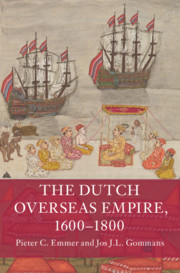
BOOK: Pieter C. EMMER & Jos J.L. GOMMANS, The Dutch Overseas Empire, 1600-1800 (Cambridge: CUP, 2020), ISBN 9781108449519, 22,99 GBP


(image source: CUP)

On the book:

How did the Dutch Empire compare with other imperial enterprises? And how was it experienced by the indigenous peoples who became part of this colonial power? At the start of the seventeenth century, the Dutch Republic emerged as the centre of a global empire that stretched along the edges of continents and connected societies surrounding the Atlantic and Indian Oceans. In the Dutch Empire, ideas of religious tolerance and scientific curiosity went hand in hand with severe political and economic exploitation of the local populations through violence, monopoly and slavery. This pioneering history of the early modern Dutch Empire, over two centuries, for the first time provides a comparative and indigenous perspective on Dutch overseas expansion. Apart from discussing the impact of the Empire on the economy and society at home in the Dutch Republic, it also offers a fascinating window into the contemporary societies of Asia, Africa and the Americas and, through their interactions, on processes of early modern globalisation.

On the authors:

Pieter C. Emmer is Professor Emeritus at Leiden University. He is the author of The Dutch in the Atlantic Economy, 1580-1880 (1998), The Dutch Slave Trade, 1500-1850 (2006) and is co-editor of The Encyclopedia of Migration and Minorities in Europe (2011) and Who Abolished Slavery? (2010). Jos J. L. Gommans is Professor of Colonial and Global History at Leiden University. He is the author of The Rise of the Indo-Afghan Empire, 1710-1780, (1999, 3rd edition 2018), Mughal Warfare: Indian Frontiers and High Roads to Empire (2002), The Indian Frontier: Horse and Warband in the Making of Empires (2018), The Unseen World: The Netherlands and India from 1550 (2018) and co-editor of Exploring the Dutch Empire; Agents, Networks and Institution, 1600-2000 (2005). 

(source: CUP

25 January 2021

BOOK: Harumi GOTO-SHIBATA, The League of Nations and the East Asian Imperial Order, 1920–1946 (London: Palgrave, 2020). ISBN: 978-981-15-4967-0, € 93


(Source: Palgrave)

ABOUT THE BOOK

Well-grounded on abundant Japanese language sources which have been underused, this book uncovers the League of Nations’ works in East Asia in the inter-war period. By researching the field of social and other technical issues, namely, the trade in narcotics, the trafficking of women and the work in terms of improving health provision and providing economic advice to Nationalist China, it not only examines their long-term impacts on the international relations in the region but also argues that the League’s works challenged the existing imperial order of East and Southeast Asia. The book offers a key read for academics and students of international history and international relations, and others studying Japan or East Asia in the twentieth century. 

ABOUT THE AUTHOR

Harumi Goto-Shibata is Professor of International History at the Department of Advanced Social and International Studies, Graduate School of Arts and Sciences, University of Tokyo, Japan. Her prior publications include Japan and Britain in Shanghai, 1925-31 (Macmillan, St Antony’s series, 1995) as well as three single-authored books, and two co-edited books in Japanese.


More information and table of contents with the publisher.