Search

Showing posts with label Sexuality. Show all posts

09 February 2022

ARTICLE: Jamie PAGE, "No Way to Run a Brothel? Prostitution and Policey in the Late Medieval Holy Roman Empire" (German History, XL (2022), Nr. 1, 1-21)


(image source: OUP)

Abstract:

This article addresses the relationship between civic prostitution and the concept of ‘gute Policey’ in the late fifteenth and early sixteenth centuries. It takes as its object of discussion a series of so-called Frauenhausordnungen (brothel ordinances or brothel rules) from the cities of Nuremberg, Nördlingen, Strasbourg, Constance and Ulm. Previous discussions have characterized Frauenhausordnungen from these cities as members of a coherent genre of regulations, a grouping which this article contests. By placing the creation of new brothel regulations in these cities in the larger context of the emergence of ‘gute Policey’ as a crucial category within domestic administration, the article seeks to expose civic authorities’ moral ambiguities about the role of prostitution in society, which originated well before the Reformation, often seen as the key factor in the vanishing of public prostitution from the urban landscape in the early modern era.

Read further here (DOI 10.1093/gerhis/ghab082

08 July 2021

JOURNAL: Special Issue: Sexuality, Holocaust, Stigma (German History XXXIX (2021), No. 1 (March))

(image source: OUP)
 

Introduction: Sexuality, Holocaust, Stigma (Anna Hájková)

Understanding Sexual Violence during the Holocaust: A Reconsideration of Research and Sources (Regina Mühlhäuser)

Shared Intimacies: Women’s Sexuality in Foreign Workers’ Camps, 1940–1945 (Camille Fauroux)

Cross-dressing, Male Intimacy and the Violence of Transgression in Third Reich Photography (Jennifer Evans, Elissa Mailänder)

Sexual Violence against Men and Boys during the Holocaust: A Genealogy of (Not-So-Silent) Silence (Dorota Glowacka)

Sexual Barter and Jewish Women’s Efforts to Save their Lives: Accounts from the Righteous Among the Nations Archives (Katya Gusarov)

Between Love and Coercion: Queer Desire, Sexual Barter and the Holocaust (Anna Hájková)

Book reviews:

  • The Habsburg Monarchy, 1618–1815 (Christopher Wendt)
  • The German Right, 1918–1930: Political Parties, Organized Interests, and Patriotic Associations in the Struggle against Weimar Democracy (James McSpadden)
  • Freiheitliches Bürgertum in Deutschland. Der Weimarer Demokrat Eduard Hamm zwischen Kaiserreich und Widerstand (Larry Eugene Jones)
  • Project Europe: A History (Paul Betts)
  • Bowling for Communism: Urban Ingenuity at the End of East Germany (Marcus Colla)
  • Helmut Schmidt and British-German Relations. A European Misunderstanding (Jonathan Wright)
Read more with OUP.

12 August 2020

BOOK: Julie HARDWICK, Sex in an Old Regime City - Young People, Production, and Reproduction in France, 1660-1789 (Oxford: Oxford University Press, 2020). ISBN 9780190945183, $35.00


(Source: OUP)

OUP is publishing a book on the history of young people's intimacy, based on legal records from the city of Lyon during the Ancien Régime.

ABOUT THE BOOK

Our ideas about the long histories of young couples' relationships and women's efforts to manage their reproductive health are often premised on the notion of a powerful sexual double standard.

In Sex in an Old Regime City, Julie Hardwick offers a major reframing of the history of young people's intimacy. Based on legal records from the city of Lyon, Hardwick uncovers the relationships of young workers before marriage and after pregnancy occurred, even if marriage did not follow, and finds that communities treated these occurrences without stigmatizing or moralizing. She finds a hidden world of strategies young couples enacted when they faced an untimely pregnancy. If they could not or would not marry, they sometimes tried to terminate pregnancies, to make the newborn go away by a variety of measures, or to charge the infant to local welfare institutions. Far from being isolated, couples drew on the resources of local communities and networks. Clerics, midwives, wet nurses, landladies, lawyers, parents, and male partners in and outside the city offered pragmatic, sympathetic ways to help young, unmarried pregnant women deal with their situations and hold young men responsible for the reproductive consequences of their sexual activity. This was not merely emotional work; those involved were financially compensated. These support systems ensured that the women could resume their jobs and usually marry later, without long-term costs. In doing so, communities managed and minimized the disruptions and consequences even of cases of abandonment and unprosecuted infanticide.

This richly textured study re-thinks the ways in which fundamental issues of intimacy and gendered power were entwined with families, communities, and religious and secular institutions at all levels from households to neighborhoods to the state.

ABOUT THE AUTHOR

Julie Hardwick is the John E. Green Professor of History at the University of Texas at Austin. She is the author of Family Business: Litigation and the Political Economies of Daily Life in Seventeenth-Century France (OUP, 2009) and The Practice of Patriarchy: Gender and the Politics of Household Authority in Early Modern France.

TABLE OF CONTENTS

Acknowledgments
Introduction A Foundling's Garter and the World of Young People's Intimacy
Ch.. 1. Sourcing Intimate Histories: The Social World of Young Workers
Ch. 2. Peril Stories: Licit Intimacy, Space, and Community Safeguarding
Ch. 3. Holding Men Responsible: Fertility, Community, and Court
Ch. 4. "Remedies" and Remedies: Managing Out-of-Wedlock Pregnancy
Ch. 5. Intimate Labor: Paid Work and an Intimate Economy of Reproduction
Ch. 6. Foundlings and Makeshift Coffins: Community Complicity and Dead Babies
Conclusion: The End of the Old Regime?
Notes
Bibliography
Index

More info here

25 June 2020

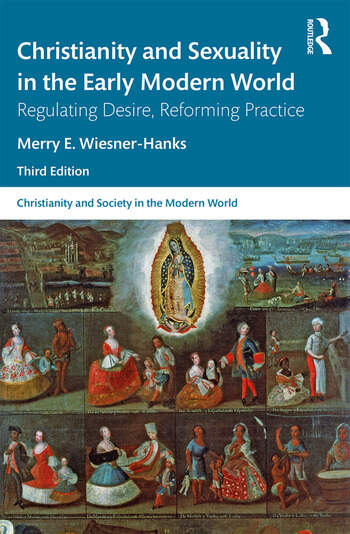
BOOK: Merry E. WIESNER-HANKS, Christianity and Sexuality in the Early Modern World Regulating Desire, Reforming Practice, 3rd ed. (London: Routledge, 2020). ISBN 9780367201791, 32.99 GBP


(Source: Routledge)

Routledge is publishing a new edition of Christianity and Sexuality in the Early Modern World.

ABOUT THE BOOK

Christianity and Sexuality in the Early Modern World surveys the ways in which people from the time of Luther and Columbus to that of Thomas Jefferson used Christian ideas and institutions to regulate and shape sexual norms and conduct, and examines the impact of their efforts.

Global in scope and geographic in organization, the book contains chapters on Protestant, Catholic, and Orthodox Europe, Latin America and the Caribbean, Africa and Asia, and North America. It explores key topics, including marriage and divorce, fornication and illegitimacy, clerical sexuality, same-sex relations, witchcraft and love magic, moral crimes, and interracial relationships. The book sets its findings within the context of many historical fields, including the history of gender and sexuality, and of colonialism and race.

Each chapter in this third edition has been updated to reflect new scholarship, particularly on the actual lived experience of people around the world. This has resulted in expanded coverage of nearly every issue, including notions of the body and of honor, gendered religious symbols, religious and racial intermarriage, sexual and gender fluidity, the process of conversion, the interweaving of racial identity and religious ideologies, and the role of Indigenous and enslaved people in shaping Christian traditions and practices. It is ideal for students of the history of sexuality, early modern Christianity, and early modern gender.

ABOUT THE AUTHOR

Merry E. Wiesner-Hanks is Distinguished Professor of History Emerita at the University of Wisconsin-Milwaukee, USA. The senior editor of the Sixteenth Century Journal, she is author or editor of thirty books and many articles that have appeared in English, German, French, Italian, Spanish, Portuguese, Greek, Chinese, Turkish, and Korean.

TABLE OF CONTENTS

Introduction; 1. Christianity to 1500; 2. Protestant Europe; 3. Catholic and Orthodox Europe; 4. Latin America and the Caribbean; 5. Africa and Asia; 6. North America; 7. Conclusions

More info here

12 December 2019

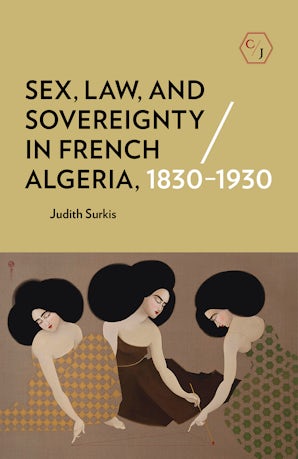
BOOK: Judith SURKIS, Sex, Law, and Sovereignty in French Algeria, 1830–1930 (Ithaca: Cornell University Press, 2019). ISBN 9781501739507, $29.95


Cornell University Press has published a new book on sex, law and sovereignty in French Algeria.

ABOUT THE BOOK

During more than a century of colonial rule over Algeria, the French state shaped and reshaped the meaning and practice of Muslim law by regulating it and circumscribing it to the domain of family law, while applying the French Civil Code to appropriate the property of Algerians. In Sex, Law, and Sovereignty in French Algeria, 1830–1930, Judith Surkis traces how colonial authorities constructed Muslim legal difference and used it to deny Algerian Muslims full citizenship. In disconnecting Muslim law from property rights, French officials increasingly attached it to the bodies, beliefs, and personhood.

Surkis argues that powerful affective attachments to the intimate life of the family and fantasies about Algerian women and the sexual prerogatives of Muslim men, supposedly codified in the practices of polygamy and child marriage, shaped French theories and regulatory practices of Muslim law in fundamental and lasting ways. Women's legal status in particular came to represent the dense relationship between sex and sovereignty in the colony. This book also highlights the ways in which Algerians interacted with and responded to colonial law. Ultimately, this sweeping legal genealogy of French Algeria elucidates how "the Muslim question" in France became—and remains—a question of sex.

ABOUT THE AUTHOR

Judith Surkis is Associate Professor of History at Rutgers University, New Brunswick. She is author of Sexing the Citizen.

More info here

26 October 2014

BOOK: "Cohabitation and Non-Marital Births in England and Wales" (1600-2012), edited by Rebecca Probert (June 2014)


Cohabitation and Non-Marital Births in England and Wales (1600-2012), edited by Rebecca Probert, (University of Warwick) 

June 2014
All information here 

From the press:

Today, almost half of all children are born outside marriage, with cohabiting relationships accounting for the majority of such births. But what was the situation in earlier centuries? Bringing together leading historians, demographers and lawyers, this interdisciplinary collection examines the changing context of non-marital child-bearing in England and Wales since 1600. Drawing on Private Acts of Parliament, ecclesiastical court records, reported cases, sessions files, coronial records, poor law records, petitions to the London Foundling Hospital, the registers of the London Bridewell, the records of charitable institutions, surveys and modern demographic data, it not only shows the relative rarity of cohabitation in earlier periods but also discovers the nature of individual relationships. It also explores how differences in the extent of both non-marital child-bearing and cohabitation emerge depending on definition, source material, interpretation and location, building up a more nuanced picture of past practices.