Search

Showing posts with label Canon law. Show all posts

07 July 2026

BOOKS: Violet SOEN, Wouter DRUWÉ, Wim FRANCOIS & Ralph DECONINCK (eds.), Innovationes Lovanienses: Arts, Law and Theology at the University of Louvain (1425–1797) and Students, Scholars and Their Books at the University of Louvain (1425–1797) [Lectio, ed. Pieter D'HOINE/Studium Lovaniense, ed. Violet SOEN] (Turnhout: Brepols, 2026) [OPEN ACCESS]


(image source: Brepols)

Two open access volumes on the University of Leuven/Louvain in the late Middle Ages and Early Modern Age have been published recently.

Innovationes Lovanienses: Arts, Law and Theology at the University of Louvain (1425–1797) (eds. Violet Soen, Wouter Druwé, Wim François & Ralph Deconinck)
DOI 10.1484/M.LECTIO-EB.5.145524
Abstract:

Throughout the first centuries of its existence, the University of Louvain functioned as a crossroads for the transmission of texts, ideas, and even images from Antiquity, across the Middle Ages, and through the Renaissance. From its foundational bulls between 1425 and 1432, the university was established as a prototypical studium generale, drawing inspiration from earlier institutions in Paris and Cologne and adopting elements from contemporary universities like Rostock and Geneva. Situated at the heart of Europe, the University of Louvain quickly became a pivotal center for the reception and dissemination of both ancient and contemporary knowledge across the continent, and later, the Habsburg Empire. This volume examines how teachers and students examined old and innovative ideas across various constituent bodies of the university, including the Faculty of Arts or the College of the Three Tongues, or neighboring institutions, like the Jesuit College. Contributions span the Faculties of Law, adopting insights on the newly promulgated Tridentine decrees or novel moral economies, to the Faculty of Theology, a hotbed of the controversies surrounding grace, free will, and salvation in post-Tridentine Catholicism. Of the many scholars that were active in Louvain, special attention is devoted to the philologist Petrus Nannius, the theologians Michael Baius and Jacobus Janssonius, the lawyers Petrus Peckius and Johannes Wamesius, and the Jesuits Robertus Bellarminus and Leonardus Lessius, along with the lectures they gave at the Louvain house of their Order.

Chapters

  • Innovationes Lovanienses. What Is New about the ‘Old’ University of Louvain (1425–1797)? (Violet Soen)
  • The Old and the New. Scholastic Elements in the Works of Petrus Nannius (1496–1557), Professor of the Collegium Trilingue in the First Half of the Sixteenth Century (Aline Smeesters)
  • Diagrammatic Innovations in Louvain Logic Notebooks (Seventeenth-Eighteenth Centuries) (Lorenz Demey)
  • The Role of Legal Practice in Louvain’s Legal Education (c. 1550–1650) (Wouter Druwé)
  • What Makes a Legal Commentary? . Louvain Professors on Liber Extra and Liber Sextus (Sixteenth-Eighteenth Centuries) (Piotr Alexandrowicz)
  • Teaching Canon Law after Trent. Mapping Juridical Sources in the Lectures of Petrus Peckius (1529–1589) (Ana Luiza Ferreira Gomes Silva)
  • When the Sun Stopped Setting. Louvain Lawyers & Theologians on Issues of Monopolies and Competition (1500–1670) (Wout Vandermeulen)
  • Knowledge of Nature and Scripture at the Threshold of Modernity. Michael Baius’s (1513–1589) Louvain Lecture on Romans 1 (Jarrik Van Der Biest)
  • The Internal Act of Faith in the Commentaries on the Summa theologiae. Produced in Sixteenth- and Seventeenth-century Louvain (with a Comparison with Previous Iberian Commentators) (Lidia Lanza)
  • The Jesuit College and Knowledge Transmission: Robert Bellarmine’s Lectiones Louanienses (1570–1576) and the Spanish Scholastic Legal-Economic Thought (Shiri Roelofs)
  • Ex nudo Dei beneplacito. On Concord and Discord between Luis de Molina’s Concordia (1588) and Leonardus Lessius’s De gratia efficaci (1610) (C.J. (Niels) De Bruijn)
  • Vision, Love, and Joy. The Louvain Jesuit Leonard Lessius (1554–1623) on Beatitude (Patrícia Calvário)

Students, Scholars and Their Books at the University of Louvain (1425–1797) (eds. Violet Soen, Wouter Druwé, Wim François & Ralph Deconinck)
DOI 10.1484/M.LECTIO-EB.5.145522
Abstract:

Integrating prosopographical, cartographical, and book-historical data, this collective volume on the first University of Louvain (1425–1797) contributes to ongoing interdisciplinary inquiries into the intellectual productions of students, scholars, and printers in the Early Modern era. The ten contributions examine the state of the art at the University of Louvain, whose output was supported by the vibrant printing presses of the Low Countries and the continual mobility of its scholars across continental Europe. The essays first unravel the transregional circuits of Louvain’s students, scholars, and printers, built upon their geographical mobility throughout Europe. The second part explores how early modern students at Louvain created their study materials by compiling lecture notes, rearranging the contents, and binding them into codices, often adorned with drawings or printed engravings – a practice that remained prevalent until the eighteenth century. Further contributions trace the introduction of the handpress to the city of Louvain, which, beginning in 1473, brought new opportunities for producing textbooks for broader markets, as typography and physical features transformed handbook production. Louvain’s publication network was especially dense in the sixteenth century, and publication rates remained high through the eighteenth century. This volume offers new insights into the hybrid world of oral teaching, handwritten note-taking, and printed textbook production by students, scholars, and printers at one of Europe’s intellectual crossroads.

Chapters

  • From Magister Dixit to STUDIUM.AI. New Perspectives on Students, Scholars and Their Books at the University of Louvain (1425–1797) (Violet Soen)
  • Louvain Scholars on the Move. Networks and Mobility Patterns at the Early University of Louvain. An Analysis of Academic Mobility (1425–1797) (David de la Croix & Maria Vitale)
  • From Transregional Recruitment to Self-reproduction. Building a Teaching Staff at the University of Louvain in Its First Two Decades (1425–1443) (Christiaan Engberts)
  • Who’s Who in STUDIUM.AI. New Linked Data about Students, Scholars and Printers at the Early Modern University of Louvain (1425–1797) (Violet Soen Yann Ryan)
  • The Louvain Lecture Halls during Theological Controversy. The Benedictine Student Stephanus Puelincx and His Notes on the Lectures of Jacobus Janssonius (c. 1607) (Linde Van den Eede)
  • In the University Classroom. Seventeenth-century Notebooks of Arts Students at the Universities of Louvain and Leiden (1651–1700) (An Smets)
  • Drawing Practices as Learning and Recreational Processes in Louvain Student Notebooks (Seventeenth–Eighteenth Centuries) (Gwendoline de Mûelenaere)
  • Honesti et probi adolescentes. Pardon Letters and Student Violence at the Early Modern University of Louvain (Sixteenth–Seventeenth Centuries) (Gert Gielis, Luke Giraudet & Quintin Verreycken)
  • The Importance of Typography in Knowledge Transfer. The Materiality of Louvain Printed Philosophy Textbooks (1474–1562) (Dieter Cammaerts)
  • Shedding (More) Light on Sixteenth-century Mapping Practices. Pieter Pourbus’s Application of Gemma Frisius’s Triangulation Methods (Jan Trachet & Hendrik Hameeuw)
  • Integrating Library and Prosopographical Data in the Early Modern Publication Network of the University of Louvain (1501–1797) (Rossana Scebba & Margherita Fantoli)
Both books can be read in open access with Brepols


03 July 2026

VACANCY: Professor of Canon Law (Leuven: KULeuven, DEADLINE 15 SEP 2026)

(image source: KULeuven)

The Faculty of Canon Law has a strong national and international reputation in teaching, research, and scientific services in the field of Canon Law and aims for leadership in each of these activities at the national, European, international and ecclesiastical levels.


The Faculty of Canon Law currently has more than 120 students from the five continents. Based on its extensive research expertise, teaching is offered in Dutch and English, both at master's and advanced master's level.

The Faculty distinguishes itself by emphasizing the ecclesiastical and Church-political role of Canon Law. Well-formed canon lawyers with a solid legal basis are vital for the Church and for the dialogue between the Church and society at a time of increasing secularization, religious fundamentalism and sometimes religiously legitimized violence. The Faculty of Canon Law has, based on its intrinsic mission and services, an important task and responsibility in this as the only Faculty in the world where people are trained in this discipline in Dutch and as one of the four in the world where this is possible in English. This requires sufficient analytical skills and originality in research and teaching, as well as attention to the juridical, the theological and philosophical foundations of Canon Law.
Research

The candidate strives for excellence in research. The candidate is able to develop and implement a broad research programme which is aligned with and complements the existing research programmes and the profile of the Faculty of Canon Law and which has a strong international dimension and outreach.
The candidate is expected to:

  • conduct independent research on an international forum, build an international competitive research programme and strive for excellent scientific results;
  • have a strong methodological research profile and be open for interdisciplinary research;
  • promote national and international research cooperation;
  • attract external funds for research;
  • (co)supervises master’s and PhD students. 

Teaching

Teaching assignments will include the education in Dutch and English in Canon Law. As a full member of the Faculty, the teaching assignments will be related to the research domain as much as possible, while members of the academic staff are also expected to contribute more broadly to the Faculty’s teaching portfolio. Furthermore, the candidate will organize seminars for smaller groups, provide individual supervision of master’s theses and reserve sufficient time for the supervision of PhD students. 

Service

Service provision includes both internal service, such as service to the university or the Faculty and participation in councils and/or academic activities, as well as external service, i.e. service to the Church, to society or to the professional field in a broader sense.

Profile

You hold a doctoral degree in Canon Law with dissertation (JCD). An additional master's degree in law and/or theology (STL) counts as an added value.
You have demonstrable expertise, both at national and international level, in:

  • basic concepts of Canon Law and/or;
  • general norms of Canon Law and/or;
  • history of Canon Law and/or;
  • theology of Canon Law and/or;
  • law of religious communities and/or;
  • the law of the Oriental Churches and/or;
  • marriage law in the Church and the law of matrimonial procedures and/or;
  • the hierarchical organization of the Church (the universal and particular Church) and/or;
  • ecclesiastical procedural law and/or;
  • ecclesiastical penal law and/or;
  • the law of the sacraments and/or;
  • temporal goods of the Church and/or;
  • the teaching office of the Church and/or;
  • the rights and obligations of Christian faithful and/or;
  • the relations between Church and State and ecclesiastical diplomacy.

RESEARCH

You conduct excellent research related to several of these areas of Canon Law, as evidenced by internationally reviewed scientific publications, the development of your own research projects and/or the successful supervision of PhD students. You are prepared to engage in inter- and multidisciplinary collaboration with other researchers and research units in the Faculty of Canon Law and beyond, more specifically in the disciplines of Law and Theology.

You are also part of international networks in the academic world. Your publications and/or other research results demonstrate originality, a deep level of abstraction and openness to intra- or interdisciplinary research, as well as the ability to understand and clearly explain the technical nature of Canon Law.

You show the ability to acquire research funding and you demonstrate a willingness to strengthen the position of the research unit through your continued efforts in this area.


TEACHING


You have a solid vision on academic research based teaching, and the ability to provide it. You have demonstrable didactical skills enabling you to contribute to the high quality of the teaching assignments of the Faculty of Canon Law and of the university. You have the necessary skills to teach students from various disciplines so as to allow them to acquire knowledge and skills relating to Canon Law. Commitment to the quality of the educational programs in general is considered self-evident.

If available, please attach any evaluations of prior teaching experience to your file.


SERVICE PROVISION AND LEADERSHIP

You have the necessary social and professional skills to work and collaborate in a flexible way in a team in the Faculty of Canon Law. You are capable of taking up or growing in various leadership positions, at the level of both the Faculty and the university.
KU Leuven has an equal opportunity and diversity policy.

REQUIRED LANGUAGE SKILLS

Proficiency in English is required.
Mastery of the Dutch language at CEFR level C1 is required at the start of employment, in order to be able to teach in Dutch immediately.
Offer

We are offering full-time employment in an intellectually stimulating environment. KU Leuven is a research-intensive, internationally oriented university that carries out both fundamental and applied scientific research. It is a highly inter- and multidisciplinary institution which strives for international excellence. In this regard, it actively works together with research or network partners in Belgium and abroad. It provides its students with an academic teaching that is based on high-quality scientific research.


Depending on your record and qualifications, you will be appointed to or tenured in one of the grades of the senior academic staff: assistant professor, associate professor, professor or full professor.

To facilitate scientific integration and research in the initial phase of appointment, an initial funding of EUR 110,000 is offered to new professors who have no substantial other funding and who are appointed for at least 50%.

KU Leuven is well equipped to welcome international professors and their families and offers practical support with immigration and administration, housing, childcare and career coaching for partners.

Interested?
You can apply for this job via KU Leuven’s online application platform. To enable review by international experts, we kindly ask you to submit your application in English. 

KU Leuven attaches great importance to research integrity and ethical conduct and will therefore ask you to sign an integrity statement upon appointment.

For more information about the content of the position or vacancy, please contact: Prof. dr. Hildegard Warnink (dean of the Faculty of Canon Law), e-mail: Hildegard.Warnink@kuleuven.be, tel.: +32-16/32.51.58.

Do you have a question about the online application system? Please email us at apply@kuleuven.be.


You can apply for this job no later than September 15, 2026 via the online application tool


KU Leuven strives for an inclusive, respectful and socially safe environment. We embrace diversity among individuals and groups as an asset. Open dialogue and differences in perspective are essential for an ambitious research and educational environment. In our commitment to equal opportunity, we recognize the consequences of historical inequalities. We do not accept any form of discrimination based on, but not limited to, gender identity and expression, sexual orientation, age, ethnic or national background, skin colour, religious and philosophical diversity, neurodivergence, employment disability, health, or socioeconomic status

20 February 2026

REMINDER SEMINAR: PetrIUS and Printed Canon Law Paratexts up to ca. 1600 (Poznań: Centre for Ius Commune, Adam Mickiewicz University, 24 FEB 2026 - 11:00 CET, online)


(Source: Liber extra, edition of Paris 1499, Basel University Library, Nn III 10)


The Centre for Ius Commune has been established at Adam Mickiewicz University to implement the ERC Starting Grant PetrIUS: Petrification of ius commune through printed paratexts led by Piotr Alexandrowicz. The project aims to trace the origins, evolution, and consolidation of marginalia (paratexts) added to printed editions of the Roman and canon law sources. By examining their variations and significance, the project will demonstrate how paratexts shaped the interpretation of Roman and canon law in the early modern period and determine whether the printed marginalia influenced the legal education and practice. More information on the project can be found here: link.

The Centre will also host events related to ongoing research and to broader topics concerning late medieval and early modern ius commune. In the first meeting Piotr Alexandrowicz will talk in general about the project and the first observations on the development of canon law printed paratexts. The meeting will be held on Tuesday, 24.02.2026 at 11 am CET. It will be organised in a hybrid format; to join online use the link to the MS Teams: link.

The Centre welcomes collaboration with scholars working on late medieval and early modern ius commune. If you want to learn more about the Centre or contact the Centre do not hesitate to email the team members Piotr Alexandrowicz (piotr.alexandrowicz@amu.edu.pl) or Matthew Cleary (matthew.cleary@amu.edu.pl).

12 February 2026

SEMINAR: PetrIUS and Printed Canon Law Paratexts up to ca. 1600 (Poznań: Centre for Ius Commune, Adam Mickiewicz University, 24 FEB 2026 - 11:00 CET, online)

(Source: Liber extra, edition of Paris 1499, Basel University Library, Nn III 10)

The Centre for Ius Commune has been established at Adam Mickiewicz University to implement the ERC Starting Grant PetrIUS: Petrification of ius commune through printed paratexts led by Piotr Alexandrowicz. The project aims to trace the origins, evolution, and consolidation of marginalia (paratexts) added to printed editions of the Roman and canon law sources. By examining their variations and significance, the project will demonstrate how paratexts shaped the interpretation of Roman and canon law in the early modern period and determine whether the printed marginalia influenced the legal education and practice. More information on the project can be found here: link.

The Centre will also host events related to ongoing research and to broader topics concerning late medieval and early modern ius commune. In the first meeting Piotr Alexandrowicz will talk in general about the project and the first observations on the development of canon law printed paratexts. The meeting will be held on Tuesday, 24.02.2026 at 11 am CET. It will be organised in a hybrid format; to join online use the link to the MS Teams: link.

The Centre welcomes collaboration with scholars working on late medieval and early modern ius commune. If you want to learn more about the Centre or contact the Centre do not hesitate to email the team members Piotr Alexandrowicz (piotr.alexandrowicz@amu.edu.pl) or Matthew Cleary (matthew.cleary@amu.edu.pl).

21 August 2025

BOOK: Sari KATAJALA-PELTOMAA (ed.), A Companion to Medieval Canonization Processes. New Contexts, Perspectives, and Comparisons [Brill's Companions to the Christian Tradition, ed. Christopher M. BELLITTO; vol. 109] (Leiden/Boston: Brill, 2025), XII + 341 p. ISBN: 9789004516298, € 168,54

(Image source: Brill)


About the book:

Canonizations, which officially proclaimed a person’s sanctity, were complex, embracing theological, judicial, social, and cultural aspects of medieval Christianity. The dossiers manifest the theological ponderings while also revealing the devotional practices, daily life, and troubles of those not learned in canon law or theology.

This volume offers tools for comprehending canonization processes by investigating their judicial background and structural elements, as well as devotional aspects reflected in the depositions. It approaches canonization processes in a three-fold way: as a phenomenon of the past, as a source material with methodological challenges, and as a specific field of historical studies. Furthermore, this volume engages in innovative methodological discussions and illuminates the state-of-the-art and topical new themes.


Table of contents

Introduction: Canonization Processes in Context and Comparison (Sari Katajala-Peltomaa)

1. The Papacy on the Canonization of Saints: between Appropriation, Regulation, and Disinterest (Christian Krötzl)

2. God’s Ordinary and Extraordinary Speech: the Determination of Miracles by the Roman Congregation of Rites in the Early Modern Era (Maria Teresa Fattori)

3. Transforming an Individual into a Saint and an Accused into a Criminal. Judicial Procedure in Canonization Processes and libri maleficiorum of Italian Communes at the End of the Middle Ages (Didier Lett)

4. The Construction of Information in the Records of Medieval Canonization and Heresy Inquests: a Methodological Comparison (Saku Pihko)

5. Testimonies of the Life of the Saint in the Context of Canonization (Jenni Kuuliala)

6. Safe and Dangerous Names: Uncovering Connections and Boundaries in the Canonization Inquest for Countess Delphine de Puimichel, 1363 (Nicole Archambeau)

7. Disability, Miracle, and Sainthood in Early Fourteenth-Century Canonization Dossiers (Adelheid Russenberger)

8. “Are You Content to Die?” Death Acceptance and Death Denial in Depositions of Canonization Processes (Jyrki Nissi)

9. Writing Microhistory from the Canonizations of Bernardino of Siena and Vincent Ferrer (Laura Ackerman Smoller)

10. Experiencing the Miraculous: Lived Religion in the Depositions (Sari Katajala-Peltomaa)

11. Scent, Sight, Awe: Examining the Bodily Signs of Sainthood in the Canonization Processes of Dominican Saints (Marika Räsänen)

12. Canonizations and Jesuit Saints: the Lives and Images amid the Causes for Ignatius Loyola and Francis Xavier (Jonathan Greenwood)

On the editor

Sari Katajala-Peltomaa is currently Professor of Cultural History at the University of Turku, Finland. She has specialized in lived religion, gender, and family. Her recent publications on canonization processes include Demonic Possession and Lived Religion in Later Medieval Europe (Oxford: Oxford University Press, 2020) and edited with Christian Krötzl, Miracles in Medieval Canonization Processes: Structures, Functions, and Methodologies (Turnhout: Brepols, 2018).

More information can be found here: 10.1163/9789004726833.

26 May 2025

IM MEMORIAM: Gérard Giordanengo (1944-2025)


(image source: ENC)

First paragraph:

L’École a le regret de vous faire part du décès de Gérard Giordanengo (prom. 1969), professeur honoraire à l’École, survenu le 18 mai 2025, à l’âge de 80 ans. Né à Gap (Hautes-Alpes) le 15 octobre 1944, Gérard Giordanengo est archiviste paléographe (prom. 1969) et docteur en droit. Ancien membre de l’École française de Rome (1969-1971), Gérard Giordanengo est conservateur aux archives départementales de l’Isère (1969), puis des Bouches-du-Rhône (1973). Il devient professeur à l’École nationale des chartes en 1981, où il occupe la chaire d’histoire du droit civil et du droit canonique, jusqu’en 2005.

Read further on the website of the Ecole Nationale des Chartes

14 April 2025

JOB: Postdoc position in history of canon law (Poznan: Adam Mickiewicz University, DEADLINE: 25 April 2025)


The Faculty of Law and Administration in the Department of Roman Law, Legal Traditions and Cultural Hertiage Law is looking for a Postdoctoral Researcher in the project: EXTRA: The Decretals, early modern science of canon law and legal commentaries today.

The project aims at the examination of the methods and development of the early modern science of canon law through the study of the most relevant legal commentaries of the time. For ages thick volumes of commentaries to statutes have been the most typical output of scientific endeavours of legal scholars in Europe. The universality of this practice allows us to study its nature in the past and relate the conclusions also to contemporary issues which in many ways resemble the past challenges. EXTRA will contribute to the overall understanding of the legal developments in the early modern Europe and the functions of commentary for legal discourse. Moreover, the conceptualizations developed to approach the early modern science of canon law will serve as the framework for addressing the current challenges of legal writing such as legal data overload or the impact of technological revolutions on law. The other broadly discussed issue today is the very nature of legal commentary and its ‘scientific’ character and EXTRA will contribute to this topic as well.

The textual basis for the research is commentaries to the Decretals (so called Liber extra, hence the project acronym) written by canonists c.1450-1650 which were usually several-hundred-pages-long multi-volume works in Latin. In the early modern period the Decretals were still the pivotal legal text handled within canon law science and canon law still formed a relevant part of the universal legal system of European ius commune. Therefore commentaria were a vehicle for addressing all currently relevant legal issues in Europe and were a tool for updating old laws to the new times. During the preliminary research there were listed sixteen works fulfilling selection criteria, the most relevant of which were those written by such authors as Felino Sandeo, Filippo Decio, Hendrik Zoesius, Emanuel González Téllez, and Prospero Fagnani.


This is a full-time position for 6 months, with the possibility of extension for an additional 10 months, starting June 2025 (or later).

For more information do not hesitate to contact the project PI, Piotr Alexandrowicz (piotr.alexandrowicz[at]amu.edu.pl).


More information can be found here.


01 April 2025

CONFERENCE: Les pratiques aristocratiques du clergé. Transgresser la norme cléricale en Occident (IXe-XIVe siècle) (Paris: Sorbonne Université, 10-11 APR 2025)

(Image source: Centre Roland Mousnier)


Abstract

Un homme d’Église se doit d’être modeste. C’est en tout cas ce qu’affirment nombre de traités et de miroirs médiévaux, les moralistes ne se privant pas de rappeler que le clerc est un modèle pour les fidèles et qu’il doit illustrer l’humilité du Christ. Pourtant, il n’est pas rare que certains ecclésiastiques s’adonnent à des pratiques empruntées aux codes de comportements aristocratiques et, ce faisant, s’affranchissent parfois des normes qui leur sont peu à peu imposées par l’Église, quitte à outrepasser certains interdits. C’est au prisme de cette ambiguïté entre un idéal clérical qui se veut dépouillé et la réalité de pratiques aristocratiques ostentatoires chez certains ecclésiastiques, que nous proposons d’interroger la dynamique de transgression de la norme cléricale. 


Program

Jeudi 10 avril 2025 (Salle des Actes – Sorbonne Université)
9h : Accueil
9h30-10h : Valentine Ferreira et Harold Hans (Sorbonne Université) – Introduction


1ère discussion : Ecclésiastiques, solidarités familiales aristocratiques et pratiques transgressives
10h-10h30 : Margot Laprade (Université Paris 1 Panthéon-Sorbonne) – Robert de Rouen (v. 989-1037) : archevêque et comte, époux et père de famille – un prélat typique du XIe siècle ?
10h30-11h : Romain Waroquier (Université de Namur) – Prince ecclésiastique ou prélat aristocrate? Ethos aristocratique et solidarité familiale chez Simon de Vermandois, évêque de Noyon-Tournai (1123-1146).
11h15-11h45 : Max Parada (Université du Littoral Côte d’Opale, Sorbonne Université) – Historia comitum Ghisnensium de Lambert d’Ardres. La carrière et les conflits de Baudouin de Guînes (av. 1169-av. 1229), chanoine de Thérouanne et recteur d’églises en Angleterre.
11h45-12h30 : Table ronde


2ème discussion : Pratiques aristocratiques et stratégies de distinction des élites ecclésiastiques
14h15-14h45 : Charles West (University of Edinburgh) – Birds of Pray : Local Priests and Hunting in the Ninth and Tenth Centuries.
14h45-15h15 : Maxime Fulconis (Sorbonne Université) – À la cour de l’évêque. Réforme et comportement seigneurial des prélats d’Italie centrale aux XIe-XIIe siècles.
15h15-15h45 : Table ronde


3ème discussion : Des pratiques de gestion aristocratiques des biens d’Église ? 
16h-16h30 : Valentina Toneatto (Université Lumière Lyon II) – Normes et transgressions cléricales en matière économique, des Carolingiens au début du XIe siècle.
16h30-17h : Anne Massoni (Université de Limoges) – Entre évêques et chanoines, quelles pratiques aristocratiques à la cathédrale de Limoges aux XIe et XIIe siècles ?
17h-17h30 : Table ronde


Vendredi 11 avril 2025 (Salle des Actes – Sorbonne Université)
9h30 : Accueil


4ème discussion : Sanctions et ambitions réformatrices face aux pratiques aristocratiques des ecclésiastiques
10h00-10h30 : Bruno Dumézil (Sorbonne Université) – Un clerc peut-il jouer ? Les aleatores entre réforme carolingienne et grégorienne
10h30-11h00 : François Wallerich (Université de Louvain) – Les moines nobles dans le monachisme réformé : idéaux, réalités et influence sur la société (seconde moitié du XIe s.- fin du XIIIe s)
11h15-12h00 : Table ronde


5ème discussion : Ecclésiastiques et comportements guerriers : pratiques coutumières, pratiques transgressives ?
13h30-14h00 : Matthieu Bayle (Casa de Velázquez, Sorbonne Université) – Pour le salut de l’âme, et la défense de la patria. Testaments et pratiques martiales du clergé dans les comtés ibériques marémontains au Xe siècle
14h00-14h30 : Sébastien Fray (Université Jean Monnet Saint-Étienne) – Quand l’évêque méridional s’en va en guerre (XIIIe siècle)
14h30-15h00 : Table ronde
15h30-16h : Charles Mériaux (Université de Lille) – Conclusions du colloque


Practical informations

  • When: Jeudi 10 avril 2025 (9h-17h30); Vendredi 11 avril 2025 (9h30-16h)
  • Where: Salle des Actes, 54 rue Saint-Jacques ou 17 rue de la Sorbonne, 75005, Paris. Pour assister au colloque en visio-conférence : lien communiqué par mail aux personnes intéressées. Pour venir assister au colloque, si vous êtes extérieur à Sorbonne Université, merci de vous inscrire en envoyant un mail à pratiquesaristocratiquesclerge@gmail.com avant le 04 avril 2025. 
  • Who (comité d’organisation): Valentine Ferreira (Doctorante, Sorbonne Université, Centre Roland Mousnier) and Harold Hans (Doctorante, Sorbonne Université, Centre Roland Mousnier)


More information can be found here.

28 February 2025

SEMINAR: Justices de chanoines (1200-1500) (Aubervilliers: Campus Condorcet, 21 MAR 2025 h. 14-17) [ONLINE]


La table-ronde des Fasti ecclesiæ gallicanæ est consacrée cette année aux justices des chanoines (xiie-xve siècle). L’histoire des justices ecclésiastiques à la fin du Moyen Âge, qu’il s’agisse des officialités épiscopales et métropolitaines, des justices seigneuriales d’Église ou encore des justices monastiques et canoniales, a connu des renouvellements importants ces dernières décennies. La table-ronde entend éclairer les spécificités des justices des chapitres cathédraux, nées des justices épiscopales, en examinant, à travers plusieurs études de cas, leur fonctionnement et leur place au sein de la pluralité des justices urbaines.


Programme:

  • Élisabeth Lusset (CNRS – LaMOP) – Introduction
  • Thomas Lacomme (Université Jean Moulin Lyon 3 – CIHAM) – Le chapitre cathédral troyen et l’exemption de la juridiction épiscopale (xiie-xve siècle)
  • Monique Maillard-Luypaert (chercheuse associée à l’université Saint-Louis, Bruxelles) – Crime et châtiment au chapitre cathédral de Cambrai. L’affaire du chanoine Jean Reginaldi (1443-1449) : un cas exemplaire ?
  • Véronique Beaulande-Barraud et Lucas Flandre (Université Grenoble-Alpes) – Le procès d’un prêtre voleur en 1479 : l’exercice de la juridiction capitulaire sur l’Hôtel-Dieu de Reims

La table-ronde pourra être suivie en présentiel ou à distance.


Inscription préalable : fasti-journees(at)services.cnrs.fr

More information can be found here.

03 December 2024

CONFERENCE: Désunions : La séparation du couple à l’initiative de l’Église dans le monde catholique (Poitiers: CESCM, 6 DEC 2024) [ONLINE]

(Image source: Carnets du CESCM)


GENERAL DATA

Journée soutenue par le CESCM (UMR 7302), le CRIHAM (UR 15507) et l’axe 2 de la MSHS de Poitiers (UAR 3565)

  • 6 décembre 2024
  • Lieu : salle Gaston Berger du CESCM / Hôtel Berthelot, 24 rue de la Chaîne, POITIERS.
  • Pour assister à la journée en distanciel merci de vous inscrire sur ce formulaire : https://forms.gle/bpmx8LZAW3kAobXeA. Le lien vous sera envoyé la veille.


SCHEDULE

  • 9h – Accueil
  • 9h15 – Introduction par Emilie Kurdziel et Marie Walin

Session du matin modérée par Justine Audebrand (U. Poitiers, CESCM)

  • 9h45 – Emilie Kurdziel (U. Poitiers, CESCM) : Les séparations forcées de couples cléricaux au XIe siècle
  • 10h25 – Nahema Hanafi (U. Angers, TEMOS) : Les prétentions dangereuses. La nullité du mariage des castrats selon le juriste Charles Ancillon
  • 11h20 – Mariela Fargas Peñarrocha (U. Barcelone, GEHMO) [distanciel] : Enlèvement et confinement : trajectoires féminines de séparation conjugale. Analyse de cas dans la Barcelone moderne

Session de l’après-midi modérée par Vincent Gourdon (CNRS, Centre Roland Mousnier)

  • 14h – Marie Walin (U. Poitiers, CRIHAM) : L’Église et ses représentants, des soutiens pour les femmes dans des procédures d’annulation de mariage en Espagne (1777-1840)
  • 14h40 – Léon Snyers (professeur agrégé d’histoire, lycée Lamartine (Paris)) : Défendre la séparation de corps : un pis-aller catholique face au projet de loi du divorce (1876-1884)
  • 15h20 – Aïcha Limbada (École Française de Rome, Centre d’Histoire du XIXe siècle) : L’accompagnement religieux des fidèles catholiques en cas de séparation matrimoniale (France, 1884-années 1920)
  • 16h – Conclusions par Emilie Kurdziel et Marie Walin

More information can be found here.


27 June 2024

BOOK: Christof ROLKER, Canon Law in the Age of Reforms (c. 1000 to c. 1150), (Washington: The Catholic University of America, 2023). ISBN: 9780813237572


ABOUT THE BOOK

This monograph addresses the history of canon law in Western Europe between ca. 1000 and ca. 1150, specifically the collections compiled and the councils held in that time. The main part consists of an analysis of all major collections, taking into account their formal and material sources, the social and political context of their origin, the manuscript transmission, and their reception more generally. As most collections are not available in reliable editions, a considerable part of the discussion involves the analysis of medieval manuscripts. Specialized research is available for many but not all these works, but tends to be scattered across miscellaneous publications in English, German, French, Italian, and Spanish; one purpose of the book is thus to provide relatively uniform, up-to-date accounts of all major collections of the period. At the same time, the book argues that the collections are much more directly influenced by the social milieux from which they emerged, and that more groups were involved in the development of high medieval canon law than it has previously been thought. In particular, the book seeks to replace the still widely held belief that the development of canon law in the century before Gratian’s Decretum (ca. 1140) was largely driven by the Reform papacy. Instead, it is crucial to take into account the contribution of bishops, monks, and other groups with often conflicting interests. Put briefly, local needs and conflicts played a considerably more important role than central (papal) ‘reform’, on which older scholarship has largely focused.


ABOUT THE AUTHOR

Christof Rolker is a professor of medieval history at the University of Bamberg.


More information can be found here.

13 March 2024

BOOK: Élisabeth LUSSET, Clément PIEYRE, La Pénitencerie apostolique sous Innocent VIII (1484-1492) (Rome: École française de Rome, 2024). ISBN: 9782728318063

(Image source: École française de Rome)


ABOUT THE BOOK

Accessibles depuis 1983, les registres de suppliques de la Pénitencerie apostolique ont fait l’objet de plusieurs éditions et répertoires concernant l’Empire, l’Angleterre, la Scandinavie ou encore la péninsule italienne à la fin du Moyen Âge. Cette édition est la première d’ampleur pour le royaume de France. Elle présente un corpus de 287 suppliques de declaratoriis adressées au pape Innocent VIII (1484-1492) afin de lutter contre les discours diffamatoires entachant la renommée du suppliant. La plupart émanent de prêtres accusés d’homicide, qui s’adressent à l’office pontifical pour être déclarés non coupables. D’autres suppliants sont des laïcs qui entendent obtenir la confirmation ou, au contraire, l’annulation de leur mariage, en théorie indissoluble. Enfin, certains individus, entrés au monastère contre leur gré, recourent à la Pénitencerie pour faire invalider leur profession religieuse. Des sociabilités villageoises au quotidien des clercs et des moines, en passant par les pratiques judiciaires, matrimoniales, agricoles ou fiscales, les suppliques éditées nous plongent au cœur de la vie sociale, politique et religieuse du règne de Charles VIII, au sortir de la guerre de Cent Ans.


ABOUT THE AUTHORS

Élisabeth Lusset, ancienne élève de l’ENS de Lyon et ancienne pensionnaire de la Fondation Thiers, est chargée de recherche au CNRS (Laboratoire de médiévistique occidentale de Paris, UMR 8589).

Clément Pieyre, archiviste paléographe, conservateur général des bibliothèques et ancien directeur de la bibliothèque de l’École française de Rome, dirige la Bibliothèque Diderot de Lyon (ENS de Lyon).


11 March 2024

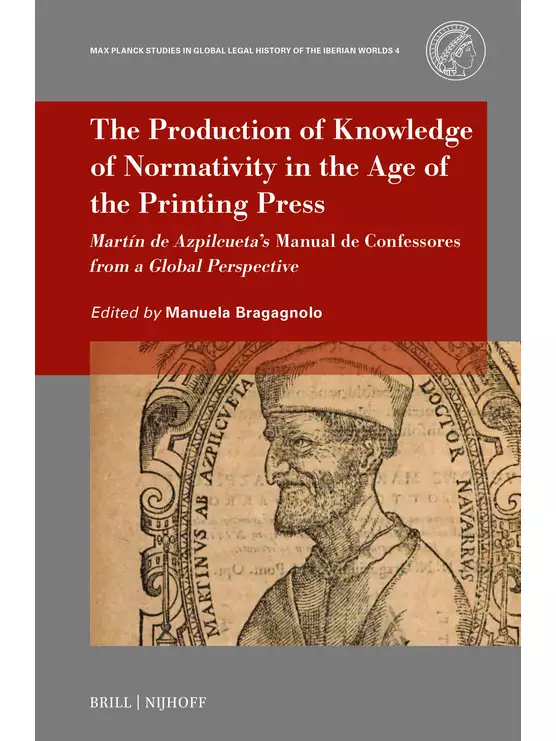
BOOK: Manuela BRAGAGNOLO, The Production of Knowledge of Normativity in the Age of the Printing Press. Martín de Azpilcueta’s Manual de Confessores from a Global Perspective (Leiden-Boston: Brill, 2024). ISBN: 9789004685789 [OPEN ACCESS]


ABOUT THE BOOK

This volume explores the production of knowledge of normativity in the age of early modern globalisation by looking at an extraordinarily pragmatic and normative book: Manual de Confessores, by the Spanish canon law professor Martín de Azpilcueta (1492-1586). Intertwining expertise, methods, and questions of legal history and book history, this book follows the actors and analyses the factors involved in the production, circulation, and use of the Manual, both in printed and manuscript forms, in the territories of the early modern Iberian Empires and of the Catholic Church. It convincingly illustrates the different dynamics related to the materiality of this object that contributed to “glocal” knowledge production.


TABLE OF CONTENTS

  • Preface: Coordinates of an Experiment
  • Books and the Production of Knowledge of Normativity in the Early Modern Period: The Case of Martín de Azpilcueta’s Manual de Confessores (Manuela Bragagnolo)
  • Legal Authorship in the Age of the Printing Press: Manual De Confessores by Martín de Azpilcueta (1492–1586) (Manuela Bragagnolo)
  • The Flemish Reeditions of Martín de Azpilcueta’s Works: A Paratextual Study (César Manrique Figueroa)
  • Professional Book Trade Networks and Azpilcueta’s Manual in 16th-Century Europe (Natalia Maillard Álvarez)
  • Translating Normative Knowledge: Martín de Azpilcueta and Jesuits in Portuguese America (16th Century) (Samuel Barbosa)
  • Sed talentum commissum non abscondere: Moral Obligations of an Author (Christiane Birr)
  • Martín de Azpilcueta Navarro in the Andes (16th–17th Centuries) (Pedro Guibovich Perez)
  • Azpilcueta in the Atlantic Book Trade of the Early Modern Period (1583–1700) (Pedro Rueda Ramírez)
  • The Path of Doctor Navarro in Colonial Mexico: The Circulation of Martín Azpilcueta’s Works (Idalia García Aguilar)
  • The Presence of Azpilcueta’s Manual de Confessores in Portuguese America (16th to 18th Centuries) (Airton Ribeiro)
  • Reading Azpilcueta in the Valley of Mexico (Byron Ellsworth Hamann)
  • Doctor Navarro in the Americas: The Circulation and Use of Martín de Azpilcueta’s Work in Early-Modern Mexico (David Rex Galindo)
  • Martín de Azpilcueta on Trade and Slavery in Jesuit Legal Manuscripts from Iberian Asia (Stuart M. McManus)
  • Pietro Alagona’s Compendium Manualis Navarri Published by the Jesuit Mission Press in Early Modern Japan (Yoshimi Orii)
  • Making Women Sinners: Guilt and Repentance of Converted Japanese Women in the Application of Alagona’s Compendium Manualis Navarri in Japan (16th Century) (Luisa Stella de Oliveira Coutinho Silva)


The publication can be found in open access here.


09 February 2024

BOOK: REGINO VON PRUM - ed. WILFRIED HARTMANN, Sendhandbuch (Libri duo de synodalibus causis) (Wiesbaden: Harrassowitz Verlag, 2023). ISBN: 9783447119801

(Image source: Harrassowitz Verlag)


Das Sendhandbuch wurde von Regino von Prüm († 915) angelegt und stellt eine der wichtigen Kirchenrechtssammlungen aus dem Mittelalter dar. Die dem Erzbischof Hatto von Mainz gewidmete Sammlung war dazu gedacht, die Bischöfe bei ihren Visitationsreisen und der Durchführung der Sendgerichtsbarkeit zu begleiten. Regino hat dafür Rechtssätze aus Konzilien, Bußbüchern und Kapitularien der Karolingerzeit zusammengestellt, aber auch Auszüge aus Papstbriefen, aus den alten Konzilien und den Schriften der Kirchenväter gesammelt, um die Kleriker bei der Seelsorge zu unterstützen. Neben Fragenkatalogen und Beschreibungen von Delikten enthält das Sendhandbuch genaue Anweisungen über die zu verhängenden Bußen, was es zu einer einzigartigen Quelle für das Kleriker- und Alltagsleben in spätkarolingischer Zeit macht. Die vorliegende Edition bietet neben dem lateinischen Text eine deutsche Übersetzung und wird durch mehrere Register auch für gezielte Fragestellungen erschlossen.

Der Band eröffnet die Reihe „Collectiones canonum“ der MGH, in der Kanonessammlungen des Mittelalter herausgegeben werden.


More information can be found here.

20 December 2023

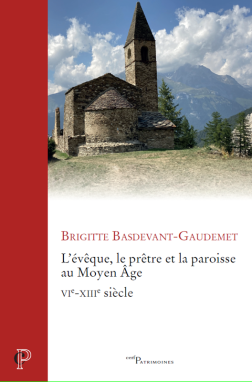
BOOK: Brigitte BASDEVANT-GAUDEMET, L’évêque, le prêtre et la paroisse au Moyen Âge, VIe-XIIIe siècle (Paris: éd. Cerf Patrimoine, 2023), 240 p. ISBN 9782204162081, € 29


Abstract:
Le cléricalisme fait aujourd’hui débat et soulève de multiples questions. Comment penser la discipline cléricale et le rapport entre le prêtre et les ? dèles au sein de la paroisse, ou la relation de l’évêque avec le clergé de son diocèse ? Le clerc, le prêtre, la hiérarchie cléricale doivent-ils être mis à part de l’ensemble de la société ? Si elle ne répond pas aux questions du XXIe siècle, l’histoire fournit des clés susceptibles d’éclairer ces débats brûlants d’actualité. Que savons-nous de la vie religieuse des villageois qui, sous la conduite d’un prêtre, se rassemblaient dans les églises dont les clochers, ruraux ou urbains, continuent d’égailler nos paysages ? Dans la société chrétienne de l’Occident médiéval, au ? l du temps, l’image du prêtre de paroisse se dessine, dans une Église toujours soucieuse tant de garantir sa liberté que de se réformer. Constituant le premier ordre de la nation, elle mène une lutte acharnée contre les intrusions exagérées des laïcs. Il convient de protéger le prêtre contre toute entreprise laïque abusive et d’assurer son indépendance à l’égard des pouvoirs temporels, tout en le plaçant, vis-à-vis de l’évêque, dans une relation d’obéissance ? liale qui n’est pas servitude. Une stricte discipline de vie s’impose à lui ; elle vise à renforcer le prestige nécessaire à l’exercice de sa mission supérieure, celle de conduire chacun au salut. L’ouvrage retrace ce lent cheminement de réformes, constamment remises sur le métier, même lorsque les efforts des décennies précédentes semblent avoir porté leurs fruits.

On the author:

Brigitte Basdevant-Gaudemet est professeur émérite de l’Université Paris-Saclay. Spécialiste d’histoire du droit canonique, elle a fondé le centre Droit et Sociétés religieuses, qu’elle a dirigé de nombreuses années. Parmi ses ouvrages, citons : Église et Autorités, Études d’histoire du droit canonique médiéval (Limoges, PULIM, 2006), Histoire du droit canonique et des institutions de l’Église latine, XVe-XXe siècle (Paris, éd. Économica, 2014).
Read more here.

14 December 2023

BOOK: Sepúlveda on the Spanish Invasion of the Americas (ed./tr. Luke GLANVILLE, David LUPHER & Maya Feile TOMES) [The History and Theory of International Law, eds. Nehal BHUTA, Anthony PAGDEN & Benjamin STRAUMANN] (Oxford: OUP, 2023), 448 p. ISBN 9780198863823, 110 GBP


(image source: OUP)

Abstract:

This volume presents the first full English translation of four key texts from the dispute between Juan Ginés de Sepúlveda and Bartolomé de las Casas regarding the justice of Spain's invasion of the Americas, culminating in their famous debate in Valladolid in 1550-51. An impassioned defence of the invasion, Sepúlveda's Democrates secundus (composed around 1544) amplified the controversy within Spain about the justice of its activities in the Americas. When Las Casas schemed to block publication of Sepúlveda's manuscript, Sepúlveda wrote an Apologia (1550) in its defence. Tensions were so high that Emperor Charles V called a temporary halt to undertakings in the Americas and convoked a meeting of theologians and jurists in Valladolid to address the matter. Here, Sepúlveda and Las Casas debated bitterly. Las Casas subsequently printed a composite record of the Valladolid deliberations (Aquí se contiene una disputa o controversia, 1552). Sepúlveda retaliated by penning a furious response (Proposiciones temerarias y de mala doctrina, around 1553-54) and strove to have Las Casas' text banned by the Inquisition. The debate between Sepúlveda and Las Casas was a pivotal moment in the history of international legal thought. They argued over fundamental matters of empire and colonial rule; natural law and cultural difference; the jurisdiction of the Church, responsibilities of Christian rulers, and rights of infidel peoples; the just reasons for war and grounds for resistance; and the right to punish idolatry, protect innocents from tyranny, and subjugate unbelievers for the purpose of spreading the Christian faith. With a detailed scholarly introduction that elucidates the complex story of these four controversial texts and reflects on the impacts of Sepúlveda's ideas, which continue to be felt in the theories and practices of war today, this book is a must-read for all those interested in the fields of history, political science, international relations, and colonial studies.

On the editors/translators:

Edited and translated by Luke Glanville, Associate Professor, The Australian National University, David Lupher, Professor of Classics, University of Pudget Sound, and Maya Feile Tomes, Lorna Close Lecturer in Spanish, University of Cambridge Luke Glanville is Associate Professor of International Relations at the Australian National University. His research spans past and present thought and practice regarding international protection against atrocities, refugee exclusion, and colonial conquest, and he has most recently authored Sharing Responsibility: The History and Future of Protection from Atrocities. David Lupher is Professor of Classics, Emeritus, at the University of Puget Sound. His main area of research is classical receptions in early modern colonial America. He is the author of books including Romans in a New World: Classical Models in Sixteenth-Century Spanish America (2003), as well as a translation of Alberico Gentili's Wars of the Romans (2011). Maya Feile Tomes is Lorna Close Lecturer in Spanish at Murray Edwards College, Cambridge, Bye-Fellow in Modern Languages at Peterhouse, and Affiliated Lecturer in the Faculty of Classics, Cambridge. She has most recently co-edited Brill's Companion to Classics in the Early Americas (2021). This is her second book. 

Read more here

11 December 2023

BOOK: Margareth LANZINGER, Administrating Kinship: Marriage Impediments and Dispensation Policies in the 18th and 19th Centuries [Legal History Library, eds. Remco VAN RHEE, Dirk HEIRBAUT & Matthew C. MIROW] (Leiden/Boston: Martinus Nijhoff/Brill, 2023), 420 p. ISBN 9789004431072 (OPEN ACCESS)


(image source: Brill)

Abstract:

From the late eighteenth century, more and more men and women wished to marry their cousins or in-laws. This aim was primarily linked to changes in marriage concepts, which were increasingly based on familiarity. Wealthy as well as economically precarious households counted on related marriage partners. Such unions, however, faced centuries-old marriage impediments. Bridal couples had to apply for a papal dispensation. This meant a hurdled, lengthy and also expensive procedure. This book shows that applicants in four dioceses – Brixen, Chur, Salzburg and Trent – took very different paths through the thicket of bureaucracy to achieve their goal. How did they argue their marriage projects? How did they succeed and why did so many fail? Tenacity often proved decisive in the end.

On the author:

Margareth Lanzinger, Ph.D. (1999), is Professor of Economic and Social History from the sixteenth to the nineteenth century in the Department of Economic and Social History at the University of Vienna. Her work focuses on kinship, family and marriage, property and wealth, inheritance practices and marital property regimes, cultural history of administration as well as the construction of heroes and heroines and historiographic topics.

Read the whole book for free: DOI 10.1163/9789004539877

07 December 2023

Workshop: The Writings of Francisco Rodrigues SJ (1515-1573): Mission, theology, politics, and religious normativities in Iberian Asia (Max Planck Institute for Legal History and Legal Theory, 1 & 15 December 2023) [online]

Arquivo da Universidade de Coimbra (Colégio de Jesus de Coimbra, Pergaminhos de Cartas e Ordens, AUC-IV-3a-Gav. 28, n. 40). University of Coimbra


 Workshop: The Writings of Francisco Rodrigues SJ (1515-1573): Mission,

theology, politics, and religious normativities in Iberian Asia


Organization: Rômulo Ehalt (mpilhlt)

Contact: ehalt@lhlt.mpg.de


1 December 2023 


Rômulo Ehalt (mpilhlt)

10:00-10:30 - The World that Theology and Canon Law Created: Iberian Asia, 1550s-1570s


Coffee break 10:30-10:45


Ines G. Županov (Centre national de la recherche scientifique)

10:45-12:00 - The Crooked Line: Accommodation as pragmatic universal in Portuguese India (16th-

17th c.)


James Fujitani (University of Nottingham, Ningbo)

10:45-12:00 - Rodrigues as a witness to Portuguese smuggling in East Asia


Lunch 12:00-13:00


Gustavo Cabral (Universidade Federal do Ceará)

13:00-14:30 - Francisco Rodrigues and the cases of conscience regarding the captains of fortresses

and voyages in the Estado da Índia (16th c.)


Bradley Blankemeyer (University of Oxford)

13:00-14:30 - By the favor of Our Lord and his prince: Francisco Rodrigues and the politics of Christian uniformity in the Estado da Índia


15 December 2023


Stuart M. McManus (Chinese University of Hong Kong)

10:00-12:00 - Text and Intertext in Francisco Rodrigues' Resolução de algumas dúvidas


Roger Lee de Jesus (Leibniz Universität Hannover)

10:00-12:00 - From percalços to fazenda: Francisco Rodrigues and the economy of the Estado da

Índia


Lunch 12:00-13:00


Antonio Vasconcelos de Saldanha (University of Macau-Universidade de Lisboa)

13:00-14:30 - Finding, defining, and serving a cause: Fr. Francisco Rodrigues and the Jesuit enterprise of mass conversion and idolatry eradication in India


Stefano Cattelan (Vrije Universiteit Brussel)

13:00-14:30 - Serafim de Freitas and Francisco Rodrigues: defending the Portuguese Empire in Asia


Rômulo Ehalt (mpilhlt)

14:30-15:00 - Closing remarks and deadlines

11 September 2023

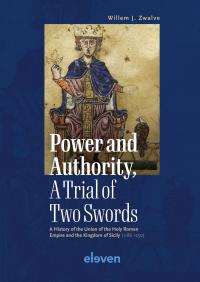
BOOK: Willem ZWALVE, Power and Authority. A Trial of Two Swords. A History of the Union of the Holy Roman Empire and the Kingdom of Sicily (1186-1250) (The Hague: Eleven Publishing, 2023), 631 p. ISBN 9789462363410, € 50


(image source: Eleven)

Abstract:

On 27 January 1186 the German king Henry VI, son and heir of the Roman Emperor Frederick I ‘Barbarossa’, married Constance of Hauteville, heir to the throne of Sicily, in the Basilica of St Ambrose in Milan. The royal wedding sealed the union of the Kingdom of Sicily and the Holy Roman Empire, creating an enormous empire stretching from the shores of the North Sea to the beaches of Africa. The union also incited a major geopolitical conflict dominating European politics in the thirteenth century since it seriously compromised the sovereignty which the Roman papacy professed to exercise over all Christendom as well as the territorial integrity of the Papal State. Consequently, succeeding popes ( Innocent III, Gregory IX and Innocent IV) endeavoured to undo that union at all costs. The ensuing struggle between the Roman papacy and the Hohenstaufen emperors culminated in the deposition of the Emperor Frederick II by Pope Innocent IV on the First Council of Lyon in 1245, resulting in the final dissolution of the union of the Empire and the Kingdom of Sicily and the extermination of the Hohenstaufen race. By inviting a foreign prince, Charles of Anjou, brother to King Louis IX of France, to fight the last of the Hohenstaufens, papal politics ultimately turned the Italian peninsula into a battlefield for the two major powers of early-modern Europe: Spain and France. The origins, the vicissitudes, and the consequences of the union of the Empire and the Kingdom of Sicily are the subject of the first part of this book. The second part deals with the trial of Frederick II at Lyon, the court and its competence, the law involved and, lastly, the execution and aftermath of the sentence of the court.

On the author:

Willem Jans Zwalve was born in Groningen in the Netherlands in 1949. He studied law in the University of Groningen, writing his doctoral thesis on a subject of Roman civil procedure. Since then, he has written extensively on Roman law, comparative legal history, and Anglo-American and Dutch private law. His most recent book, Publiciteit van Jurisprudentie (2013), co-authored with his friend and colleague Corjo Jansen, is a comprehensive history of European law reporting. Willem Zwalve was Professor of Jurisprudence in Groningen University since 1987; Professor of Legal History in Leiden University since 1993; Professor of Anglo-American Private Law in Groningen University since 1994 and in the Nij megen Radboud University since 2009, retiring in 2014. He is a member of the Royal Netherlands Academy of Arts and Sciences and lives in Leiden with his wife Titia, also a lawyer. They have two children and three grandchildren. 

(source: Eleven

10 July 2023

BOOK: Isabelle ROSE, Le mariage des prêtres, une hérésie ? Genèse du « nicolaïsme » (Ier-XIe siècle) (Paris: PUF, 2023). ISBN: 9782130853268


ABOUT THE BOOK

Jusqu’au XIe siècle, beaucoup de prêtres catholiques étaient mariés, sans que cela pose le moindre problème. En 1059, le milieu pontifical se mit brusquement à considérer ces clercs-là comme des pervers sexuels, mais surtout comme des hérétiques, les Nicolaïtes, qui étaient proches d’autres déviants (les simoniaques) et qu’il fallait éradiquer. Menée du Ier au XIe siècle, l’enquête explore comment l’institution catholique a construit et imposé la norme du célibat ecclésiastique, en instrumentalisant l’accusation d’hérésie. Elle montre aussi comment cette dernière a permis d’ébaucher une monarchie d’Église, centrée sur Rome, dans laquelle le souverain pontife disposait désormais d’outils de coercition interne. Plus largement, l’ouvrage retrace comment a émergé en Occident, à travers l’interdiction du mariage aux prêtres, un groupe survalorisé, exclusivement masculin et détenteur du capital culturel et économique : la caste sacerdotale.


ABOUT THE AUTHOR

Isabelle Rosé est maîtresse de conférences en histoire du Moyen Âge à l’Université Rennes 2. D’abord spécialiste du monde monastique, ses travaux portent sur l’Église au cours du premier Moyen Âge. Elle travaille désormais sur l’histoire des hérésies cléricales. Dernier ouvrage co-publié : Aux marges de l’hérésie. Inventions, formes et usages polémiques de l’accusation d’hérésie au Moyen Âge (Presses universitaires de Rennes, 2017).


TABLE OF CONTENTS

Partie I : 1059, année hérétique

  • Chapitre 1. L’année 1059 dans la tourmente
  • Chapitre 2.  Pierre Damien, pourfendeur de la sexualité et des hérésies cléricales
  • Chapitre 3.  Une définition originale de l’hérésie des Nicolaïtes en 1059

Partie II : Retour aux sources de la cléricalisation de l’hérésie des Nicolaïtes (Ier-Xe siècle) 

  • Chapitre 4.  “Invention” précoce et longue polysémie de l’hérésie des Nicolaïtes au cours d’une longue séquence patristique  (IIe-VIe siècle)
  • Chapitre 5. Actualisations de Nicolas et des Nicolaïtes pendant le haut Moyen Âge  (VIIe-Xe siècle)
  • Chapitre 6. Aux origines des « hérésies jumelles » : les déviances « simoniaque et des Néophytes »

Partie III : Jeux et enjeux des hérésies cléricales dans la construction de l’Ecclesia grégorienne (1049-1059)

  • Chapitre 7. Un banc d’essai ? La cléricalisation par Rome de l’heresis Nicolaitarum, en tant que déviance grecque (1054)
  • Chapitre 8. War on archbishops ! La primatie romaine en action contre les archevêques hérétiques en 1059
  • Chapitre 9. Le rêve éveillé d’une monarchie d’Église ? Pierre Damien, le pape et les hérésies cléricales


More information can be found here.