Search

Showing posts with label Irish Legal History. Show all posts

06 December 2023

ADVANCE ARTICLE: Thomas MOHR, "Irish newspapers and the creation of the 1922 constitution of the Irish Free State" (Comparative Legal History) [OPEN ACCESS]


Abstract:

This article attempts to recover perceptions of the Constitution of the Irish Free State at the time of its creation through analysis of Irish newspapers published in 1922. The comparative analysis of contemporary perceptions is intended to serve as a counterweight to perceptions of this Constitution presented in scholarship written in the years after 1922 that have been heavily influenced by knowledge of subsequent events. This article includes analysis of the 1922 Constitution in newspapers based in all regions of the island of Ireland. It covers the jurisdiction of ‘Southern Ireland’, that was evolving into the ‘Irish Free State’, and the jurisdiction of ‘Northern Ireland’ that was destined to remain a part of the United Kingdom. The comparative analysis examines differing viewpoints within and between these two jurisdictions. The conclusion argues that the difficulties and relatively short lifespan experienced by the Constitution of the Irish Free State could not have been easily predicted from the vantage point of 1922.

Read the article here: DOI 10.1080/2049677X.2023.2270389

28 February 2022

BOOK: Stephen HEWER, Beyond Exclusion in Medieval Ireland: Intersections of Ethnicity, Sex, and Society under English Law (Turnhout: Brepols, 2021). ISBN: 978-2-503-59457-6, pp.338, EUR 100,00


(Source: Brepols)

ABOUT THE BOOK

The notion that, upon the advent of the English in 1167, all Gaelic peoples in Ireland were immediately and ipso facto denied access to the English royal courts has become so widely accepted in popular culture that it is often treated as fact. In this ground-breaking monograph, however, the narrative of absolute ethnic discrimination in thirteenth- and early fourteenth-century English Ireland is for the first time tackled head-on through a thorough re-examination of the Irish plea rolls. Through a forensic study of these records, the author demonstrates not only that there was a great deal of variation in how members of various ethnic groups and women who came before the English royal courts in Ireland were treated, but also that there was a large — and hitherto scarcely noticed — population of Gaels with regular and unimpeded access to English law, and that the intersections between gender/sex and ethnicity have too often been deeply misunderstood or disregarded. A close comparison between the treatment of Gaelic women and men and that of the English of Ireland, together with an in-depth examination of other ethnicities from around the Irish Sea, provide a new understanding of English Ireland in which it is clear that there was not a simple dichotomy between the English and the unfree, but rather that people lived an altogether more complex and nuanced existence.

ABOUT THE AUTHOR

Stephen Hewer is a Leverhulme Early Career Fellow at the University of Liverpool.

TABLE OF CONTENTS

Table of Contents
Acknowledgements   p. 9
Abbreviations   p. 11
Introduction   p. 15
Chapter 1: Legal Bondage and ‘betaghs’    p. 37
Chapter 2: Free Gaelic Men in English Ireland    p. 53
Chapter 3: Te Legal Status of Women    p. 93
Chapter 4: Legal Discrimination, Disseisins, and Land Transfers    p. 137
Chapter 5: Irish Sea Region Ethnicities    p. 161
Chapter 6: Te Efects of Ethnicity in Criminal Cases    p. 195
Chapter 7: Te Role of Ethnicity in the Legal Status of Clerics    p. 259
Conclusion    p. 289
Bibliography    p. 299
Index   p.  319


More information with the publisher.

20 December 2021

JOURNAL: The Journal of Legal History XL (2021), nr. 1


(image source: ESCLH Blog)

Articles

Natural Law in Early Twentieth Century Ireland – State (Ryan) v Lennon and its Aftermath (Thomas Mohr) OPEN ACCESS
DOI 10.1080/01440365.2021.1893946
Abstract:
This article examines the relationship between natural law and Irish law held by constitutional drafters, academic commentators and judges in the early twentieth century. References to natural law values in interpreting Irish law were not acceptable before 1922 when the entire island of Ireland remained part of the United Kingdom. The emergence of the self-governing Irish Free State in 1922 did not immediately change this position and natural law was limited to a peripheral position during the drafting of the first Irish Constitution. This article examines how and why the use of natural law by the Irish courts became increasingly acceptable by the middle of the twentieth century. It will also examine the connection between the drafting of the 1922 Constitution of the Irish Free State and the 1934 judgment of the Supreme Court in State (Ryan) v Lennon. This provides a new perspective on the judgments delivered in this case and on the origins of the use of natural law in interpreting Irish constitutional law. The article will also examine the legacy of State (Ryan) v Lennon, the position of natural law in the 1937 Irish Constitution and the evolving position of natural law in the decades that followed.

The Matrimonial Family in Byzantine Imperial Law: An Overview from Late Antiquity Until the Tenth Century AD (Manuel Vial-Dumas)
DOI 10.1080/01440365.2021.1893947
Abstract:

This article analyses the representation of the matrimonial family in Byzantine legislation. It provides an overview of the basic structures of the system from the time of Constantine the Great until the tenth century. The article considers the elements that can be seen in both the ideal conception provided by imperial law and the customs that imperial legislation recognized even when they differed from the ideal representation. In this reconstruction two types of matrimonial family are discussed: one that involves the transfer of property between families of origin and one that does not. From the matrimonial family, constituted without transfer of property, the logic behind the structure of exchange between families can be understood. This is especially revealing as regards its purpose, namely, the protection of the children and the surviving spouse and the conservation of the matrimonial family’s inheritance.

‘By Fraud and Collusion’: Feudal Revenue and Enforcement of the Statute of Marlborough, 1267–1526 (Ashley Hannay)
DOI 10.1080/01440365.2021.1893948
Abstract:

Following the Statute of Marlborough 1267, feoffments which were designed to deprive lords of wardship could in some circumstances be deemed ‘collusive’ or ‘fraudulent’. This was further complicated from the mid-fourteenth century onwards by the common practice of creating uses to circumvent the common law rules prohibiting the devise of land by last will. The effect of uses being created to perform last wills was that lords, in particular the king, were losing out on their feudal incidents. The current view, put forward by legal historians, is that the Crown struggled to enforce the Statute of Marlborough after 1410, and that the ‘campaign’ against this loss of feudal revenue began in the 1520s. This article seeks to re-examine this view, particularly in relation to how Marlborough and collusion were understood and the Crown’s approach to the avoidance of feudal incidents before the Statute of Uses 1536.

Scottish Legal History Group Report 2020

Migrations of Manuscripts 2020 (Sir John Baker)

Book reviews

  • Law and Society in England 1750–1950 by William Cornish, Stephen Banks, Charles Mitchell, Paul Mitchell and Rebecca Probert, Oxford, Hart Publishing, 2019, 2nd ed., lvii + 721 pp. (including index)., £39.99 (paperback), ISBN 9781849462730 (Ciarian McCabe) 
Read the whole issue with Taylor & Francis Online.

27 April 2021

Webinar: "Ireland, the law, and a long history of the English colony in Ireland" with Coleman A. Dennehy - 7th May 2021 - University of Belgrad, Forvm Romanvm


(Source: Forvm Romanvm)

The lecture is held over Webex on May 7th, 19:00 Belgrade time (GMT+2). The link to the lecture itself is https://ppma.webex.com/ppma/j.php?MTID=m481fc47614b90c56fd0aca667d96786c

Or one can enter the event code “181 333 6001” directly into the Webex Meetings app.

The meeting password is “Forvm”.


More information is available here.

20 April 2020

BOOK: John COAKLEY and Jennifer TODD, Negotiating a Settlement in Northern Ireland, 1969-2019 (Oxford: Oxford University Press, 2020). ISBN 9780198841388, £95.00


(Source: OUP)

Oxford University Press has published a reference resource on the negotiation of the Northern-Irish peace process (1969-2019).

ABOUT THE BOOK

Negotiating a Settlement in Northern Ireland: From Sunningdale to St Andrews uses original material from witness seminars, elite interviews, and archive documents to explore the shape taken by the Irish peace process, and in particular to analyse the manner in which successful stages of this were negotiated. Northern Ireland's Good Friday Agreement of 1998 marked the end a 30-year conflict that had witnessed more than 3,000 deaths, thousands of injuries, catastrophic societal damage, and large-scale economic dislocation.

This book traces the roots of the Agreement over the decades, stretching back to the Sunningdale conference of 1973 and extending up to at least the St Andrews Agreement of 2006. It describes the changing relationship between parties to the conflict (nationalist and unionist groups within Northern Ireland, and the Irish and British governments) and identifies three dimensions of significant change: new ways of implementing the concept of sovereignty, growing acceptance of power sharing, and the steady emergence of substantial equality in the socio-economic, cultural, and political domains.

As well as placing this in the context of an extensive social science literature, the book innovates by looking at the manner in which those most closely involved understood the process in which they were engaged. The authors reproduce testimonies from witness seminars and interviews involving central actors, including former prime ministers, ministers, senior officials, and political advisors.

They conclude that the outcome was shaped by a distinctive interaction between the conscious planning of these elites and changing demographic and political realities that themselves were, in a symbiotic way, consequences of decisions made in earlier years. They also note the extent to which this settlement has come under pressure from new notions of sovereignty implicit in the Brexit process.

ABOUT THE AUTHOR

John Coakley, Professor and Member of the Royal Irish Academy, School of History, Anthropology, Philosophy and Politics, Queen's University Belfast, and Geary Institute, University College Dublin, and Jennifer Todd, Professor and Member of the Royal Irish Academy, Geary Institute, University College Dublin

John Coakley, MRIA, is Professor of Politics at Queen's University Belfast, and Fellow of the Geary Institute for Public Policy at University College Dublin. Recent publications include Nationalism, Ethnicity and the State: Making and Breaking Nations (Sage, 2012), Reforming Political Institutions: Ireland in Comparative Perspective (IPA, 2013), Breaking Patterns of Conflict: Britain, Ireland and the Northern Ireland Question (co-edited, Routledge, 2015), Non-Territorial Autonomy in Divided Societies: Comparative Perspectives (edited, Routledge, 2017) and Politics in the Republic of Ireland (co-edited, 6th ed., Routledge, 2018).

Jennifer Todd, MRIA is a Fellow of the Geary Institute for Public Policy at University College Dublin. She has been Fernand Braudel visiting Fellow at the European University Institute (2016) and is presently Fellow of the Political Studies Association of Ireland. She is co-author of the classic Dynamics of Conflict in Northern Ireland (Cambridge 1996), and recent publications include Identity Change after Conflict: Ethnicity, Boundaries and Belonging in the Two Irelands (Palgrave 2018), and jointly edited volumes on Ethnicity and Religion (Routledge, 2011); Breaking Pattens of Conflict (Routledge 2015).

TABLE OF CONTENTS

1: Introduction: defining moments in the British-Irish relationship
2: The Sunningdale Agreement, 1973
3: The Anglo-Irish Agreement, 1985
4: The Downing Street Declaration and Framework Documents, 1993-95
5: The Good Friday Agreement, 1998: negotiation
6: The Good Friday Agreement, 1998: implementation
7: Conclusion: benchmarks from the British-Irish process

More info here

15 April 2020

BOOK: Kieran WALSH, The Development of Child Protection Law and Policy Children, Risk and Modernities (London: Routledge, 2020). ISBN 9780367276317, £120.00


(Source: Routledge)

Routledge has published a new book on the history of child protection law, focused on the Republic of Ireland.

ABOUT THE BOOK

This book examines how child protection law has been shaped by the transition to late modernity and how it copes with the ever-changing concept of risk.

The book traces the evolution of the contemporary child protection system through historical changes, assessing the factors that have influenced the development of legal responses to abuse over a 130-year period. It does so by focussing on the Republic of Ireland where child protection has become emblematic of wider social change. The work draws on a wide range of primary and secondary sources including legislation, case law and official and media reports of child protection inquiries. It also utilises insights developed through an extensive examination of parliamentary debates on child protection matters. These materials are assessed through the lens of critical discourse analysis to explore the relationship between law, social policy and social theory as they effect child protection. While the book utilises primarily Irish sources, this multidisciplinary approach ensures the argument has international applicability.

The book will be a valuable resource for all those with an interest in the development of child protection law.

ABOUT THE AUTHOR

Kieran Walsh is a Senior Lecturer in Family and Child Law at the University of Portsmouth, UK.

TABLE OF CONTENTS

Chapter 1: Modernity, Reflexivity, Risk And The Law;
Chapter 2: Threats, Victims And Agents: Victorian Law Reform And The Beginning Of Modern Child Protection;
Chapter 3: Children In The Constitutional Order Of Traditional Modernity;
Chapter 4: Children And Risk In Independent Ireland, 1921-1970;
Chapter 5: The Twilight Of Traditional Modernity: Children In Child Protection Law And Policy, 1970-1993;
Chapter 6: Children’s Rights And Constitutional Change;
Chapter 7: Child Abuse And Risk In A New Modernity: Child Protecion Law And Policy 1992 – 2006;
Chapter 8: Agents Of Change: Children And Risk In Reflexive Modernity 2006-2017;

More info here

19 March 2020

ARTICLE: Coleman DENNEHY: 'Parliamentary committees in seventeenth-century Ireland: a brief introduction', Parliaments, Estates and Representation 2019, 39 (3), pp. 316-327 (OPEN ACCESS)

Abstract:
Parliament in early modern Ireland grew in both the size of its membership and its workload, and so as the flow of business put before parliament in the early modern period increased, the parliamentary committee became a more frequent part of the institution. Committees, and the parliamentary conferences conducted by them, were used as a way of dispatching business in an increasingly efficient, targeted, and concentrated manner. The committee allowed for freer debate, concentration of expertise, and timely completion of work. Studying them is useful for our understanding of the development of the institution, but also too for observing the involvement and work-rate of individual parliamentarians, and perhaps political activity too.
Source: Taylor&Francis.

17 January 2020

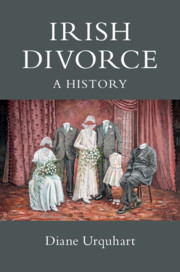
BOOK: Diane URQUHART, Irish Divorce: A History (Cambridge: Cambridge University Press, 2020). ISBN 9781108717250, £ 22.99


(Source: CUP)

Cambridge University Press is publishing a new socio-legal history of divorce in Ireland.

ABOUT THE BOOK

This is the first history of Irish divorce. Spanning the island of Ireland over three centuries, it places the human experience of marriage breakdown centre stage to explore the impact of a highly restrictive and gendered law and its reform. It considers the accessibility of Irish divorce as it moved from a parliamentary process in Westminster, the Irish parliament and the Northern Ireland parliament to a court-based process. This socio-legal approach allows changing definitions of gendered marital roles and marital cruelty to be assessed. In charting the exceptionalism of Ireland's divorce provision in a European and imperial framework, the study uncovers governmental reluctance to reform Irish divorce law which spans jurisdictions and centuries. This was therefore not only a law dictated by religious strictures but also by a long-lived moral conservatism.

ABOUT THE AUTHOR

Diane UrquhartQueen's University Belfast

Diane Urquhart is Professor of Gender History at Queen's University Belfast. She has written widely on Irish women's history and gender and is the author of The Ladies of Londonderry: Women and Political Patronage, 1800–1959 (2007) as well as Women in Ulster Politics, 1890–1940: A History Not Yet Told (2000), which was selected as an Irish Times Book of the Year. She is the editor of The Papers of the Ulster Women's Unionist Council and Executive Committee, 1911–40 (2001), co-editor of Irish Women at War: The Twentieth Century (2010) and co-author of The Irish Abortion Journey, 1922–2018 (2019) with Lindsey Earner-Byrne.

TABLE OF CONTENTS

Introduction. The 'anatomy of a divorce'
1. Divorce in two legislatures: Irish divorce, 1701–1857
2. The failings of the law: the cases of Talbot and Westmeath
3. A non-inclusive reform: Ireland and the Divorce and Matrimonial Causes Act of 1857
4. Divorce in the post-reform era of 1857–1922: 'Like diamonds, gambling, and picture-fancying, a luxury of the rich'?
5. The widening definition of marital cruelty
6. Divorce in court, 1857–1922
7. 'An exotic in very ungenial soil': divorce in the Northern Ireland parliament, 1921–1939
8. With as 'little provocative as possible': the Northern Ireland move to court
9. An 'unhappy affair': divorce in independent Ireland, 1922–1950
10. Marriage law 'in this country is an absolute shambles': the reform agenda
11. A 'curiosity [and]…an oddity': referenda in 1986 and 1995
12. The 'last stretch of a long road': the Family (Divorce) Law Act of 1996
Conclusion.

More info here

08 October 2019

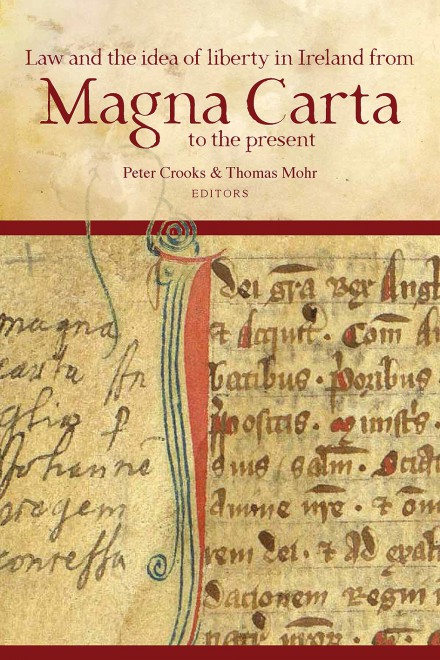
BOOK: Peter CROOKS and Thomas MOHR, eds., Law and the idea of liberty in Ireland from Magna Carta to the present (Dublin: Four Courts Press, 2019). ISBN 978-1-84682-740-2, €49.95


Four Courts Press has published an edited volume on the importance of the Magna Carta’s dissemination in Ireland.

ABOUT THE BOOK

Magna Carta is among the most famous documents in the history of the world, credited with being the first effective check in writing on arbitrary, oppressive and unjust rule – in a word, on tyranny. The fame of Magna Carta spread as England, and later Britain, came to girdle the globe in its power. This volume is the first to examine the importance of Ireland in the story of Magna Carta’s dissemination. Four centuries before Magna Carta crossed the Atlantic, it had already been implanted across the Irish Sea. A version of the charter, issued in November 1216 in the name of the boy-king Henry III, was sent to Ireland, where it became fundamental to the English common law tradition in Ireland that survives to the present. This volume – the proceedings of a conference marking the 800th anniversary of the transmission of Magna Carta to Ireland – explores the paradoxes presented by the reception of Magna Carta into Irish law, above all the contested idea of ‘liberty’ that developed in Ireland. Contributors examine the legal, political and polemical uses to which Magna Carta was put from the thirteenth century onwards, as well as its twentieth- and twentieth-first century invocations as a living presence in contemporary Irish law. The volume also includes a new edition and translation of the Magna Carta Hibernie (‘The Great Charter of Ireland’) — an adaptation of the 1216 issue of Magna Carta found in the Red Book of the Irish Exchequer, which was destroyed in 1922.
Contributors: Sparky Booker (QUB), Paul Brand (U Oxford), Ian Campbell (QUB), Coleman Dennehy (UCL/UCD), Seán Duffy (TCD), Adrian Empey (Church of Ireland Historical Society), Patrick Geoghegan (TCD), James Kelly (DCU), Colum Kenny (DCU), John Larkin (Attorney General for Northern Ireland), Bláthna Ruane SC.

ABOUT THE EDITOR

Peter Crooks is a lecturer in medieval history at TCD, and a fellow of the Royal Historical Society. He is co-editor of The Geraldines and medieval Ireland: the making of a myth (Dublin, 2016). Thomas Mohr is a lecturer at the School of Law, UCD. He is honorary secretary of the Irish Legal History Society and the author of Guardian of the Treaty: the Privy Council appeal and Irish sovereignty (Dublin, 2016).

All information to be found here

24 September 2019

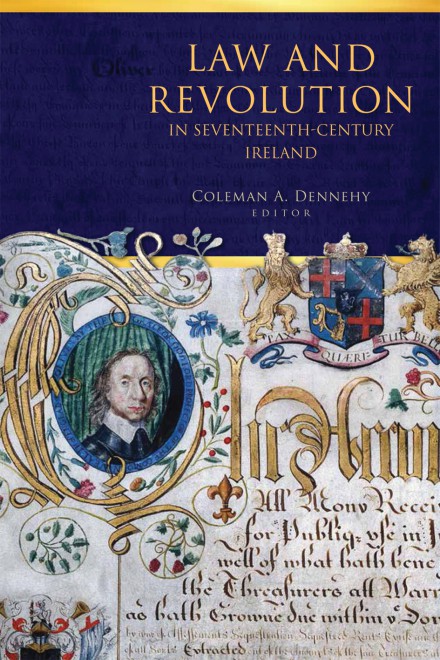
BOOK: Coleman A. DENNEHY, Law and Revolution in Seventeenth-Century Ireland (Dublin: Four Courts Press, 2019). ISBN 978-1-84682-813-3, €49.50


Four Courts Press is publishing a book on law and revolution in 17th century Ireland.

ABOUT THE BOOK

In October 1641, violence erupted in mid-Ulster that spread throughout the whole kingdom and lasted for more than a decade. The war was neither unpredictable nor was it out of step with the rest of the Stuart kingdoms, or indeed Europe generally. As with all wars, particularly the multi-national and multi-denominational, the Irish wars of the 1640s and 1650s had many complex and interrelated causes. Law, the legal system and the legal community played a vital role in the origins and the development of the conflict in Ireland that took it from a dependent kingdom to becoming part of a republican commonwealth. Lawyers also played a fundamental part in the return of the legal and political ‘normality’ in the 1660s. This collection of essays considers how the law was part of this process and to what extent it was shaped by the revolutionary developments of the period. These essays arise from a conference held in 2014 in the House of Lords at the Bank of Ireland, Dublin, under the auspices of the Irish Legal History Society.

Contributors: Andrew Carpenter, Stephen Carroll, John Cunningham, Coleman A. Dennehy, Neil Johnston, Colum Kenny, Neasa Malone, Aran McArdle, Bríd McGrath, Jess Velona, Philip Walsh and Jennifer Wells.

ABOUT THE EDITOR

Coleman A. Dennehy is a Humanities Institute (University College Dublin) research associate and a former IRC Marie Skłodowska-Curie fellow, having taught at University College London and University of Vienna. In addition to many articles and chapters, he published an edited collection, Restoration Ireland (London, 2008) and also a monograph The Irish parliament, 1613–89 (Manchester, forthcoming).

More info here

25 June 2019

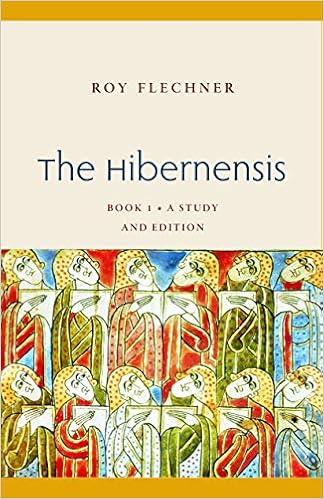
BOOK : Roy FLECHNER (Transl.), The Hibernensis: Book 1: A Study and Edition [Studies in Medieval and Early Modern Canon Law] (Washington D.C.: Catholic University of America Press, 2019). ISBN 978-0813231938, $75.27


(Source: Amazon.com)

The Catholic University of America Press is publishing an English translation and commentary of the early medieval, Irish, tract Hibernensis.

ABOUT THE BOOK

The Hibernensis is the longest and most comprehensive canon-law text to have circulated in Carolingian Europe. Compiled in Ireland in the late seventh or early eight century, it exerted a strong and long-lasting influence on the development of European canon law. The present edition offers―for the first time―a complete text of the Hibernensis combining the two main branches of its manuscript transmission. This is accompanied by an English translation and a commentary that is both historical and philological. TheHibernensis is an invaluable source for those interested in church history, the history of canon law, social-economic history, as well as intellectual history, and the history of the book.

Widely recognized as the single most important source for the history of the church in early medieval Ireland, the Hibernensis is also our best index for knowing what books were available in Ireland at the time of its compilation: it consists of excerpted material from the Bible, Church Fathers and doctors, hagiography, church histories, chronicles, wisdom texts, and insular normative material unattested elsewhere. This in addition to the staple sources of canonical collections, comprising the acta of church councils and papal letters. Altogether there are forty-two cited authors and 135 cited texts. But unlike previous canonical collections, the contents of the Hibernensis are not simply derivative: they have been modified and systematically organised, offering an important insight into the manner in which contemporary clerical scholars attempted to define, interpret, and codify law for the use of a growing Christian society.

ABOUT THE TRANSLATOR

Dr Roy Flechner lectures at University College Dublin. He obtained his Masters degree and Doctorate from Oxford University, subsequently becoming a Postdoc at Trinity College Cambridge. His research explores contacts between Continental Europe and the islands of Britain and Ireland in the early medieval period. He won awards for his research on church history and historiography, but he is especially known for his work on conversion to Christianity, canon law, and St Patrick.

More information here

26 April 2019

CALL FOR PAPERS: Transformations of the State in Ireland, c.1600-c.1900, 25-26 SEP 2019 (DEADLINE 16 JUN 2019)

(image source: Oxford)
Conference call: 
For much of Ireland’s modern history, its supposed ungovernability was proverbial, at least among British and continental European observers. Yet Ireland was in fact an intensely governed space: law, property, welfare, religion, and the landscape itself were forcibly remade through repeated exercises of coercive and others forms of power. By 1850, Ireland had one of the most advanced railway systems in Europe, and some of the most detailed maps. Public authority interacted with more diffuse networks of kinship, religion and ‘civility’ to produce an unusually resilient society by the close of the nineteenth century. 
In recent decades, Irish historians of the seventeenth, eighteenth and nineteenth centuries have characterised public authority in Ireland as a kind of hybrid regime, at once ‘colonial’ and ‘European’. Building on the work of Patrick Carroll-Burke, David Fitzpatrick, Joanna Innes, K. T. Hoppen and others, this conference is concerned with the implications of this judgement, seeking to locate it more securely within a broader historiographical and theoretical framework. We want to understand how political agency and political coalitions developed in Ireland; not only in the usual narratives of constitutional, sectarian, and national conflicts, but in broader, less-studied fields of social and economic regulation, cultural transformation, intellectual history and mentalities. We also seek to bring together early modern and modern scholars of Ireland, too often separated into their respective academic silos. 
Through this investigation, we believe that we can develop a perspective on Irish political development that does not define it as a set of divergences from a British (or continental European) model of historical evolution. In both European and global history, hybrid regimes of various kinds are the rule. Sovereign nation-states and stable market economies are the exception. The study of Irish history can be viewed as an opportunity to examine a set of variations on this universal theme of political complexity. It can help us to perceive the conceptual inadequacy of common analytical categories, and to develop better ones. 
We welcome contributions on topics including (but not limited to) the following: 
1.   The interaction between public and private authority and capital in Ireland.
2.   The politics and ideology of administration and administrative reform.
3.   The gendered nature of political authority.
4.  Interactions between social class (and how it was structured in both rural and urban environments) and the mechanics of state governance.
5.   The development and construction of public infrastructure: roads, canals, railways, public buildings, environmental and reclamation projects.
6.   The hybridities of Ireland’s ‘semi-peripheral’ location in Europe and the Empire; the role of concepts of race and civilisational hierarchy in shaping Irish governance, and the ways in which the state in Ireland interacted with non-white imperial subjects.
7.   The culture of governing and governance.
8.   The cultural reaches and limits of state authority.
9.   The distinctive Irish experience of modernisation and modernity.
10. The extent to which British modernity was defined by Irish comparison and experience.

Organising Committee:
Ciara Breathnach (University of Limerick)
Richard Butler (University of Leicester)
Peter Hession (University of Liverpool)
Olwen Purdue (Queen’s University Belfast)
James Stafford (Bielefeld University)
Matthew Ward (University of Oxford)
Please send abstracts of no more than 300 words and a research CV of 1 page to james.stafford@uni-bielefeld.de and matthew.ward@kellogg.ox.ac.uk by 12 midnight on 16 June 2019. This conference is taking place with the support of the Sanderson Fund at Oxford University. Graduate and Early Career bursaries for travel and accommodation are available. Lunch and refreshments during the conference will be provided.

More information here.

23 April 2019

SSRN PAPER: Thomas MOHR, "Irish Home Rule and Constitutional Reform in the British Empire, 1885-1914"

(image source: UCD School of Law/Twitter)

Abstract:
This article examines the meaning of Irish “home rule” as a constitutional experiment and its relationship with other proposals for constitutional change in the British Empire of the late 19th and early 20th centuries. The concept of Irish home rule was seen as a major constitutional experiment and the United Kingdom had little experience of devolution or federal settlements. This article will examine the model that was finally selected for this constitutional experiment which was inspired by the constitution of the Dominion of Canada. The article will also examine the relationship between Irish home rule and other constitutional experiments. These included proposals to create a federal United Kingdom, a concept known as “home rule all round” and even a federal British Empire, a concept known as “Imperial federation”. The conclusion will assess the significance of these constitutional experiments in influencing the campaign for Irish home rule.
More information on SSRN.

27 February 2019

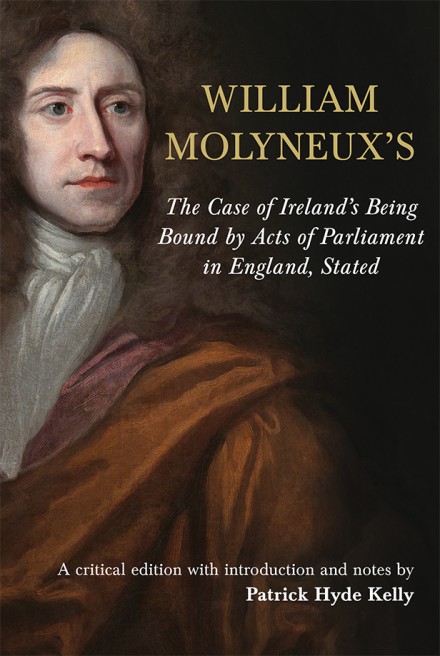
BOOK: Patrick Hyde KELLY, William Molyneux's The Case of Ireland’s Being Bound by Acts of Parliament in England, Stated (Dublin: Four Courts Press, 2018), 336 p. ISBN 978-1-84682-741-9, € 49,5


Book abstract:
Regarded as the most celebrated Irish political pamphlet published before 1801, William Molyneux’s Case of Ireland, stated (1698) was written to demonstrate that English statutes did not become of force in Ireland until they had been re-enacted by the Irish parliament. For all its fame, The Case’s mass of legal precedents and seemingly contradictory arguments make it a work that requires elucidation for the modern reader. This new edition presents a critical text, based on the manuscripts of The Case in the Trinity College Dublin library, together with explanatory notes, and a re-examination of the historical background and the sources on which Molyneux drew. The arguments in The Case, set out in a form analogous to presenting a legal case in court, are shown to be a significant response to the contemporary pamphlet debate on Irish woollen exports and the legal competence of the Irish house of lords, rather than the stand-alone publication the book has often been treated as.
On the editor:
Patrick Hyde Kelly is a fellow emeritus of Trinity College Dublin. A specialist in the history of political and economic thought in late seventeenth- and early eighteenth-century Ireland and Britain, he has edited Locke on money (2 vols, Oxford, 1991) for The Clarendon Edition of the Works of John Locke.

20 February 2019

BOOK: Charlene M. ESKA, A Raven’s Battle-cry: The Limits of Judgment in the Medieval Irish Legal Tract Anfuigell (Leiden-New York: Brill, 2019). ISBN 978-90-04-39198-7, €90.00


(Source: Brill)

Brill has published a critical edition and translation of the previously unpublished medieval Irish legal tract Anfuigell.

ABOUT THE BOOK

In A Raven’s Battle-cry Charlene M. Eska presents a critical edition and translation of the previously unpublished medieval Irish legal tract Anfuigell. Although the Old Irish text itself is fragmentary, the copious accompanying commentaries provide a wealth of legal, historical, and linguistic information not found elsewhere in the medieval Irish legal corpus. Anfuigell contains a wide range of topics relating to the role of the judge in deciding difficult cases, including kingship, raiding, poets, shipwreck, marriage, fosterage, divorce, and contracts relating to land and livestock.

ABOUT THE AUTHOR

Charlene M. Eska, Ph.D. (2006), in Celtic Languages and Literatures, Harvard University, is an Associate Professor in the Department of English at Virginia Polytechnic Institute & State University. Her publications focus on medieval Irish legal texts and manuscripts, and include Cáin Lánamna: An Old Irish Tract on Marriage and Divorce Law (Brill, 2010).

TABLE OF CONTENTS

Acknowledgements Abbreviations Plates
Introduction
Summary of the Text
Manuscript Sources
Concordances
Editorial Method
Notes on Dating and Orthography
Anfuigell: Text, Variants, Commentary, and Translation
Appendix 1: Text and commentary from source C Appendix 2: Commentary from § 32 source T Appendix 3: Commentary from § 51 source T Appendix 4: List of variant MS readings against CIH Appendix 5: Regarding Aidbred ‘Claiming’ Appendix 6: O’Davoren’s Glossay no. 862(3) and CIH 1452.11–24 Glossary Bibliography Index

More information here

08 October 2018

BOOK: Peter CROOKS and Thomas MOHR, eds., Law and the idea of liberty in Ireland from Magna Carta to the present (Dublin: Four Courts Press, 2018). ISBN 978-1-84682-740-2, €49.95


Four Courts Press is publishing a book on the influence of Magna Carta in Irish legal history next month.

ABOUT THE BOOK

Magna Carta is among the most famous documents in the history of the world, credited with being the first effective check in writing on arbitrary, oppressive and unjust rule – in a word, on tyranny. The fame of Magna Carta spread as England, and later Britain, came to girdle the globe in its power. This volume is the first to examine the importance of Ireland in the story of Magna Carta’s dissemination. Four centuries before Magna Carta crossed the Atlantic, it had already been implanted across the Irish Sea. A version of the charter, issued in November 1216 in the name of the boy-king Henry III, was sent to Ireland, where it became fundamental to the English common law tradition in Ireland that survives to the present. This volume – the proceedings of a conference marking the 800th anniversary of the transmission of Magna Carta to Ireland – explores the paradoxes presented by the reception of Magna Carta into Irish law, above all the contested idea of ‘liberty’ that developed in Ireland. Contributors examine the legal, political and polemical uses to which Magna Carta was put from the thirteenth century onwards, as well as its twentieth- and twentieth-first century invocations as a living presence in contemporary Irish law. The volume also includes a new edition and translation of the Magna Carta Hibernie (‘The Great Charter of Ireland’) — an adaptation of the 1216 issue of Magna Carta found in the Red Book of the Irish Exchequer, which was destroyed in 1922.

ABOUT THE AUTHOR

Peter Crooks is a lecturer in medieval history at TCD, and a fellow of the Royal Historical Society. He is co-editor of The Geraldines and medieval Ireland: the making of a myth (Dublin, 2016). Thomas Mohr is a lecturer at the School of Law, UCD. He is honorary secretary of the Irish Legal History Society and the author of Guardian of the Treaty: the Privy Council appeal and Irish sovereignty (Dublin, 2016).

More information here